Bible Studies

“Your Sin Will Find Out” God’s Providential Hand: The book of Esther

“Then King Ahasuerus said to Queen Esther, ‘Who is he, and where is he, who has dared to do this?’” Esther 7:5 ESV

“……and be sure your sin find you out.” Numbers 32:23b ESV

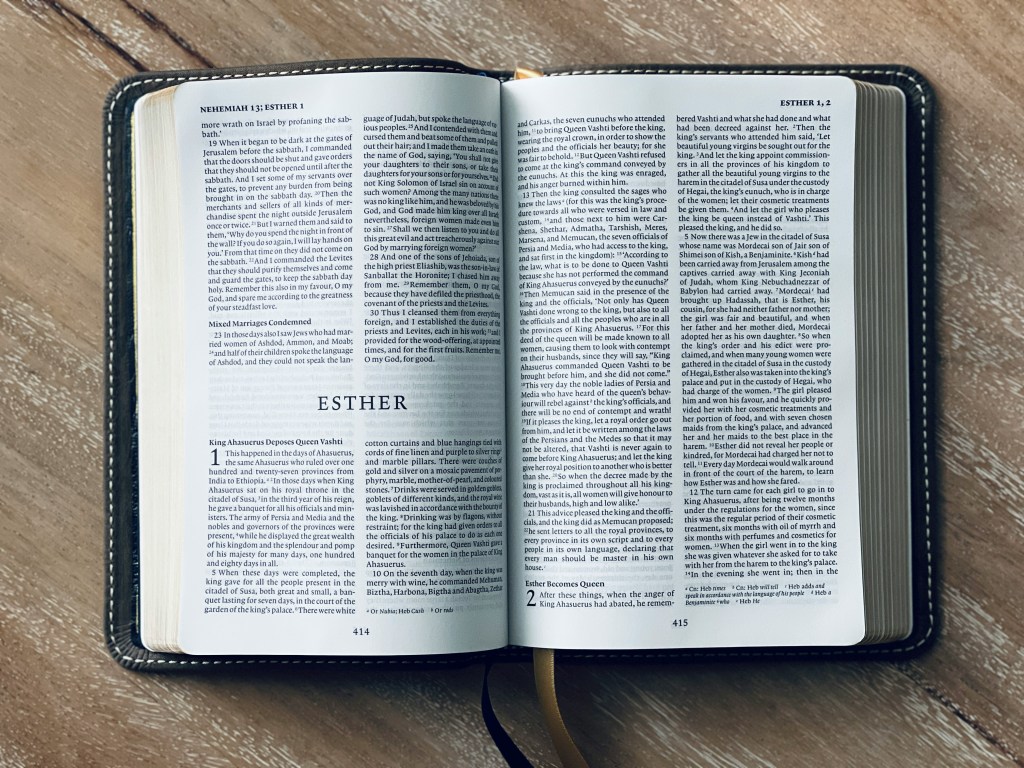
Photo by Jose P. Ortiz on Unsplash

Last Sunday we left Haman in humiliation after he was blindsided by King Ahasuerus in having to parade Mordecai around the city square in recognition of his favor with the king. Haman’s plan was to get permission from the king to hang Mordecai who was rebelling against Haman’s authority as the king’s highest official. He did not get permission to hang Mordecai, and he found out just how highly King Ahasuerus thought of Mordecai. Haman knew he would soon be found out and his world would come to a crashing end.

Chapter 6 ends with the doomsday call upon Haman. “While they were still talking, the king’s eunuchs arrived and quickly took Haman to the banquet Esther had prepared.” (Es.6:14 nlt) Haman’s wife and friends surmised a fatal future for Haman. He would be found out dissolving his plan and his life at the same time. Haman didn’t have enough time to digest all the bad news he was receiving or try to make an escape before the king’s officials came and escorted him to his final meal. Sin has a way of unravelling and exposing itself. You do not always have time to make amends or change your ways before the consequences arrive. It’s too late. Haman’s time had run out.

Once again King Ahasuerus asked Esther what her request was after the meal. This time Queen Esther answered convincedly. “If I have found favor with the king, and if it pleases the king to grant my request, I ask that my life and the lives of my people will be spared. For my people and I have been sold to those who would kill, slaughter, and annihilate us.” (Es.7:3-4a nlt) If the king did not know his wife was Jewish, he knew it now, and that she would not escape the annihilation. His immediate reaction was who would do such a thing to his wife, the queen. Esther emboldened even more blurted out, “This wicked Haman is our adversary and our enemy.” (Es7:6a nlt)

Sometimes when sin is found out it comes in like a floodlight shining brightly on you exposing your sin to all in view. A variety of emotions occur, guilt, shame, remorse, anger, fear. Haman’s was fear, he was terrified. He coerced the king into agreeing to the destruction of a people’s group without naming them. The king did not need to ask Esther who was the one who did this. He would have remembered the edit he decreed by Haman’s persuasion and Haman obviously didn’t know Queen Esther was a Jew. God’s providential hand had been making all the moves in Esther being chosen queen. She was now in a position to save her people.

King Ahasuerus was outraged storming out to the palace garden while Haman pleaded for his life to Esther the queen, the only hope he had. In his frantic begging before the queen, Haman ended up falling onto the couch next to Esther at the moment the king walked in. “The king exclaimed, ‘Will he even assault the queen right here in the palace, before my very eyes?’ And as soon as the king spoke, his attendants covered Haman’s face, signaling his doom.” (Es.7:8b nlt) Harbona, one of the king’s officials noted to King Ahasuerus that a gallows was already built by Haman in his own courtyard. Then he added this for the king’s benefit, “He intended to use it to (hang) Mordecai, the man who saved the king from assassination.” (Es.7:9b nlt)

Haman was found out. He had conceived a plot for the destruction of the Jews, he was perceived to have assaulted the queen, and he planned to have Mordecai hanged. He paid a price for it as he was hanged on his own gallows in place of Mordecai. The Lord saw to it that Haman’s plans failed. God protected His chosen people and will continue to do so until Jesus’ reign in the millennium kingdom.  

The Jewish people and Christians today are facing continuing threats. There are many Haman’s in the world today who want to wipe out all Christians and Jews. Freedom of religion is slowly being eroded in America and around the world. The most persecuted religious group in the world are Christians. We may suffer, but Jesus said we would. Satan knows he is running out of time and is making every move he can, but as Christ’s church, we do not need to fear. Our Lord God is the master chess player, and His moves are already planned out as with the story of Esther. The Jews were saved by another edit written by Mordecai using the king’s signet ring. Mordecai was now the king’s high official, and he wrote the Jews were to defend themselves against their annihilation by killing those attacking them and to take their property. (Es.8-10) The Jewish festival of ‘Purim’ celebrates the victory the Lord gave them that day, and the Lord will give all Christians the victory we have in Jesus over Satan as He makes His final moves.

Read: Esther 7 ESV – So the king and Haman went in to feast – Bible Gateway
Bible Studies

“A Sleepless Night” God’s Providential Hand: The book of Esther

“On that night the king could not sleep. And he gave orders to bring the book of memorable deeds, the chronicles, and they were read before the king.” Esther 6:1 ESV

God does work in mysterious ways. We can also call it God’s providential hand at work. Last week in our look in the book of Esther we left off with Haman feeling good about himself. He set in motion the act of finally getting rid of Mordecai, the hated Jew. Haman couldn’t wait until the king’s edit was in force killing all the Jews. He needed to finish him off immediately. In rapid succession, the gallows were being built overnight and Haman made sure he arose early the next morning to go before the king and get permission to execute the rebellious Mordecai. All was going according to plan, except for one thing, King Ahasuerus had trouble falling asleep that night. God was making the next move with His providential hand.

Photo by Mark Rasmuson on Unsplash

Sleep aids were not available back in the day of the Persian Empire and perhaps he tried a little wine to help him relax, but he still couldn’t fall asleep. So, he did the next best thing. The king had the records of his reign brought in and read to him. There’s nothing more boring to put you to sleep than listening to government records being recited. But in this case, before falling asleep he was stimulated by the account of Mordecai who had saved his life. “In those records he discovered an account of how Mordecai had exposed the plot of Bigthana and Teresh, two of the eunuchs who guarded the door to the king’s private quarters. They had plotted to assassinate King (Ahasuerus).” (Es.6:2 nlt)

It seems strange to us at times that people don’t get the recognition they deserved at the time. The king’s officials knew of Mordecai’s discovery and moved to save the king, but somehow the reward or thanks escaped the king. We may have experienced the same results where we find ourselves going unnoticed for an important deed we had done. But take heart, our providential God knows and will reward us in due time.

King Ahasuerus asked how Mordecai was rewarded for uncovering this plot, in which the reply was nothing was done to reward him. The king’s heart was moved to appropriate gratitude and honor for the man who saved his life. He wanted the advice of one of his officials and asked if anybody was in the courtyard that early morning. Sure enough, Haman had just arrived and was invited to come in by the king.

The king may have been pleased that it was Haman, his most trusted and highest official, who was in the courtyard that morning. It was fortunate for King Ahasuerus, but not for Haman. Haman was asked what should be done for the man who the king desires to honor. True to his character, Haman applied this to himself, “Whom would the king delight to honor more than me?” (Es.6:6b esv) He then proceeded to honor himself in a glorious way to secure his position as the king’s right-hand man. Haman wasn’t interested in financial gain, only for the acclaim and adoration of the people. One commentator noted that there is irony here, Haman held back the identity of Jews he wanted to destroy, and King Ahasuerus didn’t reveal who he wanted to honor.

All the elements of a proper recognition of the one the king wants to honor as suggested by Haman had to be bestowed upon Mordecai. Haman thought he would be the one dressed in Royal robes the king wore. He would ride on the king’s own horse, and one the king’s officials would parade him through the city square shouting, “This is what the king does for someone he wishes to honor!” (Es.6:9b nlt) But Haman felt the providential hand of God turn his entire world upside down when King Ahasuerus said to him, “Excellent! Quick! Take the robes and my horse and do just as you have said for Mordecai the Jew, who sits at the gate of the palace. Leave out nothing you have suggested!” (Es.6:10 nlt) Proverbs 16:18 says, “Pride goes before destruction, and haughtiness before a fall.” (nlt) Haman is now beginning to fall into the hand of God where he will never escape.

Haman obeyed his instructions from the king and paraded Mordecai through the city square facing humiliation. Dr. John MacArthur notes, “Mordecai’s distress turned to Haman…… just days before Mordecai was in the city square with sackcloth and ashes, now he (is) honored by the king in royal robes.” Haman returns to his home dejected by the morning’s turn of events and is greeted by his wife and friends who realize this is from the God of the Jewish people and tell him that his plan and he himself is doomed.

The examples we see of God’s providential hand in the book of Esther are for our benefit today. The future doesn’t always look bright, in fact it seems very dark, but God still has His moves to make. He will make them at the appropriate time for His glory and for our benefit. In the meantime, we continue to serve God and trust Him for His will to done. There are plenty of Haman’s in the world today, but God will frustrate their plans perhaps by another sleepless night and eventually they will be brought down. We will uncover Haman’s fate and the Jews miraculous survival in the weeks ahead through God’s providential hand.

Read: Esther 6 ESV – The King Honors Mordecai – On that – Bible Gateway

Bible Studies

“Blinded by Hate” God’s Providential Hand: The book of Esther    

“Yet all this is worth nothing to me, so long as I see Mordecai the Jew sitting at the king’s gate.” Esther 5:13 NLT

Photo by Clem Onojeghuo on Unsplash
 

Hatred is a powerful force and if not dealt with will eventually destroy you as we will begin to see in chapter 5 of Esther. In chapter 4 Queen Esther learns of the official decree to destroy all the Jews. After being persuaded by her cousin Mordecai she agrees to approach the king uninvited to inform him of the innocence of the Jews and Haman’s hatred of them which precipitated the decree he agreed to. King Ahasuerus indifference to the people under his rule in the Persian Empire made it easy for Haman to sell his plan to him. The king obviously failed to notice Haman’s cunningness or any alternative motives on Haman’s part but rushed through without checking the facts. Leaders today have the same blind spots as they sign legislation and executive orders on the advice of those who are only there to serve themselves. And you can be sure there is also some hatred involved.

After three days of fasting and praying, Esther prepares to visit the king by putting on her Royal robes. She made her way into the king’s inner court and stood there waiting. The king noticed her and granted her favor by holding out the golden scepter. Esther may have found favor with King Ahasuerus, but she first found favor with God for her fasting and prayer. “The king’s heart is like a stream of water directed by the LORD; he guides it wherever he pleases.” (Pr.21:1 nlt) The Lord directed the king to do what He wanted for Esther, hold out the golden scepter. Christians sometimes hesitate to call on the Lord in prayer for leaders in government not recognizing every leader’s heart is a stream of water God directs. Esther was a recipient of God’s guiding the king’s heart. The Lord did it then, He can do it again.

The king knew his queen enough to understand something was troubling her to approach him unannounced. “Then the king asked her, ‘What do you want, Queen Esther? What is your request? I will give it to you, even if it is half the kingdom!’” (Es.5:3 nlt) ‘Half the kingdom’ is hyperbole to make the point that the king took it seriously. It is interesting Esther would request a dinner invitation for him and Haman to be accepted. It is more interesting Esther did not confront Haman or tell the king of Haman’s real plan but invited them both to another dinner the next day. This could be answered by attributing this to the God’s providential hand. Haman became more full of himself by Queen Esther’s recognition of him and his high rank in the King Ahasuerus’ court. As Haman exited the palace gates there was Mordecai who again refused to bow to him. “Haman was a happy man as he left the banquet! But when he saw Mordecai sitting at the palace gate, not standing up or trembling nervously before him, Haman became furious.” (Es.5:9 nlt)

Haman returned home and gathered his friends and Zeresh his wife to boast of his great day. He proceeded to brag about all his accomplishments, his wealth, his ten sons, and that Queen Esther herself invited only him to dinner with her and the king. For one who had it all, he was not very happy with his life. In fact, he was miserable. His hatred blinded him to all that he had, nothing satisfied him if Mordecai, the, Jew was alive. In Haman’s own words, “Yet all this is worth nothing to me, so long as I see Mordecai the Jew sitting at the king’s gate.” (Es.5:13 nlt) Haman exemplifies true hatred. Nothing else was important to him than to do away with his so-called enemy. The evil of hatred is alive and well in our day. We have many Haman look-a-likes from personal resentment, political opponents, religious extremists, to prejudice and racism, and the hatred of Christians worldwide fueling the attempted destructions of innocent people.

Haman didn’t need a lot of encouragement when his wife and friends came up with the solution to his problem. “Then his wife Zeresh and all his friends said to him, ‘Let a gallows fifty cubits high be made, and in the morning tell the king to have Mordecai hanged upon it. Then go joyfully with the king to the feast.’ This idea pleased Haman, and he had the gallows made.” (Es.5:14 nlt) Satan has made his move by enticing Haman through his wife and friends to build a gallows fifty cubits (75 ft) high. The gallows would have been as high as the city wall for all the people Susa to see Mordecai hanging in death. The king would also have a good view from the palace which pleased Haman as he was sure the king would give the order to execute Mordecai for his failure to honor the king’s top official. Haman’s problem seems to be rectified for the moment, by God is about to make the next move in this chess match. To be continued…………

Photo by Charlie Solorzano on Pexels.com

Read: Esther 5 ESV – Esther Prepares a Banquet – On the – Bible Gateway

Bible Studies

“For Such a Time as This” God’s Providential Hand: The book of Esther

“If you keep quiet at a time like this, deliverance and relief for the Jews will arise from some other place, but you and your relatives will die. Who knows if perhaps you were made queen for just such a time as this?” Esther 4:14 NLT

Photo by Andre Hunter on Unsplash

            Chapter 4 of the book of Esther opens with the disastrous news of the scheduled destruction of the Jews reaching every province in the kingdom. “And as news of the king’s decree reached all the provinces, there was great mourning among the Jews. They fasted, wept, and wailed, and many people lay in burlap and ashes.” (Es.4:3 nlt) In the city of Susa in front of the king’s gate was Mordecai with his clothes torn and covered with sackcloth and ashes, the sign of mourning. The news of the king’s decree was unconscionable and caused great sorrow to every Jew in the Persian Empire, but especially for Mordecai. He realized it was his resistance to Haman that such a genocidal edit was given against all the Jews.

Innocent people are often considered guilty by association in our world today. To satisfy a self-perceived wrongdoing an entire class of people are found guilty. Mordecai clearly did nothing wrong, but Haman’s hatred for his actions were inferred through the entire Jewish race. Modern-day Christians are subject to mass hatred for their standing on Biblical principles. One or two individuals are referenced in committing perceived hate speech, intolerance, or proselytizing in the public square and Christianity is now subject to scrutiny by the authorities. This should not deter any Christian of speaking the truth in love.

            Members of the royal court, the Queen’s maids and the eunuchs took notice of Mordecai, also a royal official, with his clothes torn and in mourning. After hearing of Mordecai’s appearance Esther sent out a change of clothes for him. She desperately wanted to know what had happened but couldn’t meet him inside the king’s gate the way he was dressed. To impress upon Esther how serious of a problem he had, he refused the clothing. Esther then sent out Hathach, one of the king’s eunuchs who attended to her to speak to Mordecai. “Mordecai told him the whole story, including the exact amount of money Haman had promised to pay into the royal treasury for the destruction of the Jews.” (Es.4:7 nlt) Mordecai gave Hathach a copy of the decree which he was able to obtain being a royal official, asking him to give it to Esther and for her to go to the king and beg his favor concerning the death sentence on the Jews.

            Esther may have been queen and her husband the king, but she was put in a tough spot. It was a matter of life or death for Esther at this point. No one was allowed to make an uninvited visit to the king by entering the inner courtyard unless they were called by the king. It meant instant death unless the king raised his golden scepter. It was a matter of security as unannounced visits were viewed as possible assassination attempts on the king. Esther revealed she hadn’t been summoned to the king for thirty days and may certainly cause suspicion if she entered the court.

            It’s hard for us to imagine a governing system as in those days. Yes, we also provide protection for our leaders, but to consider one’s wife as a possible threat would seem a little over the top. But maybe not so much in the days in which we live. Governments around the world are becoming more corrupt and the lack of trust within and outside the government is increasing year after year. Satan is actively busy making his moves as his time is starting to run out.

            When Mordecai receives Esther’s answer, he is quick to spell out the truth. “Don’t think for a moment that because you’re in the palace you will escape when all other Jews are killed.” (Es.4:13 nlt) Mordecai tells her if she remains silent and doesn’t do anything that God will still save His people but by other means. But perhaps this was the very reason why she became queen. Mordecai had faith God would not abandon His people and would indeed rescue them. He persuaded Esther by explaining she may die either way, by the king’s body guards or as part of Haman’s extermination plot.

            Esther reveals her true spirit, courage, and faith in God. She tells Mordecai to gather all the Jews in Susa and fast for three days, and she would do the same with her maids. Normal fasting was one day, but Esther asked for three due to the gravity of the situation. Scripture doesn’t mention prayer with this fast, but they always go together. No doubt they will also be praying to the Lord God for Esther’s uninvited approach to the king. Esther goes into action with conviction, courage, and faith in God. She submitted herself to God’s will whatever the outcome.

            Esther provides a lesson for Christians today not be silent in the injustices of our brothers and sisters in Christ when we are able to do something. Speaking out against the wrongs and taking Esther-like action submitting ourselves to God may get us into trouble, but if we don’t respond, God will call someone else to do the work. It might as well be us. We are here ‘for such a time as this.’

Photo by Wonderlane on Unsplash

Read: Esther 4 NLT – Mordecai Requests Esther’s Help – Bible Gateway

Bible Studies

“Haman’s Plot Against the Jews” God’s Providential Hand: The book of Esther

“He had learned of Mordecai’s nationality, so he decided it was not enough to lay hands on Mordecai alone. Instead, he looked for a way to destroy all the Jews…….” Esther 3:6 NLT

Photo by Tim Wildsmith on Unsplash

           Our story in the book of Esther introduces another character this week, Haman, one the King Ahasuerus’ officials. Chapter 3 opens with the king promoting Haman to second in the kingdom and above all the king’s officials. Haman is known as Haman the Agagite. His name affirms his close association with Agag who was king of the Amalekites the archenemies of Israel. Haman’s promotion would seem to be unmerited in contrast to Mordecai who had uncovered a plot to assassinate the king. Shades of this kind of injustice is evident today in many government positions where promotions are granted over those with more experience.

            Haman took his new position very seriously, exalting himself over all others except the king of course. He loved the power he had acquired, again not unlike those in power today. All the king’s officials paid him homage by bowing down to him except one, Mordecai, the Jew. When Mordecai’s colleagues questioned him on why, he told them he was Jew. Naturally Mordecai wouldn’t bow down to one who sees himself as divine in the Persian culture and to one who was an enemy of the Jews. You have heard the saying, ‘with friends like these I don’t need any enemies.’ Mordecai had such friends who wanted to gain favor with Haman and the king, who gave the order to pay homage. They informed Haman of Mordecai’s refusal to bow before him. Haman now observed more closely all the officials bowing and Mordecai standing tall. He hadn’t noticed that before as his pride wouldn’t allow him to think anyone would refuse to honor him.

            Pride, power, and prejudice go together. This is the case with Haman, King Ahasuerus’ right hand man. Haman’s hatred of Mordecai ran much deeper than refusing to bow to him but due to Mordecai’s Jewish heritage. Haman wanted to eliminate Mordecai, but He knew if Mordecai refused to recognize him all the Jews would possibly do the same. So, Haman devised a plot to exterminate the Jewish race. Satan is making another move after the promotion of Haman through King Ahasuerus using him to target the Jews for extinction. Obviously, this plot failed as we will see, but anti-Semitic views of the Jewish people have continued through the centuries up to the 20th century with Adolf Hitler and most recently in our century with Israel’s current war with Hamas and Jewish hatred around the world including some in the United States.

            Haman put his evil plot in motion by seeking the most favorable time for the destruction of the Jewish people. Decisions were made in those days superstitiously by casting lots, or dice, to determine how to proceed. Lots were cast until they received an answer, and the day chosen was eleven months later in the month of Adar. Satan may have made his move, but God’s counter move was to give His people eleven months to prepare.

            Corruption in government affairs is the result of living in a broken world with sinful people. There is plenty of evidence in 2024 of corrupt governments and their leaders. The Persian Empire was a corrupt government ruling on half-truths, lies, power, greed, bribery, and the disinformation of their day. Haman approached King Ahasuerus first with an incomplete report. “Then Haman said to King Ahasuerus, ‘there is a certain people scattered abroad and dispersed among the peoples in all the provinces of your kingdom.’” (Es.3:8a esv) He never mentions they are Jews. There were many Jews living in the Persian Empire who attributed greatly to the well-being of the kingdom. Haman then added a half-truth and a lie, “Their laws are different from those of every other people, and they do not keep the king’s laws, so that it is not to the king’s profit to tolerate them.” (Es.3:8b esv) True, their laws were different, but these were their religious laws. They did not violate any of the king’s laws. The king showed his true colors in showing no interest in who these people were, just that they were in a rebellion state, which was not true. Then comes the bribery, Haman agrees to eliminate the problem promising to bring in $15 million in today’s currency from the destruction of the Jews into the Empire’s treasury. The king was eager to get rid of the threat, but the money seemed secondary to him telling Haman, “’Keep the money,’ the king said to Haman, ‘and do with the people as you please.’” (Es.3:11 niv) Haman would have it all, or so he thought.

            The evil decree was made official and sent out across the entire empire stating that on the thirteenth day of the month of Adar to kill all the Jews in the Empire, men, women, and children, plundering all their goods. Satan had positioned himself to annihilate the Jews, God’s chosen people, using Haman as his pawn. Satan hasn’t given up throughout history in his quest to destroy the Jews. He still has his pawns in 2024 making his moves, but the Lord God is the master chess player, and he will make the final move. Haman will soon discover the work of the providential hand of God. To be continued…………

Read: Esther 3 ESV – Haman Plots Against the Jews – After – Bible Gateway

Bible Studies

“A Queen is Chosen” God’s Providential Hand: The book of Esther           

“So his personal attendants suggested, ‘Let us search the empire to find beautiful young virgins for the king. After that, the young woman who most pleases the king will be made queen instead of Vashti.’ This advice was very appealing to the king, so he put the plan into effect.” Esther 2:2, 4 NLT

Photo by Tim Wildsmith on Unsplash

            We continue in the book of Esther this week with the introduction of the two main heroic characters of the book, Esther and Mordecai. Esther is of Jewish descent, and her Hebrew name is Hadassah, meaning ‘myrtle.’ Her Persian name Esther means ‘star.’  Mordecai is her cousin, but much older, who raised her as his own daughter for Hadassah’s parents were deceased. Both Esther and Mordecai lived in Susa and around the king’s palace. Mordecai, most likely, had a prominent position within the government of the king as he was one of the men who sat at the king’s gate. (Es.2:21) The stage is set; the players are in place for this second act to begin as God’s providential hand is about to make the next move.

            King Ahasuerus may have been having second thoughts agreeing to having his wife, Queen Vashti, banished from the kingdom. He was near the end of a war that was going badly, and his mind continually reflected to his wife. “After these things, when the anger of King Ahasuerus had abated, he remembered Vashti and what she had done and what had been decreed against her.” (Es.2:1 esv) The king misses his wife, but due to the law that banished her, at the persuasion of his self-centered advisors, he could not legally reverse it. So, his advisors came up with another solution to install a new queen. They knew how to appeal to the king explaining the details, “Let the king appoint agents in each province to bring these beautiful young women into the royal harem at the fortress of Susa. Hegai, the king’s eunuch in charge of the harem, will see that they are all given beauty treatments. After that, the young woman who most pleases the king will be made queen instead of Vashti.” (Es.2:3-4a nlt) The suggestion appealed to the King and again he agreed with the advisors.

            The search began in all 127 provinces to bring the most beautiful women into the king’s royal harem to begin the process of possibly becoming queen., They could have saved themselves a lot of time and expenses if they looked just around the corner at Esther. But of course, they didn’t know that. They wanted to have a huge selection of women to choose from to ensure the king would select the best one. And he did, he chose Esther, God’s choice, God’s next move.

            Government leaders across the world make hundreds of decisions every day. It would help all of us to be reminded of God’s providential hand in each decision that is made. There are many decisions, acts of congress and parliaments, executive orders from state and federal governments, and court decisions which we may or may not agree with, but the Lord’s hand is in each one of them for His purposes. Esther being chosen Queen by King Ahasuerus is God’s preparation for Esther to be used by Him to recuse His people from annihilation. The king has no idea that Esther is Jewish, and her name is Hadassah. Esther had kept her ancestry secret under instructions from Mordecai, perhaps for her safety, but it would be an effective piece of information in the days ahead.

            God’s hand is clearly at work here in chapter 2 as He moves the pieces around the chess board. Esther had no choice but to agree to go the king’s royal harem when approached by the king’s officers. Hegai, who had charge of the women, was very impressed with Esther and treated her kindly providing a special menu for her, the best of cosmetics, assigning seven maids to her, and moving her into the best place in the harem. Esther was gaining favor with all who had seen her. When her time came to be presented to the king, Esther did not ask for anything she could have had before going in to see the king, such as jewelry or any extravagant clothing. Esther revealed her unique quite spirit. The king did not need to see anyone else, Esther would be his wife, the Queen. “And the king loved Esther more than any of the other young women. He was so delighted with her that he set the royal crown on her head and declared her queen instead of Vashti.” (Es.2:17 nlt)

Photo by Olesia Libra on Unsplash

            God is always one step ahead of Satan’s plan as we see with Esther. Her cousin Mordecai will also be the recipient of a chess move by the Lord. While sitting at the king’s gate he undercovers a plot to assassinate the king. Mordecai warns his cousin Queen Esther, the plot is exposed, and the two conspirators are hanged on the gallows. There’s more to this story of Mordecai’s action to be revealed. God’s hand of providence concerning Mordecai is not yet competed.………to be continued.

Read: Esther 2 ESV – Esther Chosen Queen – After these – Bible Gateway

Bible Studies

“A National Crisis” God’s Providential Hand: The book of Esther

“Women everywhere will begin to despise their husbands when they learn that Queen Vashti has refused to appear before the king.” Esther 1:17 NLT

Photo by Tim Wildsmith on Unsplash

Our next ‘Biblical Insights’ series will be a survey of the Old Testament book of Esther. We will attempt to extract as much pertinent information as it relates to our day concerning the providence of God for us individually, as well as the Christian church, Israel as God’s chosen people, and current events in the United States and across the world. God’s providential hand overrules all things, nothing happens by chance.

Critics and skeptics have line up for years to discount the the book of Esther on the grounds it lacks Biblical authority when there is no mention of God in its entire writing. It does seem like a valid point but when we place ‘Esther’ in context with the entirety of Scripture it’s hard not to confirm it as God’s Word. God is seen all throughout the pages of the book of Esther. His character, love for His people, His righteousness, and His control of events are on display in the in the reversals of outcomes some would call fate, but it is not fate but the providential hand of God.

The events of the book occur over a ten-year period fifty-five years after the Jews were freed from captivity by Cyrus, king of Persia at that time. Approximately 50,000 Jews returned to Jerusalem after the exile. Many stayed in Babylon and surrounding areas to live out their lives while others moved eastward to Susa one of the three capitals of the Persian Empire. This is where the story of Esther takes place in 483-473 B. C. the Persian Empire of world history. Scripture says the Empire included 127 provinces stretching from India, present day Pakistan to Ethiopia presently northern Sudan.

We start this week with a look into the Persian Empire and its king boasting of its power, strategizing to assume more power, flaunting their many luxuries, and partying for a week. The king gets insulted by his wife near the end of the festive week and it becomes a national crisis. King Ahasuerus, highly embarrassed and furious, seeks counsel from his advisers on how to proceed. The advisors not wanting to waste an opportunity to increase their own power informed the king how his wife’s actions would filter down to every woman in the kingdom. “Before this day is out, the wives of all the king’s nobles throughout Persia and Media will hear what the queen did and will start treating their husbands the same way. There will be no end to their contempt and anger.” (Es.1:18 nlt) So they advise the king to make a decree banishing Queen Vashti from the presence the king and a new queen be put installed in her place. The decree would be sent across the Empire and upon receiving and read, women everywhere would learn the fate of disobeying their husbands. “He (the king) sent letters to all parts of the empire, to each province in its own script and language, proclaiming that every man should be the ruler of his own home and should say whatever he pleases.” (Es.1:22 nlt)

Officials today often look to solidify policies of their agenda by taking advantage of circumstances that arrive unexpectedly and create legislation that has nothing to do with the events that triggered it. It was used as an opportunity to expand their power and influence for their own means. This should not be a surprise, it’s as old as the Persian Empire.

Queen Vashti had a very legitimate reason for insulting her husband, King Ahasuerus. Near the end of the seven-day drinking party, the king wanted to show off his beautiful wife in a lewd matter. “He wanted the nobles and all the other men to gaze on her beauty, for she was a very beautiful woman.” (Es.1:11b nlt) The Queen was giving her own party for the women of the royal palace when the men sent from her husband came to bring her to the king’s party. Naturally she refused, suspecting the reason of her appearance. Some Biblical scholars have also suggested Queen Vashti may have been pregnant at the time. In any case, we have a king with no regard to the dignity of the Queen and more importantly, his wife.

            As mentioned earlier, nothing happens by chance. This is a chess match between the God of the universe and Satan the god of this world. King Ahasuerus was used by Satan in his drunken state to concur with his advisors that a national crisis has developed. He disposes his Queen and passes a decree to strengthen male superiority across his Empire, but God has the next move in the selection of the next Queen.

……….to be continued.

Photo by Mayukh Karmakar on Unsplash

Read: Esther 1 ESV – The King’s Banquets – Now in the – Bible Gateway

Bible Studies

I AM THE VINE: Jesus’ seven “I AM” statements – 7

“I am the vine; you are the branches. Whoever abides in me and I in him, he it is that bears much fruit, for apart from me you can do nothing.” John 15:5 ESV

Photo by Grape Things on Pexels.com

Jesus’ seventh “I am” statement in John’s gospel is “I am the vine,” meaning He is the life. He proceeds to tell us we “are the branches,” meaning no life; for “the branch cannot bear fruit by itself, unless it abides in the vine.” A branch off the vine dries up and dies, whatever fruit may have been on it will eventually rot. Jesus tells us that if we abide in Him we will bear fruit, in fact He says “much fruit.” But take note what He says next, “for apart from me you can do nothing.”

The word “abide” appears ten times in the first eleven verses of John 15. The idea is to “remain” in Christ. If your Christian life is just there going through the motions having no recognizable changes in your life, perhaps there is a separation with the vine. It is truly amazing what Christ can do for us as we remain in Him through daily Bible reading and prayer. Do not let worldly distractions keep you from what is truly important, abiding in Christ and bearing fruit.

Are you bearing fruit? Are you growing in your spiritual walk with Jesus Is your Christian life evident to those around you? Jesus said, “I am the (life) vine; you are the (dead) branches” when you do not abide in Me. Jesus says remember, “apart from me you can do nothing.” Are you abiding in Him?

Read: John 15:1-11 ESV – I Am the True Vine – “I am the true – Bible Gateway

Bible Studies

I AM THE WAY, THE TRUTH, AND THE LIFE: Jesus’ seven “I AM” statements – 6

“Jesus said to him, ‘I am the way, and the truth, and the life. No one comes to the Father except through me.’” John 14:6 ESV

Photo by Kai Gradert on Unsplash

Starting out on a journey, whether a local excursion or an extended trip across the miles, requires a knowledge of the way to get to your destination. Whether using your smart phone, a GPS system, downloaded directions from a maps web site, or perhaps if you’re like me, refer to a road map occasionally (yes they still exist), all will show various ways to get there. That’s fine when traveling from here to there in our world. At times more than one option is sometimes desirable and even recommended. Today’s GPS systems will even redirect you if you make a wrong turn. If you see your life here on earth as a journey, which it is, where is your destination at the end of your life and where are you getting your directions? Will your world religions and earthly maps warn you if you made a wrong turn and are going in the wrong direction?

Ultimately if your destination is heaven; there is only one road, only one way to eternal life in heaven with God the Father. In Jesus’ sixth “I am” statement in John’s gospel, Jesus said very clearly the He is the only way to the Father. Of the seven “I am” statements, this one is the most controversial in our day. Why, because Jesus declares there are no other roads or religions, no short cuts, no long way around, no alternative route to heaven except through Him.

If what Jesus said is not true, then He would be a liar, and if He is a liar, He could not be God the Son, and if he is not God the Son, then He could not save us from our sins. All roads do not lead to heaven, only one does, Jesus! If there are other ways to eternal life except through Jesus, then Jesus’ death on the cross was in vain. No, “Jesus said to him, ‘I am the way, and the truth, and the life. No one comes to the Father except through me.’” (Jn.14:6 esv)

Read: John 14:1-6 ESV – I Am the Way, and the Truth, and the – Bible Gateway

Bible Studies

I AM THE RESURRECTION AND THE LIFE: Jesus’ seven “I AM” statements – 5

“Jesus told her, ‘I am the resurrection and the life. Anyone who believes in me will live, even after dying.’” John 11:25 NLT

FreeBibleimages.org

The story is told of another miracle perform by Jesus in the eleventh chapter of the gospel of John. It is also the basis for His fifth “I AM.” This particular one is perhaps the greatest of them all. Jesus raised a person from the dead, one who had been dead four days. The person was Lazarus, a very close and personal friend of Jesus along with Lazarus’s sisters Mary and Martha. When Jesus heard that his friend Lazarus was sick, He stayed two more days in the place where He was before he left in response to the news. (Jn.11:6) The question immediately comes to mind, why? Why did he wait two days?

Some have suggested that Jesus knew that Lazarus was already dead when the messenger’s arrived to tell Him that His friend was sick. Perhaps so, but there seems to be a deeper explanation. For those present at Lazarus’s resurrection and for those of us in our day, it is a matter of trust (or faith) in Jesus Christ. Do we believe He is in control of every portion of our lives, that He is never late, and that He loves us knowing what is best for us? Do we believe He is God the Son, and have faith that nothing is impossible for Him to do?

Raising Lazarus from the dead was not impossible for Jesus to do, He is the resurrection and the life. Jesus also said, “Anyone who believes in me will live, even after dying.” (Jn.11:26 nlt) We are assured of a place in heaven and eternal life if we put our trust and faith in Jesus Christ, God the Son.

Jesus is speaking to you and me when He says, “I am the resurrection and the life. Anyone who believes in me will live, even after dying. Everyone who lives in me and believes in me will never ever die. Do you believe this, (insert your name)?” (Jn.11:25-26 nlt)

Read: John 11:1-44 NLT – The Raising of Lazarus – A man named – Bible Gateway