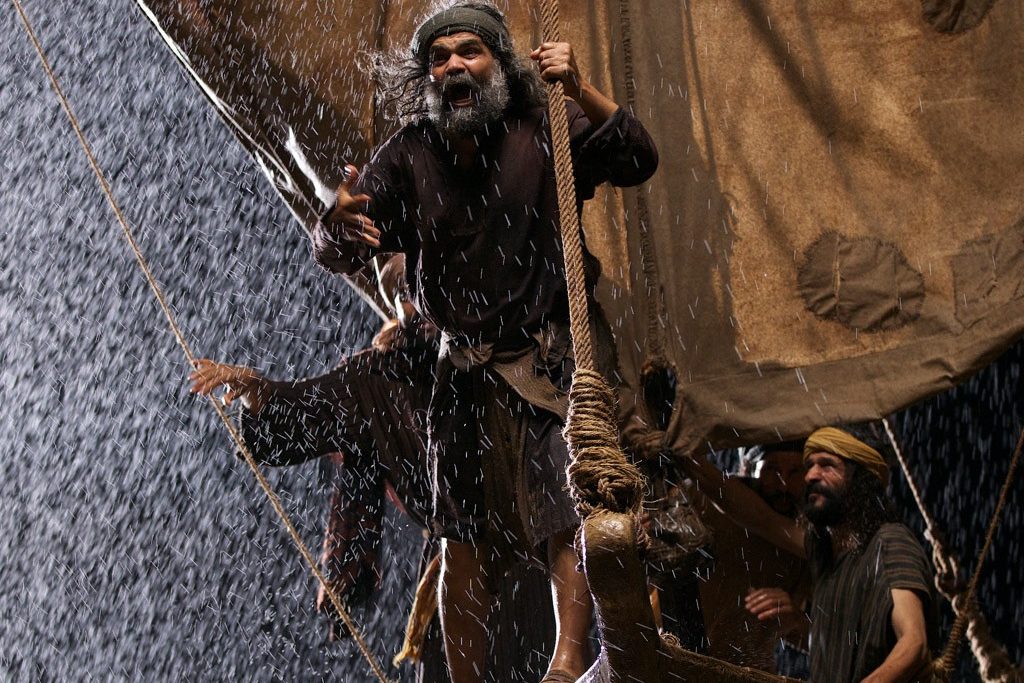
“But when he saw the strong wind and the waves, he was terrified and began to sink. ‘Save me, Lord!’ he shouted. Jesus immediately reached out and grabbed him. ‘You have so little faith,’ Jesus said. ‘Why did you doubt me?’” Matthew 14:30-31
FreeBibleimages.org
‘Just have faith’ is an expression we have all heard and spoken at one time or another. Although meant well, it does not carry the true sentiment of having true faith most of the time. The writer of the New Testament book of Hebrews says, “Faith shows the reality of what we hope for; it is the evidence of things we cannot see.” (Heb.11:1 nlt) True faith does not waver if we believe it. If faith is proof of the reality of the evidence we cannot see how can we deny the evidence? The evidence can be translated as ‘divine assurance.’
We have this gift of divine assurance from the Lord, yet all of us have wavered in our faith. Claiming faith in God to help us in a dire situation sees us through dark times, but before we know it we begin to have doubts and our faith wavers. We had the courage to step out in faith through the Lord’s leading but didn’t rest on that faith as troubling times continued. One major reason is we let our eyes wonder around our circumstances by not remaining focused on God and our faith wavers.
The Lord gives us the perfect example of this in His Word with the apostle Peter. Just think of the courage and faith it took Peter to step out of that boat in the middle a dark stormy night with the billowing waves around them. We sometimes forget about the great faith it took. Peter had divine assurance Jesus was leading him and watching over him. But then it happened, Peter’s faith wavered. Yes, because of the billowing waves around him.
The waves in the storms of life will have the same effect on us today. We will see the trouble around us in the corner of our eye but if remain focused on God our faith will not waver. If you had faith to get out of the boat then that same faith will not waver as the Lord sees you through it. Remain focused on God’s ‘divine assurance.’
‘“Yes, come,’ Jesus said. So Peter went over the side of the boat and walked on the water toward Jesus. But when he saw the strong wind and the waves, he was terrified and began to sink. ‘Save me, Lord!’ he shouted. Jesus immediately reached out and grabbed him. ‘You have so little faith,’ Jesus said. ‘Why did you doubt me?’” Matthew 14:29-31 NLT
There are many who have heard the story of Jesus walking on the water. Some even comment to their own frailty when praise by others by saying, ‘I don’t walk on water.’ But how many of us forget that a mere human did walk on water. He was Peter, one of Jesus’ disciples. This, of course, did not come about by Peter’s fishing skills, but by the supernatural power of Jesus as Peter put his faith in Him.
The occasion was a stormy night in which the disciples were sent ahead by Jesus to the other side of the lake as He took time to pray by Himself up in the hill country. Scripture says the disciples were in trouble fighting the waves from the fierce winds. At about three o’clock in the morning, Jesus came walking to them on the sea. Calming their fears from the wind and waves, and the fact that they thought he was a ghost, Jesus said to them, “Don’t be afraid, Take courage. I am here!” Peter then displayed a tremendous amount of faith in asking Jesus if he could join him by walking to Him on the water. Jesus granted his request and if you know the rest of the story, Peter walked on the water, but he did not get very far.
Have you ever stepped out in faith by asking the Lord to open a door for you and he opens it, you go through it, but you do not get very far? Peter asked in faith to walk on water despite the effects of the wind and waves due to his great faith in Jesus. But once out on the water, Peter panicked after seeing his surroundings forgetting that Jesus was right in front of him, and he began to sink. Of course, Jesus did not let him sink, but did rebuke him by saying, ‘You have so little faith, Why did you doubt me?’ Peter’s doubt resulted from having an imperfect faith.
Our Lord wants to do remarkable things through us. If He has put a desire in your heart, push that desire through by taking a risk in faith. Once out on the water with all its effects continue moving forward with Jesus as your guide and you will accomplish what He has planned for you.
“This is my command—be strong and courageous! Do not be afraid or discouraged. For the LORD, your God is with you wherever you go.” Joshua 1:9 NLT
This week we come to the end of our study of Abraham in Sunday’s Biblical Insights. This man of great faith gave us much to admire and many examples to follow both good and bad. Although Abraham was a great man, he was also human and needed God in his life to direct him in all that God wanted him to do. Abraham was chosen by God to leave his family and homeland to a land God promised to give him and his descendants. Abraham would become the father of the Jewish people. So, Abraham set out for the Promised Land with his wife Sarai and his nephew Lot. That, indeed, took a lot of faith.
As we noted in our study, Abraham was not only the father of Jews but is known as the father of all who believe. Abraham received the good news that salvation for all would come through him. The Lord told Abraham in Genesis chapter 12, “All the families on earth will be blessed through you.” (Gen.12:3 nlt) Jesus Christ, the Messiah, came through Abraham’s seed. God’s salvation for sinners came through Abraham. The gospel of Matthew in the New Testament begins with the words, “This is a record of the ancestors of Jesus the Messiah, a descendant of David and of Abraham.” (Mt.1:1 nlt)
Last week we witnessed Abraham’s ultimate test of faith. God had told him to kill and sacrifice his son Issac on Mount Moriah. This great man of faith didn’t waver, at least not by an outward appearance that we can see, but proceeded with faith that God would raise him up from the dead or provide a substitute for his son. In this scene we discovered a foreshadowing of Jesus’ crucifixion in Issac’s willingness and the Lord supplying a substitute. A sacrifice was needed for our sin and God provided a substitute for all who believe in His name, Jesus Christ, God the Son.
Of everything we covered in our study of Abraham, this is the most important connection to your life that you can make. Abraham makes a wonderful story. It is God’s story of redeeming mankind through the seed of one man He chose to become the father of the Jewish people. From the line of King David of the tribe of Judah, the Messiah, Jesus Christ, the savior of the world, was born. All you need to do is have the faith to believe it. “God saved you by his grace when you believed. And you can’t take credit for this; it is a gift from God.” (Eph.2:8 nlt)
‘“God will provide a sheep for the burnt offering, my son,’ Abraham answered. And they both walked on together.” Genesis 22:8 NLT
FreeBibleimages.org
We do not know how much time had lapsed from last weeks story of Abraham’s and King Abimelech’s agreement with each other. Notably it is at least a few years. Chapter 22 begins with the words, ‘Some time later.’ Abraham is well over one-hundred years old and his son Issac could now be in his late teens or early twenties. Abraham had been faithful in believing God’s promise to him concerning the Promised Land and the many descendants he will have that will begin with his son Issac. That is why the events in this chapter can only be considered as an ultimate test of faith for Abraham. Let’s begin.
“Some time later, God tested Abraham’s faith. ‘Abraham!’ God called. ‘Yes,’ he replied. ‘Here I am.’” (Gen.22:1 nlt) Here again we see Abraham’s willingness to hear and respond to whatever God asks of him. What Abraham heard was the last thing he thought he would ever hear. “Take your son, your only son—yes, Isaac, whom you love so much—and go to the land of Moriah. Go and sacrifice him as a burnt offering on one of the mountains, which I will show you.” (Gen.22:2 nlt) The Lord is testing Abraham’s love for Him over Issac. Notice the progression for effect when God says, ‘your son, your only son—yes, Isaac, whom you love so much.’ This is not going to be easy. A father’s love for his son is emphasized as is only natural. This is also the first time the word ‘love’ is used in Scripture and it is used here in this text. This portion of Scripture is a foreshadowing in several ways of Jesus’ sacrifice for us on the cross at Calvary. First we note God’s love for His Son as noted at Jesus’ transfiguration, “But even as he spoke, a bright cloud overshadowed them, and a voice from the cloud said, ‘This is my dearly loved Son, who brings me great joy. Listen to him.’” (Mt.17:5) God the Father loved Jesus as much as Abraham loved Issac.
Abraham wasn’t hesitant, as was his mode of operation, but prepared to set out the next day. He chopped the wood and saddled his horse which he could have had his servants do, but Abraham chose to do it himself. Abraham took two of his servants with him on this three-day journey to Moriah. The land of Moriah is the Jerusalem area. Mount Moriah is where Solomon’s Temple was built and the present-day Temple Mount is occupied by the Muslim Dome of the Rock. Abraham had plenty of time to digest and reflect on God’s instructions for him. I am sure he did not understand it but he knew God was faithful and always kept His promises. The Lord often tests us through adversity and hardships, although not in the same sense as Abraham, but He knows what is best and is looking for us to trust Him when those days come upon us.
As they arrived near the place Abraham said to his servants, “Stay here with the donkey…..The boy and I will travel a little farther. We will worship there, and then we will come right back.” (Gen.22:5 nlt) Abraham did not know what was ahead of him, but what he did know was that both he and Issac would be coming back after worshiping the Lord. Another first is found here as it is the first mention of the word worship in the Bible. Abraham must have had it in his mind and had the faith that God was able to raise Issac from the dead or that God would provide a substitute for Issac. With that, Abraham placed the wood on Issac’s shoulders, he took the fire and knife and the two walked together the rest of the way.
Along the walk as they came closer to the site something occurred to Issac. “Isaac turned to Abraham and said, ‘Father?’ ‘Yes, my son?’ Abraham replied. ‘We have the fire and the wood,’ the boy said, ‘but where is the sheep for the burnt offering?’” (Gen.22:7 nlt) Again, Abraham does not hesitant even though he is not sure how God will act says, “God will provide a sheep for the burnt offering, my son,” (Gen.22:8 nlt) Upon arrival the Bible says Abraham built an altar, he arranged the wood, tied his son and laid him on top of the wood.
FreeBibleimages.org
Abraham’s faith is on full display but let us not overlook Issac’s faith. Seeing Abraham’s faith led Issac to have great faith in his father and in the Lord God. Issac did not seemed to resist. He certainly could have overpowered the aging Abraham. But he did not, and willing submitted to his father Abraham. Here is another foreshadowing of Christ’s sacrifice in this passage. Jesus willing laid down His life for us. Issac is seen as a prefiguration of Christ. “And Abraham picked up the knife to kill his son as a sacrifice. At that moment, the angel of the LORD called to him from heaven, ‘Abraham! Abraham!’ ‘Yes,’ Abraham replied. ‘Here I am!’ (Gen.22:10-11 nlt) The Lord was about to provide a substitute.
Abraham passed the test. He proved his faith through obedience and trusting in God to keep His promises. “Then Abraham looked up and saw a ram caught by its horns in a thicket. So he took the ram and sacrificed it as a burnt offering in place of his son.” (Gen.22:13 nlt) Another first here is the first mention of a sacrifice substitution of one life for another. God still required the sacrifice, but a substitute was needed. He supplied a ram for Issac. A sacrifice was needed for our sin and God provided a substitute for all who believe in His name, Jesus, God the Son. Abraham then called the place ‘Yahweh-Yireh’ (which means “the LORD will provide”) Yes, the Lord will provide.
tim ildsmith on unsplash
“For this is how God loved the world: He gave his one and only Son, so that everyone who believes in him will not perish but have eternal life.” (Jn.3:16 nlt)
“This is my covenant with you: I will make you the father of a multitude of nations! What’s more, I am changing your name. It will no longer be Abram. Instead, you will be called Abraham, for you will be the father of many nations.” Genesis 17:4-5 NLT
FreeBibleimages.org
Your name is significant. It identifies you. It may have a special meaning or be in honor of one of your parents or someone nestled in your family tree. Overall it is unique to you even if others have the same name. There is a purpose for it, and that purpose is you, it is your name. Imagine having your name changed at age ninety-nine. Imagine living until age ninety-nine. Abram was quite alive when he was ninety-nine years old and he had his name change by the Lord God. There was a special purpose for it, Abram was about to Abraham, the father of many nations.
“When Abram was ninety-nine years old, the LORD appeared to him and said, ‘I am El-Shaddai—‘God Almighty.’ Serve me faithfully and live a blameless life.’ (Gen.17:1 nlt) It had been thirteen years since Ishmael was born, Sarai’s and Abram’s plan to have a child through Hagar, Sarai’s servant. Abram was commanded to live a blameless life by the Lord ‘El-Shaddai’ which means ‘God almighty, nothing is impossible with God.’ Abram must respond in obedience to receive God’s promises for him. Abram fell down to the ground as the Lord spoke to him about the covenant He would make with him.
The Lord God told Abram He was going to make him the father of many nations. He then said to Abram that his name would change from Abram (Exalted Father) to Abraham meaning (father of many nations). God promised that Abraham’s descendants would be fruitful and become many nations with many kings. This covenant would be an everlasting covenant lasting throughout the generations and the Lord promised He will always be his God and the God of his future descendants.
God also said, “And I will give the entire land of Canaan, where you now live as a foreigner, to you and your descendants. It will be their possession forever.” (Gen.17:8 nlt) The Lord includes the earlier covenant He made with Abram in chapter 15 here in chapter 17. The Lord promised the land where Abram was standing would be his descendants forever. Abram was to walk through it and claim it. This everlasting covenant is still in effect today and beyond. It does not end. The Lord God has promised that land to Israel.
Abraham had one responsibility in this covenant along with all his future descendants and that was to conduct the sign of the covenant, circumcision. “From generation to generation, every male child must be circumcised on the eighth day after his birth. This applies not only to members of your family but also to the servants born in your household and the foreign-born servants whom you have purchased. All must be circumcised. Your bodies will bear the mark of my everlasting covenant.” (Gen.17:12-13 nlt) Circumcision was common in Abram’s day. It was carried out by various people groups. The most common reason was for hygienic purposes. Here God uses it as a symbol of cutting away sin and being cleansed, and it served as signifying consecration to the Lord.
FreeBibleimages.org
Sarai also gets a new name. “Then God said to Abraham, ‘Regarding Sarai, your wife—her name will no longer be Sarai. From now on her name will be Sarah.” (Gen.17:15 nlt) Both Sarai and Sarah mean ‘princess’ although ‘Sarai’ includes ‘my princess.’ This name change would emphasize Sarah would be the mother of many nations as Abraham’s wife, for she will bear a child to him and serve God’s purposes. “And I will bless her and give you a son from her! Yes, I will bless her richly, and she will become the mother of many nations. Kings of nations will be among her descendants.” (Gen.17:16 nlt) Abraham could not believe what he heard and laughed to himself, after all he would be one hundred years old and Sarah ninety.
Abraham seeks a simpler solution that is right in front of him again. He once again asks God for Ishmael serve as his heir. But again God says ‘No!’ Sarah will have a son and you will name him Issac, meaning ‘he laughs.’ Abraham did laugh, if only to himself. God said that He will confirm His covenant with Issac and his descendants for he is the covenant child of promise, not Ishmael. But God does indeed bless Ishmael and his descendants. Abraham will be the father of many nations and Ishmael descendants will help fulfill that promise. The Lord God said, “As for Ishmael, I will bless him also, just as you have asked. I will make him extremely fruitful and multiply his descendants. He will become the father of twelve princes, and I will make him a great nation.” (Gen.17:20 nlt)
On that very day when the Lord left Abraham he immediately obeyed God by fulfilling his responsibility by circumcising his son Ishmael and all the male servants in his household. “Both Abraham and his son, Ishmael, were circumcised on that same day, along with all the other men and boys of the household, whether they were born there or bought as servants. All were circumcised with him.” (Gen.17:26-27 nlt) Abraham obeyed God. He did not delay by thinking about it. He had faith that God would do what he had promised even though it may seem impossible. Abraham’s faith is an example for all of us. May Abraham’s faith be contagious to us in our day to catch his faith through the help of the Holy Spirit because El-Shaddai is God Almighty wherein nothing is impossible.
“Then the LORD took Abram outside and said to him, ‘Look up into the sky and count the stars if you can. That’s how many descendants you will have!’ So the LORD made a covenant with Abram that day and said, ‘I have given this land to your descendants, all the way from the border of Egypt to the great Euphrates River.’” Genesis 15:5, 18 NLT
FreeBibleimages.org
Last week in Sunday’s Biblical Insights Abram is visited by the king of Salem, Melchizedek. The king brought a large meal for Abram and his men after their victory over the kings of the north. Melchizedek blessed Abram and he blessed God. Abram gave a gift of one-tenth of all the spoils to the Lord and His servant, Melchizedek. The king of Sodom was present and offered Abram all the goods that were returned to Sodom. Abram in his generosity did not want a thing, only what his men and his allies where entitled to. He would take nothing for himself.
This week in chapter 15, God renews His promise to Abram with a covenant. Chapter 15 opens with God telling Abram in a vision not to be afraid because He is Abram’s protector. Abram may have been afraid of retaliation from the four kings and their armies he had just defeated. Abram may also have had something else on his mind. He said in reply, “O Sovereign LORD, what good are all your blessings when I don’t even have a son? Since you’ve given me no children, Eliezer of Damascus, a servant in my household, will inherit all my wealth.” (Gen.15:2 nlt) Abram was concerned that he still had no children and he wasn’t getting any younger. He suggested to God that his servant Eliezar could be his heir. The custom in Abram’s day was that if a couple was childless they could adopt one the servants to be the heir. Abram was asking permission to do so.
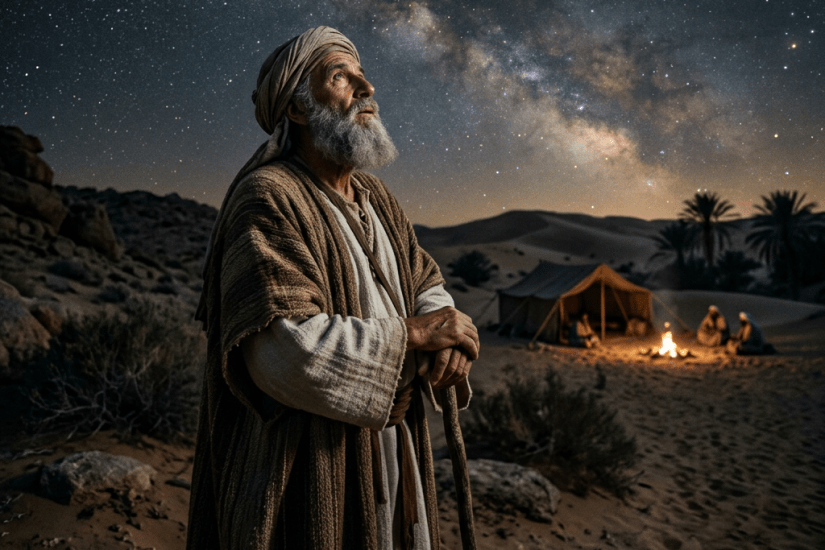
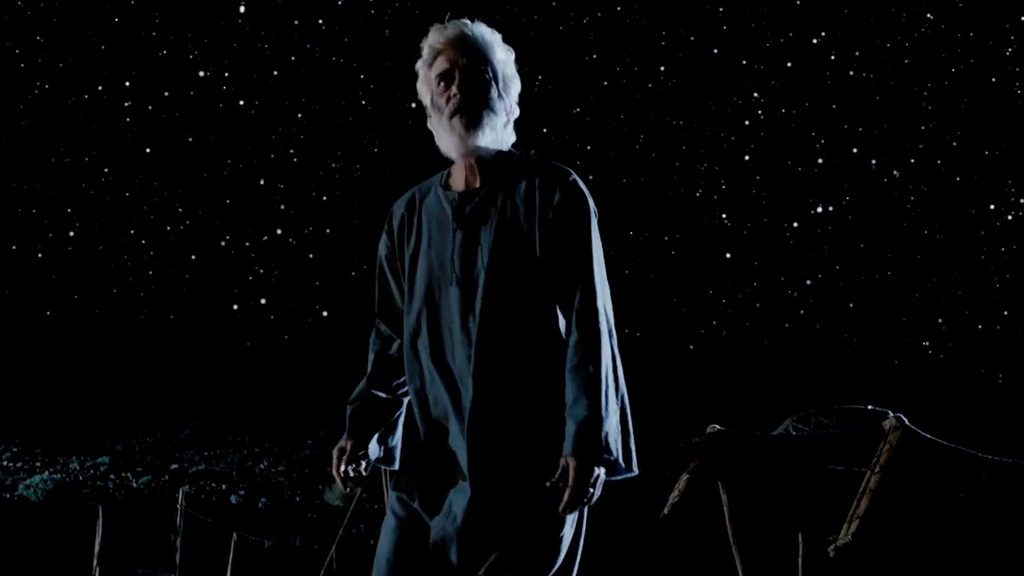
The Lord said no to Abram’s request. He had other plans. Abram and Sarai would have a son, yes, in their old age. God then directed Abram outside and said, “Look up into the sky and count the stars if you can. That’s how many descendants you will have!” (Gen.15:5 nlt) In ancient Palestine more than 8,000 stars were visible in the dark sky of a Near Eastern night. The enormous amount of stars in the sky was God’s illustration of the promise to come. Abram believed God and it was counted to him as righteousness. This is the first time ‘believe’ and ‘righteousness’ are used in the Bible. This is the core foundation of justification by faith. Abram believed God. When one believes God and His plan for salvation without any works involved on our own, it is counted to us as righteousness. God sees Jesus’ righteousness in us as we accept Him as Lord and savior.
Abram believed God and asked how he could be sure of His promises. He asked in faith believing, not suspecting if God’s promises were true. God is going to confirm His promises to Abram with a covenant, a legal binding agreement with a formal expression of intent. “The LORD told him, ‘Bring me a three-year-old heifer, a three-year-old female goat, a three-year-old ram, a turtledove, and a young pigeon.’” (Gen.15:9 nlt) Abram was to gather these animals suitable for sacrifice. Three years old was the prime age for animal sacrifices. A serious covenant is sealed with blood. Abram then cut the animals in half, but not the birds, laying their pieces side by side. The idea is walking through the two halves seals the covenant by saying if I break it, may the same thing be done to me.
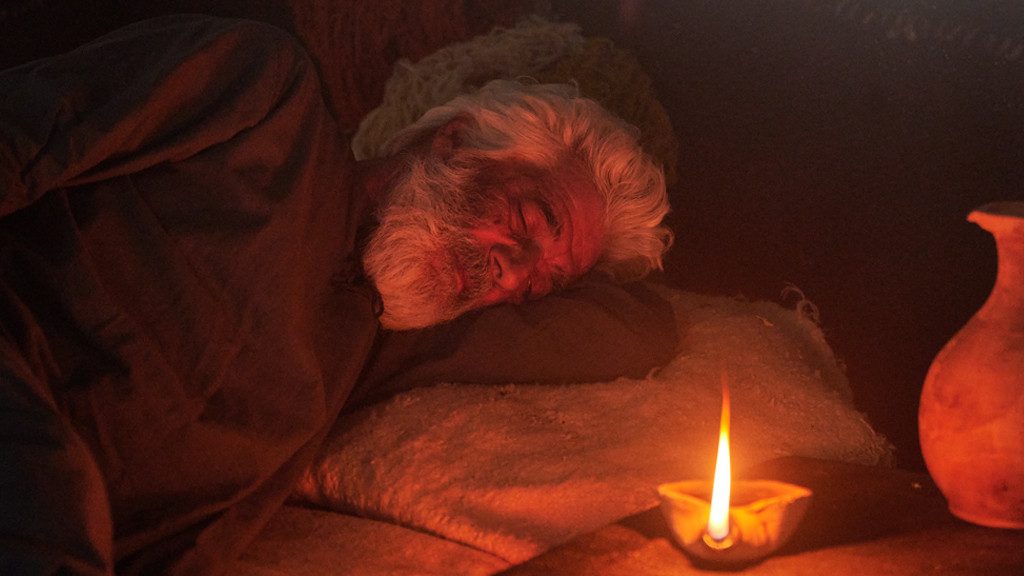
“As the sun was going down, Abram fell into a deep sleep, and a terrifying darkness came down over him.” (Gen.15:12 nlt) God caused a deep sleep to come over Abram. Abram did not need to walk through the pieces. The ratifying of the covenant did not depend on him, but on God. Our salvation does not depend on us, but on God. The Lord gives Abram a preview of his descendants before they enter the Promised Land. “Then the LORD said to Abram, ‘You can be sure that your descendants will be strangers in a foreign land, where they will be oppressed as slaves for 400 years. But I will punish the nation that enslaves them, and in the end they will come away with great wealth. After four generations your descendants will return here to this land.’” (Gen.15:13-14, 16 nlt) The Lord is assuring Abram his descendants will occupy the land as promised.
FreeBibleimages.org
“After the sun went down and darkness fell, Abram saw a smoking firepot and a flaming torch pass between the halves of the carcasses.” (Gen.15:17 nlt) The Lord God passed through the pieces represented by the smoking firepot and a flaming torch. In ancient times this solemnized a covenant. It was only necessary for God to pass through the pieces. This covenant is God’s alone. It cannot fail because God does not fail. The Lord God keeps His promises. “So the LORD made a covenant with Abram that day and said, ‘I have given this land to your descendants, all the way from the border of Egypt to the great Euphrates River.’” (Gen.15:18 nlt) The Lord gives Abram the specific boundaries of the land and the current occupants as a definite acquisition, it will happen. The children of Israel did move into the Promised Land, but they have not possessed its entirety to this day. But God’s promise to Abram still stands. Israel will possess all the land promised them when Christ returns to rule from Jerusalem. Our Lord keeps His promises.
“Melchizedek blessed Abram with this blessing: ‘Blessed be Abram by God Most High, Creator of heaven and earth. And blessed be God Most High, who has defeated your enemies for you.’” Genesis 14:19-20 NLT
Abram had won a battle over the four kings from the north who had taken his nephew Lot and his family captive and stolen all his belongings. Lot, as we reviewed last week, was in the wrong place at the wrong time. His desire to live the good life caused him to compromise his values and eventually settled for life in the sin-city of Sodom. The king of Sodom along with the kings of Gomorrah, Admah, Zeboiim, and Zoar, were about to be attacked by the kings of the north, and Lot was a sitting duck. Abram stepped in with his trained men and rescued Lot and the city of Sodom. Afterward, the king of Sodom set out to meet Abram to show him his appreciation.
The liberated “king of Sodom went out to meet him in the valley of Shaveh (that is, the King’s Valley).” (Gen.14:17 nlt) This valley was one of the several valleys near Jerusalem, named Salem in ancient times. Possibly this could have been the ‘Kidron Valley.’ Abram and the king of Sodom are met by a historical figure, Melchizedek, a priest and king of Salem. “And Melchizedek, the king of Salem and a priest of God Most High, brought Abram some bread and wine.” (Gen.14:18 nlt) Melchizedek’s name means ‘king of righteousness’ or ‘righteous king.’ Being a priest and a king, many biblical scholars identify him as a ‘type of Christ’ figure. David writes in the book of Psalms concerning the coming Messiah, “The LORD said to my Lord, ‘Sit in the place of honor at my right hand until I humble your enemies, making them a footstool under your feet.’ The LORD has taken an oath and will not break his vow: ‘You are a priest forever in the order of Melchizedek.’” (Ps.110:1, 4 nlt)
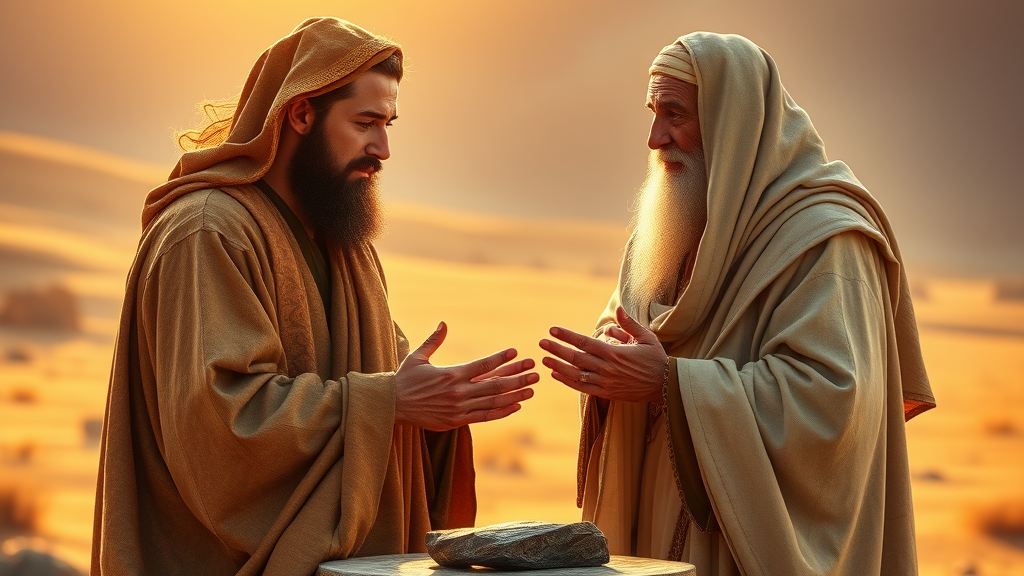
This priest and king, Melchizedek, brought food for Abram and his men. This was more than bread and wine but signifies a large meal or a banquet in recognition of their victory over their enemies. It was also a symbol of friendship and hospitality. Scripture doesn’t provide us much background about Melchizedek other than he was a worshiper of the true God. His references to God as ‘God most high’ and ‘creator of heaven and earth’ points us in that direction of Melchizedek’s faith and knowledge of the Lord God. This kingly priest did two things, he blessed Abram and he blessed God. “Melchizedek blessed Abram with this blessing: ‘Blessed be Abram by God Most High, Creator of heaven and earth. And blessed be God Most High, who has defeated your enemies for you.’” (Gen.14:19-20 nlt) Melchizedek gives all the credit for Abram’s victory to God. Abram also is aware the victory came from the Lord God. Abram gave a tenth of the spoils to the Lord and his servant Melchizedek in gratitude for Lord’s victory.
The king of Sodom now makes an offer to Abram for his returning the people and goods of his city, Sodom. The king only wants his people back and Abram can keep all the goods. “Abram replied to the king of Sodom, ‘I solemnly swear to the LORD, God Most High, Creator of heaven and earth, that I will not take so much as a single thread or sandal thong from what belongs to you. Otherwise you might say, I am the one who made Abram rich.’” (Gen.14:22-23 nlt) Abram was careful not to allow himself to be obligated to anyone but the Lord. How tempting that must have been to not take advantage of what some might say was certainly deserved. Abram made it an oath not to accept anything. Accepting this offer would have negative results for Abram. People would be able to say that part of Abram’s wealth came from the king of Sodom. The king of Sodom may see it as an opportunity to lord himself over Abram. Abram did not go into this battle for personal gain, but to rescue his family. Accepting the offer would also show a lack of trust in God to supply his needs and finally Abram wanted no part of the king of Sodom and his wicked city.
tim-wildsmith-telGnqCOCnc-unsplash
Abram’s faith in God and his godly character is shown at the end of chapter 14 as he requests to receive only what his men had already eaten and for his allies to share the spoils among themselves. Abram looked out for the men who serve him and for those who aligned with him in this battle. This man of faith was also a man of fairness and generosity.
Next week, the Lord’s covenant promise to Abram…………
“Lot took a long look at the fertile plains of the Jordan Valley in the direction of Zoar. The whole area was well watered everywhere, like the garden of the LORD or the beautiful land of Egypt.” Genesis 13:10 NLT
This week in Biblical Insights Abram is leaving Egypt with his tail between his legs after being called out by Pharoah for his deception. It was a mistake going down to Egypt in the first place failing to trust God in caring for them during the famine. But he is on his way now traveling north into the Negev on their way to the region of Bethel and Ai. Abram left Egypt a lot more prosperous than when he entered. The Lord had blessed Abram in spite of his sin. Pharoah gave Abram much livestock and servants in addition to what he already had. “So Abram left Egypt and traveled north into the Negev, along with his wife and Lot and all that they owned. (Abram was very rich in livestock, silver, and gold.)” (Gen.13:1-2 nlt)
Abram went back to Bethel and worshiped the Lord at the altar he made at his first visit when entering Canaan. Abram got back to business with God. Realizing God’s mercy and blessings towards him when he failed the Lord, Abram went to the nearest place he had set up an altar and worshiped God.
Lot, Abram’s nephew, was traveling with him. Lot had also become very wealthy with flocks of sheep and goats, herds of cattle, and many servants. Wealth in ancient Palestine was measured in the number of livestock, servants and jewels one possessed. Both Abram and Lot had plenty. This created a problem for the both of them. It’s hard to comprehend how blessings from God could be the cause of a problem. We accept these problems noting it is a good problem to have. A young family have God’s blessings of more children and soon find themselves needing to move into a bigger place. A good problem to have.
Abram and Lot found themselves having ‘a good problem to have.’ The region could not supply the sufficient needs for all of the livestock of both Abram and Lot. The land did not have enough water or pastured land. “So disputes broke out between the herdsmen of Abram and Lot. (At that time Canaanites and Perizzites were also living in the land.)” (Gen.13:7 nlt) It is also noted that rural dwellers were living there as well. On a side note, it should be mentioned besides this problem being caused by God’s blessing both of them, it should be noted that Abram was instructed to leave his family in Ur and go to the place where God would lead him. If Lot was not with him, there would be no problem. Sometimes the smallest miscue in obeying God even with the best of intentions surface later in ways we never thought of. It’s always better to obey God completely, 100%.
Abram knew this issue needed to be resolved. “Finally Abram said to Lot, ‘Let’s not allow this conflict to come between us or our herdsmen. After all, we are close relatives!’” (Gen.13:8 nlt) It wasn’t good for families to be fighting with each other and not a good look for those who were representing the Holy God the creator of all things.
It seems the decision to separate is a wise one and there is no dispute. The decision as to who goes in what direction is now to be decided. Abram, although the elder, shows kindness to Lot in letting him choose first. Whichever direction Lot chooses Abram will go in the opposite direction. Abram was growing in faith and relying on God and not his own decisions. His experience in Egypt had an effect on him. Abram is finding faith in God’s sovereignty and trusting Him. He knows in whatever direction he goes the Lord will be with him and bless him. Not so with Lot. Abram took off his self-centeredness and Lot put his on.
“Lot took a long look at the fertile plains of the Jordan Valley in the direction of Zoar. The whole area was well watered everywhere, like the garden of the LORD or the beautiful land of Egypt.” (Gen.13:10 nlt) Lot took a long look. There is always danger in taking a long look. Some will disagree saying you need to be careful and sure to make a wise decision and that is true. But what captivates you in that first look? Do you ever get past the surface and consider what is underneath? Lot based his decision on what his eyes told him. He saw the green lush vegetation of the fertile fields in the Jordan Valley. There was an irrigation system in place, even in that day, from the Jordan river. Lot knew this was a prize pic. He chose the land towards the east in the Jordan Valley at the edge of the Promised Land. His decision was a wise one in business terms and in a worldly point of view. Lot was more than content with his newfound territory and moved on away from Abram with his possessions, but it would turn out to be a disastrous decision.
Abram settled to the west in the land Canaan and Lot settled around the city of Sodom. Abram walked by faith; Lot walked only by sight. Lot allowed his long look to dictate his future. Abram let his growing faith in God decide his future. Sodom was an evil and sinful city. Lot was putting himself and his family in harm’s way to satisfy his selfish desires. When our selfish desires put us in a bad spot it will have the same effect on those closest to us and not only ourselves. Having Abram’s growing faith will have the opposite effect on each of us. Shortening that long look and putting our faith in God will help us to make the right decisions.
Next week we’ll begin to see some of Lot’s troubles as a result of his long look……
“But the LORD sent terrible plagues upon Pharaoh and his household because of Sarai, Abram’s wife. So Pharaoh summoned Abram and accused him sharply. ‘What have you done to me?’ he demanded. ‘Why didn’t you tell me she was your wife?’” Genesis 12:17-18 NLT
The first two weeks in our story of Abraham we saw Abram, who later became Abraham, as a man of great faith and the father of all who believe. He left all that was familiar to him, his home, friends, and family to go where God called him. This took great faith as we learned last week. Unfortunately Abram paused his journey along the way and settled in Haran for a period of time. Although Abram was called of God, he was not perfect and wasn’t chosen because he was perfect. He eventually moved on after God’s repeated the call to him. Abram made it to the Promised Land and built an altar to the Lord when arriving in Shechem. This week Abram’s frailty leads him through a detour into Egypt.
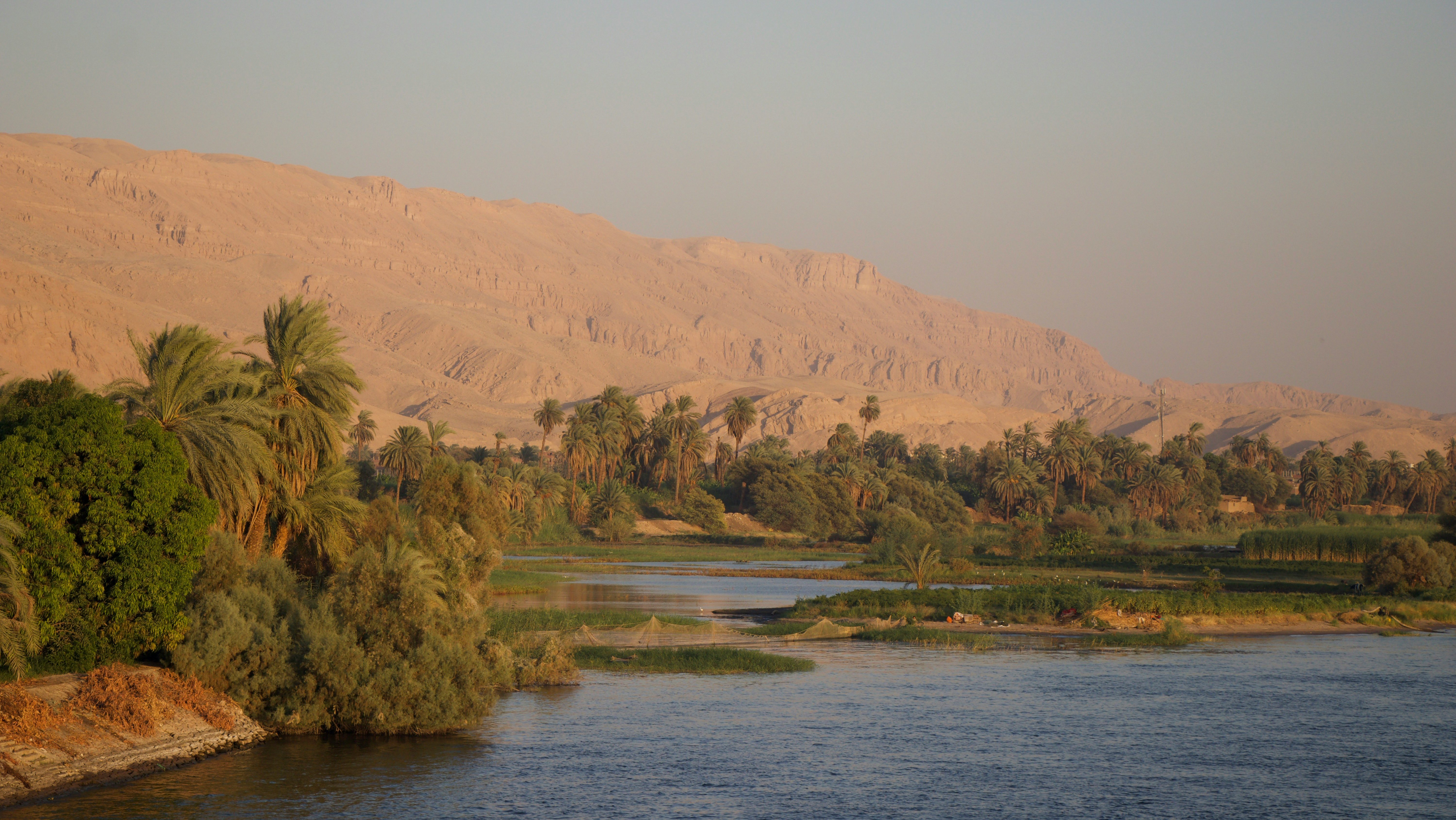
The land of Canaan was suffering from severe famine. The Palestine region in ancient times often experienced famines. Abram decided to journey down to Egypt on his own under no divine guidance from God. Egypt fared well during periods of famine. It had an abundant supply of food available from the water source of the Nile River. Abram took his wife Sarai and all who were with him down into Egypt. He may not have planned to stay long, but it turned out to be long enough to bring shame on God’s chosen vessel.
As Abram nears Egypt he says to Sarai his wife, “Look, you are a very beautiful woman. When the Egyptians see you, they will say, ‘This is his wife. Let’s kill him; then we can have her!’” (Gen.12:11-12 nlt) Abram was right in his assessment that Pharaoh would take beautiful women to be part of his Harem. He was also right in that they would kill him to take his wife. The Egyptians respected marriage but had an unusual way to show it, especially the Pharaohs. Pharaoh would have the wife of the husband killed first before he took her for his Harem. Abram, of course, didn’t want this to happen so he devised a plan, again not under God’s guidance. Abram said to Sarai, “ So please tell them you are my sister. Then they will spare my life and treat me well because of their interest in you.” (Gen.12:13 nlt) Abram’s fear, and really his lack of faith at this point, caused him to deceive the Egyptians into thinking Saria was his sister. It worked, and they took her.
Abram’s scheme was a half-truth, or we could call it a half-lie, and a half-lie is really a lie. Abram’s reasoning was to deceive and that is what he did. He failed to trust in the Lord who was leading him and would protect him. He was thinking more of himself than any thought he had for his wife. But despite Abram’s failure here, the Lord is going to watch out for Sarai and protect her. “And sure enough, when Abram arrived in Egypt, everyone noticed Sarai’s beauty. When the palace officials saw her, they sang her praises to Pharaoh, their king, and Sarai was taken into his palace.” (Gen.12:14-15 nlt)
The irony of this story is that Abram is rewarded by Pharoah for taking his sister. “Then Pharaoh gave Abram many gifts because of her—sheep, goats, cattle, male and female donkeys, male and female servants, and camels.” (Gen.12:16 nlt) Abram was right, Pharaoh did treat him well. Having livestock and servants were a indication of wealth in those days, and Abram was paid handsomely.
But as we noted, the Lord protected Sarai. He sent plagues upon Pharoah and his household. Scripture does not tell us the nature of these plagues, but they were severe enough for Pharoah to summon Abram. Some commentators speculate that Pharoah’s illness kept him from defiling Sarai. We do know from Scripture that no mention is given of Sarai being intimate with Pharaoh. We also know from history that a four-month purification process was in place for new brides before they were received into Pharoah’s Harem. God’s hand was at work in protecting Sarai.
Pharoah sharply accused Abram of deception. He came to know Sarai was his wife and these plagues were the proof of it. Pharoah ordered Abram to get out of Egypt and even had his men escort him out to make sure he left. Abram was exposed as a liar. The Egyptians with their many faults were still a society that valued truthfulness. This wasn’t a good look for Abram who was called by God. Abram was kicked out of Egypt in humiliation before the Egyptians and those traveling with him who knew of his call from the Lord. The Wycliffe Bible Commentary notes, “Abram’s behavior was not worthy of the majestic soul of Jehovah’s special ambassador to the nations. He would need to grow; he would need to go back to Bethel.”
Abram will grow and God will still use him. God knew of Abram’s failures before He call him out of Ur and into the Promised Land. God knows of our failures even before we do and yet He calls us just the same. The Lord will never give up on us despite our failures. We may have a rough go of it when we decide to go our own way, but the Lord will put us back on track as we trust Him and allow Him to lead us in every situation.
Next week Abram and his nephew Lot have a decision to make. Until next week trust the Lord completely even in a famine.
“The Israelites left Succoth and camped at Etham on the edge of the wilderness. The LORD went ahead of them. He guided them during the day with a pillar of cloud, and he provided light at night with a pillar of fire. This allowed them to travel by day or by night. And the LORD did not remove the pillar of cloud or pillar of fire from its place in front of the people.” Exodus 13:20-22 NLT
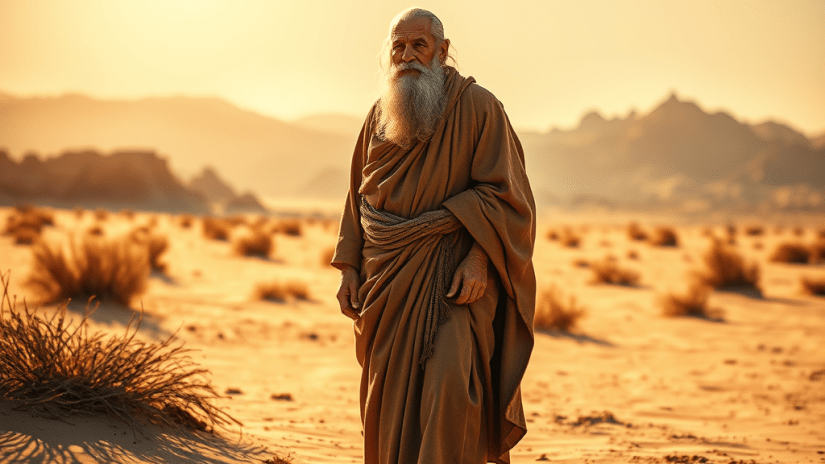
Wilderness wandering can cause you to lose focus. Managing to think and see clearly in a valley of overwhelming frustration seems impossible. All of us find ourselves in a wilderness at some point in our lives. Not only is our vision blurry, but there seems to be no exit ramp to brighter days.
The children of Israel were just released into brighter days after 400 years in bondage by the Egyptians. The Lord promised He would guide them as they moved from Succoth and on to Etham by a cloud during the day and a pillar of fire at night. After a miraculous escape through the parting of the Red Sea they found themselves on their way to Mt. Sinai. The cloud and pillar of fire never left them and soon they would need them more than ever. (Neh.9:19)
Israel soon found themselves wandering in the wilderness for 40 years after disobeying God in failing to enter the Promised Land when first presented to them. That generation would never see that exit ramp to brighter days again, but it will appear to their children. During those 40 years in the wilderness the Lord still led them and provided for them. The cloud and pillar of fire remained. The future generation saw God’s faithfulness as He led them through the wilderness and eventually into the Promised Land.
Whatever your wilderness journey is, the Lord is there to guide you through it. You may not have a physical cloud or a fire at night as Israel had, but what you have is the same assurance they had of the immediate presence of God. The Lord guided Israel into the Promised Land and He will guide you through your wilderness into the brighter days ahead.




 Word for the Soul