Bible Studies

“Introduction” Let Freedom Ring: the book of Galatians

Read: Galatians 1:1-10 NLT – Greetings from Paul – This letter is – Bible Gateway

“This letter is from Paul, an apostle. I was not appointed by any group of people or any human authority, but by Jesus Christ himself and by God the Father, who raised Jesus from the dead.” Galatians 1:1 NLT
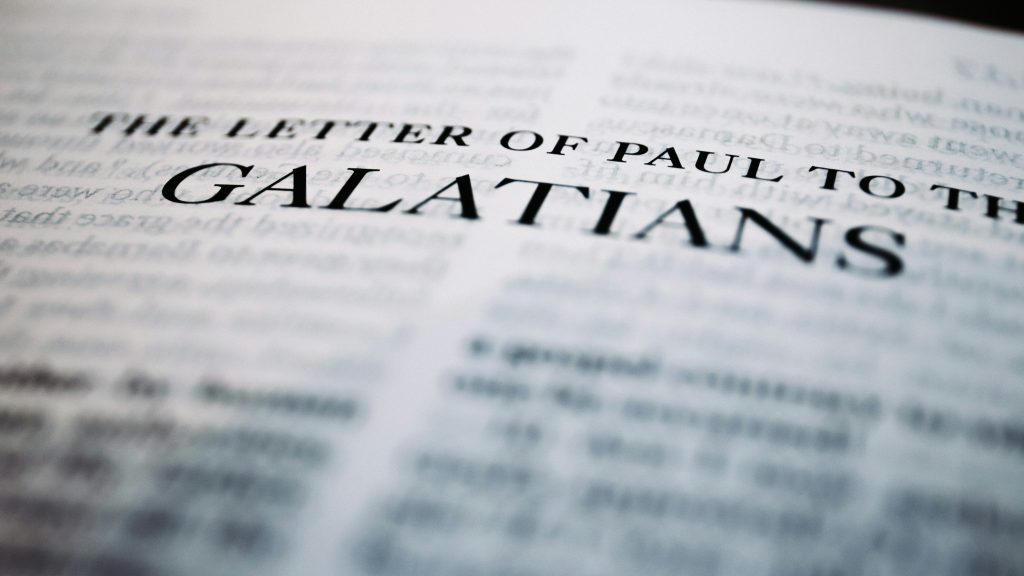
Photo by James Coleman on Unsplash

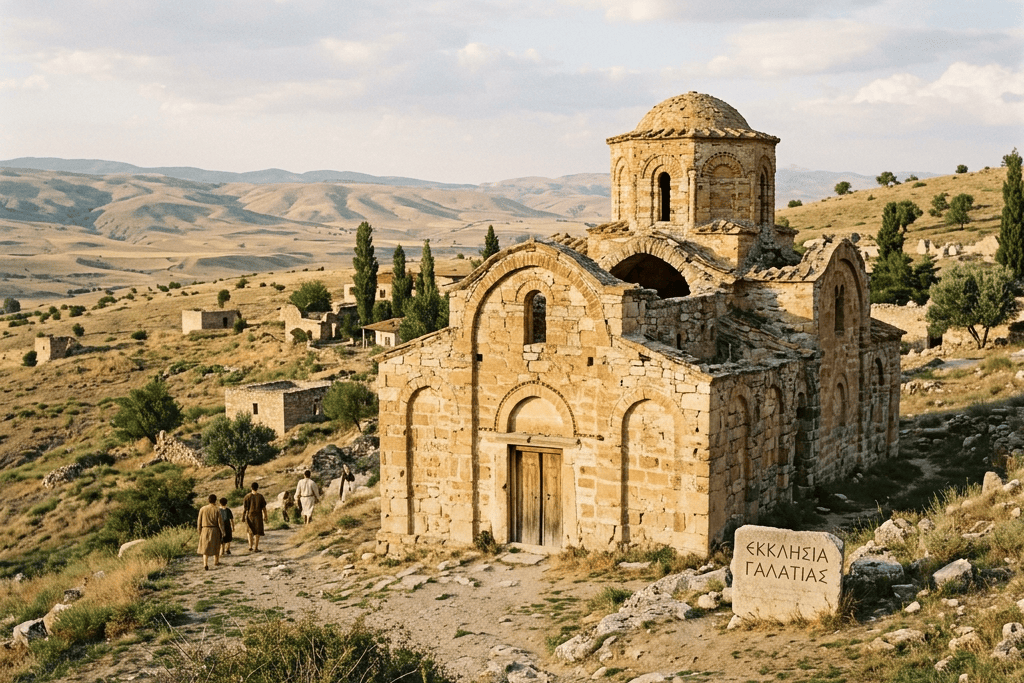
This week in Biblical Insights we begin a new series in the New Testament book of Galatians. Our opening verse tells us the apostle Paul authored this book which was actually a letter written to the churches in Galatia. These were churches Paul founded on his first missionary journey in cities throughout ancient Asia Minor. This is the only epistle Paul wrote addressing more than one city. Here he is addressing those in the Galatia region. The main theme in Paul’s letter to the Galatians is ‘justification by faith,’ which Paul preached when establishing these churches. There are no works involved for one to come to Christ but to accept His free gift of salvation. The purpose for writing to the Galatian churches was to correct false teaching that was being spread after Paul had left to continue his journey. These false teachers were agitators who did not like Paul and attacked him personally as not being qualified to preach let alone refer to himself as an apostle. They accused Paul of preaching a false gospel when he preach salvation by faith alone. The Judaizers, as they were called, were adding works and Jewish traditions to faith, and therefore distorting the gospel message of ‘salvation by grace through faith alone.’

The book of Galatians is sometimes referred to as the ‘Magna Charta of Christian Liberty’ or ‘Declaration of Independence of Christian liberty.’ Martin Luther called Galatians his ‘Catherine von Bora’ after his wife. He loved her and he loved the book of Galatians and said, “I am married to it,” as Luther was married to his wife. The central truth in the book is again, ‘man is justified by faith in Jesus Christ,’ nothing else is needed. This was the core of Luther’s ministry as well.

It was important to Paul but vital for the churches to recognize Paul’s apostleship. He claimed to be a direct appointee by Jesus Christ and God the Father. Paul’s message was serious, simple and to the point but he would speak it with authority. Paul needed to seen as a true apostle with  apostolic authority. His enemies did all they could to cast doubt on his credentials. So, Paul starts out by saying, “I was not appointed by any group of people or any human authority, but by Jesus Christ himself and by God the Father, who raised Jesus from the dead.” (Gal.1:1 nlt) Paul then gives them his greeting which will become his custom in the rest of his letters, “May God the Father and our Lord Jesus Christ give you grace and peace.” (Gal.1:2 nlt) After his initial greetings Paul jumps right into the gospel message stating Jesus gave up His life voluntarily according to Father’s plan to save us from our sins.

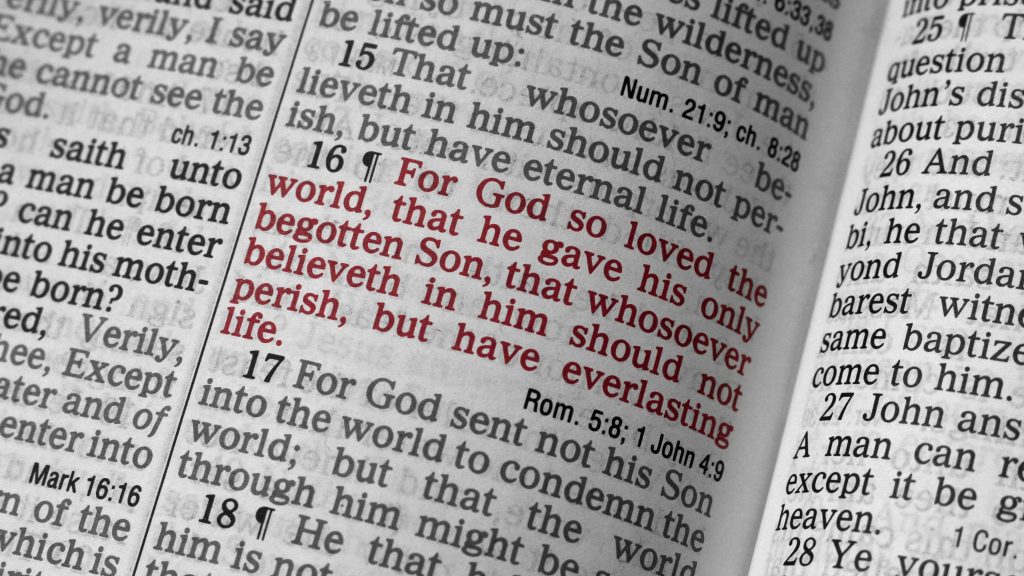
The Galatian churches started well but it wasn’t long before Paul had heard how quickly how the Judaizers were persuading them to turn away from the true gospel. The gospel of Jesus Christ is Good News as Paul preached. What the people in Galatia were now being taught in Paul’s absence, Paul says, “is not the Good News at all. You are being fooled by those who deliberately twist the truth concerning Christ.” (Gal.1:7 nlt) The Judaizers were deliberately twisting or perverting the gospel by adding traditions of the law to it. Part of what was taught was a Christian needed to be circumcised in the Jewish tradition. They reasoned Jesus was a Jew and Christianity has its root in the Jewish religion of the Old Testament. This distorts the simple message of belief in Jesus by faith as all that is needed. Jesus Himself said to Nicodemus, “For this is how God loved the world: He gave his one and only Son, so that everyone who believes in him will not perish but have eternal life.” (Jn.3:16 nlt) Jesus did not say anything else needed to be added, including good works to earn your way to heaven. No, only simple faith in Christ as your savior is all that is required.

This was such a serious issue for the churches in Galatia and for churches today in 2026 that Paul boldly states with authority, “Let God’s curse fall on anyone, including us or even an angel from heaven, who preaches a different kind of Good News than the one we preached to you.” (Gal.1:8 nlt) There is no other gospel. There is no other way. So many churches today are falling into the trap the early church fell into. People feel there needs to be something else, or good works to get them to heaven. Some are beginning to as we say ‘coexist’ and accept all religions as a way to get to heaven. You have had it said, ‘all roads lead to heaven.’ Well, what does Paul, who was appointed by Jesus as an apostle say? “I say again what we have said before: If anyone preaches any other Good News than the one you welcomed, let that person be cursed.” (Gal.1:9 nlt)
Stone church marked “ΕΚΚΛΗΣΙΑ ΓΑΛΑΤΑΣ” amid rolling hills and trees

This is serious business. If you believe the Bible is God’s Word you cannot possibly accept any other form of salvation. If you deny any part of the Bible referring to salvation or you add something, such as good deeds, or aligning with other religions of the world you are as Paul says of those who preach such things, ‘let that person be cursed.’ The word ‘cursed’ actually means ‘doomed to destruction.’ This all sounds frightening and it should, but beneath it all is the Good News Paul preaches about the love of God who sent His Son for us. Jesus Christ  provided the way for us, the only way.

Next week Paul explains his call to apostleship………
A Christian Perspective

Reformation Day: the righteous shall live by faith

“For in it the righteousness of God is revealed from faith for faith, as it is written, ‘The righteous shall live by faith.’” Romans 1:17 ESV

Photo by Wim van ‘t Einde on Unsplash

October 31st is recognized around the world as Halloween or ‘All Hallows’ Eve.’ The meaning of ‘hallows’ is ‘saints’ in the Christian tradition, All Saints Day is November 1st. However, Halloween today is nothing about Christian saints and I will leave it there. Today is Reformation Day, the day celebrated by Christians in recognizing Martin Luther’s ‘95 Theses’ nailed to the University of Wittenberg’s chapel door in 1517.

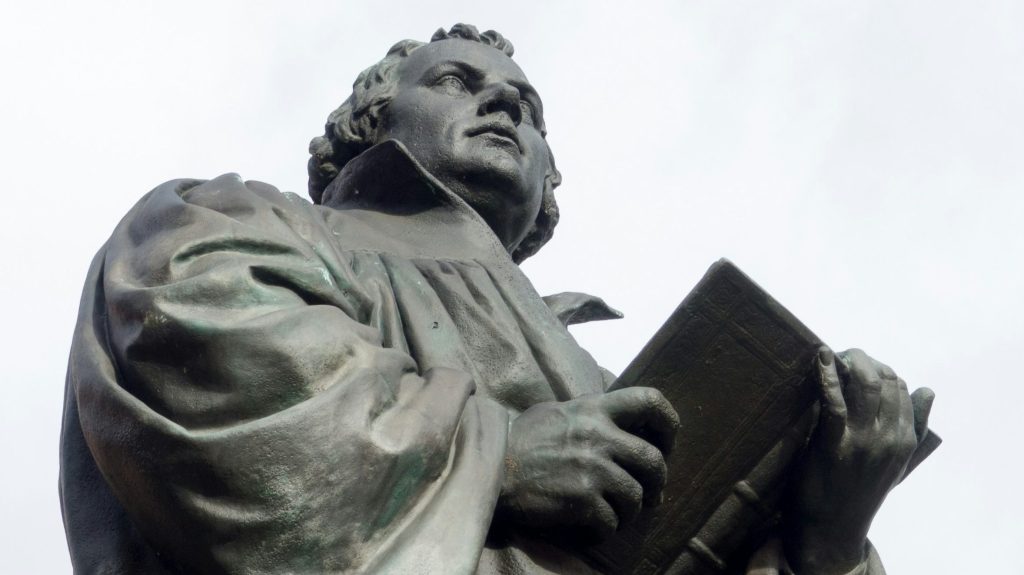
Martin Luther was a German monk and a professor of biblical studies at the University of Wittenberg who became disillusioned with the error he saw in the Catholic church, particularly the selling of indulgences. He posted his ‘95 Theses’ to spark conversation and debate among his colleagues calling for reform in the Catholic church. This, however, led to the Protestant Reformation of the 16th century.

Luther was convinced through the reading of Scripture that salvation was by the grace of God alone and faith alone in Jesus Christ. It was not by any merit or works on our part that contributes to salvation and entrance into heaven. This was in contradiction to what he had observed within the church. Luther was also a staunch believer that every person should have access to the Bible and be able to read it for themselves. He had translated the entire Bible into German.

Stephen Nichols formerly of Ligonier Ministries writes, “The real main character in Reformation Day is not Luther. It’s the Word of God. What Luther discovered as a monk is that for centuries, the true teachings of the Word of God had been hidden by century upon century of tradition. That’s what Reformation Day is about: it’s about pulling back the cover and releasing the power of the Word of God and the beauty and the truth of the gospel. That’s why we celebrate Reformation Day.” (1)

“For by grace you have been saved through faith. And this is not your own doing; it is the gift of God, not a result of works, so that no one may boast.” Ephesians 2:8-9 ESV

(1) What Is Reformation Day? | Ligonier Ministries

Devotionals

Test Yourself

“Examine yourselves to see if your faith is genuine. Test yourselves. Surely you know that Jesus Christ is among you; if not, you have failed the test of genuine faith. As you test yourselves, I hope you will recognize that we have not failed the test of apostolic authority.” 2 Corinthians 13:5-6 NLT

 Photo by Mitchell Hartley on Unsplash

The apostle Paul had been challenged several times on his missionary journeys as to his genuine faith and being accused of not being a true apostle. At the end of his second letter to the church at Corinth he told his readers to examine themselves to see if ‘their’ faith was truly genuine. The people saw themselves as true Christians but did not see Paul the same way. Paul was their spiritual father. “For I became your father in Christ Jesus when I preached the Good News to you.” (1Cor.4:15 nlt) Paul presented them with some good old common sense, if his faith was not genuine neither was theirs. Paul preached the same gospel to them that he believed and they had accepted Christ as Paul preached it.

How could Paul’s readers test themselves to see if they were true faith believers in Christ? How can we do the same? Paul gives us a couple of surefire ways in his letter to the Galatians. In Galatians 6:6-10, Paul teaches the law of sowing and reaping. You plant what you sow. Sow good seed, get good fruit. If a person has truly received Christ eventually good fruit will be evident. Good deeds will become evident. Paul encourages them, “Therefore, whenever we have the opportunity, we should do good to everyone—especially to those in the family of faith.” (Gal.6:10 nlt) And in chapter 2 Paul writes a true Christian is aware of the change that has taken place in them, “My old self has been crucified with Christ. It is no longer I who live, but Christ lives in me. So I live in this earthly body by trusting in the Son of God, who loved me and gave himself for me.” (Gal.2:20 nlt)

Christians are saved by grace and we are not perfect. We will fail at times but can ask for forgiveness and we can test ourselves to see if we are truly in the faith. If Christ is in you through the Holy Spirit you have passed the test. Have you tested yourself?

Bible Studies

The Story of Ruth the Moabitess: Part 6      

Read: Ruth 4:13-22 NLT – The Descendants of Boaz – So Boaz took – Bible Gateway

“This is the genealogical record of their ancestor Perez: Perez was the father of Hezron. Hezron was the father of Ram. Ram was the father of Amminadab. Amminadab was the father of Nahshon. Nahshon was the father of Salmon. Salmon was the father of Boaz. Boaz was the father of Obed. Obed was the father of Jesse. Jesse was the father of David.” Ruth 4:18-22 NLT

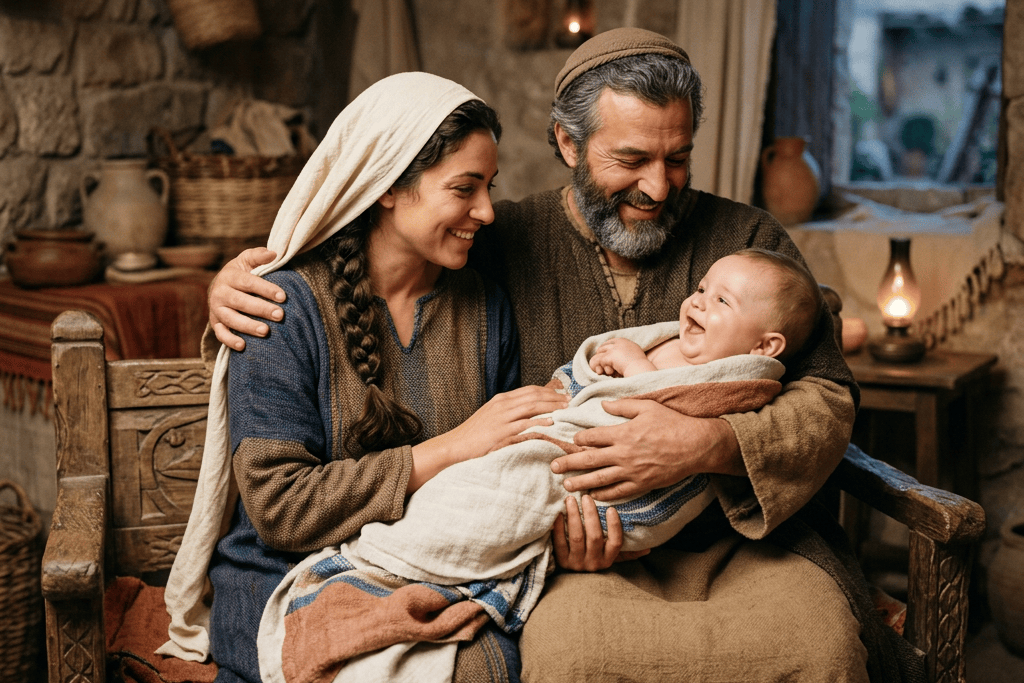
Smiling couple holding a laughing baby in a rustic stone home

When we began our look at the book of Ruth six weeks ago it was noted that the story of Ruth is much more than her story. Ruth is an Old Testament book having three major theological themes. God’s redemption plan is for both Jews and Gentiles. God’s sovereignty and providential care, and Boaz, Ruth’s kinsman redeemer, as a type of Christ. Redemption being the key word is found over twenty times in various forms throughout the book. Boaz was Ruth’s kinsman redeemer who married her and restored the land of her late husband and preserved the family line in her husband’s name. God not only provided for Ruth but also for her mother-in-law, Naomi, through Boaz. But the most important underlying theme of the book is God’s redemption plan of salvation that came through His Son Jesus, a descendant of Ruth and Boaz.

“So Boaz took Ruth into his home, and she became his wife. When he slept with her, the LORD enabled her to become pregnant, and she gave birth to a son.” (Ruth 4:13 nlt) The Lord bless Ruth and Boaz for their faithfulness to Him. Ruth became a convert and trusted in the true God of Israel and Boaz fulfilled his obligation of Ruth’s kinsman redeemer. A son was born to them. It was a happy beginning for them both and a happy ending for Naomi. It was also noted in the beginning of our study that Naomi could be considered the main character. She is just as important in this story as Ruth and Boaz. The theological theme of God’s sovereignty and providential care is seen in Naomi’s well-being. The family name will go on, the land was restored, and there will be grandchildren to help support Naomi in her old age. In returning to Bethlehem after her stay in Moab Naomi said to her friends, “I went away full, but the LORD has brought me home empty.” (Ruth 1:21 nlt) The Lord God watched over her and now she is full once again. The Lord brought her from emptiness to fullness.

Concerning the child born the women said, “May he restore your youth and care for you in your old age. For he is the son of your daughter-in-law who loves you and has been better to you than seven sons!” (Ruth 4:15 nlt) The women named him Obed which means ‘a servant who worships.’ This is the only time in Scripture where someone other than the parents or family have ever named a child. Obed became the father of Jesse, and Jesse became the father of King David. Scripture is clear that the Messiah would be a descendant of King David and would be called the Son of David.

God had this all planned in His sovereignty. God uses those who He chooses for His own purposes. There are both Jews and Gentiles listed in the genealogy of the Messiah. This shows salvation is open to all people who accept Christ as savior. Jesus came to redeem all people, both Jew and Gentile. (Gentile meaning anyone not Jewish) Jesus came for all people. In God’s kingdom there will be representatives from every nation, of every language, and every ethnicity and race. This is part of the story of Ruth the Moabitess, born as a gentile woman in a heathen nation, Ruth went on to trust God having faith in Him proving salvation is open to all people.

Finally, Boaz is seen as a type of Christ in our story. Boaz redeemed Ruth. She became his bride and married her. Jesus redeems those who accept Him as savior and Christians become the bride of Christ. And there will be a day when the wedding will take place. “Let us be glad and rejoice and let us give honor to him. For the time has come for the wedding feast of the Lamb, and his bride has prepared herself. She has been given the finest of pure white linen to wear. For the fine linen represents the good deeds of God’s holy people.” (Rev.19:7-8 nlt)

There are many things to glean from the book of Ruth, the story of Ruth the Moabitess. Just as Ruth gleaned the grain that had fallen there is plenty for us to feast on when we read the Bible but let us pay attention to what is intentionally pulled out as Boaz’s men pulled out extra grain for Ruth. The entire Bible is about Jesus Christ and God’s plan of redemption. Every book has additional grain to be pulled out and noticed about Christ. May the book of Ruth be good training ground for us to see Christ as we read all of Scripture.

Photo by Tima Miroshnichenko on Pexels.com
Devotionals

The Lord’s Garden in Eden      

Read: Genesis 2:6-9 NLT – Instead, springs came up from the – Bible Gateway

“Then the LORD God planted a garden in Eden in the east, and there he placed the man he had made.” Genesis 2:8 NLT

Photo by Tim Mossholder on Unsplash

The Garden of Eden in the book of Genesis is sometimes referred to as ‘paradise.’ The Septuagint Bible uses a word that forms our English word ‘paradise.’ Indeed, it certainly would be a paradise by today’s standards but so much more. The Bible says after God created Adam He planted a garden and placed Adam in it. This was no ordinary garden. It was planted in pure uncontaminated soil in a perfect environment of the newly created earth. We would expect everything grown there to be without spot or wrinkle, perfect fruit hanging from the tress.

God placed in His garden all kind of trees beautiful and producing delicious fruit. Today we still enjoy the fruit of God’s creation, but it comes at the expense of working the cursed ground. Adam did not have that problem but he still worked in the garden. Adam’s work was dominion over the garden in serving God. He was allowed to eat from any tree in the garden except the ‘tree of the knowledge of good and evil.’ Adam had sweet fellowship with his creator while working to care for the garden and the trees providing him with sustaining food.

The Lord loved and cared for Adam providing him with a paradise in which to live and all the fruit he could eat. But God did place one restriction, not to eat from that one specific tree or he would be sure to die. (Gen.2:17) We know the story, Adam disobeyed God along with his wife Eve and the process of dying had begun. There was another named tree in the Lord’s Garden of Eden, the ‘tree of life.’ This tree is a symbol of the eternal ‘tree of life’ that will be in the new heaven. (Rev.22:2) Adam noticed that ‘tree of life’ every day as it was placed in the middle of garden alongside the forbidden tree. God gave Adam and Eve freedom of choice. They willfully chose wrong. May we choose to obey God in all our actions. We have a tree of life waiting for us. If you have not accepted Jesus Christ as your savior, now is the time to look upon calvary’s tree of life in which Jesus died and accept His offering for your sin. The Lord’s Garden of Eden in the new heaven awaits you.

Devotionals

Believe What You Don’t Understand

Read: John 16:16-30 NLT – Sadness Will Be Turned to Joy – “In a – Bible Gateway

‘“In a little while you won’t see me anymore. But a little while after that, you will see me again.’ Some of the disciples asked each other, ‘What does he mean when he says, In a little while you won’t see me, but then you will see me, and I am going to the Father? And what does he mean by ‘a little while’? We don’t understand.”’ John 16:16-18 NLT

Photo by wisconsinpictures on Unsplash

Jesus’ disciples had a challenging time understanding what He was teaching them. I guess it would be fair to say we wouldn’t either. Jesus had spent three years with these men and was ready to leave them. Here in today’s text Jesus was summarizing the events which would take place in a few days from all He had taught them. Jesus told them plainly what was going to occur when they arrived in Jerusalem for the Passover but it didn’t register with them. To be fair, maybe it didn’t register with them because it seemed impossible. Each time Jesus told His disciples that He would be handed over as a criminal and be killed He always told them of His rising up in three days. But it was still hard for them to understand.

The disciples begin to understand as Jesus says He had been speaking to them figuratively. Then He said to them, “Yes, I came from the Father into the world, and now I will leave the world and return to the Father.” (Jn.16:28 nlt) This is a reference of Jesus’ ascension into heaven after he is raised from the dead. They finally got it. The disciples believed Jesus is the Son of God who came from the Father. They may not have understood everything, but they knew enough that Jesus is God who had come into the world to save sinners.

You may be struggling to understand all there is to know about Jesus and God the Father. God’s salvation plan may sound far fetched in its simplicity that it doesn’t register with you. But it is that simple. “For this is how God loved the world: He gave his one and only Son, so that everyone who believes in him will not perish but have eternal life.” (Jn.3:16 nlt) Believe what you don’t understand.

Devotionals

In the beginning, God

“In the beginning God created the heavens and the earth.” Genesis 1:1 NKJV

Photo by Suzy Hazelwood on Pexels.com

Everything has a beginning; your life, a relationship, a new year, a new school year, a semester, a job, an idea leading to a new consumer product, even this devotional. Everything has a beginning to point to. The most recognizable quote of a beginning is in the Bible in Genesis 1:1 which says, “In the  beginning God created the heavens and the earth.” The earth and all of the universe had a beginning. There was a time when the universe did not exist but then came into being. This view is to be understood as God creating everything in the beginning, in the beginning of our time.

Our time began when God created man in His image, “So God created man in His own image; in the image of God He created him; male and female He created them.” (Gen.1:27 nkjv) We had a beginning. God created us. But God had no beginning. He always was. This is hard to understand  and truthfully, I would not even try, we need to accept it by faith. God in a true sense is the beginning although He never began. He is God. Everything that has ever come into being is from His hand (figuratively) and His voice as God spoke the universe into existence.

Another amazing fact that is hard to comprehend is God had us in mind with our lives planned out for us ‘in the beginning’ before He created. God knew we would fall into sin and need a savior redeemer. He had that planned also. To show us the way, God gave us the Holy Scriptures written by men through the power of the Holy Spirit. The whole Bible speaks of God’s plan of salvation through Jesus Christ.

Do not think you do not need to wait until you get to the New Testament to hear the good news of a coming savior, it is all in the Old Testament. In fact, ‘in the beginning’ of the Scriptures, God tells us all we need to know about His plan of salvation through the first five books known as the Pentateuch, the book of Moses. It’s all there ‘in the beginning.’

Devotionals

Too Busy to Attend

Read: Luke 14:15-24 NLT – Parable of the Great Feast – Hearing – Bible Gateway

“A man prepared a great feast and sent out many invitations. When the banquet was ready, he sent his servant to tell the guests, ‘Come, the banquet is ready.’ But they all began making excuses.” Luke 14:16-18 NLT

Photo by Carrie Allen www.carrieallen.com on Unsplash

Have you ever been invited to a social function such as a birthday party, a special dinner, or a neighborhood get-together which you have accepted but then looked for a way out of it? I know I have and to my shame it wasn’t the right thing to do. Jesus tells a story of those who accepted an invitation for dinner and then backed out. Their refusing to attend had deeper consequences than a missed meal.

This story (or parable) is about the future Messianic banquet table in the kingdom of God. Jesus is speaking to the Jewish people with the religious leaders also in attendance. Jesus’ intent is more aimed at them as they were constantly trying to trap Him in His words. The man in the story sent out many invitations to his banquet. Jesus is referring here to the Old Testament that speaks about Him. His audience are Jews who have accepted the Old Testament and were looking for the Messiah to come. But when Jesus, the Messiah, came they rejected Him. “He came to his own people, and even they rejected him.” (Jn.1:11 nlt) They began to make excuses why they could not come when in fact they were simply rejecting Him. They said they were too busy.

Today we have many people who have accepted the historic Jesus. They believe He was on earth, did great things, and taught us all about love, but when it comes to accepting Him in a full-blown commitment, they are too busy. They are looking for a way to get out which conjures up all kinds of excuses. Don’t be too busy to accept God’s invitation of salvation by making excuses. There is no legitimate excuse that will stand.

Devotionals

The Fire Still Burns

“Meanwhile, the fire on the altar must be kept burning; it must never go out. Each morning the priest will add fresh wood to the fire and arrange the burnt offering on it. He will then burn the fat of the peace offerings on it. Remember, the fire must be kept burning on the altar at all times. It must never go out.” Leviticus 6:12-13 NLT

Photo by Cullan Smith on Unsplash

The Old Testament book of Leviticus describes the sacrifices that had to be made to forgive and cover sins that were committed. The sacrifices didn’t take away the sin, only covered it. Someone had to pay for that sin committed. A blameless animal’s blood was shed on the alter with the perpetual fire of God under it. The fire was never to go out signifying God’s willingness and readiness to receive confession and offer forgiveness. The people of Israel needed continual atonement for their sin and the Lord would always accept their sacrifice on the altar. The fire was always burning.

Today we do not need to offer daily sacrifices to cover our sin. There was a perfect sacrifice made for us once and for all in the God-man Christ Jesus. “Christ suffered for our sins once for all time. He never sinned, but he died for sinners to bring you safely home to God.” (1Pt.3:18 nlt) Not only are our sins forgiven but we gain entrance into the kingdom to God as we accept Christ as our savior. Our sin that kept alienated from God has been forgiven and taken away. We have now been reconciled to God for the sin that kept us apart. It has been taken away by the blood of Christ, something that the blood of bulls and goats could never do.

But, we still have a problem. Although assured of forgiveness and eternal life with Christ we still sin in this life. So what do we do? The symbolism of God’s perpetual fire still applies for us today. Fire destroys but it also purifies. God is ready to forgive us our sins and restore us to fellowship with Him as we confess them to Him. The fire still burns. Ask Him daily to purify you as you confess your sins to Him.

Devotionals

The Book of Moses        

Read: John 5:39-47 NLT – “You search the Scriptures because – Bible Gateway

“If you really believed Moses, you would believe me, because he wrote about me.” John 5:46 NLT

Photo by Brett Jordan on Unsplash

The first five books of the Bible are known as ‘The Pentateuch’ meaning in the Greek ‘five books.’ It is referred to as ‘The Torah’ (law) in the Hebrew Bible. Moses is the human author for these collection of five books, therefore, the name ‘Book of Moses’ is appropriate. Genesis, Exodus, Leviticus, Numbers, and Deuteronomy  run consecutively in historical sequence picking up where the previous book left off. It is like a miniseries streaming on your favorite streaming service. You can binge read this series the same as you would binge watch Netflix.

The Pentateuch, Torah, (book of the Law) was extremely important to the Jewish people especially in Jesus’ day. For centuries this was Israel’s only Scripture. It covers Israel’s relationship as God’s chosen people and fulfills God’s promises to Abraham in the book of Genesis. “I will make you into a great nation. I will bless you and make you famous, and you will be a blessing to others. I will bless those who bless you and curse those who treat you with contempt. All the families on earth will be blessed through you.’” (Gen.12:1-13 nlt)

Abraham’s descendants became a great nation. Israel has been a blessing to others. Every family on earth is blessed by the birth of Jesus Christ, a descendant of Abraham as described by Paul in Galatians. “What’s more, the Scriptures looked forward to this time when God would make the Gentiles right in his sight because of their faith. God proclaimed this good news to Abraham long ago when he said, ‘All nations will be blessed through you.’” (3:8 nlt)  

The bottom line is the ‘Book of Moses’ is for both Jews and Christians. It shows the way to a right relationship with God for Old Testament believers and Christians and Jews today are shown that same way to God through Christ Jesus from the ‘Book of Moses.’