Bible Studies

“The Popularity and Excitement Around Jesus” The Gospel of Jesus Christ: the book of Mark

Read: Mark 3:1-12 NLT – Jesus Heals on the Sabbath – Jesus went – Bible Gateway

“Jesus went out to the lake with his disciples, and a large crowd followed him. The news about his miracles had spread far and wide, and vast numbers of people came to see him.” Mark 3:7- 8 NLT
FreeBibleimages.org

Famous people usually draw a crowd when out in public just by showing up at an event or enjoying dinner out. People crowd around them to say a word, or hope for a longer conversation, or are just looking for an autograph. Imagine if that person, in addition to filling your excitable emotions, could heal you physically of any disease or sickness you had. You would actively seek that person and not wait for a chance meeting. Jesus was such a famous person as he started His earthly ministry as we have been studying in the book of Mark.  

Large crowds were beginning to follow Jesus as the news about His miracles of healing began spreading all throughout the region and beyond. People were traveling considerable distances from outside Palestine to find Jesus. He was becoming quite popular and there was much excitement building around Him.

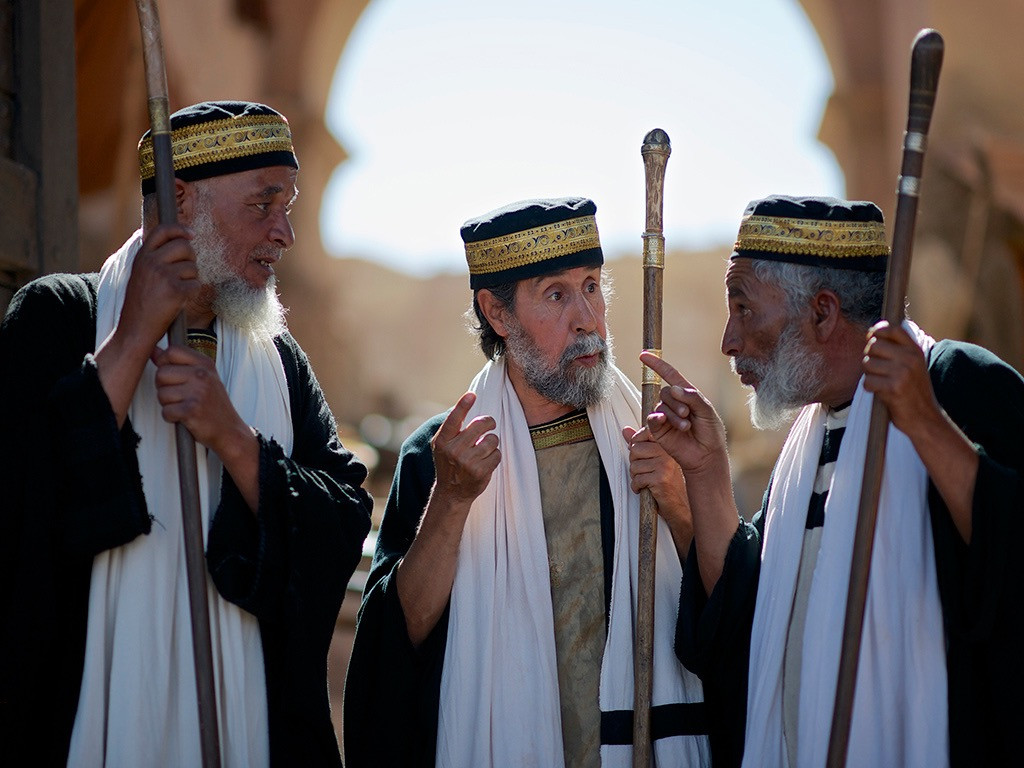
We read today in the first six verses of Mark chapter 3 of another healing performed this time in the synagogue in Capernaum that helped boost Jesus’ fame. This miracle took place on the Sabbath day which boosted the Pharisees disproval of Jesus to the point they were now plotting His death. As Jesus entered the synagogue there was a man with a deformed hand. The Pharisees were watching with intent for what Jesus would do. The verb that is used indicates they were observing maliciously waiting to trap Him. The Pharisees were looking for an opportunity to accuse Jesus of breaking the Sabbath by healing the man. Rabbinic teaching did not allow the practice of medicine on the Sabbath unless the individual was close to death. This man with the deformed hand clearly was not, so the Pharisees watched closely.

Jesus asked the Pharisees, “Does the law permit good deeds on the Sabbath, or is it a day for doing evil? Is this a day to save life or to destroy it?”  (Mk.3:4 nlt) The Pharisees had failed to see the true nature of the Sabbath was to do good. Not healing this man would be breaking the spirit of the Sabbath and would be a sin. The Pharisees did not answer Jesus. By remaining silent they were implying their views on the Sabbath were wrong. They were convinced Jesus could heal the man, yet when He does, they are ready to accuse Him and seek His death. It’s ironic Jesus asked them, ‘Is it a day to save life or to destroy it?’ No wonder they didn’t answer, Jesus was going to save life, and the Pharisees were plotting to destroy His.

Jesus displayed His righteous anger as the Holy One of God and was grieved at their hardness of heart. The Pharisees hearts were growing hard by their pride, and by the prospect of losing their power and positions. Their lifestyle was more important to them than accepting Jesus the Messiah had come. How many people have we in the world today who also love their lifestyle to the point that any mention of Christ hardens their hearts. The Pharisees in Jesus’ day were throwing away the truth of Christ for their own lies.

“Then he said to the man, ‘Hold out your hand.’ So the man held out his hand, and it was restored!” (Mk.3:5 nlt) Jesus performed another miracle of healing increasing His popularity with the people and infuriating the so-called religious Pharisees who wasted no time in gathering support to destroy Jesus. The Pharisees met with the Herodians, a secular political party who supported the Roman government, but opposed the Pharisees. The Herodians also wanted to see the end of Jesus. They feared their political power would be in jeopardy if the region became unstable due to Jesus’ presence. The Herodians and Pharisees had a common enemy for different reasons, but their concern for themselves united them. Our world is no different today. We have so-called religious people where Jesus gets in the way of their programs, and secular political parties where the name of Jesus becomes a distraction. Both avoid any contact with the Christ of Scripture.

No matter the efforts to suppress Jesus in our modern society, His popularity and the excitement He builds cannot be restrained. Large crowds still follow Him today, and they are growing. Just as in Jesus’ day, “They came from all over Galilee, Judea, Jerusalem, Idumea, from east of the Jordan River, and even from as far north as Tyre and Sidon. The news about his miracles had spread far and wide, and vast numbers of people came to see him.” (Mk.3:7-8 nlt) Jesus is not on earth physically with crowds of people ascending on Him just to touch Him that He needed to seek refuge in a boat. But Jesus’ popularity and the excitement He brings is only natural as He is the only hope in this world, and the only hope for our afterlife. He still heals and saves those who come to Him for salvation. Jesus offers us the ultimate healing from the sin of death to eternal life. That’s worth seeking Him.


 Photo by Emile Guillemot on Unsplash
Bible Studies

“Discussions with Jesus” The Gospel of Jesus Christ: the book of Mark

Read: Mark 2:18-28 NLT – A Discussion about Fasting – Once when – Bible Gateway

“Once when John’s disciples and the Pharisees were fasting, some people came to Jesus and asked, ‘Why don’t your disciples fast like John’s disciples and the Pharisees do?’” Mark 2:18 NLT

Photo by Yosi Prihantoro on Unsplash

In this week’s Biblical Insights, we sit back and listen to the first two of many discussions Jesus has with the Pharisees, other religious rulers, and the people of Israel in the book of Mark. Jesus’ discussions along with His teaching is the core of the gospel of Mark. His favorite name for Himself is the ‘Son of Man.’ Jesus corrects misunderstandings and outright misinformation leveled against Him by the religious rulers, and He answers all questions presented to Him. He confirms His deity, the future coming kingdom, and that He is the way of salvation and the only way to the Father.

After the dinner party Levi had for Jesus in his home, some people came to Jesus with a question concerning fasting. “Why don’t your disciples fast like John’s disciples and the Pharisees do?” (Mk.2:18 nlt) Now, these two groups couldn’t be more apart on religious matters, but the people’s concern was legitimate. John the Baptist’s disciples probably were fasting as an expression of the repentance John preached. John was also in prison at this time, so their fasting could have been in mourning for him. The Pharisees, on the other hand, fasted twice a week as a religious ritual. Fasting was a sign of contrition and penitence as far back as the days of the Judges but had become a mere outward expression. The only fasting that was required by Mosaic law was on the Day of Atonement. The Jewish people found it odd that Jesus’ disciples did not fast as other religious people did, so they asked the question.

Jesus takes this opportunity to hint of His mission here on earth. He compares Himself to a bridegroom and His disciples as guests in a marriage celebration. A marriage was a joyous occasion, no time for mourning, why would they fast. But there will come a day when Jesus leaves them, and then they will fast. It will be appropriate at that time.

Expanding on the scope of His mission, Jesus uses two illustrations to explain something new is coming. Jesus’ new gospel of repentance and forgiveness of sin cannot relate to the old traditional rituals. “Besides, who would patch old clothing with new cloth? For the new patch would shrink and rip away from the old cloth, leaving an even bigger tear than before. And no one puts new wine into old wineskins. For the wine would burst the wineskins, and the wine and the skins would both be lost. New wine calls for new wineskins.” (Mk.2:21-22 nlt)

The Pharisees prompt the second of Jesus’ discussions this week. They observe Jesus’ disciples picking heads of grain and eating them as they were traveling along the road next to the grainfields. What upset them was this occurred on the Sabbath day. They claimed Jesus’ disciples were breaking the Sabbath by working harvesting wheat on the Sabbath day. As ridiculous as that sounds, that is how far they stretched the law to conform to their new rules and regulations. Some Christian leaders today are guilty of adding do’s and don’ts above what God has stated in His Word. Just a note of caution to be sure we are biblically sound.  

The Old Testament book of Deuteronomy says, “And when you enter your neighbor’s field of grain, you may pluck the heads of grain with your hand, but you must not harvest it with a sickle.” (Dt.23:25 nlt) The Pharisees should have been familiar with that scripture, but their concern is it was the Sabbath day. Jesus gives them the example of David and his men, what they did when exhausted from hunger. “He went into the house of God (during the days when Abiathar was high priest) and broke the law by eating the sacred loaves of bread that only the priests are allowed to eat. He also gave some to his companions.” (Mk.2:26 nlt) Jesus was illustrating they may have done what was forbidden, but it is also lawful to do good and save a life on the Sabbath. He emphasized the true spirit of the Sabbath is intended for man restoration; spiritual, mental, and physical. (Mk.2:27)

FreeBibleimages.org

Jesus again confirms His Deity in His discussion with the Pharisees when He claimed He is Lord of Sabbath. He is greater than the Sabbath and therefore has the authority to reject the Pharisees rules and regulations concerning the Sabbath day. Jesus will have continual run ins with these religious rulers as we will see throughout the book of Mark, and He will confront them with who He is and His mission why He is here. Jesus said, “The time promised by God has come at last! The Kingdom of God is near! Repent of your sins and believe the Good News!” (Mk.1:15 nlt)  

Bible Studies

“Radical Change” The Good News of Jesus Christ: the book of Mark

Read: Mark 2:13-17 NLT – Jesus Calls Levi (Matthew) – Then Jesus – Bible Gateway

“As he walked along, he saw Levi son of Alphaeus sitting at his tax collector’s booth. ‘Follow me and be my disciple,’ Jesus said to him. So Levi got up and followed him.” Mark 2:14 NLT

FreeBibleimages.org

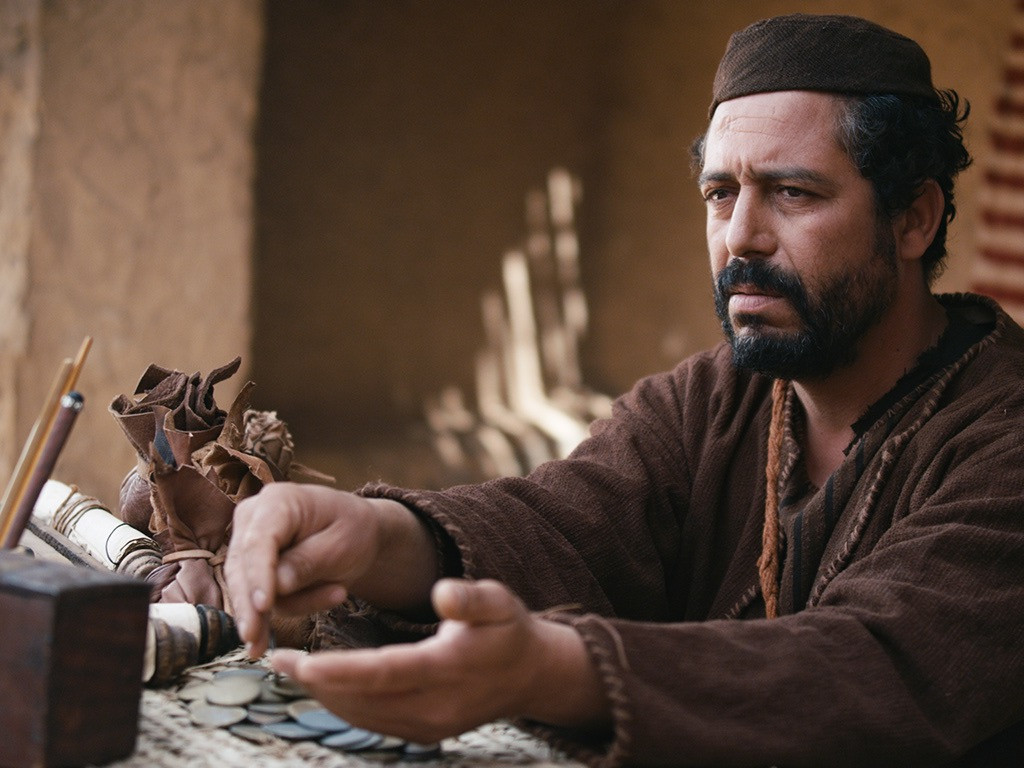
Have you noticed someone who has truly come to Christ and the radical change that has occurred in their life? I emphasize ‘truly’ for there are many who profess finding Jesus, but their lives do not show it. They are easily exposed to being fraudulent, no true conversion has taken place. Unlike the truly converted, whose lives have changed and taken on a new a meaning. Things they have done before they no longer do, things they would never do they are doing unashamed. Jesus has a way of making that happen in the most unlikely individual when they realize they need a savior. This week in our study in the gospel of Mark we meet up with such a person, Levi, whose name was changed to Mathew after he met Jesus in his place of business.

Jesus went out to the lakeshore after healing and forgiving the sins of a paralytic proving His deity in Peter’s house. Again, Jesus was teaching all who came to Him. “Then Jesus went out to the lakeshore again and taught the crowds that were coming to him.” (Mk.2:13 nlt) Jesus came to a tax booth near the Sea of Galilee. Tax booths were set up by the Roman government to collect taxes for infrastructure and to support the government. They were set strategically along the main roads to collect tolls like in our day. Commercial fishing was also taxed, so you would find a tax booth near a major fishing location. There Jesus saw Levi in his tax collector’s booth and said to him, ‘follow me and be my disciple.’ Levi didn’t hesitate to leave his lucrative job behind he went out and followed Jesus.  

Levi is a good example for us to look at of one having a radical change after accepting Christ as savior. Levi was a tax collector, one of the most despised people in Israel at that time. Tax collection ran like our modern-day franchises. Tax offices were purchased from the Roman government with the right to collect taxes in a certain area. Operators were allowed to keep everything above the required government tax rate. Tax collectors made an exuberant living by charging excess fees far above what was reasonable, and most were dishonest. These tax collectors were making themselves rich at the expense of their own people. Levi left the money on the table, realizing that he needed a savior more than the money due to his sins, and he was now about to show everyone his radical change.

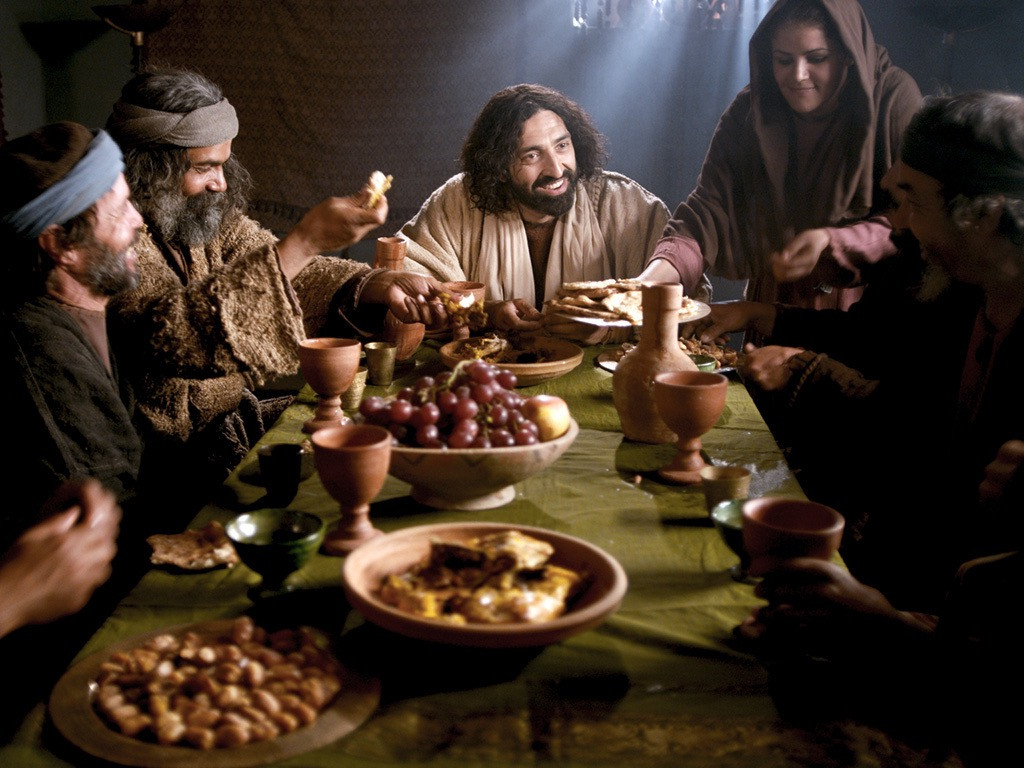
Levi’s quick response to Jesus and what he is about to do next is a testimony to the genuineness of his conversion. Levi decided to have a dinner party in honor of Jesus and invite his friends, colleagues, and associates. “Later, Levi invited Jesus and his disciples to his home as dinner guests, along with many tax collectors and other disreputable sinners.” (Mk.2:15 nlt) Levi wanted his guests to meet Jesus who had made such a change in his life. This did not sit well with the Jewish leaders who were looking for anything to discredit Jesus. Jesus sitting among these people and having a meal with them was an offense to these Pharisaical leaders. “But when the teachers of religious law who were Pharisees saw him eating with tax collectors and other sinners, they asked his disciples, ‘Why does he eat with such scum?’” (Mk.2:16 nlt) The leaders felt any contact with these people would make Jesus a sinner. Sinner was a common term for tax collectors, adulterers, robbers, and the like. But in their eyes, anyone who did not follow the Mosaic Law as they interpreted it were sinners, or scum.

Christians today need to be careful we don’t look down on non-Christians by not associating with them. Jesus gave us a command to go into all the world and preach the gospel making disciples in all nations. (Mt.28:19-20) Jesus also said “But I say, love your enemies! Pray for those who persecute you! If you love only those who love you, what reward is there for that? Even corrupt tax collectors do that much.” (Mt.5:44, 46 nlt) Jesus answered the Jewish leaders in Levi’s home by saying, “Healthy people don’t need a doctor—sick people do. I have come to call not those who think they are righteous, but those who know they are sinners.” (Mk.2:17 nlt) A self-righteous person feels no need to come to Christ for salvation, but a sinner does. And that sinner will have a radical change take place in their life for all their friends and the world to see.

FreeBibleimages.org
Bible Studies

“Jesus Proves His Deity” The Good News of Jesus Christ: the book of Mark

Read: Mark 2:1-12 NLT – Jesus Heals a Paralyzed Man – When – Bible Gateway

“So I will prove to you that the Son of Man has the authority on earth to forgive sins.” Mark 2:10a NLT

FreeBibleimages.org

Jesus had become a popular figure with the Jewish people as we saw in last week’s Biblical Insights. This week Jesus becomes a polarizing figure with the Jewish leaders, the teachers of the Law. Jesus finished His first tour through Galilee and returned to Capernaum. Scripture says the news spread quickly that He was home. People of celebrity status find it difficult to return home without a big fanfare or with news leaking out. Jesus was indeed well-known. Remember He was forced to go outside the city to continue His ministry due to the crowds, and He has now returned home with His disciples. Most likely Jesus stayed in Peter’s home while in Capernaum. It would become Jesus’ ministry headquarters. Capernaum was convenient as it was centrally located with direct access to the Sea of Galilee.

It didn’t take long for Peter’s home to be filled with people wanting to see Jesus for healing and to hear Him teach. There was no more room in the house and an overflow crowd was assembling outside reminiscent of today’s concert venues and speaking events of famous people. While Jesus was preaching, four men arrived carrying their paralyzed friend on a mat. There was no way into the house due to the crowd, but they were determined to get their friend to Jesus for his paralytic condition was severe. There was only one thing to do, if they couldn’t get in by going through the door, they would go through the roof.

“They couldn’t bring him to Jesus because of the crowd, so they dug a hole through the roof above his head. Then they lowered the man on his mat, right down in front of Jesus.” (Mk.2:4 nlt) Palestinian houses of that day had a flat roof that were used for relaxation in the cool of the day and sleeping during hot nights. They had an outside staircase which led up to the roof. The roof was made with a thick layer of clay baked by the sun, then covered with mats and branches across wooden beams. The four men saw their opportunity to help their friend and proceeded up the staircase to the roof.

Once on the roof, they dug a hole through the clay large enough to lower the paralytic down in front of Jesus. Jesus recognized that these men, including the paralytic, had the faith the He could heal the man physically. But Jesus took care of the most pressing need first. The forgiveness of sins for salvation. “Seeing their faith, Jesus said to the paralyzed man, ‘My child, your sins are forgiven.’” (Mk.2:5 nlt) Many Jews believed that one’s illness, especially severe, was because one’s sins. Once Jesus heals the man of his paralysis, which only God can do, they could not deny that He could forgive sins. But the Jewish leaders did just that.

The Jewish leaders thought to themselves Jesus was committing blasphemy, for only God could forgive sins. Jewish theology taught that even the Messiah could not forgive sins, so indeed, Jesus was a blasphemer in their eyes, He was claiming deity. Jesus asked them, “Why do you question this in your hearts? Is it easier to say to the paralyzed man ‘Your sins are forgiven,’ or ‘Stand up, pick up your mat, and walk’?” (Mk.2:8b-9 nlt) It may be easier to say ‘Your sins are forgiven’ but when the paralytic gets up and walks, proof that Jesus healed him, it is proof that Jesus has the power to forgive sins as well.

“Then Jesus turned to the paralyzed man and said, ‘Stand up, pick up your mat, and go home!’ And the man jumped up, grabbed his mat, and walked out through the stunned onlookers. (Mk.2:10b-12a nlt) The man came into the house through the roof laying on a mat and went out walking through the front door to the amazement of those around. The paralytic was completely healed, which no one could deny. It was another one of Jesus’ instantaneous healings. This miracle healing along with Jesus proving His deity intensified the conflict between Jesus and the Jewish leaders. It put the leaders in conflict with Jewish people, for the people “were all amazed and praised God, exclaiming, ‘We’ve never seen anything like this before!’” (Mk.2:12b nlt) A Biblical Insight for us is, ‘preaching the truth about the deity of Jesus Christ is sure to find conflict especially in our day.’ May we continue to be faithful and proclaim Jesus is God the Son. For Jesus said, “So I will prove to you that the Son of Man has the authority on earth to forgive sins.” (Mk.2:10a nlt)

FreeBibleimgaes.org
Bible Studies

“The Ministry Begins” The Good News of Jesus Christ: the book of Mark

Read: Mark 1:21-45 NLT – Jesus Casts Out an Evil Spirit – Jesus – Bible Gateway

“Jesus and his companions went to the town of Capernaum. When the Sabbath day came, he went into the synagogue and began to teach. So he traveled throughout the region of Galilee, preaching in the synagogues and casting out demons.” Mark 1:21, 39 NLT

FreeBibleimages.org

The Good News of Jesus Christ is about to be told from Jesus Himself, for that is why he came. “We must go on to other towns as well, and I will preach to them, too. That is why I came. For even the Son of Man came not to be served but to serve others and to give his life as a ransom for many.” (Mk.1:38, 10:45 nlt) Jesus’ ministry is now in in full operation after His baptism, forty days in the wilderness being tempted by Satan, and choosing four fishermen to be His disciples. “Jesus and his companions went to the town of Capernaum. When the Sabbath day came, he went into the synagogue and began to teach.” (Mk.1:21 nlt)

Jesus begins His first of three tours through Galilee. The first stop Jesus made was to visit the local synagogue in Capernaum. It was where the Scriptures were read and studied, and God was worshiped. Jesus took advantage of the custom of having a visiting teacher speak and participate in teaching. As He began to speak, the people were amazed at His teaching compared to the local Rabbis. Jesus taught not as the other Rabbis who referred to and quoted previous Rabbinical teaching, but Jesus taught with authority, His own authority. It was not only His authoritative style, but the content of His teaching that impressed those in attendance. Jesus, the Son of God, certainly knew the Scriptures.   

Satan and his demons also knew the Scriptures and who Jesus is as was evident by the demon-possessed man among them. “Suddenly, a man in the synagogue who was possessed by an evil spirit began shouting, ‘Why are you interfering with us, Jesus of Nazareth? Have you come to destroy us? I know who you are—the Holy One of God!’” (Mk.1:23-24 nlt) This demon-spirit knew Jesus was God the Son and was terrified at Jesus’ power. Jesus stopped the demon’s ranting immediately and ordered him to come out of the man. He didn’t want His identity known at this time. The demon left the man, and the people were yet in more amazement to what they just witnessed. They reasoned among themselves, ‘what kind of teaching is this, that even the demons obey Him?’ At this point, the news about Jesus spread quickly throughout Galilee.

Jesus’ act of confronting the evil spirit drew much attention which is now going to escalate even further as He is beginning to heal all those who are sick and diseased. Jesus begins by healing Simon’s mother-in-law after the meeting at the synagogue. Jesus and His disciples go to Simon’s and Andrew’s home. Finding Simon’s mother-in-law sick with a high fever, Jesus touched her, healing her. After sunset when the Sabbath was over many people from all over converged on Simon’s and Andrew’s home. “That evening after sunset, many sick and demon-possessed people were brought to Jesus. The whole town gathered at the door to watch.” (Mk.1:32-33 nlt) Jesus is ministering as He predicted, ‘the Son of Man came not to be served, but to serve.’

As is often the case today, we call upon Jesus to help us in our time of need. He will not deny our request but will hear us and answer in accordance with His will. How sad it is so many of us only call upon the Lord only in the case of an emergency. He is our Lord and savior when things are bad and when all is well. Jesus came to sacrifice His life to give us the ultimate healing, a soul set free, and eternal life with Him. He desires for us to have constant fellowship with Him throughout our lives here on earth and not wait until we’re with Him in glory.

Jesus valued His time in prayer with His heavenly Father. After a long day of teaching, healing, and casting out demons, Jesus rose early the next morning, probably between 3-4 am going to a secluded place to pray. It was where Jesus, the man, met His spiritual battles. Satan and his demons constantly opposed Jesus all throughout His ministry. It was also where Jesus prepared Himself with conversations with His Father for the day’s work in ministry. If Jesus needed to do this, do we have any excuse for not doing it? We need it a lot more.

While traveling through Galilee preaching in the synagogues Jesus is met by a leper who knelt before Him begging to be healed. ‘“If you are willing, you can heal me and make me clean,’ he said. Moved with compassion, Jesus reached out and touched him. ‘I am willing,’ he said. ‘Be healed!’” (Mk.1:40b-41 nlt) Leprosy was one of the most dreadful diseases during Jesus’ day. We should take note of the leper’s faith in Jesus that He could heal him. This is a testimony in Jesus’ power to heal such a terrible disease. Jesus then instructed the man to show himself to the priest to be declared clean so he could resume social contact. The priest could not deny the man was healed, and that only God had the power to cure leprosy.  Afterward the man went out and told everyone about his healing. Quickly it was impossible for Jesus to continue His ministry in the towns but needed to move out into the nearby fields around the cities. Jesus’ ministry is off to a fast start and will continue at a fast pace, for His time in preaching, teaching, healing, and casting out evil spirits is relatively short, three- and one-half years. We will pick it up next week.

FreeBibleimages.org

Bible Studies

“The Promised Time Has Come” The Good News of Jesus Christ: the book of Mark

Read: Mark 1:9-20 NLT – The Baptism and Temptation of Jesus – Bible Gateway

‘“The time promised by God has come at last!’ he announced. ‘The Kingdom of God is near! Repent of your sins and believe the Good News!’” Mark 1:15 NLT

FreeBibleimages.org

The first week of our study in the book of Mark we were introduced to John the Baptist whose mission was to introduce us to the Messiah, Jesus, the Son of God. He encouraged those in his day to clear the road and ‘prepare the way for the LORD’s coming!’ This week we begin to follow Jesus as He began His ministry in 27 A.D. when he was 30 years old. “One day Jesus came from Nazareth in Galilee, and John baptized him in the Jordan River.” (Mk.1:9 nlt)

The question is automatically asked, ‘Why did Jesus get baptized?’ It was His deliberate act of identification with us. Jesus identified with us in all ways as human, except for sin. He was sinless. Therefore, Jesus will bear our sins on the cross at Calvary. The triune God is on displayed in Jesus’ baptism proving His deity. The Father speaks from heaven, the Son is baptized, and the Holy Spirit appears as a dove anointing Jesus for His ministry. (Mk. 1:10-11) The symbol of a dove represents gentleness and purity, which describes Jesus, our meek and mild savior.

Very often when we have a high moment, a mountaintop experience, we’re brought down to reality. The sin of this world and the luring of Satan and his demons drags us down and tempts us. After Jesus had His high moment at His baptism, the Bible says the Spirit compelled (drove) Him into the wilderness to be tempted by the devil. This was a divine action and necessary for us as Jesus suffered the same temptations we face every day. He knows what we go through and can help us in our time of temptation. “For because he himself has suffered when tempted, he is able to help those who are being tempted.” (Heb.2:18 esv)

Jesus’ ministry now begins after defeating Satan by not succumbing to any of the temptations he offered up. This was Jesus’ first step in overthrowing Satan. Jesus then went into Galilee, the northern most region in Palestine, and started preaching God’s Good News, the Good News of salvation. Jesus announced, “The time promised by God has come at last! The Kingdom of God is near! Repent of your sins and believe the Good News!” (Mk.1:15 nlt) Dr. John MacArthur notes, ‘It was time for decisive action on God’s part. An era of God dealing with men had come.’ (1) And Dr. Charles Ryrie comments, ‘The rule of Messiah on earth, promised in the OT and earnestly longed for by the Jewish people, was near, for the Messiah has now come.’ (2) John the Baptist preached a message of repentance, now Jesus adds to it by believing the Good News. The Messiah is here, and He will save you from your sins.

Jesus now calls His first disciples along the shore of the Sea of Galilee, a body of water 700 ft below sea level, 14 miles long and 6 miles wide. It was fed by the waters of the upper Jordan River. Jesus saw Simon and his brother Andrew working at their craft for they were fishermen. Andrew had been a follower of John the Baptist. It is possible that Simon had been also, and they both went back to work fishing after John’s arrest. Jesus calls them to follow Him and be the first Evangelists, fishers of men. They immediately drop what they were doing, making the commitment to follow Jesus.

Further up the shoreline, Jesus and His first two recruits run into fellow fishermen James and John. Fishing was a main source of income for people in the Galilean region. James and John followed suit when Jesus called them to follow Him, leaving their father and co-workers in the boat.

Take note Jesus didn’t look for those to be His disciples from the religious elites, or those with references from well-respected Rabbis, and He didn’t recruit from intellectual scholars of the first century, but He chose ordinary people who fished for a living to carry out the greatest message the world has ever known. With these four and others who will come in time, including you and me, the gospel message will go forth, right up to our current day, for the promised time has come.

  1. MacArther, John. The MacArthur Study Bible. Nashville: Word Publishing, 1997. Pg. 1458
  2. Ryrie, Charles. The Ryrie Study Bible. Chicago: Moody Publishers, 2012. Pg. 1226
Bible Studies

“Clear the road” The Good News of Jesus Christ: the book of Mark    

Read: Mark 1:1-8 NLT – John the Baptist Prepares the Way – Bible Gateway

“He is a voice shouting in the wilderness, ‘Prepare the way for the LORD’s coming! Clear the road for him!’” Mark 1:3 NLT

Photo by Brett Jordan on Pexels.com

This first Sunday of the new year in Biblical Insights we will start a study in the gospel of Mark. Mark, the second book in the New Testament and one of the four gospels, begins with a simple introduction, “This is the Good News about Jesus the Messiah, the Son of God.” (Mk.1:1 nlt) It may be simple, short and to the point, but that’s the point. So, there is no misunderstanding, this book is about the good news of Jesus Christ, the Messiah. The Zondervan NASB Study Bible notes, “The good news is that God has provided salvation through the life, death, and resurrection of Jesus Christ.” Mark is more concise than the other gospel writers and focuses more on Jesus’ actions than His teachings. Although through His actions there is much teaching to be learned. Mark’s gospel puts emphasis on His servanthood while confirming His deity. His humanity is detailed throughout the book, and He is presented as the suffering servant. “For even the Son of Man came not to be served but to serve others and to give his life as a ransom for many.” (Mk.10:45 nlt) It is the good news of Jesus Christ.

Mark skips over the genealogy of Jesus and story of His birth jumping right into the start of Jesus’ ministry with John the Baptist preparing the way. “He (John) is a voice shouting in the wilderness, ‘Prepare the way for the LORD’s coming! Clear the road for him!’” (Mk.1:3 nlt) John was the messenger who was prophesized would come ahead of the Messiah and prepare the way for Him. In ancient days king’s envoys were sent ahead to clear the roads for safe passage and to announce the arrival of the king. John was preparing the hearts and minds of the people of Jesus’ arrival to fulfill His Father’s plan of salvation for them. It is in this same manner that we prepare our hearts and minds by clearing the road of any debris or distractions that will prevent the Holy Spirit from teaching us the Biblical Insights He has for us in this study.

John the Baptist’s ministry of preparing the way for Jesus was a call to repentance. That’s a good place for us to start if we are serious about studying God’s Word and growing in Him. Confession of sin and turning away from it will clear and purify our hearts and minds, making us ready to receive His Word. John preached his message of ‘repentance baptism’, baptism accompanied by repentance, in the arid wilderness near the Dead Sea. People were coming out to him when they heard of his ministry. “All of Judea, including all the people of Jerusalem, went out to see and hear John. And when they confessed their sins, he baptized them in the Jordan River.” (Mk.1:5 nlt) There hasn’t been a prophet in Israel for 400 years and you could imagine the interest of the Jews to see this prophet. John certainly looked the part with his clothing of camels’ hair and his diet, he was a replicate of the Old Testament prophets.

Meeting John in the wilderness was reminiscent of the Jewish wanderings in Exodus. The wilderness was the meeting place for God and His people in the Old Testament. We need to be reminded of that next time we find ourselves in a wilderness. God loves to meet His people in their wilderness. He will meet us when we are ready to meet Him after exhausting all our options. God will not leave us there but will draw us out as we turn to Him.  

John’s announcement was, “Someone is coming soon who is greater than I am—so much greater that I’m not even worthy to stoop down like a slave and untie the straps of his sandals.” (Mk.1:7 nlt) John could not forgive sin, nor was that his intention. His message was to lead people to the one who could forgive sin. John stated he only baptized people with water, clearly no saving value. Referring to Jesus he said, “…. but he will baptize you with the Holy Spirit!” (Mk.1:8b nlt) John the Baptist’s ministry was one of confession, repentance and righteous living, followed up by baptism. He heralded the Messiah’s coming and prepared people waiting for His arrival.

Jesus’ ministry was providing salvation by coming to earth, living a perfect life, dying on the cross for forgiveness of sin, and conquering death by rising from the dead to ensure eternal life for all who believe accepting Him as savior. No wonder John uttered that he wasn’t even worthy as a slave to untie His sandals. Next week we’ll see the one who John was preparing the way for. Have you cleared the road for Him?

FreeBibleimages.org

Bible Studies

“Simeon’s Song-Nunc Dimittis” 5 Songs of Hope for Advent

“Lord, now you are letting your servant depart in peace, according to your word; for my eyes have seen your salvation that you have prepared in the presence of all peoples, a light for revelation to the Gentiles, and for glory to your people Israel.” Luke 2:29-32 ESV

FreeBibleimages.org

We have come to our 5th and final song of hope for advent. Yes, Christmas is over, but this song takes place after the birth of Christ, some 40 days later. The first male child born to a Jewish couple was to be dedicated to the Lord as required by the Law of Moses. Joseph and Mary, being devout Jews, brought Jesus to the temple in Jerusalem for this purpose. Mary had to wait 40 days until her purification period was over before she could go to the Temple, and she would also go to offer a sacrifice for her purification.

“And when the time came for their purification according to the Law of Moses, they brought him up to Jerusalem to present him to the Lord (as it is written in the Law of the Lord, ‘Every male who first opens the womb shall be called holy to the Lord’) and to offer a sacrifice according to what is said in the Law of the Lord, ‘a pair of turtledoves, or two young pigeons.’” (Lk.2:22-24 esv)

Mary and Joseph made the 6-mile trip from Bethlehem to Jerusalem to offer a sacrifice of two turtledoves or two pigeons which shows the poverty of this young couple, the earthly parents of the Christ-child. This should serve as a reminder to us that Jesus left His heavenly home to come to earth, giving up the luxuries of heaven to live in the lower class of society. We can be sure Jesus understands the plight of the poor in today’s world and cares about them.

The gospel writer Luke introduces us to Simeon in Luke 2:25-26. All we know about him is what is written in these two verses. He is mentioned nowhere else in Scripture. “Now there was a man in Jerusalem, whose name was Simeon, and this man was righteous and devout, waiting for the consolation of Israel, and the Holy Spirit was upon him. And it had been revealed to him by the Holy Spirit that he would not see death before he had seen the Lord’s Christ.” (Lk.2:25-26 esv)

Presumably Simeon was an elderly man. He was a righteous man who was waiting for the consolation of Israel (the comfort the Messiah would bring to the people at his coming). Scripture says the Holy Spirit was upon him and given special insight that he would not die until he had seen the Messiah. One could imagine Simeon going to the Temple every day thinking maybe this will be the day. Finally, the day came when Mary and Joseph entered the Temple area. “….and when the parents brought in the child Jesus, to do for him according to the custom of the Law, (Simeon) took him up in his arms and blessed God….” (Lk.2:27-28 esv)

Simeon’s song begins, “Lord, now you are letting your servant depart in peace, according to your word; for my eyes have seen your salvation that you have prepared in the presence of all peoples, a light for revelation to the Gentiles, and for glory to your people Israel.” (Lk2:29-32 esv)

Simeon’s words here are known as “Nunc Dimittis” the Latin Vulgate translation meaning “You now dismiss.” It is a New Testament hymn celebrating God’s salvation. Simeon was holding in his arms the one who would redeem Israel from their sins and not only Israel but of every nation, tongue, and tribe.  Simeon didn’t need to see anything more; he saw God’s promised Messiah. He didn’t desire to live any longer, God rewarded Simeon for his faithfulness. Perhaps there are some things we would like to see before the Lord calls us home. The Lord’s arm is not too short that he cannot reach down and grant that request. But our focus is to be righteous and devout as Simeon. We may be surprised at all the Lord will reveal to us before we leave this earth.

Simeon now focuses his attention on Mary and Joseph and blesses them. “And Simeon blessed them and said to Mary his mother, ‘Behold, this child is appointed for the fall and rising of many in Israel, and for a sign that is opposed (and a sword will pierce through your own soul also), so that thoughts from many hearts may be revealed.’” (Lk.2:34-35 esv) Christ will raise up those who believe in Him, but He will be a stumbling block to those who disbelieve. Simeon’s blessing included a hard truth for Mary. A cost will come to her as Mary will suffer deep anguish at her Son’s rejection and crucifixion. What was going through Mary’s mind at this point? We don’t know, and we don’t know how many times she thought about this during Jesus’ years on earth as she watched Him grow up and become a man. Mary certainly knew that the prophecy had to come to pass. Yes, it was a hard truth.

Simeon is joined by Anna, a prophetess 84 years old, who begins to give thanks to God and tells everyone around her waiting for the Messiah that He is here. “And coming up at that very hour she began to give thanks to God and to speak of him to all who were waiting for the redemption of Jerusalem.” (Lk.2:38 esv)

FreeBibleimages.org

Simeon’s song “Nunc Dimittis” closes these 5 songs of hope for advent, and what better song can we end with but the hope (assurance) of our salvation. We can sing with Simeon, “……my eyes have seen your salvation that you have prepared in the presence of all peoples, a light for revelation to the Gentiles, and for glory to your people Israel.”

Read: Luke 2:22-38 ESV – Jesus Presented at the Temple – And – Bible Gateway

Bible Studies

“The Angels’ Song-Gloria in Excelsis Deo” 5 Songs of Hope for Advent

“And suddenly there was with the angel a multitude of the heavenly host praising God and saying, ‘Glory to God in the highest, and on earth peace among those with whom he is pleased!’” Luke 2:13-14 ESV

FreeBibleimages.org

A common thread that ran through the last two songs of hope we have looked at, Mary’s song and Zechariah’s song, is they both give glory to God. Mary said, “My soul magnifies the Lord,” and Zechariah exclaimed, “Blessed be the Lord God of Israel.” And the angels continue the theme this week with “Glory to God in the highest.” Indeed, the birth of Christ is reason to rejoice in praising God and giving Him all the glory. This week in our 4th Song of Hope for Advent we sing along with the angels, “Glory to God in the highest, and on earth peace among those with whom he is pleased!” (Lk.2:14 esv)

The greatest birth the world has ever known, the incarnation of God embodying human flesh, occurred in the most humiliating of circumstances. But God saw it was noted as the most glorious event that it was. R.C. Sproul describes it in this manner, “At the very moment the babe is wrapped in the cloth of humiliation, God is not satisfied that the circumstances of the Son’s birth be only humiliation. God desired that shame be balanced with glory and exaltation.” (1) And it was glory with a host of angels preceding down from heaven in a chorus of praise.

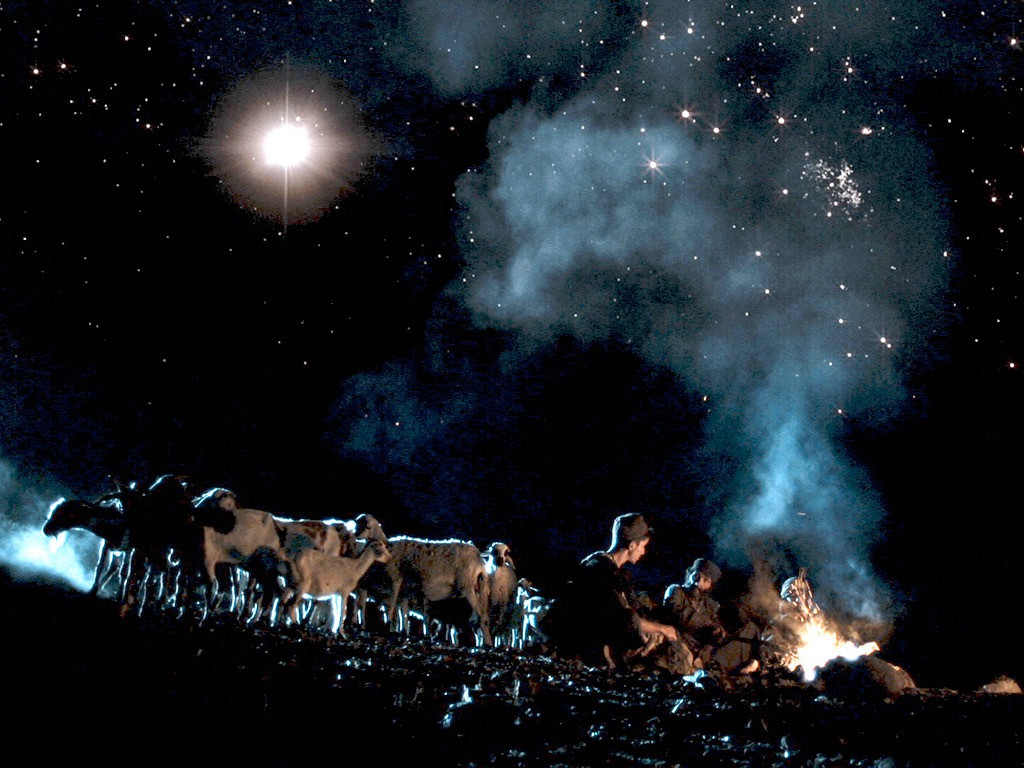
The first ones to receive the glorious news were the shepherds working the night shift out in the fields overlooking Bethlehem. Theirs’ was a busy occupation with the Temple in Jerusalem only six miles away. They provided many of the animals for sacrifice, including sheep. Shepherds worked day and night 365 days a year. They were also on the lower cast of society. The smell of the fields and animals was just as unattractive as their occupation for most people. Nevertheless, God chose them as the first ones to hear the good news. The news of Christ’s miraculous birth is for all people willing to come to Him and accept Him for salvation. The shepherds didn’t waste any time after the angels left them, “(they) said to one another, ‘Let us go over to Bethlehem and see this thing that has happened, which the Lord has made known to us.’” (Lk.2:15, esv)

The shepherds were filled with joy and hurried to see the Christ child, but when the angels first appeared, they were frighten to death. In fact, it was only one angel that got them all worked up. “And an angel of the Lord appeared to them, and the glory of the Lord shone around them, and they were filled with great fear.” (Lk.2:9 esv) Fear would have been a natural reaction when on a dark, quiet night of the same-old, same-old work an angel appears with the glory of the Lord shining all around them. But the angel quickly calms their fears with good news. “Fear not, for behold, I bring you good news of great joy that will be for all the people. For unto you is born this day in the city of David a Savior, who is Christ the Lord.” (Lk.2:10-11 esv)

This was good news for the shepherds. They would know ‘Christ’ was the Messiah that the Jews were waiting for. The angel referred to the city of David where the Messiah was prophesied to be born. This was a declaration of the birth of the one who would save the world from sin and death. Notice, the angel gives three titles to the Christ-child; Savior, Christ (Messiah, anointed one), and Lord (Yahweh, or God.) He was both God and man. The angel then gives them a sign of what to look for when they go to into Bethlehem to look for the savior, and then the song begins.

“And suddenly there was with the angel a multitude of the heavenly host praising God and saying, ‘Glory to God in the highest, and on earth peace among those with whom he is pleased!’” (Lk.2:13-14 esv) A heavenly host of angels came down and joined their colleague in singing their song ‘Gloria in Excelsis Deo.’ Here again, as in Mary’s and Zechariah’s songs, we get the name from the Latin Vulgate translation. The first words in the Latin Vulgate are ‘Gloria in Excelsis Deo’ meaning ‘Glory to God in the highest.’ The angels know of the glory and majesty of God and have just witnessed perhaps the greatest event they have seen and can’t hold back in giving praise and glory to God.

We will have the opportunity to sing along with angels this Christmas season whether singing in church, or caroling, singing at home, or in your car. This song of hope this week is giving glory to God for His plan of salvation coming to realization in the birth of Christ and the peace we can have by accepting Him as savior. What better song to sing.

(1) Sproul, R.C. Luke: An Expositional Commentary. Sanford: Reformation Trust Publishing, 2020. Pg 57

Read: Luke 2:7-20 ESV – And she gave birth to her firstborn son – Bible Gateway

Angels We Have Heard on High:

Bible Studies

“Zechariah’s Song-The Benedictus” 5 Songs of Hope for Advent        

“And you, child, will be called the prophet of the Most High; for you will go before the Lord to prepare his ways.” Luke 1:76 ESV

FreeBibleimages.org

The story of the birth of Christ has several intriguing storylines and all of them true. There are some ordinary people who play a significant role in God’s plan in bringing His Son into the world. This week we look at the husband of Elisabeth who gave us our first song of hope for advent two weeks ago. His name is Zechariah, one of 18,000 priests of that day, and who had been speechless the entire time of his wife’s pregnancy for not believing that Elizabeth would have a child in their old age. Over the course of nine months, I’m sure Zechariah had done some deep thinking, perhaps second guessing himself for his response to the angel. The angel had told him his son’s name would be John and that he would be great in the sight of the Lord turning peoples’ hearts back to the God, and that John would be the forerunner of the Messiah. This ordinary prophet will burst out in praise to the Lord God for His work in providing a way of salvation for all people.

Zechariah’s song is called ‘The Benedictus’ just as in Mary’s ‘The Magnificat’ the first word is translated from the Latin Vulgate. In this case the opening word is ‘Benedictus’ meaning ‘Praise be’ or ‘Blessed be.’ The song occurs eight days after Elizabeth had given birth. The occasion was the circumcision of the child as required by the Lord.

It was the custom to name a child at their circumcision, and most likely be named after someone in the family. Family members and friends tried to persuade Zechariah and Elizabeth to name him Zechariah. “And on the eighth day they came to circumcise the child. And they would have called him Zechariah after his father.” (Lk.1:59 esv) But of course Mary spoke up and said, ‘“No; he shall be called John.’ And they said to her, ‘None of your relatives is called by this name.’” (Lk.1:60b-61 esv) It’s interesting to note, families didn’t always agree in those days either. When they gestured to Zechariah what name he wanted for the child, Zecheriah wrote on a tablet, ‘His name is John.’ And immediately his mouth was opened, and Zechariah began praising God.

Zechariah’s first words after nine months were filled with praise to God. His silence from speaking could have brought on deep contemplation with God. Unable to speak, listening to everything around him, writing on a tablet, but able to converse with God in silent prayer, Zechariah used this time to connect deeper with his God. We need more quiet moments with God in our day to connect and grow deeper in our relationship with him. The results that await us will be positive as Zechariah has demonstrated.

The fear of the Lord came upon all those present. Reverential awe was displayed as the Lord’s presence was felt in naming this child. The anticipation was high in what this child named ‘John” would turn out to be. His naming outside the traditional norms meant great expectations for him as the hand of the Lord must be upon him.  

Zechariah begins his song, “Blessed be the Lord God of Israel, for he has visited and redeemed his people and has raised up a horn of salvation for us in the house of his servant David.” (Lk.1:68-69 esv) The occasion as noted above is the birth and circumcision of his son, but the heart and theme of his song is ‘God visiting His people.’ God had visited him and Elisabeth in the birth of their child and now God is about to visit His people with the birth of His Son, the Messiah. Zechariah begins his song with that prophecy. The word ‘horn’ is a symbol of strength and power. Jesus has the power to save. He is a powerful savior able to redeem his people.

God had spoken though the prophets of the Old Testament of Israel being saved from their enemies, but this is much more than that, it is redemption from their ultimate enemy and ours, Satan. Zechariah continues, “to show the mercy promised to our fathers and to remember his holy covenant, the oath that he swore to our father Abraham, to grant us.” (Lk.1:72-73 esv) The Lord God made a holy covenant with Abraham, an everlasting covenant with a promise to keep it, the Abrahamic covenant promising salvation by grace. (Gen,12:1-3, 15:18-21, 17:1-21)

Zechariah’s song now turns to his son, the forerunner to the Messiah. “And you, child, will be called the prophet of the Most High; for you will go before the Lord to prepare his ways, to give knowledge of salvation to his people in the forgiveness of their sins.” (Lk.1:76-77 esv) John is the one who was prophesied in the Old Testament as the one coming in the power of Elijah to prepare the way. “Behold, I will send you Elijah the prophet before the great and awesome day of the LORD comes. And he will turn the hearts of fathers to their children and the hearts of children to their fathers, lest I come and strike the land with a decree of utter destruction.” (Mal.4:5-6 esv) One commentary note, ‘John was a prophet of the Most High whereas Jesus is the Son of the Most High.’ John paved the way for the one who has the power to provide salvation.

Zechariah closes with the rising of the ‘Son,’ the light that will come upon those who live in darkness. “because of the tender mercy of our God, whereby the sunrise shall visit us from on high to give light to those who sit in darkness and in the shadow of death, to guide our feet into the way of peace.” Zechariah prophesied the sunrise was about to appear bringing light to all who sit in the darkness of sin. Christ was coming into the world ‘to guide our feet into the way of peace.’ Soon the heavenly angels will take over the singing, “Glory to God in the highest, and on earth peace among those with whom he is pleased!” (Lk.2:14 esv) And we look at that next week!

Photo by Owen.outdoors on Pexels.com

Read: Luke 1:57-80 ESV – The Birth of John the Baptist – Now the – Bible Gateway