“I do not treat the grace of God as meaningless. For if keeping the law could make us right with God, then there was no need for Christ to die.” Galatians 2:21 NLT
Photo AI Generated
Have you done your good deed for the day yet? Depending on when you are reading this, the beginning of your day or ending it or perhaps on your lunch break, there is still time to complete that good deed. When and if you do a good deed, does it count towards your entrance into heaven? How many good deeds you have stacked up at the gate so far? What’s the magic number you need for the gate to open? How do you know if your reached it? Do your good deeds outweigh your bad deeds? You hope they do. But you can never be sure. Trying to work your way into heaven is a fruitless effort. It will never be achieved no matter how hard you try. So, why don’t you quit trying to be good enough to become right with God, because you can’t, and count on Jesus’ righteousness through accepting Him for salvation.
The apostle Paul was telling the churches in Galatia that following the law would never make them right with God. If that where the case, then there was no reason for Jesus to die for our sins, seeing we could handle it ourselves through obeying the law and doing good deeds. The truth is there is nothing we can do to stand righteous before God. It is only through Jesus’ righteousness applied to us as we accept Him as our savior. That is why Jesus came. He needed to come to be the perfect sacrifice for sin which we could never be. Isaiah wrote, “We are all infected and impure with sin. When we display our righteous deeds, they are nothing but filthy rags. Like autumn leaves, we wither and fall, and our sins sweep us away like the wind.” (Is.64:6 nlt) Even our good deeds are as filthy rags. They certainly won’t get us into heaven. They won’t make us right with God. But faith through grace will get us both right with God and into heaven.
Don’t give up doing good deeds. But know they are not what gets you into heaven. Accept Jesus Christ as your savior, having His righteousness applied to you, and your good deeds will be done in the name of Jesus showing others you are a child of God.
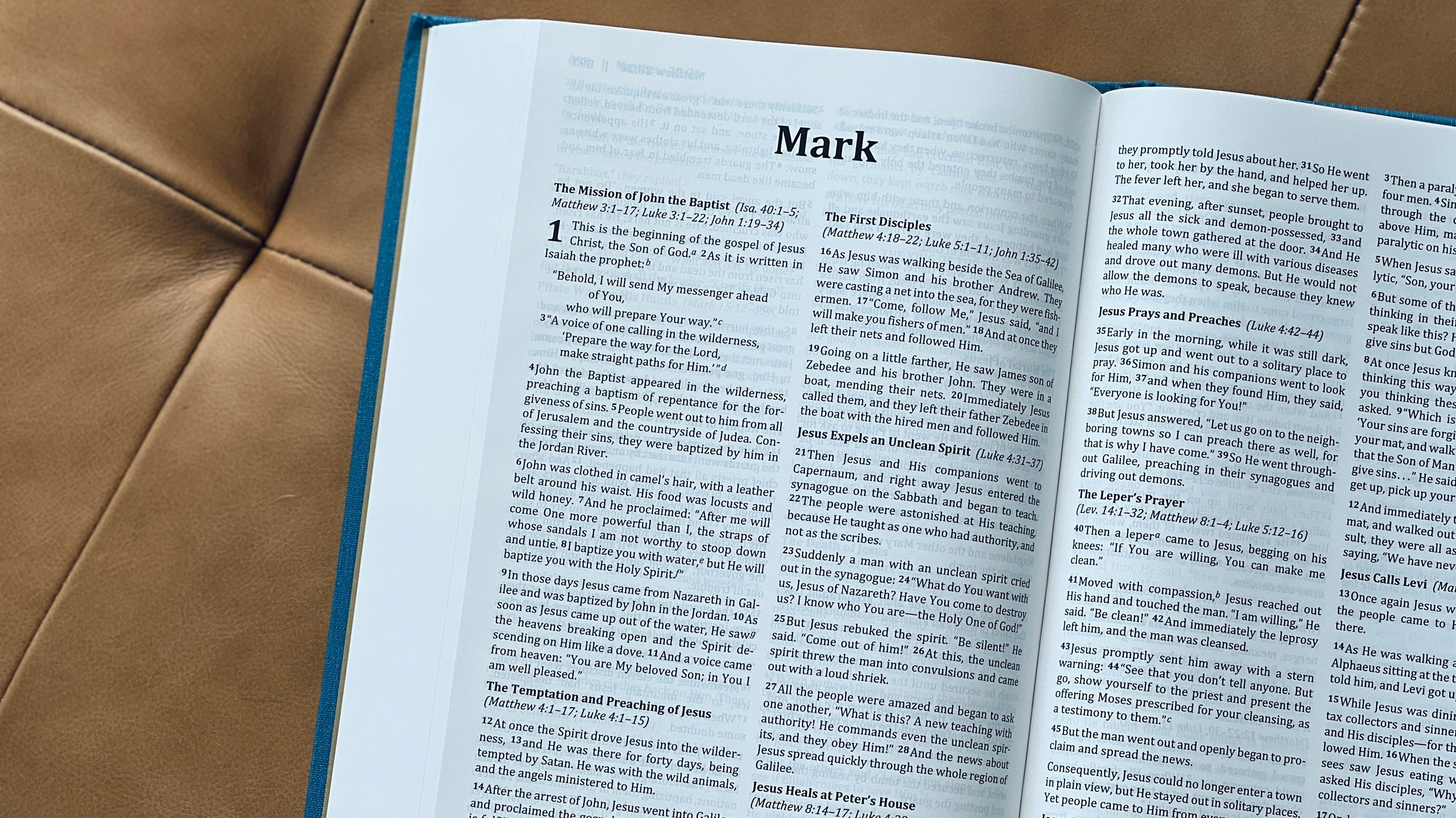
We are coming to the end of chapter 12 of Mark this week in Biblical Insights. It is still Tuesday of Passion week, and Jesus is getting questions from the Jewish rulers as the curious crowds look on. Jesus will have an opportunity to address a certain teacher, the people following Him, and His disciples with His teaching.
One teacher of the law was standing by and heard Jesus answer the Sadducees’ ridiculous question concerning a woman who was married seven times. They wanted to know whose wife she will be in the resurrection, when the Sadducees didn’t even believe in the resurrection. (Mk.12:18-27) This teacher was impressed with Jesus’ answer and decided to ask his own question.
The question he asked was, ‘Of all the commandments, which is the most important.’ (Mk.12:28 nlt) Jewish rabbis had a count of 613 commandments in the book of the law. They distinguished them between heavy and light. The problem was they couldn’t all agree which ones were ‘heavy’ (more binding) and which ones were ‘light.’ The Jewish teacher went right to the top commandment and asked what was the greatest of them all. “Jesus replied, ‘The most important commandment is this: Listen, O Israel! The LORD our God is the one and only LORD. And you must love the LORD your God with all your heart, all your soul, all your mind, and all your strength. The second is equally important: Love your neighbor as yourself. No other commandment is greater than these.” (Mk.12:29-31 nlt) The teacher liked Jesus’ response agreeing with Him adding his own Scriptural evidence. Jesus saw how much the man understood, but he was still lacking what was needed for salvation. The teacher knew moral concerns were more important than ceremonial sacrifices, but he needed to grasp all that was needed was to love God and obey Him. Jesus told him he was not far from the kingdom of God. Interesting that after this exchange with the Jewish teacher, no one dared to asked Jesus anymore questions.
Later in the day Jesus was once again teaching in the Temple. He asked the people who were listening, “Why do the teachers of religious law claim that the Messiah is the son of David? For David himself, speaking under the inspiration of the Holy Spirit, said, ‘The LORD said to my Lord, Sit in the place of honor at my right hand until I humble your enemies beneath your feet.’ Since David himself called the Messiah ‘my Lord,’ how can the Messiah be his son?” (Mk.12:35-37 nlt) Jesus is making the claim here that He is the Messiah, the Son of God. Most Jewish people knew the Messiah would come from the family of David. Jesus is explaining the first word ‘The LORD’ is ‘Yahweh’ God’s covenant name, and the second ‘my Lord’ is a word the Jews used for God. It is a picture of God speaking to the Messiah, and David calls Him Lord indicating the Messiah is more than the Son of David, but the Son of God. David would not refer to one of his descendants as Lord. Jesus was acknowledging the Messiah’s deity, and therefore His own.
Jesus then takes the opportunity to warn his listening audience which includes some of these religious rulers, “Beware of these teachers of religious law!” (Mk.12:38 nlt) Jesus said they would know them by their appearance in the long robes of a dignitary and the wealthy, and worthy of a respectful greeting. They would be noticeable in having the front row seats in the synagogue. Jesus then issues a cautious warning to widows, as the scribes and teachers also served as estate planners taking unfair advantage of unsuspecting women. A warning needs to be given in our day against false teachers and those who would seize on the opportunity to take advantage of those in hurting situations. The very ones who trust these leaders to be faithful are swindling them out of house and home. May we sound the alarm when we observe these vulnerable ones being taken.
FreeBibleimages.org
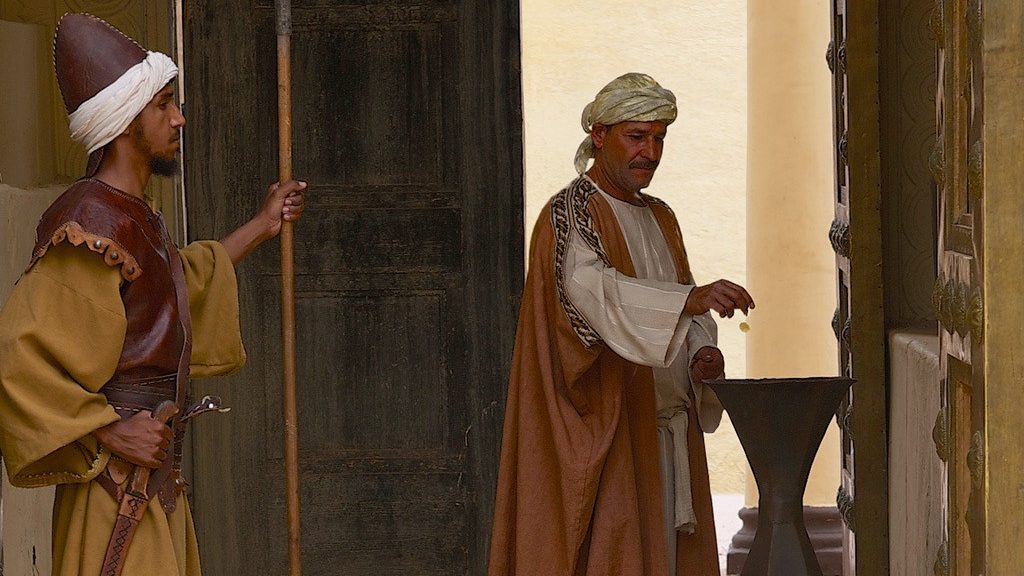
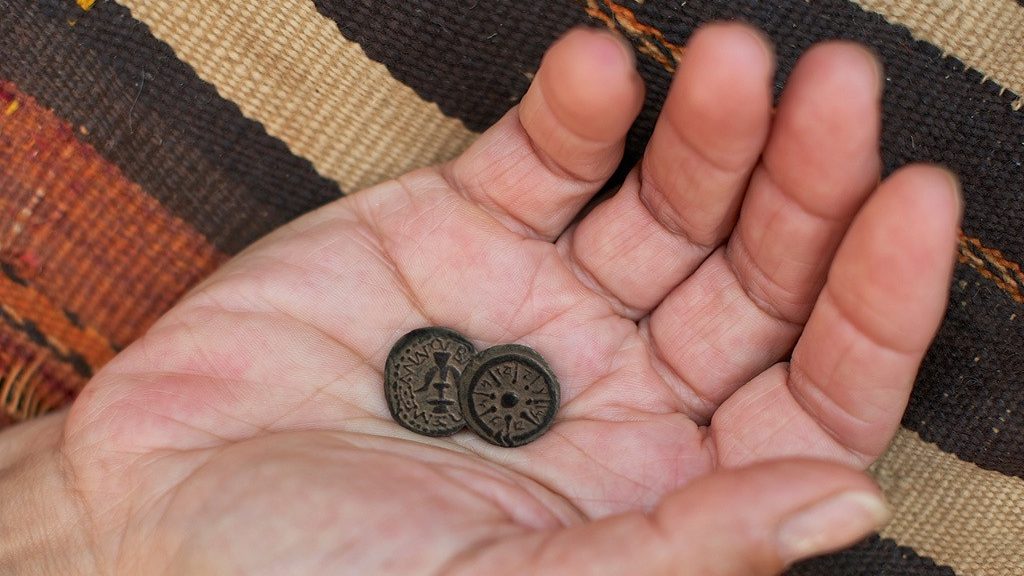
“Jesus sat down near the collection box in the Temple and watched as the crowds dropped in their money. Many rich people put in large amounts. Then a poor widow came and dropped in two small coins.” (Mk.12:41-42 nlt) When Jesus saw this, He called His disciples. The collection box was in the women’s court of the Temple. In fact, there were 13 trumpet shaped receptacles around the courtyard to make donations. This was a public area as people traveled through depositing their money. Jesus pointed out to His disciples the large amount of money the rich put it, which to them was equivalent to spare change. Then Jesus noted what the poor widow put in, two small coins. These were copper coins, the lowest valued coins in circulation in the Holy Land. These two copper coins were all she had to live on, and she put it in the donation box. This lesson Jesus points to is the show of faith this woman had in believing and trusting God to meet her daily needs. We live in a time when trusting God needs to come with a secure job and healthy bank account, then we can donate our spare change. But our God is faithful who will supply our needs when we first seek Him and His kingdom. “Seek the Kingdom of God above all else, and live righteously, and he will give you everything you need.” (Mt.6:33 nlt)
FreeBibleimages.org
Next week we begin chapter 13 where Jesus answers the disciples’ questions concerning future events. “Tell us, when will all this happen? What sign will show us that these things are about to be fulfilled?” (Mk.13:4 nlt) Until next week…….
“Jesus performed many other signs in the presence of his disciples, which are not recorded in this book. But these are written that you may believe that Jesus is the Messiah, the Son of God, and that by believing you may have life in his name.” John 20:30-31 NIV
Have you ever wondered why the Bible has stood the test of time over thousands of years? It is still in print today and available in a multitude of languages. The full Bible has been translated in over 700 languages and the New Testament in over 1,500. Approximately 15.7 million Bibles were sold in the United States alone in the first ten months of 2024. It is available in book or digital form and if you have a smart phone you have one available to you free of charge. So, why is it such a bestseller?
I image there are countless reasons why so many people desire a Bible or access to one. Some people like the look of a Bible on a shelf or coffee table. Some record special occasions in it such as births, marriages, and the passing of a loved one. Others read it for its historical content or literature artistic value. Then there are those who study it for its religious content as they would other works from the major world religions There are many more reasons why one desires a Bible, but the number one reason to have a Bible should be to know the God of the Bible and His love and salvation plan for mankind.
This brings us to the purpose the Bible was written. Every major work of literature has a main purpose, and the Bible is no different. The gospel writer John summed up the purpose of his book, which could be used as a summary for the entire Bible by saying, “But these are written that you may believe that Jesus is the Messiah, the Son of God, and that by believing you may have life in his name.” (Jn.20:31 niv) The Old Testament spoke of the coming Messiah. The New Testament revealed His coming and the way of salvation. If you are going to read the Bible, I suggest you read it for its main purpose, to believe what is written and by believing you may have life in His name.
“If I then, your Lord and Master, have washed your feet; ye also ought to wash one another’s feet. For I have given you an example, that ye should do as I have done to you.” John 13:14-15 NLT
Christians have an obligation to be an example to others in this world in the things of God. He saved us for a purpose other than to fill another place in heaven. Jesus is not currently living on earth, but we are. We are His hands and feet during our time here. Jesus gave us many examples in Scripture to follow on how to live the Chrisitan life and lead others to Him. The question remains, are we doing that?
One of the greatest examples Jesus gave us was on the night before His death. He washed His disciples feet. Jesus humbly took care of a need His disciples had, to have their dirty feet washed. People we come across everyday have needs to be met. It may not be dirty feet, but dirty laundry in need of being washed. It may a ride to the store or having the store brought to them at our expense. It may be lending a helping hand in a difficult family situation. Jesus’ example of washing the disciples feet extends far beyond the scene itself.
Jesus’ main point is for us to be humble enough to address any menial task that comes our way, especially if it is someone in need. These examples we follow from Christ is the essence of Christianity. We do them to show people Christ, the light in a dark world. We do them in Jesus’ name to lead them to the Savoir their greatest need, and we do them to be the example the Lord desires us to be.
“For you have been born again, but not to a life that will quickly end. Your new life will last forever because it comes from the eternal, living word of God.” 1 Peter 1:23 NLT
Some Christians struggle with the possibility that they could lose their salvation and eternal life. The Bible has several verses that can ease those unfriendly thoughts. In Peter’s letter to Gentile and Jewish believers he quotes from Isaiah to illustrate the power of the Word of God to renew souls unto the Lord, the Word that lasts forever. ‘“But the word of the Lord remains forever.’ And that word is the Good News that was preached to you.” (1Pt.1:25 nlt)
A person is saved as they are drawn by God through the Holy Spirit to Jesus Christ. Jesus Himself said, “For no one can come to me unless the Father who sent me draws them to me.” (Jn.6:44 nlt) And Paul writes in Titus, “ he saved us, not because of the righteous things we had done, but because of his mercy. He washed away our sins, giving us a new birth and new life through the Holy Spirit.” (Titus 3:5 nlt) Peter is expressing in 1 Peter the importance of the Word of God in salvation. The Bible points us to look at ourselves as sinners in need of repentance and belief in Christ. He is leading us to the Word of God, which contains the good news of the gospel.
Peter says in our text verse those who are born again now have a life that will last forever. The Holy Spirit uses the eternal living Word of God to convict us of our need of salvation. The ‘forever’ Word of God clearly defines the good news of salvation through Jesus. We can be sure as the Word of God will last forever, our salvation in the Lord will last forever. No worries.
“For to this you have been called, because Christ also suffered for you, leaving you an example, so that you might follow in his steps.” 1 Peter 2:21 ESV
Following Jesus in today’s world is not easily done. Oh sure, there are people who have no trouble following the Jesus they have set up in their mind. This Jesus is loving and kind (which He is), cares for the poor and underprivileged (which He does), and is all about justice (and He is). Following Jesus in each of these character traits is a godly endeavor every Christian should strive to achieve. But only following these traits about Jesus is not following the Biblical Jesus. It’s not following Him completely. If we are following the Biblical Jesus there will be some suffering involved. Peter tells us, ‘For to this you have been called.’
Peter was writing to Christians scattered throughout Asia Minor due to persecution for living out their faith in Christ. Living for Jesus involves all those things listed above and so much more. If attending only to those Christian deeds you probably won’t come under persecution, but if you stand for the truth of the gospel the stones will begin to fly. Peter encouraged his readers by saying, “But if when you do good and suffer for it you endure, this is a gracious thing in the sight of God. For to this you have been called,” (1Pt.2:20-21 esv) Every true Chrisitan has received the efficacious call to salvation, and with that call the suffering of injustice when we live out and proclaim the truth of the gospel.
Jesus completed His mission in suffering and dying for our sins. That was the plan. What put Jesus on that cross was His outspoken words of truth against the religious rulers of the day. It cost Him His life, but that was the plan. Peter says Jesus left us an example that we might follow in His steps. Jesus patiently endured His suffering for us; may we patiently endure our suffering for Him. If you have not been suffering in any way for Jesus, who is the Jesus you’re following?
“For even the Son of Man came not to be served but to serve others and to give his life as a ransom for many.” Mark 10:45 NLT
FreeBibleimages.org
This week Jesus is making His final approach to the city of Jerusalem were He will fulfill His mission of serving others by giving His life as a ransom for many. This final trip with His disciples started in Ephraim going through Galilee, south to Jericho, and on to Jerusalem. The Scripture says they were going up to Jerusalem even though they are traveling in a southernly direction. Jerusalem is actually 2,500 ft above sea level. Their trip will take them down through the Jordan Valley, below sea level, then upward to Jerusalem in the south. Jesus was walking ahead of them which was rare for Him to do. “They were now on the way up to Jerusalem, and Jesus was walking ahead of them. The disciples were filled with awe, and the people following behind were overwhelmed with fear.” (Mk.10:32 nlt) Many followers were frightened due to the threats upon Jesus coming from Jerusalem. Yet, they were amazed at His courage as He led them on the road.
Jesus reveals for a third time His upcoming death, this time in much more detail. Jesus confirms this is the trip in which it will all take place. He will be betrayed and handed over to the Jewish religious rulers who will sentence Him to die handing Him over to the Romans. “They will mock him, spit on him, flog him with a whip, and kill him, but after three days he will rise again.” (Mk.10:34 nlt) Despite the fact this is the third time Jesus spoke these words to His disciples they still failed to register it in their thought process. What happens next reveals what their thoughts were.
After Jesus informed His disciples what would soon take place when they arrive in Jerusalem, James and John ask Jesus for a favor, “When you sit on your glorious throne, we want to sit in places of honor next to you, one on your right and the other on your left.” (Mk.10:37 nlt) They clearly didn’t get it. It is as if James and John didn’t hear a word Jesus said. They were concerned about their own position in the future kingdom, which they still thought would be happening in the here and now. They were so focused on their view of the kingdom they failed to hear what the King said about the establishment of His kingdom. Christians today fall into the same trap of rewriting Scripture to reshape the kingdom as to what we think it should represent and how one is to come into the kingdom.
Jesus firmly answered James and John telling them they did not know what they are asking for. In the parallel scene of the disciples arguing who would be the greatest (Mk.9:33-37) Jesus taught the disciples what is true greatest. Here, He teaches them about humble, loving service. Drinking a bitter cup of suffering and being a servant to all is a humble, loving service shown as true greatest. The other disciples were indignant at what just occurred, but perhaps they were anticipating those positions for themselves. Jesus again teaches them all an important lesson.
Jesus noted how the rulers in the world ‘lord it’ over the people. They brag about their power and positions. Jesus then reverses the world’s value structure by saying, “But among you it will be different. Whoever wants to be a leader among you must be your servant, and whoever wants to be first among you must be the slave of everyone else.” (Mk.10:43-44 nlt) The disciples were to be different. We’re called to be different. Christians are to lead by serving. The disciples were to learn to lead by serving. And Jesus gave us both the greatest example, Himself, when He said, “For even the Son of Man came not to be served but to serve others and to give his life as a ransom for many.” (Mk.10:45 nlt)
The reason Jesus came to this earth was not for recognition or to lord it over people, but to provide salvation for all who accept His sacrifice for sins. This is the ultimate act of serving lost sinners. We cannot achieve entrance into heaven on our own. We needed someone who is ready, willing, and able to serve us in this fashion, and Jesus came to serve us in our most important need. He did not come to be served, but to serve.
As chapter 10 closes, Jesus performs His last healing miracle outside the city of Jericho. This the first and last recorded visit of Jesus in the city of Jericho, a rebuilt city under Herod the Great, 1 mile south of the ancient Old Testament Jericho. “A blind beggar named Bartimaeus (son of Timaeus) was sitting beside the road. When Bartimaeus heard that Jesus of Nazareth was nearby, he began to shout, ‘Jesus, Son of David, have mercy on me!’” (Mk.10:46-47 nlt) Bartimaeus was sitting just outside the city on the main road to Jerusalem. Being in his condition he would sit there asking for donations of those passing by on their way to Jerusalem. When he heard Jesus was passing through he shouted out to Jesus to have mercy on him. Two very important truths are noticed through the blind man’s words. He called Jesus, ‘Son of David’ meaning he must have believed Jesus was the Messiah, and he asked Jesus for mercy. Bartimaeus did not think God owed him anything but begged for mercy from Jesus the Messiah. We live in a world where at times people assume that God owes us something. He doesn’t, but He will bestow mercy on all who call on Him.
FreeBibleimages.org
When Jesus heard the man, he stopped. Jesus always stopped when those in need called out to Him, and this time was no different. He called for the man, and Bartimaeus quickly threw off his coat, jumped up and headed towards Jesus. The moment he had waited for many years had arrived; he would not be late. ‘“What do you want me to do for you?’ Jesus asked. ‘My rabbi,’ the blind man said, ‘I want to see!’” (Mk.10:51 nlt) Bartimaeus was healed immediately. Both his physical and spiritual eyes were opened, and he followed Jesus down the road.
Jesus continues His trip up to Jerusalem with His disciples and those who have been traveling with Him, along with the people heading to Jerusalem for the Passover, and now Bartimaeus is tagging along with them. We pick it up next week………
Do you know the number of promises God has given to us in the Bible? I did not. To me they are countless, but there is an actual number. Whether any human being could count them all and be accurate I’m not sure, but what I do know is that God knows the exact number for they are His promises. Many Biblical scholars put the number at 7,487 promises of God found in Scripture. So, I’ll go with that. God is not a God that He should lie. When God makes a promise, He sees it through. The responsibility now falls on us, do we believe His promises?
Of all the promises God has made, perhaps the greatest is His promise of eternal life. “This is the promise which He Himself made to us: eternal life…..And the testimony is this, that God has given us eternal life, and this life is in His Son.” (1Jn.2:25, 5:11 nasb) If you believe there is a God, then you should believe He is not a deceiver and would not lie. What He promises will come about, because He Himself is God. He has promised those who believe in His Son, Jesus Christ, will have eternal life.
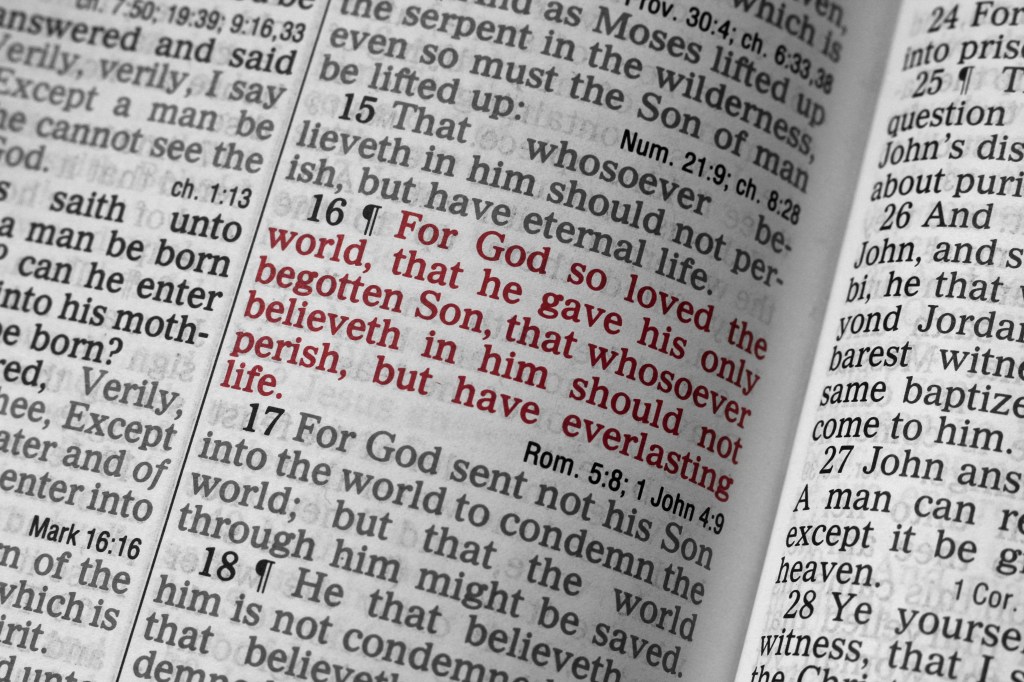
The only sure thing we can count on in this world is the promises of God as recorded in Scripture. As noted, there are many to read about in His Word and be encouraged, but we need to take first things first. The first promise of God for us to learn is His love for us and His salvation plan through Jesus Christ that guarantees us eternal life. Every one of His promises is true but let us start with the most important one. “For God so loved the world, that He gave His only begotten Son, that whoever believes in Him shall not perish, but have eternal life.” (Jn.3:16 nasb)
“But my life is worth nothing to me unless I use it for finishing the work assigned me by the Lord Jesus—the work of telling others the Good News about the wonderful grace of God.” Acts 20:24 NLT
Photo AI Generated wordpress
Have you ever received an ‘I’ as a mark in place of a grade on your school report card? ‘I’ or ‘incomplete’ notes you haven’t finished the course to receive a passing or failing grade. You didn’t fail, but you didn’t pass either. You failed to complete the course. Except for certain uncontrollable circumstances, failing to complete the course could be considered failing. This may seem a little harsh, but you did fail by not completing the assignments to receive a grade. Some educators today are too quick to mark an ‘I’ when it is not warranted.
The apostle Paul would never give out an ‘I’ as a teacher nor would he accept one. Paul was determined to go back to Jerusalem by the leading of the Holy Spirit although he knew that chains awaited him. Waiting near the docks of Miletus, Paul called for the elders at Ephesus. When they arrived, he gave them some final instructions and informed them they would not see each other again. Paul emphasized he still had work to do. He said his life would mean nothing if he didn’t finish the work the Lord Jesus gave him to do. Even prison, which may be a legitimate excuse, would not stop him from preaching the Good News. Paul did not want an ‘I’ on his report card.
Remember how you felt on those days your grades came out. Christians should have that feeling year-round for we do not know when our final report card is coming out. I don’t say this to put us into a state of panic, but to encourage us to complete what God has given us to do in this life. The Lord has given each of us our own assignments to accomplish, but all of us have the same work Paul had, telling others the Good News of Jesus Christ. We don’t want to be given an ‘I’ on that day but to hear ‘well done good and faithful servant.’
Last week in Biblical Insights, Jesus’ disciples were arguing among themselves who will be the greatest in the kingdom. To that Jesus taught them true greatness was with the one who serves. This week Jesus has another lesson to teach His followers, what is ‘true discipleship?’
“John said to Jesus, ‘Teacher, we saw someone using your name to cast out demons, but we told him to stop because he wasn’t in our group.’” (Mk.9:38 nlt) The disciples took it upon themselves to stop the man performing these exorcisms. The man, obviously, wasn’t a fraud or he wouldn’t be able to cast out demons in Jesus’ name. He must have been a believer in Jesus, but the disciples only saw that he wasn’t one of them. Their selfish ambition took over and perhaps some jealousy as they previously failed to cast out a demon. Jesus told them not to stop him. He didn’t care about the details but pointed out that one who was for Him would not be against Him. Once anyone performed a miracle in Jesus’ name they would not speak ill of Him. There’s no middle ground when it comes to Jesus.
The disciples’ reaction to the outsider is all too common within the church today and among certain Christians. Those outside our circle are often looked at as inferior or not as spiritual as us. The disciples thought they had an inside track to Jesus, which they had in their calling, but Jesus’ view of discipleship was more inclusive than His disciples realized. The church today needs to realize just how inclusive God’s kingdom is. But a word of caution in today’s language of ‘inclusive’, ‘inclusion’ ‘all accepting’ etc.. Jesus is the head of His church, and His Word, the Bible is the authority for all we do and how we conduct ourselves. Paul’s charge to the young Pastor Timothy was, “All Scripture is inspired by God and is useful to teach us what is true and to make us realize what is wrong in our lives. It corrects us when we are wrong and teaches us to do what is right. God uses it to prepare and equip his people to do every good work.” (2Tim.3:16-17 nlt) The church must continue to abide by Biblical standards. We can do both, be inclusive and maintain Godly principles at the same time. That’s what we have to do. Let’s do it!
Jesus states there is no deed done in Jesus’ name that goes unnoticed. “If anyone gives you even a cup of water because you belong to the Messiah, I tell you the truth, that person will surely be rewarded.” (Mk.9:41 nlt) No service done for Christ is unimportant. Those who do them are in Jesus’ circle as all who do great things for Hs name. They are the examples of ‘true discipleship.’
A warning is given by Jesus to those who cause a new Christian to stumble. Criticism of a new convert in their understanding and methods may cause them to turn away from Christ. The disciples trying to stop the man casting out demons could have him questioning Jesus later on. Enticing or leading a new believer into sin and/or doing the same to a child will bring about serious judgement from God. Jesus says, “it would be better for you to be thrown into the sea with a large millstone hung around your neck.” (Mk.9:42 nlt) Some need to be careful not to lead in this way by example with no intention of harm. Concerning young people, there’s an old saying, ‘more is caught than taught.’ We all lead by example.
Jesus now uses hyperbole to make a point. Drastic measures need to be taken to eradicate sin from our lives. The most drastic step we can take is to come face to face with our sin, acknowledge it, see for what it is, what it is doing to us, and face reality. Jesus uses the examples of cutting off your hand, or foot, and gouge out an eye if any of these are causing you to sin. He says it is better to enter into eternity lame than to be cast whole into hell, “where the maggots never die and the fire never goes out.” (Mk.9:48 nlt) The Wycliffe Bible Commentary notes, “The seat of sin is the soul not any organ of the physical body.” All are born with a sin nature, we can’t dismiss that, nor can we change our nature, but the Holy Spirit can when we put our faith in Christ for salvation. We take on a new nature. “This means that anyone who belongs to Christ has become a new person. The old life is gone; a new life has begun!” (2Cor.5:17 nlt)
As we close this week it’s important we notice Jesus’ reference to hell. We don’t hear a lot about hell in our churches these days. Some people even doubt Jesus’ references to it. When doubting they need to omit, change, symbolize, or ignore Jesus’ sayings. In todays reading, The Greek word that is used for ‘hell’ is ‘geenna’ It is of Hebrew origin meaning “lamentation” from the Hebrew word ‘hinnōm’. There was a Valley of Hinnom southwest of Jerusalem. This area was very familiar to the Jewish people. It was once the place of worship to the god Moloch. Later, in Jesus’ day it was the city dump with fires burning continually. Worms or maggots were always present as Jesus said, ‘where the maggots never die and the fire never goes out. For everyone will be tested with fire” (Mk.9:48-49 nlt) Jewish thought was the Valley of Hinnom was a symbol of eternal punishment. They knew what Jesus was saying.
FreeBibleimages.org
Last, back to ‘true discipleship’ as we close. Jesus uses His analogy of salt once again from His Sermon on the Mount. This time He says, “Salt is good for seasoning. But if it loses its flavor, how do you make it salty again? You must have the qualities of salt among yourselves and live in peace with each other.” (Mk.9:50 nlt) True Discipleship can be recognized by being the salt of the earth. Total commitment to Christ, the gospel, living in agreement with our brothers and sisters in the faith, and sharing the good news of Jesus Christ is true discipleship.











 Word for the Soul