I’ve heard it said, and it is true, that those desiring to read through the Bible never make it past the book of Leviticus. It is understandable seeing that the specific sacrifices made do not apply today. The religious ceremonies and offerings required by God do not apply either. The slaughtering of animals for the sacrifices is also a turnoff for some people. But there is much we can learn about the holiness of God in Leviticus, and maybe a thing or two about ourselves.
A sacrifice had to be made in the event of a sin even if one sinned unintentionally. The Lord required an animal sacrifice for the forgiveness of sin. “When they become aware of their sin, they must bring as an offering for their sin a female goat with no defects. They must lay a hand on the head of the sin offering and slaughter it at the place where burnt offerings are slaughtered.” (Lev.4:28-29 nlt) You may have heard the saying ‘our sin affects more people than just ourselves.’ The sinful actions we engage in have a ripple effect hurting people around us. Sin has its consequences.
The effects of sin by the people in Old Testament Israel caused the death of a blemish free animal. What was striking to me as I read our passage was that the one bringing the animal for sacrifice had to put their hand on the head of the one about to die and have their blood poured out on the altar. Because of their sin, that blameless animal was about to die. This should resonate with each one of us when we think of our own sin. Our Lord Jesus shed His blood on the cross at Calvary to satisfy the Father’s required payment for sin. Our hands were on Him as He was in our place about to sacrifice His life for our sin.
“Jesus went out to the lake with his disciples, and a large crowd followed him. The news about his miracles had spread far and wide, and vast numbers of people came to see him.” Mark 3:7- 8 NLT
FreeBibleimages.org
Famous people usually draw a crowd when out in public just by showing up at an event or enjoying dinner out. People crowd around them to say a word, or hope for a longer conversation, or are just looking for an autograph. Imagine if that person, in addition to filling your excitable emotions, could heal you physically of any disease or sickness you had. You would actively seek that person and not wait for a chance meeting. Jesus was such a famous person as he started His earthly ministry as we have been studying in the book of Mark.
Large crowds were beginning to follow Jesus as the news about His miracles of healing began spreading all throughout the region and beyond. People were traveling considerable distances from outside Palestine to find Jesus. He was becoming quite popular and there was much excitement building around Him.
We read today in the first six verses of Mark chapter 3 of another healing performed this time in the synagogue in Capernaum that helped boost Jesus’ fame. This miracle took place on the Sabbath day which boosted the Pharisees disproval of Jesus to the point they were now plotting His death. As Jesus entered the synagogue there was a man with a deformed hand. The Pharisees were watching with intent for what Jesus would do. The verb that is used indicates they were observing maliciously waiting to trap Him. The Pharisees were looking for an opportunity to accuse Jesus of breaking the Sabbath by healing the man. Rabbinic teaching did not allow the practice of medicine on the Sabbath unless the individual was close to death. This man with the deformed hand clearly was not, so the Pharisees watched closely.
Jesus asked the Pharisees, “Does the law permit good deeds on the Sabbath, or is it a day for doing evil? Is this a day to save life or to destroy it?” (Mk.3:4 nlt) The Pharisees had failed to see the true nature of the Sabbath was to do good. Not healing this man would be breaking the spirit of the Sabbath and would be a sin. The Pharisees did not answer Jesus. By remaining silent they were implying their views on the Sabbath were wrong. They were convinced Jesus could heal the man, yet when He does, they are ready to accuse Him and seek His death. It’s ironic Jesus asked them, ‘Is it a day to save life or to destroy it?’ No wonder they didn’t answer, Jesus was going to save life, and the Pharisees were plotting to destroy His.
Jesus displayed His righteous anger as the Holy One of God and was grieved at their hardness of heart. The Pharisees hearts were growing hard by their pride, and by the prospect of losing their power and positions. Their lifestyle was more important to them than accepting Jesus the Messiah had come. How many people have we in the world today who also love their lifestyle to the point that any mention of Christ hardens their hearts. The Pharisees in Jesus’ day were throwing away the truth of Christ for their own lies.
“Then he said to the man, ‘Hold out your hand.’ So the man held out his hand, and it was restored!” (Mk.3:5 nlt) Jesus performed another miracle of healing increasing His popularity with the people and infuriating the so-called religious Pharisees who wasted no time in gathering support to destroy Jesus. The Pharisees met with the Herodians, a secular political party who supported the Roman government, but opposed the Pharisees. The Herodians also wanted to see the end of Jesus. They feared their political power would be in jeopardy if the region became unstable due to Jesus’ presence. The Herodians and Pharisees had a common enemy for different reasons, but their concern for themselves united them. Our world is no different today. We have so-called religious people where Jesus gets in the way of their programs, and secular political parties where the name of Jesus becomes a distraction. Both avoid any contact with the Christ of Scripture.
No matter the efforts to suppress Jesus in our modern society, His popularity and the excitement He builds cannot be restrained. Large crowds still follow Him today, and they are growing. Just as in Jesus’ day, “They came from all over Galilee, Judea, Jerusalem, Idumea, from east of the Jordan River, and even from as far north as Tyre and Sidon. The news about his miracles had spread far and wide, and vast numbers of people came to see him.” (Mk.3:7-8 nlt) Jesus is not on earth physically with crowds of people ascending on Him just to touch Him that He needed to seek refuge in a boat. But Jesus’ popularity and the excitement He brings is only natural as He is the only hope in this world, and the only hope for our afterlife. He still heals and saves those who come to Him for salvation. Jesus offers us the ultimate healing from the sin of death to eternal life. That’s worth seeking Him.
“Jesus came and told his disciples, ‘I have been given all authority in heaven and on earth. Therefore, go and make disciples of all the nations, baptizing them in the name of the Father and the Son and the Holy Spirit.’” Matthew 28:18-19 NLT
FreeBibleimages.org
Do you own a ‘red-letter edition’ of the Bible? I have had several over the years. The red letters, of course, are the words spoken by Jesus. It is an excellent edition especially for a new Christian and those seeking to know more about the sayings of Christ, for Jesus’ words are easy to find. A bit of caution though to be aware of when reading a red-letter edition. There is a tendency to put more emphasis on Jesus’ words as being more important than the rest of Scripture. They are not. All Scripture is God’s Holy Word and equally important. What Jesus had to say is very important and should be lived out by every Christian. There is no greater example of living a godly lifestyle than the Lord Jesus. We should heed the words He spoke, all His words, and live accordingly.
Throughout the four gospels Jesus tells us in His teaching why He came to earth. He came to redeem us and restore our broken relationship with God the Father due to our sin. Jesus proved He was God the Son by the miracles He perform, and His love and compassion He had for all. He lived a perfect sinless life and was the only one worthy to offer Himself as a sacrifice for our sins. Jesus taught His followers, including us, how we should live and care for others. Christians today are to be the hands and feet of Jesus in all He taught us by His words, His example, and His parting words which are His instructions for us to follow while He is away.
Sadly, I’m afraid there are many Christians and churches who are weighing the importance of Jesus’ words against the rest of Scripture even within the red letters themselves. For example, Jesus taught us how to treat others, how to care for poor and the sick, how to look out for widows and orphans, and visit those in prison, along with loving the Lord our God with all our heart and loving our neighbor as ourselves. Jesus taught us many other things in Scripture, but those mentioned above seem to have priority over everything else Jesus said including, “I am the way, the truth, and the life. No one can come to the Father except through me.” (Jn.14:6 nblt) and His final instructions, His parting words as he ascended to heaven.
All of Jesus’ words have equal importance and it is not up to us to pick and choose, especially when we ignore the gospel message of salvation. Jesus told us to, ‘go and make disciples of all the nations.’ We are to preach the good news of saving grace and explain why Jesus came. He came to provide our greatest need, forgiveness of our sins and to save us from eternal separation from the Father.
And yes, taking care of social needs in Jesus’ name is also the work of Christians and the church. We should be quick to do this work and never neglect it. It only stands to reason if Jesus instructed us to care for the temporal needs of people on earth, He cares just as much for the more pressing need of saving their eternal souls. That is why Jesus gave us those parting words. Let’s do both!
“Command the people of Israel to bring you pure oil of pressed olives for the light, to keep the lamps burning continually. The lampstand will stand in the Tabernacle, in front of the inner curtain that shields the Ark of the Covenant. Aaron and his sons must keep the lamps burning in the LORD’s presence all night.” Exodus 27:20-21 NLT
When the children of Israel set out for the Promised Land under Moses’ leadership, the Lord God gave instructions in the building and maintaining the Tabernacle of God. (Ex.25-27) One of the articles inside the Holy place of the Tabernacle was the golden lampstand. It was crafted resembling an almond tree in bloom. The lampstand gave light for the priests serving in the Tabernacle, and it was to be lit at twilight and never to go out until morning.
The Lord commanded that there be a sufficient supply of olive oil on hand to keep it burning continuously. Care was taken to ensure that the olives used in providing the oil were beaten rather than crushed, for it would produce a finer quality of clearer fuel burning brighter and with less smoke. This command to provide olive oil was given to the people to ensure that the priests would be able to keep the lamps burning.
Dark storm clouds and shadows of discouragement that fill our life dim the light around us. Soon we find ourselves fumbling in the dark and losing our way. But there is no need for Christians to succumb to the darkness when we have the light. Jesus tells us, “I am the light of the world. If you follow me, you won’t have to walk in darkness, because you will have the light that leads to life.” (Jn.8:12 nlt) The light in the Tabernacle symbolized the life-giving and light-giving power of God. It also typified our Lord Jesus who is the true light who came into the world to save us. Those of us who know Him as savior have the light, the lamp of God that burns continually. So, no need to walk around in the dark.
The results of NFL’s ‘Super Bowl 59’ are in as the game was played last evening in New Orleans, Louisiana. As I write this, the game is a day away. I anticipate there will be many joyous celebrations from fans of the winning team, and not so joyous on the other side. Locally I reside 60 miles from Philadelphia and this morning there is either joy or sadness in the Philly area. In fact, there will be joy or sadness across the sporting world due to the outcome. Did Kansas City set a record with their 3rd in a row? Either way, whatever the result, don’t let it take away your joy.
David writes in Psalm 16:11, “You make known to me the path of life; in your presence there is fullness of joy; at your right hand are pleasures forevermore.” (nlt) David says there is fullness of joy, or complete joy, in God’s presence. He is not referring to happy moments as when your favorite team wins the Super Bowl. David is referring to a lasting joy that overcomes any disappointment, sadness, or sorrow that comes our way in life. Our joy in God is not based on external circumstances, but on His internal presence in our lives with His Son Jesus, and the Holy Spirit.
To secure that internal joy that will never fade away receive Christ as your personal savior if you have never done so. If you’re a child of God but your joy is missing a beat, perhaps there is something in your life that needs to be corrected. Make it right with God and restore your joy, win or lose.
“Once when John’s disciples and the Pharisees were fasting, some people came to Jesus and asked, ‘Why don’t your disciples fast like John’s disciples and the Pharisees do?’” Mark 2:18 NLT
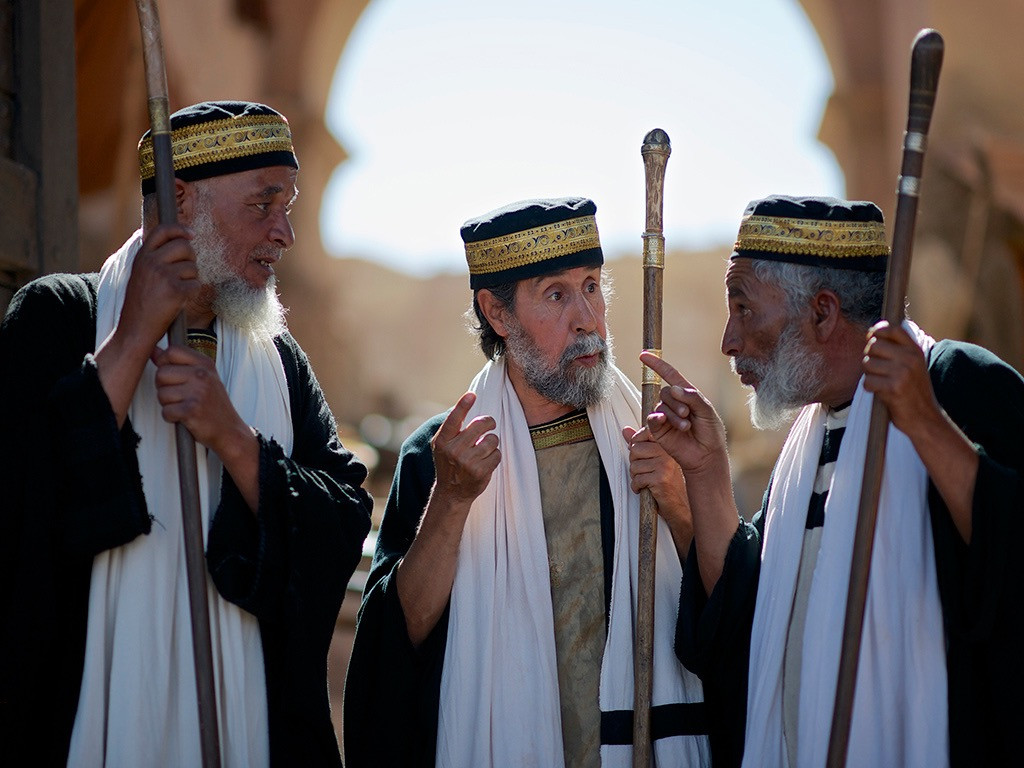
In this week’s Biblical Insights, we sit back and listen to the first two of many discussions Jesus has with the Pharisees, other religious rulers, and the people of Israel in the book of Mark. Jesus’ discussions along with His teaching is the core of the gospel of Mark. His favorite name for Himself is the ‘Son of Man.’ Jesus corrects misunderstandings and outright misinformation leveled against Him by the religious rulers, and He answers all questions presented to Him. He confirms His deity, the future coming kingdom, and that He is the way of salvation and the only way to the Father.
After the dinner party Levi had for Jesus in his home, some people came to Jesus with a question concerning fasting. “Why don’t your disciples fast like John’s disciples and the Pharisees do?” (Mk.2:18 nlt) Now, these two groups couldn’t be more apart on religious matters, but the people’s concern was legitimate. John the Baptist’s disciples probably were fasting as an expression of the repentance John preached. John was also in prison at this time, so their fasting could have been in mourning for him. The Pharisees, on the other hand, fasted twice a week as a religious ritual. Fasting was a sign of contrition and penitence as far back as the days of the Judges but had become a mere outward expression. The only fasting that was required by Mosaic law was on the Day of Atonement. The Jewish people found it odd that Jesus’ disciples did not fast as other religious people did, so they asked the question.
Jesus takes this opportunity to hint of His mission here on earth. He compares Himself to a bridegroom and His disciples as guests in a marriage celebration. A marriage was a joyous occasion, no time for mourning, why would they fast. But there will come a day when Jesus leaves them, and then they will fast. It will be appropriate at that time.
Expanding on the scope of His mission, Jesus uses two illustrations to explain something new is coming. Jesus’ new gospel of repentance and forgiveness of sin cannot relate to the old traditional rituals. “Besides, who would patch old clothing with new cloth? For the new patch would shrink and rip away from the old cloth, leaving an even bigger tear than before. And no one puts new wine into old wineskins. For the wine would burst the wineskins, and the wine and the skins would both be lost. New wine calls for new wineskins.” (Mk.2:21-22 nlt)
The Pharisees prompt the second of Jesus’ discussions this week. They observe Jesus’ disciples picking heads of grain and eating them as they were traveling along the road next to the grainfields. What upset them was this occurred on the Sabbath day. They claimed Jesus’ disciples were breaking the Sabbath by working harvesting wheat on the Sabbath day. As ridiculous as that sounds, that is how far they stretched the law to conform to their new rules and regulations. Some Christian leaders today are guilty of adding do’s and don’ts above what God has stated in His Word. Just a note of caution to be sure we are biblically sound.
The Old Testament book of Deuteronomy says, “And when you enter your neighbor’s field of grain, you may pluck the heads of grain with your hand, but you must not harvest it with a sickle.” (Dt.23:25 nlt) The Pharisees should have been familiar with that scripture, but their concern is it was the Sabbath day. Jesus gives them the example of David and his men, what they did when exhausted from hunger. “He went into the house of God (during the days when Abiathar was high priest) and broke the law by eating the sacred loaves of bread that only the priests are allowed to eat. He also gave some to his companions.” (Mk.2:26 nlt) Jesus was illustrating they may have done what was forbidden, but it is also lawful to do good and save a life on the Sabbath. He emphasized the true spirit of the Sabbath is intended for man restoration; spiritual, mental, and physical. (Mk.2:27)
FreeBibleimages.org
Jesus again confirms His Deity in His discussion with the Pharisees when He claimed He is Lord of Sabbath. He is greater than the Sabbath and therefore has the authority to reject the Pharisees rules and regulations concerning the Sabbath day. Jesus will have continual run ins with these religious rulers as we will see throughout the book of Mark, and He will confront them with who He is and His mission why He is here. Jesus said, “The time promised by God has come at last! The Kingdom of God is near! Repent of your sins and believe the Good News!” (Mk.1:15 nlt)
“Put on your new nature, created to be like God—truly righteous and holy. And do not bring sorrow to God’s Holy Spirit by the way you live. Remember, he has identified you as his own, guaranteeing that you will be saved on the day of redemption.” Ephesians 4:24, 30 NLT
New converts to Christianity have a hard time relinquishing their old sinful habits. Once a person accepts Christ as savior they are indwelt by the Holy Spirit, but the flesh takes time to surrender. In fact, total surrender will not happen until we’re with Christ in glory. We can make progress in our Christian Walk if we are constantly reminded of the old ways that we are to let go of and replace them with renewed thoughts and attitudes. We’ve been given a new nature in Christ to help us walk in the light.
Paul tells us to put on that new nature, but in a sense, we already have it. He is reminding us to live as if we have it, because we do. Paul is telling us it’s now time to remove our dirty old clothes and put on our clean new ones. In his letter to the church in Ephesus, Paul lays out a section of living as children of light. (Eph.4:17-32) Before we came to know the Lord, we were living in darkness. There was no need for instructions on evil behavior, it came naturally. But even with our new nature, the old one still hangs around. Paul tells us to get rid of it by saying, “Since you have heard about Jesus and have learned the truth that comes from him, throw off your old sinful nature and your former way of life, which is corrupted by lust and deception.” (Eph.4:21-22 nlt)
Listing some of the things that still creep into our lives, Paul tells us to throw them in the pile of dirty clothes along with other sins he didn’t mention. For every piece we throw off, Paul tells us what to put on in its place. It takes time, but a steady progression of living in the light eliminates the darkness.
“As he walked along, he saw Levi son of Alphaeus sitting at his tax collector’s booth. ‘Follow me and be my disciple,’ Jesus said to him. So Levi got up and followed him.” Mark 2:14 NLT
FreeBibleimages.org
Have you noticed someone who has truly come to Christ and the radical change that has occurred in their life? I emphasize ‘truly’ for there are many who profess finding Jesus, but their lives do not show it. They are easily exposed to being fraudulent, no true conversion has taken place. Unlike the truly converted, whose lives have changed and taken on a new a meaning. Things they have done before they no longer do, things they would never do they are doing unashamed. Jesus has a way of making that happen in the most unlikely individual when they realize they need a savior. This week in our study in the gospel of Mark we meet up with such a person, Levi, whose name was changed to Mathew after he met Jesus in his place of business.
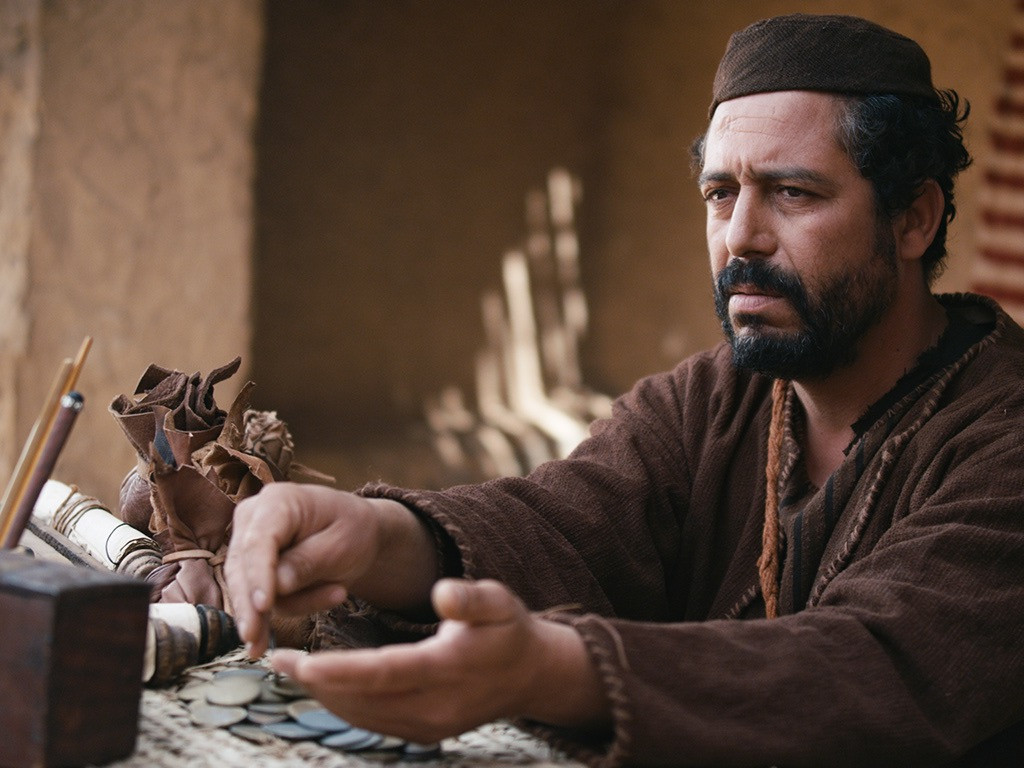
Jesus went out to the lakeshore after healing and forgiving the sins of a paralytic proving His deity in Peter’s house. Again, Jesus was teaching all who came to Him. “Then Jesus went out to the lakeshore again and taught the crowds that were coming to him.” (Mk.2:13 nlt) Jesus came to a tax booth near the Sea of Galilee. Tax booths were set up by the Roman government to collect taxes for infrastructure and to support the government. They were set strategically along the main roads to collect tolls like in our day. Commercial fishing was also taxed, so you would find a tax booth near a major fishing location. There Jesus saw Levi in his tax collector’s booth and said to him, ‘follow me and be my disciple.’ Levi didn’t hesitate to leave his lucrative job behind he went out and followed Jesus.
Levi is a good example for us to look at of one having a radical change after accepting Christ as savior. Levi was a tax collector, one of the most despised people in Israel at that time. Tax collection ran like our modern-day franchises. Tax offices were purchased from the Roman government with the right to collect taxes in a certain area. Operators were allowed to keep everything above the required government tax rate. Tax collectors made an exuberant living by charging excess fees far above what was reasonable, and most were dishonest. These tax collectors were making themselves rich at the expense of their own people. Levi left the money on the table, realizing that he needed a savior more than the money due to his sins, and he was now about to show everyone his radical change.
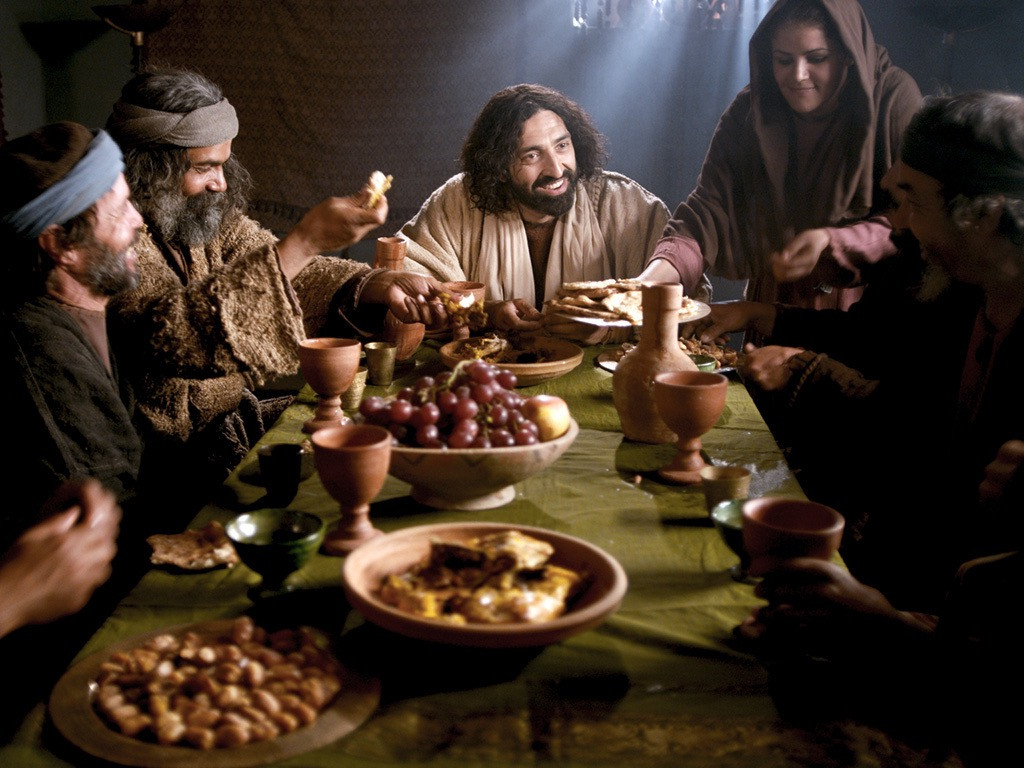
Levi’s quick response to Jesus and what he is about to do next is a testimony to the genuineness of his conversion. Levi decided to have a dinner party in honor of Jesus and invite his friends, colleagues, and associates. “Later, Levi invited Jesus and his disciples to his home as dinner guests, along with many tax collectors and other disreputable sinners.” (Mk.2:15 nlt) Levi wanted his guests to meet Jesus who had made such a change in his life. This did not sit well with the Jewish leaders who were looking for anything to discredit Jesus. Jesus sitting among these people and having a meal with them was an offense to these Pharisaical leaders. “But when the teachers of religious law who were Pharisees saw him eating with tax collectors and other sinners, they asked his disciples, ‘Why does he eat with such scum?’” (Mk.2:16 nlt) The leaders felt any contact with these people would make Jesus a sinner. Sinner was a common term for tax collectors, adulterers, robbers, and the like. But in their eyes, anyone who did not follow the Mosaic Law as they interpreted it were sinners, or scum.
Christians today need to be careful we don’t look down on non-Christians by not associating with them. Jesus gave us a command to go into all the world and preach the gospel making disciples in all nations. (Mt.28:19-20) Jesus also said “But I say, love your enemies! Pray for those who persecute you! If you love only those who love you, what reward is there for that? Even corrupt tax collectors do that much.” (Mt.5:44, 46 nlt) Jesus answered the Jewish leaders in Levi’s home by saying, “Healthy people don’t need a doctor—sick people do. I have come to call not those who think they are righteous, but those who know they are sinners.” (Mk.2:17 nlt) A self-righteous person feels no need to come to Christ for salvation, but a sinner does. And that sinner will have a radical change take place in their life for all their friends and the world to see.
There are many parallels in Scripture to consider for our benefit if we take the time to recognize them. An easy way to access them is to observe the study notes and related Scripture of the verses in the passage you are reading. That is, of course, if you have a Study Bible. If you do not have one, I highly recommend you get one. Parallels between the Old and New Testaments occur quite often, and all are important for our understanding and growth as a Christian.
Daniel chapter 2 records the story of King Nebuchadnezzar’s dream and Daniel’s interpretation. The king sees a large shining statue of a man in his dream which frighten him. Daniel reveals the dream exactly as the king saw it. Daniel then interprets the description of the appearance of the man from head to toe. In short, the man in the king’s dream represents four kingdoms, one that was present, Babylon, and three that are future. They were the Medo-Persian Empire, followed by Greek Empire with help of Alexander the Great, and the Roman Empire.
The rise of a fifth and final kingdom is explained by Daniel from what Nebuchadnezzar saw in his dream. “As you watched, a rock was cut from a mountain, but not by human hands. It struck the feet of iron and clay, smashing them to bits.” (Dan.2:34 nlt) The interpretation of the rock (stone) is Christ at His second coming who will destroy all the sinful empires of man establishing His millennial kingdom on earth. “During the reigns of those kings, the God of heaven will set up a kingdom that will never be destroyed or conquered. It will crush all these kingdoms into nothingness, and it will stand forever.” (Dan.2:44 nlt)
Jesus told His followers in the New Testament as He was being rejected by the Elders and Jewish Leaders, “The stone that the builders rejected has now become the cornerstone. Everyone who stumbles over that stone will be broken to pieces, and it will crush anyone it falls on.” (Lk.20:17b-18 nlt) All who reject Christ, the only way of salvation, is subjecting themselves to stumbling and being crushed by the weight of their own unforgiven sin. Let that not be you!
Super Bowl Sunday, the unofficial holiday in the United States, is less than two weeks away. The Philadelphia Eagles and the Kansas City Chiefs have earned their tickets to the biggest football game of the year by winning their respective conference championship games. The game has truly become an event the shuts down most of the nation for 4-5 hours on a Sunday evening. There are parties and family gatherings, with every variety of food imaginable and all eyes bent toward the giant flat screen television. Excitement builds for two weeks with fans bantering each other on who will win, and who are true fans and who are the bandwagon jumpers looking to get in on a good thing. Last year an estimated 123 million people in the United States watched the game, and that’s not including the international audience, that close to 40% of the entire population of America.
Obviously, they are not that many football fans in the U.S. or across the world, but many people get caught up in the excitement and enthusiasm of the fans and the whole event. It is a time to celebrate. On those same lines every day is an unofficial holiday for Christians, and it too is a day to celebrate. God in His grace and mercy reconciled us back to Himself through His Son Jesus Christ. Our only response needed is to accept Christ as our Savior. “For by grace you have been saved through faith. And this is not your own doing; it is the gift of God, not a result of works, so that no one may boast. (Eph.2:8-9 esv)
Do people around us get caught up with our enthusiasm and excitement for Christ? Do you think it’s possible for us to stir up enough excitement these next two weeks to make a difference in the kingdom of God by offering a free ticket to the biggest event in of all history, eternity with Christ? Yes, it is time to celebrate. And maybe we’ll even see a John 3:16 sign in the end zone this year!











 Word for the Soul