Bible Studies

“Discussions with Jesus” The Gospel of Jesus Christ: the book of Mark

Read: Mark 2:18-28 NLT – A Discussion about Fasting – Once when – Bible Gateway

“Once when John’s disciples and the Pharisees were fasting, some people came to Jesus and asked, ‘Why don’t your disciples fast like John’s disciples and the Pharisees do?’” Mark 2:18 NLT

Photo by Yosi Prihantoro on Unsplash

In this week’s Biblical Insights, we sit back and listen to the first two of many discussions Jesus has with the Pharisees, other religious rulers, and the people of Israel in the book of Mark. Jesus’ discussions along with His teaching is the core of the gospel of Mark. His favorite name for Himself is the ‘Son of Man.’ Jesus corrects misunderstandings and outright misinformation leveled against Him by the religious rulers, and He answers all questions presented to Him. He confirms His deity, the future coming kingdom, and that He is the way of salvation and the only way to the Father.

After the dinner party Levi had for Jesus in his home, some people came to Jesus with a question concerning fasting. “Why don’t your disciples fast like John’s disciples and the Pharisees do?” (Mk.2:18 nlt) Now, these two groups couldn’t be more apart on religious matters, but the people’s concern was legitimate. John the Baptist’s disciples probably were fasting as an expression of the repentance John preached. John was also in prison at this time, so their fasting could have been in mourning for him. The Pharisees, on the other hand, fasted twice a week as a religious ritual. Fasting was a sign of contrition and penitence as far back as the days of the Judges but had become a mere outward expression. The only fasting that was required by Mosaic law was on the Day of Atonement. The Jewish people found it odd that Jesus’ disciples did not fast as other religious people did, so they asked the question.

Jesus takes this opportunity to hint of His mission here on earth. He compares Himself to a bridegroom and His disciples as guests in a marriage celebration. A marriage was a joyous occasion, no time for mourning, why would they fast. But there will come a day when Jesus leaves them, and then they will fast. It will be appropriate at that time.

Expanding on the scope of His mission, Jesus uses two illustrations to explain something new is coming. Jesus’ new gospel of repentance and forgiveness of sin cannot relate to the old traditional rituals. “Besides, who would patch old clothing with new cloth? For the new patch would shrink and rip away from the old cloth, leaving an even bigger tear than before. And no one puts new wine into old wineskins. For the wine would burst the wineskins, and the wine and the skins would both be lost. New wine calls for new wineskins.” (Mk.2:21-22 nlt)

The Pharisees prompt the second of Jesus’ discussions this week. They observe Jesus’ disciples picking heads of grain and eating them as they were traveling along the road next to the grainfields. What upset them was this occurred on the Sabbath day. They claimed Jesus’ disciples were breaking the Sabbath by working harvesting wheat on the Sabbath day. As ridiculous as that sounds, that is how far they stretched the law to conform to their new rules and regulations. Some Christian leaders today are guilty of adding do’s and don’ts above what God has stated in His Word. Just a note of caution to be sure we are biblically sound.  

The Old Testament book of Deuteronomy says, “And when you enter your neighbor’s field of grain, you may pluck the heads of grain with your hand, but you must not harvest it with a sickle.” (Dt.23:25 nlt) The Pharisees should have been familiar with that scripture, but their concern is it was the Sabbath day. Jesus gives them the example of David and his men, what they did when exhausted from hunger. “He went into the house of God (during the days when Abiathar was high priest) and broke the law by eating the sacred loaves of bread that only the priests are allowed to eat. He also gave some to his companions.” (Mk.2:26 nlt) Jesus was illustrating they may have done what was forbidden, but it is also lawful to do good and save a life on the Sabbath. He emphasized the true spirit of the Sabbath is intended for man restoration; spiritual, mental, and physical. (Mk.2:27)

FreeBibleimages.org

Jesus again confirms His Deity in His discussion with the Pharisees when He claimed He is Lord of Sabbath. He is greater than the Sabbath and therefore has the authority to reject the Pharisees rules and regulations concerning the Sabbath day. Jesus will have continual run ins with these religious rulers as we will see throughout the book of Mark, and He will confront them with who He is and His mission why He is here. Jesus said, “The time promised by God has come at last! The Kingdom of God is near! Repent of your sins and believe the Good News!” (Mk.1:15 nlt)  

Devotionals

Live as Children of Light         

Read: Ephesians 4:17-32 NLT – Living as Children of Light – With the – Bible Gateway

“Put on your new nature, created to be like God—truly righteous and holy. And do not bring sorrow to God’s Holy Spirit by the way you live. Remember, he has identified you as his own, guaranteeing that you will be saved on the day of redemption.” Ephesians 4:24, 30 NLT

Photo by RDNE Stock project on Pexels.com

New converts to Christianity have a hard time relinquishing their old sinful habits. Once a person accepts Christ as savior they are indwelt by the Holy Spirit, but the flesh takes time to surrender. In fact, total surrender will not happen until we’re with Christ in glory. We can make progress in our Christian Walk if we are constantly reminded of the old ways that we are to let go of and replace them with renewed thoughts and attitudes. We’ve been given a new nature in Christ to help us walk in the light.

Paul tells us to put on that new nature, but in a sense, we already have it. He is reminding us to live as if we have it, because we do. Paul is telling us it’s now time to remove our dirty old clothes and put on our clean new ones. In his letter to the church in Ephesus, Paul lays out a section of living as children of light. (Eph.4:17-32) Before we came to know the Lord, we were living in darkness. There was no need for instructions on evil behavior, it came naturally. But even with our new nature, the old one still hangs around. Paul tells us to get rid of it by saying, “Since you have heard about Jesus and have learned the truth that comes from him, throw off your old sinful nature and your former way of life, which is corrupted by lust and deception.” (Eph.4:21-22 nlt)

Listing some of the things that still creep into our lives, Paul tells us to throw them in the pile of dirty clothes along with other sins he didn’t mention. For every piece we throw off, Paul tells us what to put on in its place. It takes time, but a steady progression of living in the light eliminates the darkness.

Bible Studies

“Radical Change” The Good News of Jesus Christ: the book of Mark

Read: Mark 2:13-17 NLT – Jesus Calls Levi (Matthew) – Then Jesus – Bible Gateway

“As he walked along, he saw Levi son of Alphaeus sitting at his tax collector’s booth. ‘Follow me and be my disciple,’ Jesus said to him. So Levi got up and followed him.” Mark 2:14 NLT

FreeBibleimages.org

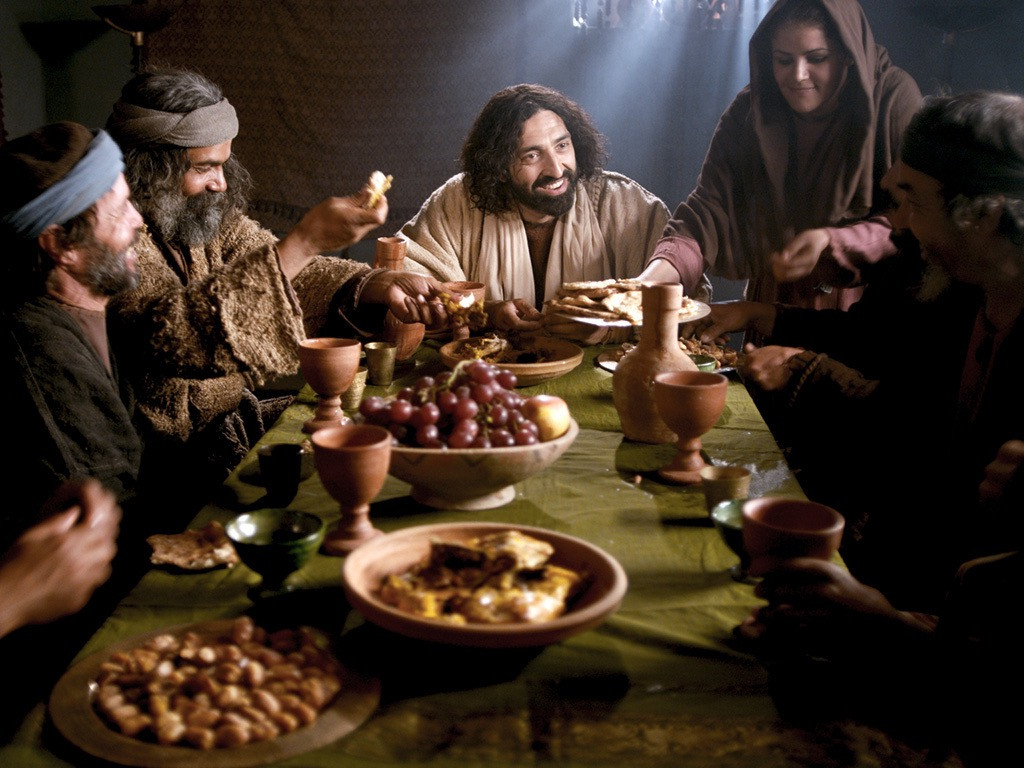
Have you noticed someone who has truly come to Christ and the radical change that has occurred in their life? I emphasize ‘truly’ for there are many who profess finding Jesus, but their lives do not show it. They are easily exposed to being fraudulent, no true conversion has taken place. Unlike the truly converted, whose lives have changed and taken on a new a meaning. Things they have done before they no longer do, things they would never do they are doing unashamed. Jesus has a way of making that happen in the most unlikely individual when they realize they need a savior. This week in our study in the gospel of Mark we meet up with such a person, Levi, whose name was changed to Mathew after he met Jesus in his place of business.

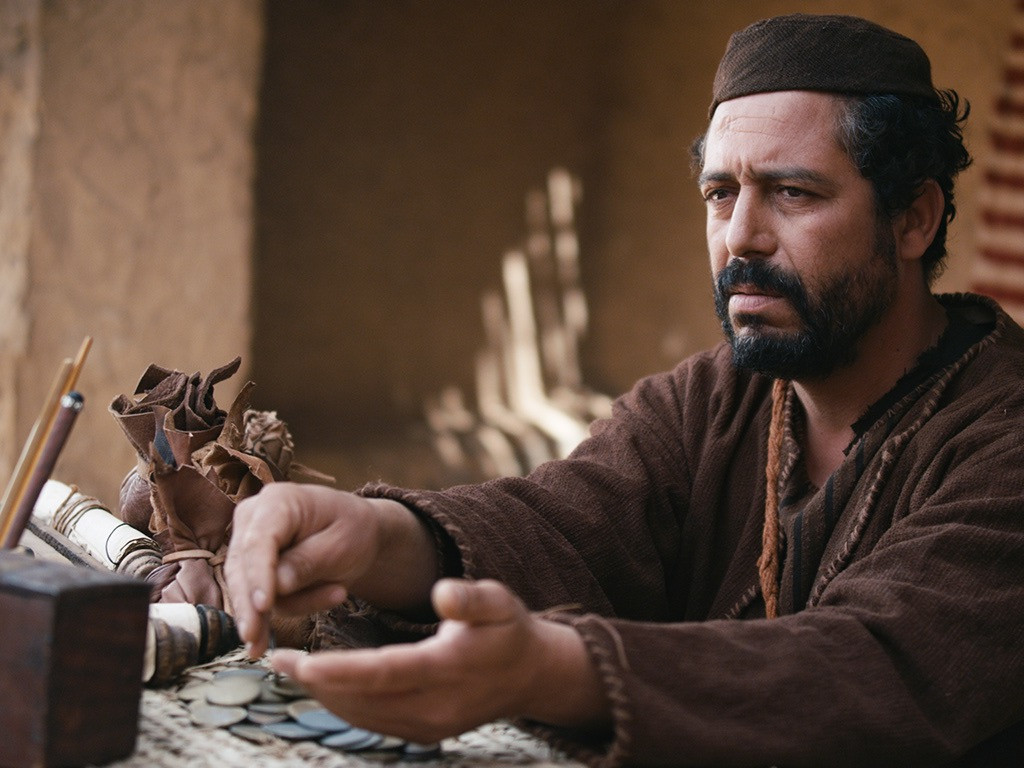
Jesus went out to the lakeshore after healing and forgiving the sins of a paralytic proving His deity in Peter’s house. Again, Jesus was teaching all who came to Him. “Then Jesus went out to the lakeshore again and taught the crowds that were coming to him.” (Mk.2:13 nlt) Jesus came to a tax booth near the Sea of Galilee. Tax booths were set up by the Roman government to collect taxes for infrastructure and to support the government. They were set strategically along the main roads to collect tolls like in our day. Commercial fishing was also taxed, so you would find a tax booth near a major fishing location. There Jesus saw Levi in his tax collector’s booth and said to him, ‘follow me and be my disciple.’ Levi didn’t hesitate to leave his lucrative job behind he went out and followed Jesus.  

Levi is a good example for us to look at of one having a radical change after accepting Christ as savior. Levi was a tax collector, one of the most despised people in Israel at that time. Tax collection ran like our modern-day franchises. Tax offices were purchased from the Roman government with the right to collect taxes in a certain area. Operators were allowed to keep everything above the required government tax rate. Tax collectors made an exuberant living by charging excess fees far above what was reasonable, and most were dishonest. These tax collectors were making themselves rich at the expense of their own people. Levi left the money on the table, realizing that he needed a savior more than the money due to his sins, and he was now about to show everyone his radical change.

Levi’s quick response to Jesus and what he is about to do next is a testimony to the genuineness of his conversion. Levi decided to have a dinner party in honor of Jesus and invite his friends, colleagues, and associates. “Later, Levi invited Jesus and his disciples to his home as dinner guests, along with many tax collectors and other disreputable sinners.” (Mk.2:15 nlt) Levi wanted his guests to meet Jesus who had made such a change in his life. This did not sit well with the Jewish leaders who were looking for anything to discredit Jesus. Jesus sitting among these people and having a meal with them was an offense to these Pharisaical leaders. “But when the teachers of religious law who were Pharisees saw him eating with tax collectors and other sinners, they asked his disciples, ‘Why does he eat with such scum?’” (Mk.2:16 nlt) The leaders felt any contact with these people would make Jesus a sinner. Sinner was a common term for tax collectors, adulterers, robbers, and the like. But in their eyes, anyone who did not follow the Mosaic Law as they interpreted it were sinners, or scum.

Christians today need to be careful we don’t look down on non-Christians by not associating with them. Jesus gave us a command to go into all the world and preach the gospel making disciples in all nations. (Mt.28:19-20) Jesus also said “But I say, love your enemies! Pray for those who persecute you! If you love only those who love you, what reward is there for that? Even corrupt tax collectors do that much.” (Mt.5:44, 46 nlt) Jesus answered the Jewish leaders in Levi’s home by saying, “Healthy people don’t need a doctor—sick people do. I have come to call not those who think they are righteous, but those who know they are sinners.” (Mk.2:17 nlt) A self-righteous person feels no need to come to Christ for salvation, but a sinner does. And that sinner will have a radical change take place in their life for all their friends and the world to see.

FreeBibleimages.org
Devotionals

Christ the Stone    

Read: Daniel 2:31-45 NLT – “In your vision, Your Majesty, you – Bible Gateway

“Everyone who stumbles over that stone will be broken to pieces, and it will crush anyone it falls on.” Luke 20:18 NLT

Photo by Aaron Burden on Unsplash

There are many parallels in Scripture to consider for our benefit if we take the time to recognize them. An easy way to access them is to observe the study notes and related Scripture of the verses in the passage you are reading. That is, of course, if you have a Study Bible. If you do not have one, I highly recommend you get one.  Parallels between the Old and New Testaments occur quite often, and all are important for our understanding and growth as a Christian.

Daniel chapter 2 records the story of King Nebuchadnezzar’s dream and Daniel’s interpretation. The king sees a large shining statue of a man in his dream which frighten him. Daniel reveals the dream exactly as the king saw it. Daniel then interprets the description of the appearance of the man from head to toe.  In short, the man in the king’s dream represents four kingdoms, one that was present, Babylon, and three that are future. They were the Medo-Persian Empire, followed by Greek Empire with help of Alexander the Great, and the Roman Empire.  

The rise of a fifth and final kingdom is explained by Daniel from what Nebuchadnezzar saw in his dream. “As you watched, a rock was cut from a mountain, but not by human hands. It struck the feet of iron and clay, smashing them to bits.” (Dan.2:34 nlt) The interpretation of the rock (stone) is Christ at His second coming who will destroy all the sinful empires of man establishing His millennial kingdom on earth. “During the reigns of those kings, the God of heaven will set up a kingdom that will never be destroyed or conquered. It will crush all these kingdoms into nothingness, and it will stand forever.” (Dan.2:44 nlt)

Jesus told His followers in the New Testament as He was being rejected by the Elders and Jewish Leaders, “The stone that the builders rejected has now become the cornerstone. Everyone who stumbles over that stone will be broken to pieces, and it will crush anyone it falls on.” (Lk.20:17b-18 nlt) All who reject Christ, the only way of salvation, is subjecting themselves to stumbling and being crushed by the weight of their own unforgiven sin. Let that not be you!  

Devotionals

Time to celebrate  

“For God so loved the world, that he gave his only Son, that whoever believes in him should not perish but have eternal life.” John 3:16 ESV

Photo by Terrance Barksdale on Pexels.com

Super Bowl Sunday, the unofficial holiday in the United States, is less than two weeks away. The Philadelphia Eagles and the Kansas City Chiefs have earned their tickets to the biggest football game of the year by winning their respective conference championship games. The game has truly become an event the shuts down most of the nation for 4-5 hours on a Sunday evening. There are parties and family gatherings, with every variety of food imaginable and all eyes bent toward the giant flat screen television. Excitement builds for two weeks with fans bantering each other on who will win, and who are true fans and who are the bandwagon jumpers looking to get in on a good thing. Last year an estimated 123 million people in the United States watched the game, and that’s not including the international audience, that close to 40% of the entire population of America.

Obviously, they are not that many football fans in the U.S. or across the world, but many people get caught up in the excitement and enthusiasm of the fans and the whole event. It is a time to celebrate. On those same lines every day is an unofficial holiday for Christians, and it too is a day to celebrate. God in His grace and mercy reconciled us back to Himself through His Son Jesus Christ. Our only response needed is to accept Christ as our Savior. “For by grace you have been saved through faith. And this is not your own doing; it is the gift of God, not a result of works, so that no one may boast. (Eph.2:8-9 esv)

Do people around us get caught up with our enthusiasm and excitement for Christ? Do you think it’s possible for us to stir up enough excitement these next two weeks to make a difference in the kingdom of God by offering a free ticket to the biggest event in of all history, eternity with Christ?  Yes, it is time to celebrate. And maybe we’ll even see a John 3:16 sign in the end zone this year!

Bible Studies

“Jesus Proves His Deity” The Good News of Jesus Christ: the book of Mark

Read: Mark 2:1-12 NLT – Jesus Heals a Paralyzed Man – When – Bible Gateway

“So I will prove to you that the Son of Man has the authority on earth to forgive sins.” Mark 2:10a NLT

FreeBibleimages.org

Jesus had become a popular figure with the Jewish people as we saw in last week’s Biblical Insights. This week Jesus becomes a polarizing figure with the Jewish leaders, the teachers of the Law. Jesus finished His first tour through Galilee and returned to Capernaum. Scripture says the news spread quickly that He was home. People of celebrity status find it difficult to return home without a big fanfare or with news leaking out. Jesus was indeed well-known. Remember He was forced to go outside the city to continue His ministry due to the crowds, and He has now returned home with His disciples. Most likely Jesus stayed in Peter’s home while in Capernaum. It would become Jesus’ ministry headquarters. Capernaum was convenient as it was centrally located with direct access to the Sea of Galilee.

It didn’t take long for Peter’s home to be filled with people wanting to see Jesus for healing and to hear Him teach. There was no more room in the house and an overflow crowd was assembling outside reminiscent of today’s concert venues and speaking events of famous people. While Jesus was preaching, four men arrived carrying their paralyzed friend on a mat. There was no way into the house due to the crowd, but they were determined to get their friend to Jesus for his paralytic condition was severe. There was only one thing to do, if they couldn’t get in by going through the door, they would go through the roof.

“They couldn’t bring him to Jesus because of the crowd, so they dug a hole through the roof above his head. Then they lowered the man on his mat, right down in front of Jesus.” (Mk.2:4 nlt) Palestinian houses of that day had a flat roof that were used for relaxation in the cool of the day and sleeping during hot nights. They had an outside staircase which led up to the roof. The roof was made with a thick layer of clay baked by the sun, then covered with mats and branches across wooden beams. The four men saw their opportunity to help their friend and proceeded up the staircase to the roof.

Once on the roof, they dug a hole through the clay large enough to lower the paralytic down in front of Jesus. Jesus recognized that these men, including the paralytic, had the faith the He could heal the man physically. But Jesus took care of the most pressing need first. The forgiveness of sins for salvation. “Seeing their faith, Jesus said to the paralyzed man, ‘My child, your sins are forgiven.’” (Mk.2:5 nlt) Many Jews believed that one’s illness, especially severe, was because one’s sins. Once Jesus heals the man of his paralysis, which only God can do, they could not deny that He could forgive sins. But the Jewish leaders did just that.

The Jewish leaders thought to themselves Jesus was committing blasphemy, for only God could forgive sins. Jewish theology taught that even the Messiah could not forgive sins, so indeed, Jesus was a blasphemer in their eyes, He was claiming deity. Jesus asked them, “Why do you question this in your hearts? Is it easier to say to the paralyzed man ‘Your sins are forgiven,’ or ‘Stand up, pick up your mat, and walk’?” (Mk.2:8b-9 nlt) It may be easier to say ‘Your sins are forgiven’ but when the paralytic gets up and walks, proof that Jesus healed him, it is proof that Jesus has the power to forgive sins as well.

“Then Jesus turned to the paralyzed man and said, ‘Stand up, pick up your mat, and go home!’ And the man jumped up, grabbed his mat, and walked out through the stunned onlookers. (Mk.2:10b-12a nlt) The man came into the house through the roof laying on a mat and went out walking through the front door to the amazement of those around. The paralytic was completely healed, which no one could deny. It was another one of Jesus’ instantaneous healings. This miracle healing along with Jesus proving His deity intensified the conflict between Jesus and the Jewish leaders. It put the leaders in conflict with Jewish people, for the people “were all amazed and praised God, exclaiming, ‘We’ve never seen anything like this before!’” (Mk.2:12b nlt) A Biblical Insight for us is, ‘preaching the truth about the deity of Jesus Christ is sure to find conflict especially in our day.’ May we continue to be faithful and proclaim Jesus is God the Son. For Jesus said, “So I will prove to you that the Son of Man has the authority on earth to forgive sins.” (Mk.2:10a nlt)

FreeBibleimgaes.org
Devotionals

Not Feeling Holy?          

“For God saved us and called us to live a holy life. He did this, not because we deserved it, but because that was his plan from before the beginning of time—to show us his grace through Christ Jesus.” 2 Timothy 1:9 NLT

Photo by Devin Avery on Unsplash

Every Christian has come to faith in the same way. The Lord calls us by the nudging of His Spirit leading us to realize our sin before Him. Sin that needs to be confessed and repented of, leading us to accept Christ’s payment for our sins, for there is nothing we can do to save ourselves. When we accept Christ as our savior, our sins are forgiven. God declares us righteous through Christ’s righteousness. Paul says, God saved us and called us to a holy life, and Peter writes, “But now you must be holy in everything you do, just as God who chose you is holy. For the Scriptures say, ‘You must be holy because I am holy.’” (1Pt.1:15-16 nlt) But do we always feel holy. No! In fact, far from it most of the time.

Not feeling holy is not an indication you are not saved. Your salvation does not depend on how you feel. If we monitored our feelings every day to see where we stand on the holiness scale, we would do nothing but continually doubt if our salvation is real and try to make sure that it was. Scripture is clear, we have been saved by grace through faith in Christ. (Eph.2:8) We did nothing to earn it. We did not make ourselves holy, God made us holy in Christ.

Understanding the biblical definition of ‘holy’ or ‘holiness’ may help us to see this in a better light. In the Old Testament, ‘The Hebrew word for holy is “qodesh” which means “apartness, sacredness,” or “separateness” showing that God is altogether holy, sacred, set apart or separate from His creation.” In the New Testament, “The Greek word used for holy or holiness is “hagios” and means much the same thing that the Old Testament word “godesh” means, which is “pure, morally blameless” or “set apart” as in set apart for holy use, which is what the saints of God have been called to.” (1) Having been ‘set apart’ for God’s use, we are to be separate from the things of the world.

This helps explain why at times we don’t feel holy. We don’t always set ourselves apart from the world and unto God. But that feeling is not the status of your salvation. The Holy Spirit is working in us to become more like Christ (holy) overtime. That process is called sanctification, being set apart for holy use. It is a journey every Christian goes through and none of have arrived yet, but one day we will. So, keep striving to be holy as God is holy and enjoy the journey.

(1) What Is The Biblical Definition Of Holy?

Bible Studies

“The Ministry Begins” The Good News of Jesus Christ: the book of Mark

Read: Mark 1:21-45 NLT – Jesus Casts Out an Evil Spirit – Jesus – Bible Gateway

“Jesus and his companions went to the town of Capernaum. When the Sabbath day came, he went into the synagogue and began to teach. So he traveled throughout the region of Galilee, preaching in the synagogues and casting out demons.” Mark 1:21, 39 NLT

FreeBibleimages.org

The Good News of Jesus Christ is about to be told from Jesus Himself, for that is why he came. “We must go on to other towns as well, and I will preach to them, too. That is why I came. For even the Son of Man came not to be served but to serve others and to give his life as a ransom for many.” (Mk.1:38, 10:45 nlt) Jesus’ ministry is now in in full operation after His baptism, forty days in the wilderness being tempted by Satan, and choosing four fishermen to be His disciples. “Jesus and his companions went to the town of Capernaum. When the Sabbath day came, he went into the synagogue and began to teach.” (Mk.1:21 nlt)

Jesus begins His first of three tours through Galilee. The first stop Jesus made was to visit the local synagogue in Capernaum. It was where the Scriptures were read and studied, and God was worshiped. Jesus took advantage of the custom of having a visiting teacher speak and participate in teaching. As He began to speak, the people were amazed at His teaching compared to the local Rabbis. Jesus taught not as the other Rabbis who referred to and quoted previous Rabbinical teaching, but Jesus taught with authority, His own authority. It was not only His authoritative style, but the content of His teaching that impressed those in attendance. Jesus, the Son of God, certainly knew the Scriptures.   

Satan and his demons also knew the Scriptures and who Jesus is as was evident by the demon-possessed man among them. “Suddenly, a man in the synagogue who was possessed by an evil spirit began shouting, ‘Why are you interfering with us, Jesus of Nazareth? Have you come to destroy us? I know who you are—the Holy One of God!’” (Mk.1:23-24 nlt) This demon-spirit knew Jesus was God the Son and was terrified at Jesus’ power. Jesus stopped the demon’s ranting immediately and ordered him to come out of the man. He didn’t want His identity known at this time. The demon left the man, and the people were yet in more amazement to what they just witnessed. They reasoned among themselves, ‘what kind of teaching is this, that even the demons obey Him?’ At this point, the news about Jesus spread quickly throughout Galilee.

Jesus’ act of confronting the evil spirit drew much attention which is now going to escalate even further as He is beginning to heal all those who are sick and diseased. Jesus begins by healing Simon’s mother-in-law after the meeting at the synagogue. Jesus and His disciples go to Simon’s and Andrew’s home. Finding Simon’s mother-in-law sick with a high fever, Jesus touched her, healing her. After sunset when the Sabbath was over many people from all over converged on Simon’s and Andrew’s home. “That evening after sunset, many sick and demon-possessed people were brought to Jesus. The whole town gathered at the door to watch.” (Mk.1:32-33 nlt) Jesus is ministering as He predicted, ‘the Son of Man came not to be served, but to serve.’

As is often the case today, we call upon Jesus to help us in our time of need. He will not deny our request but will hear us and answer in accordance with His will. How sad it is so many of us only call upon the Lord only in the case of an emergency. He is our Lord and savior when things are bad and when all is well. Jesus came to sacrifice His life to give us the ultimate healing, a soul set free, and eternal life with Him. He desires for us to have constant fellowship with Him throughout our lives here on earth and not wait until we’re with Him in glory.

Jesus valued His time in prayer with His heavenly Father. After a long day of teaching, healing, and casting out demons, Jesus rose early the next morning, probably between 3-4 am going to a secluded place to pray. It was where Jesus, the man, met His spiritual battles. Satan and his demons constantly opposed Jesus all throughout His ministry. It was also where Jesus prepared Himself with conversations with His Father for the day’s work in ministry. If Jesus needed to do this, do we have any excuse for not doing it? We need it a lot more.

While traveling through Galilee preaching in the synagogues Jesus is met by a leper who knelt before Him begging to be healed. ‘“If you are willing, you can heal me and make me clean,’ he said. Moved with compassion, Jesus reached out and touched him. ‘I am willing,’ he said. ‘Be healed!’” (Mk.1:40b-41 nlt) Leprosy was one of the most dreadful diseases during Jesus’ day. We should take note of the leper’s faith in Jesus that He could heal him. This is a testimony in Jesus’ power to heal such a terrible disease. Jesus then instructed the man to show himself to the priest to be declared clean so he could resume social contact. The priest could not deny the man was healed, and that only God had the power to cure leprosy.  Afterward the man went out and told everyone about his healing. Quickly it was impossible for Jesus to continue His ministry in the towns but needed to move out into the nearby fields around the cities. Jesus’ ministry is off to a fast start and will continue at a fast pace, for His time in preaching, teaching, healing, and casting out evil spirits is relatively short, three- and one-half years. We will pick it up next week.

FreeBibleimages.org

Devotionals

Our Sins are Nailed to the Cross        

Read: Galatians 5:16-26 NLT – Living by the Spirit’s Power – So I – Bible Gateway

“Those who belong to Christ Jesus have nailed the passions and desires of their sinful nature to his cross and crucified them there. Since we are living by the Spirit, let us follow the Spirit’s leading in every part of our lives.” Galatians 5:24-25 NLT

Photo by Alicia Quan on Unsplash

The apostle Paul was not one to mince words in his writings. He gives it to us straight and doesn’t hold back. Writing to the churches in Galatia Paul writes, “When you follow the desires of your sinful nature, the results are very clear: sexual immorality, impurity, lustful pleasures, idolatry, sorcery, hostility, quarreling, jealousy, outbursts of anger, selfish ambition, dissension, division, envy, drunkenness, wild parties, and other sins like these. Let me tell you again, as I have before, that anyone living that sort of life will not inherit the Kingdom of God.” (Gal.5:19-21 nlt) Anyone who is consistently living in one or more of these ways seriously needs to consider if they are truly a child of God. Paul gives this warning, not to lord it over anybody, but to warn them of the serious consequences of living such a lifestyle.

Christians may not be involved in living such a lifestyle, but occasionally those desires spring forth through temptations and our sinful nature. Paul instructs us if we walk by the Spirit, we will not carry out the desires of the flesh. (Gal.5:16) He then goes on to list what we should be desiring, the fruit of the Spirit, ‘love, joy, peace, patience, kindness, goodness, faithfulness.’ (Gal.5:22-23) This is the way we should be living consistently.

The cross of Christ is where all our sins were exposed and dealt with. Christ took on our sins and paid the price for them. Our passions and sinful desires have been nailed to the cross and crucified there. We should not be trying to resurrect what has been crucified. Our sins have been nailed to the cross. Let us leave them there.

Bible Studies

“The Promised Time Has Come” The Good News of Jesus Christ: the book of Mark

Read: Mark 1:9-20 NLT – The Baptism and Temptation of Jesus – Bible Gateway

‘“The time promised by God has come at last!’ he announced. ‘The Kingdom of God is near! Repent of your sins and believe the Good News!’” Mark 1:15 NLT

FreeBibleimages.org

The first week of our study in the book of Mark we were introduced to John the Baptist whose mission was to introduce us to the Messiah, Jesus, the Son of God. He encouraged those in his day to clear the road and ‘prepare the way for the LORD’s coming!’ This week we begin to follow Jesus as He began His ministry in 27 A.D. when he was 30 years old. “One day Jesus came from Nazareth in Galilee, and John baptized him in the Jordan River.” (Mk.1:9 nlt)

The question is automatically asked, ‘Why did Jesus get baptized?’ It was His deliberate act of identification with us. Jesus identified with us in all ways as human, except for sin. He was sinless. Therefore, Jesus will bear our sins on the cross at Calvary. The triune God is on displayed in Jesus’ baptism proving His deity. The Father speaks from heaven, the Son is baptized, and the Holy Spirit appears as a dove anointing Jesus for His ministry. (Mk. 1:10-11) The symbol of a dove represents gentleness and purity, which describes Jesus, our meek and mild savior.

Very often when we have a high moment, a mountaintop experience, we’re brought down to reality. The sin of this world and the luring of Satan and his demons drags us down and tempts us. After Jesus had His high moment at His baptism, the Bible says the Spirit compelled (drove) Him into the wilderness to be tempted by the devil. This was a divine action and necessary for us as Jesus suffered the same temptations we face every day. He knows what we go through and can help us in our time of temptation. “For because he himself has suffered when tempted, he is able to help those who are being tempted.” (Heb.2:18 esv)

Jesus’ ministry now begins after defeating Satan by not succumbing to any of the temptations he offered up. This was Jesus’ first step in overthrowing Satan. Jesus then went into Galilee, the northern most region in Palestine, and started preaching God’s Good News, the Good News of salvation. Jesus announced, “The time promised by God has come at last! The Kingdom of God is near! Repent of your sins and believe the Good News!” (Mk.1:15 nlt) Dr. John MacArthur notes, ‘It was time for decisive action on God’s part. An era of God dealing with men had come.’ (1) And Dr. Charles Ryrie comments, ‘The rule of Messiah on earth, promised in the OT and earnestly longed for by the Jewish people, was near, for the Messiah has now come.’ (2) John the Baptist preached a message of repentance, now Jesus adds to it by believing the Good News. The Messiah is here, and He will save you from your sins.
Jesus now calls His first disciples along the shore of the Sea of Galilee, a body of water 700 ft below sea level, 14 miles long and 6 miles wide. It was fed by the waters of the upper Jordan River. Jesus saw Simon and his brother Andrew working at their craft for they were fishermen. Andrew had been a follower of John the Baptist. It is possible that Simon had been also, and they both went back to work fishing after John’s arrest. Jesus calls them to follow Him and be the first Evangelists, fishers of men. They immediately drop what they were doing, making the commitment to follow Jesus.

Further up the shoreline, Jesus and His first two recruits run into fellow fishermen James and John. Fishing was a main source of income for people in the Galilean region. James and John followed suit when Jesus called them to follow Him, leaving their father and co-workers in the boat.

Take note Jesus didn’t look for those to be His disciples from the religious elites, or those with references from well-respected Rabbis, and He didn’t recruit from intellectual scholars of the first century, but He chose ordinary people who fished for a living to carry out the greatest message the world has ever known. With these four and others who will come in time, including you and me, the gospel message will go forth, right up to our current day, for the promised time has come.

  1. MacArther, John. The MacArthur Study Bible. Nashville: Word Publishing, 1997. Pg. 1458
  2. Ryrie, Charles. The Ryrie Study Bible. Chicago: Moody Publishers, 2012. Pg. 1226