“The wall of Jerusalem has been torn down, and the gates have been destroyed by fire. When I heard this, I sat down and wept. In fact, for days I mourned, fasted, and prayed to the God of heaven.” Nehemiah 1:3b-4 NLT
Today we start our Biblical Insights Fall Series with a study into the book of Nehemiah. While there are many themes and insights we can glean from this book, our focus will be on Godly Leadership in a time of crisis. A selection of events of his leadership from his own memoirs provide the context for this Old Testament history book. Nehemiah demonstrates unmatched skills for his day in overall leadership and organization. The Wycliffe Bible Commentary notes, “No portion of the Old Testament provides us with a greater incentive to dedicated, discerning zeal for the work of God than the book of Nehemiah. The example of Nehemiah’s passion for the truth of God’s word, whatever the cost or consequences, is an example solely needed in the present hour.” (1) With that said, let us begin.
Nehemiah was a trusted Royal official in King Artaxerxes court. Artaxerxes was King Ahasuerus’ son from our study in the book of Esther. In fact, Esther was his stepmother. Nehemiah was one King Artaxerxes most trusted officials for he was the king’s cupbearer. He would choose and taste the king’s wine safeguarding it from being poisoned. He was highly trusted and would be used by God for His purposes as Joseph, Daniel, and Esther. Once again God’s people found themselves in an uncomfortable and dangerous situation.
Some quick background; The Jewish people had returned to Jerusalem from captivity in 538 B.C. and completed the rebuilt temple 515 B.C… There was a second mass return from the Persian Empire under the leadership of Ezra in 458 B.C… The book of Nehemiah begins in Nov/Dec 445 B.C. as Nehemiah receives word from his brother and others who had traveled to Jerusalem to report on the conditions of the city. Nehemiah was concerned for the people there and anxious to receive the report. Scripture does say how involved Nehemiah was in these men going to Jerusalem, but he was certainly concerned. Nehemiah possessed a caring attitude for his brothers and sisters in Jerusalem. When he heard of the bad report he was devastated by the news. “They said to me, ‘Things are not going well for those who returned to the province of Judah. They are in great trouble and disgrace.’” (Neh.1:3a nlt) When he heard the news, Nehemiah took the first step a Godly leader takes, he mourned for those in Jerusalem, fasted and prayed. Godly leaders know who to turn to when people are in trouble. A lesson appropriate for leaders today.
What was hard for Nehemiah to grasp was not that the walls and gates were torn down, but that the work had stopped in rebuilding them after their return to the land. There was much opposition and delays when building the temple, but the people were able to see it to completion. Apparently, those distractors still had a stronghold on Jerusalem’s residents that they did not continue the work. This was extremely dangerous for the safety of the people and the protection of the temple with no walls of defense. Nehemiah was not a religious leader but understood what the city of Jerusalem was to the Lord God. It was the city where God had put His name, and His name was not being glorified by the total completion of the city walls when His people returned to Jerusalem. Nehemiah had godly insight into the problem which a Godly leader needs to have to be successful.
Notice another trait of a Godly leader. Nehemiah identified with the people in his prayer. “Listen to my prayer! Look down and see me praying night and day for your people Israel. I confess that we have sinned against you. Yes, even my own family and I have sinned!” (Neh.1:6 nlt) Nehemiah recognizes perhaps the people have not been obedient to God and therefore the walls of protection are gone so he prays to that end and adds his own sin and confesses. Godly leaders confess their sins and the sins of those they represent.
Nehemiah reminds the Lord of His covenant with Israel in his prayer, not that he needs to be reminded but plead with God to activate His promise to them if the people repented. “But if you return to me and obey my commands and live by them, then even if you are exiled to the ends of the earth, I will bring you back to the place I have chosen for my name to be honored.” (Neh.1:9 nlt) The Lord had indeed brought them back and now Nehemiah is asking God for His name to honored again in Jerusalem through His chosen people. “The people you rescued by your great power and strong hand are your servants.” (Neh.1:10 nlt)
Nehemiah closes his prayer with a request that the king’s heart would be kind to him when he makes his approach to ask permission to go to Jerusalem to rebuild the walls. He already had a plan. A good leader does go about haphazardly but has a plan in place. We can all use this advice in our daily lives. God may change your plans but have a plan in place Nehemiah did.
Finally, a Godly leader understands the value of bringing everything before God in prayer. Nehemiah prayed recognizing the transcendent God, who is high and mighty far above His people and close enough to help them in their time of need. We have the same God today. May all those in leadership positions follow Nehemiah’s first step when faced with a crisis. Pray!
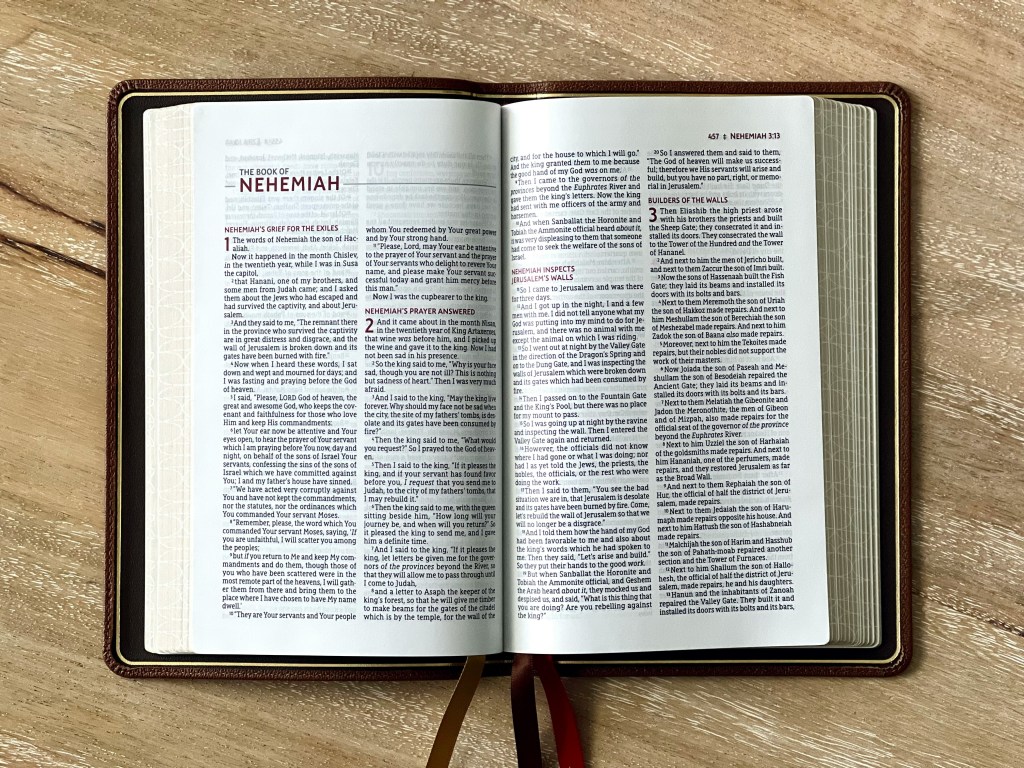
Read: Nehemiah 1 NLT – These are the memoirs of Nehemiah son – Bible Gateway
(1) Pfeiffer, Charles F, Harrison, Everett F. The Wycliffe Bible Commentary. Chicago: The Moody Bible Institute of Chicago, 1990.










 Word for the Soul