Bible Studies

“Godly Leaders lead the people in dedicating and celebrating” Godly Leadership: the book of Nehemiah

“Many sacrifices were offered on that joyous day, for God had given the people cause for great joy. The women and children also participated in the celebration, and the joy of the people of Jerusalem could be heard far away.”

 
Photo by Zach Lucero on Unsplash

As we are nearing the close of our study in the book of Nehemiah on ‘godly leadership’ we are beginning to see a complete picture of those God places before us in leadership roles. We have seen their courage, wisdom, prayer life, planning and organizing, their justice, ability to stay focused and lead the people in spiritual matters. Part of the picture we noticed last week is with all these positive attributes, godly leaders are still human with sin a nature. But we also pointed out that true godly leaders confess their sins and help lead others into confession and repentance. This week we take another look at godly leaders leading.

Chapter 11 is another listing of those who were selected or volunteered to resettle in Jerusalem. We looked at this several weeks ago after the completion of the wall, but the resettlement was not yet complete. It was put on pause and now it has resumed. “The leaders of the people were living in Jerusalem, the holy city. A tenth of the people from the other towns of Judah and Benjamin were chosen by sacred lots to live there, too, while the rest stayed where they were. And the people commended everyone who volunteered to resettle in Jerusalem.” (Neh.11:1-2 nlt)

The city was populated with 10% of the Jews living in the surrounding cities and villages moving to Jerusalem. It is thought by one commentor that 10% represented a tithe of the people in not rejecting the house of God. This is very likely for chapter 10 ends by saying, “We promise together not to neglect the Temple of our God.” (Neh.10:39b nlt) The new residents were chosen by sacred lots that were cast. We call it throwing the dice and that is exactly what it is. But it’s not a lot by chance, but of the Lord. The Lord honored it, for it was His decision. Proverbs 16:33 says, “We may throw the dice, but the LORD determines how they fall.” (nlt) Jerusalem now had a sizable population with those chosen and those who volunteered to resettle on their own in the holy city.

One final step was still to be taken, the dedication of the rebuilt walls that surrounded God’s city and the Temple of God. History doesn’t give us an exact date as to when the dedication took place. It is estimated that it could have been seventeen years or more after the completion of the walls. Dedication of buildings and projects are common in our day. Sometimes they occur in a timely manner, and then there are times when the wheels move slowly for whatever reason, and it is much later. Perhaps the wheels were a little slow in Jerusalem, but it was worth the wait.

Nehemiah along with Ezra and other leaders prepared and organized the dedication and the celebration that was to follow. They first called the Levites from around the land to come and participate. “They were to take part in the joyous occasion with their songs of thanksgiving and with the music of cymbals, harps, and lyres.” (Neh.12:27b nlt) Music was an extremely important element of the dedication. We have witnessed in our day talented musicians and singers who are included in dedication ceremonies. The priests and Levites then went through a ritual of purification to remind them of God’s holiness and moral purity. “The priests and Levites first purified themselves; then they purified the people, the gates, and the wall.” (Neh.12:30 nlt)

Nehemiah then led the leaders to the top of the wall and organized two great choirs. Two processions would take place going in opposite directions on top of the wall, one led by Ezra and the other by Nehemiah. The order of each procession was Levitical singers first, then princes, followed by priests with trumpets, and last the Levites with stringed instruments. Ezra’s company going counterclockwise and Nehemiah’s company proceeding clockwise until they met and entered the Temple to offer sacrifices to the Lord. Just a follow-up note on the size of the wall and how wide it had to have been for that kind of procession to take place. And they completed that wall in 52 days. Amazing work through amazing leadership.

Imagine the site from the ground as the people watched and celebrated with the two processions encircling the wall leading to the worship service at the Temple. “Many sacrifices were offered on that joyous day, for God had given the people cause for great joy. The women and children also participated in the celebration, and the joy of the people of Jerusalem could be heard far away.” (Neh.12:43 nlt) The people continued to bring their offerings to support the priests, Levites, and the work of the Temple.

The godly leadership of Nehemiah, Ezra, the priests, and Levites is noticeably successful. The people responded with joy, and praise to God. They contributed to the work of the Lord. The people along with the leaders celebrated and worshiped God together.

It takes godly leadership to lead in a way that encourages others to come along side one another and do the Lord’s work. Godly leaders can’t do it all. The old saying, 20% of the people (leaders in this case) are doing 80% of the work is not an effective way to do ministry. It needs to be 100%. It takes all of us today to accomplish God’s redemptive plan. May we pray for leaders to lead by inspiring and encouraging those under their care to work towards the building of the kingdom of God. That will be a celebration!

Photo by Pedro Lima on Unsplash

Read: Nehemiah 12:27-47 NLT – Dedication of Jerusalem’s Wall – For – Bible Gateway

Bible Studies

“A National Crisis” God’s Providential Hand: The book of Esther

“Women everywhere will begin to despise their husbands when they learn that Queen Vashti has refused to appear before the king.” Esther 1:17 NLT

Photo by Tim Wildsmith on Unsplash

Our next ‘Biblical Insights’ series will be a survey of the Old Testament book of Esther. We will attempt to extract as much pertinent information as it relates to our day concerning the providence of God for us individually, as well as the Christian church, Israel as God’s chosen people, and current events in the United States and across the world. God’s providential hand overrules all things, nothing happens by chance.

Critics and skeptics have line up for years to discount the the book of Esther on the grounds it lacks Biblical authority when there is no mention of God in its entire writing. It does seem like a valid point but when we place ‘Esther’ in context with the entirety of Scripture it’s hard not to confirm it as God’s Word. God is seen all throughout the pages of the book of Esther. His character, love for His people, His righteousness, and His control of events are on display in the in the reversals of outcomes some would call fate, but it is not fate but the providential hand of God.

The events of the book occur over a ten-year period fifty-five years after the Jews were freed from captivity by Cyrus, king of Persia at that time. Approximately 50,000 Jews returned to Jerusalem after the exile. Many stayed in Babylon and surrounding areas to live out their lives while others moved eastward to Susa one of the three capitals of the Persian Empire. This is where the story of Esther takes place in 483-473 B. C. the Persian Empire of world history. Scripture says the Empire included 127 provinces stretching from India, present day Pakistan to Ethiopia presently northern Sudan.

We start this week with a look into the Persian Empire and its king boasting of its power, strategizing to assume more power, flaunting their many luxuries, and partying for a week. The king gets insulted by his wife near the end of the festive week and it becomes a national crisis. King Ahasuerus, highly embarrassed and furious, seeks counsel from his advisers on how to proceed. The advisors not wanting to waste an opportunity to increase their own power informed the king how his wife’s actions would filter down to every woman in the kingdom. “Before this day is out, the wives of all the king’s nobles throughout Persia and Media will hear what the queen did and will start treating their husbands the same way. There will be no end to their contempt and anger.” (Es.1:18 nlt) So they advise the king to make a decree banishing Queen Vashti from the presence the king and a new queen be put installed in her place. The decree would be sent across the Empire and upon receiving and read, women everywhere would learn the fate of disobeying their husbands. “He (the king) sent letters to all parts of the empire, to each province in its own script and language, proclaiming that every man should be the ruler of his own home and should say whatever he pleases.” (Es.1:22 nlt)

Officials today often look to solidify policies of their agenda by taking advantage of circumstances that arrive unexpectedly and create legislation that has nothing to do with the events that triggered it. It was used as an opportunity to expand their power and influence for their own means. This should not be a surprise, it’s as old as the Persian Empire.

Queen Vashti had a very legitimate reason for insulting her husband, King Ahasuerus. Near the end of the seven-day drinking party, the king wanted to show off his beautiful wife in a lewd matter. “He wanted the nobles and all the other men to gaze on her beauty, for she was a very beautiful woman.” (Es.1:11b nlt) The Queen was giving her own party for the women of the royal palace when the men sent from her husband came to bring her to the king’s party. Naturally she refused, suspecting the reason of her appearance. Some Biblical scholars have also suggested Queen Vashti may have been pregnant at the time. In any case, we have a king with no regard to the dignity of the Queen and more importantly, his wife.

            As mentioned earlier, nothing happens by chance. This is a chess match between the God of the universe and Satan the god of this world. King Ahasuerus was used by Satan in his drunken state to concur with his advisors that a national crisis has developed. He disposes his Queen and passes a decree to strengthen male superiority across his Empire, but God has the next move in the selection of the next Queen.

……….to be continued.

Photo by Mayukh Karmakar on Unsplash

Read: Esther 1 ESV – The King’s Banquets – Now in the – Bible Gateway

Bible Studies

I AM THE DOOR Jesus’ seven “I AM” statements – 3

“Truly, truly, I say to you, I am the door of the sheep………. If anyone enters by me, he will be saved and will go in and out and find pasture.” John 10:7, 9 ESV

Photo by Michael Windsor on Unsplash

We call our dwelling places home, whether an apartment, a dorm room, a house, or a recently purchased condo all of them have a main door for entrance. Upon going through the door and entering we find peace, security, and safety in the dwelling of our own home. 

In Jesus’ day shepherds would lay across the entrance (or gate) of the sheep pen during the night to guard the sheep, protecting them from danger and unwanted visitors. Within the confines of the sheep pen, their home, the sheep had safety and security. The door was being guarded.

In Jesus’ third ‘I am’ statement of His salvation message Jesus says, ‘I am the door.’ He is the entrance or the gate we must go through to be assured of eternal life in heaven. Entrance to an eternal home in Heaven is only through Jesus Christ and no one else or any effort on our part. In 2024 many people may find this statement intolerant. But these are Jesus’ words, and He says to all of us, ‘If anyone enters by me, he will be saved and will go in and out and find pasture.’ and only there.   

Looking forward to arriving at our earthly homes and entering through the door, we find the comforts, peace and security we have anticipated. And we can be assured of another home we will have for a much longer time than our short stay here on earth, that time is eternity, which does not end. May we look with greater anticipation to arrive at that home. Perhaps you do not have the assurance you will have a home of peace, comfort and security after this life? Romans 10:13 says, “For ‘Everyone who calls on the name of the LORD will be saved.’” (nlt) There is no other way to eternal life in heaven with God the Father except going through Jesus Christ, the door.

Photo by icecloudxx on Pexels.com

Read: John 10:7-10 esv – So Jesus again said to them, “Truly, – Bible Gateway

Bible Studies

The Last Passover – The First Lord’s Supper

“When it was evening, Jesus sat down at the table with the twelve disciples.” Matthew 26:20 NLT

Photo by Nico Smit on Unsplash

The last meal Jesus had with His disciples on the night before His crucifixion is known to many as the Last Supper. We have all seen that painting of that historic event. Jesus is seated in the center with the disciples gathered around Him on both sides. He will proceed to break the bread passing it to His disciples, representing His body, and then passing the cup representing His shed blood. But that is not how the meal started.

The gospel of Matthew tells us, “On the first day of the Festival of Unleavened Bread, the disciples came to Jesus and asked, ‘Where do you want us to prepare the Passover meal for you?’” (Mt.26:17 nlt) Jesus was in the habit of celebrating the Passover along with the Jewish community remembering God’s deliverance of Israel from their bondage in Egypt. This was the yearly observance as instructed by the Lord and explained by Moses in the book of Deuteronomy. (Dt.16:1-8) Jesus participated in this Passover meal with His disciples in that upper room that evening. Luke 22:15 expresses Jesus’ anticipation in having this meal with them. “Jesus said, ‘I have been very eager to eat this Passover meal with you before my suffering begins.’” (nlt) John MacArthur notes, “He wanted to prepare them for what was coming.”

Jesus would be crucified the next day as a sacrifice for sin. During the meal Jesus took bread and broke it into pieces giving it to His disciples saying, “Take this and eat it, for this is my body.” (Mt.26:26 nlt) He then took a cup of wine and gave it to His disciples telling them to drink from it explaining, “for this is my blood, which confirms the covenant between God and his people. It is poured out as a sacrifice to forgive the sins of many.” (Mt.26:28 nlt) Jesus carefully explained to them His time had come for His purpose was to lay down His life, His body being broken, and His blood shed for the remission of sin. (Heb.9:22)

The evening started with the Passover meal remembering God’s deliverance of the Jews as He saw the blood of the sacrificial lamb on the doorposts. It was symbolic of Jesus’ soon to be shed blood on the cross of Calvary for our sin. Jesus finished the meal by instituting a new covenant through His blood and a new observance for all those who believe in His name, the Lord’s Supper. Jesus said, “For as often as you eat this bread and drink the cup, you proclaim the Lord’s death until he comes.” (1Cor.11:26 esv) May we always remember our Lord’s death each time we gather for Worship.

Read: Matthew 26:17-29 NLT – The Last Supper – On the first day of – Bible Gateway

Bible Studies

“The Parables of the Lost and Found” Parables of Jesus

“In the same way, there is joy in the presence of God’s angels when even one sinner repents.” Luke 15:10 NLT

FreeBibleimages.org

            We have come to the last week of Jesus’ parables with three more all concerning the lost and found. These parables are all aimed at the Pharisees and the teachers of the Law. They despised the tax collectors and the sinners who always gathered around Jesus to hear Him teach and to eat with Him, but they despised Jesus even more. In telling these stories Jesus would contrast the Pharisees exclusiveness with His love and compassion for all including the outcasts of society. These parables relate to every person who has ever walked this earth and those who will walk it in the future. It is about the lost and found.

            “So Jesus told them this story: ‘If a man has a hundred sheep and one of them gets lost, what will he do? Won’t he leave the ninety-nine others in the wilderness and go to search for the one that is lost until he finds it?’” (Lk.15:3-4 nlt) A familiar painting comes to mind which most of us seen with Jesus carrying a lost sheep over His shoulders. That one lost sheep represents you and I lost in our sin before we came to Christ. He calls and looks for each of us individually. It’s not a group thing, it’s you by yourself and it’s me by myself. Jesus says, “…. there is more joy in heaven over one lost sinner who repents and returns to God than over ninety-nine others who are righteous and haven’t strayed away!” (Lk.15:7 nlt) It’s about you and me, the lost and found.

            In the next parable, Jesus speaks of a woman who lost one of her ten silver coins. There were many women who followed Jesus, and this would be of considerable interest to them. A silver coin in those days was a day’s wages and she lost it somewhere in her house. She lights a lamp in the dark one room dwelling and sweeps until she finds it. When she finds the coin, she calls her friends to rejoice with her for finding what was lost. Jesus’ heavenly meaning in this earthly story is, “In the same way, there is joy in the presence of God’s angels when even one sinner repents.” (Lk.15:10 nlt) Again there is rejoicing in heaven over one individual who has come to Christ.

            Jesus is not yet finished on this subject and to drive the point home, He tells a third parable. “…. Jesus told them this story: A man had two sons. The younger son told his father, ‘I want my share of your estate now before you die.’ So his father agreed to divide his wealth between his sons.” (Lk.15:11-12 nlt) This parable, known as the ‘Parable of the Prodigal Son’, is the most familiar of all Jesus’ parables. It also has more than one heavenly meaning. The younger son was greedy and impatient wanting his share of his father’s estate while he was still alive. This would have been extremely rare but not unheard of. The father would need to sell off part of his property up to a third, which was the portion allotted to a younger son. The father had done that, perhaps unwisely, and his son took the money and ran. “A few days later this younger son packed all his belongings and moved to a distant land, and there he wasted all his money in wild living.” (Lk.15:13 nlt)

            The younger son blinded by greed and selfishness failed to remember a few important things about life. Good times don’t last forever. A party life will eventually lead to ruin. Money disappears quickly when spent frivolously. And, of course, everything comes to an end. His end came sooner than expected and during the worst possible time, a serve famine. It is often during these times prodigals of all ages, both men and women, hear from the Lord and come to their senses. The fun-loving partying son finally came to his senses and started his way back home. Upon his return he would confess his foolishness to his father and ask to take a position as one of his father’s hired servants. But the father had other plans. And our heavenly Father has other plans for us when we foolishly run away from Him. “So he returned home to his father. And while he was still a long way off, his father saw him coming. Filled with love and compassion, he ran to his son, embraced him, and kissed him.” (Lk.15:20 nlt) This parable is sometimes referred to as the ‘Parable of the Father’s Love’, and we can see why.

            The father demands a celebration be held in honor of his son’s return. All were enjoying the celebration with music and dancing. But there was one who did not celebrate by refusing to join the party. The older brother was furious at his father’s actions that he would welcome his brother back and with a party after what he had done. He looked at his brother as unworthy of such a celebration and forgiveness. A lesson directed right back at the Pharisees who thought those tax collectors and sinners were unworthy to eat with Jesus.

FreeBibleimages.org

            These three parables of the lost and found show the Lord’s love for each one of us. We are all lost in our sin, and He and all of heaven rejoices when we turn to Him for salvation and for forgiveness when we go astray. As the father in the parable explained to his other son, “We had to celebrate this happy day. For your brother was dead and has come back to life! He was lost, but now he is found” (Lk.15:32 nlt)

Read: Luke 15 NLT – Parable of the Lost Sheep – Tax – Bible Gateway

Bible Studies

The Unforgiving Debtor: Parables of Jesus

“You evil servant! I forgave you that tremendous debt because you pleaded with me. Shouldn’t you have mercy on your fellow servant, just as I had mercy on you?” (Mt.18:32b-33 nlt)

Photo by Brett Jordan on Pexels.com

            This week in our study of the parables of Jesus we have one on forgiveness. Sometimes the hardest thing for a person to do is to forgive. This is especially true if the one extending forgiveness is extremely hurt. There are times one would finally agree to forgive the offender, but then adds they will never forget. Not much of a comfort for the one seeking forgiveness. Jesus is the perfect teacher to show us the true art of forgiveness and he did it in several ways recorded for us in the New Testament of the Bible.

            Our parable this week, ‘The Unforgiving Debtor’, has a backstory to it. Peter, the always inquisitive disciple, asked Jesus, “Lord, how often should I forgive someone who sins against me? Seven times?” (Mt.18:21 nlt) Peter thought the number of seven was sufficient since Rabbinic teaching only required three. Jesus’ answer didn’t follow the teaching of three being the acceptable number. He didn’t put a number on it. Jesus told Peter his number seven was insufficient. The correct number was seventy-seven. In others words it was to an uncounted number of times. Jesus takes this opportunity to teach us all a valuable lesson on forgiveness. Christians who have received God’s forgiveness are accountable to forgive others considering the enormous debt we have been forgiven as we will see in this parable.

            In Jesus’ earthly story there is a king who wanted to settle accounts with his servants who did business for him. These servants could have been governors of the provinces in the kingdom. One servant was in arrears of one million dollars in today’s currency. How did this servant come to owe such a lager debt we don’t know, perhaps it was mismanagement in the taxation process, or a complete mishandling of public funds, which is just as prevalent in our day. The amount was so excessive this governor couldn’t pay it back in a lifetime. The king then ordered that he, his wife and children along with all that he owned be sold to pay the debt. “But the man fell down before his master and begged him, ‘Please, be patient with me, and I will pay it all.’” (Mt.18:26 nlt) The king knew that he had no means in which to pay the debt. There was nothing he could ever do in his lifetime that would be enough to satisfy the debt.

The king of heaven, the Lord Jesus, knew there was nothing we could ever do to pay our debt regarding our sin. We are all doomed to a Christless eternity without our debt being paid in full, and we are not able to pay it. The king in Jesus’ story “was filled with pity for him, and he released him and forgave his debt.” (Mt.18:27 nlt) The king forgave the servants debt completely. It was only by the king’s grace and mercy he was free from the unpayable debt. No need to worry about back payments, the debt was marked paid in full. Jesus Christ paid our sin debt on the cross of Calvary. What we cannot do for ourselves, He did for us. When we accept Christ as our savior, our account is marked paid in full.

Photo by Alicia Razuri on Unsplash

Christians should be the most forgiving people on the planet considering the forgiveness granted to us unto salvation. Apparently though this is not always the case. Therefore, the need for more of Jesus’ teaching. Jesus continues His parable, “But when the man left the king, he went to a fellow servant who owed him a few thousand dollars. He grabbed him by the throat and demanded instant payment.” (Mt.18:28 nlt) This servant who was just set free from a lifetime debt was worried about a few thousand dollars owed to him by a colleague. This debtor also begged for more time, but what was different was his colleague had the ability to pay and only needed a little more time to clear the debt. But the unforgiving debtor refused and had his fellow worker put in prison.

            Needless to say, when the king heard of the matter, he was furious. He called for this servant and said to him, “You evil servant! I forgave you that tremendous debt because you pleaded with me. Shouldn’t you have mercy on your fellow servant, just as I had mercy on you?” (Mt.18:32b-33 nlt) Our Lord Jesus, King Jesus, has the same right to question us the same way should we ever forsake the forgiveness He has shown us by not granting it to others. No matter what offenses may have been done to us, it pales in comparison to our sin before the Lord. Our Lord forgives us of our sin as often as we come to Him, yes even seventy-seven times. May we do the same and forgive all those who ask for forgiveness remembering the debt that was forgiven on our behalf by our king, King Jesus!

Read: Matthew 18:21-35 NLT – Parable of the Unforgiving Debtor – Bible Gateway

Bible Studies

The Farmer Scattering Seed; Parables of Jesus

“The farmer plants seed by taking God’s word to others.” Mark 4:14 NLT

FreeBibleimages.org

            Our Sunday Biblical Insights over the next couple of months will feature the ‘Parables of Jesus.’ One third of Jesus’ teaching was in the form of a parable. There are close to forty in all, and we will examine as many as we can, reviewing a couple of them in the same week. A parable is simply an earthly story with a heavenly meaning. We begin this week with the parable of ‘The Farmer Scattering Seed.’ This is one of several parables found in all the Synoptic Gospels (Matthew, Mark, and Luke). Mark’s gospel is our text for this parable. FYI, the book of John contains none of Jesus’ parables.

            Much of Jesus’ teaching was done before large crowds and this first parable is no exception. The crowd was so large that day Jesus got into a boat sitting down to teach all those who were gathered along the shoreline to hear Him. Jesus started by saying, “Listen! A farmer went out to plant some seed.” (Mk. 4:3 nlt) Familiar illustrations were often employed by Jesus in His teaching. Jesus’ day was mostly an agricultural society. Most people understood the principles of agriculture, the planting and harvesting of crops. This is where Jesus begins.

            The farmer is scattering his seed in the soil of his field to produce a fruitful crop. When scattering seed, it falls in various locations of the field. Jesus describes the seed as being scattered in four different areas. Some seeds never make it to the field as they fall on the footpath and the birds immediately devour it. Other seeds make it but fall on shallow soil on top of a rock. The plant rises quickly but is soon wilted and dies for lack of deep roots. Some seeds found deep soil, but the adequate dept also contained thorns which grew and choked out the plants. And then there were seeds that fell on good fertile soil. They sprouted, grew, and produced a bountiful crop.

            Later, Jesus’ disciples asked Him the meaning of the parable. Jesus did say as He concluded the parable, “Anyone with ears to hear should listen and understand.” (Mk. 4:9 nlt) They obviously didn’t understand. The farmer’s seed is providing earthly subsistence of food needed for survival. Jesus implies the heavenly meaning by equating the seed being planted by the farmer as the Word of God. He tells His disciples, “The farmer plants seed by taking God’s word to others.” (Mk. 4:14 nlt) God’s Word is the spiritual subsistence we need for eternal life. More specifically, Jesus Christ, the Son of God, the Word made flesh. “So the Word became human and made his home among us.” (Jn. 1:14a nlt)

            The four types of soil in the parable represent four different responses from individuals who are presented with the gospel. There are those with ‘no response’ for Satan immediately shows up and steals it away before it has the time to germinate. Many people have an ‘emotional response’ when they hear the gospel being preached, but not having deep roots they fall away when start to receive flak from others due to their interest in Christianity. A third response is a ‘conformity to the world response.’ “Do not conform to the pattern of this world but be transformed by the renewing of your mind.” (Ro. 12:2a niv) The word taken in begins to grow along side the thorns of this world, the lure of money, success, and all one would have to give up being a Christian. And those thorns chock out any new desires for God or His Word. But then there is the ‘fruitful response’, those who readily accept the gospel message being drawn by the Holy Spirit. “And the seed that fell on good soil represents those who hear and accept God’s word and produce a harvest of thirty, sixty, or even a hundred times as much as had been planted!” (Mk. 4:20 nlt)

Photo by Jonathan Wells on Unsplash

            The farmer scattering seed in Jesus’ parable is every Christian today. All who accepted Christ as savior has received a bag of seed from the Lord to spread around. Gospel seeds are not reserved for only pastors, Bible teachers, evangelists, or seminary professors, but everyone who names the name of Christ. Jesus is encouraging each of His followers in this parable not to be discouraged in the lack of response as we tell others about Him. There will be different types of responses according to each heart. The preparation of the soil is not our responsibility. God will prepare the soil. We are only called to be faithful and scatter the seed.

Read: Mark 4:1-9, 13-20 NLT – Parable of the Farmer Scattering Seed – Bible Gateway

Bible Studies

Come, See, Go, and Tell that Jesus is Risen  

“……. Fear not ye: for I know that ye seek Jesus, which was crucified. He is not here: for he is risen, as he said.  Come, see the place where the Lord lay. And go quickly and tell his disciples that he is risen from the dead.” Matthew 28:5-7 KJV

FreeBibleimages.org

Matthew’s account of the resurrection of Jesus from the grave agree with the other gospel writers with the women first to arrive at the tomb that first Easter morning. They came in the very early morning hours with spices to prepare Jesus’ body for permanent burial. Jesus’ death was on the day before the Sabbath, the day in which no work is to be done. With evening approaching, Joseph of Arimathea, a very wealthy man, asked Pilate for Jesus’ body wrapping it in clean linen laid it in his own tomb. The burial was incomplete due to the late hour. The women came to anoint Jesus’ body with the spices they had prepared as soon as the Sabbath was over as time would not allow them to do on Friday evening. But the unexpected happened.

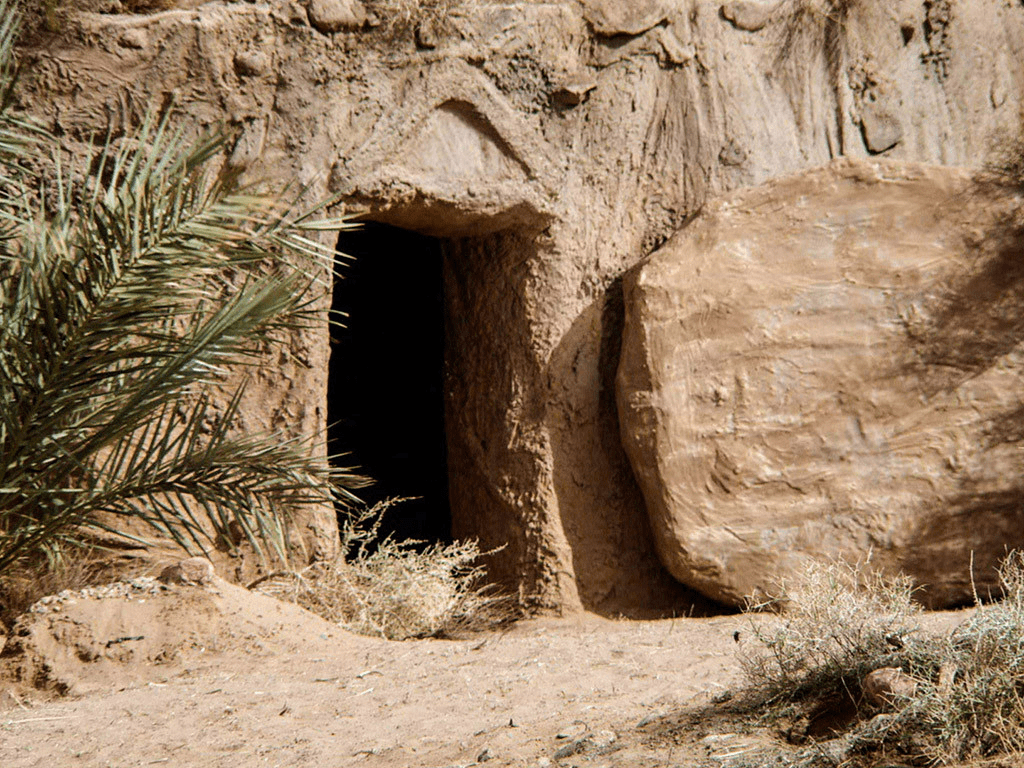
There was a great earthquake as Mary Magdalene and Mary, the mother of James the less, arrived at the tomb. Matthew describes it; “for the angel of the Lord descended from heaven and came and rolled back the stone from the door and sat upon it. (Mt. 28:2 kjv) Enormous fear must have come upon them for the angel told them to fear not! Matthew records even the guards of the tomb became as dead men due to fright. (Mt. 28:4) The angel proceeded to give the women news not only to calm their fear but give them great joy. “I know that ye seek Jesus, which was crucified. He is not here: for he is risen, as he said.  Come, see the place where the Lord lay. And go quickly and tell his disciples that he is risen from the dead.” (Mt. 28:5-7 kjv)

The angel’s news along with further instructions to the women that morning is just as valid for us today, as if we witnessed the events along with Mary Magdalene and Mary, James’ mother. We serve a living savior. Our Lord is not to be memorialized with flowers of remembrance this Easter. He is alive and is to be worshiped. We do not come to tomb to remember and with respect as the women did that morning but rejoice with them that He is not there to be remembered, He is risen. All of us are invited to follow the angel’s instructions to ‘come’ and ‘see’ that He is not in the tomb. We are invited with the women to ‘go’ and ‘tell’ everyone that He is Risen, He is Risen Indeed!

Read: Matthew 28:1-10 KJV – In the end of the sabbath, as it began – Bible Gateway

Bible Studies

Jesus’ Seven Cries from the Cross                 

Our Lord Jesus suffered on the cross six hours that first Good Friday. He willingly laid down His life by way of crucifixion to pay the penalty for our sin. He made seven statements or ‘cries’ amid the pain and suffering for us to remember the importance of each one.

FreeBibleimages.org

“And Jesus said, ‘Father, forgive them, for they know not what they do.’ And they cast lots to divide his garments.” (Lk. 23:34esv) Jesus is not only asking forgiveness for the Roman soldiers, but all who had a part in His crucifixion. His compassion and grace are on full display even as the soldiers are dividing up His garments among themselves. John MacArthur commenting on this cry states, “Some of the fruit of this prayer can be in the salvation of thousands of people in Jerusalem at Pentecost.”  

 “And he said to him, ‘Truly, I say to you, today you will be with me in paradise.’” (Lk. 23:43esv) Jesus assures the thief on the cross that he will be with Him in Paradise as he believed Jesus is the Christ and trusted Him for salvation. This is a precious promise that no one is beyond salvation and unredeemable even up to the eleventh hour. It also illustrates there are those who continue to reject Christ in our current day as represented by other thief.  

 “When Jesus saw his mother and the disciple whom he loved standing nearby, he said to his mother, ‘Woman, behold, your son!’” (Jn. 19:26esv) For although He was suffering and in anguish, Jesus was not going to leave any unfinished business. As the first born according to the Law, Jesus was responsible for the care of His mother. He entrusted her to the care of His beloved disciple John. Jesus was not only obeying the Law, but He was also fulfilling it. “Do not think that I have come to abolish the Law or the Prophets; I have not come to abolish them but to fulfill them.” (Mt. 5:17esv)

 “And about the ninth hour Jesus cried out with a loud voice, saying…. ‘My God, my God, why have you forsaken me?’” (Mt. 27:46esv) This fourth cry from Jesus through His physical pain is now matched with the emotional the pain of abandonment. Jesus who only knew constant fellowship with His Father was now feeling the divine wrath of God on Him. Jesus experienced this spiritual death of the rejection of His Father in our stead as our sin was upon Him. “For our sake he made him to be sin who knew no sin, so that in him we might become the righteousness of God.” (2 Cor. 5:21esv)

 “After this, Jesus, knowing that all was now finished, said, ‘I thirst.’” (Jn. 19:28esv) Here the humanity of Jesus is seen as He states a matter of fact ‘I thirst.’ This was not an appeal to satisfy His thirst but demonstrates His suffering to the end for our sin.

 “When Jesus had received the sour wine, he said, ‘It is finished,’” (Jn. 19:30esv) Our redemption for sin was marked ‘paid in full’ by Christ’s completed work on the cross.

“Then Jesus, calling out with a loud voice, said, ‘Father, into your hands I commit my spirit!’” (Lk. 23:46esv) Jesus willingly laid down His life for your sin and mine. “No one takes it from me, but I lay it down of my own accord.” (Jn. 10:18esv)

Bible Studies

“Willing to Die” LIVING IN BABYLON: The Book of Daniel

“Then Nebuchadnezzar said, ‘Praise to the God of Shadrach, Meshach, and Abednego! He sent his angel to rescue his servants who trusted in him. They defied the king’s command and were willing to die rather than serve or worship any god except their own God.’” Daniel 3:28 NLT

Photo by Ben Burkhardt on Unsplash

            The third chapter of the book of Daniel records the first of two favorite children Sunday School stories found in Daniel. Of course, I’m referring to the story of Shadrach, Meshach, and Abednego. As the story goes, these three young men, Hananiah, Mishael, and Azariah (their Hebrew names) refused to bow down and worship the gold statue Nebuchadnezzar had erected. The king demanded worship of the statue at the instant of hearing musical instruments. Any who refused would be thrown into a blazing fiery furnace. Shadrach, Meshach, and Abednego were willing to die than to worship any pagan gods, even a golden statue set up by the king himself.

            I’m sure Shadrach, Meshach, and Abednego didn’t anticipate this tragic event happening. They were in obedience to the Lord in participating for the welfare of Babylon, their new home. They were also in Nebuchadnezzar’s service as a few of the most educated and wisest officials in the king’s court. But they were living in a pagan culture with no regard for the God of the Hebrews, the true God, and was governed by a ruler who was as fickle as the weather.

            King Nebuchadnezzar had earlier praised the God of Heaven for revealing his dream to him through Daniel, but he quicky forgot God. He elevated himself by erecting a statue overlaid in gold to represent himself and his kingdom as in his dream, the head of gold in chapter 2. An announcement was made to gather all the officials of Nebuchadnezzar’s empire to pledge their allegiance in the dedication of the golden statue. “Then he sent messages to the high officers, officials, governors, advisers, treasurers, judges, magistrates, and all the provincial officials to come to the dedication of the statue he had set up.” (Dan. 3:2 NLT) The king demanded worship of the golden statue which represented his kingdom, but also possibly the god Nabu meaning ‘Nabu, protect my son!’, or ‘Nabu, protect my boundary!’ The Jewish people were truly living in a pagan culture, and Shadrach, Meshach, and Abednego will soon find out how much it would cost them.

            Much like in our day with the tolerance, D.E.I., reproductive rights, and hate speech police watching every move of Bible believing Christians, Shadrach, Meshach, and Abednego had their own thought police keeping tabs on them. Their colleagues in the king’s court blew the whistle on them. Daniel 3:8 &12 says, “But some of the astrologers went to the king and informed on the Jews…. But there are some Jews—Shadrach, Meshach, and Abednego—whom you have put in charge of the province of Babylon. They pay no attention to you, Your Majesty. They refuse to serve your gods and do not worship the gold statue you have set up.” (NLT) Naturally these men were jealous and envied the three Hebrew officials who had a higher rank than them. Not only did they have powerful positions, but they did not bow down to the cultural demands of Babylon. Those in authority today are under supreme pressure to compromise to get along with the culture, but it also comes at a high cost, not only affecting themselves but others as well.  

            When brought before the king; Shadrach, Meshach, and Abednego had their minds made up. They didn’t need to think or pray about what their answer would be. “(They) replied, ‘O Nebuchadnezzar, we do not need to defend ourselves before you……Your Majesty, that we will never serve your gods or worship the gold statue you have set up.’” (Dan. 3:16, 18b) The king was furious by their outright refusal not to obey an order he had given. Not to be humiliated in front of those who were present he ordered them to be thrown into the blazing furnace. God miraculously saved them sending an angel in the heated furnace. Not a hair on their head was singed, nor the smell of smoke on them. But going in, they did not know if God would indeed save them.

FreeBibleimages.org

            We haven’t yet reached that point in our present-day Babylon in the United States, but other believers in other parts of the world have and will continue to do so. Perhaps it’s only a matter of time before we are faced with a Shadrach, Meshach, and Abednego experience. But if or when we are, will we be willing to die saying, “that we will never serve your gods or worship the gold statue you have set up.”

Read: Daniel 3 NLT – Nebuchadnezzar’s Gold Statue – King – Bible Gateway