Bible Studies

“The Ministry Begins” The Good News of Jesus Christ: the book of Mark

Read: Mark 1:21-45 NLT – Jesus Casts Out an Evil Spirit – Jesus – Bible Gateway

“Jesus and his companions went to the town of Capernaum. When the Sabbath day came, he went into the synagogue and began to teach. So he traveled throughout the region of Galilee, preaching in the synagogues and casting out demons.” Mark 1:21, 39 NLT

FreeBibleimages.org

The Good News of Jesus Christ is about to be told from Jesus Himself, for that is why he came. “We must go on to other towns as well, and I will preach to them, too. That is why I came. For even the Son of Man came not to be served but to serve others and to give his life as a ransom for many.” (Mk.1:38, 10:45 nlt) Jesus’ ministry is now in in full operation after His baptism, forty days in the wilderness being tempted by Satan, and choosing four fishermen to be His disciples. “Jesus and his companions went to the town of Capernaum. When the Sabbath day came, he went into the synagogue and began to teach.” (Mk.1:21 nlt)

Jesus begins His first of three tours through Galilee. The first stop Jesus made was to visit the local synagogue in Capernaum. It was where the Scriptures were read and studied, and God was worshiped. Jesus took advantage of the custom of having a visiting teacher speak and participate in teaching. As He began to speak, the people were amazed at His teaching compared to the local Rabbis. Jesus taught not as the other Rabbis who referred to and quoted previous Rabbinical teaching, but Jesus taught with authority, His own authority. It was not only His authoritative style, but the content of His teaching that impressed those in attendance. Jesus, the Son of God, certainly knew the Scriptures.   

Satan and his demons also knew the Scriptures and who Jesus is as was evident by the demon-possessed man among them. “Suddenly, a man in the synagogue who was possessed by an evil spirit began shouting, ‘Why are you interfering with us, Jesus of Nazareth? Have you come to destroy us? I know who you are—the Holy One of God!’” (Mk.1:23-24 nlt) This demon-spirit knew Jesus was God the Son and was terrified at Jesus’ power. Jesus stopped the demon’s ranting immediately and ordered him to come out of the man. He didn’t want His identity known at this time. The demon left the man, and the people were yet in more amazement to what they just witnessed. They reasoned among themselves, ‘what kind of teaching is this, that even the demons obey Him?’ At this point, the news about Jesus spread quickly throughout Galilee.

Jesus’ act of confronting the evil spirit drew much attention which is now going to escalate even further as He is beginning to heal all those who are sick and diseased. Jesus begins by healing Simon’s mother-in-law after the meeting at the synagogue. Jesus and His disciples go to Simon’s and Andrew’s home. Finding Simon’s mother-in-law sick with a high fever, Jesus touched her, healing her. After sunset when the Sabbath was over many people from all over converged on Simon’s and Andrew’s home. “That evening after sunset, many sick and demon-possessed people were brought to Jesus. The whole town gathered at the door to watch.” (Mk.1:32-33 nlt) Jesus is ministering as He predicted, ‘the Son of Man came not to be served, but to serve.’

As is often the case today, we call upon Jesus to help us in our time of need. He will not deny our request but will hear us and answer in accordance with His will. How sad it is so many of us only call upon the Lord only in the case of an emergency. He is our Lord and savior when things are bad and when all is well. Jesus came to sacrifice His life to give us the ultimate healing, a soul set free, and eternal life with Him. He desires for us to have constant fellowship with Him throughout our lives here on earth and not wait until we’re with Him in glory.

Jesus valued His time in prayer with His heavenly Father. After a long day of teaching, healing, and casting out demons, Jesus rose early the next morning, probably between 3-4 am going to a secluded place to pray. It was where Jesus, the man, met His spiritual battles. Satan and his demons constantly opposed Jesus all throughout His ministry. It was also where Jesus prepared Himself with conversations with His Father for the day’s work in ministry. If Jesus needed to do this, do we have any excuse for not doing it? We need it a lot more.

While traveling through Galilee preaching in the synagogues Jesus is met by a leper who knelt before Him begging to be healed. ‘“If you are willing, you can heal me and make me clean,’ he said. Moved with compassion, Jesus reached out and touched him. ‘I am willing,’ he said. ‘Be healed!’” (Mk.1:40b-41 nlt) Leprosy was one of the most dreadful diseases during Jesus’ day. We should take note of the leper’s faith in Jesus that He could heal him. This is a testimony in Jesus’ power to heal such a terrible disease. Jesus then instructed the man to show himself to the priest to be declared clean so he could resume social contact. The priest could not deny the man was healed, and that only God had the power to cure leprosy.  Afterward the man went out and told everyone about his healing. Quickly it was impossible for Jesus to continue His ministry in the towns but needed to move out into the nearby fields around the cities. Jesus’ ministry is off to a fast start and will continue at a fast pace, for His time in preaching, teaching, healing, and casting out evil spirits is relatively short, three- and one-half years. We will pick it up next week.

FreeBibleimages.org

Bible Studies

“The Promised Time Has Come” The Good News of Jesus Christ: the book of Mark

Read: Mark 1:9-20 NLT – The Baptism and Temptation of Jesus – Bible Gateway

‘“The time promised by God has come at last!’ he announced. ‘The Kingdom of God is near! Repent of your sins and believe the Good News!’” Mark 1:15 NLT

FreeBibleimages.org

The first week of our study in the book of Mark we were introduced to John the Baptist whose mission was to introduce us to the Messiah, Jesus, the Son of God. He encouraged those in his day to clear the road and ‘prepare the way for the LORD’s coming!’ This week we begin to follow Jesus as He began His ministry in 27 A.D. when he was 30 years old. “One day Jesus came from Nazareth in Galilee, and John baptized him in the Jordan River.” (Mk.1:9 nlt)

The question is automatically asked, ‘Why did Jesus get baptized?’ It was His deliberate act of identification with us. Jesus identified with us in all ways as human, except for sin. He was sinless. Therefore, Jesus will bear our sins on the cross at Calvary. The triune God is on displayed in Jesus’ baptism proving His deity. The Father speaks from heaven, the Son is baptized, and the Holy Spirit appears as a dove anointing Jesus for His ministry. (Mk. 1:10-11) The symbol of a dove represents gentleness and purity, which describes Jesus, our meek and mild savior.

Very often when we have a high moment, a mountaintop experience, we’re brought down to reality. The sin of this world and the luring of Satan and his demons drags us down and tempts us. After Jesus had His high moment at His baptism, the Bible says the Spirit compelled (drove) Him into the wilderness to be tempted by the devil. This was a divine action and necessary for us as Jesus suffered the same temptations we face every day. He knows what we go through and can help us in our time of temptation. “For because he himself has suffered when tempted, he is able to help those who are being tempted.” (Heb.2:18 esv)

Jesus’ ministry now begins after defeating Satan by not succumbing to any of the temptations he offered up. This was Jesus’ first step in overthrowing Satan. Jesus then went into Galilee, the northern most region in Palestine, and started preaching God’s Good News, the Good News of salvation. Jesus announced, “The time promised by God has come at last! The Kingdom of God is near! Repent of your sins and believe the Good News!” (Mk.1:15 nlt) Dr. John MacArthur notes, ‘It was time for decisive action on God’s part. An era of God dealing with men had come.’ (1) And Dr. Charles Ryrie comments, ‘The rule of Messiah on earth, promised in the OT and earnestly longed for by the Jewish people, was near, for the Messiah has now come.’ (2) John the Baptist preached a message of repentance, now Jesus adds to it by believing the Good News. The Messiah is here, and He will save you from your sins.

Jesus now calls His first disciples along the shore of the Sea of Galilee, a body of water 700 ft below sea level, 14 miles long and 6 miles wide. It was fed by the waters of the upper Jordan River. Jesus saw Simon and his brother Andrew working at their craft for they were fishermen. Andrew had been a follower of John the Baptist. It is possible that Simon had been also, and they both went back to work fishing after John’s arrest. Jesus calls them to follow Him and be the first Evangelists, fishers of men. They immediately drop what they were doing, making the commitment to follow Jesus.

Further up the shoreline, Jesus and His first two recruits run into fellow fishermen James and John. Fishing was a main source of income for people in the Galilean region. James and John followed suit when Jesus called them to follow Him, leaving their father and co-workers in the boat.

Take note Jesus didn’t look for those to be His disciples from the religious elites, or those with references from well-respected Rabbis, and He didn’t recruit from intellectual scholars of the first century, but He chose ordinary people who fished for a living to carry out the greatest message the world has ever known. With these four and others who will come in time, including you and me, the gospel message will go forth, right up to our current day, for the promised time has come.

  1. MacArther, John. The MacArthur Study Bible. Nashville: Word Publishing, 1997. Pg. 1458
  2. Ryrie, Charles. The Ryrie Study Bible. Chicago: Moody Publishers, 2012. Pg. 1226
Bible Studies

“Clear the road” The Good News of Jesus Christ: the book of Mark    

Read: Mark 1:1-8 NLT – John the Baptist Prepares the Way – Bible Gateway

“He is a voice shouting in the wilderness, ‘Prepare the way for the LORD’s coming! Clear the road for him!’” Mark 1:3 NLT

Photo by Brett Jordan on Pexels.com

This first Sunday of the new year in Biblical Insights we will start a study in the gospel of Mark. Mark, the second book in the New Testament and one of the four gospels, begins with a simple introduction, “This is the Good News about Jesus the Messiah, the Son of God.” (Mk.1:1 nlt) It may be simple, short and to the point, but that’s the point. So, there is no misunderstanding, this book is about the good news of Jesus Christ, the Messiah. The Zondervan NASB Study Bible notes, “The good news is that God has provided salvation through the life, death, and resurrection of Jesus Christ.” Mark is more concise than the other gospel writers and focuses more on Jesus’ actions than His teachings. Although through His actions there is much teaching to be learned. Mark’s gospel puts emphasis on His servanthood while confirming His deity. His humanity is detailed throughout the book, and He is presented as the suffering servant. “For even the Son of Man came not to be served but to serve others and to give his life as a ransom for many.” (Mk.10:45 nlt) It is the good news of Jesus Christ.

Mark skips over the genealogy of Jesus and story of His birth jumping right into the start of Jesus’ ministry with John the Baptist preparing the way. “He (John) is a voice shouting in the wilderness, ‘Prepare the way for the LORD’s coming! Clear the road for him!’” (Mk.1:3 nlt) John was the messenger who was prophesized would come ahead of the Messiah and prepare the way for Him. In ancient days king’s envoys were sent ahead to clear the roads for safe passage and to announce the arrival of the king. John was preparing the hearts and minds of the people of Jesus’ arrival to fulfill His Father’s plan of salvation for them. It is in this same manner that we prepare our hearts and minds by clearing the road of any debris or distractions that will prevent the Holy Spirit from teaching us the Biblical Insights He has for us in this study.

John the Baptist’s ministry of preparing the way for Jesus was a call to repentance. That’s a good place for us to start if we are serious about studying God’s Word and growing in Him. Confession of sin and turning away from it will clear and purify our hearts and minds, making us ready to receive His Word. John preached his message of ‘repentance baptism’, baptism accompanied by repentance, in the arid wilderness near the Dead Sea. People were coming out to him when they heard of his ministry. “All of Judea, including all the people of Jerusalem, went out to see and hear John. And when they confessed their sins, he baptized them in the Jordan River.” (Mk.1:5 nlt) There hasn’t been a prophet in Israel for 400 years and you could imagine the interest of the Jews to see this prophet. John certainly looked the part with his clothing of camels’ hair and his diet, he was a replicate of the Old Testament prophets.

Meeting John in the wilderness was reminiscent of the Jewish wanderings in Exodus. The wilderness was the meeting place for God and His people in the Old Testament. We need to be reminded of that next time we find ourselves in a wilderness. God loves to meet His people in their wilderness. He will meet us when we are ready to meet Him after exhausting all our options. God will not leave us there but will draw us out as we turn to Him.  

John’s announcement was, “Someone is coming soon who is greater than I am—so much greater that I’m not even worthy to stoop down like a slave and untie the straps of his sandals.” (Mk.1:7 nlt) John could not forgive sin, nor was that his intention. His message was to lead people to the one who could forgive sin. John stated he only baptized people with water, clearly no saving value. Referring to Jesus he said, “…. but he will baptize you with the Holy Spirit!” (Mk.1:8b nlt) John the Baptist’s ministry was one of confession, repentance and righteous living, followed up by baptism. He heralded the Messiah’s coming and prepared people waiting for His arrival.

Jesus’ ministry was providing salvation by coming to earth, living a perfect life, dying on the cross for forgiveness of sin, and conquering death by rising from the dead to ensure eternal life for all who believe accepting Him as savior. No wonder John uttered that he wasn’t even worthy as a slave to untie His sandals. Next week we’ll see the one who John was preparing the way for. Have you cleared the road for Him?

FreeBibleimages.org

Bible Studies

“Simeon’s Song-Nunc Dimittis” 5 Songs of Hope for Advent

“Lord, now you are letting your servant depart in peace, according to your word; for my eyes have seen your salvation that you have prepared in the presence of all peoples, a light for revelation to the Gentiles, and for glory to your people Israel.” Luke 2:29-32 ESV

FreeBibleimages.org

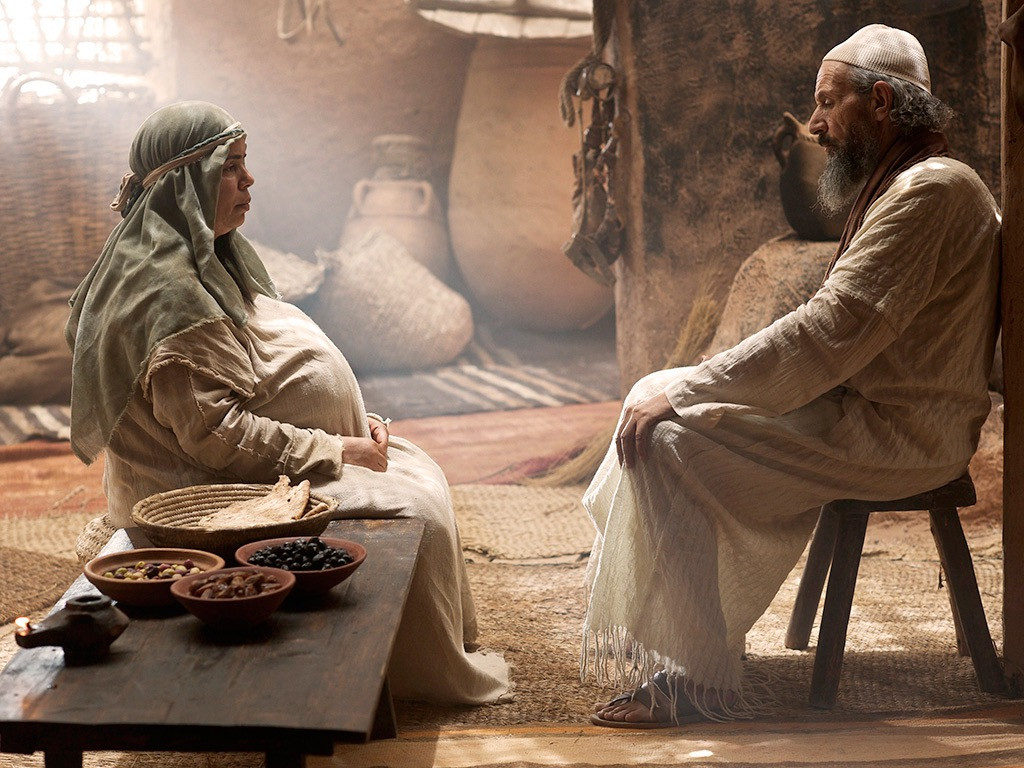
We have come to our 5th and final song of hope for advent. Yes, Christmas is over, but this song takes place after the birth of Christ, some 40 days later. The first male child born to a Jewish couple was to be dedicated to the Lord as required by the Law of Moses. Joseph and Mary, being devout Jews, brought Jesus to the temple in Jerusalem for this purpose. Mary had to wait 40 days until her purification period was over before she could go to the Temple, and she would also go to offer a sacrifice for her purification.

“And when the time came for their purification according to the Law of Moses, they brought him up to Jerusalem to present him to the Lord (as it is written in the Law of the Lord, ‘Every male who first opens the womb shall be called holy to the Lord’) and to offer a sacrifice according to what is said in the Law of the Lord, ‘a pair of turtledoves, or two young pigeons.’” (Lk.2:22-24 esv)

Mary and Joseph made the 6-mile trip from Bethlehem to Jerusalem to offer a sacrifice of two turtledoves or two pigeons which shows the poverty of this young couple, the earthly parents of the Christ-child. This should serve as a reminder to us that Jesus left His heavenly home to come to earth, giving up the luxuries of heaven to live in the lower class of society. We can be sure Jesus understands the plight of the poor in today’s world and cares about them.

The gospel writer Luke introduces us to Simeon in Luke 2:25-26. All we know about him is what is written in these two verses. He is mentioned nowhere else in Scripture. “Now there was a man in Jerusalem, whose name was Simeon, and this man was righteous and devout, waiting for the consolation of Israel, and the Holy Spirit was upon him. And it had been revealed to him by the Holy Spirit that he would not see death before he had seen the Lord’s Christ.” (Lk.2:25-26 esv)

Presumably Simeon was an elderly man. He was a righteous man who was waiting for the consolation of Israel (the comfort the Messiah would bring to the people at his coming). Scripture says the Holy Spirit was upon him and given special insight that he would not die until he had seen the Messiah. One could imagine Simeon going to the Temple every day thinking maybe this will be the day. Finally, the day came when Mary and Joseph entered the Temple area. “….and when the parents brought in the child Jesus, to do for him according to the custom of the Law, (Simeon) took him up in his arms and blessed God….” (Lk.2:27-28 esv)

Simeon’s song begins, “Lord, now you are letting your servant depart in peace, according to your word; for my eyes have seen your salvation that you have prepared in the presence of all peoples, a light for revelation to the Gentiles, and for glory to your people Israel.” (Lk2:29-32 esv)

Simeon’s words here are known as “Nunc Dimittis” the Latin Vulgate translation meaning “You now dismiss.” It is a New Testament hymn celebrating God’s salvation. Simeon was holding in his arms the one who would redeem Israel from their sins and not only Israel but of every nation, tongue, and tribe.  Simeon didn’t need to see anything more; he saw God’s promised Messiah. He didn’t desire to live any longer, God rewarded Simeon for his faithfulness. Perhaps there are some things we would like to see before the Lord calls us home. The Lord’s arm is not too short that he cannot reach down and grant that request. But our focus is to be righteous and devout as Simeon. We may be surprised at all the Lord will reveal to us before we leave this earth.

Simeon now focuses his attention on Mary and Joseph and blesses them. “And Simeon blessed them and said to Mary his mother, ‘Behold, this child is appointed for the fall and rising of many in Israel, and for a sign that is opposed (and a sword will pierce through your own soul also), so that thoughts from many hearts may be revealed.’” (Lk.2:34-35 esv) Christ will raise up those who believe in Him, but He will be a stumbling block to those who disbelieve. Simeon’s blessing included a hard truth for Mary. A cost will come to her as Mary will suffer deep anguish at her Son’s rejection and crucifixion. What was going through Mary’s mind at this point? We don’t know, and we don’t know how many times she thought about this during Jesus’ years on earth as she watched Him grow up and become a man. Mary certainly knew that the prophecy had to come to pass. Yes, it was a hard truth.

Simeon is joined by Anna, a prophetess 84 years old, who begins to give thanks to God and tells everyone around her waiting for the Messiah that He is here. “And coming up at that very hour she began to give thanks to God and to speak of him to all who were waiting for the redemption of Jerusalem.” (Lk.2:38 esv)

FreeBibleimages.org

Simeon’s song “Nunc Dimittis” closes these 5 songs of hope for advent, and what better song can we end with but the hope (assurance) of our salvation. We can sing with Simeon, “……my eyes have seen your salvation that you have prepared in the presence of all peoples, a light for revelation to the Gentiles, and for glory to your people Israel.”

Read: Luke 2:22-38 ESV – Jesus Presented at the Temple – And – Bible Gateway

Bible Studies

“The Angels’ Song-Gloria in Excelsis Deo” 5 Songs of Hope for Advent

“And suddenly there was with the angel a multitude of the heavenly host praising God and saying, ‘Glory to God in the highest, and on earth peace among those with whom he is pleased!’” Luke 2:13-14 ESV

FreeBibleimages.org

A common thread that ran through the last two songs of hope we have looked at, Mary’s song and Zechariah’s song, is they both give glory to God. Mary said, “My soul magnifies the Lord,” and Zechariah exclaimed, “Blessed be the Lord God of Israel.” And the angels continue the theme this week with “Glory to God in the highest.” Indeed, the birth of Christ is reason to rejoice in praising God and giving Him all the glory. This week in our 4th Song of Hope for Advent we sing along with the angels, “Glory to God in the highest, and on earth peace among those with whom he is pleased!” (Lk.2:14 esv)

The greatest birth the world has ever known, the incarnation of God embodying human flesh, occurred in the most humiliating of circumstances. But God saw it was noted as the most glorious event that it was. R.C. Sproul describes it in this manner, “At the very moment the babe is wrapped in the cloth of humiliation, God is not satisfied that the circumstances of the Son’s birth be only humiliation. God desired that shame be balanced with glory and exaltation.” (1) And it was glory with a host of angels preceding down from heaven in a chorus of praise.

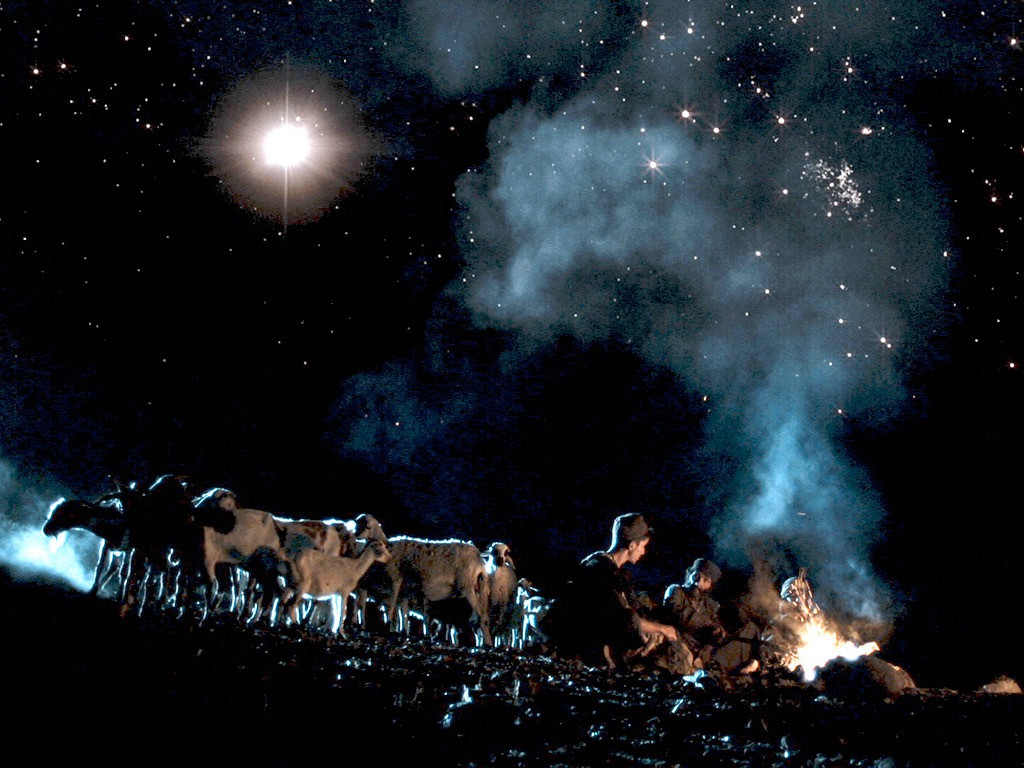
The first ones to receive the glorious news were the shepherds working the night shift out in the fields overlooking Bethlehem. Theirs’ was a busy occupation with the Temple in Jerusalem only six miles away. They provided many of the animals for sacrifice, including sheep. Shepherds worked day and night 365 days a year. They were also on the lower cast of society. The smell of the fields and animals was just as unattractive as their occupation for most people. Nevertheless, God chose them as the first ones to hear the good news. The news of Christ’s miraculous birth is for all people willing to come to Him and accept Him for salvation. The shepherds didn’t waste any time after the angels left them, “(they) said to one another, ‘Let us go over to Bethlehem and see this thing that has happened, which the Lord has made known to us.’” (Lk.2:15, esv)

The shepherds were filled with joy and hurried to see the Christ child, but when the angels first appeared, they were frighten to death. In fact, it was only one angel that got them all worked up. “And an angel of the Lord appeared to them, and the glory of the Lord shone around them, and they were filled with great fear.” (Lk.2:9 esv) Fear would have been a natural reaction when on a dark, quiet night of the same-old, same-old work an angel appears with the glory of the Lord shining all around them. But the angel quickly calms their fears with good news. “Fear not, for behold, I bring you good news of great joy that will be for all the people. For unto you is born this day in the city of David a Savior, who is Christ the Lord.” (Lk.2:10-11 esv)

This was good news for the shepherds. They would know ‘Christ’ was the Messiah that the Jews were waiting for. The angel referred to the city of David where the Messiah was prophesied to be born. This was a declaration of the birth of the one who would save the world from sin and death. Notice, the angel gives three titles to the Christ-child; Savior, Christ (Messiah, anointed one), and Lord (Yahweh, or God.) He was both God and man. The angel then gives them a sign of what to look for when they go to into Bethlehem to look for the savior, and then the song begins.

“And suddenly there was with the angel a multitude of the heavenly host praising God and saying, ‘Glory to God in the highest, and on earth peace among those with whom he is pleased!’” (Lk.2:13-14 esv) A heavenly host of angels came down and joined their colleague in singing their song ‘Gloria in Excelsis Deo.’ Here again, as in Mary’s and Zechariah’s songs, we get the name from the Latin Vulgate translation. The first words in the Latin Vulgate are ‘Gloria in Excelsis Deo’ meaning ‘Glory to God in the highest.’ The angels know of the glory and majesty of God and have just witnessed perhaps the greatest event they have seen and can’t hold back in giving praise and glory to God.

We will have the opportunity to sing along with angels this Christmas season whether singing in church, or caroling, singing at home, or in your car. This song of hope this week is giving glory to God for His plan of salvation coming to realization in the birth of Christ and the peace we can have by accepting Him as savior. What better song to sing.

(1) Sproul, R.C. Luke: An Expositional Commentary. Sanford: Reformation Trust Publishing, 2020. Pg 57

Read: Luke 2:7-20 ESV – And she gave birth to her firstborn son – Bible Gateway

Angels We Have Heard on High:

Bible Studies

“Zechariah’s Song-The Benedictus” 5 Songs of Hope for Advent        

“And you, child, will be called the prophet of the Most High; for you will go before the Lord to prepare his ways.” Luke 1:76 ESV

FreeBibleimages.org

The story of the birth of Christ has several intriguing storylines and all of them true. There are some ordinary people who play a significant role in God’s plan in bringing His Son into the world. This week we look at the husband of Elisabeth who gave us our first song of hope for advent two weeks ago. His name is Zechariah, one of 18,000 priests of that day, and who had been speechless the entire time of his wife’s pregnancy for not believing that Elizabeth would have a child in their old age. Over the course of nine months, I’m sure Zechariah had done some deep thinking, perhaps second guessing himself for his response to the angel. The angel had told him his son’s name would be John and that he would be great in the sight of the Lord turning peoples’ hearts back to the God, and that John would be the forerunner of the Messiah. This ordinary prophet will burst out in praise to the Lord God for His work in providing a way of salvation for all people.

Zechariah’s song is called ‘The Benedictus’ just as in Mary’s ‘The Magnificat’ the first word is translated from the Latin Vulgate. In this case the opening word is ‘Benedictus’ meaning ‘Praise be’ or ‘Blessed be.’ The song occurs eight days after Elizabeth had given birth. The occasion was the circumcision of the child as required by the Lord.

It was the custom to name a child at their circumcision, and most likely be named after someone in the family. Family members and friends tried to persuade Zechariah and Elizabeth to name him Zechariah. “And on the eighth day they came to circumcise the child. And they would have called him Zechariah after his father.” (Lk.1:59 esv) But of course Mary spoke up and said, ‘“No; he shall be called John.’ And they said to her, ‘None of your relatives is called by this name.’” (Lk.1:60b-61 esv) It’s interesting to note, families didn’t always agree in those days either. When they gestured to Zechariah what name he wanted for the child, Zecheriah wrote on a tablet, ‘His name is John.’ And immediately his mouth was opened, and Zechariah began praising God.

Zechariah’s first words after nine months were filled with praise to God. His silence from speaking could have brought on deep contemplation with God. Unable to speak, listening to everything around him, writing on a tablet, but able to converse with God in silent prayer, Zechariah used this time to connect deeper with his God. We need more quiet moments with God in our day to connect and grow deeper in our relationship with him. The results that await us will be positive as Zechariah has demonstrated.

The fear of the Lord came upon all those present. Reverential awe was displayed as the Lord’s presence was felt in naming this child. The anticipation was high in what this child named ‘John” would turn out to be. His naming outside the traditional norms meant great expectations for him as the hand of the Lord must be upon him.  

Zechariah begins his song, “Blessed be the Lord God of Israel, for he has visited and redeemed his people and has raised up a horn of salvation for us in the house of his servant David.” (Lk.1:68-69 esv) The occasion as noted above is the birth and circumcision of his son, but the heart and theme of his song is ‘God visiting His people.’ God had visited him and Elisabeth in the birth of their child and now God is about to visit His people with the birth of His Son, the Messiah. Zechariah begins his song with that prophecy. The word ‘horn’ is a symbol of strength and power. Jesus has the power to save. He is a powerful savior able to redeem his people.

God had spoken though the prophets of the Old Testament of Israel being saved from their enemies, but this is much more than that, it is redemption from their ultimate enemy and ours, Satan. Zechariah continues, “to show the mercy promised to our fathers and to remember his holy covenant, the oath that he swore to our father Abraham, to grant us.” (Lk.1:72-73 esv) The Lord God made a holy covenant with Abraham, an everlasting covenant with a promise to keep it, the Abrahamic covenant promising salvation by grace. (Gen,12:1-3, 15:18-21, 17:1-21)

Zechariah’s song now turns to his son, the forerunner to the Messiah. “And you, child, will be called the prophet of the Most High; for you will go before the Lord to prepare his ways, to give knowledge of salvation to his people in the forgiveness of their sins.” (Lk.1:76-77 esv) John is the one who was prophesied in the Old Testament as the one coming in the power of Elijah to prepare the way. “Behold, I will send you Elijah the prophet before the great and awesome day of the LORD comes. And he will turn the hearts of fathers to their children and the hearts of children to their fathers, lest I come and strike the land with a decree of utter destruction.” (Mal.4:5-6 esv) One commentary note, ‘John was a prophet of the Most High whereas Jesus is the Son of the Most High.’ John paved the way for the one who has the power to provide salvation.

Zechariah closes with the rising of the ‘Son,’ the light that will come upon those who live in darkness. “because of the tender mercy of our God, whereby the sunrise shall visit us from on high to give light to those who sit in darkness and in the shadow of death, to guide our feet into the way of peace.” Zechariah prophesied the sunrise was about to appear bringing light to all who sit in the darkness of sin. Christ was coming into the world ‘to guide our feet into the way of peace.’ Soon the heavenly angels will take over the singing, “Glory to God in the highest, and on earth peace among those with whom he is pleased!” (Lk.2:14 esv) And we look at that next week!

Photo by Owen.outdoors on Pexels.com

Read: Luke 1:57-80 ESV – The Birth of John the Baptist – Now the – Bible Gateway

Bible Studies

“Mary’s Song-The Magnificat” 5 Songs of Hope for Advent

And Mary said,

 “My soul magnifies the Lord,

    and my spirit rejoices in God my Savior,

for he has looked on the humble estate of his servant.

   For behold, from now on all generations will call me blessed;

for he who is mighty has done great things for me,

   and holy is his name.” Luke 1:46-49 ESV

FreeBibleimages.org

Our second song of hope for this Advent season is most likely the most recognized one of the five. Mary’s song, known as ‘The Magnificat,’ has been read and sung in churches around the world for centuries. It is a song Mary spoke through the inspiration of the Holy Spirit. Did she sing it or speak it? Scripture says, “And Mary said,” but there was certainly singing in her heart. It was heart-felt praise and adoration for her Lord from the depths of her soul. It is called the ‘Magnificat’ because in the Latin Vulgate translation the opening word is ‘Magnificat’ meaning ‘glorifies.’ Mary’s song displays her vast knowledge of the Scriptures. As John MacArthur points out, “These verses also contain numerous allusions to the law, the psalms, and the prophets. The entire passage is a point-by-point reciting of the covenant promises of God.” (1) There are 15 quotations from the Old Testament in her song. It is noteworthy there is deep concern for the poor and despised, and rejection of the rich and proud. Mary finds herself as one of the poor and despised people of the world. She is astonished and humbled the Lord has found favor with her. R.C. Sproul sees it as a true Cinderella story, not a fairy tale, but reality and truth.

Mary starts by exalting or magnifying the Lord, “My soul magnifies the Lord, and my spirit rejoices in God my Savior.” (Lk.1:46-47 esv) Praising the almighty God, Mary also realized her need of a savior. The child she would bear would indeed be her son but would also be her savior. Despite the historical church teaching to our friends in the Catholic church, Mary was not sinless and needed a savior. Mary says, ‘my spirit rejoices in God my Savior.’ Thomas Aquinas, an Italian Christian theologian and philosopher who served under several Popes and was canonized St. Thomas Aquinas in 1323, believed Mary could not have been sinless because of her confession of needing of a savior.

Mary then acknowledges her lowly state and how graciously the Lord God looked upon her. From that point on all generations will realize how blessed Mary was. “For he has looked on the humble estate of his servant. For behold, from now on all generations will call me blessed.” (Lk.1:48 esv) The word ‘servant’ is also translated ‘maidservant’ was the term for a female slave in that day. Mary, therefore, expressed a deep sense of humility.

Three attributes are rendered in the words of Mary in her song, God’s mighty power, His holiness, and His mercy. (Lk.1:49-50) Mary says the mighty God has done great things for her, a lowly servant. She then notes the holiness of God and says those who fear God and acknowledges Him receives mercy. God’s mighty hand is further seen in Mary’s words as she describes the acts of God. “He has shown strength with his arm; he has scattered the proud in the thoughts of their hearts; he has brought down the mighty from their thrones and exalted those of humble estate; he has filled the hungry with good things, and the rich he has sent away empty.” (Lk.1:51-53 esv) Mary gives us a history lesson of God’s justice by God scattering the proud and bringing the mighty down from their thrones, while raising up those of low estate which Mary was one. If anyone knew God’s mercy towards the poor and the low estate in society, Mary knew. It speaks to her overwhelming humble attitude and praise to God in seeing her lowly handmaid status being raised up by the God of mercy.

Mary ends her song with the assurance that God keeps His promises. Again, Mary, being well versed in Scripture, knew God has helped Israel in the past and will continue to do so. She also knew God is a covenant keeping God, and what was promised and prophesied in Old Testament would come to past. Mary knew the promise of the coming Messiah. She knew He would be born of a virgin; she knew she was in that category. She knew He would be called the Son of God, and He would save His people from their sins. Mary praised and glorified God who chose her in a lowly estate to bring into the world, the savior of the world. So, Mary sang, The Magnificat – “My soul magnifies the Lord.”

Read: Luke 1:46-55 ESV – Mary’s Song of Praise: The – Bible Gateway

(1) MacArthur, John. The MacArthur Study Bible. Nashville: Word Publishing, 1997. Pg 1512

Bible Studies

“Elizabeth’s Song” 5 Songs of Hope for Advent    

“And when Elizabeth heard the greeting of Mary, the baby leaped in her womb. And Elizabeth was filled with the Holy Spirit, and she exclaimed with a loud cry, ‘Blessed are you among women, and blessed is the fruit of your womb!’” Luke 1:41-42 ESV

FreeBibleimages.org

During the next couple of weeks throughout the Advent season we will be looking at 5 songs of hope as recorded in Luke’s gospel on the birth of Christ. Music and particularly songs of praise are all throughout Scripture. Music alone has a way to lift the soul. What better time of year is there than to celebrate with music than the Christmas season. Christmas music will be filling the airwaves, churches, school auditoriums, concert halls, and shopping malls. It can certainly change your mood, mostly for the better, but some might argue with that. These 5 songs of hope for Advent are songs spoken to praise God for the hope He has bestowed upon us in sending His Son for the hope (assurance) we have of salvation.

Our first song this Sunday is ‘Elizabeth’s Song.’ It is not at all lengthy, but rather short and to the point speaking volumes of praise and theological truth. The occasion was Mary’s visit to Elizabeth and Zechariah upon hearing the news of them having their first child. “Blessed are you among women, and blessed is the fruit of your womb! And why is this granted to me that the mother of my Lord should come to me? For behold, when the sound of your greeting came to my ears, the baby in my womb leaped for joy. And blessed is she who believed that there would be a fulfillment of what was spoken to her from the Lord.” (Lk.1:42b-45 esv)

Elizabeth was Mary’s older cousin, much older. Zechariah, a priest, was told by an angel of the Lord while he was serving in the Temple burning incense that his wife Elizabeth, who was barren, would have a child in their old age. The angel said his name would be John, and there would be much rejoicing and gladness, “And he will turn many of the children of Israel to the Lord their God, and he will go before him in the spirit and power of Elijah, to turn the hearts of the fathers to the children, and the disobedient to the wisdom of the just, to make ready for the Lord a people prepared.” (Lk.1:16-17 esv) John would be the forerunner of Jesus, the Messiah and John’s cousin. He would lead people to repentance preparing the way for the Lord.

When Elizabeth heard Mary’s voice upon arriving, the Bible says the baby leaped in her womb. Perhaps John was singing his own song meeting his aunt and cousin for the first time. Elizabeth was then filled with the Holy Spirit and started her song about the hope that was to come. ‘Blessed are you among women, and blessed is the fruit of your womb!’ Elizabeth praised Mary’s faith and the child to be born to her. She realized through the Holy Spirit this must be the Messiah, the son of God for she said, “And why is this granted to me that the mother of my Lord should come to me?” (Lk.1:43 esv) Elizabath evidently knew of the prophet Isaiah’s words, “Therefore the Lord himself will give you a sign. Behold, the virgin shall conceive and bear a son, and shall call his name Immanuel.” (Is.7:14 esv) She was in the presence of her cousin Mary and yes, was impressed that Mary would visit her, but Elizabeth also in the presence of the Messiah, her savior.

Elizabeth’s song of hope introduces the savior who was coming into the world, born of a virgin as prophesized in Scripture. Her own child, John, perhaps also at the influence of the Holy Spirit leaped for joy at the coming savior. Although Elizabeth may not have been able to understand it all, she did realize the blessings she and her husband Zechariah were given and through the Holy Spirit, Elizabeth knew enough to break out in song. It was a song of praise to God and a song of hope for all people in the coming of the Messiah.

FreeBibleimages.org

Read: Luke 1:5-25, 39-45 ESV – Birth of John the Baptist Foretold – In – Bible Gateway

Bible Studies

“Godly Leaders’ Work is Never Done” Godly Leadership: the book of Nehemiah

“So I purged out everything foreign and assigned tasks to the priests and Levites, making certain that each knew his work. I also made sure that the supply of wood for the altar and the first portions of the harvest were brought at the proper times. Remember this in my favor, O my God.” Nehemiah 13:30-31 NLT

Photo by Tim Wildsmith on Unsplash
 

We have come to end of our study of godly leaders from the book of Nehemiah, but the work, unfortunately, for godly leaders never comes to an end. That is why godly leaders are needed in every facet of society. Last week we recalled the influence Nehemiah, Ezra, and the other leaders had on the people encouraging them and participating with them in the dedication of Jerusalem’s rebuilt walls. The people responded by celebrating and worshiping God. “Many sacrifices were offered on that joyous day, for God had given the people cause for great joy. The women and children also participated in the celebration, and the joy of the people of Jerusalem could be heard far away.” (Neh.12:43 nlt) You may have heard this saying, ‘when the cat’s away, the mice will play.’ Well, Nehemiah was away, back serving the king, and the people playfully went back to their old ways.

Before we are quick to condemn the people of Judah, we should look at ourselves in the mirror, me included. How many times have we repented our sins and past actions, only to repeat them when no one is around to notice. My point is that we need godly leaders around us to help us toe the line. Godly leaders are not perfect as we observed a few weeks back, but they are used by God and need our continue prayers.

Nehemiah may have received word of the turning back of the people while in Persia serving King Artaxerxes. Nehemiah had been back in Persia close to twelve years, enough time for the people to unravel a lot of the reforms that he had put in place. There was inter-marriage taking place again with foreigners. The children from these marriages could not speak the Hebrew language, but the languages of foreign nations. This command of separation from foreigners was for religious purposes and was not racial or political.

The Temple of God was being desecrated. Tobiah, an archenemy of the Jews, had now taken residence in the Temple courtyard where the articles for sacrifice were stored. Eliashib, a priest and supervisor of the storerooms in the Temple, was persuaded by Tobiah to provide accommodations for him while visiting Jerusalem. Tobiah used his influence as a relative to convince Eliashib to the point of moving out the articles for the Temple and bringing in Tobiah’s idols of worship.

In addition, the people neglected to support the priests and Levites who served in the Temple. As a result, they had to neglect their duties in the Temple and return to the fields to support themselves and their families. The Law of Sabbath was also being broken again. Work was being done, and business was transacted on the Sabbath day as any other day of the week.

As mentioned above, Nehemiah may have heard of what was taking place in Jerusalem. There was a reading from the book of Moses ‘on that same day.’ (Neh.13:1) This could have been the anniversary of the dedication of the wall years earlier. Notably, Ezra the scribe, was not present, but what he reinstated was still being carried on. The people may have drifted away, but not so far that they neglected the reading of the Word. Through this reading there was conviction. Perhaps, Nehemiah heard this and responded by coming back.

Nehemiah returned and put new reforms in place. His first act was throwing Tobiah out of the Temple storerooms with all his belongings. “I became very upset and threw all of Tobiah’s belongings out of the room.” (Neh.13:8 nlt) Nehemiah displayed the righteous anger Jesus displayed 450 years later, “Jesus entered the Temple and began to drive out all the people buying and selling animals for sacrifice. He knocked over the tables of the money changers and the chairs of those selling doves.” (Mt.21:12 nlt) Godly leaders should not be afraid and hold back righteous anger when it is called for. It needs to be on displayed, but in a godly way and according to God’s righteousness and justice. Nehemiah then performed a ceremonial cleaning in purifying the Temple storerooms.

The Levites were brought back into the Temple to perform their duties. Tithes were coming back into the Temple and the Levites were being supported for their work. Nehemiah appointed four men of good reputation as treasurers to oversee the distribution to the Levites. These overseers included a Priest, a Levite, a Scribe, and a lay person. A good model to follow today, honest people with different positions working together, and don’t forget the lay person.

Nehemiah then addressed the profaning of the Sabbath. He rebuked the people for working and conducting business on the Sabbath. He called out the nobles by saying to them, “Wasn’t it just this sort of thing that your ancestors did that caused our God to bring all this trouble upon us and our city? Now you are bringing even more wrath upon Israel by permitting the Sabbath to be desecrated in this way!” (Neh.13:18 nlt) Nehemiah commanded the gates to shut from sunset on Friday until sunset on Saturday threatening violators with arrest if they continued to buy and sell on the Sabbath.

Lastly, and yes again, Nehemiah had to deal with the sin of inter-marriage with pagans. His response may seem a little harsh, but the cat is back, and the mice are guilty. “So I confronted them and called down curses on them. I beat some of them and pulled out their hair. I made them swear in the name of God that they would not let their children intermarry with the pagan people of the land. (Neh.13:25 nlt) Nehemiah’s actions were to prevent this sin from occurring again in the future. He reminded them Solomon was the wisest and most powerful king in the world, and he was brought down by the influence of his foreign wives. The same would happen to them if they continued in this practice.

As we can see, godly leaders are needed for there is always work to do. We could say it’s job security, but it takes the right individual. A godly leader is one who is above reproach, committed to God, and to His work, His justice, His leadership, and must have a desire to do everything for God’s glory. Nehemiah’s motive throughout his ministry was to please and serve God. Godly leaders know it’s not about them, but what God will do through them.

Read: Nehemiah 13 NLT – Nehemiah’s Various Reforms – On that – Bible Gateway

Bible Studies

“Godly Leaders lead the people in dedicating and celebrating” Godly Leadership: the book of Nehemiah

“Many sacrifices were offered on that joyous day, for God had given the people cause for great joy. The women and children also participated in the celebration, and the joy of the people of Jerusalem could be heard far away.”

 
Photo by Zach Lucero on Unsplash

As we are nearing the close of our study in the book of Nehemiah on ‘godly leadership’ we are beginning to see a complete picture of those God places before us in leadership roles. We have seen their courage, wisdom, prayer life, planning and organizing, their justice, ability to stay focused and lead the people in spiritual matters. Part of the picture we noticed last week is with all these positive attributes, godly leaders are still human with sin a nature. But we also pointed out that true godly leaders confess their sins and help lead others into confession and repentance. This week we take another look at godly leaders leading.

Chapter 11 is another listing of those who were selected or volunteered to resettle in Jerusalem. We looked at this several weeks ago after the completion of the wall, but the resettlement was not yet complete. It was put on pause and now it has resumed. “The leaders of the people were living in Jerusalem, the holy city. A tenth of the people from the other towns of Judah and Benjamin were chosen by sacred lots to live there, too, while the rest stayed where they were. And the people commended everyone who volunteered to resettle in Jerusalem.” (Neh.11:1-2 nlt)

The city was populated with 10% of the Jews living in the surrounding cities and villages moving to Jerusalem. It is thought by one commentor that 10% represented a tithe of the people in not rejecting the house of God. This is very likely for chapter 10 ends by saying, “We promise together not to neglect the Temple of our God.” (Neh.10:39b nlt) The new residents were chosen by sacred lots that were cast. We call it throwing the dice and that is exactly what it is. But it’s not a lot by chance, but of the Lord. The Lord honored it, for it was His decision. Proverbs 16:33 says, “We may throw the dice, but the LORD determines how they fall.” (nlt) Jerusalem now had a sizable population with those chosen and those who volunteered to resettle on their own in the holy city.

One final step was still to be taken, the dedication of the rebuilt walls that surrounded God’s city and the Temple of God. History doesn’t give us an exact date as to when the dedication took place. It is estimated that it could have been seventeen years or more after the completion of the walls. Dedication of buildings and projects are common in our day. Sometimes they occur in a timely manner, and then there are times when the wheels move slowly for whatever reason, and it is much later. Perhaps the wheels were a little slow in Jerusalem, but it was worth the wait.

Nehemiah along with Ezra and other leaders prepared and organized the dedication and the celebration that was to follow. They first called the Levites from around the land to come and participate. “They were to take part in the joyous occasion with their songs of thanksgiving and with the music of cymbals, harps, and lyres.” (Neh.12:27b nlt) Music was an extremely important element of the dedication. We have witnessed in our day talented musicians and singers who are included in dedication ceremonies. The priests and Levites then went through a ritual of purification to remind them of God’s holiness and moral purity. “The priests and Levites first purified themselves; then they purified the people, the gates, and the wall.” (Neh.12:30 nlt)

Nehemiah then led the leaders to the top of the wall and organized two great choirs. Two processions would take place going in opposite directions on top of the wall, one led by Ezra and the other by Nehemiah. The order of each procession was Levitical singers first, then princes, followed by priests with trumpets, and last the Levites with stringed instruments. Ezra’s company going counterclockwise and Nehemiah’s company proceeding clockwise until they met and entered the Temple to offer sacrifices to the Lord. Just a follow-up note on the size of the wall and how wide it had to have been for that kind of procession to take place. And they completed that wall in 52 days. Amazing work through amazing leadership.

Imagine the site from the ground as the people watched and celebrated with the two processions encircling the wall leading to the worship service at the Temple. “Many sacrifices were offered on that joyous day, for God had given the people cause for great joy. The women and children also participated in the celebration, and the joy of the people of Jerusalem could be heard far away.” (Neh.12:43 nlt) The people continued to bring their offerings to support the priests, Levites, and the work of the Temple.

The godly leadership of Nehemiah, Ezra, the priests, and Levites is noticeably successful. The people responded with joy, and praise to God. They contributed to the work of the Lord. The people along with the leaders celebrated and worshiped God together.

It takes godly leadership to lead in a way that encourages others to come along side one another and do the Lord’s work. Godly leaders can’t do it all. The old saying, 20% of the people (leaders in this case) are doing 80% of the work is not an effective way to do ministry. It needs to be 100%. It takes all of us today to accomplish God’s redemptive plan. May we pray for leaders to lead by inspiring and encouraging those under their care to work towards the building of the kingdom of God. That will be a celebration!

Photo by Pedro Lima on Unsplash

Read: Nehemiah 12:27-47 NLT – Dedication of Jerusalem’s Wall – For – Bible Gateway