Bible Studies

“Hated in the Last Days” The Gospel of Jesus Christ: the book of Mark        

Read: Mark 13:9-13 NLT – “When these things begin to happen, – Bible Gateway

“And everyone will hate you because you are my followers.” Mark 13:13 NLT

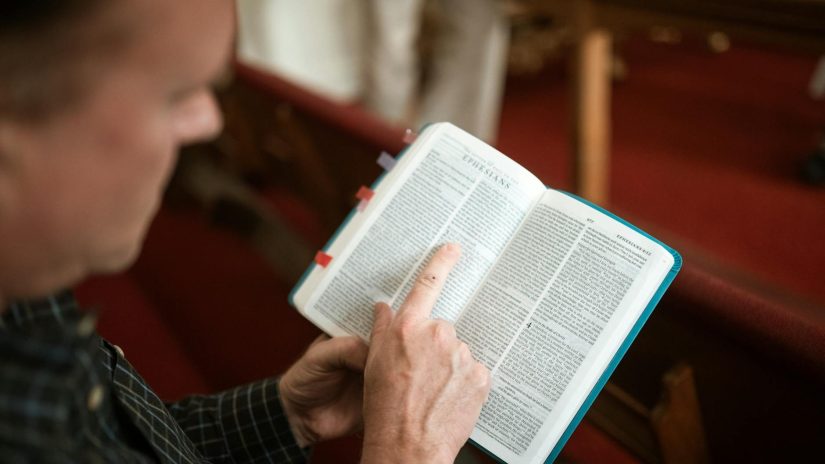
Photo by Jose P. Ortiz on Unsplash
 

Last week we started to look at the ‘Olivet Discourse’, Jesus’ teaching on the end times.  Jesus predicted the destruction of the Temple that occurred in A.D.70. Peter, James, John, and Andrew came to Jesus asking Him when that would happen thinking that represented the end times, but it did not. Jesus then preceded to explain to them the signs to watch for when these things will take place. Being two thousand years from when Jesus first gave these signs to His disciples, the signs are now for us in this present generation. Should the Lord tarry His return, these signs will be for the next generation and each one after that until He returns. But be sure, Jesus will return and these signs will continue to increase right up until that time.

Jesus warned them to watch for false prophets and those claiming to be the Christ. We have seen our share of them over the years. Jesus said there will be wars and rumors of wars between the nations, and there are an increasing number of wars in our current day. Jesus then told them to watch for earthquakes and famines across the world. Again, these have been increasing in number and severity over the years. Jesus described these as birth pains, the closer and more severe the pains, the closer the end of the pregnancy. The closer and more severe these signs are, the closer we are to the return of Christ.

Jesus tells us when we see these things happening, “…..watch out! You will be handed over to the local councils and beaten in the synagogues. You will stand trial before governors and kings because you are my followers. But this will be your opportunity to tell them about me.” (Mk.13:9 nlt) Persecution of Christians is rising steadily. “A new report by Open Doors International said that more than 380 million Christians faced persecution and discrimination in 2024, an increase of 15 million from the year before.” (1) State governments across the world will up their persecution of Christians as the days get closer. Jesus explains to us this we be our opportunity to tell the gospel truth about Jesus. “For the Good News must first be preached to all nations.” (Mk.13:10 nlt)

Believers are not to worry about how they will respond in that day. We will be given the words to speak through the Holy Spirit. Jesus says it will not be us speaking, but the Holy Spirit speaking through us. Jesus will not abandon us during those days. “….for he has said, ‘I will never leave you nor forsake you.’” (Heb.13:5 esv) This is the age of grace, the time between Jesus’ resurrection and His second coming. It is an evangelistic period to preach the gospel even under severe persecution. There will be a day when we will preach no more, and until that day we to be aware of the persecution that may come to us but continue to preach just the same.

Photo by Austin Kehmeier on Unsplash

Jesus warns us of the painful effects of rejection by our families. Much of that occurs today as people accept Jesus as savior and are then disowned by their families. Some individuals even seek to kill family members who have turned away from their religion and turned to Christ. Persecution is here now, and as birth pains increase, so will the persecution of Christians.

All Christians will be hated in those days because they believe in Jesus and follow Him. The world is rapidly accelerating to that point with the amount of Christian hate against those who live for God and follow His Word. Jesus reminds us in the gospel of John, “If the world hates you, remember that it hated me first. The world would love you as one of its own if you belonged to it, but you are no longer part of the world. I chose you to come out of the world, so it hates you.” (Jn.15:18-19 nlt) So, we need to be aware of upcoming hate and persecution even from those we love.

The Lord gives us a word of encouragement, “But the one who endures to the end will be saved.” (Mk.13:13 nlt) Perseverance in the midst of persecution is a sign of loyal service to Christ and more importantly an example of one who is totally trusting Jesus Christ for salvation. We will be saved in the end. The time of Jesus’ return and the end days are not known to us, but we have plenty of signs that it could happen at any moment. May we be ready and busy in service for Him while waiting.

Next week we examine the tribulation period as Jesus unfolds it for us………

(1) Christian persecution on the rise worldwide, new report says – OSV News

Bible Studies

“Jesus Foretells the Future” The Gospel of Jesus Christ: the book of Mark

Read: Mark 13:1-13 NLT – Jesus Speaks about the Future – As – Bible Gateway

“Tell us, when will all this happen? What sign will show us that these things are about to be fulfilled?” Mark 13:4 NLT

FreeBibleimages.org

In recent years conversations concerning the end times have risen dramatically. It stands to reason with all the chaos and evil happening in the world around us people tend to believe the future apocalypse is near. That may indeed be the case because there is no other prophecy in Scripture yet to be fulfilled. The next big event will be the return of Jesus Christ. Two thousand years ago, Jesus disciples asked Him when these things will take place and what signs should they look for in the approaching days. Today, we are asking the same questions and Jesus’ answer hasn’t changed it is still the same. His answer to the disciples is his answer to us. May we pay attention and understand for that day may be soon.

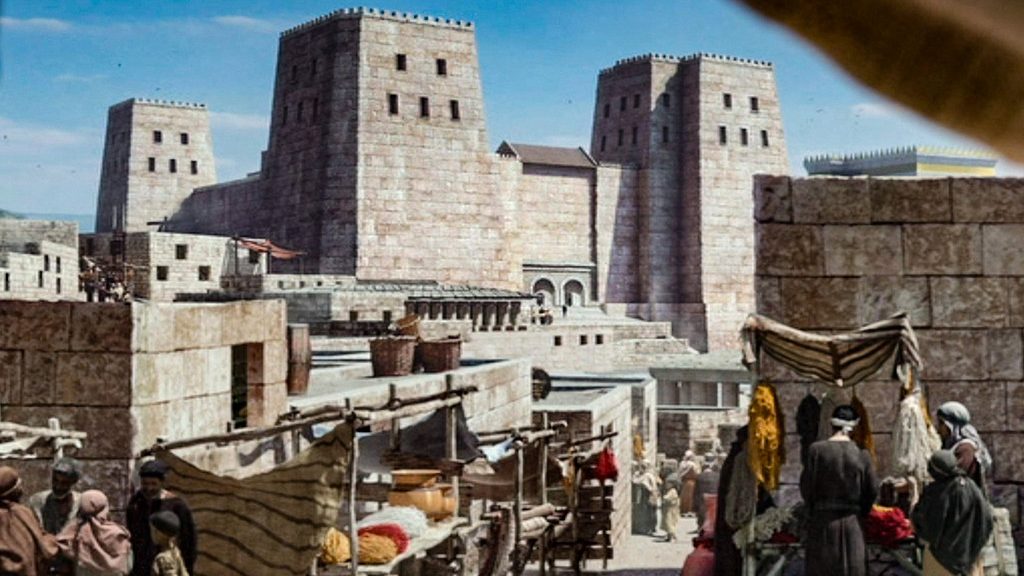
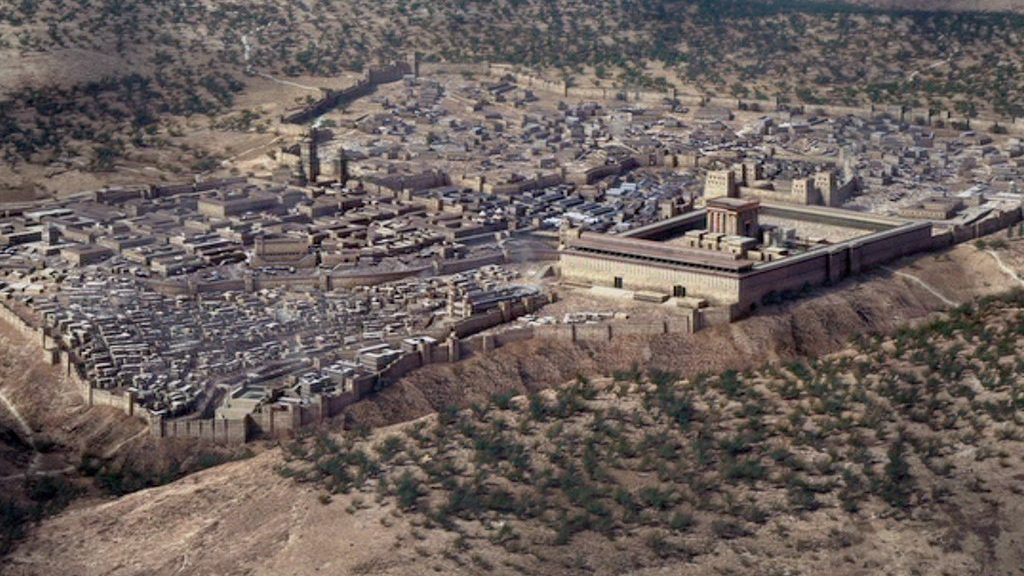
Later on that Tuesday of Passion week, “As Jesus was leaving the Temple that day, one of his disciples said, ‘Teacher, look at these magnificent buildings! Look at the impressive stones in the walls.’” (Mk.13:1 nlt) The disciples were mesmerized by the beauty and structure of the Temple. Herod the Great started a rebuilding project on the Temple in 19 B.C.. The current structure was over 500 years old and in need of repair. The Temple was surrounded by huge white stone, some as large as 37 ft long, 12 ft high, and 18 ft wide. Marble and gold was used as decorative material on the outside of the Temple reflecting a glorious shine as the sun shown on it. It was truly magnificent. Jesus then stunned them by saying those huge stones would not be in place on top of each other, as the whole Temple would be destroyed.

Jesus’ foretelling of the Temple’s destruction occurred 40 years later in A.D.70 by the Roman army led by General Titus who later became Emperor. The destruction of the Temple in A.D.70 is well documented by historians, so there is no reason for us today not to believe what Jesus foretells about what we prefer to as the end times.

FreeBibleimages.org

Jesus proceeds to the Mount of Olives across the Kidron Valley with a spectacular view of the Temple in the distance and sitting down with some of His disciples. “Peter, James, John, and Andrew came to him privately and asked him, ‘Tell us, when will all this happen? What sign will show us that these things are about to be fulfilled?’” (Mk.13:3-4 nlt) The disciples thought the destruction of the Temple would be the beginning of the end times, so they were asking for the signs when to anticipate the destruction of the Temple. Jesus now begins what is known as the ‘Olivet Discourse’ properly named for the place He spoke it, on the Mount of Olives.

The first sign Jesus said to look for is false Messiahs will emerge. “Don’t let anyone mislead you, for many will come in my name, claiming, ‘I am the Messiah.’ They will deceive many.” (Mk.13:5-6 nlt) Jesus’ concern for them and us is not to be fooled by deception but be aware. We have seen several individuals in recent years claiming to be the Christ, the Messiah. Ironically, the first one came as early as A.D.130 and man named Bar Kochba who led a Jewish rebellion against Rome. As the centuries pass and we get closer to the coming of Christ, there will be an increase in these false Messiahs to deceive the world and we have already  witnessed some of them in our day.

Secondly, Jesus said, “And you will hear of wars and threats of wars, but don’t panic. Yes, these things must take place, but the end won’t follow immediately.” (Mk.13:7 nlt) In our present day we can’t go 24 hours without hearing of some conflict or war between nations. Jesus said these things will happen but the end won’t follow immediately. There have been hundreds of wars in the past 2,000 years, yet the sign Jesus is instructing us to watch for is the frequency of these wars.

Jesus then gives us third sign, “There will be earthquakes in many parts of the world, as well as famines. But this is only the first of the birth pains, with more to come.” (Mk.13:8 nlt) A quick google search on the number of earthquakes each year is staggering, and they do occur in many parts of the world. Famines are also increasing. An internet search on famines and food shortage will yield the same results of frequent occurrences. Jesus describes these as the beginning of birth pains. He says more will come. Again, the more frequent the birth pains signify the end of pregnancy is near. The more earthquakes, famines, wars, and false messiahs we have, the closer we are to the Lord’s return.

FreeBibleimages.org

So how are we to understand the current events of our day in light of Jesus’ sayings about the future. First we are to know that they are certain. They will come to pass, although we don’t know when. Second, these signs are becoming more frequent so the time is getting closer. The world is closer to Jesus’ return than when He first spoke these words to His disciples 2,000 years ago. And third, we should aware that it is imminent, it could happen at any time. So, we need to be ready. The question is, are we ready?

We continue with Jesus’ foretelling the future next week…….

Bible Studies

“Four Teachings from the Messiah” The Gospel of Jesus Christ: the book of Mark

Read: Mark 12:28-44 NLT – The Most Important Commandment – One of – Bible Gateway

Photo by Tim Wildsmith on Unsplash

We are coming to the end of chapter 12 of Mark this week in Biblical Insights. It is still Tuesday of Passion week, and Jesus is getting questions from the Jewish rulers as the curious crowds look on. Jesus will have an opportunity to address a certain teacher, the people following Him, and His disciples with His teaching.

One teacher of the law was standing by and heard Jesus answer the Sadducees’ ridiculous question concerning a woman who was married seven times. They wanted to know whose wife she will be in the resurrection, when the Sadducees didn’t even believe in the resurrection. (Mk.12:18-27) This teacher was impressed with Jesus’ answer and decided to ask his own question.

The question he asked was, ‘Of all the commandments, which is the most important.’ (Mk.12:28 nlt) Jewish rabbis had a count of 613 commandments in the book of the law. They distinguished them between heavy and light. The problem was they couldn’t all agree which ones were ‘heavy’ (more binding) and which ones were ‘light.’ The Jewish teacher went right to the top commandment and asked what was the greatest of them all. “Jesus replied, ‘The most important commandment is this: Listen, O Israel! The LORD our God is the one and only LORD. And you must love the LORD your God with all your heart, all your soul, all your mind, and all your strength. The second is equally important: Love your neighbor as yourself. No other commandment is greater than these.” (Mk.12:29-31 nlt) The teacher liked Jesus’ response agreeing with Him adding his own Scriptural evidence. Jesus saw how much the man understood, but he was still lacking what was needed for salvation. The teacher knew moral concerns were more important than ceremonial sacrifices, but he needed to grasp all that was needed was to love God and obey Him. Jesus told him he was not far from the kingdom of God. Interesting that after this exchange with the Jewish teacher, no one dared to asked Jesus anymore questions.

Photo by The Maker Jess on Unsplash

Later in the day Jesus was once again teaching in the Temple. He asked the people who were listening, “Why do the teachers of religious law claim that the Messiah is the son of David? For David himself, speaking under the inspiration of the Holy Spirit, said, ‘The LORD said to my Lord, Sit in the place of honor at my right hand
until I humble your enemies beneath your feet.’ Since David himself called the Messiah ‘my Lord,’ how can the Messiah be his son?” (Mk.12:35-37 nlt) Jesus is making the claim here that He is the Messiah, the Son of God. Most Jewish people knew the Messiah would come from the family of David. Jesus is explaining the first word ‘The LORD’ is ‘Yahweh’ God’s covenant name, and the second ‘my Lord’ is a word the Jews used for God. It is a picture of God speaking to the Messiah, and David calls Him Lord indicating the Messiah is more than the Son of David, but the Son of God. David would not refer to one of his descendants as Lord. Jesus was acknowledging the Messiah’s deity, and therefore His own.

Jesus then takes the opportunity to warn his listening audience which includes some of these religious rulers, “Beware of these teachers of religious law!” (Mk.12:38 nlt) Jesus said they would know them by their appearance in the long robes of a dignitary and the wealthy, and worthy of a respectful greeting. They would be noticeable in having the front row seats in the synagogue. Jesus then issues a cautious warning to widows, as the scribes and teachers also served as estate planners taking unfair advantage of unsuspecting women. A warning needs to be given in our day against false teachers and those who would seize on the opportunity to take advantage of those in hurting situations. The very ones who trust these leaders to be faithful are swindling them out of house and home. May we sound the alarm when we observe these vulnerable ones being taken.

FreeBibleimages.org

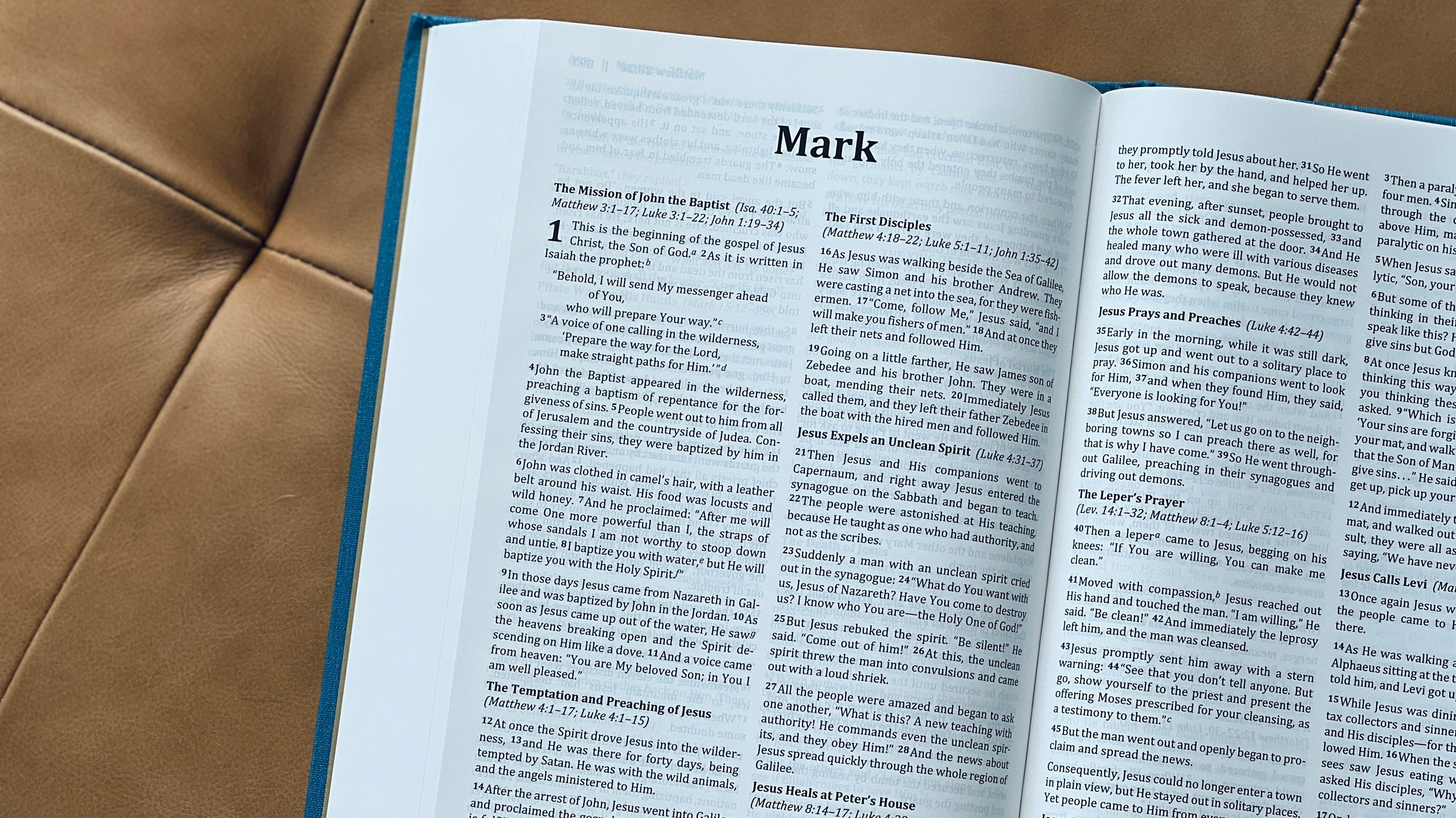
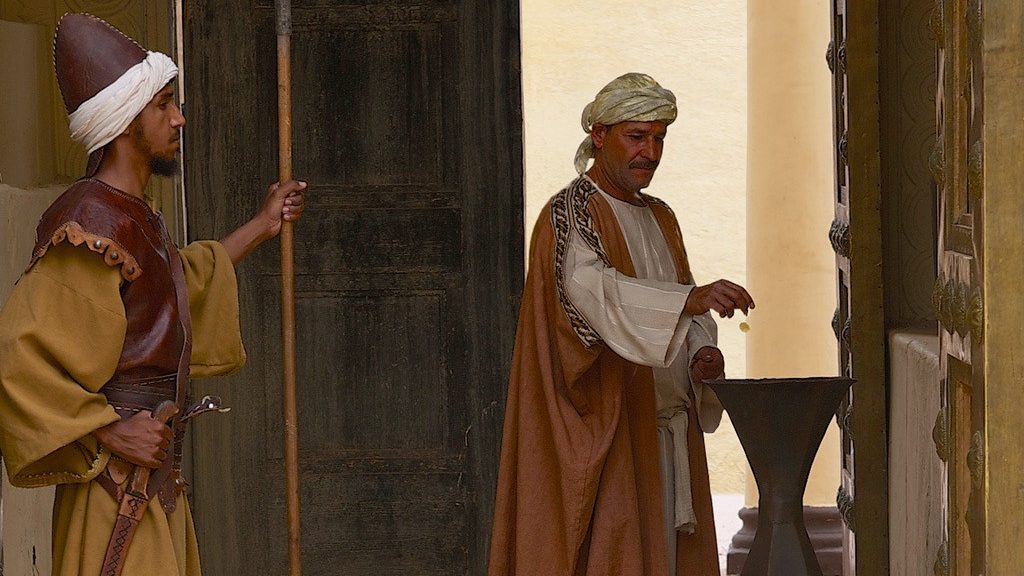
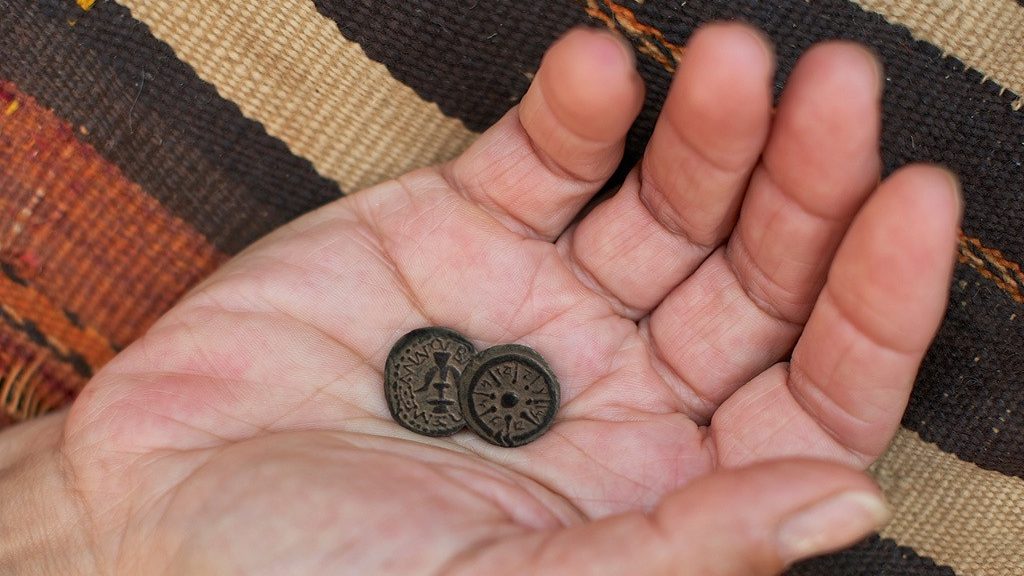
“Jesus sat down near the collection box in the Temple and watched as the crowds dropped in their money. Many rich people put in large amounts. Then a poor widow came and dropped in two small coins.” (Mk.12:41-42 nlt) When Jesus saw this, He called His disciples. The collection box was in the women’s court of the Temple. In fact, there were 13 trumpet shaped receptacles around the courtyard to make donations. This was a public area as people traveled through depositing their money. Jesus pointed out to His disciples the large amount of money the rich put it, which to them was equivalent to spare change. Then Jesus noted what the poor widow put in, two small coins. These were copper coins, the lowest valued coins in circulation in the Holy Land. These two copper coins were all she had to live on, and she put it in the donation box. This lesson Jesus points to is the show of faith this woman had in believing and trusting God to meet her daily needs. We live in a time when trusting God needs to come with a secure job and healthy bank account, then we can donate our spare change. But our God is faithful who will supply our needs when we first seek Him and His kingdom. “Seek the Kingdom of God above all else, and live righteously, and he will give you everything you need.” (Mt.6:33 nlt)

FreeBibleimages.org

Next week we begin chapter 13 where Jesus answers the disciples’ questions concerning future events. “Tell us, when will all this happen? What sign will show us that these things are about to be fulfilled?” (Mk.13:4 nlt) Until next week…….

Bible Studies

“The Power of God” the Gospel of Jesus Christ: the book of Mark

Read: Mark 12:13-27 NLT – Taxes for Caesar – Later the leaders – Bible Gateway

“Jesus replied, ‘Your mistake is that you don’t know the Scriptures, and you don’t know the power of God.’” Mark 12:24 NLT

This week in Biblical Insights Jesus is approached by two groups of religious rulers opposed to each other but have a common enemy, Jesus. Their goals are to trap Jesus into contradicting Himself and for Him be at odds with either the Roman government or the Jewish law.

Our first group is a combined group of the Pharisees and the Herodians. The Herodians were a political group of supporters of King Herod, not exactly the Jews best friend but they were sent together to ask Jesus a question about paying taxes. “Later the leaders sent some Pharisees and supporters of Herod to trap Jesus into saying something for which he could be arrested.” (Mk.12:13 nlt) Their hope was Jesus wouldn’t recognize the Herodians and He would agree with the Pharisees in not paying tribute to Caesar by not paying taxes forcing His arrest.

FreeBibleimages.org

The Pharisees and Herodians used flattery by telling Jesus they knew how honest He was. They noted His impartiality, playing no favorites, and always speaking the truth of God. Then they asked Jesus should we be paying taxes to Caesar. Of course Jesus saw right through this. “Why are you trying to trap me? Show me a Roman coin, and I’ll tell you.” (Mk.12:15 nlt) Showing Jesus a coin, He asked them an easy question, whose picture is on the coin? When they replied with ‘Caesar’s’ Jesus said,  “Well, then, give to Caesar what belongs to Caesar, and give to God what belongs to God.” (Mk.12:17 nlt) Problem solved. But the Pharisees didn’t see it that way. They hated to pay taxes to the Roman government who was oppressing them. Their thought was, Jesus would never sanction such a tax, but he did, and they were amazed. They also failed at their attempt to trap Jesus in having Him arrested or the crowds turning on Him which was the real goal.

What Jesus laid out to the taxpayers of His day applies to us in our day. Jesus implied our responsibility to the government does not interfere with our responsibilities to God. We are under divine obligation to pay taxes to the government God has placed over us, for all authority comes only from Him. Many Christians today have the same problem the Jews had in paying taxes to an oppressive government, but Jesus spoke it plainly, “give to Caesar what belongs to Caesar, and give to God what belongs to God.”

Our second group this week are the Sadducees. They were the sophisticated  Jewish party and very wealthy. Australian Theologian Leon Morris describes them best,  “The conservative, aristocratic, high-priestly party, worldly minded and very ready to cooperate with the Romans, which, of course, enabled them to maintain their privileged position.” They were made up of High priests, chief priests, and most of the Sanhedrin. They were highly political and had great influence in the religious activities at the Temple. They oversaw the Temple business which Jesus disrupted the day before by clearing them all out. Their beliefs were noticeably opposite the Pharisees and other religious rulers. The Sadducees did not believe in the resurrection. They were all about this world and making a profit. The Sadducees only recognized the first five books of Moses as authority and did not adhere to any oral, traditional, or Scribal law of the Pharisees. They also denied the existence of angels.

FreeBibleimages.org

This group, the Sadducees, described in the previous paragraph asked Jesus the most ridiculous question. They based the question on a law of Moses found in the Old Testament. The Sadduceess were seeing common ground with Jesus for their question. They confirmed the book of Moses and knew of Jesus’ quotations from Moses. But their question was to prove their point of no resurrection. They start by saying, “Teacher, Moses gave us a law that if a man dies, leaving a wife without children, his brother should marry the widow and have a child who will carry on the brother’s name.” (Mk.12:19 nlt) The purpose of Moses’ law was to provide a continuance of the man’s family name and inheritance rights. The first son born would be considered the son of the dead brother. The Sadducees then create a scenario where there were seven brothers and all of them died without passing on a son, and then the woman died. Now their ridiculous question from a group who doesn’t believe in the resurrection, “So tell us, whose wife will she be in the resurrection? For all seven were married to her.” (Mk.12:23 nlt) Absurdity!

“Jesus replied, ‘Your mistake is that you don’t know the Scriptures, and you don’t know the power of God.’” (Mk.12:24 nlt) The Sadducees were ignorant of the Scriptures. If they knew God’s Word even just the first five books they claim to believe they would know of the power of God and His ability to raise the dead. People today are just as ignorant of the Bible as the Sadducees were. They don’t believe because they don’t know. They don’t know because they haven’t read. They don’t read because their eyes are blinded by the spirit of darkness in this world. Christians should be in prayer for eyes and hearts to be opened in people to read God’s Word and understand His plan of salvation.

Jesus then explained those raised from the dead are not married as when they were here on earth but are like angels in heaven. Angels do not marry and do not have children. Life in heaven is not like life on earth. Marriage was established by God on the earth for companionship and advancing the human race. Believers in heaven will have a totally new spiritual existence.

The Sadducees needed understanding in another area in which Jesus is going to explain to them. They needed to know the truth of the resurrection. “But now, as to whether the dead will be raised—haven’t you ever read about this in the writings of Moses, in the story of the burning bush? Long after Abraham, Isaac, and Jacob had died, God said to Moses, ‘I am the God of Abraham, the God of Isaac, and the God of Jacob.’” (Mk.12:26 nlt) Jesus went right to book of Moses, the book they should have been familiar with for they accepted it as the authority of God. This Scripture proves there is a resurrection of the dead. God spoke of Abraham, Isaac, and Jacob as being alive. He said, ‘I am the God of Abraham’ not ‘I was’, but ‘I am’ in the present tense.

Photo by RDNE Stock project on Pexels.com

Only the power of God is able to raise someone from the dead. Every believer’s body will be raised up on the last day and be united with our living souls in heaven. Our physical bodies die but our souls live on either in heaven with Christ or in hell with the lost until they reunited at the Lord’s return unto eternal life or eternal punishment. Don’t be as the Sadducees. Don’t be ignorant of the Bible, believe in the resurrection and the power of God, and accept Christ as His Spirit calls you unto salvation.

Bible Studies

“Parable of the Wicked Farmers” The Gospel of Jesus Christ: the book of Mark

Read: Mark 12:1-17 NLT – Parable of the Evil Farmers – Then – Bible Gateway

“The religious leaders wanted to arrest Jesus because they realized he was telling the story against them—they were the wicked farmers. But they were afraid of the crowd, so they left him and went away.” Mark 12:12 NLT

We’re back this week in the book of Mark on Biblical Insights. We left off two weeks ago as Jesus was being questioned as to His authority after He cleared the Temple of the merchants and money changers. The religious rulers were incensed by Jesus’ actions, and more so by the people following Him. They saw their authority and way of life slipping away right before their eyes and were determined to do something about it. Today, Jesus gives the rulers another reason for their hatred towards Him by speaking a parable against them.

FreeBibleimages.org

In New Testament times large estates were put into the hands of locals to farm and care for while the owner was away. They worked as tenant farmers farming the land paying the owner a percentage of the profits as rent keeping the rest as payment for their work. Palestine’s hillsides were covered by grape vineyards as this was the main source of income in the region especially in Galilee. Jesus, once again, took a familiar way of life as an example to make a point. Jesus’ main audience this time are the leading priests, the teachers of religious law, and the elders who questioned Him about His authority. Jesus is about to reveal their hidden agenda by putting this parable squarely on them.

Jesus sets up the story in verse one of chapter twelve, “A man planted a vineyard. He built a wall around it, dug a pit for pressing out the grape juice, and built a lookout tower. Then he leased the vineyard to tenant farmers and moved to another country.” (Mk.12:1 nlt) Jesus describes the very details of a working vineyard from planting the seed, a wall to mark its boundaries, a place to press out the grapes, and a lookout tower for security and storing seed and tools. Everyone listening to it would be reminded of the local vineyards they see frequently on their journeys through Palestine. They would also be familiar with the tenant farmer scenario in Jesus’ story. Jesus will now begin to make His point of the story.

This parable, or story, Jesus is teaching is based on the ‘Song of the Vineyard’ in Isaiah 5:1-5. It describes Israel’s unfaithfulness. Jesus is addressing this to the Jewish rulers and applying it to them. The fact that Israel is represented as the vineyard in Isaiah makes it hard not to connect the dots and see Jesus is talking about the Jewish people and their leaders. They all knew who the story was about, it was about them. In this story, the man is God, the vineyard is Israel, the servants are the Old Testament prophets and John the Baptist, the Son is Jesus, and the tenant farmers are the religious rulers.

FreeBibleimages.org

Jesus continues with this parable. “At the time of the grape harvest, he (the owner) sent one of his servants to collect his share of the crop. But the farmers grabbed the servant, beat him up, and sent him back empty-handed.” (Mk.12:2-3 nlt) This went on and on with the owner sending servant after servant who were either beaten or killed. This is a picture of the prophets God sent to Israel in the Old Testament which they either ignored, beat up, or killed. The owner finally sends his son who he expects would be respected by the tenant farmers. But the tenants had other ideas. Jewish law stated that a piece of unclaimed property by an heir could be claimed by anyone. They assumed the son was coming to claim his property, so, if they killed him they could claim it for themselves. “But the tenant farmers said to one another, ‘Here comes the heir to this estate. Let’s kill him and get the estate for ourselves!’ So they grabbed him and murdered him and threw his body out of the vineyard.” (Mk.12:7-8 nlt)

The tenant farmers not only wanted the entire harvest for themselves but the vineyard estate. The Jewish leaders, as the tenant farmers, wanted to see Jesus dead for He claimed to be the Son of God. Jesus was keeping them from power and total rule over the religious affairs of the people. Jesus then asks those around Him what they thought the owner of the vineyard would do. Before they could answer, Jesus told them. “I’ll tell you—he will come and kill those farmers and lease the vineyard to others.” (Mk.12:9 nlt) Then Jesus asked another question which should have been answered ‘yes.’ “Didn’t you ever read this in the Scriptures? ‘The stone that the builders rejected has now become the cornerstone.’” (Mk.12:10 nlt) Teachers of the Law and the Old Testament certainly knew of the passage Jesus was referring to, but they refrained from answering. The rejected ‘stone’ is the rejected ‘Son’ in Jesus’ parable. Although Jesus was rejected by the Jewish leaders, He is the cornerstone and rightful heir to the throne of David. He is the Messiah who was to come to save His people from their sins, to the Jew first then the Gentile. The hostility towards Jesus by the Jewish rulers clearly show their rejection of Him.

“The religious leaders wanted to arrest Jesus because they realized he was telling the story against them—they were the wicked farmers. But they were afraid of the crowd, so they left him and went away.” (Mk.12:12 nlt)

FreeBibleimages.org

Once again, the leaders walked away for fear of the crowd, but eventually they will get the crowd on their side in just a few days. This event occurred on Tuesday of Passion Week. Jesus will continue His teaching to His disciples the next two days in between the religious rulers continually attempting to trap Him. Jesus has a lot to say and little time to say it. Until next week……..

Bible Studies

“Jesus’ Authority Questioned” The Gospel of Jesus Christ: the book of Mark

Read: Mark 11:20-33 NLT – The next morning as they passed by the – Bible Gateway

“As Jesus was walking through the Temple area, the leading priests, the teachers of religious law, and the elders came up to him. They demanded, ‘By what authority are you doing all these things? Who gave you the right to do them?’” Mark 11:27-28 NLT

Jesus’ final week (Passion Week) started with a huge celebration of His arrival. The people in Jerusalem welcomed the one they assumed was going to overthrow the Roman government and free them of heavy oppression. Much to the displeasure of the religious rulers, who saw Jesus as a threat to their power, the people marveled at His teaching and were eager to hear more. The welcoming attitude would start to fade by the end of week with the people, but not so with rulers, they were against Him from the minute He rode into town. After Jesus cleared the Temple, as we read last week, the rulers were livid and would question His authority to do so.

FreeBibleimages.org

Last week in our study we saw Jesus curse a fig tree on their way into Jerusalem on Monday morning. Being full of leaves the tree appeared to have figs, but it gave a false impression, it did not have any. “The next morning as they passed by the fig tree he had cursed, the disciples noticed it had withered from the roots up.” (Mk.11:20 nlt) Peter recalling Jesus cursing the tree pointed out the tree had died. It had withered from the roots up which meant total destruction. The tree would never be able to produce fruit again. Jesus replied, ‘have faith in God.’ He would use this illustration of the dying fig tree to teach about having faith in God.

Jesus said, “I tell you the truth, you can say to this mountain, ‘May you be lifted up and thrown into the sea,’ and it will happen. But you must really believe it will happen and have no doubt in your heart. I tell you, you can pray for anything, and if you believe that you’ve received it, it will be yours.” (Mk.11:23-24 nlt) It sounds like Jesus is saying as long as we believe it, we can have anything we ask for in prayer. But is this what He is saying? Before we get too excited, I think not. That is not what He is teaching. Jesus liked to use visual illustrations, and since He was at the Mount of Olives with the Dead Sea at a distance in view this example fits. But what was Jesus saying? Jewish literature of that day used the phrase, ‘rooter up of mountains,’ which referred to great Rabbis and spiritual leaders who could solve difficult problems. It was  a common metaphor. Jesus Himself never rooted up any physical mountains despite the continual request of the Jewish rulers for Him to perform some supernatural miracle. Jesus’ point is as we believe and have faith in God and in His power we will see His mighty powers at work in us. There is nothing God can’t do and won’t do for us if it is in His will and purpose for us.

Verse 25 of today’s text is often misunderstood. “But when you are praying, first forgive anyone you are holding a grudge against, so that your Father in heaven will forgive your sins, too.” (Mk.11:25 nlt) The first thing to observe is Jesus is talking to His disciples and not those who do not believe in Him. If we fail to forgive, holding resentment in our hearts towards someone, our relationship with the Lord is also fractured. Christians are to have a forgiving attitude towards others, even those who have sinned against us. This forgiveness restores fellowship with our brothers and sisters in Christ and with our Lord. It’s impossible to pray effectively if we are holding something against someone. James 5:16 says, “Therefore confess your sins to each other and pray for each other so that you may be healed. The prayer of a righteous person is powerful and effective.” (niv)

FreeBibleimages.org

Jesus and His disciples arrive in Jerusalem on this Tuesday morning and make their way to the Temple. As soon as Jesus enters the Temple He is surrounded and questioned by the religious rulers. They were all there, the chief priests, scribes, and the elders. Most likely Caiaphas, Annas, and the captain of the Temple were there as well. They questioned Jesus as to His authority in throwing the businesspeople and the money changers out of the Temple the day before among other things He was doing. It was said in Jewish tradition the Temple could only be cleared out and cleansed by certain people, the Sanhedrin, a prophet, or the Messiah. But their main argument was that Jesus disrupted their business in the Temple.  

Jesus asked them a question, “Did John’s authority to baptize come from heaven, or was it merely human? Answer me!” (Mk.11:30 nlt) Jesus threw them what we would call today a curve ball. They were in a tough spot. Heaven was a common Jewish term for God. If they said heaven (God), they would admitting what John the Baptist had said about Jesus was true. This would prove Jesus’ authority and that He was the Messiah. If they said John’s authority was only his own, the people would be in an uproar for many believed John to be a prophet. They took the easy way out and didn’t answer. “So they finally replied, ‘We don’t know.’ And Jesus responded, ‘Then I won’t tell you by what authority I do these things.’” (Mk.11:33 nlt)

The religious rulers will not give up as we will see. Jesus was totally messing up their system of operation and they wanted Him disposed of. They will eventually succeed by the end of the week enticing the crowd to join them. But the most astonishing thing about this is it was God’s plan from the beginning for a perfect sacrifice to be made on our behalf. “For God so loved the world, that he gave his only begotten Son, that whosoever believeth in him should not perish, but have everlasting life.” (Jn.3:16 kjv) Until next week………..

FreeBibleimages.org

Bible Studies

“Jesus’ Triumphant Entry” The Gospel of Jesus Christ: the book of Mark

Read: Mark 11:1-19 NLT – Jesus’ Triumphant Entry – As Jesus – Bible Gateway

“Jesus was in the center of the procession, and the people all around him were shouting, ‘Praise God! Blessings on the one who comes in the name of the LORD!
Blessings on the coming Kingdom of our ancestor David! Praise God in highest heaven!’” Mark 11:9-10 NLT

FreeBibleimages.org

Last week we followed along with Jesus as He made His final trip to Jerusalem. Chapter 11 begins the final week of Jesus’ life known as the ‘Passion’ week. Many events and plenty of teaching from Jesus take place during the next four days before He is led to a cross and crucified. “As Jesus and his disciples approached Jerusalem, they came to the towns of Bethphage and Bethany on the Mount of Olives. Jesus sent two of them on ahead.” (Mk.11:1 nlt) Jesus and His companions are now on the outskirts of the city. He sends two of His disciples to the next town over to retrieve a donkey for Him. The town was Bethphage, a small town east of Jerusalem, whose name means ‘house of unripe figs.’ Jesus told them they would find a young colt in which no had ever ridden. They were to untie it and bring it to Jesus. Jesus further instructed them, if anyone asks why they were doing that, there were to say, “The Lord needs it and will return it soon.” (Mk.11:3 nlt)

In our study we have seen many miracles from Jesus with His all-knowing attributes and here is one more. Jesus knows there will be a colt in that town no one had ridden, and they would give permission for its release. The disciples left and it all turned out just as Jesus said it would. “Then they brought the colt to Jesus and threw their garments over it, and he sat on it.” (Mk.1:7 nlt) In Jesus’ day to come in riding on a colt represented a man of peace. Jesus didn’t come into the city on a war-horse to conquer but to suffer as the suffering servant on a cross. That first Palm Sunday morning fulfilled the prophecy of Zechariah. “Rejoice, O people of Zion! Shout in triumph, O people of Jerusalem! Look, your king is coming to you. He is righteous and victorious, yet he is humble, riding on a donkey—
riding on a donkey’s colt.” (Zech.9:9 nlt)

As Jesus rode into Jerusalem, crowds of people led the way as others followed spreading their coats along the road in front of Him while others spread branches on the road from nearby fields. The spread of clothing was a practice of welcoming a new king in those days. Notice the difference in Jesus’ acceptance of this response as to other occasions. Jesus’ avoided recognition in the past as to not interfere with the work He still had to do because His time had not yet come. But now, His has come. The people were beginning to shout, “Praise God! Blessings on the one who comes in the name of the LORD!” (Mk.1:9 nlt) Many other translations use the familiar word “Hosanna!” meaning ‘save now.’ The people were shouting out in song from Psalm118, a Psalm usually sung at the Passover festival which was currently going on. “Please, LORD, please save us. Please, LORD, please give us success. Bless the one who comes in the name of the LORD. We bless you from the house of the LORD.” (Ps.118:25-26 nlt) Another undeniable proof in the accuracy of seeing references to Christ all throughout Scriptures.

Upon entering Jerusalem, Jesus headed to the Temple, His Father’s house. Mark records He looked at everything. You can be sure Jesus didn’t miss a thing of what was going on in the Temple. Jesus had the authority to look and carefully inspect every inch of the Temple, and that He did. Late in the afternoon, Jesus and the disciples left for Bethany where they were staying in the home of Mary, Martha, and Lazarus each night of this week.

FreeBibleimages.org

The next morning, Monday of Passion week, Jesus and His disciples headed back to Jerusalem. On the way Jesus became hungry and saw a fig tree in the distance along the road. As they got closer, Jesus saw that it was full of leaves appearing to have figs ready to eat. Fig trees would start to bear leaves in late March or early April and be in full bloom with figs in June, however this tree was already full of leaves. Jesus did not find any figs to eat on that tree for it was not the season for figs. But the tree gave the appearance that it was able to meet the need of the hungry, it gave a false impression. So like many of the false teachers and preachers of our day who entice us with their appearance, style, and convincing words of joy, love, and positive thinking with a little Bible mixed in. Their fruit is not satisfying, nor is there much of it. Jesus cursed the fig tree for its falsehood. Today’s modern preachers need to beware. Individual Christians also need to beware of false impressions we may give without any fruit to show for it. The world will notice, and the Lord certainly notices.

“When they arrived back in Jerusalem, Jesus entered the Temple and began to drive out the people buying and selling animals for sacrifices. He knocked over the tables of the money changers and the chairs of those selling doves, and he stopped everyone from using the Temple as a marketplace.” (Mk.11:15-16 nlt) Jesus was using His authority on what He saw the day before as He looked over the Temple. This area was the outer court of the Gentiles. It was the only place where non-Jews could gather to worship God. The area was now a place of business, and corrupt business, taking away the right of worship from the Gentiles. Jesus said the Scriptures declare God’s house was to be a house of prayer for all nations and they turned it into a den of thieves. The book of Isaiah says, “I will also bless the foreigners who commit themselves to the LORD, who serve him and love his name, who worship him and do not desecrate the Sabbath day of rest, and who hold fast to my covenant. I will bring them to my holy mountain of Jerusalem and will fill them with joy in my house of prayer. I will accept their burnt offerings and sacrifices, because my Temple will be called a house of prayer for all nations.” (Is.55:6-7 nlt)

FreeBibleimages.org

The Jewish leaders of the Temple were prohibiting proper worship from the Gentiles and had no regard for the sanctity of the Temple. The Jewish rulers (Scribes and Chief priests) saw their way of life being interrupted and were not pleased. They decided to do something about it, plotting Jesus’ death even though they were afraid of Him “because the people were so amazed at his teaching.” (Mk.11:18 nlt)

Jesus’ first day of Passion week was an eventful one. He returned back to Bethany with His disciples for the night. Tuesday begins another eventful day with Jesus’ teaching and debating with the religious rulers who are determined to have Him done away with. Until next week…….

Bible Studies

“The Son of Man came not to be served” The Gospel of Jesus Christ: the book of Mark

Read: Mark 10:32-52 NLT – Jesus Again Predicts His Death – They – Bible Gateway

“For even the Son of Man came not to be served but to serve others and to give his life as a ransom for many.” Mark 10:45 NLT

FreeBibleimages.org

This week Jesus is making His final approach to the city of Jerusalem were He will fulfill His mission of serving others by giving His life as a ransom for many. This final trip with His disciples started in Ephraim going through Galilee, south to Jericho, and on to Jerusalem. The Scripture says they were going up to Jerusalem even though they are traveling in a southernly direction. Jerusalem is actually 2,500 ft above sea level. Their trip will take them down through the Jordan Valley, below sea level, then upward to Jerusalem in the south. Jesus was walking ahead of them which was rare for Him to do. “They were now on the way up to Jerusalem, and Jesus was walking ahead of them. The disciples were filled with awe, and the people following behind were overwhelmed with fear.” (Mk.10:32 nlt) Many followers were frightened due to the threats upon Jesus coming from Jerusalem. Yet, they were amazed at His courage as He led them on the road.

Jesus reveals for a third time His upcoming death, this time in much more detail. Jesus confirms this is the trip in which it will all take place. He will be betrayed and handed over to the Jewish religious rulers who will sentence Him to die handing Him over to the Romans. “They will mock him, spit on him, flog him with a whip, and kill him, but after three days he will rise again.” (Mk.10:34 nlt) Despite the fact this is the third time Jesus spoke these words to His disciples they still failed to register it in their thought process. What happens next reveals what their thoughts were.

After Jesus informed His disciples what would soon take place when they arrive in Jerusalem, James and John ask Jesus for a favor, “When you sit on your glorious throne, we want to sit in places of honor next to you, one on your right and the other on your left.” (Mk.10:37 nlt) They clearly didn’t get it. It is as if James and John didn’t hear a word Jesus said. They were concerned about their own position in the future kingdom, which they still thought would be happening in the here and now. They were so focused on their view of the kingdom they failed to hear what the King said about the establishment of His kingdom. Christians today fall into the same trap of rewriting Scripture to reshape the kingdom as to what we think it should represent and how one is to come into the kingdom.

Jesus firmly answered James and John telling them they did not know what they are asking for. In the parallel scene of the disciples arguing who would be the greatest (Mk.9:33-37) Jesus taught the disciples what is true greatest. Here, He teaches them about humble, loving service. Drinking a bitter cup of suffering and being a servant to all is a humble, loving service shown as true greatest. The other disciples were indignant at what just occurred, but perhaps they were anticipating those positions for themselves. Jesus again teaches them all an important lesson.

Photo by Elianna Gill on Unsplash

Jesus noted how the rulers in the world ‘lord it’ over the people. They brag about their power and positions. Jesus then reverses the world’s value structure by saying,  “But among you it will be different. Whoever wants to be a leader among you must be your servant, and whoever wants to be first among you must be the slave of everyone else.” (Mk.10:43-44 nlt) The disciples were to be different. We’re called to be different. Christians are to lead by serving. The disciples were to learn to lead by serving. And Jesus gave us both the greatest example, Himself, when He said, “For even the Son of Man came not to be served but to serve others and to give his life as a ransom for many.” (Mk.10:45 nlt)

The reason Jesus came to this earth was not for recognition or to lord it over people, but to provide salvation for all who accept His sacrifice for sins. This is the ultimate act of serving lost sinners. We cannot achieve entrance into heaven on our own. We needed someone who is ready, willing, and able to serve us in this fashion, and Jesus came to serve us in our most important need. He did not come to be served, but to serve.

As chapter 10 closes, Jesus performs His last healing miracle outside the city of Jericho. This the first and last recorded visit of Jesus in the city of Jericho, a rebuilt city under Herod the Great, 1 mile south of the ancient Old Testament Jericho. “A blind beggar named Bartimaeus (son of Timaeus) was sitting beside the road. When Bartimaeus heard that Jesus of Nazareth was nearby, he began to shout, ‘Jesus, Son of David, have mercy on me!’” (Mk.10:46-47 nlt) Bartimaeus was sitting just outside the city on the main road to Jerusalem. Being in his condition he would sit there asking for donations of those passing by on their way to Jerusalem. When he heard Jesus was passing through he shouted out to Jesus to have mercy on him. Two very important truths are noticed through the blind man’s words. He called Jesus, ‘Son of David’ meaning he must have believed Jesus was the Messiah, and he asked Jesus for mercy. Bartimaeus did not think God owed him anything but begged for mercy from Jesus the Messiah. We live in a world where at times people assume that God owes us something. He doesn’t, but He will bestow mercy on all who call on Him.

FreeBibleimages.org

When Jesus heard the man, he stopped. Jesus always stopped when those in need called out to Him, and this time was no different. He called for the man, and Bartimaeus quickly threw off his coat, jumped up and headed towards Jesus. The moment he had waited for many years had arrived; he would not be late. ‘“What do you want me to do for you?’ Jesus asked. ‘My rabbi,’ the blind man said, ‘I want to see!’” (Mk.10:51 nlt) Bartimaeus was healed immediately. Both his physical and spiritual eyes were opened, and he followed Jesus down the road.

Jesus continues His trip up to Jerusalem with His disciples and those who have been traveling with Him, along with the people heading to Jerusalem for the Passover, and now Bartimaeus is tagging along with them. We pick it up next week………

Bible Studies

“The Rich Young Ruler” The Gospel of Jesus Christ: the book of Mark 

Read: Mark 10:13-31 NLT – Jesus Blesses the Children – One day – Bible Gateway

“Looking at the man, Jesus felt genuine love for him. ‘There is still one thing you haven’t done,’ he told him. ‘Go and sell all your possessions and give the money to the poor, and you will have treasure in heaven. Then come, follow me.’” Mark 10:21 NLT

Photo by Tim Wildsmith on Unsplash

Jesus has been making His way to Jerusalem traveling through Judea and the east side of the Jordan River. After another session with the questioning Pharisees, some parents were bringing their children to Jesus so He could touch them and bless them. Jewish parents would bring their children to prominent Rabbis for blessing. Jesus was certainly the most known Rabbi in Israel and many children were brought to Him. The disciples thinking Jesus’ time was too valuable to be given to little children scolded the parents, but Jesus scolded the disciples. “He said to them, ‘Let the children come to me. Don’t stop them! For the Kingdom of God belongs to those who are like these children.’” (Mk.10:14 nlt)

Jesus never wastes an opportunity to teach His disciples. The disciples thought Jesus would be wasting His time with the children, but Jesus proves no time spent with Him is ever wasted. The little children serve as an illustration of coming to Jesus for salvation. Children have nothing to bring but everything to receive from Jesus. Sinners have nothing to bring and offer for salvation, only to receive His free gift of it by accepting Him. Jesus did it all. “Then he took the children in his arms and placed his hands on their heads and blessed them.” (Mk.10:16 nlt)

Jesus continues on His journey to Jerusalem and is met by a man who kneels before Him and asks, “Good Teacher, what must I do to inherit eternal life?” (Mk.10:17 nlt) This man is known as the rich young ruler. Mark does not identify him as such, but gospel writers Matthew and Luke note he was  rich, young, and a ruler in the synagogue. The man was seeking a religious deed or a sacrifice of some kind to ensure him entry into heaven and eternal life. He was accustomed to religious deeds in pleasing God and reasoned there must be one for eternal life. Many people in the 21st century still process their thinking of eternal life with this rich young ruler as something that we must do to achieve it. But Jesus said while holding the little children in His arms, “I tell you the truth, anyone who doesn’t receive the Kingdom of God like a child will never enter it.” (Mk.10:15 nlt) Salvation is not merit-based. It is the free gift of God.

The rich man is asked by Jesus, “Why do you call me good? Only God is truly good.” (Mk.10:18 nlt) Jesus was not retreating from His deity but was encouraging the man to recognize Him as the Messiah if he was leaning that way. Jesus wanted him to understand that his only hope for eternal life was in God and not in himself. He went on to say, “But to answer your question, you know the commandments: ‘You must not murder. You must not commit adultery. You must not steal. You must not testify falsely. You must not cheat anyone. Honor your father and mother.’” (Mk.10:19 nlt) The rich young ruler claimed he has done all of that. Jesus doesn’t challenge him for He had compassion and love for him. He knew the man was sincere but wrong in his thinking. Jesus sums it up by saying, ‘“There is still one thing you haven’t done,’ he told him. ‘Go and sell all your possessions and give the money to the poor, and you will have treasure in heaven. Then come, follow me.’” (Mk.10:21 nlt)

FreeBibleimages.org

The man had a major obstacle in his way, his love for his riches. The Bible said the man’s face fell and he went away sad. He couldn’t part with his possessions. They were more valuable to him than eternal life. What obstacles might you have stopping you from accepting the gospel message. Jesus didn’t say his money or possessions were evil, but that he loved them more than anything else, even at the risk of losing eternal life. What do you love more than anything else that is preventing you from accepting Jesus? Jesus exposed the man’s heart. It was too high a price to pay for this rich young ruler, even though Jesus told him there will be guaranteed treasures in heaven.

Jesus amazed His disciples when He told them how hard it is for the rich to enter into the kingdom of God. He did not say a rich person couldn’t enter, but it would be difficult. Jesus then made this statement, “In fact, it is easier for a camel to go through the eye of a needle than for a rich person to enter the Kingdom of God!” (Mk.10:25 nlt) Riches are a temptation one would rely on in place of God. John MacAthur notes, “Riches breed self-sufficiency and a false sense of security.” The disciples, of course, ask who then could be saved. Jesus answered humanly speaking it is impossible, but nothing is impossible with God. Salvation is totally a work of God. It is by God’s amazing saving grace by faith we put in Christ. Outside of God’s grace, no one can be saved. The rich young ruler asked what he must do to inherit eternal life. He had it all wrong as many others have through the centuries up to our current day. There is nothing we can do, but to forsake all, accept Christ as our savior through His grace and follow Him.

Peter, the spokesman for the group, asked Jesus, “We’ve given up everything to follow you,” (Mk.10:28 nlt) Peter pointed out that they had done what Jesus told the rich young ruler to do. Jesus replied that there are rewards in this life for following Him and eternal rewards in the kingdom. But Jesus also pointed out that following Him will also bring persecution. Jesus ended this conversation with His disciples by saying, “But many who are the greatest now will be least important then, and those who seem least important now will be the greatest then.” (Mk.10:31 nlt) This is a warning against pride in this life. All believers will be equally important serving our Lord Jesus in the kingdom.

FreeBibleimages.org

Next week we will look at the final leg of Jesus’ journey before His triumphal entry into Jerusalem. Jesus teaches His disciples along the way and heals a blind man……..until next week.

Bible Studies

“What God Has Joined Together” The Gospel of Jesus Christ: the book of Mark

Read: Mark 10:1-12 NLT – Discussion about Divorce and Marriage – Bible Gateway

“But God made them male and female from the beginning of creation. This explains why a man leaves his father and mother and is joined to his wife, and the two are united into one. Since they are no longer two but one, let no one split apart what God has joined together.” Mark 10:6-9 NLT

Photo by Sandy Millar on Unsplash

We are halfway through this year, 2025, and a little more than halfway through our study in the book of Mark, the gospel of Jesus Christ. Going through an entire book forces you to cover every topic within its pages. Some are controversial and subject to debate, especially among Christians, but to skip over these topics would be noticeable and negligent in not presenting all of God’s Word for it is for our benefit. This week we have such a topic, ‘divorce.’ When reading and studying the Bible it is vital to know who the author is. God, the Holy Spirit spoke His Word through men to be recorded for us to know Him, His message of salvation, and how to live our lives. There are many passages in the Bible that are hard to deal with, but they are God’s Words for us live by. As we unpack these difficult passages a clearer understanding will develop with the Spirit’s help. He will guide us into truth and a deeper understanding of God’s love for us. We have learned much over the last six months listening to Jesus teach His disciples in various subjects. Now we will hear Jesus’ teaching on divorce, His Words on the subject.

I realize there are many who are reading this who have gone through the tragedy and heartbreak of a divorce. Living in a broken world, the effects of sin touch each of lives in different ways. Those who know the Lord as savior will find comfort in the God of all Comfort. “Blessed be the God and Father of our Lord Jesus Christ, the Father of mercies and God of all comfort.” (2Cor.1:3 esv) Be assured God is a merciful, loving God who comforts us in our time of need. Whatever your circumstances, the Lord God has not abandoned you. He is right there, the God of all comfort, especially in a divorce.

We begin with a familiar scene. Jesus is once again surrounded by a crowd of people who have gathered to hear Him teach. And once again, the Pharisees show up with another attempt to discredit Jesus. They ask Jesus a question in hopes of turning the crowd against Him making it easier to accuse Him later in their attempts to have Jesus put to death. They asked Him, “Should a man be allowed to divorce his wife?” (Mk.10:2 nlt) It was the divorce of Herod and his remarriage to Herodias John the Baptist spoke against that put him in jail and eventually lose his life. Jesus was in Herod’s ruling district, so this was a perfect set up to catch Jesus saying a word against an unlawful divorce. The Pharisees would then interject Herod’s name as an example. But, as always, Jesus was not going to play their games.

FreeBibleimages.org

Jesus answered them by asking them a question.  “What did Moses say in the law about divorce?” (Mk.10:3 nlt) Jesus’ ground rules were, what does Scripture say? They replied Moses permitted it. A man was allowed to write a certificate of divorce and send his wife away. What the Pharisees failed to include in their answer were the conditions of Moses’ permission. The Old Testament reference for permission of divorce is found in Deuteronomy 24:1-4. It is important to remember, the Mosaic Law did not command but permitted divorce, and the Pharisees knew this. Divorce was a reality, and permission was granted to protect the wife’s reputation, along with securing women’s rights, and to regulate remarriage. A man had to affirm the reason for the divorce. This would free the wife of suspected wrongdoing or immorality if that was not the case. She would then be free to remarry being released from her husband. There were two schools of thought among the Pharisees concerning divorce in Jesus’ day. The liberal wing, those who followed Hillel, favored that a man could divorce his wife for any reason. Shammai said only adultery was sufficient grounds for a divorce. Now we listen to what Jesus has to say.

“But Jesus responded, ‘He (Moses) wrote this commandment only as a concession to your hard hearts. But God made them male and female from the beginning of creation. This explains why a man leaves his father and mother and is joined to his wife, and the two are united into one. Since they are no longer two but one, let no one split apart what God has joined together.’” (Mk.10:5-9 nlt)

Jesus doesn’t answer according to tradition or to the current culture of His days. He answers through the Word of God explaining God’s intentions from the beginning. Jesus first calls out their hard hearts. Moses’ words weren’t a command but a concession because of their spiritual condition. It was never part of God’s original plan to consider divorce. Jesus goes back to the Old Testament book of Genesis and God’s creation order. (In the beginning male and female, distinctive beings, the man and the woman leave their families, are married, and now are one in the eyes of God.) What God has joined together let no one split apart. This is God’s creation order to be maintained. When followed, a lot of trouble and heartache are avoided.

Later, the disciples brought up the subject again as they usually do when they were alone with Him. Jesus answered, “Whoever divorces his wife and marries someone else commits adultery against her. And if a woman divorces her husband and marries someone else, she commits adultery.” (Mk.10:11-12 nlt) During this time, the Jewish practice of divorce was initiated and settled by the husband, not a court. His written letter of divorce did not release him from God’s law of marriage. So, they were still married, and adultery would ensue for both parties after the fact.

Jesus did note an exception for divorce. Mark did not record it in his book; however, Matthew does in his gospel by quoting Jesus. “I tell you that anyone who divorces his wife, except for sexual immorality, and marries another woman commits adultery.” (Mt.19:9 niv) The apostle Paul also notes an exception in writing to the church in Corinth. “(But if the husband or wife who isn’t a believer insists on leaving, let them go. In such cases the Christian husband or wife is no longer bound to the other, for God has called you to live in peace.)” (1Cor.7:15 nlt)

Photo by engin akyurt on Unsplash

Divorce is a hard subject to address, even more so for one has gone through it. The Lord God has given us His life principles to live by in this sinful world. We don’t always follow His instructions and at times fall into a bad situation. But our God is an all-forgiving God bestowing mercy and grace to all who come to Him in their time of need. Remember He is the God of all comfort who will see you through whatever your circumstances you are in when you surrender to Him, even in a divorce.