Bible Studies

God’s Vineyard of Grace: The Parables of Jesus

“So those who are last now will be first then, and those who are first will be last.” Matthew 20:16 NLT

“God saved you by his grace when you believed. And you can’t take credit for this; it is a gift from God. Salvation is not a reward for the good things we have done, so none of us can boast about it.” Ephesians 2:8-9 NLT
FreeBibleimages.org

            This week our parable is the ‘Parable of the Vineyard Workers in God’s Vineyard of Grace.’ As last week’s parable had a backstory to it, so does the Vineyard Workers. Again, it is Peter who has asked Jesus a question. Peter’s concern was he and the other disciples sacrificed their livelihood in following Jesus and thought they would get shortchanged in the kingdom. He asked Jesus, “We’ve given up everything to follow you. What will we get?” (Mt.19:27 nlt) The sentiment was that the disciples should be ranked on a higher scale in the kingdom than others who have not given up as much. Jesus sets them all straight by explaining the measure of God’s grace to everyone in the kingdom of heaven. He tells them, “But many who are the greatest now will be least important then, and those who seem least important now will be the greatest then.” (Mt. 19:30 nlt) Jesus then proceeds to teach “The Parable of the Vineyard Workers in God’s Vineyard of Grace.”  

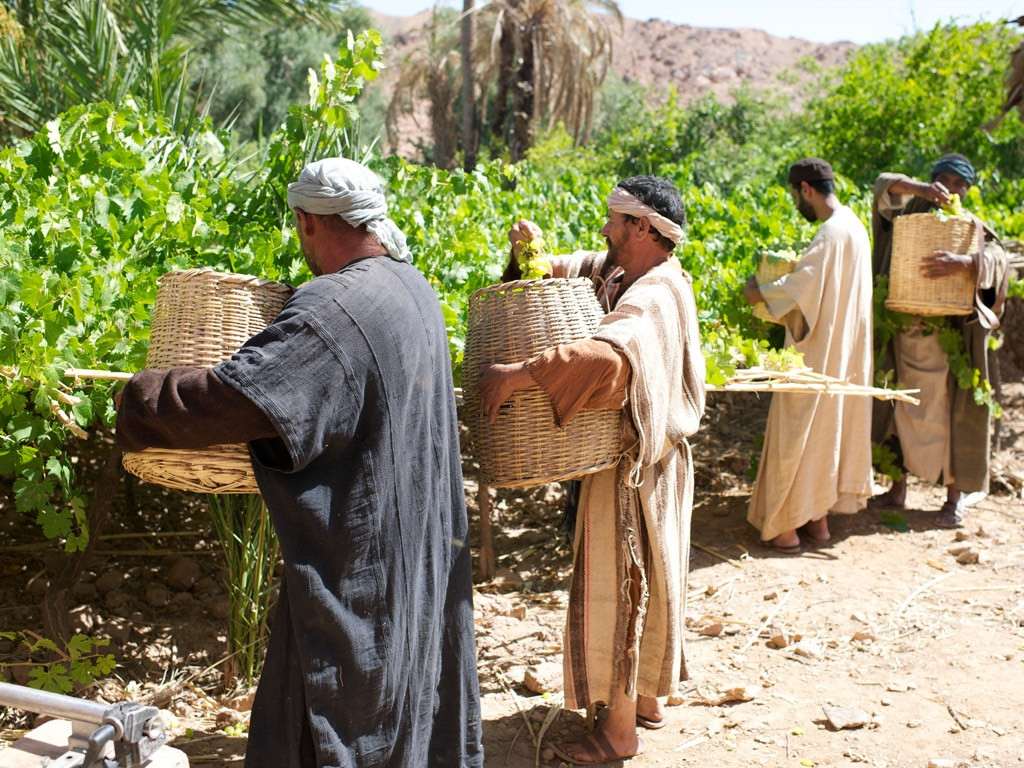
            The parable begins with a landowner going out to hire workers for his vineyard. This most likely occurred during harvest season as landowners would hire day workers gathered in the marketplace looking for work. Workers were hired at the start of the day for an agreed amount of pay for a day’s wages. Throughout the day the landowner would return to the marketplace and find those who needed work. Arriving at 9 o’clock, at noon, and right up until the last hour, he found others who needed work and sent them into the vineyard agreeing to pay them what was right. At the end of the day the workers got paid, and each received the same amount, a full day’s wages. Those who worked all day were upset either that they did not receive more or that the others were treated the same by the gracious landowner. The landowner answered them by saying, “Friend, I haven’t been unfair! Didn’t you agree to work all day for the usual wage? Take your money and go. I wanted to pay this last worker the same as you. Is it against the law for me to do what I want with my money? Should you be jealous because I am kind to others?” (Mt.20:13-15 nlt)

            Jesus is saying all those in the kingdom have the same amount of grace applied to them. Those who have been Christians most of their lives and have done great service for Christ will be in the kingdom along with those who have done little due to limited time to serve Him since their conversion. God’s grace is applied equally to all.

            The Kingdom of Heaven is not a commercial venture. You cannot buy your way into heaven. Nor can you earn your way or achieve greater recognition or rewards for service through hard work, helping the poor, caring for others, church attendance, or any other charitable means you may employ. It is only by God’s grace that we have access to heaven as we believe in His Son Jesus for Salvation. (Eph.2:8-9) Entrance into the kingdom is by God’s grace alone at the moment He bestows it upon us whether in our childhood or in old age while on our death bed.

For those of us who have been Christians a long time are we using the time God has given us to serve Him?  Those of you who have recently come to know the Lord, are you being faithful in the opportunity given to you to serve Him? And are we all praying for those who have not yet accepted Christ as Savior? We are all workers in God’s vineyard of grace, may we be faithful in the work He has given us.

Read: Matthew 20:1-16 NLT – Parable of the Vineyard Workers – Bible Gateway

Bible Studies

The Unforgiving Debtor: Parables of Jesus

“You evil servant! I forgave you that tremendous debt because you pleaded with me. Shouldn’t you have mercy on your fellow servant, just as I had mercy on you?” (Mt.18:32b-33 nlt)

Photo by Brett Jordan on Pexels.com

            This week in our study of the parables of Jesus we have one on forgiveness. Sometimes the hardest thing for a person to do is to forgive. This is especially true if the one extending forgiveness is extremely hurt. There are times one would finally agree to forgive the offender, but then adds they will never forget. Not much of a comfort for the one seeking forgiveness. Jesus is the perfect teacher to show us the true art of forgiveness and he did it in several ways recorded for us in the New Testament of the Bible.

            Our parable this week, ‘The Unforgiving Debtor’, has a backstory to it. Peter, the always inquisitive disciple, asked Jesus, “Lord, how often should I forgive someone who sins against me? Seven times?” (Mt.18:21 nlt) Peter thought the number of seven was sufficient since Rabbinic teaching only required three. Jesus’ answer didn’t follow the teaching of three being the acceptable number. He didn’t put a number on it. Jesus told Peter his number seven was insufficient. The correct number was seventy-seven. In others words it was to an uncounted number of times. Jesus takes this opportunity to teach us all a valuable lesson on forgiveness. Christians who have received God’s forgiveness are accountable to forgive others considering the enormous debt we have been forgiven as we will see in this parable.

            In Jesus’ earthly story there is a king who wanted to settle accounts with his servants who did business for him. These servants could have been governors of the provinces in the kingdom. One servant was in arrears of one million dollars in today’s currency. How did this servant come to owe such a lager debt we don’t know, perhaps it was mismanagement in the taxation process, or a complete mishandling of public funds, which is just as prevalent in our day. The amount was so excessive this governor couldn’t pay it back in a lifetime. The king then ordered that he, his wife and children along with all that he owned be sold to pay the debt. “But the man fell down before his master and begged him, ‘Please, be patient with me, and I will pay it all.’” (Mt.18:26 nlt) The king knew that he had no means in which to pay the debt. There was nothing he could ever do in his lifetime that would be enough to satisfy the debt.

The king of heaven, the Lord Jesus, knew there was nothing we could ever do to pay our debt regarding our sin. We are all doomed to a Christless eternity without our debt being paid in full, and we are not able to pay it. The king in Jesus’ story “was filled with pity for him, and he released him and forgave his debt.” (Mt.18:27 nlt) The king forgave the servants debt completely. It was only by the king’s grace and mercy he was free from the unpayable debt. No need to worry about back payments, the debt was marked paid in full. Jesus Christ paid our sin debt on the cross of Calvary. What we cannot do for ourselves, He did for us. When we accept Christ as our savior, our account is marked paid in full.

Photo by Alicia Razuri on Unsplash

Christians should be the most forgiving people on the planet considering the forgiveness granted to us unto salvation. Apparently though this is not always the case. Therefore, the need for more of Jesus’ teaching. Jesus continues His parable, “But when the man left the king, he went to a fellow servant who owed him a few thousand dollars. He grabbed him by the throat and demanded instant payment.” (Mt.18:28 nlt) This servant who was just set free from a lifetime debt was worried about a few thousand dollars owed to him by a colleague. This debtor also begged for more time, but what was different was his colleague had the ability to pay and only needed a little more time to clear the debt. But the unforgiving debtor refused and had his fellow worker put in prison.

            Needless to say, when the king heard of the matter, he was furious. He called for this servant and said to him, “You evil servant! I forgave you that tremendous debt because you pleaded with me. Shouldn’t you have mercy on your fellow servant, just as I had mercy on you?” (Mt.18:32b-33 nlt) Our Lord Jesus, King Jesus, has the same right to question us the same way should we ever forsake the forgiveness He has shown us by not granting it to others. No matter what offenses may have been done to us, it pales in comparison to our sin before the Lord. Our Lord forgives us of our sin as often as we come to Him, yes even seventy-seven times. May we do the same and forgive all those who ask for forgiveness remembering the debt that was forgiven on our behalf by our king, King Jesus!

Read: Matthew 18:21-35 NLT – Parable of the Unforgiving Debtor – Bible Gateway

Bible Studies

Parables of the Kingdom of Heaven: Parables of Jesus

“Jesus always used stories and illustrations like these when speaking to the crowds. In fact, he never spoke to them without using such parables.” Matthew 13:34 NLT

FreeBibleimages.org

This week we look at Jesus’ ‘Kingdom of Heaven’ parables and there are a few, six to be exact. Most of them are short and to the point, but even in Jesus’ longer parables there are life changing points for ‘Anyone with ears to hear should listen and understand!’ (Mt.13:43b nlt) We noted last week that parables were an earthly story with a heavenly meaning, and these parables of the ‘Kingdom of Heaven’ leave no doubt as to the heavenly meaning. They do indeed point to the Kingdom of Heaven itself. Jesus taught His disciples the Kingdom of Heaven is future and those who will populate it will be those who respond to the message of their preaching and the preaching of the gospel throughout the ages until Jesus returns. It is still in effect today. There will be those who accept the preaching and those who will not respond to the message that kingdom of God is at hand.

There are five characteristics of the Kingdom of Heaven that are seen in these parables. The preaching of the gospel, the growth of the gospel, the power of the gospel, the value of the gospel, and the response of the gospel. The book of Matthew is our source this week found in chapter 13 and verses 24-50.

In the first parable in this passage, the parable of the wheat and the weeds (Mt.13:24-30), and the last parable of the fishing net (Mt.13:47-50) we find both the preaching of the gospel and the response of the gospel. Jesus says the preaching of the gospel “……is like a farmer who planted good seed in his field. But that night as the workers slept, his enemy came and planted weeds among the wheat, then slipped away.” (Mt.13:24-25 nlt) “Again, the Kingdom of Heaven is like a fishing net that was thrown into the water and caught fish of every kind.” (Mt.13:47 nlt) The preaching of the gospel goes out just as last week’s parable, the farmer scatters his seed with some taking hold and some not. Here the seed is planted and takes root accepting the gospel, but the evil one has also planted seeds becoming weeds as they reject God’s Word. The gospel net of preaching the good news is thrown out into the sea to catch all kinds of fish, but here again there are many who were there only for the ride into the shore.

A familiar parable is the parable of the mustard seed. (Mt.13:31-32) A mustard seed is the smallest of all seeds, but it grows into a large tree. The gospel message starts out small among believers but begins to spread quickly and rapidly encompassing many in its fold. It spreads quickly due to its magnificent power as illustrated in the parable of the yeast. “Jesus also used this illustration: ‘The Kingdom of Heaven is like the yeast a woman used in making bread. Even though she put only a little yeast in three measures of flour, it permeated every part of the dough.’” (Mt. 13:33 nlt) The power of the gospel through the influence of the Holy Spirit cannot be resisted by those called of the Lord.

Jesus gives us two very short parables to emphasize the value of being in the Kingdom of Heaven. In the parables of the hidden treasure and the pearl, the value is so great that one would give up everything they owned to possess it. Nothing could be more important, nothing else matters in this world than to be prepared for the next world.  

FreeBibleimages.org

The fifth characteristic of the Kingdom of Heaven as noted above is found in both the parable of the wheat and weeds and the parable of the fishing net. It is the response to the gospel message. Jesus’ heavenly message in these parables is the gospel is being preached, it grows in the power of the Holy Spirit, and it is the most valuable thing you can ever possess. But His message also speaks of those who will be in the Kingdom of Heaven and those who will not. Jesus’ words are clear in both parables as He distinguishes between the acceptance and rejection of the gospel. “Just as the weeds are sorted out and burned in the fire, so it will be at the end of the world. The Son of Man will send his angels, and they will remove from his Kingdom everything that causes sin and all who do evil. And the angels will throw them into the fiery furnace, where there will be weeping and gnashing of teeth.” (Mt.13:40-42 nlt)

It is a sobering thought there are many who believe they are the wheat in the field or the good fish in the net, only to find themselves being thrown out with bad. Don’t make the same mistake, accept the preaching of the gospel message, and secure your place in the Kingdom of Heaven. “Then the righteous will shine like the sun in their Father’s Kingdom. Anyone with ears to hear should listen and understand!” (Mt.13:43 nlt)

Read: Matthew 13:24-50 NLT – Parable of the Wheat and Weeds – Here – Bible Gateway

Bible Studies

The Farmer Scattering Seed; Parables of Jesus

“The farmer plants seed by taking God’s word to others.” Mark 4:14 NLT

FreeBibleimages.org

            Our Sunday Biblical Insights over the next couple of months will feature the ‘Parables of Jesus.’ One third of Jesus’ teaching was in the form of a parable. There are close to forty in all, and we will examine as many as we can, reviewing a couple of them in the same week. A parable is simply an earthly story with a heavenly meaning. We begin this week with the parable of ‘The Farmer Scattering Seed.’ This is one of several parables found in all the Synoptic Gospels (Matthew, Mark, and Luke). Mark’s gospel is our text for this parable. FYI, the book of John contains none of Jesus’ parables.

            Much of Jesus’ teaching was done before large crowds and this first parable is no exception. The crowd was so large that day Jesus got into a boat sitting down to teach all those who were gathered along the shoreline to hear Him. Jesus started by saying, “Listen! A farmer went out to plant some seed.” (Mk. 4:3 nlt) Familiar illustrations were often employed by Jesus in His teaching. Jesus’ day was mostly an agricultural society. Most people understood the principles of agriculture, the planting and harvesting of crops. This is where Jesus begins.

            The farmer is scattering his seed in the soil of his field to produce a fruitful crop. When scattering seed, it falls in various locations of the field. Jesus describes the seed as being scattered in four different areas. Some seeds never make it to the field as they fall on the footpath and the birds immediately devour it. Other seeds make it but fall on shallow soil on top of a rock. The plant rises quickly but is soon wilted and dies for lack of deep roots. Some seeds found deep soil, but the adequate dept also contained thorns which grew and choked out the plants. And then there were seeds that fell on good fertile soil. They sprouted, grew, and produced a bountiful crop.

            Later, Jesus’ disciples asked Him the meaning of the parable. Jesus did say as He concluded the parable, “Anyone with ears to hear should listen and understand.” (Mk. 4:9 nlt) They obviously didn’t understand. The farmer’s seed is providing earthly subsistence of food needed for survival. Jesus implies the heavenly meaning by equating the seed being planted by the farmer as the Word of God. He tells His disciples, “The farmer plants seed by taking God’s word to others.” (Mk. 4:14 nlt) God’s Word is the spiritual subsistence we need for eternal life. More specifically, Jesus Christ, the Son of God, the Word made flesh. “So the Word became human and made his home among us.” (Jn. 1:14a nlt)

            The four types of soil in the parable represent four different responses from individuals who are presented with the gospel. There are those with ‘no response’ for Satan immediately shows up and steals it away before it has the time to germinate. Many people have an ‘emotional response’ when they hear the gospel being preached, but not having deep roots they fall away when start to receive flak from others due to their interest in Christianity. A third response is a ‘conformity to the world response.’ “Do not conform to the pattern of this world but be transformed by the renewing of your mind.” (Ro. 12:2a niv) The word taken in begins to grow along side the thorns of this world, the lure of money, success, and all one would have to give up being a Christian. And those thorns chock out any new desires for God or His Word. But then there is the ‘fruitful response’, those who readily accept the gospel message being drawn by the Holy Spirit. “And the seed that fell on good soil represents those who hear and accept God’s word and produce a harvest of thirty, sixty, or even a hundred times as much as had been planted!” (Mk. 4:20 nlt)

Photo by Jonathan Wells on Unsplash

            The farmer scattering seed in Jesus’ parable is every Christian today. All who accepted Christ as savior has received a bag of seed from the Lord to spread around. Gospel seeds are not reserved for only pastors, Bible teachers, evangelists, or seminary professors, but everyone who names the name of Christ. Jesus is encouraging each of His followers in this parable not to be discouraged in the lack of response as we tell others about Him. There will be different types of responses according to each heart. The preparation of the soil is not our responsibility. God will prepare the soil. We are only called to be faithful and scatter the seed.

Read: Mark 4:1-9, 13-20 NLT – Parable of the Farmer Scattering Seed – Bible Gateway

Bible Studies

Come, See, Go, and Tell that Jesus is Risen  

“……. Fear not ye: for I know that ye seek Jesus, which was crucified. He is not here: for he is risen, as he said.  Come, see the place where the Lord lay. And go quickly and tell his disciples that he is risen from the dead.” Matthew 28:5-7 KJV

FreeBibleimages.org

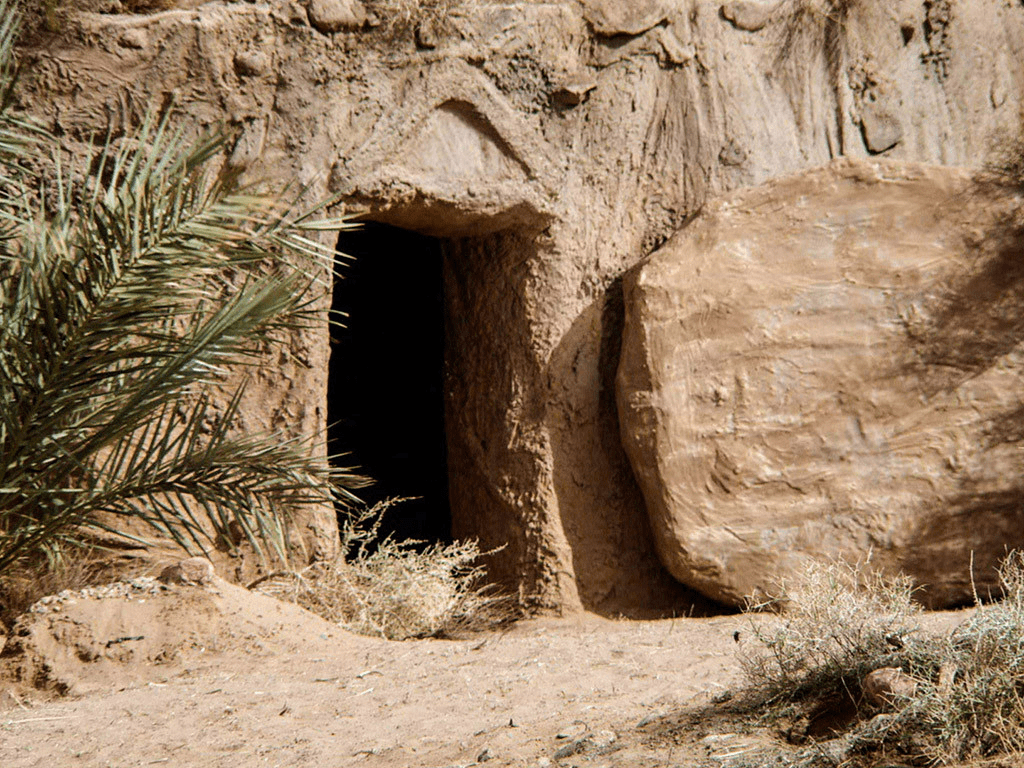
Matthew’s account of the resurrection of Jesus from the grave agree with the other gospel writers with the women first to arrive at the tomb that first Easter morning. They came in the very early morning hours with spices to prepare Jesus’ body for permanent burial. Jesus’ death was on the day before the Sabbath, the day in which no work is to be done. With evening approaching, Joseph of Arimathea, a very wealthy man, asked Pilate for Jesus’ body wrapping it in clean linen laid it in his own tomb. The burial was incomplete due to the late hour. The women came to anoint Jesus’ body with the spices they had prepared as soon as the Sabbath was over as time would not allow them to do on Friday evening. But the unexpected happened.

There was a great earthquake as Mary Magdalene and Mary, the mother of James the less, arrived at the tomb. Matthew describes it; “for the angel of the Lord descended from heaven and came and rolled back the stone from the door and sat upon it. (Mt. 28:2 kjv) Enormous fear must have come upon them for the angel told them to fear not! Matthew records even the guards of the tomb became as dead men due to fright. (Mt. 28:4) The angel proceeded to give the women news not only to calm their fear but give them great joy. “I know that ye seek Jesus, which was crucified. He is not here: for he is risen, as he said.  Come, see the place where the Lord lay. And go quickly and tell his disciples that he is risen from the dead.” (Mt. 28:5-7 kjv)

The angel’s news along with further instructions to the women that morning is just as valid for us today, as if we witnessed the events along with Mary Magdalene and Mary, James’ mother. We serve a living savior. Our Lord is not to be memorialized with flowers of remembrance this Easter. He is alive and is to be worshiped. We do not come to tomb to remember and with respect as the women did that morning but rejoice with them that He is not there to be remembered, He is risen. All of us are invited to follow the angel’s instructions to ‘come’ and ‘see’ that He is not in the tomb. We are invited with the women to ‘go’ and ‘tell’ everyone that He is Risen, He is Risen Indeed!

Read: Matthew 28:1-10 KJV – In the end of the sabbath, as it began – Bible Gateway

Bible Studies

Jesus’ Seven Cries from the Cross                 

Our Lord Jesus suffered on the cross six hours that first Good Friday. He willingly laid down His life by way of crucifixion to pay the penalty for our sin. He made seven statements or ‘cries’ amid the pain and suffering for us to remember the importance of each one.

FreeBibleimages.org

“And Jesus said, ‘Father, forgive them, for they know not what they do.’ And they cast lots to divide his garments.” (Lk. 23:34esv) Jesus is not only asking forgiveness for the Roman soldiers, but all who had a part in His crucifixion. His compassion and grace are on full display even as the soldiers are dividing up His garments among themselves. John MacArthur commenting on this cry states, “Some of the fruit of this prayer can be in the salvation of thousands of people in Jerusalem at Pentecost.”  

 “And he said to him, ‘Truly, I say to you, today you will be with me in paradise.’” (Lk. 23:43esv) Jesus assures the thief on the cross that he will be with Him in Paradise as he believed Jesus is the Christ and trusted Him for salvation. This is a precious promise that no one is beyond salvation and unredeemable even up to the eleventh hour. It also illustrates there are those who continue to reject Christ in our current day as represented by other thief.  

 “When Jesus saw his mother and the disciple whom he loved standing nearby, he said to his mother, ‘Woman, behold, your son!’” (Jn. 19:26esv) For although He was suffering and in anguish, Jesus was not going to leave any unfinished business. As the first born according to the Law, Jesus was responsible for the care of His mother. He entrusted her to the care of His beloved disciple John. Jesus was not only obeying the Law, but He was also fulfilling it. “Do not think that I have come to abolish the Law or the Prophets; I have not come to abolish them but to fulfill them.” (Mt. 5:17esv)

 “And about the ninth hour Jesus cried out with a loud voice, saying…. ‘My God, my God, why have you forsaken me?’” (Mt. 27:46esv) This fourth cry from Jesus through His physical pain is now matched with the emotional the pain of abandonment. Jesus who only knew constant fellowship with His Father was now feeling the divine wrath of God on Him. Jesus experienced this spiritual death of the rejection of His Father in our stead as our sin was upon Him. “For our sake he made him to be sin who knew no sin, so that in him we might become the righteousness of God.” (2 Cor. 5:21esv)

 “After this, Jesus, knowing that all was now finished, said, ‘I thirst.’” (Jn. 19:28esv) Here the humanity of Jesus is seen as He states a matter of fact ‘I thirst.’ This was not an appeal to satisfy His thirst but demonstrates His suffering to the end for our sin.

 “When Jesus had received the sour wine, he said, ‘It is finished,’” (Jn. 19:30esv) Our redemption for sin was marked ‘paid in full’ by Christ’s completed work on the cross.

“Then Jesus, calling out with a loud voice, said, ‘Father, into your hands I commit my spirit!’” (Lk. 23:46esv) Jesus willingly laid down His life for your sin and mine. “No one takes it from me, but I lay it down of my own accord.” (Jn. 10:18esv)

Bible Studies

“Prayerful Repentance” LIVING IN BABYLON: The Book of Daniel

“O my God, lean down and listen to me. Open your eyes and see our despair. See how your city—the city that bears your name—lies in ruins. We make this plea, not because we deserve help, but because of your mercy.” Daniel 9:18 NLT

FreeBibleimages.org

            We have come to end of our short study of the book of Daniel covering the historical narrative of chapters 1-6. The rest of the book is apocalyptic material and eschatological in theological content. We will conclude with the main theme of our study ‘Living in Babylon’ a comparison of living in our world today with lessons we can learn from the Jewish captives living in ancient Babylon. In our final lesson we will learn from Daniel’s example of his prayer in chapter 9.

            Daniel is in his 67th year of captivity with his Jewish brothers and sisters. Taken captive as a teenager, Daniel is now past eighty years old. He is keenly aware from reading the Old Testament scrolls of Jeremiah’s prophecy the captivity would last 70 years. The time was rapidly approaching for the nation to return to their homeland. Daniel offers up a powerful prayer of repentance not only for himself, but for the whole nation of Israel, fasting, covering himself with sackcloth and ashes. The nation is about to go back to the land they were driven from due to their sin towards the Lord God. Daniel’s pattern of prayer serves as a good model for us to follow in our daily prayers. It is filled with worship to God, humility, confession of sin, and making our requests known to Him.

            Daniel begins his prayer by acknowledging how great and awesome God is. He always fulfilled His covenant with Israel keeping His promises as they obeyed Him. But then Daniel confesses, “But we have sinned and done wrong. We have rebelled against you and scorned your commands and regulations.” (Dan. 9:5nlt) The Jewish people refused to heed the many warnings God had given for many years through the prophets He sent them. Daniel furthers acknowledged God was in the right to punish them as He had. The guilty was not just a few or those only living in Jerusalem, but the entire nation was guilty. “All Israel has disobeyed your instruction and turned away, refusing to listen to your voice.” (Dan. 9:11nlt)

            The confessions in Daniel’s prayer can easily be applied to the modern-day Babylon we are living in. Referring to ancient Israel Daniel confessed, “O LORD, we and our kings, princes, and ancestors are covered with shame because we have sinned against you.” (Dan. 9:8nlt) All one needs to do is to look around and review the news cycle over the last 50 years to wonder if Daniel wasn’t referring to many countries in our world today with the United States on top of the list. Israel had been warned many times throughout their history of the consequences of their disobedience and even suffered for it before the Babylon captivity, and still they refused to obey God. “Every curse written against us in the Law of Moses has come true. Yet we have refused to seek mercy from the LORD our God by turning from our sins and recognizing his truth.” (Dan. 9:13nlt) I’m afraid if the United States and other countries around the world continue this path of rejecting the Lord God of heaven and earth, a day of judgment is the horizon.

            Daniel praises God for His blessings of bringing the nation Israel out of the bondage of slavery in Egypt. “O Lord our God, you brought lasting honor to your name by rescuing your people from Egypt in a great display of power. But we have sinned and are full of wickedness.” (Dan. 9:15nlt) Dismissing the Lord’s past blessings they continued to sin against God bringing judgment upon themselves. The United Staes of America has been richly blessed by God from its founding, but as with the nation of Israel, it has turned its back on God. If God had not spared His people from judgement, the United States and all other countries of the world will not be spared either.

Photo by adrianna geo on Unsplash

            Making his petition to God, Daniel knowing of God’s mercies asks Him to turn His anger away from them as they prepare to return to Jerusalem. Daniel doesn’t want God’s name to dishonored by the surrounding nations as Israel was a reproach to them. Daniel pleas for mercy for their restoration back in the Holy Land. “O my God, lean down and listen to me. Open your eyes and see our despair. See how your city—the city that bears your name—lies in ruins. We make this plea, not because we deserve help, but because of your mercy.” (Dan. 9:18nlt) Daniel is offering a prayer for repentance for the nation because God is merciful. May all of us pray for the country in which we live during our days in Babylon and be praying for each other, not that we deserve it, but because God is merciful.

Read: Daniel 9:1-19 NLT – Daniel’s Prayer for His People – It – Bible Gateway

Bible Studies

“Legitimate Disobedience” LIVING IN BABYLON: The Book of Daniel

“But when Daniel learned that the law had been signed, he went home and knelt down as usual in his upstairs room, with its windows open toward Jerusalem. He prayed three times a day, just as he had always done, giving thanks to his God.” Daniel 6:10 NLT

Photo by Library of Congress on Unsplash

            The United States has had its share of civil disobedience since its independence. Defined by Merrian-Webster as refusal to obey governmental demands or commands especially as a nonviolent and usually collective means of forcing concessions from the government” has been used by people over the years for a vast range of issues. Some examples of civil disobedience in the United States include, Susan B. Anthony arrested for illegally voting in the 1872, Rosa Parks refused to give up her seat to a white man on an Alabama bus in 1955, the Vietnam war period had many protests resulting in civil disobedience, and the pro-life movement has been actively involved in similar demonstrations having led to civil disobedience. Is all civil disobedience legitimate disobedience? Being obedient to holy God, the ultimate ruler and authority, in standing up for the truth spelled out in His word is what is expected from every Christian.

            Our study in the book of Daniel presented us with an example of ‘legitimate disobedience’ in chapter 3. Shadrach, Meshach, and Abednego refused to bow down and worship the golden stature King Nebuchadnezzar set up. These three were notable officials in the king’s court and yet took the stand of refusing to worship anything or anyone other than the true God. Legitimate disobedience to those in authority has its consequences as Shadrach, Meshach, and Abednego found out. The Lord God delivered them from harm in the fiery furnace, however they did not know that would in fact be the case. They still took a righteous stand for God.

            As we approach chapter 6, we have another encounter of ‘legitimate disobedience.’ Darius the Mede was king who divided his kingdom into 120 provinces with officials over each one and three administrators over all the officials. Daniel was one of the three administrators and soon to be promoted to the top position in the empire due to expertise and work ethic. His two colleagues and some of the officials resented a Jewish captive holding such a high position and tried to find some dirt on him. “Then the other administrators and high officers began searching for some fault in the way Daniel was handling government affairs, but they couldn’t find anything to criticize or condemn. He was faithful, always responsible, and completely trustworthy.” (Dan. 6:4nlt) When their efforts failed, they devised a plan to get rid of him.

            Daniel’s conspirators came up with a foolproof plan guaranteed to bring him down. They were aware of Daniel’s work ethic and loyalty to Darius the king, but they were also aware of his devotion to the God of heaven he prayed to three times a day as was his practice. The officials brought a proposal to the king in the guise of total agreement of all of them (note Daniel wasn’t there) “……that the king should make a law that will be strictly enforced. Give orders that for the next thirty days any person who prays to anyone, divine or human—except to you, Your Majesty—will be thrown into the den of lions.” (Dan. 6:7nlt) Laws passed in the Medo-Persian empire were unchangeable and could not be reversed even by himself once he signed it, and he signed this one. They had him, or so they thought.

            Living in Babylon today is not much different than Daniel’s day. Our conspirators today use the same tactics to overthrow us and bring us down. Authentic Christianity today lived out is guaranteed to upset those who hold to a secular worldview. Secularists despise those of faith in authority. They will expose a conviction held by Christians in a negative light, even pursing legal action to remove and discredit them. Unfortunately, there are many who cave and compromise.

            Daniel is an example needed in our world today. He did not cave. His enemies knew he wouldn’t. Their plan was foolproof for they knew of Daniel’s integrity and convictions. “Then the officials went together to Daniel’s house and found him praying and asking for God’s help. So they went straight to the king and reminded him about his law.” (Dan. 6:11-12a nlt) King Darius also knew Daniel would not give in when the officials reported Daniel’s continued prayer habits. “Hearing this, the king was deeply troubled, and he tried to think of a way to save Daniel. He spent the rest of the day looking for a way to get Daniel out of this predicament.” (Dan. 6:14 nlt) Darius realized he was used by those who wanted Daniel dead, the most competent and loyal administrator he had.

Photo by Mika Brandt on Unsplash

            We know the rest of the story. The king had no choice but to have Daniel thrown into the lion’s den but had hope that Daniel’s God would save him. (Dan. 6:16) We know God did indeed save him by sending an angel to shut the lion’s mouths, but again as with Daniel’s three friends thrown into the fiery furnace, he did not know if God would save him, but knew that He could.  Daniel took a courageous stand of ‘legitimate disobedience’ for he was not about to let any authority prevent him from praying to the Lord God. A foolproof plan today only works against us if we become a Daniel and hold to our convictions, not cave, or compromise trusting God for the outcome in whether He will deliver us. Do we have the courage to do more than civil disobedience, but to stand for God in ‘legitimate disobedience?’

Read: Daniel 6 NLT – Daniel in the Lions’ Den – Darius the – Bible Gateway

Bible Studies

“Handwriting on the Wall” LIVING IN BABYLON: The Book of Daniel

“So they brought these gold cups taken from the Temple, the house of God in Jerusalem, and the king and his nobles, his wives, and his concubines drank from them. While they drank from them they praised their idols made of gold, silver, bronze, iron, wood, and stone.” Daniel 5:3-4 NLT

FreeBibleimages.org

The statement ‘Those who cannot learn from history are doomed to repeat it’ is attributed to American philosopher George Santayana. To quote him in ‘The Life of Reason: Reason in Common Sense’ he wrote, “Those who cannot remember the past are condemned to repeat it.” The Babylonian empire had a rich history which was well-known within and outside the empire. But George Santayana’s statement rings true for King Belshazzar, he did not learn from history, and he was about to repeat it in a big way. Doom is sure to follow.

As we approach chapter 5 in the book of Daniel, we find a new king as head of the Babylonian empire. Nebuchadnezzar died in 562 B.C. and the events of chapter 5 take place 23 years later in 539 B.C. Babylon had been under siege by the armies of Medo-Persia who were just outside the walls of the city. King Belshazzar, to boost morale for his nobles, gave a great feast for them to enjoy. During the feast he gave orders to bring in the cups of gold and silver that were captured from the temple in Jerusalem to be used to drink from. Perhaps a part of his strategy was to flout the destruction of Jerusalem years earlier presenting the cups as evidence of a mighty conquest. But his real objective was to use them to praise their idols made of gold, silver, bronze, iron, wood, and stone in hopes of being delivered from the Medo-Persians. Belshazzar mocked the God of heaven as his predecessor Nebuchadnezzar had done years earlier.  

Living in Babylon today there are plenty of leaders who are mocking God praising and leaning on their idols of power, money, idealism, greed, military strength, the cultural revolution, and the three ‘isms’, fascism, socialism, and communism. These leaders fail to accept there is a God in heaven who is the ultimate authority, and He has entrusted them to governed in order that we may live peaceful lives. Even those who believe there is a God are far from governing in line with the pages of scripture. I’m afraid my own country, the United States, is sadly among them.  

This gala event was in full swing, perhaps at the height of the party, when “Suddenly, they saw the fingers of a human hand writing on the plaster wall of the king’s palace, near the lampstand. The king himself saw the hand as it wrote.” (Dan. 5:5 NLT) You’ve heard of ‘the handwriting on the wall’, well this is it right from the pages of the Bible. The mighty King Belshazzar turned white with fright. His knees knocked together and he nearly collapsed immediately calling for his wise men to read the writing and explain what it means. Again, as in Nebuchadnezzar’s Day they were of no help to him for they were deceivers themselves worshiping the same idols. “So the king grew even more alarmed, and his face turned pale. His nobles, too, were shaken.” (Dan. 5:9 NLT) It was time once again to call in Daniel, the only one who worshiped the God of heaven.

This may have been the first encounter the king had with Daniel. It appeared Belshazzar didn’t even know Daniel when the queen mother persuaded the king to call him based on her previous knowledge of Daniel’s dealings with Nebuchadnezzar. Daniel wasted no time in responding to the king, but first gave him a history lesson. Daniel began by saying, “Your Majesty, the Most High God gave sovereignty, majesty, glory, and honor to your predecessor, Nebuchadnezzar. But when his heart and mind were puffed up with arrogance, he was brought down from his royal throne and stripped of his glory.” (Dan. 5:18, 20 NLT) Daniel proceeded to tell the king in detail of Nebuchadnezzar’s demise and then let Belshazzar know, “O Belshazzar, and you knew all this, yet you have not humbled yourself…..……you have not honored the God who gives you the breath of life and controls your destiny!” (Dan. 5:22, 23b NLT) He didn’t learn from history the consequences of not giving the God of heaven praise for the kingdom He had given him or even for his own life.

FreeBibleimages.org

What was written was straight to the point; ‘MENE, MENE, TEKEL, and PARSIN.’ Mene means your days are numbered. Tekel means you have been weighed on the balances and have not measured up. Parsin means your kingdom has been divided and given to the Medes and Persians. It happened quickly. “That very night Belshazzar, the Babylonian king, was killed. And Darius the Mede took over the kingdom at the age of sixty-two.” (Dan. 5:30-31 NLT)

The Lord God of heaven does not share His glory and He is not mocked. (Gal. 6:7) King Belshazzar found that out and world leaders today also will find it out for themselves if they do not change their ways. But this is not just a lesson for world leaders. It applies to each of us living in today’s Babylon. Being outnumbered as Daniel had been requires Christians to be on guard and faithful to the Lord God of heaven. We are to know all that we have is from God, and He is the one who receives all the glory and the praise!

Read: Daniel 5 NLT – The Writing on the Wall – Many years – Bible Gateway

Bible Studies

“The Insanity of Human Pride” LIVING IN BABYLON: The Book of Daniel

“As he looked out across the city, he said, ‘Look at this great city of Babylon! By my own mighty power, I have built this beautiful city as my royal residence to display my majestic splendor.’” Daniel 4:30 NLT

            A godless society provides the right environment for seeds of pride to grow. Without having God to answer to, it becomes all about me. All my accomplishments are of my doing. The successes I enjoy are through the skill sets I have developed over the years. They are the product of hard work securing a vast education and using that knowledge and experience along with my natural abilities and keenness. Such rationalization is applauded nowadays. There is nothing wrong with being successful. Higher education should be pursued, and a good strong work ethic is a positive trait and is looked upon favorably. But Christians need to be careful in developing skill sets to remember where our natural abilities come from, and who is guiding, leading, and helping us along the way. Jesus reminds us, “For apart from me you can do nothing.” (Jn. 15:5)

            In our continued weekly ‘Living in Babylon’ series, we come now to chapter 4 of the book of Daniel where see the insanity of human pride. Last week in chapter 3, Nebuchadnezzar erected a statue representing himself to be worshiped. When Shadrach, Meshach, and Abednego refused, the king had them thrown into the fiery furnace. To Nebuchadnezzar’s amazement the Lord God sent His angel to deliver them from the flames. Nebuchadnezzar had a change of heart saying, “Praise to the God of Shadrach, Meshach, and Abednego! He sent his angel to rescue his servants who trusted in him. They defied the king’s command and were willing to die rather than serve or worship any god except their own God.” (Dan. 3:28 NLT) He then made a decree that no one is to speak a word against the God of Shadrach, Meshach, and Abednego. But in a pagan culture, a change of heart is centered on the power of a god and not recognition of the true God. Nebuchadnezzar had another change of heart.

            Nebuchadnezzar praises God again in chapter 4 by saying, “I want you all to know about the miraculous signs and wonders the Most High God has performed for me. How great are his signs, how powerful his wonders! His kingdom will last forever, his rule through all generations.” (Dan. 4:2-3 NLT) The king has another dream that troubled him and calls for the wise men to interpret it. These are the same men who couldn’t help the king in chapter 2 and cannot help him now by interpreting his dream. Nebuchadnezzar then calls for his ace in the hole, Daniel, who has accurately interpreted his dream concerning the statue with the head of gold. Daniel does indeed give the king an accurate interpretation to his latest dream, one that troubles Daniel as well.

            I’m sure we have all heard the saying, ‘pride comes before a fall.’ Perhaps some of us witnessed such a disaster. Daniel was not only going to witness one, but he would be the one to inform the king that it would happen to him and in the most humiliating way. Although the king had praised God’s wonderful signs; the seeds of pride within Nebuchadnezzar’s mind have been sprouting and growing now for some time. The Lord would tell the king through the dream Daniel interpreted that he would be disposed from his kingdom by a period of insanity that would come upon him due to his pride. He would be driven out into fields and live like a wild animal for seven years until he came to senses and acknowledges that God rules over all the kingdoms of world. And so it happened, “As he looked out across the city, he said, ‘Look at this great city of Babylon! By my own mighty power, I have built this beautiful city as my royal residence to display my majestic splendor.’ While these words were still in his mouth, a voice called down from heaven, ‘O King Nebuchadnezzar, this message is for you! You are no longer ruler of this kingdom.’” (Dan. 4:30-31 NLT) The king was driven out by his pride.

            Living in modern day Babylon has its challenges for Christians. The sin of pride is certainly evident in our society. But we must also acknowledge that pride is at the root of all sin. Christians must be careful not be influenced by the culture and allow the seeds of pride to find fertile soil in our hearts and minds ready for planting. Lest we join in the insanity of human pride.

Read: Daniel 4 NLT – Nebuchadnezzar’s Dream about a Tree – Bible Gateway