“But my life is worth nothing to me unless I use it for finishing the work assigned me by the Lord Jesus—the work of telling others the Good News about the wonderful grace of God.” Acts 20:24 NLT
Photo AI Generated wordpress
Have you ever received an ‘I’ as a mark in place of a grade on your school report card? ‘I’ or ‘incomplete’ notes you haven’t finished the course to receive a passing or failing grade. You didn’t fail, but you didn’t pass either. You failed to complete the course. Except for certain uncontrollable circumstances, failing to complete the course could be considered failing. This may seem a little harsh, but you did fail by not completing the assignments to receive a grade. Some educators today are too quick to mark an ‘I’ when it is not warranted.
The apostle Paul would never give out an ‘I’ as a teacher nor would he accept one. Paul was determined to go back to Jerusalem by the leading of the Holy Spirit although he knew that chains awaited him. Waiting near the docks of Miletus, Paul called for the elders at Ephesus. When they arrived, he gave them some final instructions and informed them they would not see each other again. Paul emphasized he still had work to do. He said his life would mean nothing if he didn’t finish the work the Lord Jesus gave him to do. Even prison, which may be a legitimate excuse, would not stop him from preaching the Good News. Paul did not want an ‘I’ on his report card.
Remember how you felt on those days your grades came out. Christians should have that feeling year-round for we do not know when our final report card is coming out. I don’t say this to put us into a state of panic, but to encourage us to complete what God has given us to do in this life. The Lord has given each of us our own assignments to accomplish, but all of us have the same work Paul had, telling others the Good News of Jesus Christ. We don’t want to be given an ‘I’ on that day but to hear ‘well done good and faithful servant.’
Last week in Biblical Insights, Jesus’ disciples were arguing among themselves who will be the greatest in the kingdom. To that Jesus taught them true greatness was with the one who serves. This week Jesus has another lesson to teach His followers, what is ‘true discipleship?’
“John said to Jesus, ‘Teacher, we saw someone using your name to cast out demons, but we told him to stop because he wasn’t in our group.’” (Mk.9:38 nlt) The disciples took it upon themselves to stop the man performing these exorcisms. The man, obviously, wasn’t a fraud or he wouldn’t be able to cast out demons in Jesus’ name. He must have been a believer in Jesus, but the disciples only saw that he wasn’t one of them. Their selfish ambition took over and perhaps some jealousy as they previously failed to cast out a demon. Jesus told them not to stop him. He didn’t care about the details but pointed out that one who was for Him would not be against Him. Once anyone performed a miracle in Jesus’ name they would not speak ill of Him. There’s no middle ground when it comes to Jesus.
The disciples’ reaction to the outsider is all too common within the church today and among certain Christians. Those outside our circle are often looked at as inferior or not as spiritual as us. The disciples thought they had an inside track to Jesus, which they had in their calling, but Jesus’ view of discipleship was more inclusive than His disciples realized. The church today needs to realize just how inclusive God’s kingdom is. But a word of caution in today’s language of ‘inclusive’, ‘inclusion’ ‘all accepting’ etc.. Jesus is the head of His church, and His Word, the Bible is the authority for all we do and how we conduct ourselves. Paul’s charge to the young Pastor Timothy was, “All Scripture is inspired by God and is useful to teach us what is true and to make us realize what is wrong in our lives. It corrects us when we are wrong and teaches us to do what is right. God uses it to prepare and equip his people to do every good work.” (2Tim.3:16-17 nlt) The church must continue to abide by Biblical standards. We can do both, be inclusive and maintain Godly principles at the same time. That’s what we have to do. Let’s do it!
Jesus states there is no deed done in Jesus’ name that goes unnoticed. “If anyone gives you even a cup of water because you belong to the Messiah, I tell you the truth, that person will surely be rewarded.” (Mk.9:41 nlt) No service done for Christ is unimportant. Those who do them are in Jesus’ circle as all who do great things for Hs name. They are the examples of ‘true discipleship.’
A warning is given by Jesus to those who cause a new Christian to stumble. Criticism of a new convert in their understanding and methods may cause them to turn away from Christ. The disciples trying to stop the man casting out demons could have him questioning Jesus later on. Enticing or leading a new believer into sin and/or doing the same to a child will bring about serious judgement from God. Jesus says, “it would be better for you to be thrown into the sea with a large millstone hung around your neck.” (Mk.9:42 nlt) Some need to be careful not to lead in this way by example with no intention of harm. Concerning young people, there’s an old saying, ‘more is caught than taught.’ We all lead by example.
Jesus now uses hyperbole to make a point. Drastic measures need to be taken to eradicate sin from our lives. The most drastic step we can take is to come face to face with our sin, acknowledge it, see for what it is, what it is doing to us, and face reality. Jesus uses the examples of cutting off your hand, or foot, and gouge out an eye if any of these are causing you to sin. He says it is better to enter into eternity lame than to be cast whole into hell, “where the maggots never die and the fire never goes out.” (Mk.9:48 nlt) The Wycliffe Bible Commentary notes, “The seat of sin is the soul not any organ of the physical body.” All are born with a sin nature, we can’t dismiss that, nor can we change our nature, but the Holy Spirit can when we put our faith in Christ for salvation. We take on a new nature. “This means that anyone who belongs to Christ has become a new person. The old life is gone; a new life has begun!” (2Cor.5:17 nlt)
As we close this week it’s important we notice Jesus’ reference to hell. We don’t hear a lot about hell in our churches these days. Some people even doubt Jesus’ references to it. When doubting they need to omit, change, symbolize, or ignore Jesus’ sayings. In todays reading, The Greek word that is used for ‘hell’ is ‘geenna’ It is of Hebrew origin meaning “lamentation” from the Hebrew word ‘hinnōm’. There was a Valley of Hinnom southwest of Jerusalem. This area was very familiar to the Jewish people. It was once the place of worship to the god Moloch. Later, in Jesus’ day it was the city dump with fires burning continually. Worms or maggots were always present as Jesus said, ‘where the maggots never die and the fire never goes out. For everyone will be tested with fire” (Mk.9:48-49 nlt) Jewish thought was the Valley of Hinnom was a symbol of eternal punishment. They knew what Jesus was saying.
FreeBibleimages.org
Last, back to ‘true discipleship’ as we close. Jesus uses His analogy of salt once again from His Sermon on the Mount. This time He says, “Salt is good for seasoning. But if it loses its flavor, how do you make it salty again? You must have the qualities of salt among yourselves and live in peace with each other.” (Mk.9:50 nlt) True Discipleship can be recognized by being the salt of the earth. Total commitment to Christ, the gospel, living in agreement with our brothers and sisters in the faith, and sharing the good news of Jesus Christ is true discipleship.
In the sports world, ‘who is the Greatest” is debated over social media and between sports commentators and pundits. Each sport has its own debate as ‘who is the Greatest in their sport and the conversation expands to who is the greatest sport athlete of all time. We refer to that individual as the G.O.A.T. (the Greatest of All Time) Although each sport will also have its own G.O.A.T.. The world has its own categories of ‘who is the Greatest’ among presidents, political leaders, war heroes, entrepreneurs, risks takers, inventors, musicians, entertainers, the list goes on. The world debates ‘who is the Greatest and many in the world desire to be the greatest in their field of expertise. Jesus has some thoughts on who is the Greatest in this week’s look into the gospel of Mark in our Biblical Insights.
Jesus is leaving the Caesarea Philippi region for the last time and heading to Jerusalem where in a few months He will suffer and be put to death on a cross. Traveling with His disciples, His ministry in the Galilean region is now over. Jesus makes a planned stop in Carpernaum His home base during His three years of ministry, also for the last time. The ministry to the people may be completed, but Jesus’ ministry in teaching His disciples is continuing and with greater emphasis for His time is short. Jesus wanted to prepare the disciples for the soon-to-be events, but so far they couldn’t understand what Jesus was referring to when He spoke of His death and resurrection. “(Jesus) wanted to spend more time with his disciples and teach them. He said to them, ‘The Son of Man is going to be betrayed into the hands of his enemies. He will be killed, but three days later he will rise from the dead.’ They didn’t understand what he was saying, however, and they were afraid to ask him what he meant.” (Mk.9:31-32 nlt)
When Jesus and His disciples arrived in Capernaum scripture says they settled into a house. Most likely this was Peter’s and Andrew’s home where Jesus stayed most often. The first thing Jesus did, probably after the door was close, was to asked them a question. “Jesus asked his disciples, ‘What were you discussing out on the road?’” (Mk.9:33 nlt) Jesus didn’t need to ask them, He knew, but it required an answer which they failed to give. The verb ‘asked’ is in the perfect tense suggesting a repeating. It probably wasn’t the first time Jesus asked them, but asked continually on the road, but they stifled their conversation and did not answer. Now they’re alone with Jesus, the door closed and still no response. Why didn’t they answer, “because they had been arguing about which of them was the greatest.” (Mk.9:34 nlt) They were embarrassed being concerned about their own status in Jesus’ kingdom than trying to understand what He was teaching them.
FreeBibleimages.org
Before we jump on the disciples with criticism, let’s think this through. While we’re thinking of this let’s think about ourselves and the world we live in. Someone’s rank and status in the Jewish culture of the disciples’ day were important roles to achieve. Rank and status in our culture is just as important to those seeking that high position as it was for the disciples. Whatever we may be seeking if it doesn’t line up with Jesus’ mission for us is a selfish reason for wanting to achieve it. Jesus is about to revolutionize our concept of leadership and greatness through teaching the disciples, which they need as well.
The Bible says Jesus sat down and called His disciples to Himself. Whenever Scripture notes that Jesus ‘sat down’ to teach, it is to stress an official time of teaching. Pay attention and listen, the Rabbi, the teacher, is about to speak, and speak Jesus did. “Whoever wants to be first must take last place and be the servant of everyone else.” (Mk.9:35 nlt) This goes against the grain in our day and I’m sure the disciples questioned this statement. Jesus is not condemning leadership but showing how it is to be exercised. Leaders are always needed in any culture. The disciples had the desire to be first, to be on top. Jesus was reversing that line of thinking. In reality, the disciples’ position in leadership was secure and recognized by Jesus when He called them together. Now they needed to know how to act like leaders.
For that Jesus put a little child in front of them. Since this was Peter’s home, it could very well have been Peter’s child, “Taking the child in his arms, he said to them, ‘Anyone who welcomes a little child like this on my behalf welcomes me, and anyone who welcomes me welcomes not only me but also my Father who sent me.” (Mk.9:36-37 nlt) The willingness to humble oneself and serve a little child by putting them in your arms is the mark of true Greatest. When we act in this way, we are serving Christ and God the Father. This is also an example of all Christians who have come to know the Lord by simple faith and humbling themselves like a trusting little child.
Who is the Greatest among us? Those who humble themselves at the feet of Jesus accepting Him as their personal savior through faith as a child for forgiveness of sin and assurance of salvation and eternal life. It doesn’t end there, then we follow Jesus’ example when He said, “For even the Son of Man came not to be served but to serve others.” (Mk.10:45 nlt) Who is the Greatest, it is those who serve. It could be you!
“How then shall they call on Him in whom they have not believed? And how shall they believe in Him of whom they have not heard? And how shall they hear without a preacher?” Romans 10:14 NKJV
The Christian church has local congregations of all sizes. We have mega churches with thousands of members within their building and satellite locations. Mid-size churches with a few hundred people seems to be norm, at least in the United States. Then you have very small congregations with a hundred people or less. Whatever the size of the church, most pastors take on more responsibilities than are necessary but try to tell them that! Their efforts are commendable, and we appreciate their service, but there are times when we, the congregates, need to step up mostly in some of our smaller churches. You may have heard it said, the pastor can’t do everything. That’s true, he can’t.
One main area a pastor needs our help is presenting the gospel message to others. You are probably thinking, ‘well isn’t that his job.’ Well, yes, it is, but it is also our job. We’re fed the word of God each week through sound teaching to equip us to go out and do the Lord’s work. A major part of that work is to tell others about Jesus Christ. Paul, writing in Romans, is explaining the very important and simple way of salvation, “For Everyone who calls on the name of the LORD will be saved.” (Ro.10:13 nlt) but then he adds, “But how can they call on him to save them unless they believe in him? And how can they believe in him if they have never heard about him?” (Ro.10:14 nlt) So, how are they going to hear about the one who is offering salvation? They need a preacher, not ‘the preacher,’ as in a better translation, “And how can they hear about him unless someone tells them?” (Ro.10:14b nlt) That someone is you and me, along with our pastor.
No, the pastor can’t do everything. So, may we be willing, energetic, and enthusiastic in sharing the gospel with others. Then let us help him set up the tables and chairs for the family fellowship and maybe mow the lawn.
There is a saying, I admit, that I often use. “The truth is somewhere in the middle.” I use it because in most cases it turns out to be true. Take any news story today which has two sides to it as they report it. It lands somewhere in the middle of the two reported stories. Each reporter and/or advocate slant their bias towards their version of the truth, usually a half-truth. They are partially true, but when the whole truth is revealed, their half-truth turns out not to be true. Still, some people hold on to their perspective of the truth even though it is flawed and misleading. This may seem harmless and a just a matter of opinion, but in a life-or-death situation this will be disastrous.
The apostle Paul was adamant of the truth, especially when it came to the truth of the gospel. They are no half-truths in the gospel. The truth is Jesus said, “I am the way, the truth, and the life. No one can come to the Father except through me.” (Jn.14:6 nlt) That is the whole truth revealed. Those who sugar coat the gospel with charitable deeds, being a good person, obeying the law, being kind to others, and tolerate of other religions who claim alternative ways to heaven and eternal life are doing more than spreading half-truths, but propagating a false gospel. A life-or-death situation cannot succumb to half-truths.
Paul wrote to the church at Corinth, “For we cannot oppose the truth, but must always stand for the truth.” (2Cor.13:8 nlt) Paul made sure the Corinthians knew he was always speaking the truth in everything he taught them. Even when he was reprimanding them, it was always the truth. Paul did not mince words to sound less forceful. They needed to hear what Paul was telling them for their own good. We are not doing any favors to those who do not know the true way of salvation by sugar coating the gospel with half-truths. It this case, ‘the truth is never somewhere in the middle.’
Jesus, the healer and miracle worker, continues His ministry departing Tyre in the Phoenician region, and heading back to the Sea of Galilee. Jesus and His disciples traveled 20 miles north passing through Sidon, then traveled southeast to the eastern shore of the Sea of Galilee to the area of the Decapolis. As always, when Jesus arrives, a crowd forms and the sick are quickly brought to Him.
“A deaf man with a speech impediment was brought to him, and the people begged Jesus to lay his hands on the man to heal him.” (Mk.7:32 nlt) Jesus wanted some privacy with the man and led him away so they could be alone. Mark records Jesus put His fingers into the man’s ears. The reason for this is not given, but a good indication maybe He was letting the man know he would soon be able to hear. The next sequence seems strange to us for our times as Jesus spits and touches the man’s tongue and, “Looking up to heaven, he sighed and said, ‘Ephphatha,’ which means, ‘Be opened!’” (Mk.7:34 nlt) The man was healed instantly. He could hear and speak plainly. Mark adds that Jesus sighed while performing this miracle, perhaps a display of His compassion for the man and what he has gone through. We would be careful to note that Jesus’ physical actions played no part in the healing, it was His miraculous power that opened the man’s ears and loosened his tongue.
FreeBibleimages.org
Again, Jesus tries to maintain a low profile during this phase of His ministry, but it isn’t possible as the news of this healing begins to spread. The people once again responded in amazement of one who could heal a man who was deaf and mute. Isaiah, in his writings, prophesied about the coming Messiah and what He will do. “And when he comes, he will open the eyes of the blind and unplug the ears of the deaf. The lame will leap like a deer, and those who cannot speak will sing for joy!” (Is.35:5-6 nlt) The people were witnessing the unveiling of Isaiah’s prophesies.
Soon another large crowd develops, grows, and begins to follow Jesus for three days seeking healing and desiring to hear His teaching. After three days whatever food everyone had was now depleted and they were far from home. Notice Jesus’ compassion for the people as he speaks with His disciples. “I feel sorry for these people. They have been here with me for three days, and they have nothing left to eat. If I send them home hungry, they will faint along the way. For some of them have come a long distance.” (Mk.8:2-3 nlt) When Jesus looked upon the crowd at the feeding of the 5,000, we looked at a few weeks ago, He stress His compassion for them as sheep wandering around without a shepherd. This time Jesus is stressing His concern for this crowd’s basic need of food, nourishment to sustain them physically. This a lesson all Christians and the church need to heed. Yes, we need to preach the gospel to them, but it goes a lot better when the people are fed and are not hungry.
The disciples, sensing Jesus’ compassion, respond in a manner of concern but failed to remember His previous miracle of feeding the 5,000 plus women and children. They were slow to learn, but so are we at times. Jesus doesn’t criticize them for their lack of faith at this moment, but He will address it later with them. For now, He simply ask them what they were able to find, knowing what He could do with what they brought Him. The disciples had seven loaves of bread and Jesus went to work. Jesus had the people sit down. He then took the loaves, gave thanks to God, started breaking the bread into pieces giving them to the disciples who distributed it to the crowd. Jesus was given a few small fish, but a few small fish is plenty in the Master’s hands. The disciples gave these out with the bread and the Bible says, “They ate as much as they wanted. Afterward, the disciples picked up seven large baskets of leftover food.” (Mk.8:8 nlt)
FreeBibleimages.org
Jesus met their physical need of nourishment for the way home, and most likely sent the leftovers with them. This crowd could have been close to 16,000 people when including the women and children. No one went home hungry that day. Jesus’ compassion for them is the same He has for us. It covers our whole being, body, soul, and spirit. He cares about our physical needs, our basic needs of food, clothing and shelter, and most of all our spiritual needs in providing the way of salvation through His shed blood on the cross at calvary. We have a compassionate savior. Have you met Him yet or are you still searching for Him? He’s not hard to find, just follow the crowd.
“So the Pharisees and teachers of religious law asked him, ‘Why don’t your disciples follow our age-old tradition? They eat without first performing the hand-washing ceremony.’” Mark 7:5 NLT
FreeBibleimages.org
Jesus and His disciples arrived at Gennesaret on the northwest shore of the Sea of Galilee after a windy night walking on the water and calming the wind. The disciples were amazed of what they just witnessed even though they have seen Jesus perform many miracles, but they were slow to learn, as we all are at times when we should already know the truth. A familiar scene develops as Jesus and His companions brought the boat to shore. Immediately, the people recognized Him. The word spread, good news travels fast! Soon people were coming from all over the area when they heard Jesus was in the Gennesaret region. They heard of Jesus’ miracles of healing and were rushing to get near Him. “They ran throughout the whole area, carrying sick people on mats to wherever they heard he was.” (Mk.6:55 nlt) As Jesus walked through the countryside and in the marketplaces of various villages, people would bring their sick begging Him to let them touch the fringe of His robe. Mark records that all who touched Him were healed. The news of Jesus was once again rapidly expanding forcing another visit by the Pharisees from Jerusalem.
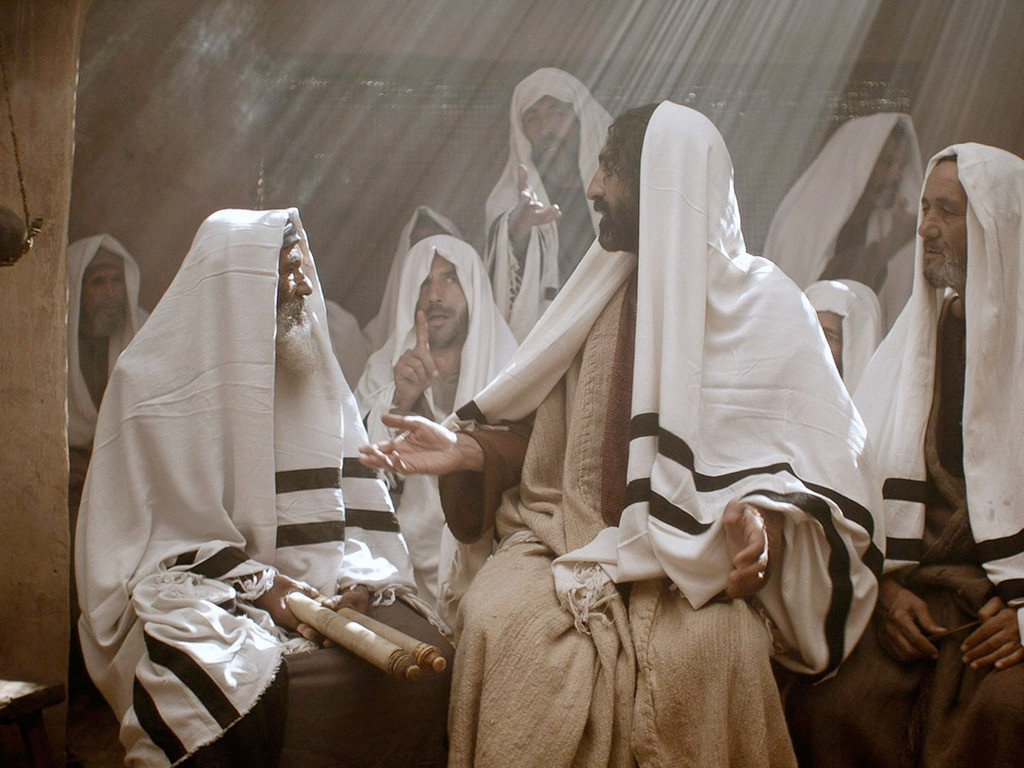
“One day some Pharisees and teachers of religious law arrived from Jerusalem to see Jesus.” (Mk.7:1 nlt) They got right to work observing and taking notes of Jesus’ activities and those of His disciples. The Pharisees took notice that the disciples did not perform the ceremonial hand washing before eating. This was a tradition of the elders. The Wycliffe Bible Commentary explains, “The tradition of the elders was the unwritten corpus of commands and teachings of honored rabbis of the past, a body of 613 rules designed to regulate every aspect of life.” (1) The Pharisees considered these commands binding, and the people were to obey. They questioned Jesus why His disciples did not observe the traditions of the elders. What they were really saying was ‘why are you teaching your disciples to disobey the traditions of the elders?’ This command had nothing to do with dirty hands but was a ceremonial rinsing if one became defiled by touching a Gentile or an unclean person while out in public. They were claiming an inward cleansing by outward action, which they made up. Jesus tells the Pharisees they have it all backwards.
Jesus calls them hypocrites, and then quotes Isaiah the prophet, ‘These people honor me with their lips, but their hearts are far from me. Their worship is a farce, for they teach man-made ideas as commands from God.’ (Mk.7:6-7 nlt) Jesus notes how they deliberately ignore God’s laws to elevate their own laws. He uses the example of those who refuse to honor their parents by not caring for them, claiming their income has been vowed to God. The Pharisees ruled that money given to God could not be used for any other purpose. They used Numbers 30:2 as their defense, “A man who makes a vow to the LORD or makes a pledge under oath must never break it. He must do exactly what he said he would do.” (nlt) The traditions of the elders were overriding God’s law to apply their law. Jesus then tells them this is only one example of the many non-binding laws they have over the Lord’s binding laws in Scripture.
Jesus calls the crowd to Himself to bring them back into conformity with Scripture. People in our day, and sadly some churches need to bring back what the Bible teaches. There are misguided souls who follow the traditions of churches and the oracle preachers with a present personality because it requires only a mechanical response. No change of heart or lifestyle is necessary, just follow the rules and whatever feels good. Jesus tells the people, “All of you listen, and try to understand. It’s not what goes into your body that defiles you; you are defiled by what comes from your heart.” (Mk.7:14-15 nlt) He explains deeper to His disciples that food consumed with or without dirty hands cannot defile you for it goes in and comes out. That does not defile you. It is what is lying inside your heart that defiles you. Jesus says, “For from within, out of a person’s heart, come evil thoughts, sexual immorality, theft, murder, adultery, greed, wickedness, deceit, lustful desires, envy, slander, pride, and foolishness. All these vile things come from within; they are what defile you.” (Mk.7:21-23 nlt)
Age-old traditions will not save you if they are man-made laws added throughout the course of history with no Biblical support or reference. Added prophecies and teachings not included in Scripture preached by popular ministers today will not save you either. It is only what God recorded in His Holy Word. The saving redeeming grace provided by Christ’s sacrifice on the cross for our sins and acceptance of that by faith is the only age-old tradition that will save you.
“God saved you by his grace when you believed. And you can’t take credit for this; it is a gift from God. Salvation is not a reward for the good things we have done, so none of us can boast about it.” (Eph.2:8-9 nlt)
“Jesus saw the huge crowd as he stepped from the boat, and he had compassion on them because they were like sheep without a shepherd. So he began teaching them many things.” Mark 6:34 NLT
FreeBibleimages.org
This week in our study of the book of Mark we see Jesus as the good shepherd. Leading His disciples to a place of rest which they all desperately needed, Jesus is met by people who had followed Him around the Sea of Galilee to be near Him. Jesus didn’t get upset that His plans were ruined but looked on the people with compassion. He saw them for who they were, sheep without a shepherd.
Our story begins with the disciples returning from their preaching tour Jesus had sent them on. Jesus, naturally, would want a full report of their mission. Recapping their tour of duty was met with constant interruption that Jesus finally said, “Let’s go off by ourselves to a quiet place and rest awhile.” (Mk.6:31 nlt) The Bible says the disruptions made it impossible even for them to eat. What is needed most after a long time spent on the road in your job is a good meal when you arrive home. Jesus knew this and suggested they get away from the crowds. “So they left by boat for a quiet place, where they could be alone.” (Mk.6:32 nlt)
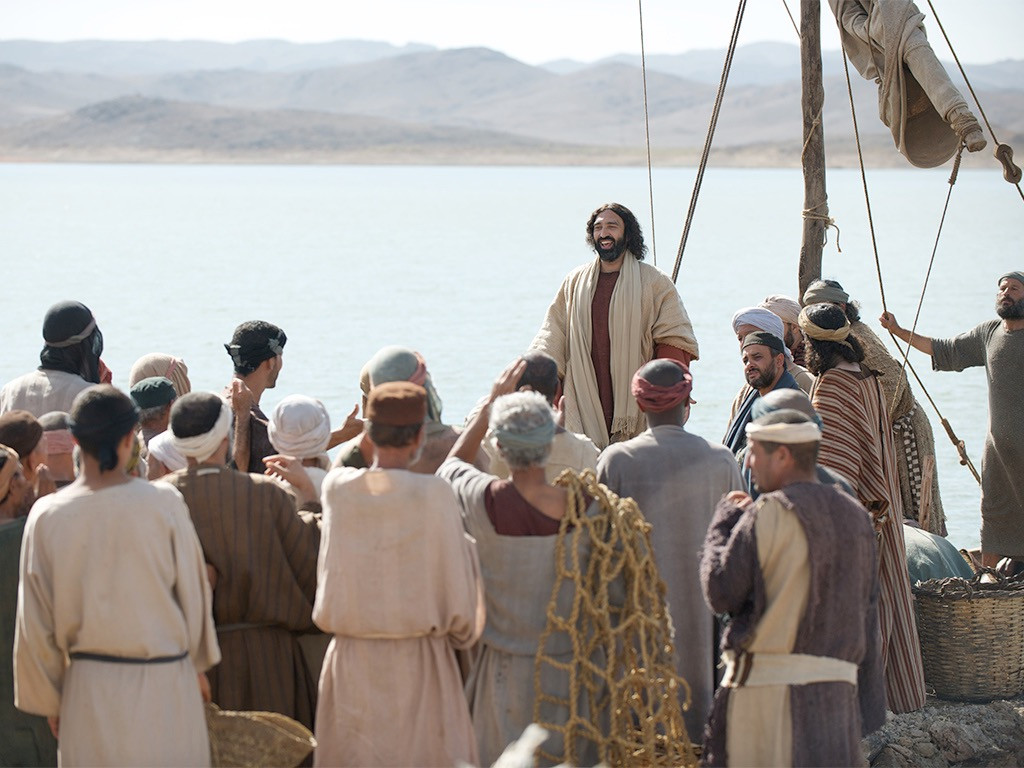
Their destination was the northeastern shore of the Sea of Galilee near the city of Bethsaida. Their departure didn’t stop the people from following Him. They took the long route walking eight miles along the shore arriving before Jesus who was cutting across the lake which was only four miles. It is possible the disciples’ boat incurred headwinds slowing them down, and it could have been the people were in a hurry not to let Jesus get away from them. Jesus met them as He came to shore with His disciples. Seeing the size of the crowd, the Bible says, “(Jesus) had compassion on them because they were like sheep without a shepherd. So he began teaching them many things.” (Mk.6:34 nlt) The rest and quiet time they were anticipating would have to wait, the sheep need a shepherd.
Jesus was teaching well into the late afternoon when His disciples came to Him saying, “This is a remote place, and it’s already getting late. Send the crowds away so they can go to the nearby farms and villages and buy something to eat.” (Mk.6:35-36 nlt) Jesus was aware of the hour and it was now time to turn His teaching specifically to the disciples. He told them to give them something to eat. The disciples gave Jesus a logical answer back up by numbers that it would take eight months of wages to feed such a crowd, also calculating the size of the crowd. The Lord was about to test their faith and teach them valuable truths about Himself. ‘“How much bread do you have?’ he asked. ‘Go and find out.’ They came back and reported, ‘We have five loaves of bread and two fish.” (Mk.6:38 nlt) Then Jesus told them to have the people sit down, it’s supper time!
It would do us well to picture the scene of this miraculous feeding of this large group of people. Jesus instructs the people to sit in groups on the green grass. The place is on the northeast shore of the Sea of Galilee. The grass is green signifying it is in the spring after the late winter and early spring rains. Grass in that area becomes dry and brown during the hot summer months. Having them sit down in groups of fifties and hundreds shows an orderly process. Our Lord always does everything in an orderly fashion. It would be smart for us to follow His example in all our endeavors. Jewish festivals in the day used a symmetrical seating of 50 semi-circles of 100 people for easy food distribution. So, this wasn’t uncommon. The Greek word used for ‘groups’ is prasia meaning ‘a garden bed or plot.’ The Wycliffe Bible Commentary describes the place as, ‘a picturesque scene, like beds of flowers with the different colors from all the clothing sitting in groups that can be seen from a distance.’ Yes, Jesus certainly does things in order and in splendid color.
“Jesus took the five loaves and two fish, looked up toward heaven, and blessed them. Then, breaking the loaves into pieces, he kept giving the bread to the disciples so they could distribute it to the people. He also divided the fish for everyone to share.” (Mk.6:41 nlt) In the preceding verse the words ‘took’ ‘looked’ ‘blessed’ and ‘break’ or ‘breaking’, are in a simple past tense in the Greek, whereas ‘gave’ is in the imperfect tense meaning ‘kept giving’ as in our text. Here is the miracle occurring. Jesus kept on giving the bread and fish and kept on giving until everyone had something to eat and were satisfied. There were also leftovers which Jesus had the disciples gather up. Twelve baskets in fact, one for each disciple so no one would miss out on their teacher’s lessons.
FreeBibleimages.org
They learned Jesus is the good shepherd who feeds His sheep. Jesus taught them He was able to feed thousands of people with five loaves and two fishes. The major lesson here is He can supply every need for His sheep. This miracle fulfilled prophecies from the Old Testament concerning the Messiah shepherd. Ezekiel 34:23 says, “And I will set over them one shepherd, my servant David. He will feed them and be a shepherd to them.” (nlt) Jesus is the Son of David, the Messiah who was to come. And Isaiah the prophet wrote, “On this mountain the LORD Almighty will prepare a feast of rich food for all peoples, a banquet of aged wine— the best of meats and the finest of wines.” (Is.45:6 niv)
Jesus is the Messiah, the Son of God, and the shepherd who feeds His sheep, protects His sheep and died for His sheep. “I am the good shepherd. The good shepherd sacrifices his life for the sheep.” (Jn.10:11 nlt) The gospel of Jesus Christ is the good news about the good shepherd who came and laid down His life in order that we may have eternal life by believing in His name. Yes, it’s supper time!
What’s in a name? Well, that depends on whose name it is. Reference to someone’s name will bring a visual picture of them to your mind. Names of well-known people will draw up images both good and bad as to their character, and their achievements or non-achievements. Being associated with a name will likely put you in the same boat of the name in question. It’s called ‘guilty by association.’ So, it is wise to keep our name free from scandals and from associations with those whose names recall bad images.
What about the name of Christ? Luke writes in the book of Acts, “God has given no other name under heaven by which we must be saved.” (4:12 nlt) His name, Jesus Christ, is the only way of salvation and assurance of heaven after this life. Being associated with that name would be a good thing, and I trust that you are. However, there are people who would disagree that the name of Jesus is the only way to heaven, which puts Christians in a bad light being associated with Jesus’ name. Jesus, Himself said, “I am the way, the truth, and the life. No one can come to the Father except through me.” (Jn.14:6 nlt) Being associated with Jesus may tarnish your name a bit if you’re totally committed to Him and His Words.
But where are we to go as Peter said to Jesus, “Lord, to whom would we go? You have the words that give eternal life. We believe, and we know you are the Holy One of God.” (Jn.6:68-69 nlt) Peter held fast and stayed true being associated with the name of Jesus as we see in our reading today in Acts 3. It was in the name of Jesus, Peter was able to heal the lame man, and it is the same name of Jesus that is the only name able to heal our sin sick soul unto eternal life through faith in Him. It’s OK to be guilty by association in the name of Jesus Christ. It is the name by which we must be saved.
“A prophet is honored everywhere except in his own hometown and among his relatives and his own family.” Mark 6:4 NLT
FreeBibleimages.org
There have been many hometown heroes throughout the centuries. Famous artists have painted their priceless artwork in familiar surroundings of their neighborhood. Renown composers from Bach and Beethoven to Lennon and McCartney started composing the world’s masterpieces in their small rustic villages and small towns. Many Presidents and foreign leaders have been memorialized in their hometowns. People from all walks of life who made a name for themselves have been recognized and hailed in their communities as achieving great success. Not so with Jesus of Nazareth. He was rejected by those who knew Him best.
Last week in our Biblical Insights in the book of Mark, Jesus was back in Capernaum where He performed two miracles. After raising Jarius’ daughter from the dead, “Jesus left that part of the country and returned with his disciples to Nazareth, his hometown.” (Mk.6:1 nlt) Jesus was about to begin His third and final tour through the Galilean region. He returns to His hometown of Nazareth 20 miles southwest of Capernaum and the Sea of Galilee. This is not a planned family visit but a preaching ministry event. It is the start of Jesus’ and the disciples preaching tour through Galilee.
As was Jesus’ custom, He observed the Sabbath by attending worship services in the local synagogue. While there Jesus began to teach, and the on-lookers were astonished. Never did they hear such teaching and from someone who they knew but knew Him as a local carpenter. Even though they heard Him with their own ears, they found it hard to believe. “Then they scoffed, ‘He’s just a carpenter, the son of Mary and the brother of James, Joseph, Judas, and Simon. And his sisters live right here among us.’ They were deeply offended and refused to believe in him.” (Mk.6:3 nlt) The people took offense that Jesus would elevate Himself to such a high position with no formal religious or academic training. He was on their level, a local layman, ‘how dare He raise Himself above us.’
The peoples’ reference to Him as the ‘son of Mary’ could very well have been an insult to Jesus. It could be possible that Joseph passed away, as he is not mentioned, but it may also be a shot at the legitimacy of His birth. To say that one is the son of the mother is to say we don’t know who the father is. The townspeople in their ignorance and snippy remarks missed an opportunity to get to know the Jesus they thought they knew. Jesus was amazed at their unbelief and did no miracles in Nazareth except for a few people He healed. (Mk.6:5) It was not that He couldn’t perform any miracles, but in an atmosphere of such unbelief Jesus didn’t have many opportunities as most people were offended by Him. John MacArthur notes, “Miracles belong among those who were ready to believe.” There were many who simply would not believe. It must have hurt the Lord Jesus to announce, “A prophet is honored everywhere except in his own hometown and among his relatives and his own family.” (Mk.6:4 nlt)
Jesus did not let this interrupt His mission or the mission He was about to send the disciples on. Neither should we let the way we are received by those closest to us to influence whether we continue to live the Christian life. Jesus knows what it is like to be rejected by His own family for the sake of the gospel, so He knows how you feel if it happens to you. Jesus continued going from village to village reaching out to people. We shouldn’t allow anything to slow us down, but to continue with the mission He gave us.
“And he called his twelve disciples together and began sending them out two by two, giving them authority to cast out evil spirits.” (Mk.6:7 nlt) Jesus gets His disciples involved to go out on their own and preach the gospel. He has taught them as they gathered around Him. They have observed His preaching and the miracles He performed on the road, now it was time for them to get some on-the-job training. This was a big step for them, and the Lord emphasized how big a step it was in the instructions He gave them.
Jesus told them to take nothing along with them except the common walking stick in case attack. That alone calls for tremendous faith. Whatever God calls us to do requires faith on our part to be successful for the task. We shouldn’t doubt thinking we can’t do it. If the Lord is sending us out, we can do it. The disciples were also told not to take any food, no overnight bag or extra clothing, and no money. Jesus did allow them to wear sandals for their feet. The Lord Jesus was training them to increase their faith for future days when they would go out preaching the message of salvation after His death, burial, and resurrection. They were to trust God completely to meet their needs.
The disciples were instructed not to be fickle with the accommodation provided for them, but to show appreciation and stay in that one place as long as they were in that city. Jesus gave them one final important instruction, “But if any place refuses to welcome you or listen to you, shake its dust from your feet as you leave to show that you have abandoned those people to their fate.” (Mk.6:11 nlt) Strict Jews in that day shook the dust off their feet whenever they left a pagan territory. Rejecting Jesus’ gospel of salvation is equal to a pagan society who rejects the only true God. Shaking off the dust is certainly in order. It also absolves them from any further responsibility after making known the manner of salvation.
FreeBibleimages.org
Jesus did not say following Him would be a cakewalk. There will be hard times, long roads ahead to travel, rejection even from loved ones, but it is a life of tremendous joy when following Him in obedient faith. Jesus guarantees it.
















 Word for the Soul