Bible Studies

“The Kingdom of God Revealed” The Gospel of Jesus Christ: the book of Mark

Read: Mark 9:1-10 NLT – Jesus went on to say, “I tell you the – Bible Gateway:

“Jesus went on to say, “I tell you the truth, some standing here right now will not die before they see the Kingdom of God arrive in great power! Jesus’ appearance was transformed, and his clothes became dazzling white, far whiter than any earthly bleach could ever make them.” Mark 9:1-3 NLT

Photo by Brett Jordan on Pexels.com

This week in Sunday’s Biblical Insights Jesus gives three disciples, His inner circle, a glimpse of His glory and the future kingdom of God. Last week we focused on the discussion Jesus had with His disciples on who did people say He was. The disciples answered Him which Jesus in turn immediately asked them, ‘who do you say I am?’ They confirmed their answer through Peter that Jesus was the Christ, the Son of God, even though they still didn’t totally understand.

We ended last week with Jesus calling the crowd to Himself telling them, “If any of you wants to be my follower, you must turn from your selfish ways, take up your cross, and follow me. If anyone is ashamed of me and my message in these adulterous and sinful days, the Son of Man will be ashamed of that person when he returns in the glory of his Father with the holy angels.” (Mk.8:34, 38 nlt) Jesus explained if you hang on to this life with its sin you will lose it, but if you give up your life for His sake you will save it. The fate of those who deny Jesus is noted as Jesus announces His return to earth in the glory of His Father. This is where we begin today.

This passage of Scripture is well-known as the Transfiguration. It is a revelation of Jesus’ deity. The story is also found in Matthew’s and Luke’s gospels. The first verse in our text today, some scholars believe belongs at the end of chapter 8. This may be correct. We are wise to remember the Bible was not written with chapter divisions, but they were added later for clarity and organization of thought. Sad, but, true, they always didn’t get it right. Jesus’ words about His return in His glory in the last verse of chapter 8 flows right in thought with the first verse of chapter 9. “Jesus went on to say, ‘I tell you the truth, some standing here right now will not die before they see the Kingdom of God arrive in great power!’” (Mk.9:1 nlt) Jesus will return in glory and set up His divine kingdom. The Transfiguration fulfills these words in verse 1.
FreeBibleimages.org

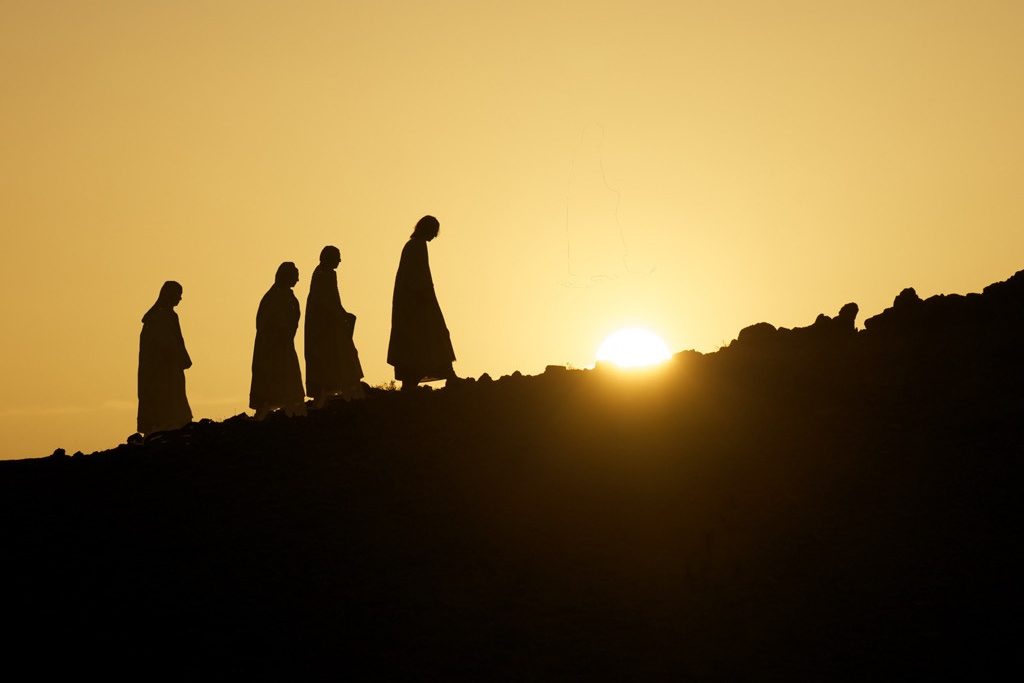
Jesus takes three disciples with Him up to a high mountain, most likely Mt. Hermon, the highest mountain in the Caesarea Philippi region.  Peter, James, and John were chosen for this trip. These three often witnessed events the other disciples did not. This is nothing against the ones left behind, but it shines a light on Jesus’ teaching method. Jesus had an important message to get out, and little time to do it. He needed well-trained disciples to accomplish it. Note, Jesus chose only twelve disciples and among those twelve He went deeper with three others. And these twelve changed the world with the gospel message after Jesus’ accession into heaven. Sometimes less with deep impact accomplishes more.

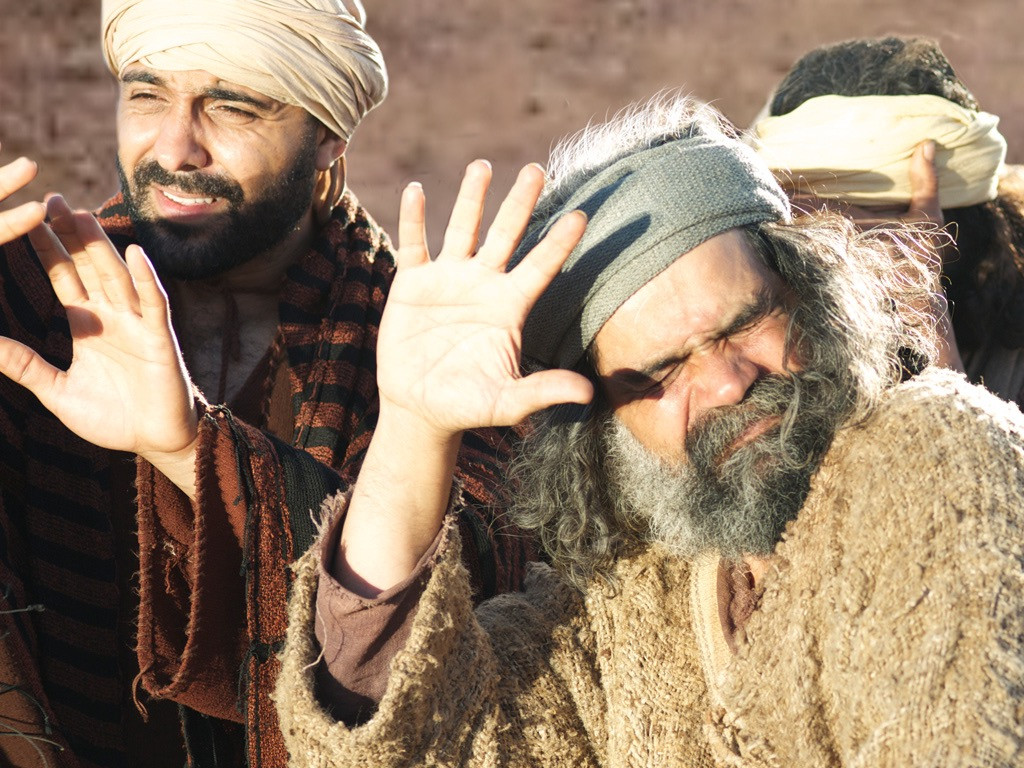
Peter, James, and John witnessed a spectacular divine event before their eyes. “Jesus’ appearance was transformed, and his clothes became dazzling white, far whiter than any earthly bleach could ever make them.” (Mk.9:3 nlt) Jesus’ divine glory was revealed. His clothing was radiant in white light as it had never been before. This wasn’t a superficial change of outward appearance. It was a change in His essence. Jesus’ body was glorified as it will be when He returns to earth to set up His kingdom. Imagine the reaction of the disciples as they saw this, along with another stunning occurrence, the presence of Elijah and Moses in front of them talking with Jesus. It is interesting that they recognized two Old Testament figures. In Luke’s gospel, it is referenced Elijah and Moses were talking with Jesus about His upcoming death. (Lk:20-21)

“Peter exclaimed, ‘Rabbi, it’s wonderful for us to be here! Let’s make three shelters as memorials—one for you, one for Moses, and one for Elijah.’” (Mk.9:5 nlt) Peter had the reputation of speaking first and thinking later. But in this case, I think we can offer him a little grace. The Bible does say that they were all terrified by what they saw. Peter’s suggestion for the shelters has commentators offering several thoughts as to his motives. I must admit it is hard to determine. One opinion is Peter might have thought the millennial kingdom was beginning then and there. He may also have thought they were going to be there for a while, so might as well make permanent shelters. One disturbing thought is Peter seemed to have put Elijah and Moses on equal status with Jesus. This may not have been his intent, and we know all the disciples were still learning. God did remove that thought by removing Elijah and Moses from the scene. But before He did that, God spoke to them as a cloud covered them, “This is my dearly loved Son. Listen to him.” (Mk.9:7 nlt) The cloud was a symbol of God’s presence of protection and guidance as when leading the children of Israel out of Egypt. It also represented the Shekinah glory that was in the Temple of old. The Lord God tells them to listen and obey His Son. He is the one Elijah and Moses spoke about that was to come. Jesus is the only one left standing. Listen to Him!
FreeBibleimages.org

God allowed Peter, James, and John to see Jesus’ divine glory as it will in the kingdom of God. They were not to say anything to anyone about it until Jesus is raised from the dead. Probably hard for them to do, but Scripture said they obeyed Jesus’ words. “So they kept it to themselves, but they often asked each other what he meant by ‘rising from the dead.’” (Mk.9:10 nlt) The disciples still have questions for Jesus concerning this matter, and we will pick it up next week.

Bible Studies

“But Who Do You Say I Am?” The Gospel of Jesus Christ: the book of Mark

Read: Mark 8:22-38 NLT – Jesus Heals a Blind Man – When they – Bible Gateway

“Jesus and his disciples left Galilee and went up to the villages near Caesarea Philippi. As they were walking along, he asked them, ‘Who do people say I am?’  ‘Well,’ they replied, ‘some say John the Baptist, some say Elijah, and others say you are one of the other prophets.’ Then he asked them, ‘But who do you say I am?’” Mark 8:27-29 NLT

FreeBibleimages.org

We ended last week’s Biblical Insights with Jesus on another trip across the Sea of Galilee, and once again teaching the disciples what they didn’t get the first time. From this point on, Jesus’ teaching will be direct and plainly spoken not speaking in parables or using comparison examples. The disciples will be given a clearer understanding of Jesus’ teaching but will still have some trouble as we will see.

Jesus and His disciples arrived at Bethsaida, a fishing town and home to Peter, Andrew, and Philip. Soon after arriving some people brought a blind man to Jesus begging to heal him. Once again Jesus led him out of town not to draw attention to the miracle He was about to perform. The Bible says Jesus spit on the man’s eyes and laid His hands on him asking, ‘Can you see anything now?’ The man responded he could, but not clearly for the people he saw looked like trees. “Then Jesus placed his hands on the man’s eyes again, and his eyes were opened. His sight was completely restored, and he could see everything clearly.” (Mk.8:25 nlt) This was gradual healing. Sceptics may say Jesus failed the first time, or didn’t quite have it that day. But it was his method in this case. Jesus healed a blind man once again. Jesus then told the man to return to his home and not go back into the town.

Jesus then left Galilee with His disciples for Caesarea Philippi, twenty-five miles to the north, a town at the foot of Mount Hermon. Along the way Jesus asked, ‘Who do people say I am?’ The disciples said some say Jesus was John the Baptist, or Elijah, and others said He was one of the prophets of old who had come back. Jesus then asked them who do they say He is. At this point, Jesus was more concerned what His disciples believed than the public. Peter answered for the group by saying, ‘You are the Messiah’ (or Christ). This is the first time ‘Christ’ is used in the book of Mark, and it marks a turning point in Jesus’ ministry. Jesus hardly used the name ‘Christ’ in reference to Himself due to the association with the political and national interests at the time. But He will now teach His disciples the mission of the Messiah, the anointed one, the Christ. Jesus will begin to tell of His forthcoming suffering, His death, and His resurrection as they travel down to Jerusalem.

FreeBibleimages.org

Jesus did warn His disciples not to tell anyone He was the Messiah as He told those that He healed not say anything to not attract a crowd. But in this case, it was more than that, Jesus did not want the political nature of the promised Messiah to take away from His true mission. The Christ will establish an earthly kingdom and rule from Jerusalem, but that time is not now. Jesus’ mission can only be understood through the cross, something His disciples did not yet fully understand, as we will see. Jesus now begins to explain the true meaning of the ‘Christ’ and His mission.

“Then Jesus began to tell them that the Son of Man must suffer many terrible things and be rejected by the elders, the leading priests, and the teachers of religious law. He would be killed, but three days later he would rise from the dead.” (Mk.8:31 nlt) This is another first. Jesus is predicting His suffering, death, and resurrection for the first time and he is speaking clearly. He is speaking it as a matter of fact using the word ‘must.’ These things ‘must’ happen. They were prophesied in the Old Testament and must take place as part of God’s plan of salvation for sinners. The Messiah will suffer and die on a cross for sinners but will be raised to life defeating death and guaranteeing eternal life for all who believe in Him.

But again, we see, the disciples fell short, well at least Peter did, by reprimanding Jesus that this would never happen on his watch. To be fair, Peter didn’t get it, but his reaction does show his deep love he had for Jesus. What is so damaging in Peter’s actions is his thinking being contrary to God’s plan. Peter could not visualize His Messiah dying on a cross, and in attempting to persuade Jesus away from the cross is line with Satan’s past attempts. This explains Jesus’ words to Peter, ‘“Get away from me, Satan!’ he said. ‘You are seeing things merely from a human point of view, not from God’s.’” (Mk.8:33 nlt)

“Then, calling the crowd to join his disciples, he said, ‘If any of you wants to be my follower, you must turn from your selfish ways, take up your cross, and follow me.’” (Mk.8:34 nlt) Jesus explains the criteria for following Him. It really comes down to this in simple terms, anyone unwilling to deny himself can’t be a true follower of Jesus. To take up your cross is a willingness to suffer and die for Christ. A man who was already condemned to death was forced to carry his cross. When Jesus says, ‘follow me’ He is indicating ‘in His death.’ Tough words. Jesus says in trying to hang on to your life, you will lose it. The Wycliffe Bible Commentary notes, the person so focus on the protection of this life will miss the second. You can save your physical life by denying Christ, but eternal life will be lost.

Photo by Jon Tyson on Unsplash

Jesus then asks a question to all those around Him, “And what do you benefit if you gain the whole world but lose your own soul? Is anything worth more than your soul?” (Mk.8:36-37 nlt) No monetary value can be placed on one’s soul. Acquiring all the wealth the world has to offer and achieving success beyond measure cannot match the value of a soul. The soul is the real you! Don’t lose it to the influences of this world. In closing Jesus predicts His coming back again. He notes, those who care more for this present generation by denying Him will find no place in the kingdom of God upon His return. “If anyone is ashamed of me and my message in these adulterous and sinful days, the Son of Man will be ashamed of that person when he returns in the glory of his Father with the holy angels.” (Mk.8:38 nlt) So, we all need to answer Jesus’ question. ‘But who do you say I am?’

“The answer every person gives to this question will determine his or her eternal destiny.” John MacArthur

Devotionals

You, the preacher!          

Read: Romans 10:9-15 NLT – If you openly declare that Jesus is – Bible Gateway

“How then shall they call on Him in whom they have not believed? And how shall they believe in Him of whom they have not heard? And how shall they hear without a preacher?” Romans 10:14 NKJV

Photo by Emerson Ward on Unsplash

The Christian church has local congregations of all sizes. We have mega churches with thousands of members within their building and satellite locations. Mid-size churches with a few hundred people seems to be norm, at least in the United States. Then you have very small congregations with a hundred people or less. Whatever the size of the church, most pastors take on more responsibilities than are necessary but try to tell them that! Their efforts are commendable, and we appreciate their service, but there are times when we, the congregates, need to step up mostly in some of our smaller churches. You may have heard it said, the pastor can’t do everything. That’s true, he can’t.

One main area a pastor needs our help is presenting the gospel message to others. You are probably thinking, ‘well isn’t that his job.’ Well, yes, it is, but it is also our job. We’re fed the word of God each week through sound teaching to equip us to go out and do the Lord’s work. A major part of that work is to tell others about Jesus Christ. Paul, writing in Romans, is explaining the very important and simple way of salvation, “For Everyone who calls on the name of the LORD will be saved.” (Ro.10:13 nlt) but then he adds, “But how can they call on him to save them unless they believe in him? And how can they believe in him if they have never heard about him?” (Ro.10:14 nlt) So, how are they going to hear about the one who is offering salvation? They need a preacher, not ‘the preacher,’ as in a better translation, “And how can they hear about him unless someone tells them?” (Ro.10:14b nlt) That someone is you and me, along with our pastor.

No, the pastor can’t do everything. So, may we be willing, energetic, and enthusiastic in sharing the gospel with others. Then let us help him set up the tables and chairs for the family fellowship and maybe mow the lawn.  

Bible Studies

“Beware of Persuasive Influences of Sin” The Gospel of Jesus Christ: the book of Mark

Read: Mark 8:11-21 NLT – Pharisees Demand a Miraculous Sign – Bible Gateway

“As they were crossing the lake, Jesus warned them, ‘Watch out! Beware of the yeast of the Pharisees and of Herod.’” Mark 8:15 NLT

FreeBibleimages.org

Continuing with our series in the book of Mark on Sunday’s Biblical Insights this week we see Jesus on the move again. After miraculously feeding another large crowd of almost 16,000 with seven loaves of bread and a few fish, Jesus leaves the Decapolis region and heading back across the sea to the region of Dalmanutha.

 Once again people are waiting for His arrival. This time it is the Pharisees who have not given up questioning Jesus but continue to harass Him demanding proof of His deity. They were demanding Jesus show them a sign to prove the divine authority He is claiming. The Pharisees have seen His previous miracles but wanted more. They were looking for a convincing celestial event to prove His power over the heavens and the earth. When Jesus heard this, he sighed deeply. Last week we noted Jesus’ compassion by sighing at the healing of the deaf and mute man, this week He sighs in grief for their refusal to believe. Jesus refused to give in to their demand knowing that the Pharisees really didn’t believe He could perform such a miracle. Their intent was to keep on trying to discredit Jesus and deflate His popularity.  

FreeBibleimages.org

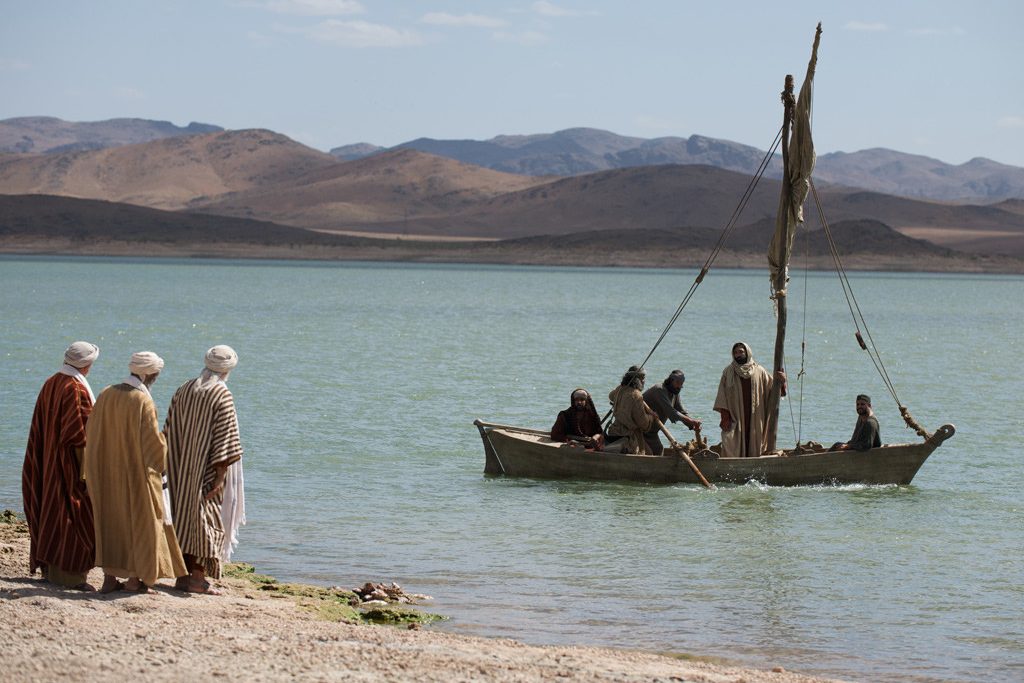
Jesus left Dalmanutha after this confrontation with the Pharisees. “So he got back into the boat and left them, and he crossed to the other side of the lake” (Mk,8:13 nlt) Jesus went back to the eastern side of the Sea of Galilee arriving at the fishing town of Bethsaida on the northern shore, the home to Peter, Philip, and Andrew. During the trip Jesus’ disciples were taught an important truth, although they were unaware of it at the time. ‘Beware of Persuasive Influences of Sin.’ “As they were crossing the lake, Jesus warned them, ‘Watch out! Beware of the yeast of the Pharisees and of Herod.’” (Mk.8:15 nlt) The disciples’ minds instantly went to the fact they forgot to take food along for the trip. Whether they thought Jesus was referring to this or something else is not clear, but “At this they began to argue with each other because they hadn’t brought any bread.” (Mk.8:16 nlt) How often we’re quick to jump to conclusions thinking we know why something is occurring. It’s usually not the case, just our minds feeding our self-serving attitude. These were the disciples on the boat that day.

What Jesus told His disciples went right over their heads. Jesus was referring to the yeast as a symbol of evil or corruption. A tiny amount of yeast can ferment a large amount of dough. A little yeast of sin in our lives will ferment into a large lump of uncontrollable sin leading to disaster. The Pharisees had the yeast of hypocrisy. This was seen by their earlier demand for Jesus to perform a sign when they didn’t believe He could perform one. Herod’s yeast was secularism and worldliness. A little influence in these areas is all that is needed to quickly rise the temptation of sin. This is what Jesus was telling His disciples back then and to us in our day. Beware of persuasive influences of sin.

Jesus knew the disciples didn’t get it and knew what they were arguing about. They were missing a vital spiritual point because they were focusing on their material needs, namely food. “Why are you arguing about having no bread? Don’t you know or understand even yet? Are your hearts too hard to take it in?……Don’t you remember anything at all?” (Mk.17-18 nlt) The disciples witnessed Jesus feeding 4,000 men plus women and children just days before and saw Him feed 5,000 men plus women and children before that, and yet they’re worried about what they will eat when the miracle worker is right in front of them. So concerned they were that they missed His important teaching about the influences of sin.

Photo by Diggity Marketing on Unsplash

Christians today have the same problem of deciphering what to beware of in all the influences in our lives. Herod’s yeast of secularism is likely the most influential to beware of. Living in the world and not being part of the world is a daily struggle. It’s easy to succumb, that is why Jesus gave us the warning, beware. The Pharisees yeast of hypocrisy should not be dismissed as if it can’t be applied to us. It can. It’s too easy to say one thing and do another. We live in a world where it is very easy to be persuaded by all that is around us. We should not be naive in thinking we can always discern if the persuasive influences in our lives are of a sin nature or not without the help of the Holy Spirit. Jesus tells to beware, and He has sent His Holy Spirit to help us beware and live a life free from giving in to the persuasive influences of sin.

Devotionals

Standing for the Truth of the Gospel  

“For we cannot oppose the truth, but must always stand for the truth.” 2 Corinthians 13:8 NLT

Photo by Brett Jordan on Unsplash

There is a saying, I admit, that I often use. “The truth is somewhere in the middle.” I use it because in most cases it turns out to be true. Take any news story today which has two sides to it as they report it. It lands somewhere in the middle of the two reported stories. Each reporter and/or advocate slant their bias towards their version of the truth, usually a half-truth. They are partially true, but when the whole truth is revealed, their half-truth turns out not to be true. Still, some people hold on to their perspective of the truth even though it is flawed and misleading. This may seem harmless and a just a matter of opinion, but in a life-or-death situation this will be disastrous.

The apostle Paul was adamant of the truth, especially when it came to the truth of the gospel. They are no half-truths in the gospel. The truth is Jesus said, “I am the way, the truth, and the life. No one can come to the Father except through me.” (Jn.14:6 nlt) That is the whole truth revealed. Those who sugar coat the gospel with charitable deeds, being a good person, obeying the law, being kind to others, and tolerate of other religions who claim alternative ways to heaven and eternal life are doing more than spreading half-truths, but propagating a false gospel. A life-or-death situation cannot succumb to half-truths.

Paul wrote to the church at Corinth, “For we cannot oppose the truth, but must always stand for the truth.” (2Cor.13:8 nlt) Paul made sure the Corinthians knew he was always speaking the truth in everything he taught them. Even when he was reprimanding them, it was always the truth. Paul did not mince words to sound less forceful. They needed to hear what Paul was telling them for their own good. We are not doing any favors to those who do not know the true way of salvation by sugar coating the gospel with half-truths. It this case, ‘the truth is never somewhere in the middle.’

Bible Studies

“The Compassion of the Savior” The Gospel of Jesus Christ” the book of Mark

Read: Mark 7:31-8:10 NLT – Jesus Heals a Deaf Man – Jesus left – Bible Gateway

“I have compassion for these people; they have already been with me three days and have nothing to eat.” Mark 8:2 NIV

Jesus, the healer and miracle worker, continues His ministry departing Tyre in the Phoenician region, and heading back to the Sea of Galilee. Jesus and His disciples traveled 20 miles north passing through Sidon, then traveled southeast to the eastern shore of the Sea of Galilee to the area of the Decapolis. As always, when Jesus arrives, a crowd forms and the sick are quickly brought to Him.

“A deaf man with a speech impediment was brought to him, and the people begged Jesus to lay his hands on the man to heal him.” (Mk.7:32 nlt) Jesus wanted some privacy with the man and led him away so they could be alone. Mark records Jesus put His fingers into the man’s ears. The reason for this is not given, but a good indication maybe He was letting the man know he would soon be able to hear. The next sequence seems strange to us for our times as Jesus spits and touches the man’s tongue and, “Looking up to heaven, he sighed and said, ‘Ephphatha,’ which means, ‘Be opened!’” (Mk.7:34 nlt) The man was healed instantly. He could hear and speak plainly. Mark adds that Jesus sighed while performing this miracle, perhaps a display of His compassion for the man and what he has gone through. We would be careful to note that Jesus’ physical actions played no part in the healing, it was His miraculous power that opened the man’s ears and loosened his tongue.

FreeBibleimages.org

Again, Jesus tries to maintain a low profile during this phase of His ministry, but it isn’t possible as the news of this healing begins to spread. The people once again responded in amazement of one who could heal a man who was deaf and mute. Isaiah, in his writings, prophesied about the coming Messiah and what He will do. “And when he comes, he will open the eyes of the blind and unplug the ears of the deaf. The lame will leap like a deer, and those who cannot speak will sing for joy!” (Is.35:5-6 nlt) The people were witnessing the unveiling of Isaiah’s prophesies.

Soon another large crowd develops, grows, and begins to follow Jesus for three days seeking healing and desiring to hear His teaching. After three days whatever food everyone had was now depleted and they were far from home. Notice Jesus’ compassion for the people as he speaks with His disciples. “I feel sorry for these people. They have been here with me for three days, and they have nothing left to eat. If I send them home hungry, they will faint along the way. For some of them have come a long distance.” (Mk.8:2-3 nlt) When Jesus looked upon the crowd at the feeding of the 5,000, we looked at a few weeks ago, He stress His compassion for them as sheep wandering around without a shepherd. This time Jesus is stressing His concern for this crowd’s basic need of food, nourishment to sustain them physically. This a lesson all Christians and the church need to heed. Yes, we need to preach the gospel to them, but it goes a lot better when the people are fed and are not hungry.

The disciples, sensing Jesus’ compassion, respond in a manner of concern but failed to remember His previous miracle of feeding the 5,000 plus women and children. They were slow to learn, but so are we at times. Jesus doesn’t criticize them for their lack of faith at this moment, but He will address it later with them. For now, He simply ask them what they were able to find, knowing what He could do with what they brought Him. The disciples had seven loaves of bread and Jesus went to work. Jesus had the people sit down. He then took the loaves, gave thanks to God, started breaking the bread into pieces giving them to the disciples who distributed it to the crowd. Jesus was given a few small fish, but a few small fish is plenty in the Master’s hands. The disciples gave these out with the bread and the Bible says, “They ate as much as they wanted. Afterward, the disciples picked up seven large baskets of leftover food.” (Mk.8:8 nlt)

FreeBibleimages.org

Jesus met their physical need of nourishment for the way home, and most likely sent the leftovers with them. This crowd could have been close to 16,000 people when including the women and children. No one went home hungry that day. Jesus’ compassion for them is the same He has for us. It covers our whole being, body, soul, and spirit. He cares about our physical needs, our basic needs of food, clothing and shelter, and most of all our spiritual needs in providing the way of salvation through His shed blood on the cross at calvary.  We have a compassionate savior. Have you met Him yet or are you still searching for Him? He’s not hard to find, just follow the crowd.

Devotionals

Court will Convene

“‘But the court will convene for judgment, and his dominion will be taken away, annihilated and destroyed forever.” Daniel 7:26 NASB

Photo by Wesley Tingey on Unsplash

Interest in apocalyptic literature has increased over the years. It took a massive jump in the 20th century and seems about ready to reach its peak, but that is speculation on my part. What is certain; we are living in unprecedented times. A massive technological explosion only matched by the increase in greed, violence, government corruption, persecution, and outright distain for God puts us on a track where there seems to be no return. The world, under the influence of the evil one, is heading in that direction.

As horrific as the current and future events are for this world, we can rest assured God is still in control. In the end God will make all things right. Perfect justice will be administered. In fact, the court room is being prepared, and it may not be long before the court is in session. Satan’s hold on this world will end. The prophet Daniel recalls in one of his visions, “‘But the court will convene for judgment and his dominion will be taken away, annihilated and destroyed forever.” (Dan.7:26 nasb)

As Christians we can rejoice in God’s judgement and rejoice even more for His saving grace sparing us from His judgement against sin. (except for the grace of God go I) People are curious about ‘the end of the world’ as they say. We may not understand all that is going to occur in those future days, but we can tell those with inquiring minds what we are certain of, God’s salvation plan. God sent His Son, Jesus, to redeem us from God’s judgment of sin by putting that sin and judgment on Himself. Accepting what Jesus has done for us guarantees us an eternal home with Him. Another fact we are certain of is this; Jesus will return, and His court will convene. Satan’s dominion will be destroyed forever. Tell what we know.

Devotionals

Is there anything you wouldn’t do?    

Read: John 13:3-20 NASB – Jesus, knowing that the Father had – Bible Gateway

“If I then, the Lord and the Teacher, washed your feet, you also ought to wash one another’s feet.” John 13:14 NASB

FreeBibleimages.org

On the night Jesus was betrayed, He taught us the meaning of servanthood. Jesus was celebrating the Passover for the last time with His disciples before His crucifixion. When no one took the initiative to do what was customary in that day, to wash the feet of those entering the home, Jesus responded. His twelve disciples never gave it a thought, it wasn’t their home, but a room granted them for the occasion. It was the servant’s job of the home to perform this duty. Since it wasn’t their home and they weren’t servants, the disciples inferred, not my job. But the Lord showed them, it was their job, it’s our job.

Pride, indifference, laziness, lack of urgency, and unawareness are all factors in reasoning, not my job. Paying more attention to ourselves than to those around us causes us not to see peoples’ needs that are right in front of us. How many times have you said to yourself, ‘someone should do something about this?’ and then pass it by. Yes, maybe it’s none of your business, but if it’s needed or urgent and the right thing to do within reason, we should do it. There is also a tendency to assume that some jobs are just beneath us, and we wouldn’t want to be seen doing them. Jesus washed the disciples’ dirty feet. All the disciples saw it, John wrote about it, and we read it. All the world now knows, and it was done to teach us all.

So, is there anything you wouldn’t do as a courtesy or to help someone in need? Outside of it being shady or illegal, there shouldn’t be. May we follow Jesus’ example and take up jobs that aren’t our jobs, but in realty are our jobs. Happy serving!

Bible Studies

“A Mother’s Faith” The Gospel of Jesus Christ: the book of Mark

Read: Mark 7:24-30 NLT – The Faith of a Gentile Woman – Then – Bible Gateway

“She replied, ‘That’s true, Lord, but even the dogs under the table are allowed to eat the scraps from the children’s plates.’” Mark 7:28 NLT

FreeBibleimages .org

This week in our Sunday Biblical Insights we stumble across a difficult passage mostly misunderstood, or at least hard to understand. But in the final analysis it is the gospel of Jesus Christ available to all people through the faith of everyone who believes as exemplified through a mother’s faith. We left Jesus last week as He was again answering questions from the Pharisees who had come from Jerusalem to the Gennesaret region. Crowds were following Jesus everywhere He went, and this was unsettling for the religious rulers of the day. After answering the Pharisees and teaching the crowds Jesus leaves the area going north to the region of Tyre.

“Then Jesus left Galilee and went north to the region of Tyre. He didn’t want anyone to know which house he was staying in, but he couldn’t keep it a secret.” (Mk.7:24 nlt) Jesus’ goal for this trip was to get some much-needed rest by getting away from the crowds and the Pharisees and to have quality time to teach His disciples. Tyre was 30 miles Northwest of Capernaum in Phoenicia, which is modern-day Lebanon. As is the case, wherever Jesus traveled, even into Gentile territory, it could not be kept a secret for long. Soon, people knew He was in town. Scripture says a Syrophoenician women who had heard about Jesus came and fell at His feet. She was a Gentile of Syrian descent, a descendant of the Canaanites, who spoke Greek. Her daughter was possessed by an evil spirit, and she came begging Jesus to cast it out.

The woman was begging, repeatedly asking Jesus to cast the demon out of her daughter. Jesus’ answer to her was, “First I should feed the children—my own family, the Jews. It isn’t right to take food from the children and throw it to the dogs.” (Mk.7:27 nlt) On the surface, this sounds like a derogatory remark. Many Jews of that day would call Gentiles ‘dogs’ out of disrespect, but that is far from what Jesus was saying. The term for ‘dogs’ that is used is a little dog, or household pet. This was not a reference to the wild dogs that roamed throughout the region. What Jesus is saying is He came to reach His own people, the Jews, first. As we have seen throughout this gospel Jesus had been going mainly throughout Jewish territories. This is the deepest He has gone into a Gentile area, but as was noted His popularity always precedes Him. There would be day when God’s blessings are also extended to the Gentiles as well. Jesus was testing the mother’s faith. He was comparing the ‘little dogs’ to Gentiles. Jesus’ imagery of the food table within a home point to salvation is of the Jews and the Gentiles are part of the household and are not excluded. The mother got it, and it is displayed in her answer to the Lord.

“She replied, ‘That’s true, Lord, but even the dogs under the table are allowed to eat the scraps from the children’s plates.’” (Mk.7:28 nlt) The mother responded with a worshipful attitude calling Jesus, ‘Lord’. This is the only time Jesus is addressed as Lord in the gospel of Mark, and it comes from a Gentile woman. She had faith in Christ for who He is, and what He can do for her daughter, realizing she herself was sinful and unworthy of blessings. All she asked for were the scraps and the crumbs that fell from the children’s hands. This mother knew she and her daughter were included in God’s salvation plan and Jesus can heal her daughter.

FreeBibleimages.org

Jesus commended her for her answer and sent home saying. “‘Now go home, for the demon has left your daughter.’ And when she arrived home, she found her little girl lying quietly in bed, and the demon was gone.’” (Mk.7:29-30 nlt) When this mother heard about Jesus, she had faith that He would be able to cast out the evil spirit from her daughter. May this mother’s faith be our faith. She had faith in the only one who would be able to heal her daughter and her own soul. It is Jesus Christ the Son of God who came not only to cast our demons but to save both Jew and Gentile who put their faith in Him by accepting Him as Lord and savior.

A Christian Perspective

Climate Change

In response to an article on the Christian Post website this week entitled ‘Vanderbilt professor claims some pro-lifers use Bible to distract from climate change’ the following repost from September 2023 is in order. Christians do gather their information for moral, social, and world issues from the Bible, including ‘Climate Change.’ A link to the article with other claims by the Vanderbilt professor is posted below.

Photo by Nicholas Doherty on Unsplash

“Climate change refers to long-term shifts in temperatures and weather patterns. Such shifts can be natural, due to changes in the sun’s activity or large volcanic eruptions. But since the 1800s, human activities have been the main driver of climate change, primarily due to the burning of fossil fuels like coal, oil and gas……Because the Earth is a system, where everything is connected, changes in one area can influence changes in all others. The consequences of climate change now include, among others, intense droughts, water scarcity, severe fires, rising sea levels, flooding, melting polar ice, catastrophic storms and declining biodiversity.” (1)

The above statement is furnished to us from the ‘United Nations Climate Action’ page. The following are from the pages of the Bible which concurs with the United Nations at least to the effects of climate change. “Against its will, all creation was subjected to God’s curse. But with eager hope, the creation looks forward to the day when it will join God’s children in glorious freedom from death and decay. For we know that all creation has been groaning as in the pains of childbirth right up to the present time.” (Ro.8:20-22 nlt) Scripture confirms the created earth is under the curse of God and it came about after sin entered the paradise of the Garden of Eden. “And to the man he said, ‘Since you listened to your wife and ate from the tree
whose fruit I commanded you not to eat, the ground is cursed because of you. All your life you will struggle to scratch a living from it.’”  (Gen.3:17 nlt) The earth experienced its first ever change of climate during the great flood of Noah’s day, for it had never rained before that time in history. Scripture records for us in Genesis 7:11-12, “When Noah was 600 years old, on the seventeenth day of the second month, all the underground waters erupted from the earth, and the rain fell in mighty torrents from the sky. The rain continued to fall for forty days and forty nights.” (nlt) Waters bursting up from the ground with rain falling from the sky for the first time ever no doubt that is climate change.

The point is climate change is not restricted only to the last 200 years. But the recent noticeable changes cannot be denied. Every individual living on planet earth, especially Christians, has a responsibility to be a good steward of God’s creation for our generation and the generations to come. We are to praise God for His magnificent creation and work to maintain its wondrous beauty as far as it depends on us with what we can do.

Photo by Markus Spiske on Unsplash

The Bible also gives us encouragement that we will not destroy the earth. Our planet will not succumb to our increasing manmade climate change. After the great flood, God told Noah, “While the earth remains, seedtime and harvest, cold and heat, summer and winter, day and night, shall not cease.” (Gen.8:22 esv) The seasons will not change regardless of our recklessness but will remain. They will remain until the next disastrous climate change effect takes place during the tribulation period described in the book of Revelation. “I watched as the Lamb broke the sixth seal, and there was a great earthquake. The sun became as dark as black cloth, and the moon became as red as blood. Then the stars of the sky fell to the earth like green figs falling from a tree shaken by a strong wind. The sky was rolled up like a scroll, and all of the mountains and islands were moved from their places.” (Rev.6:12-14 nlt) We can eliminate fossil fuels entirely, but it will not save the planet from sure destruction during the tribulation period.

The earth we know will racially change in the future, but not by us driving our electric vehicles. Jesus Christ will return at the end of the tribulation and established His Kingdom and will rule on earth for a thousand years with Satan bound and cast into the bottomless pit. What will our environment and climate be like, we don’t know. But we do know that Christ, God the Son, will be here on earth ruling, I’m sure the ‘son’ will shine.

Photo by Matt Palmer on Unsplash

The ultimate and final climate change will be at the end of Christ’s thousand-year reign on the earth. Satan will be sent to his eternal final destination, the lake of fire, along with all those whose names were not found written in the book of life. The apostle John writes in Revelation 21:1-4, “Then I saw a new heaven and a new earth, for the old heaven and the old earth had disappeared. And the sea was also gone. And I saw the holy city, the new Jerusalem, coming down from God out of heaven like a bride beautifully dressed for her husband. I heard a loud shout from the throne, saying, ‘Look, God’s home is now among his people! He will live with them, and they will be his people. God himself will be with them. He will wipe every tear from their eyes, and there will be no more death or sorrow or crying or pain. All these things are gone forever,’” (nlt) and there will be no worries about carbon emissions, fossil fuels and climate change. The climate will no longer change.

Photo by Petra Reid on Pexels.com

(1) https://www.un.org/en/climatechange/what-is-climate-change

Vanderbilt professor claims pro-lifers use Bible to avoid climate | Politics