“They all ate as much as they wanted, and afterward, the disciples picked up twelve baskets of leftovers.” Matthew 14:20 NLT
FreeBibleimages.org
What do you do with the leftovers after you have finished your evening meal? For some there may not be any, but for my wife and I since it is just the two of us we always have something leftover. Usually we save it for the next day or if it will keep until the day after. We most likely come home with a box from a restaurant on the evenings we dine out. Some might say we’re not big eaters, but I would beg to differ, like most people we like to eat. The same was true in Jesus’s day. People liked to and needed to eat.
Jesus had the opportunity to feed over five thousand people after they came to Him for healing and to hear His teaching. It was also an opportunity to display His compassion, His miraculous power, and His concern for the leftovers. Jesus had compassion for the people for in Mark’s version it says “he had compassion on them because they were like sheep without a shepherd.” (Mk. 6:34) His miraculous power was seen in the distribution of the loaves and fish to the more than five thousand people for he only had five loaves and two fish to start with, but He made it work. Jesus supplied more than enough and didn’t want to see any waste. John’s account in his gospel says, “After everyone was full, Jesus told his disciples, ‘Now gather the leftovers, so that nothing is wasted.’” (Jn. 6:12)
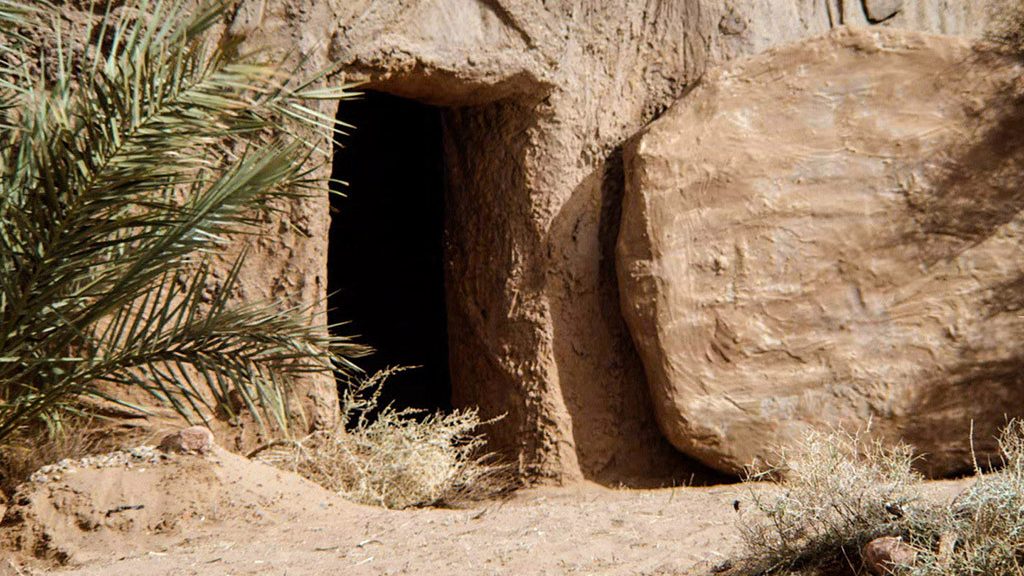
Our Lord will never fail to meet our needs. In fact, as with the feeding of the multitude He will often supply more than enough. Perhaps not more than we want, but certainly more than we need. Enough for us and enough left over to share with others in need. The disciples picked up twelve baskets of leftovers. One for each of them to remind them of Jesus’s ability to care for their needs, to understand that with Him little becomes much, and to not waste any leftovers He has blessed us with, but to use it to serve Him as He directs.
“And God will raise us from the dead by his power, just as he raised our Lord from the dead.” 1 Corinthians 6:14 NLT
FreeBibleimages.org
The passing of a loved one for those who do not know Christ causes a sadness that is not relieved by any hope. Life has come to an end which creates uncertainty as to what’s next. For one with no assurance of salvation and the certainty of eternity there is no hope that comforts the soul. Jesus said, “I am the resurrection and the life. Anyone who believes in me will live, even after dying.” (Jn.11:25 nlt)
Jesus confirmed He is the resurrection and the life by rising from the dead that first Easter morning. Some people doubt the resurrection of Christ. In our text reading today Martha was shaken by her brother’s, Lazurus, death. Jesus comforted her with these words as He knew what He would do in raising her brother from the dead. He had the power to raise Lazurus from the dead and He has the power to raise us at His glorious return. However, we don’t need to wait until that day until we meet Jesus and have eternal life. Paul tells us when we are separated from our bodies in death, we are in the present of the Lord. “Yes, we are fully confident, and we would rather be away from these earthly bodies, for then we will be at home with the Lord.” (2Cor.5:8 nlt)
The resurrection of Christ is our hope of eternal life. He defeated death. He defeated Satan. His resurrection assures us as He lives, so all who trust in Him will also live. Jesus was raised in power by the Holy Spirit, and that same Spirit will raise up each of us who know Him as savior uniting our dead bodies with our eternal souls. We will then have new glorified bodies as we enter the kingdom of God. So, don’t doubt Jesus’ resurrection, it is our only hope of eternal life.
‘“Abba, Father,’ he cried out, ‘everything is possible for you. Please take this cup of suffering away from me. Yet I want your will to be done, not mine.’” Mark 14:36 NLT
Our last time in the book of Mark we covered the conclusion of the Last Supper. Jesus gave new meaning to the Passover meal by applying the unleavened bread and the wine to Himself. The bread of affliction symbolized His broken body as He would be nailed to the cross, and the cup of wine represents the blood He would shed for the remission of sins. Jesus then tells His disciples “I tell you the truth, I will not drink wine again until the day I drink it new in the Kingdom of God.” (Mk.14:25 nlt) Scripture says they then sung a hymn and proceeded to the Mount of Olives.
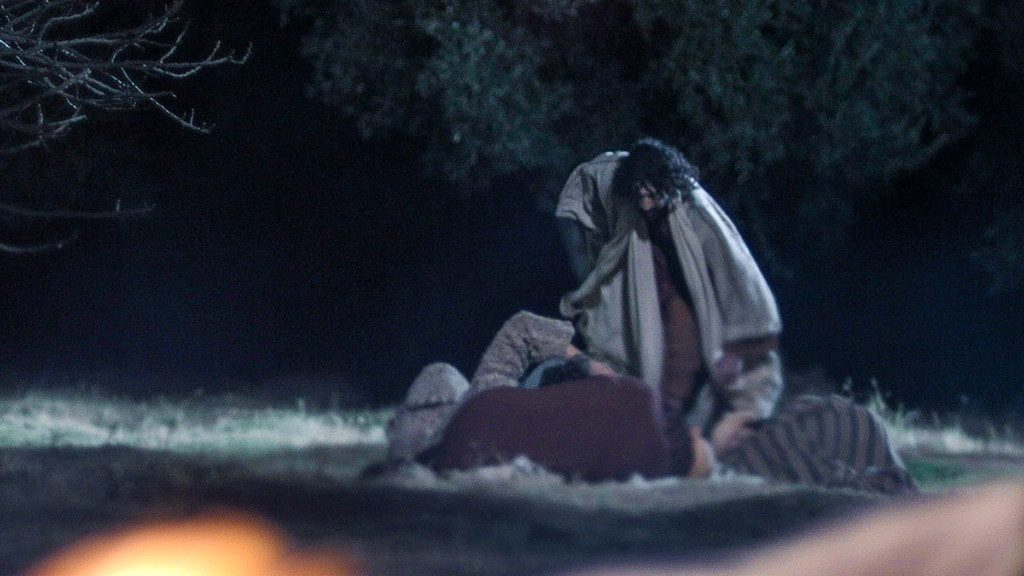
Jesus with the disciples came to Gethsemane, an Olive Grove on the lower slopes of the Mount of Olives. Gethsemane means ‘oil press’ where olives are crushed for the oil. This was one of Jesus’ favorite places to go, and ironically it is representative of His body being crushed and His blood being spilled for us. “He took Peter, James, and John with him, and he became deeply troubled and distressed. He told them, ‘My soul is crushed with grief to the point of death. Stay here and keep watch with me.’” (Mk.14:3-4 nlt) Jesus wanted these three, the leaders of the disciples, with Him during His time of sorrow. Jesus’ grief was so great He was at the risk of death just from His extreme sorrow.
While Peter, James, and John stay behind, Jesus went a little further from them and fell down and prayed. He asked His Father if the hour before would pass Him by. The hour was the time of God’s plan of salvation where Jesus would suffer and die. Jesus cried out, “Abba, Father, everything is possible for you. Please take this cup of suffering away from me.” (Mk.14:36 nlt) ‘Abba’ is an expression of a close loving relationship such as the term ‘daddy.’ Knowing that there isn’t anything His Father, can’t do, Jesus asked if this cup, meaning the ‘cup of death and God’s wrath’ upon Him be taken away. Jesus would have the sin of the entire human race placed on Him causing God His Father to turn His back on Him as Jesus paid the price for our sins. Paul writes in 2 Corinthians, “For God made Christ, who never sinned, to be the offering for our sin, so that we could be made right with God through Christ.” (2Cor.5:21 nlt)
Although Jesus knew of the physical suffering He would go through and that His Father would turn His back on Him for God cannot look upon sin, Jesus said, “Yet I want your will to be done, not mine.” (Mk.14:36b nlt) Jesus resolved to do the Father’s will. It was the Father’s plan of salvation to save mankind and it was and still is the only way of salvation. David Guzik, Christian pastor and author states, “This prayer of Jesus eliminates any other way of salvation. If there is another way, His death was not necessary, and His prayer was not answered.” There is no other way.
Jesus returned and found Peter, James, and John sleeping. He called out Peter as the leader of the leaders, “Simon, are you asleep? Couldn’t you watch with me even one hour?” (Mk.14:37 nlt) Jesus called Peter ‘Simon’ perhaps because he wasn’t living up to the name Jesus gave him. All three were then told, “Keep watch and pray, so that you will not give in to temptation. For the spirit is willing, but the body is weak.” (Mk.14:38 nlt) The disciples are soon going to be challenged and they are to be faithful in the threat of temptation and upcoming attacks on them. They would soon be tested as Jesus is arrested. If Peter had been watching and praying perhaps, he would not have denied Jesus.
FreeBibleimages.org
Leaving them a second time, Jesus went and prayed the same thing to the Father. Upon retuning He found them asleep again. The Bible says, “And they didn’t know what to say.” (Mk.14:40 nlt) They had nothing to say because they had no excuse. How many times are we without excuse when we should be watching and praying and the Lord finds us asleep, not paying attention to the signs of His coming and His command to us to make disciples. It happen a third time and this time Jesus said, “Go ahead and sleep. Have your rest. But no—the time has come. The Son of Man is betrayed into the hands of sinners. Up, let’s be going. Look, my betrayer is here!” (Mk.14:41-42 nlt)
A company of Roman soldiers along with servants of the court and the Temple guard led by Judas make their way through the garden of Gethsemane to Jesus. The order to arrest Jesus came from the Sanhedrin. “As soon as they arrived, Judas walked up to Jesus. ‘Rabbi!’ he exclaimed and gave him the kiss. Then the others grabbed Jesus and arrested him..” (Mk.14:45-46 nlt) Judas had arranged for them to arrest the one who he greets with customary Middle Eastern greeting of a kiss. But there were several methods of this greeting kiss. Judas chose the most intimate one, a kiss on the cheek, as in a pupil and a teacher (Rabbi), and in the most despicable way.
Mark records that one of the disciples drew a sword and cut off an ear of the high priest’s servant. We know from other gospel records that this disciple was Peter, and we also know that Jesus touched the servant and he was healed. Yet, the arrest continued to take place. Jesus then confronted them by asking “Am I some dangerous revolutionary, that you come with swords and clubs to arrest me?” (Mk.14:48 nlt) A revolutionary would be arrested under the cloud of darkness, but not a man who everyone knew preaching openly at the Temple every day. But that is why they arrested Jesus secretly. There were no grounds to arrest Him. And this was prophesied in the Old Testament, “Unjustly condemned, he was led away…… He had done no wrong and had never deceived anyone.” (Is.53:9-10 nlt) As Jesus foretold His disciples they would all abandon Him, (Mk.14:27) they did.
FreeBibleimages.org
The garden scene ends with a young man who was following behind wearing only a linen sheet. None of the other gospel writers record this instance. It seems to be out of place, but it is thought to be Mark himself the writer of this gospel. Having caught wind of Jesus’ upcoming arrest he hurriedly ran to the seen perhaps jumping out of bed not taking the time to fully dress. In his haste to also escape he lost his only covering he had on him except for some undergarments.
Next week we begin to look at the trials of Jesus……….
“For in it the righteousness of God is revealed from faith for faith, as it is written, ‘The righteous shall live by faith.’” Romans 1:17 ESV
Photo AI Generated wordpress
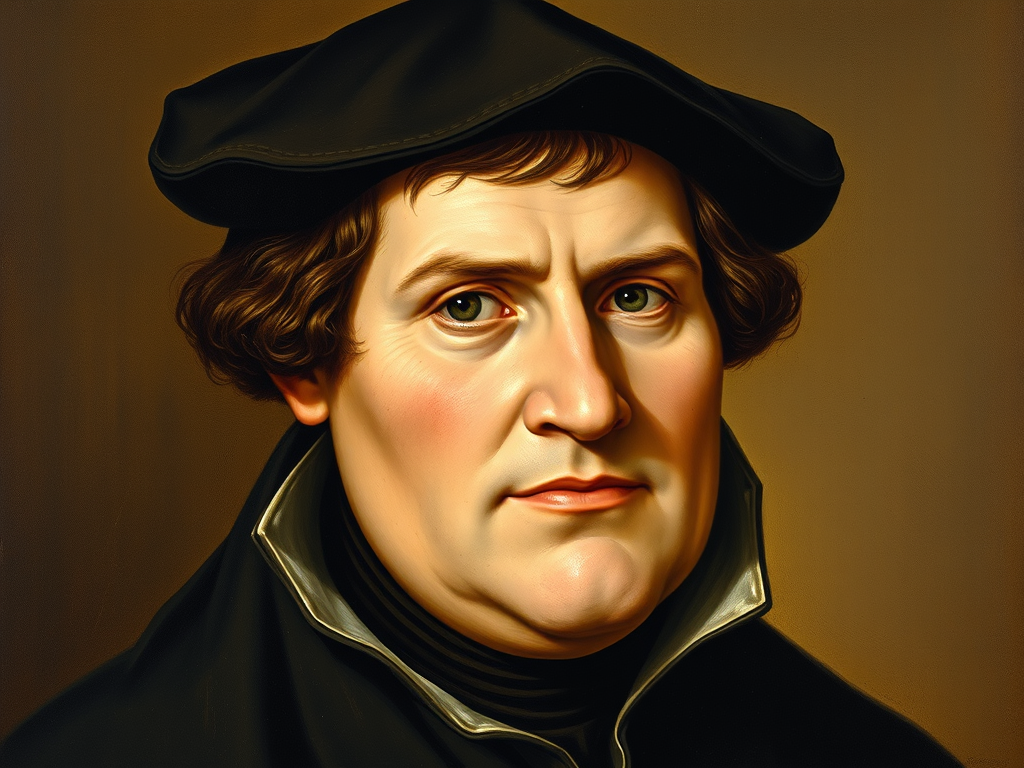
October 31st is recognized around the world as Halloween or ‘All Hallows’ Eve.’ The meaning of ‘hallows’ is ‘saints’ in the Christian tradition, All Saints Day is November 1st. However, Halloween today is nothing about Christian saints and I will leave it there. Today is Reformation Day, the day celebrated by Christians in recognizing Martin Luther’s ‘95 Theses’ nailed to the University of Wittenberg’s chapel door in 1517.
Martin Luther was a German monk and a professor of biblical studies at the University of Wittenberg who became disillusioned with the error he saw in the Catholic church, particularly the selling of indulgences. He posted his ‘95 Theses’ to spark conversation and debate among his colleagues calling for reform in the Catholic church. This, however, led to the Protestant Reformation of the 16th century.
Luther was convinced through the reading of Scripture that salvation was by the grace of God alone and faith alone in Jesus Christ. It was not by any merit or works on our part that contributes to salvation and entrance into heaven. This was in contradiction to what he had observed within the church. Luther was also a staunch believer that every person should have access to the Bible and be able to read it for themselves. He had translated the entire Bible into German.
Stephen Nichols of Ligonier Ministries writes, “The real main character in Reformation Day is not Luther. It’s the Word of God. What Luther discovered as a monk is that for centuries, the true teachings of the Word of God had been hidden by century upon century of tradition. That’s what Reformation Day is about: it’s about pulling back the cover and releasing the power of the Word of God and the beauty and the truth of the gospel. That’s why we celebrate Reformation Day.” (1)
“For by grace you have been saved through faith. And this is not your own doing; it is the gift of God, not a result of works, so that no one may boast.” Ephesians 2:8-9 ESV
The Bible has many key verses that are remembered and memorized by individuals to grab on to and hold for certain needs as they arise. Romans 12:12 is one example. “rejoicing in hope, persevering in tribulation, devoted to prayer. “ (nasb) This verse is often referenced in doing a word search on prayer, which is what led me to this verse this week. Being devoted to prayer should not only be during our times of struggle but always being in prayer daily.
But I got to think about the other two words. A biblical word search of ‘hope’ and ‘tribulation’ will also lead you to this verse along with several others. Paul, the author of Romans, says Christians should be rejoicing in hope. There is much to be joyful for. Despite the pain and suffering in the world affecting all people, Christians and non-Christians alike, there is a blessed hope for all who know Christ as savior. We can rejoice knowing the assurance of Jesus’ return and in our redemption from sin from His work on the cross.
Being patient in tribulation may be a little hard to do. Tribulation is a scary word. Other translations use the word ‘trouble’ or ‘affliction’ for ‘tribulation.’ It may soften the blow a little, but not much. The Greek word that is used here means, “a pressing, pressure, anything which burdens the spirit.” No matter how you look at it, being patient when you have any kind of trouble pressing down on you requires help from the Holy Spirit. And Christians have the Holy Spirit dwelling in them, another hope (a certainty) to rejoice in.
If we are devoted to prayer in our daily lives we will grow in our relationship with the Lord. If we are devoted to prayer our hope in Christ will be realized. If we are devoted to prayer we will feel the Holy Spirit working in our lives through every trial and tribulation. Let us start with being devoted to prayer.
“As they were eating, Jesus took some bread and blessed it. Then he broke it in pieces and gave it to the disciples, saying, ‘Take it, for this is my body.’” Mark 14:22 NLT
FreeBibleimages.org
Last week we started to work our way through the Last Supper. Jesus’ final meal with His disciples was the celebration of Passover. In this final meal Jesus gives new meaning to the Passover meal. Let’s begin.
Jesus gathered around the table with His disciples in an upper room prepared for the Passover meal. The celebration symbolizes God redeeming His people or slavery from the Egyptians. The meal would take most of the evening beginning at sunset and usually finishing by midnight. It was noted last week Jesus make a statement somewhere in the course of the meal, perhaps early on, “I tell you the truth, one of you eating with me here will betray me…… It is one of you twelve who is eating from this bowl with me.” (Mk.14:18, 20 nlt) The disciples thought this to be unimaginable and impossible, except Judas who already had the thirty pieces of silver in his pocket. Jesus went on to explain, “For the Son of Man must die, as the Scriptures declared long ago. But how terrible it will be for the one who betrays him. It would be far better for that man if he had never been born!” (Mk. 14:21 nlt)
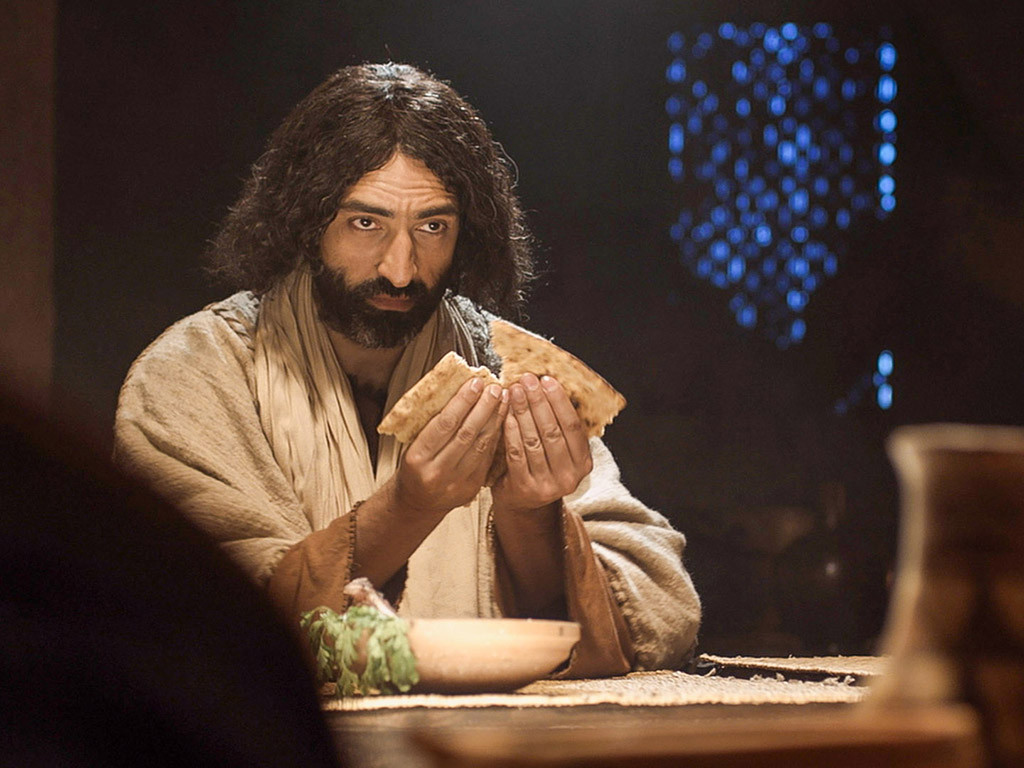
As the meal continued, Judas gone at this point, “Jesus took some bread and blessed it. Then he broke it in pieces and gave it to the disciples, saying, ‘Take it, for this is my body.’” (Mk.14:22 nlt) Scripture does not revealed at what part of the meal this took place, but it is thought to be right before eating the roasted lamb. The bread in the Passover meal represented Israel being separated from their old way of living under slavery in Egypt. As the bread was lifted up, the head of the meal would say, “This is the bread of affliction which our fathers ate in the land of Egypt. Let everyone who hungers come and eat; let everyone who is needy come and eat the Passover meal.” Jesus didn’t say that. He said, ‘Take it, for this is my body.’ Jesus brought new meaning to this meal. Jesus applied it to Himself and the suffering He will endure for the salvation of many. The unleavened bread represented His body which would be broken as He will be nailed to a cross.
Jesus then took the cup of wine giving thanks for it to God and gave it to His disciples to drink. “And he said to them, ‘This is my blood, which confirms the covenant between God and his people. It is poured out as a sacrifice for many.’” (Mk.14:24 nlt) The prophet Isaiah wrote in Isaiah 53 of the ‘suffering servant.’ “Therefore, I will allot Him a portion with the great, And He will divide the booty with the strong; Because He poured out Himself to death And was numbered with the transgressors; Yet He Himself bore the sin of many And interceded for the transgressors.” (Is.53:12 nasb) The wine represents Jesus’ blood that will be shed (poured out) for the remission of sins. Again, Jesus gives a new meaning here in establishing a new covenant. The shedding of blood in a sacrifice was required by God for an establishment of a covenant. Jesus’ blood needed to shed for the forgiveness of sins. Jesus said His blood was confirming the new covenant.
FreeBibleimages.org
Jesus confirms to His disciples this is the last time He will drink wine with them until He drinks new in the kingdom of God. In less than twelve hours Jesus will be put on a cross to suffer and die for our sins. His body will be broken and His blood shed. Mark writes after the meal they sung a hymn, the traditional Passover Hallel of Psalm 118, then they went to the Mount of Olives.
The disciples once again get some disturbing news from their Messiah as they are walking to the Mount of Olives. Jesus tells them, “All of you will desert me. For the Scriptures say, ‘God will strike the Shepherd, and the sheep will be scattered.’” (Mk.14:27 nlt) This was prophesied in the Old Testament book of Zechariah, and of course, all prophesies in Scripture come true. But the disciples themselves have a hard time with it. Jesus does tell them He will meet them in Galilee after He is resurrected, but it seems to go over their heads as they all claim they would never desert Jesus, especially Peter. Jesus gives it to Peter straight, “I tell you the truth, Peter—this very night, before the rooster crows twice, you will deny three times that you even know me.” (Mk.14:30 nlt) Peter let his pride get the best of him. We will continue to see prophecy unfold throughout the remainer of our study in the book of Mark fulfilling the gospel message that Jesus came to save sinners. Until next week………
“When the devil had finished all this tempting, he left him until an opportune time.” Luke 4:13 NIV
FreeBibleimages.org
A familiar story in the New Testament of the Bible is the temptation of Jesus in the wilderness. Notably the devil offered up three temptations that are recorded in Scripture. It can be assumed that these were the only temptations the devil threw at Jesus but can we be sure. In our text today in Luke 4:2 it says, ‘where for forty days he was tempted by the devil.’ (niv) That language in all translations points to on-going temptations throughout the forty days. We are not told what the temptations were, but they were there. At the end of the forty days Scripture records that Jesus was hungry having fasted the entire time and Satan saw an opportune time to employ a few more temptations on Jesus.
The evil one tempts us at our weakness moments. Jesus was tempted in His weakest physical moment when wandering in the wilderness for forty days and not eating. At the completion of the forty days the first recorded temptation by Satan was “If you are the Son of God, tell this stone to become bread.” (Lk.4:3 niv) Certainly a weak moment for Jesus. His answer, “It is written: ‘Man shall not live on bread alone.’” (Lk.4:4 niv) Jesus resisted the temptation at His weakness moment. At the conclusion of the last two temptations Scripture tells us the devil left him until an opportune time.
Satan did not give up on Jesus but looked for another opportunity to tempt Him or trap Him through the schemes of the Pharisees. As Satan waited for an opportune time to tempt Jesus, he waits for just the right time to tempt us, usually in our weakest moment. We need to have our guard up at all times. The devil will not give up. He will wait for the weakest moment. Peter warns us “Be alert and of sober mind. Your enemy the devil prowls around like a roaring lion looking for someone to devour.” (1Pt.5:8 niv) Don’t give the devil an opportune time.
“They kept demanding an answer, so he stood up again and said, ‘All right, but let the one who has never sinned throw the first stone!’” John 8:7 NLT
FreeBibleimages.org
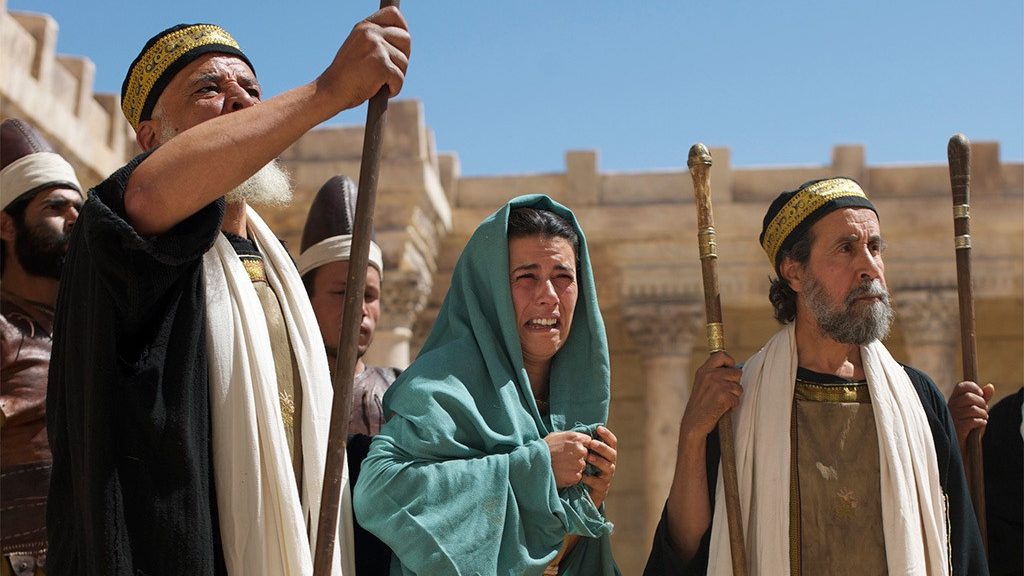
The story of a woman caught in adultery recorded in John’s gospel is a very familiar one with Christians and non-Christians alike. It reveals the hypocrisy of certain religious leaders and those who assumed the role of being one up on everyone else on morality. The main point made by many is Jesus’s words, “let the one who has never sinned throw the first stone!” Admittedly there is not one of us who is able to throw that first stone, “For everyone has sinned; we all fall short of God’s glorious standard.” (Rom.3:23 nlt) That lesson should be applied to every Christian in our daily walk in the world in which we live. But there is also another point that lies underneath the surface of the immediate that reveals the foundation for that exchange with Jesus.
The law in which the accusers wanted evoked would have been the Old Testament law of adultery. But certain facts of the case were not presented in their entirety as only one of the participants was presented. This didn’t seem to bother those who brought the woman for their own interpretation of God’s law. The fact is they weren’t as pious towards the carrying out the law as they were about trying to set up a trap for Jesus. They cared nothing about the law, but only the response from the one who came as a fulfillment of the law.
The religious leaders brought to Jesus a woman, minus the man, caught in the act of adultery. Their intent was to corner Jesus into deciding on whether or not to stone her according to the Law. Jesus essentially ignored them knowing of their deception. If He agreed to stone her, Jesus would be looked upon as having no forgiveness or compassion. If He did not comply with the Law it would appear Jesus was not who He said He was, the Son of God. They did not give up but kept on asking Him. They wanted Jesus to answer them either way to discredit Him. Jesus was interfering with their authority and their way of life.
There are those today who view Jesus as interfering with their authority and their lives. They demand an answer to the laws they perceive as right and just in their own eyes. They view the commands of God found in scripture as irrelevant today. They have gathered stones in their hands and are willing to throw the first stone, believing they have no sin. But tragically their aim is at God and His Word for interfering with their way of life. Be careful not to pick up stones.
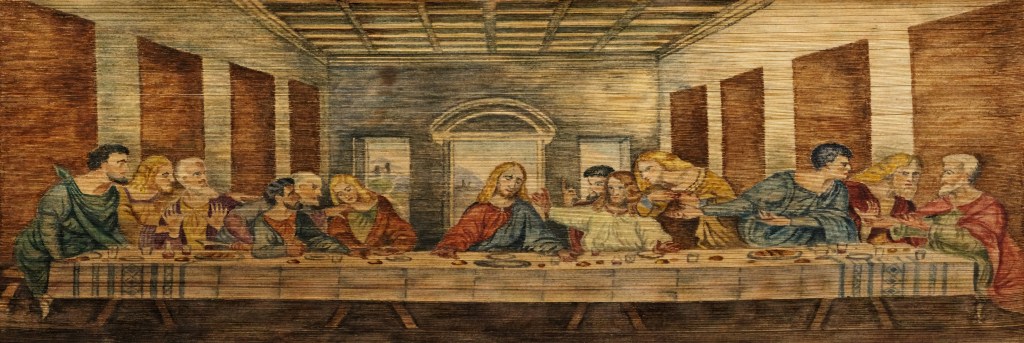
Today we begin to look at an endearing passage of Scripture with a most recognized piece of artwork to describe it, the Last Supper. There are few people in our world today who can say they haven’t seen an artist’s work of the Last Supper. Some may not know what is represents, but they have seen it. During the last few weeks we have covered the events of Passion Week beginning with Jesus’ ride into Jerusalem. It is now Thursday and sunset is the beginning of Passover. It will be Jesus’ last Passover with His disciples and He is eager to share this last meal with them before His crucifixion.
Mark notes it is the first day of the Feast of Unleavened Bread with coincides with Passover. This sounds confusing and the names of both were used interchangeably due to their close association. The Feast of Unleavened Bread represented the removal of sin in one’s life and was celebrated for seven days beginning at the end of Passover which was one day. Passover celebrates God redeeming the children of Israel from death when they applied lambs blood on the door posts in Egypt on that first Passover before He miraculously led them out of slavery. “Jesus’ disciples asked him, ‘Where do you want us to go to prepare the Passover meal for you?’” (Mk.14:12 nlt)
Jesus displays His divine knowledge once again as He did when sending two of His disciples to gather a donkey for His ride into Jerusalem. Jesus sends two disciples into the city with instructions on where to prepare the Passover meal. We know from the gospel of Luke these men are Peter and John. Jesus told them to look for a man carrying a pitcher of water and follow him to his home. That is the place. Peter and John went into Jerusalem and spotted the man with the pitcher of water. He would have been easy to identify because carrying water in pitchers was a task reserved for women. Men usually carried water in animal skin containers. They followed him to his home and said to him, “The Teacher asks: ‘Where is the guest room where I can eat the Passover meal with my disciples?’” (Mk.14:14 nlt) It was customary in those days to offer a room to pilgrims who had come to Jerusalem for Passover. Jesus may have made prior arrangements with the man for the room. The man showed them a large upper room as Jesus told them, perhaps a roof chamber built on top of the roof. So, Peter and John prepared the Passover meal where Jesus instructed them to.
The preparation of the meal began with getting a lamb for sacrifice. Only two people were allowed to accompany the lamb for sacrifice which would be killed between 3-5 PM. The blood would be sprinkled on the altar and the lamb taken home to be prepared by roasting it whole for the evening meal. Other chores were providing other necessary foods for the meal; unleavened bread, bitter herbs, sauce made from crushed apples, dates, pomegranates, and nuts. And of course, wine. The meal would begin at sunset and was to be concluded by midnight.
Jesus and His disciples gather in the evening in the furnished upper room prepared for Passover. During the meal Jesus says, “I tell you the truth, one of you eating with me here will betray me.” (Mk.14:18 nlt) Apparently a shock to eleven of the disciples as they each responds in disbelief, ‘Am I the one?’ Even Judas, number twelve, who knew he was the one. No doubt Judas wanted to avoid suspicion. The eleven were expressing the thought that this is an impossibility. This could not happen.
Again to their shock Jesus says, “It is one of you twelve who is eating from this bowl with me.” (Mk.14:20 nlt) During the meal bread or meat was dipped in the sauce that was prepared for the occasion. There were probably several bowls of sauce on the table as there were thirteen people gathered around. This would indicate that Judas would have been seated close to Jesus to be able to dip in the same bowl. This betrayal was deep and personal as it broke the table fellowship of a close friend. Bible commentator David Guzik notes, “In Middle Eastern culture, betraying a friend after eating a meal with him was and is regarded as the worst kind of treachery.”
FreeBibleimages.org
Jesus then remarks, “For the Son of Man must die, as the Scriptures declared long ago. But how terrible it will be for the one who betrays him. It would be far better for that man if he had never been born!” (Mk.14:21 nlt) Jesus notes two truths in this verse. First, the Scriptures declared the Son of Man must die. Isaiah, the prophet writes in Isaiah 53 known as the ‘Suffering Servant’ chapter, “But it was the LORD’s good plan to crush him and cause him grief. Yet when his life is made an offering for sin, he will have many descendants. He will enjoy a long life, and the LORD’s good plan will prosper in his hands.” (Is.53:10 nlt) Christ’s death on the cross provided a way of salvation for us by shedding His blood, for He is our Passover lamb. (1Cor.5:7) Second, Judas will not escape the torment of eternal punishment in hell by rejecting Jesus and His way of salvation. It would have been better if he had never been born. This horrible tragedy is still true today for those who reject Jesus. It would have been better if they had never been born. How about you? Acceptance or rejection? The choice is yours. Judas made the wrong choice. Next week part 2 of the Last Supper………
“Meanwhile, Jesus was in Bethany at the home of Simon, a man who had previously had leprosy. While he was eating, a woman came in with a beautiful alabaster jar of expensive perfume made from essence of nard. She broke open the jar and poured the perfume over his head.” Mark 14:3 NLT
We are heading into the final days of Passion Week in our study in the book of Mark. Jesus finished answering His disciples questions about the end times and it is now near the end of the day. Jesus had been staying at the home of Mary, Martha, and Lazarus and most likely retired there for the night. This is either Tuesday or Wednesday evening depending on how one counts the days to Passover. Chapter 14 starts out, “It was now two days before Passover and the Festival of Unleavened Bread.” (Mk.14:1 nlt) A Jewish day was sunset to sunset. Verse 1 goes on to inform us the leading priests and teachers of the Law were still plotting to arrest Jesus and put Him to death but did not want to do it during the Passover and the Festival of Unleavened Bread for fear of the people. The population of Jerusalem grows during those days to over 500,000 people. The religious rulers were afraid of an uprising among the people if Jesus was arrested. So, they backed off at the moment.
Although placed in the middle of Passion Week in Mark’s gospel, the following event took place on the night before Jesus rode into Jerusalem on the first Palm Sunday. Mark may have placed it here, as Matthew did, to show the significance of Jesus’ anointing to His upcoming death. The story begins, “Meanwhile, Jesus was in Bethany at the home of Simon, a man who had previously had leprosy. While he was eating, a woman came in with a beautiful alabaster jar of expensive perfume made from essence of nard. She broke open the jar and poured the perfume over his head.” (Mk.14:3 nlt)
FreeBibleimages.org
The home is the residence of Simon who at one time was a leper. Jesus had healed him and now Simon was part of the wider circle of Jesus’ followers. Simon’s home could have been a regular stop for Jesus when in Bethany along with Lazarus and his sisters’ home. While they were eating a woman, we know it to be Mary from John’s gospel, came in with an alabaster jar of expensive perfume. She proceeded to break open the bottle and pour it over Jesus’ head anointing Him with the aromatic oil of pure nard. It was customary in those days to anoint a guest with a dab of oil, of course this was more than a dab. As the aroma spread throughout the room, the realization began to sink in of Mary’s action. This perfume was kept in an alabaster jar made of a special variety of marble to keep it preserved. It was imported from India and would have been valued at a years wages at the time. Needless to say there were plenty of people upset for what they perceived as a waste of money. “Some of those at the table were indignant. ‘Why waste such expensive perfume?’ they asked. ‘It could have been sold for a year’s wages and the money given to the poor!’ So they scolded her harshly.” (Mk.14:4-5 nlt) The gospel of Matthew names the disciples as the ones complaining and John states it was Judas who was leading the charge in the murmuring. They were looking at it from the world’s perspective, as most of us do, but Jesus gives a full explanation to the purpose of Mary’s anointing Him.
The first thing Jesus says is to stop criticizing her. Mary had done a good thing. Then He says, “You will always have the poor among you, and you can help them whenever you want to. But you will not always have me.” (Mk.14:7 nlt) Jesus was not displaying a lack of concern for the poor but was making a point. (It is true we always have the poor among us. That has not changed. But are we following Jesus’ advice that we can help them whenever we want? And more importantly when do we want to?) Jesus made it a point to stress He will not always be around, in fact Jesus had least than one week before His crucifixion. Mary had done what she could. She anointed Jesus’ body for burial. Did Mary realize the symbolism of what she was doing? We really don’t know. But she was one who sat at His feet listening intently to Jesus’ every word. If we do that today, we may be surprised how much insight the Lord will reveal to us. Jesus knew He was headed for a criminal’s death and criminals did not have their bodies anointed after death before burial. Mary anointed Jesus for His burial. This anointing also displayed her love and devotion to her Lord and Savior, the one who was worthy to have the entire bottle of expensive fragrant oil poured over Him. It was not wasted. He is worthy!
Judas was more than upset, he had enough, “Then Judas Iscariot, one of the twelve disciples, went to the leading priests to arrange to betray Jesus to them.” (Mk.14:10 nlt) Judas being a thief did not care about the poor, but it sounded good in scolding Mary. He lost an opportunity to put that money in his own pockets. Judas was also looking to Jesus as a political revolutionary to overthrow Rome, and that wasn’t going to happen. He then when to Jesus’ enemies to make a deal to betray Him. The religious leaders who decided to wait until after the Passover changed their minds and took advantage of the opportunity they had and paid Judas thirty pieces of silver. Judas began to secure a time when Jesus would be away from the crowds to set up His arrest.
FreeBibleimages.org
Mary displayed complete devotion to Jesus, her Lord. No price was too high for Mary to show Him her love. No price was too low for Judas to betray Jesus the Son of God. Thirty pieces of silver seemed the right price for treachery.
Next week we begin our look at the Last Supper………..












 Word for the Soul