Bible Studies

SOLA FIDE (Faith Alone)

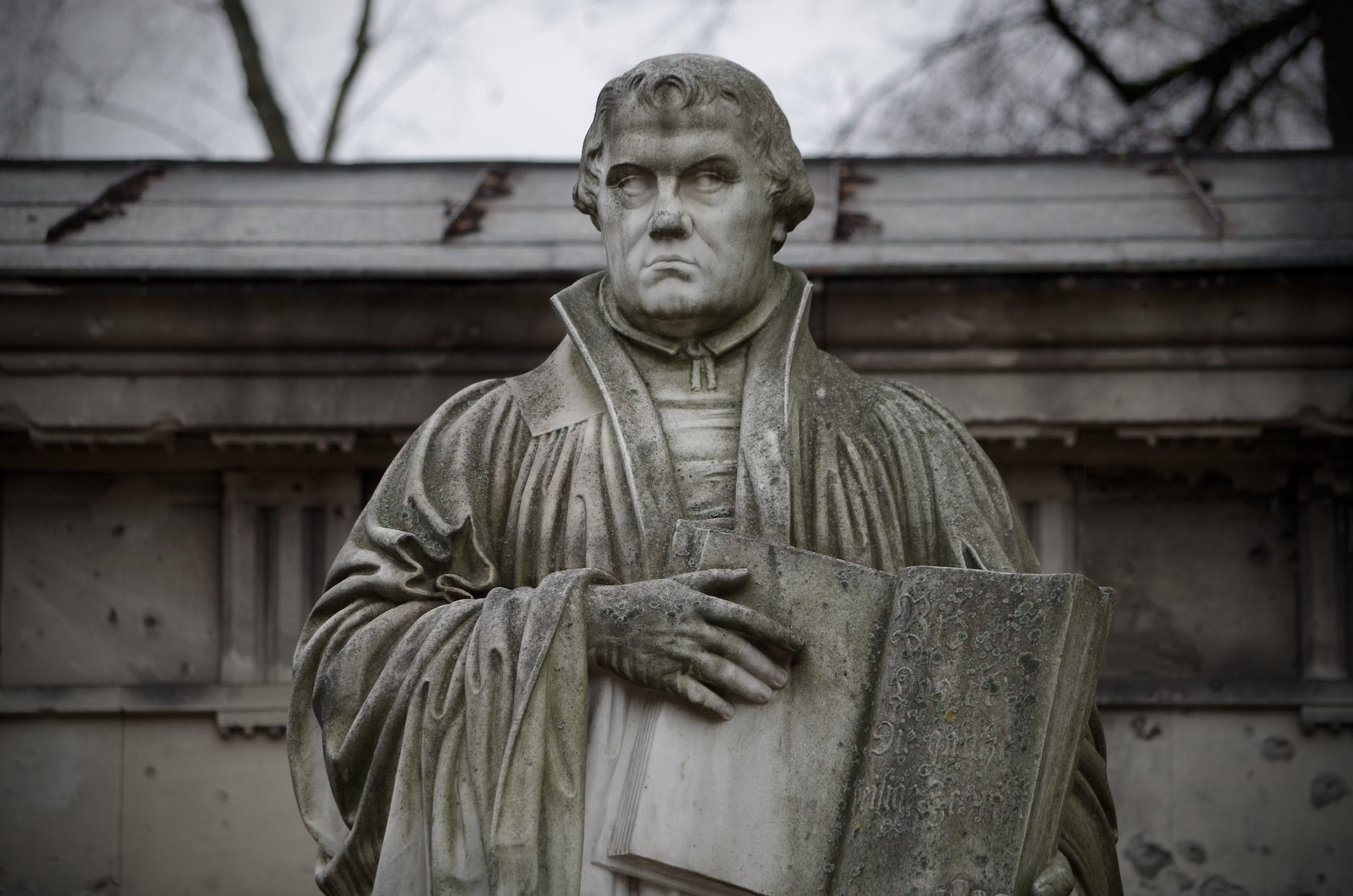
“No doctrine is more important to evangelical theology than the doctrine of justification by faith alone—the Reformation principle of sola fide. Martin Luther rightly said that the church stands or falls on this one doctrine.” John MacArthur

 “The doctrine of justification by faith is like Atlas: it bears a world on its shoulders, the entire evangelical knowledge of saving grace.” J. I. Packer

Photo by Olivia Snow on Unsplash

We have come to the fourth sola of the ‘Five Solas’ of the Reformation period, ‘sola fide’ or (faith alone.) Simply put, it is by faith alone with nothing added, in Christ Jesus alone, that we enter into a saving relationship with Him securing our salvation. The apostle Paul writes, “For by grace you have been saved through faith. And this is not your own doing; it is the gift of God.” (Eph. 2:8 ESV) A part of the gift God gives to us is the gift of faith to believe. We would not believe on our own, nor would we have the faith to do so. God grants it to us. Paul goes on further to say, “not a result of works, so that no one may boast.” (Eph. 2:9 ESV) There is nothing we can do to work our way into heaven. It is all by God’s grace alone to us through faith alone and nothing else.

            It is amazing that God sees us as righteous through His Son as we put our faith in Him. Our righteousness and justification comes only through Jesus Christ and what He accomplished in our place on Calvary’s cross. The Devotional series “Heart of the Reformation” notes, “Faith alone preserves the truth that the Lord is our only Savior. Faith looks outside of ourselves and only to Jesus as the Redeemer.” Again, there is nothing we can do to gain righteousness and be justified before God except through Jesus Christ. We are sinful creatures with a sin nature and find it impossible to keep any of God’s commandments. We could never accumulate enough good deeds to be seen as righteous in God’s eyes and earn our way to heaven. Dr. R. C. Sproul notes, “The question is not whether we are going to be saved through works; the question is whose works. We saved through the works of the one who alone fulfilled the terms of the covenant works.” We are to believe in faith the works of Christ on our behalf, and believe in faith alone!

            In Jesus’s parable of the Pharisee and the tax collector (Lk.18:9-14), Jesus points out to those who thought themselves to be righteous that they were not. The so-called righteous Pharisee in his prayer exalted himself by saying, ‘God, I thank you that I am not like other men, extortioners, unjust, adulterers, or even like this tax collector.’ The tax collector’s prayer was a humbling response, ‘God, be merciful to me, a sinner!’ Jesus explained, ‘I tell you, this man went down to his house justified, rather than the other.’ It couldn’t be clearer, Jesus is stating justification is by faith alone and not by works. “Martin Luther rightly said that the church stands or falls on this one doctrine.”

Devotionals

Failing to Think Outside the Box

“Philip replied, ‘Even if we worked for months, we wouldn’t have enough money to feed them!’ Then Andrew, Simon Peter’s brother, spoke up. ‘There’s a young boy here with five barley loaves and two fish. But what good is that with this huge crowd?’” John 6:7-9 NLT

Photo by Andy Sutioso on Pexels.com

            Jesus handpicked twelve men to be His followers during His three years of ministry before going to the cross. These twelve disciples got on-the-job training from the Master. Like us nowadays, some are fast learners, some need a little more explanation and direction, and some outright persuade the teacher to have great patience. The disciples probably had a mix of all these in their education process with Jesus. One thing that had not matured for the disciples early in Jesus’s teaching was faith ‘to think outside the box.’ We use that term today to: ‘explore ideas that are creative and unusual and that are not limited or controlled by rules or tradition.’ (Merriam-Webster) The disciples failed to think outside the box at a crucial time in Jesus’s teaching.

            The setting was on the other side of the Sea of Galilee as Jesus went up on the mountain with His disciples and notice a large crowd of people following Him. Jesus having compassion knowing they needed to eat took the opportunity for further instructing His disciples. Scripture says, “Jesus soon saw a huge crowd of people coming to look for him. Turning to Philip, he asked, ‘Where can we buy bread to feed all these people?’ He was testing Philip, for he already knew what he was going to do.” (Jn. 6:5-6 NLT) Both Philip and Andrew gave logical answers. They didn’t have nearly enough money to buy food for all of them and had only a couple rolls and two fish from a boy’s lunch. Going by the numbers, they were correct. It was time to think outside the box about something creative and unusual, looking to Jesus. They had witnessed Jesus’s miracles of changing water into wine and healing the sick, even a boy from a distance away.  Surely, He could feed the crowd with what was available.

            Jesus was teaching His disciples and us to have faith in Him knowing He can meet all our needs. He wants us to put our entire trust in Him in overwhelming circumstances, not counting on our own limited capabilities or probable solutions. He wants us to get out of our own box and come to Him. What is impossible with us is possible with God. May we not fail to think outside the box in our time of need.

Read John 6:1-14:  John 6:1-14 NLT – Jesus Feeds Five Thousand – After this, – Bible Gateway

Devotionals

The Apple Doesn’t Fall Far from the Tree

“When the men who lived there asked Isaac about his wife, Rebekah, he said, ‘She is my sister.’ He was afraid to say, ‘She is my wife.’ He thought, ‘They will kill me to get her, because she is so beautiful.’” Genesis 26:7 NLT

Photo by Zen Chung on Pexels.com

You may be familiar with the proverbial saying ‘the apple doesn’t fall far from the tree.’ Coming into English in the 1830’s from an existing German proverb the meaning refers to an individual’s traits resembling their parents. It is used to explain one’s actions in both a positive and negative way. One who is successful in life having successful parents is an apple from the tree of successful parents. A bad apple usually falls from a bad tree picking up undesirable traits. Now to be fair, that does not always hold true either positively or negatively, but when it is recognized, the saying seems appropriate.

 We have an example in the Old Testament of an apple not falling far from the tree in Genesis chapter 26. Issac is instructed by God to go down to Egypt due to the famine and reside there. Upon arriving Issac introduced his wife Rebekah as his sister out of fear for his life. This could have brought severe consequences for Rebekah if the king of the region took her for himself. Issac sinned by lying and having no regard for the safety of Rebekah. Abraham, Issac’s father, had done the same thing twice years earlier. (Gen. 12:23; 20:3) Although Abraham was a righteous man and justified by his faith in God, he set a bad example for his son to follow.

 All of us have sinned and have fallen short of God’s standards. (Ro.3:23) Even those of us who have accepted Christ as savior need daily forgiveness. Despite our failures, which will continue, are we still growing and producing good fruit? Are we good apples or bad apples? Jesus said in John 15:5a, “Yes, I am the vine; you are the branches. Those who remain in me, and I in them, will produce much fruit.” (NLT) As others observed us, are they able to say positively in a favorable manner, ‘the apple doesn’t fall far from the tree.’

A Christian Perspective

It’s going to be a long year, so…….

“Put on then, as God’s chosen ones, holy and beloved, compassionate hearts, kindness, humility, meekness, and patience.” Colossians 3:12 ESV

Photo by Clay Banks on Unsplash

            The early signs of 2024 seem to indicate this is going to be a very long year here in the United States. We have a Presidential election, and the news media is already taking sides. Each network has their bias and will state it loud and clear throughout the year. This may turn out to the most negative campaigning for the White House in the history of the United States. Not only do we have the news networks making noise, but social media out does the major networks by a landslide (no pun intended). Reading posts we find disturbing from people we know and respect, even from friends, will put us in an awkward position of how to respond, or even if we should. Probably we shouldn’t respond, but then again, some things just cannot be ignored, like the truth.

            Paul writing in the book of Colossians two thousand years ago gives us good advice even for today, “Put on then, as God’s chosen ones, holy and beloved, compassionate hearts, kindness, humility, meekness, and patience.” (Col. 3:12 ESV) There are hard questions to be asked and answered this year. Many concerns need to be addressed for the safety and moral compass of the United States going forward in the future. The next president is going to have all those issues before them, whoever they may be. No doubt, a deep divide exists as to who is best qualified for the job, and how they will govern for the betterment of the nation as a whole and for the people. So, there will be a lot of loud, partisan discussion from both sides.

            As Christians we are to declare the truth, but more specifically the truth of the gospel. People need to come into a saving relationship with Jesus Christ. The only hope America has is Jesus. 2024 has all the markings of becoming a turbulent year. But the negative, harsh, and hateful rhetoric of this historic year can be tamed down effectively and efficiently as Paul points out by God’s chosen ones. May we who are believers in Christ start now and ‘put on compassionate hearts, kindness, humility, meekness, and patience’ with those we encounter this year. Let the light of Christ be visible for all to see. It’s going to be a long year!

Devotionals

Blue Monday

“You keep him in perfect peace whose mind is stayed on you, because he trusts in you.” Isaiah 26:3 ESV

Photo by Marcus Dall Col on Unsplash

 Did you ever have one of those days where something just doesn’t feel right? There’s a slightly depressed feeling you can’t quite shake off. Your thinking is muddled, finding it hard to concentrate. I had one of those days this week on Monday. My first thought was the after effect of my Dallas Cowboys being humiliated in a playoff game the day before, but upon thinking about it further even partly muddled I knew that wasn’t the reason, at least not all of it. There had to be more to it than losing a football game, the Cowboys have disappointed me before.

The third Monday in January has become known as Blue Monday. It was first recognized in 2005 as a PR stunt by the British travel company Sky Travel. According to ‘National Today’ much controversy exists concerning the cause of the saddest day of the year, but there is agreement as to what could contribute to it such as, snow and cold weather, Christmas bills arriving in the mail, and trying to maintain your New Years resolutions. I had no idea there was Blue Monday until my wife told me she heard it reported on a newscast as I confided in her how I was feeling all day. Again, thinking through this as clearly as possible, we are having some winter weather, but it’s manageable, I thank the Lord we have no after Christmas bills, and I don’t make New Years resolutions, so it wasn’t a case of Blue Monday.

Attempting to find a cause for days of confusion, depression, or lack of concentration is above my pay scale as they say, but one thing I do know is that when we allow our minds to slip away from Christ, we open our minds up to whatever the world has to offer, and it usually isn’t so good. The prophet Isaiah has a quick and easy cure for Blue Monday’s or any other blue days of the week when he writes, “You keep him in perfect peace whose mind is stayed on you, because he trusts in you.” (Is. 26:3 ESV) We all succumb to Blue Monday days at one time or another, but we do not need to stay there if we keep on minds our Christ and keep trusting in Him.

Devotionals

A Better Way

“But I say to you, Do not resist the one who is evil. But if anyone slaps you on the right cheek, turn to him the other also.” Matthew 5:39 ESV

Photo by Christian Catamo on Pexels.com

The Old Testament law provided for equal justice in civil cases by ensuring that the punishment fit the offense. Jesus affirmed this in the Sermon on the Mount by saying, “You have heard that it was said, ‘An eye for an eye and a tooth for a tooth.’” (Mt. 5:38 ESV) The problem for so many in Jesus’s day was that the premise of the law was also being used for personal disputes. Personal retaliation was justified by misinterpreting the true nature of the law. Those seeking personal revenge would justify “an eye for an eye and tooth for a tooth.” It is still somewhat common today by the phrase, “don’t get mad, get even.” But Jesus has a better way.

I am sure Jesus’s proposals for His better way were met with some resistance on the mountain that day. They certainly are met today with push back preserving our rights. We have the right to defend ourselves (yes we do), we have the right to protect what is ours (yes we do), we have the right to not be forced into any service against our will (agreed), and we have the right to keep what is ours. But by ensuing personal revenge to protect our personal rights we destroy any opportunity we had to show the mercy and the love of God. Christians are to follow Jesus’s example, “The Lord GOD has opened my ear, and I was not rebellious; I turned not backward. I gave my back to those who strike, and my cheeks to those who pull out the beard; I hid not my face from disgrace and spitting.” (Is. 50:5-6 ESV)

It is not always easy to pursue the better way, especially in unprovoked, unjust circumstances. But our Lord set the example and He will help us through it. Dr. Benjamin Mays speaking of the unjust sufferings of Dr. Martin Luther King Jr., said the following, “If any man knew the meaning of suffering, King knew…….and yet this man had no bitterness in his heart, no rancour in his soul, no revenge in his mind; and he went up and down the length and breadth of this world preaching non-violence and the redemptive power of love.” (1)   Yes, there is ‘a better way.’

  • Coretta Scott King, My life with Martin Luther King Jr (Hodder & Stoughton, 1970), pp.365-369.
Bible Studies

SOLA GRATIA (Grace Alone)

“But no man can be thoroughly humbled until he knows that his salvation is utterly beyond his own powers, devices, endeavors, will, and works, and depends entirely on the choice, will, and work of another, namely, of God alone.” Martin Luther

Photo by Florian Chefai on Pexels.com

            The third of the Five Solas to be recognized during the Reformation period was ‘sola gratia’ or (grace alone). In the early sixteenth century there was an emphasis on church teaching of salvation by works of merit and indulgences. Scripture says we are saved by grace alone as Paul writes in the book of Ephesians, “For by grace you have been saved through faith. And this is not your own doing; it is the gift of God.” (Eph. 2:8 ESV) The first reformer of the sixteenth century was Martin Luther and he had said, “Our salvation depends entirely on the choice, will, and work of another, namely, of God alone.” We cannot take any credit leading to our salvation, God has done it all.

            Yes, ‘for by grace we been saved through faith,’ but the reality is God gives us the faith to believe in His Son through the Holy Spirit as He draws us to Himself. Our regeneration proceeds our faith. It is by His grace that He grants us the faith to believe in Jesus for we would never do this on our accord. Paul, the apostle, quoted from the Old Testament in the book of Romans, “as it is written: ‘None is righteous, no, not one; no one understands; no one seeks for God. All have turned aside; together they have become worthless; no one does good, not even one.’” (3:10-12 ESV) God’s saving grace towards sinners is His granting unmerited favor upon us. When God’s saving grace is applied to us it cannot fail to accomplish the purpose for which it was given.

            The saving grace that God bestows on His chosen cannot be understood or appreciated until we have a full knowledge of what we have been saved from. There is not one of us who has a right to eternal life, “for all have sinned and fall short of the glory of God.” (Ro. 3:23 ESV) We are all sinners in Adam, “Therefore, just as sin came into the world through one man, and death through sin, and so death spread to all men because all sinned.” (Ro. 5:12 ESV) And the punishment for sin is death, physical death and spiritual death being eternally being separated from God in the lake of fire. “And if anyone’s name was not found written in the book of life, he was thrown into the lake of fire.” (Rev. 20:15 ESV)

Photo by Abigail on Unsplash

            As we come to accept that there is nothing we could ever do to find favor with God to enter into His presence, we should find ourselves in continued praise and worship for what He has done for us through His grace. God has chosen to love us in Christ, underserving sinners that we are. As Paul writes again in Romans, “For if, because of one man’s trespass, death reigned through that one man, much more will those who receive the abundance of grace and the free gift of righteousness reign in life through the one man Jesus Christ.” (Ro. 5:17 ESV) May we chose to live for Him as He chose us to live with Him.

Devotionals

With Authority

“When Jesus had finished saying these things, the crowds were amazed at his teaching, for he taught with real authority—quite unlike their teachers of religious law.” Matthew 7:28, 29 NLT

Photo by Ron Lach on Pexels.com

Authority is power based on the right to command. Those in positions of authority have the right to command those who are under their authority. Countless are the positions of authority in the world. Anyone in charge of anything is in authority. Most notable are those in governing positions from presidents, prime ministers, members of legislatures and parliaments down to local assemblies. Outside of governing, there are others with authority such as school teachers and administrators, a foreman over a group of workers, coaches and team captains, any managerial position in the vast businesses such as retail management where I have spent most of life, and the list continues. For all who hold positions of authority, do we realized that we do not have any real authority at all? Authority is power based on the right to command in which none of us have that right. The right to command belongs to God alone.

Paul, writing to the Romans, said the following, “Everyone must submit to governing authorities. For all authority comes from God, and those in positions of authority have been placed there by God.” (Ro. 13:1 NLT) Again, those of us who are in authority, do we realize that we have been placed there by God?

When Jesus completed His teaching to the disciples in the Sermon on the Mount, those who witnessed and heard Jesus’ words were astonished. It was described as teaching with real authority. The people in the crowd often heard the teaching of the scribes. The scribes referred to tradition and quoting noteworthy rabbis. They presented nothing as coming from their own authority. A. B. Bruce is explained it simply, “The scribes spoke by authority, while Jesus spoke with authority.”

As Christians we have the authority to claim and preach the word of God as truth. Authority given to us by the one with the authority to do so, God the Father. Jesus spoke with authority as He is God the Son. He summed up His message on the mountain with an example of two builders. If one will obey the words Jesus spoke, he will be like a wise builder who built his house on a firm foundation, but the one who does not obey Jesus’s teaching will be like a foolish builder who builds his house on sand. Needless to say, one will stand and one will not. These words from the one who spoke ‘with authority.’

Bible Studies

SOLUS CHRISTUS (Christ Alone)  

Photo by Nancy B. on Pexels.com

Last week we looked at the first of the Five Solas of the Reformation, ‘Sola Scriptura’ or scripture alone. The Bible being sufficient for all we need in the way of Salvation records the truth of Jesus’s own words in the gospel of John, ‘I am the way, the truth, and the life. No one can come to the Father except through me.’ (Jn.14:6) The second solas is ‘Solus Christus’ which states that salvation is only through Jesus Christ and in Jesus Christ alone. There is no other way to get to the Father except through Jesus and He doesn’t need any of our help to get us there. He is totally sufficient.

            During the Reformation period, the church’s greatest need was to regain its focus on Christ as the head of the church. With that accomplished through Luther and the rest of the Reformers, the next step was to ensure the teaching of Scripture that Christ alone through faith was the only necessary means of salvation. Scripture confirms that Jesus is fully God and fully man making it possible for Him to be the only bridge between God and man. It was important for the Reformers to establish the Divine nature of Christ and His Human nature. The Reformers affirmed “The statement of faith made by the Council of Chalcedon (451). It reaffirms the Christological definitions of Nicaea and Constantinople and formally repudiates the errors of Nestorius and Eutyches. It declares Christ to be one Person in two natures, the Divine of the same substance as the Father, the human of the same substance as us; these are united unconfusedly, unchangeably, indivisibly, and inseparably.” (1)

            Jesus as the only Savior, and the only way to God is the predicted Messiah in the Old Testament who was to come. The Hebrew word for Messiah is ‘mashiach,’ which means ‘anointed one.’ ‘Mashiach’ translated into Greek as ‘christos” translated into English as ‘Christ.’ Therefore Jesus Christ is the ‘Anointed One, Jesus the Messiah, the Savior.’

            Note some verses from Scripture stating ‘Christ alone’ in Salvation. Jesus says to Thomas, “I am the way, the truth, and the life. No one can come to the Father except through me.” (Jn. 14:6 NLT) And Jesus speaking to Nathanael after He called him to be His disciple said to him, “I tell you the truth, you will all see heaven open and the angels of God going up and down on the Son of Man, the one who is the stairway between heaven and earth.” (Jn. 1:51 NLT) Jesus is referring to the book of Genesis and Jacob’s dream of a ladder descending from heaven. Jesus, the Messiah, is the ladder for access between God and man.

Photo by Brett Jordan on Pexels.com

            All of us are lost in our sin estranged from God with no help of reconciliation on our own. The prophet Isaiah wrote, “All of us, like sheep, have strayed away. We have left God’s paths to follow our own. Yet the LORD laid on him the sins of us all.” (Is. 53:6 NLT) The Reformers witnessed the church falsely instructing people to secure their Salvation through indulgences and human works. Salvation is only available when full payment for our sin is paid for by the only one able to do so, Jesus Christ, the Messiah, the sinless Son of God. And by faith in Christ (the ladder) and His death and resurrection, we have forgiveness of our sin and eternal life. ‘Solus Christus’ Christ alone in all sufficient for our Salvation.

(1) https://www.oxfordreference.com/display/10.1093/oi/authority.20110803095600808

Devotionals

Are you a minister of the gospel?

“Therefore, having this ministry by the mercy of God, we do not lose heart……..But we have this treasure in jars of clay, to show that the surpassing power belongs to God and not to us.” 2 Corinthians 4:1, 7 ESV

Photo by Furkan Dokuzlar on Unsplash

            How often do you think of yourself as a minister of the gospel? We think of ministers being fully trained in seminaries, going through the process of ordination, pastoring a church by presenting a sermon in formal religious attire, visiting the sick, and helping the poor in the community. These are accurate descriptions of ministers serving in local churches with some variations in seminary training, ordination, and the manner in which the worship service is conducted either formal by tradition or more a contemporary style. But overall we think of the minster as the one who does the preaching and we do the listening, and that also is accurate. But when the service is over, the ministerial duties are passed on to us.

            The word ‘minister’ in its verb form is defined as ‘to give help,’ ‘to tend to the needs of someone.’ As our needs are attended to by the minister during the sermon we are to go out and tend to the needs of others as we have been encouraged and fed the good news of Jesus Christ. We may feel unqualified, even unworthy, but those who know Christ as their savior have been saved by God’s grace and mercy through faith in Christ. It is God’s undeserved gift to us, yes we are unworthy, but again it is through God’s love, grace and mercy He extends the salvation message to all and uses us to minister to those in need of salvation.

            The apostle Paul writing to the church in Corinth says, “Therefore, having this ministry by the mercy of God, we do not lose heart.” (2 Cor. 4:1 ESV) This ministry is the good news of the gospel of Jesus Christ given to us. Paul further writes, “But we have this treasure in jars of clay, to show that the surpassing power belongs to God and not to us.” (2 Cor. 4:7 ESV) Paul uses the illustration of ‘this treasure in jars of clay’ to encourage us that God has entrusted us with the gospel message for it will show God’s power and not ours in sharing the gospel. Jars of clay are of little value, fragile, easily broken, and replaceable, yet God has stored this valuable treasure in us. So we are not to lose heart for God will grant us the necessary means for us to carry out the work of ministry. So are you a minister of the gospel?