“He says, ‘You will do more than restore the people of Israel to me. I will make you a light to the Gentiles, and you will bring my salvation to the ends of the earth.’” Isaiah 49:6 NLT
Our key verse today, Isaiah 49:6, is sometimes referred to as ‘The Great Commission of the Old Testament.’ The scripture reading, Isaiah 49:1-7, is the ‘Second Servant Song’ of the Messiah found in the book of Isaiah. This passage of scripture is all about the Messiah-Servant who will restore the people of Israel but will also be a light to Gentiles bringing salvation to all. Jesus Christ, our redeemer, came through the line of the Jewish people. He came for His chosen people. Jesus, the Messiah, had come but not for the purpose they might have anticipated, but to be offered as a sacrifice to restore all mankind to God through His death on the cross.
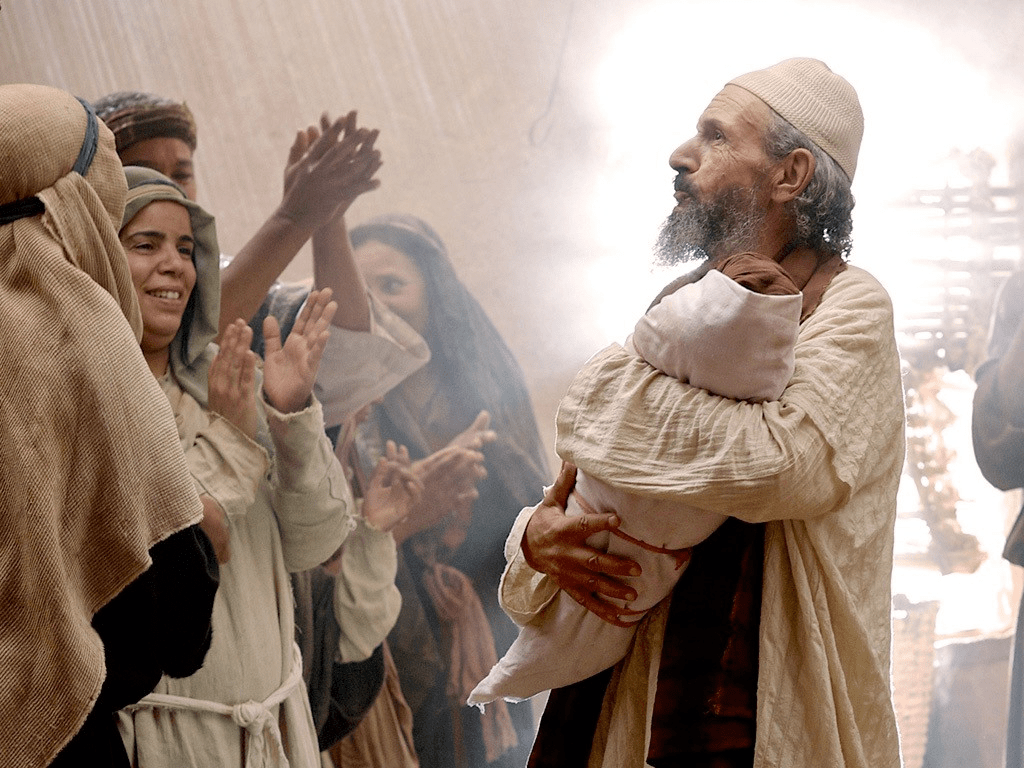
This Great Commission is seen in Simeon, a righteous and devout man, who was also waiting for the Messiah to come and rescue Israel. The Lord revealed to Simeon that he would die until he would see the Messiah. As the Lord led him to go the Temple, Simeon met Mary and Joseph who were there for the purification offering and to present Jesus to the Lord as the Law of Moses required. When Simeon saw the child he took Him in his arms saying, “I have seen your salvation, which you have prepared for all people. He is a light to reveal God to the nations, and he is the glory of your people Israel!” (Lk.2:30-32 nlt)
The true light of the world has come. Prophesied in the Old Testament as a commission to explain the truth in His purpose for coming to earth. Jesus came for much more than to restore Israel, but to bring all people to salvation who believe in His name.
We are coming to the end of chapter 12 of Mark this week in Biblical Insights. It is still Tuesday of Passion week, and Jesus is getting questions from the Jewish rulers as the curious crowds look on. Jesus will have an opportunity to address a certain teacher, the people following Him, and His disciples with His teaching.
One teacher of the law was standing by and heard Jesus answer the Sadducees’ ridiculous question concerning a woman who was married seven times. They wanted to know whose wife she will be in the resurrection, when the Sadducees didn’t even believe in the resurrection. (Mk.12:18-27) This teacher was impressed with Jesus’ answer and decided to ask his own question.
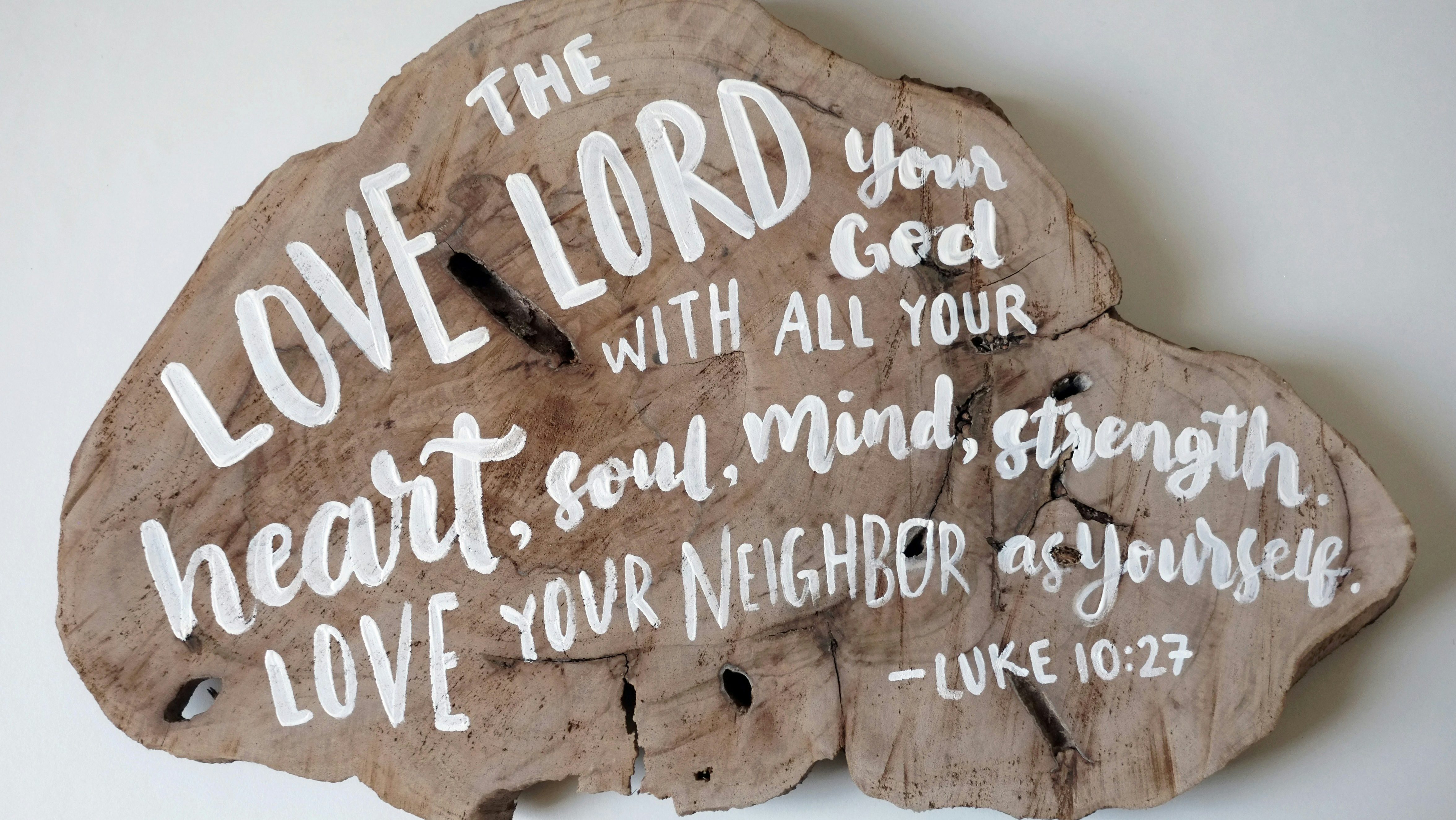
The question he asked was, ‘Of all the commandments, which is the most important.’ (Mk.12:28 nlt) Jewish rabbis had a count of 613 commandments in the book of the law. They distinguished them between heavy and light. The problem was they couldn’t all agree which ones were ‘heavy’ (more binding) and which ones were ‘light.’ The Jewish teacher went right to the top commandment and asked what was the greatest of them all. “Jesus replied, ‘The most important commandment is this: Listen, O Israel! The LORD our God is the one and only LORD. And you must love the LORD your God with all your heart, all your soul, all your mind, and all your strength. The second is equally important: Love your neighbor as yourself. No other commandment is greater than these.” (Mk.12:29-31 nlt) The teacher liked Jesus’ response agreeing with Him adding his own Scriptural evidence. Jesus saw how much the man understood, but he was still lacking what was needed for salvation. The teacher knew moral concerns were more important than ceremonial sacrifices, but he needed to grasp all that was needed was to love God and obey Him. Jesus told him he was not far from the kingdom of God. Interesting that after this exchange with the Jewish teacher, no one dared to asked Jesus anymore questions.
Later in the day Jesus was once again teaching in the Temple. He asked the people who were listening, “Why do the teachers of religious law claim that the Messiah is the son of David? For David himself, speaking under the inspiration of the Holy Spirit, said, ‘The LORD said to my Lord, Sit in the place of honor at my right hand until I humble your enemies beneath your feet.’ Since David himself called the Messiah ‘my Lord,’ how can the Messiah be his son?” (Mk.12:35-37 nlt) Jesus is making the claim here that He is the Messiah, the Son of God. Most Jewish people knew the Messiah would come from the family of David. Jesus is explaining the first word ‘The LORD’ is ‘Yahweh’ God’s covenant name, and the second ‘my Lord’ is a word the Jews used for God. It is a picture of God speaking to the Messiah, and David calls Him Lord indicating the Messiah is more than the Son of David, but the Son of God. David would not refer to one of his descendants as Lord. Jesus was acknowledging the Messiah’s deity, and therefore His own.
Jesus then takes the opportunity to warn his listening audience which includes some of these religious rulers, “Beware of these teachers of religious law!” (Mk.12:38 nlt) Jesus said they would know them by their appearance in the long robes of a dignitary and the wealthy, and worthy of a respectful greeting. They would be noticeable in having the front row seats in the synagogue. Jesus then issues a cautious warning to widows, as the scribes and teachers also served as estate planners taking unfair advantage of unsuspecting women. A warning needs to be given in our day against false teachers and those who would seize on the opportunity to take advantage of those in hurting situations. The very ones who trust these leaders to be faithful are swindling them out of house and home. May we sound the alarm when we observe these vulnerable ones being taken.
FreeBibleimages.org
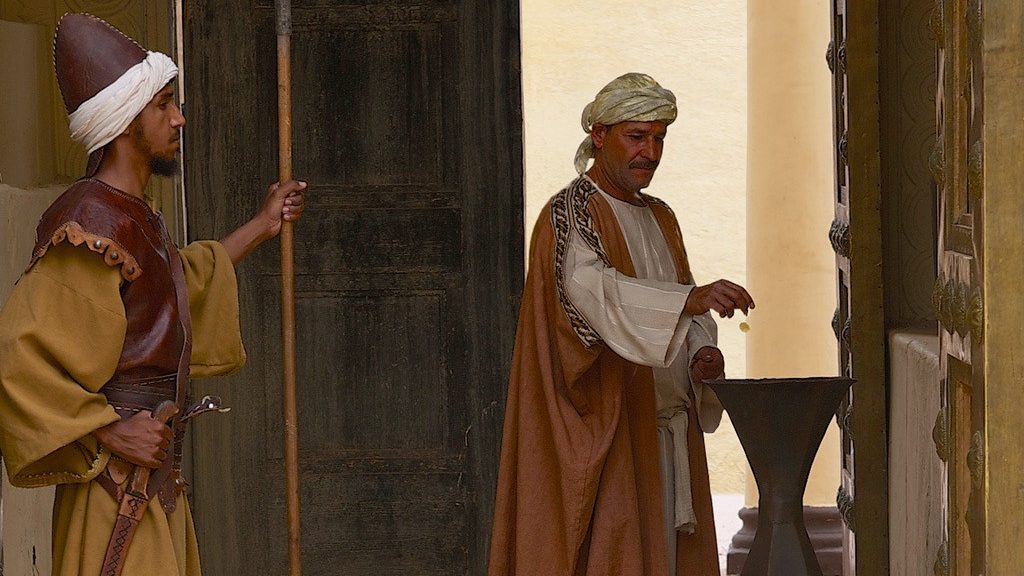
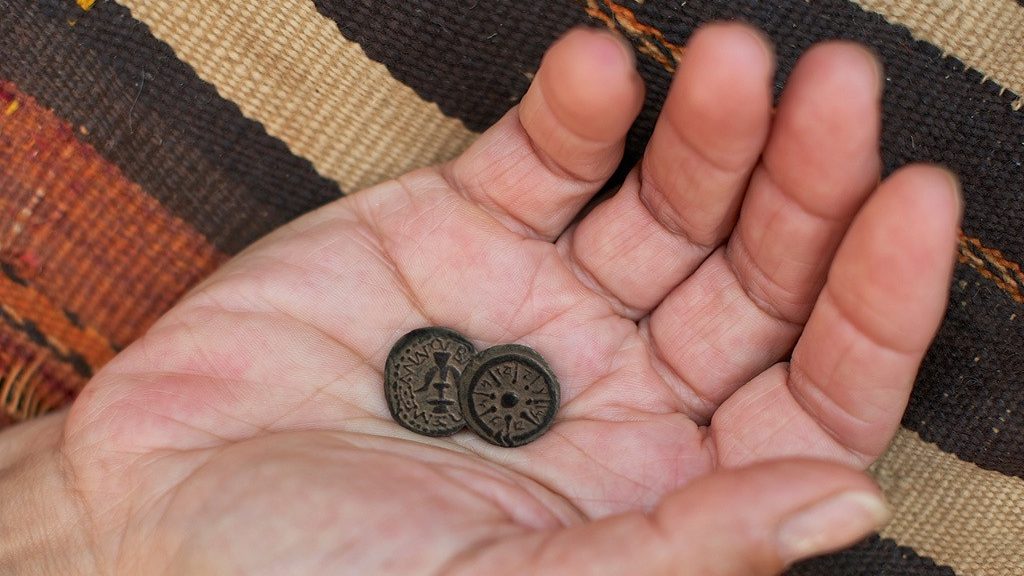
“Jesus sat down near the collection box in the Temple and watched as the crowds dropped in their money. Many rich people put in large amounts. Then a poor widow came and dropped in two small coins.” (Mk.12:41-42 nlt) When Jesus saw this, He called His disciples. The collection box was in the women’s court of the Temple. In fact, there were 13 trumpet shaped receptacles around the courtyard to make donations. This was a public area as people traveled through depositing their money. Jesus pointed out to His disciples the large amount of money the rich put it, which to them was equivalent to spare change. Then Jesus noted what the poor widow put in, two small coins. These were copper coins, the lowest valued coins in circulation in the Holy Land. These two copper coins were all she had to live on, and she put it in the donation box. This lesson Jesus points to is the show of faith this woman had in believing and trusting God to meet her daily needs. We live in a time when trusting God needs to come with a secure job and healthy bank account, then we can donate our spare change. But our God is faithful who will supply our needs when we first seek Him and His kingdom. “Seek the Kingdom of God above all else, and live righteously, and he will give you everything you need.” (Mt.6:33 nlt)
FreeBibleimages.org
Next week we begin chapter 13 where Jesus answers the disciples’ questions concerning future events. “Tell us, when will all this happen? What sign will show us that these things are about to be fulfilled?” (Mk.13:4 nlt) Until next week…….
“The religious leaders wanted to arrest Jesus because they realized he was telling the story against them—they were the wicked farmers. But they were afraid of the crowd, so they left him and went away.” Mark 12:12 NLT
We’re back this week in the book of Mark on Biblical Insights. We left off two weeks ago as Jesus was being questioned as to His authority after He cleared the Temple of the merchants and money changers. The religious rulers were incensed by Jesus’ actions, and more so by the people following Him. They saw their authority and way of life slipping away right before their eyes and were determined to do something about it. Today, Jesus gives the rulers another reason for their hatred towards Him by speaking a parable against them.
FreeBibleimages.org
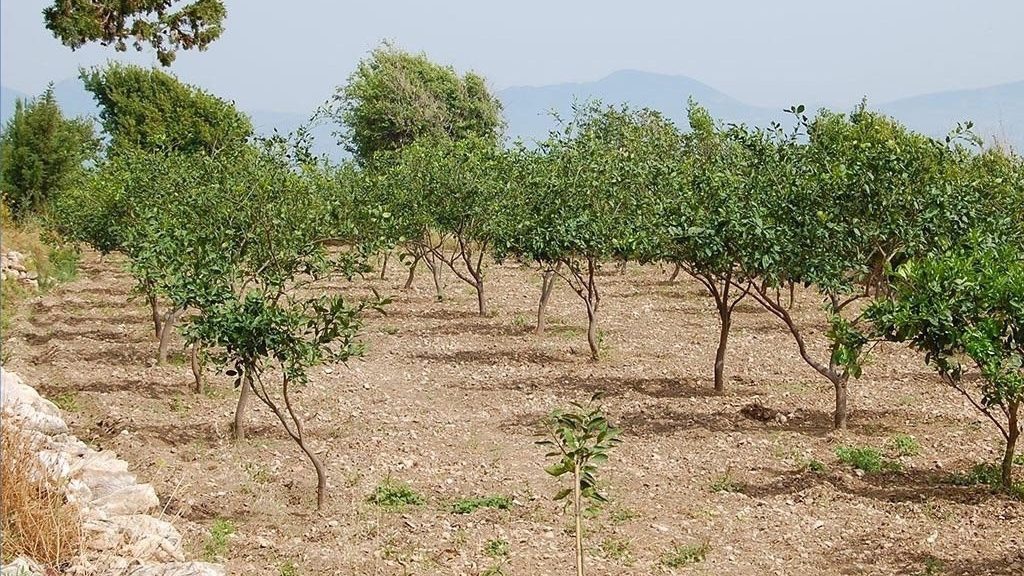
In New Testament times large estates were put into the hands of locals to farm and care for while the owner was away. They worked as tenant farmers farming the land paying the owner a percentage of the profits as rent keeping the rest as payment for their work. Palestine’s hillsides were covered by grape vineyards as this was the main source of income in the region especially in Galilee. Jesus, once again, took a familiar way of life as an example to make a point. Jesus’ main audience this time are the leading priests, the teachers of religious law, and the elders who questioned Him about His authority. Jesus is about to reveal their hidden agenda by putting this parable squarely on them.
Jesus sets up the story in verse one of chapter twelve, “A man planted a vineyard. He built a wall around it, dug a pit for pressing out the grape juice, and built a lookout tower. Then he leased the vineyard to tenant farmers and moved to another country.” (Mk.12:1 nlt) Jesus describes the very details of a working vineyard from planting the seed, a wall to mark its boundaries, a place to press out the grapes, and a lookout tower for security and storing seed and tools. Everyone listening to it would be reminded of the local vineyards they see frequently on their journeys through Palestine. They would also be familiar with the tenant farmer scenario in Jesus’ story. Jesus will now begin to make His point of the story.
This parable, or story, Jesus is teaching is based on the ‘Song of the Vineyard’ in Isaiah 5:1-5. It describes Israel’s unfaithfulness. Jesus is addressing this to the Jewish rulers and applying it to them. The fact that Israel is represented as the vineyard in Isaiah makes it hard not to connect the dots and see Jesus is talking about the Jewish people and their leaders. They all knew who the story was about, it was about them. In this story, the man is God, the vineyard is Israel, the servants are the Old Testament prophets and John the Baptist, the Son is Jesus, and the tenant farmers are the religious rulers.
FreeBibleimages.org
Jesus continues with this parable. “At the time of the grape harvest, he (the owner) sent one of his servants to collect his share of the crop. But the farmers grabbed the servant, beat him up, and sent him back empty-handed.” (Mk.12:2-3 nlt) This went on and on with the owner sending servant after servant who were either beaten or killed. This is a picture of the prophets God sent to Israel in the Old Testament which they either ignored, beat up, or killed. The owner finally sends his son who he expects would be respected by the tenant farmers. But the tenants had other ideas. Jewish law stated that a piece of unclaimed property by an heir could be claimed by anyone. They assumed the son was coming to claim his property, so, if they killed him they could claim it for themselves. “But the tenant farmers said to one another, ‘Here comes the heir to this estate. Let’s kill him and get the estate for ourselves!’ So they grabbed him and murdered him and threw his body out of the vineyard.” (Mk.12:7-8 nlt)
The tenant farmers not only wanted the entire harvest for themselves but the vineyard estate. The Jewish leaders, as the tenant farmers, wanted to see Jesus dead for He claimed to be the Son of God. Jesus was keeping them from power and total rule over the religious affairs of the people. Jesus then asks those around Him what they thought the owner of the vineyard would do. Before they could answer, Jesus told them. “I’ll tell you—he will come and kill those farmers and lease the vineyard to others.” (Mk.12:9 nlt) Then Jesus asked another question which should have been answered ‘yes.’ “Didn’t you ever read this in the Scriptures? ‘The stone that the builders rejected has now become the cornerstone.’” (Mk.12:10 nlt) Teachers of the Law and the Old Testament certainly knew of the passage Jesus was referring to, but they refrained from answering. The rejected ‘stone’ is the rejected ‘Son’ in Jesus’ parable. Although Jesus was rejected by the Jewish leaders, He is the cornerstone and rightful heir to the throne of David. He is the Messiah who was to come to save His people from their sins, to the Jew first then the Gentile. The hostility towards Jesus by the Jewish rulers clearly show their rejection of Him.
“The religious leaders wanted to arrest Jesus because they realized he was telling the story against them—they were the wicked farmers. But they were afraid of the crowd, so they left him and went away.” (Mk.12:12 nlt)
FreeBibleimages.org
Once again, the leaders walked away for fear of the crowd, but eventually they will get the crowd on their side in just a few days. This event occurred on Tuesday of Passion Week. Jesus will continue His teaching to His disciples the next two days in between the religious rulers continually attempting to trap Him. Jesus has a lot to say and little time to say it. Until next week……..
“As Jesus was walking through the Temple area, the leading priests, the teachers of religious law, and the elders came up to him. They demanded, ‘By what authority are you doing all these things? Who gave you the right to do them?’” Mark 11:27-28 NLT
Jesus’ final week (Passion Week) started with a huge celebration of His arrival. The people in Jerusalem welcomed the one they assumed was going to overthrow the Roman government and free them of heavy oppression. Much to the displeasure of the religious rulers, who saw Jesus as a threat to their power, the people marveled at His teaching and were eager to hear more. The welcoming attitude would start to fade by the end of week with the people, but not so with rulers, they were against Him from the minute He rode into town. After Jesus cleared the Temple, as we read last week, the rulers were livid and would question His authority to do so.
FreeBibleimages.org
Last week in our study we saw Jesus curse a fig tree on their way into Jerusalem on Monday morning. Being full of leaves the tree appeared to have figs, but it gave a false impression, it did not have any. “The next morning as they passed by the fig tree he had cursed, the disciples noticed it had withered from the roots up.” (Mk.11:20 nlt) Peter recalling Jesus cursing the tree pointed out the tree had died. It had withered from the roots up which meant total destruction. The tree would never be able to produce fruit again. Jesus replied, ‘have faith in God.’ He would use this illustration of the dying fig tree to teach about having faith in God.
Jesus said, “I tell you the truth, you can say to this mountain, ‘May you be lifted up and thrown into the sea,’ and it will happen. But you must really believe it will happen and have no doubt in your heart. I tell you, you can pray for anything, and if you believe that you’ve received it, it will be yours.” (Mk.11:23-24 nlt) It sounds like Jesus is saying as long as we believe it, we can have anything we ask for in prayer. But is this what He is saying? Before we get too excited, I think not. That is not what He is teaching. Jesus liked to use visual illustrations, and since He was at the Mount of Olives with the Dead Sea at a distance in view this example fits. But what was Jesus saying? Jewish literature of that day used the phrase, ‘rooter up of mountains,’ which referred to great Rabbis and spiritual leaders who could solve difficult problems. It was a common metaphor. Jesus Himself never rooted up any physical mountains despite the continual request of the Jewish rulers for Him to perform some supernatural miracle. Jesus’ point is as we believe and have faith in God and in His power we will see His mighty powers at work in us. There is nothing God can’t do and won’t do for us if it is in His will and purpose for us.
Verse 25 of today’s text is often misunderstood. “But when you are praying, first forgive anyone you are holding a grudge against, so that your Father in heaven will forgive your sins, too.” (Mk.11:25 nlt) The first thing to observe is Jesus is talking to His disciples and not those who do not believe in Him. If we fail to forgive, holding resentment in our hearts towards someone, our relationship with the Lord is also fractured. Christians are to have a forgiving attitude towards others, even those who have sinned against us. This forgiveness restores fellowship with our brothers and sisters in Christ and with our Lord. It’s impossible to pray effectively if we are holding something against someone. James 5:16 says, “Therefore confess your sins to each other and pray for each other so that you may be healed. The prayer of a righteous person is powerful and effective.” (niv)
FreeBibleimages.org
Jesus and His disciples arrive in Jerusalem on this Tuesday morning and make their way to the Temple. As soon as Jesus enters the Temple He is surrounded and questioned by the religious rulers. They were all there, the chief priests, scribes, and the elders. Most likely Caiaphas, Annas, and the captain of the Temple were there as well. They questioned Jesus as to His authority in throwing the businesspeople and the money changers out of the Temple the day before among other things He was doing. It was said in Jewish tradition the Temple could only be cleared out and cleansed by certain people, the Sanhedrin, a prophet, or the Messiah. But their main argument was that Jesus disrupted their business in the Temple.
Jesus asked them a question, “Did John’s authority to baptize come from heaven, or was it merely human? Answer me!” (Mk.11:30 nlt) Jesus threw them what we would call today a curve ball. They were in a tough spot. Heaven was a common Jewish term for God. If they said heaven (God), they would admitting what John the Baptist had said about Jesus was true. This would prove Jesus’ authority and that He was the Messiah. If they said John’s authority was only his own, the people would be in an uproar for many believed John to be a prophet. They took the easy way out and didn’t answer. “So they finally replied, ‘We don’t know.’ And Jesus responded, ‘Then I won’t tell you by what authority I do these things.’” (Mk.11:33 nlt)
The religious rulers will not give up as we will see. Jesus was totally messing up their system of operation and they wanted Him disposed of. They will eventually succeed by the end of the week enticing the crowd to join them. But the most astonishing thing about this is it was God’s plan from the beginning for a perfect sacrifice to be made on our behalf. “For God so loved the world, that he gave his only begotten Son, that whosoever believeth in him should not perish, but have everlasting life.” (Jn.3:16 kjv) Until next week………..
You may be thinking this is a ‘Christmas in July’ devotion, well almost, but not quite. My church is having Vacation Bible School this week with the theme ‘Wonder Junction’ a curriculum from ‘Answers in Genesis’. (1) It’s a week of wondering about Jesus and what better way to start than with His birth. Since we really don’t know exactly when Jesus was born, it could have been in July, so we may not be that far off. The main thing is Jesus did come down from heaven to be born of a virgin. Jesus, Immanuel is God with us.
The birth of Christ doesn’t cover a lot of pages in the Bible. In fact, there are only four chapters in Scripture that tell us the story. They are the first two chapters in each of the New Testaments books of Matthew and Luke. We have many references to Jesus the Messiah coming into the world scattered throughout the Old Testament. Our text verse notes that a virgin will give birth to Him who is called Immanuel, ‘God with us’. Of all the verses the predict Jesus’ birth, the most significant ones are those declaring His deity as God the Son. The prophet Isaiah also wrote this of the coming Messiah, “For a child is born to us, a son is given to us. The government will rest on his shoulders. And he will be called: Wonderful Counselor, Mighty God, Everlasting Father, Prince of Peace.” (Is.9:6 nlt)
It is vital for our salvation that Jesus is indeed God the Son. A perfect sacrifice was needed to pay the debt owed to God the Father for our sins. We could never pay it, but Jesus could, because He was the sinless Son of God, perfect in every way and willing to sacrifice His life for our salvation. Yes, let us remember Christmas is all about ‘God with us’ whether we celebrate it in July or on December 25th.
“Jesus and his disciples left Galilee and went up to the villages near Caesarea Philippi. As they were walking along, he asked them, ‘Who do people say I am?’ ‘Well,’ they replied, ‘some say John the Baptist, some say Elijah, and others say you are one of the other prophets.’ Then he asked them, ‘But who do you say I am?’” Mark 8:27-29 NLT
FreeBibleimages.org
We ended last week’s Biblical Insights with Jesus on another trip across the Sea of Galilee, and once again teaching the disciples what they didn’t get the first time. From this point on, Jesus’ teaching will be direct and plainly spoken not speaking in parables or using comparison examples. The disciples will be given a clearer understanding of Jesus’ teaching but will still have some trouble as we will see.
Jesus and His disciples arrived at Bethsaida, a fishing town and home to Peter, Andrew, and Philip. Soon after arriving some people brought a blind man to Jesus begging to heal him. Once again Jesus led him out of town not to draw attention to the miracle He was about to perform. The Bible says Jesus spit on the man’s eyes and laid His hands on him asking, ‘Can you see anything now?’ The man responded he could, but not clearly for the people he saw looked like trees. “Then Jesus placed his hands on the man’s eyes again, and his eyes were opened. His sight was completely restored, and he could see everything clearly.” (Mk.8:25 nlt) This was gradual healing. Sceptics may say Jesus failed the first time, or didn’t quite have it that day. But it was his method in this case. Jesus healed a blind man once again. Jesus then told the man to return to his home and not go back into the town.
Jesus then left Galilee with His disciples for Caesarea Philippi, twenty-five miles to the north, a town at the foot of Mount Hermon. Along the way Jesus asked, ‘Who do people say I am?’ The disciples said some say Jesus was John the Baptist, or Elijah, and others said He was one of the prophets of old who had come back. Jesus then asked them who do they say He is. At this point, Jesus was more concerned what His disciples believed than the public. Peter answered for the group by saying, ‘You are the Messiah’ (or Christ). This is the first time ‘Christ’ is used in the book of Mark, and it marks a turning point in Jesus’ ministry. Jesus hardly used the name ‘Christ’ in reference to Himself due to the association with the political and national interests at the time. But He will now teach His disciples the mission of the Messiah, the anointed one, the Christ. Jesus will begin to tell of His forthcoming suffering, His death, and His resurrection as they travel down to Jerusalem.
FreeBibleimages.org
Jesus did warn His disciples not to tell anyone He was the Messiah as He told those that He healed not say anything to not attract a crowd. But in this case, it was more than that, Jesus did not want the political nature of the promised Messiah to take away from His true mission. The Christ will establish an earthly kingdom and rule from Jerusalem, but that time is not now. Jesus’ mission can only be understood through the cross, something His disciples did not yet fully understand, as we will see. Jesus now begins to explain the true meaning of the ‘Christ’ and His mission.
“Then Jesus began to tell them that the Son of Man must suffer many terrible things and be rejected by the elders, the leading priests, and the teachers of religious law. He would be killed, but three days later he would rise from the dead.” (Mk.8:31 nlt) This is another first. Jesus is predicting His suffering, death, and resurrection for the first time and he is speaking clearly. He is speaking it as a matter of fact using the word ‘must.’ These things ‘must’ happen. They were prophesied in the Old Testament and must take place as part of God’s plan of salvation for sinners. The Messiah will suffer and die on a cross for sinners but will be raised to life defeating death and guaranteeing eternal life for all who believe in Him.
But again, we see, the disciples fell short, well at least Peter did, by reprimanding Jesus that this would never happen on his watch. To be fair, Peter didn’t get it, but his reaction does show his deep love he had for Jesus. What is so damaging in Peter’s actions is his thinking being contrary to God’s plan. Peter could not visualize His Messiah dying on a cross, and in attempting to persuade Jesus away from the cross is line with Satan’s past attempts. This explains Jesus’ words to Peter, ‘“Get away from me, Satan!’ he said. ‘You are seeing things merely from a human point of view, not from God’s.’” (Mk.8:33 nlt)
“Then, calling the crowd to join his disciples, he said, ‘If any of you wants to be my follower, you must turn from your selfish ways, take up your cross, and follow me.’” (Mk.8:34 nlt) Jesus explains the criteria for following Him. It really comes down to this in simple terms, anyone unwilling to deny himself can’t be a true follower of Jesus. To take up your cross is a willingness to suffer and die for Christ. A man who was already condemned to death was forced to carry his cross. When Jesus says, ‘follow me’ He is indicating ‘in His death.’ Tough words. Jesus says in trying to hang on to your life, you will lose it. The Wycliffe Bible Commentary notes, the person so focus on the protection of this life will miss the second. You can save your physical life by denying Christ, but eternal life will be lost.
Jesus then asks a question to all those around Him, “And what do you benefit if you gain the whole world but lose your own soul? Is anything worth more than your soul?” (Mk.8:36-37 nlt) No monetary value can be placed on one’s soul. Acquiring all the wealth the world has to offer and achieving success beyond measure cannot match the value of a soul. The soul is the real you! Don’t lose it to the influences of this world. In closing Jesus predicts His coming back again. He notes, those who care more for this present generation by denying Him will find no place in the kingdom of God upon His return. “If anyone is ashamed of me and my message in these adulterous and sinful days, the Son of Man will be ashamed of that person when he returns in the glory of his Father with the holy angels.” (Mk.8:38 nlt) So, we all need to answer Jesus’ question. ‘But who do you say I am?’
“The answer every person gives to this question will determine his or her eternal destiny.” John MacArthur
for he has looked on the humble estate of his servant.
For behold, from now on all generations will call me blessed;
for he who is mighty has done great things for me,
and holy is his name.” Luke 1:46-49 ESV
FreeBibleimages.org
Our second song of hope for this Advent season is most likely the most recognized one of the five. Mary’s song, known as ‘The Magnificat,’ has been read and sung in churches around the world for centuries. It is a song Mary spoke through the inspiration of the Holy Spirit. Did she sing it or speak it? Scripture says, “And Mary said,” but there was certainly singing in her heart. It was heart-felt praise and adoration for her Lord from the depths of her soul. It is called the ‘Magnificat’ because in the Latin Vulgate translation the opening word is ‘Magnificat’ meaning ‘glorifies.’ Mary’s song displays her vast knowledge of the Scriptures. As John MacArthur points out, “These verses also contain numerous allusions to the law, the psalms, and the prophets. The entire passage is a point-by-point reciting of the covenant promises of God.” (1) There are 15 quotations from the Old Testament in her song. It is noteworthy there is deep concern for the poor and despised, and rejection of the rich and proud. Mary finds herself as one of the poor and despised people of the world. She is astonished and humbled the Lord has found favor with her. R.C. Sproul sees it as a true Cinderella story, not a fairy tale, but reality and truth.
Mary starts by exalting or magnifying the Lord, “My soul magnifies the Lord, and my spirit rejoices in God my Savior.” (Lk.1:46-47 esv) Praising the almighty God, Mary also realized her need of a savior. The child she would bear would indeed be her son but would also be her savior. Despite the historical church teaching to our friends in the Catholic church, Mary was not sinless and needed a savior. Mary says, ‘my spirit rejoices in God my Savior.’ Thomas Aquinas, an Italian Christian theologian and philosopher who served under several Popes and was canonized St. Thomas Aquinas in 1323, believed Mary could not have been sinless because of her confession of needing of a savior.
Mary then acknowledges her lowly state and how graciously the Lord God looked upon her. From that point on all generations will realize how blessed Mary was. “For he has looked on the humble estate of his servant. For behold, from now on all generations will call me blessed.” (Lk.1:48 esv) The word ‘servant’ is also translated ‘maidservant’ was the term for a female slave in that day. Mary, therefore, expressed a deep sense of humility.
Three attributes are rendered in the words of Mary in her song, God’s mighty power, His holiness, and His mercy. (Lk.1:49-50) Mary says the mighty God has done great things for her, a lowly servant. She then notes the holiness of God and says those who fear God and acknowledges Him receives mercy. God’s mighty hand is further seen in Mary’s words as she describes the acts of God. “He has shown strength with his arm; he has scattered the proud in the thoughts of their hearts; he has brought down the mighty from their thrones and exalted those of humble estate; he has filled the hungry with good things, and the rich he has sent away empty.” (Lk.1:51-53 esv) Mary gives us a history lesson of God’s justice by God scattering the proud and bringing the mighty down from their thrones, while raising up those of low estate which Mary was one. If anyone knew God’s mercy towards the poor and the low estate in society, Mary knew. It speaks to her overwhelming humble attitude and praise to God in seeing her lowly handmaid status being raised up by the God of mercy.
Mary ends her song with the assurance that God keeps His promises. Again, Mary, being well versed in Scripture, knew God has helped Israel in the past and will continue to do so. She also knew God is a covenant keeping God, and what was promised and prophesied in Old Testament would come to past. Mary knew the promise of the coming Messiah. She knew He would be born of a virgin; she knew she was in that category. She knew He would be called the Son of God, and He would save His people from their sins. Mary praised and glorified God who chose her in a lowly estate to bring into the world, the savior of the world. So, Mary sang, The Magnificat – “My soul magnifies the Lord.”
“After they gathered again in Galilee, Jesus told them, ‘The Son of Man is going to be betrayed into the hands of his enemies. He will be killed, but on the third day he will be raised from the dead.’ And the disciples were filled with grief.’” Matthew 17:22-23 NLT
There comes a time in everyone’s life when a little straight talk is needed. The best way to handle this is to give it to them straight. Important matters needing attention should not be dismissed due to not wanting to hurt or offend someone. When one is mature enough to handle the truth, an honest conversation from one who is trustworthy will be beneficial helping them to go forward in life.
Jesus’ disciples needed a little straight talk. It is not that Jesus was not forthright in speaking to them. In manners they were able to understand, Jesus explained everything to them plainly. Jesus didn’t ignore His disciples’ questions answering them in their ability to comprehend. When Jesus spoke in parables to the people, He then privately explained them to the disciples. But when the disciples began to realize that Jesus was truly the Messiah, the time had come for some straight talk. Jesus was about to tell them of His betrayal, His death, and His resurrection; His mission.
It was difficult for the disciples for accept this especially Peter who ‘took him aside and began to reprimand him for saying such things.’ (Mt. 16:22 nlt) Sometimes straight talk is hard to handle but it is necessary. In Peter’s case and in ours as hard as it is to accept, Jesus’ mission on earth was to live a perfect life and to lay it down by being betrayed, crucified, and rising from the dead so that we may have eternal life with Him. It has been said, ‘a little straight talk never hurt anyone’, and in fact this straight talk saves everyone who believes.
“For God loved the world so much that he gave his one and only Son, so that everyone who believes in him will not perish but have eternal life.” (Jn. 3:16 nlt)
“Because of God’s tender mercy, the morning light from heaven is about to break upon us, to give light to those who sit in darkness and in the shadow of death, and to guide us to the path of peace.” Luke 1:78-79 NLT
FreeBibleimages.org
During the last few weeks, since daylight savings time began, the rising of the sun has coincided with my wake-up time. Of course that will change as the days get longer, but nevertheless as I walk from the bedroom into the dining room the sun is shining brightly on the wall through the living room window. As I was reading Zechariah’s prophecy in Luke chapter 1 the other day, I couldn’t help but reflect on my recent morning light experiences. “Because of God’s tender mercy, the morning light from heaven is about to break upon us.” (Lk. 1:78 nlt) The morning light of the sun is indeed from heaven for it is God’s creation and it is sure to break upon us every day. But Zechariah’s prophecy was not concerning the morning light from the sun, but the Son, Jesus the Son of God.
Zechariah’s prophecy followed the birth of son, John the Baptist. He praised the Lord God of Israel for sending the savior, Jesus Christ. “Praise the Lord, the God of Israel, because he has visited and redeemed his people. He has sent us a mighty Savior from the royal line of his servant David, just as he promised through his holy prophets long ago.” (Lk. 1:68-70 nlt) Zechariah knew his son John was to be the forerunner to prepare the people for the coming of the Messiah. “And you, my little son, will be called the prophet of the Most High, because you will prepare the way for the Lord.” (Lk. 1:76 nlt)
The prophecy concludes as Zechariah encourages those who sit in darkness that the morning light is about to break through. Perhaps you’re sitting in darkness this day. The morning light from heaven, Jesus Christ, is ready to break upon you if you look to Him to give you the light of His salvation.









 Word for the Soul