“Then Jesus said to them, ‘The Sabbath was made to meet the needs of people, and not people to meet the requirements of the Sabbath.’” Mark 2:27 NLT
“Keep the Sabbath day holy. Don’t pursue your own interests on that day but enjoy the Sabbath and speak of it with delight as the LORD’s holy day. Honor the Sabbath in everything you do on that day, and don’t follow your own desires or talk idly.” Isaiah 58:13 NLT
God has given each of us a gift, a Sabbath day of rest. This day of rest is not only for our physical bodies, but also for spiritual and mental restoration. The Lord God knows the limitations of our bodies for He created us. We can only go so far before we need to be replenished. Six days seems to be the appropriate number. God Himself confirmed this in His example in the creation of the universe, the earth, and every living creature. He rested from all His work on the seventh day. But the eternal God does not need to rest, and we do, so He established a day for us to rejuvenate our minds, souls, spirits, and physical bodies. Jesus concurred with this in Mark 2:27 when he said, “The Sabbath was made to meet the needs of people.” (NLT)
So, the question becomes, what day is your Sabbath day? Most Christians think Sunday is to be our Sabbath day and understandably so. Sunday is the day Jesus’ followers, the church, gather for worship, and that should not change. But is Sunday always your Sabbath? During 45 years in retailing, my Sabbath day was not Sunday. Required to work every Saturday and most Sundays, my Sabbath would be my day off sometime during the week. Fortunately, it was consistent throughout my career with Tuesdays as my regular day off. Tuesday became my Sabbath.
Keeping the Sabbath day is not about following a bunch of rules and regulations of what you can or cannot do. It is a day to refresh ourselves in the Lord our God. It is a day to allow our bodies to recover and to be nourished for the week ahead. It is a day to mark as holy (or separate from the other six days of the week) to engage in spiritual, mental, and physical restorations in the Lord. Keeping the Sabbath, as Isaiah says, isn’t pursing our own interests but enjoying it by honoring it with everything you do whatever day that is.
“But now, as to whether there will be a resurrection of the dead—haven’t you ever read about this in the Scriptures? Long after Abraham, Isaac, and Jacob had died, God said, ‘I am the God of Abraham, the God of Isaac, and the God of Jacob.’ So he is the God of the living, not the dead.” Matthew 22:31-32 NLT
Photo FreeBibleimages.org
The question, ‘Is there life after death?’ has been debated over millenniums. Almost every religion known to man has a belief of some form of an afterlife, and in as many different forms as there are the number of religions. Greek Philosophers and ancient Greek mythology had their theories as the ancient Egyptian religions had theirs. Different factions within Judaism and Christianity have several views on life after death. Some are embedded in tradition and some in scripture as interpreted by Jewish and Christian leaders over the centuries to our current day. But to ensure we are on solid ground, we look to the truth of God’s Word, the Holy Scriptures, and Jesus’ interpretation of life after death.
Jesus had an on-going back and forth with the religious rulers of His day who were looking to discredit Him in any way they could. After shutting down the Pharisees and the Herodians, the Sadducees where next to take a crack at Jesus. They came to Jesus with a question about the resurrection of the dead. A foot note needs to be placed here; the Sadducees did not believe in the resurrection, and the absurdity of their question proves their intent to entrap Jesus. They wanted to know; a woman married to more than one man during her lifetime whose wife would she be in the resurrection.
Jesus answered their question by not only confirming there is a resurrection, but also those waiting for the bodily resurrection are indeed very much alive. Jesus cited from the Torah, as the Sadducees only recognized Moses’ authority in the first five books of the Bible. Jesus quoted a direct statement from God Himself when Moses faced Him, “I am the God of your father—the God of Abraham, the God of Isaac, and the God of Jacob.” (Ex. 3:6 NLT) Jesus then confirmed Abraham, Isaac, and Jacob as living. “So he is the God of the living, not the dead.” (Mt. 22:32b NLT)
Is there life after death? Yes-Jesus said God is the God of the living: Abraham, Isaac, and Jacob. We are all eternal beings and will be very much alive after our earthly bodies die. Where will you be living in eternity? Will you be with Abraham, Isaac, Jacob, and the rest of all who have trusted Jesus as savior. You can be sure you will be- “For Everyone who calls on the name of the LORD will be saved.” (Ro. 10:13 NLT)
“Then Nebuchadnezzar said, ‘Praise to the God of Shadrach, Meshach, and Abednego! He sent his angel to rescue his servants who trusted in him. They defied the king’s command and were willing to die rather than serve or worship any god except their own God.’” Daniel 3:28 NLT
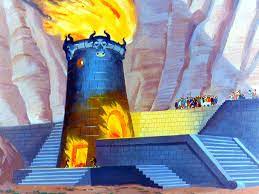
The third chapter of the book of Daniel records the first of two favorite children Sunday School stories found in Daniel. Of course, I’m referring to the story of Shadrach, Meshach, and Abednego. As the story goes, these three young men, Hananiah, Mishael, and Azariah (their Hebrew names) refused to bow down and worship the gold statue Nebuchadnezzar had erected. The king demanded worship of the statue at the instant of hearing musical instruments. Any who refused would be thrown into a blazing fiery furnace. Shadrach, Meshach, and Abednego were willing to die than to worship any pagan gods, even a golden statue set up by the king himself.
I’m sure Shadrach, Meshach, and Abednego didn’t anticipate this tragic event happening. They were in obedience to the Lord in participating for the welfare of Babylon, their new home. They were also in Nebuchadnezzar’s service as a few of the most educated and wisest officials in the king’s court. But they were living in a pagan culture with no regard for the God of the Hebrews, the true God, and was governed by a ruler who was as fickle as the weather.
King Nebuchadnezzar had earlier praised the God of Heaven for revealing his dream to him through Daniel, but he quicky forgot God. He elevated himself by erecting a statue overlaid in gold to represent himself and his kingdom as in his dream, the head of gold in chapter 2. An announcement was made to gather all the officials of Nebuchadnezzar’s empire to pledge their allegiance in the dedication of the golden statue. “Then he sent messages to the high officers, officials, governors, advisers, treasurers, judges, magistrates, and all the provincial officials to come to the dedication of the statue he had set up.” (Dan. 3:2 NLT) The king demanded worship of the golden statue which represented his kingdom, but also possibly the god Nabu meaning ‘Nabu, protect my son!’, or ‘Nabu, protect my boundary!’ The Jewish people were truly living in a pagan culture, and Shadrach, Meshach, and Abednego will soon find out how much it would cost them.
Much like in our day with the tolerance, D.E.I., reproductive rights, and hate speech police watching every move of Bible believing Christians, Shadrach, Meshach, and Abednego had their own thought police keeping tabs on them. Their colleagues in the king’s court blew the whistle on them. Daniel 3:8 &12 says, “But some of the astrologers went to the king and informed on the Jews…. But there are some Jews—Shadrach, Meshach, and Abednego—whom you have put in charge of the province of Babylon. They pay no attention to you, Your Majesty. They refuse to serve your gods and do not worship the gold statue you have set up.” (NLT) Naturally these men were jealous and envied the three Hebrew officials who had a higher rank than them. Not only did they have powerful positions, but they did not bow down to the cultural demands of Babylon. Those in authority today are under supreme pressure to compromise to get along with the culture, but it also comes at a high cost, not only affecting themselves but others as well.
When brought before the king; Shadrach, Meshach, and Abednego had their minds made up. They didn’t need to think or pray about what their answer would be. “(They) replied, ‘O Nebuchadnezzar, we do not need to defend ourselves before you……Your Majesty, that we will never serve your gods or worship the gold statue you have set up.’” (Dan. 3:16, 18b) The king was furious by their outright refusal not to obey an order he had given. Not to be humiliated in front of those who were present he ordered them to be thrown into the blazing furnace. God miraculously saved them sending an angel in the heated furnace. Not a hair on their head was singed, nor the smell of smoke on them. But going in, they did not know if God would indeed save them.
FreeBibleimages.org
We haven’t yet reached that point in our present-day Babylon in the United States, but other believers in other parts of the world have and will continue to do so. Perhaps it’s only a matter of time before we are faced with a Shadrach, Meshach, and Abednego experience. But if or when we are, will we be willing to die saying, “that we will never serve your gods or worship the gold statue you have set up.”
“An argument started among the disciples as to which of them would be the greatest. Jesus, knowing their thoughts, took a little child and had him stand beside him. Then he said to them, ‘Whoever welcomes this little child in my name welcomes me; and whoever welcomes me welcomes the one who sent me. For it is the one who is least among you all who is the greatest.’” Luke 9:46-48 NIV
In 1964 before his heavy weight title fight against Sonny Liston, Muhammad Ali, then known as Cassius Clay, made his famous pronouncement, ‘I am the greatest.’ Backing up his claim he went on to defeat Liston by a TKO after six rounds. No one can deny Ali’s greatness in the ring throughout his career; retiring in 1981 with 56 wins, only 3 loses, and 3 world titles. Many consider him to be the G.O.A.T (greatest of all time) at least in the boxing realm and that may indeed be true. Desiring to be the best in your sport, even considered great by working hard at it is an admirable endeavor, but be careful not to let your pride get in the way.
Jesus’s disciples were eagerly waiting the Messianic kingdom He was about to bring into existence. They were also anxious about their role in the kingdom asking Jesus which of them would be the greatest. The disciples were concerned because some were selected over others for specific tasks. This caused contention among them. They were more concerned with having prominence in the kingdom than what Jesus had assigned for them. Each of the disciples wanted to insure a favorable position, one that would meet their expectations, but they had it all wrong.
This became a teachable moment for the disciples and for us today. Jesus had a little child stand beside Him and then He said to His disciples, ‘Whoever welcomes this little child in my name welcomes me; and whoever welcomes me welcomes the one who sent me. For it is the one who is least among you all who is the greatest.’ (Lk. 9:48 NIV) The kingdom is not about position or status. Jesus is saying humility is at forefront in the kingdom of God. And entrance into the kingdom of God is not of our own achievements, but by the lowly position of simple faith in Him and that constitutes the greatest in the kingdom.
Let us not be prideful of our accomplishments while here on earth whatever they may be but give the glory to God. And let us take the lowly position of childlike faith in accepting Jesus Christ as our Lord and Savior and be the greatest in the kingdom by being the least.
“Can we boast, then, that we have done anything to be accepted by God? No, because our acquittal is not based on obeying the law. It is based on faith. So we are made right with God through faith and not by obeying the law.” Romans 3:27-28 NLT
Paul, writing to the church in Rome, says, “Can we boast, then, that we have done anything to be accepted by God? No, because our acquittal is not based on obeying the law.” (Ro. 3:27 NLT) There are many churches today, denominational, and autonomous, that have incorporated sets of rules or by laws to be agreed to and followed by members of the church. But in no way by obeying them along with your good deeds of kindness do they guarantee you or help you get a seat in heaven. Paul further goes on to say, “It is based on faith. So we are made right with God through faith and not by obeying the law.” (Ro. 3:27b-28 NLT) Paul was referring to the Old Testament law of Moses, but it can be easily applied here in our day. The people in Paul’s day, both Jews and Gentiles, were saved by faith in Christ and not by keeping the law.
There has been a false narrative passed down from generation to generation that says, if my good deeds of kindness outweigh my bad deeds, God will accept me into heaven. No one can take issue with ‘good deeds being good.’ Yes, they are, and we should do as many of them as possible. But where do we find reasonable evidence that God accepts these as good enough for entrance into heaven except in our mind. The only rock-solid evidence we have for entrance into heaven and eternal life is found in the pages of scripture, the Holy Bible.
Being accepted by God is not about doing good works or obeying the rules for church membership as important they may be. Acceptance by God for salvation is by faith in Jesus Christ. “For by grace you have been saved through faith. And this is not your own doing; it is the gift of God, not a result of works, so that no one may boast.” (Eph. 2:8-9 ESV)
If you feel you have fallen short with all you’re trying to do for God’s acceptance, you’re right! If you feel you are doing enough or the best you can to be accepted by God, I’m sorry but you are wrong. Salvation and acceptance by God into heaven is through simple faith as recorded for us in God’s Word. So, what have you done to be accepted by God? All you need to do is have faith!
“You have heard that it was said, ‘You shall love your neighbor and hate your enemy’ ‘But I say to you, love your enemies, bless those who curse you, do good to those who hate you, and pray for those who spitefully use you and persecute you.’” Matthew 5:43-44 NKJV
Photo FreeBibleimages.org
I have heard people say, ‘I like everybody.’ Others have commented, ‘There isn’t a person he or she hasn’t met they do not like.’ Not to be overly critical, but I find that hard to believe. There are a lot of people I don’t like. Sounds unchristian, I know. But think about it. Do you like everyone you know or have ever met? A pastor friend of mine said to me a few years back as I was pursuing a pastorate ministry, you don’t need to like everyone in your congregation, you need to love them. I admit it was a comforting thought, but then realized I needed to love them. That is hard enough, but what about those you despise and hate you, how do you love them?
In the most famous sermon of all time, Jesus’ Sermon on the Mount, He said, “You have heard that it was said, ‘You shall love your neighbor and hate your enemy’” (Mt. 5:43 NKJV) Loving your neighbor is certainly found in the pages of the Old Testament of which those in His hearing would have recognized. But ‘hate your enemy’ is not in scripture but was from hearing the scribes and Pharisees interpretation on how to apply the command of ‘love your neighbor.’ Obviously, they taught that if you didn’t like someone and they were indeed your enemy, it was permitted to hate them.
Jesus, as he always did, corrected their ill-advised thinking. He knew what they had heard and were taught was the growing sentiment of how to treat people and said to them, ‘But I say to you.’ He was telling them to forget what they heard from their teachers and listen to Him. Those who follow Jesus, live by a whole set of different rules, His rules. We are to love our enemies, bless those who ridicule and mock us, be nice to those who mistreat us, and pray for those who take advantage of us, and persecute us. Again, how are we to do this, love those who hate us? On our own this is impossible, but with Christ’s love living in us through the Holy Spirit, we are assured to love our enemies, even those we don’t like.
What treasures have you been entrusted with? Those who have children have those precious jewels placed in their trusting care from God. Those who work in financial institutions have large sums of money entrusted to them. Those who serve in law enforcement have the safety of the lives they protect and serve entrusted to them. And those of us who are Christians have the treasure of the Gospel entrusted to us.
The apostle Paul instructs his son in the faith, Timothy, to guard the treasure which had been entrusted to him, the life giving message of Salvation. Timothy was instructed to guard or keep watch over the presentation of the gospel of Jesus Christ against the false teachers of his day.
Just as Timothy had false teachers in his day, we also have false teachers in our day who distort the Gospel of Salvation through Jesus Christ. We are to guard and keep watch, “through the Holy Spirit who dwells in us” the True Gospel Message of Jesus Christ. And we can use Jesus’s own words: “For God so loved the world, that He gave His only begotten Son, that whoever believes in Him shall not perish, but have eternal life………. I am the way, and the truth, and the life; no one comes to the Father but through Me.” (Jn. 3:16, 14:6 NASB)
We have been entrusted with the most valuable treasure known to mankind, Guard the Treasure!
There are specific things in our lives we would like to remain secret. Not all these things are of a sinful nature, referred to as secret sins, but also certain matters of embarrassment we rather not be made public. I can recall many dumb and embarrassing things I have done in my life I’d rather be left in the memory of those who have witnessed them. True friends will keep the secret, but others are not so obliged in revealing the episode to others. There is not much you can do after the fact except hope it will not be used against you as a butt of a joke or even worse to make sport of you to harm you.
Some people are good at keeping certain areas of their lives extremely private and secret. This is not to condemn one who does, but for whatever reason you choose not to share and keep secret, there is one who knows everything. God the Father knows every detail and the deep dark secrets of our lives. We are unable to keep any secret from God. He even knows what we are thinking, or what we are about to think. But God will not reveal what He knows about us to anyone. God can keep a secret.
Although God can keep a secret, He will never allow us to get away with any sin in our lives unconfessed. And there will be a day when all Christians will stand before the judgment seat of Christ to give an account of our lives, both public and private. 2 Corinthians 5:10 says, “For we must all stand before Christ to be judged. We will each receive whatever we deserve for the good or evil we have done in this earthly body.” (NLT) May we keep in mind even though God forgives us of our sin, and can keep a secret, “that the day is coming when God, through Christ Jesus, will judge everyone’s secret life.” (Rom. 2:16 NLT)
“……give to Caesar what belongs to Caesar and give to God what belongs to God.” Matthew 22:21 NLT
“Christianity never should be identified with any political party or social theory, but Christians ever should take their stand for loyalty, for order, and for law.” Charles R. Erdman
Photo FreeBibleimages.org
During Jesus’ ministry on earth, there were two influential groups who hated Him and wanted Jesus dead. One group were the Pharisees, or the Jewish religious rulers of the day. The other was known as the Herodians, supporters of Herod backed by the Roman government. These two groups hated each other, but they had a common enemy Jesus that brought them together. Their goal was to trap Jesus in questioning the legitimacy of paying taxes to the Roman government headed by Caeser. In answering, yes or no, each party would be able to claim Jesus’ disloyalty either to Rome as an act of treason, or to the Jewish nation. Jesus’ answer not only settled the matter then and there, but also set precedent for all Christ followers from that day forward.
Jesus said very simply to give Caeser what he is owed and give God what He is owed. The Roman government, although harsh especially to the Jews, were the authority figure that provided protection and law and order in the land. Maintaining infrastructure of the region is also a reason to support the authorities for what is owed to them. God also demands what is owed to Him. God is owed the dedication of our lives through obedience, service, and worship to Him.
The Pharisees and the Herodians had it all wrong. They calculated Jesus had to answer one way or the other sealing His fate. Jesus’ answer to them was in perfect harmony. We are obedient to God when giving to the government what is owed as a God-ordained authority, Ceaser included, and we are obedient to God when surrendering our lives to Him. An appropriate lessons for us to heed during the upcoming tax season is to stand for loyalty, law, and order as good citizens of our country, and to stand in obedience to God as citizens of heaven for Jesus gave us a law of perfect harmony for all time!
“The king was furious when he heard this, and he ordered that all the wise men of Babylon be executed. And because of the king’s decree, men were sent to find and kill Daniel and his friends.” Daniel 2:12-13 NLT
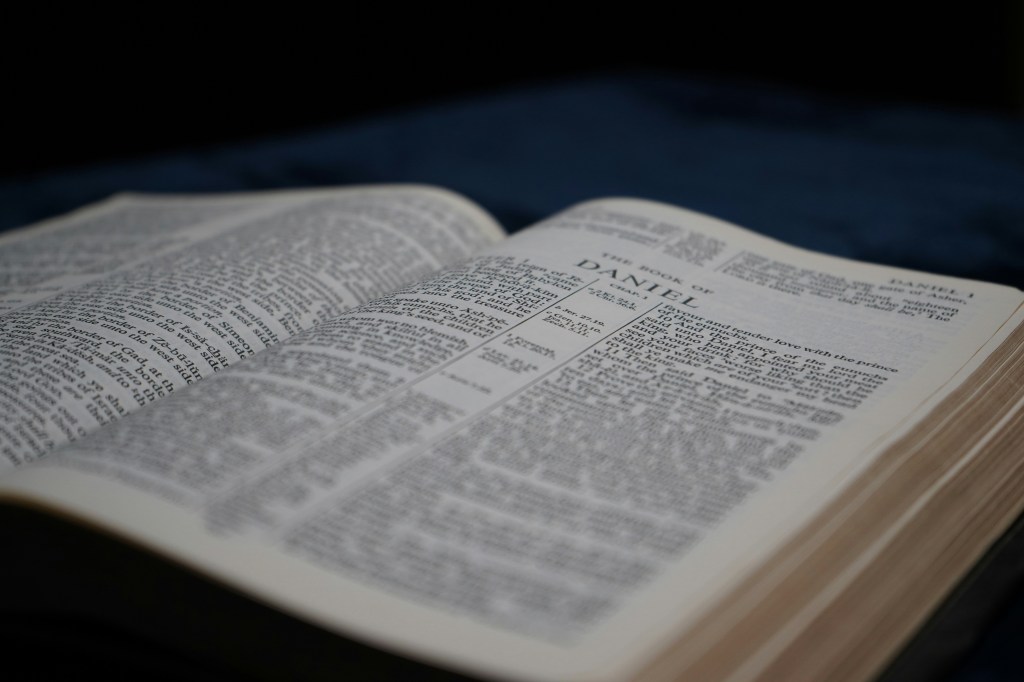
Living in a godless society is like walking on eggshells for God-fearing people. It’s walking a tightrope high above a sea of debauchery. One false move and you either fall into it willingly and participate in the corruption, or you call on the Lord to sustain you through it. Christians often find themselves needing to choose between conforming to the accepted norms of the culture or take a stand for the Lord and the truth of His Word. We saw last week in our Biblical Insights on the book of Daniel, the stand Daniel took in refusing to eat the king’s food in violation of the Hebrew law. Offering a plan B to the king’s chief of staff to replace the food with vegetables and water was blessed by God. Daniel and his friends were well nourished and appeared healthier compared to the other trainees in Nebuchadnezzar’s court. This week we highlight the Lord’s blessing on the value of prayer while living in Babylon.
Christians living in a godless culture may also find themselves guilty by association in a whimsical moment to convict all in a certain group whether guilty or not. Chapter 2 begins with Daniel in the royal service of King Nebuchadnezzar who has a disturbing dream that kept him up all night. “He called in his magicians, enchanters, sorcerers, and astrologers, and he demanded that they tell him what he had dreamed. As they stood before the king, he said, ‘I have had a dream that deeply troubles me, and I must know what it means.’” (Dan. 2:2-3 NLT) Needless to say, his so-called pagan wizards and astrologers had no clue. They needed the king to first tell them his dream and then they would conjure up something that sounded good to please the king. The king threatened to have them all executed if they couldn’t tell him the dream and then interpret it. The astrologers tried to convince Nebuchadnezzar by saying it was impossible for any human to tell beforehand a person’s dream. The pagan king then ordered the execution of all the wise men which Daniel was one.
Living in Babylon, a pagan culture, is not without hope. Daniel had seen the Lord’s hand at work in placing him and Hananiah, Mishael, and Azariah in the king’s service. He knew they were not without hope for the Lord was with them. Daniel requested more time from the king, which was granted, and he and his three friends prayed to the God of heaven and sought His help in telling and interpreting the dream. The Lord answered by revealing the dream to Daniel and its interpretation in a vision that night. God does not forget those who are in His service even when placed in Babylon.
Daniel was then brought before King Nebuchadnezzar confirming what the others had told him, “There are no wise men, enchanters, magicians, or fortune-tellers who can reveal the king’s secret. But there is a God in heaven who reveals secrets, and he has shown King Nebuchadnezzar what will happen in the future.” (Dan. 2:27-28 NLT) Daniel then preceded to tell the king his dream providing the interpretation. The king’s dream is a prophecy partially fulfilled of all the world kingdoms from King Nebuchadnezzar in Babylon to the final kingdom to come of Christ’s kingdom at His second coming. Daniel completed by saying “The great God was showing the king what will happen in the future. The dream is true, and its meaning is certain.” (Dan. 2:45b NLT)
The Lord once again blessed Daniel by his promotion to ruler over the province of Babylon and chief of all Nebuchadnezzar’s wise men. Hananiah, Mishael, and Azariah were also appointed over all the affairs of Babylon while Daniel served in the king’s court. There is a lesson for us today as we live in Babylon. The Lord can and will raise up those who are faithful to Him when faced with adversity or get pronounced guilty by association. A life of prayer is a must when living in a pagan culture. Daniel and his friends were in high positions in godless government system. Their example teaches us it is possible to live in the light of God’s Word living in Babylon as we continue to take a stand and bring everything before Him in prayer.










 Word for the Soul