Bible Studies

“Jesus Walks on Water” The Gospel of Jesus Christ: the book of Mark

Read: Mark 6:45-52 NLT – Jesus Walks on Water – Immediately – Bible Gateway

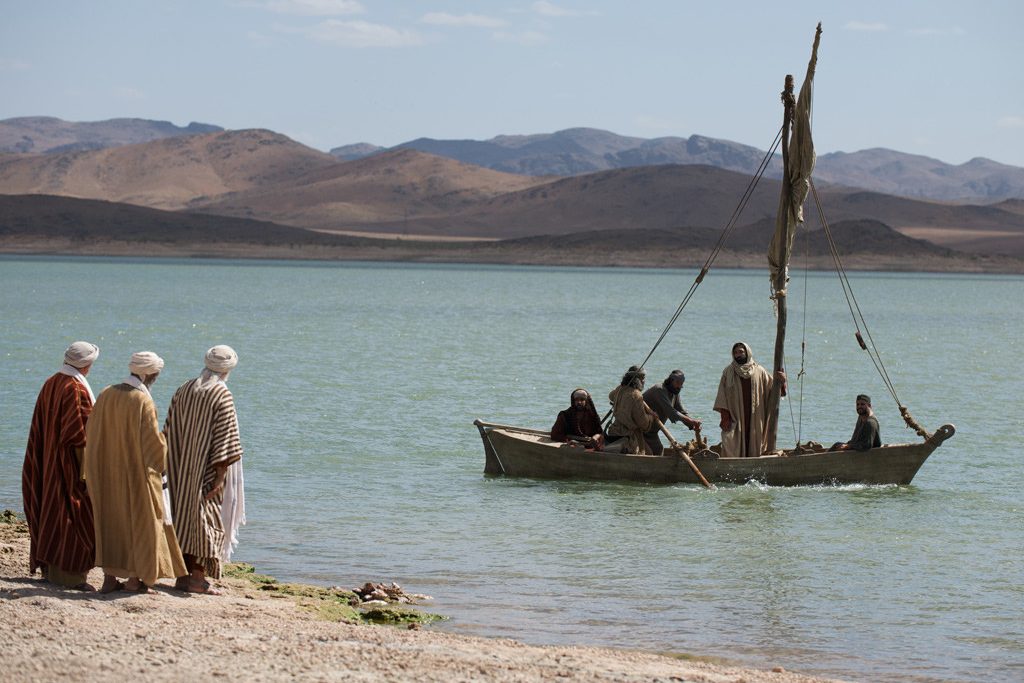
“Late that night, the disciples were in their boat in the middle of the lake, and Jesus was alone on land. He saw that they were in serious trouble, rowing hard and struggling against the wind and waves. About three o’clock in the morning Jesus came toward them, walking on the water.” Mark 6:47-48 NLT

FreeBibleimages.org

If you have just witnessed Jesus’ feed 20,000 people with 5 loaves and 2 fishes, would you be amazed if you then saw Him walking on the water hours later? His disciples were. Now before we criticize the disciples, let’s jump in their sandals on their boat and experience the ride. Jesus tells them to go ahead of Him to Bethsaida planning to meet them there later. As they set sail, another windstorm developed as is common on the Sea of Galilee. A short trip is now 9 hours old and instead of hugging the coast along the northern end of the sea, they are being driven farther out into the middle. And then they think they have seen a ghost!

We start this week after Jesus’ miracle of feeding the multitude. He insisted His disciples leave for Bethsaida ordering them into the boat. He would then send the people away and head up to the hills to spend time with His Father in prayer. Jesus being a miracle worker and the Son of God in the flesh still needed a time to rejuvenate physically and spiritually with His Father. How much more do we need it and yet neglect to do it. Jesus needed this time alone in prayer and the top of those hills was a perfect setting for it. The eastern side of the Sea of Galilee was a mountainous region with slopes leading up to a plateau. It was a good place to be alone and away from the crowd. Jesus would also have a good view of His disciples crossing the sea.

FreeBibleimages.org

Jesus saw the disciples were in serious trouble as the winds were pushing them out into the middle of the sea. The Bible says Jesus went out to them during the fourth watch of the night which is somewhere between 3am-6am. We may question why Jesus waited so long. Matthew Henry offers this comment, “If Christ’s visits to his people be deferred long, yet at length he will come; and their extremity is his opportunity to appear for them so much the more seasonably.” The time spent with His Father was important and Jesus wasn’t about to forget His disciples. He did go out to them walking on the water. It shouldn’t surprise anyone that Jesus would be able to perform this feat. He is the Lord of the Sea. Paul writes in the book of Colossians, “Christ is the visible image of the invisible God. He existed before anything was created and is supreme over all creation, for through him God created everything in the heavenly realms and on earth. He made the things we can see and the things we can’t see—such as thrones, kingdoms, rulers, and authorities in the unseen world. Everything was created through him and for him.” (1:15-16 nlt)

As Jesus got closer to them, they became frighten and thought they were seeing a ghost.  Jewish superstition said appearance of spirits during the night would bring disaster. The disciples should not have been swayed by a superstition, but how would we react in the darkest part of the night if we saw someone walking on the water in a windstorm. And Jesus was not only walking on the water but at a steady pace not affected by the wind. The Bible says He was walking on the water as if He intended to go pass them. Jesus was testing their faith to see if they would recognize Him and His miraculous powers and overcome their fear and invite Him into their boat. “But Jesus spoke to them at once. ‘Don’t be afraid,’ he said. ‘Take courage! I am here!’” (Mk.6:50 nlt)

Photo AI Generated wordpress

When Jesus entered the boat without saying a word the fierce winds stopped. The disciples were amazed. Were they more amazed that the winds suddenly stopped or that they had just witnessed Jesus’ walking on the water? As this point, we don’t know, but we do know the disciples’ hearts were still not sensitive to who Jesus is. They weren’t grasping all that Jesus was doing and showing them. The disciples were fascinated by His miracles but couldn’t put two and two together. The world is amazed by any attesting miracles they see today by the hand of God. They may say, ‘it is a miracle’ or ‘only by God’ but there is no real understanding of who the true God is. The true God is the creator of heaven and earth. He formed us out of the dust of ground and gave us life. He provided a way of forgiveness for sinning against Him. Jesus Christ, the holy one of God, came to earth to die in our place for the punishment of sin providing the way of salvation to all who believe. Jesus also walked on water. Don’t be amazed. Understand who Jesus is with the help of the Holy Spirit and accept Him as your savior.

Bible Studies

“The Shepherd Feeds the Sheep” The Gospel of Jesus Christ: the book of Mark

Read: Mark 6:30-44 NLT – Jesus Feeds Five Thousand – The – Bible Gateway

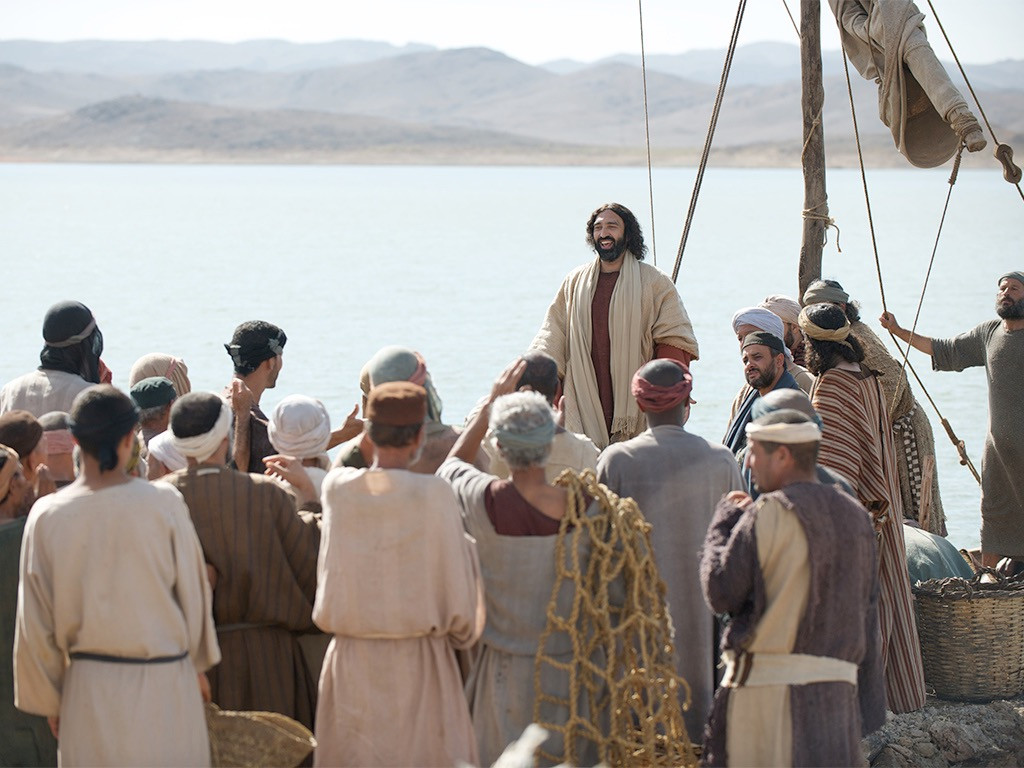
“Jesus saw the huge crowd as he stepped from the boat, and he had compassion on them because they were like sheep without a shepherd. So he began teaching them many things.” Mark 6:34 NLT

FreeBibleimages.org

This week in our study of the book of Mark we see Jesus as the good shepherd. Leading His disciples to a place of rest which they all desperately needed, Jesus is met by people who had followed Him around the Sea of Galilee to be near Him. Jesus didn’t get upset that His plans were ruined but looked on the people with compassion. He saw them for who they were, sheep without a shepherd.

Our story begins with the disciples returning from their preaching tour Jesus had sent them on. Jesus, naturally, would want a full report of their mission. Recapping their tour of duty was met with constant interruption that Jesus finally said, “Let’s go off by ourselves to a quiet place and rest awhile.” (Mk.6:31 nlt) The Bible says the disruptions made it impossible even for them to eat. What is needed most after a long time spent on the road in your job is a good meal when you arrive home. Jesus knew this and suggested they get away from the crowds. “So they left by boat for a quiet place, where they could be alone.” (Mk.6:32 nlt)

Their destination was the northeastern shore of the Sea of Galilee near the city of Bethsaida. Their departure didn’t stop the people from following Him. They took the long route walking eight miles along the shore arriving before Jesus who was cutting across the lake which was only four miles. It is possible the disciples’ boat incurred headwinds slowing them down, and it could have been the people were in a hurry not to let Jesus get away from them. Jesus met them as He came to shore with His disciples. Seeing the size of the crowd, the Bible says, “(Jesus) had compassion on them because they were like sheep without a shepherd. So he began teaching them many things.” (Mk.6:34 nlt) The rest and quiet time they were anticipating would have to wait, the sheep need a shepherd.

Jesus was teaching well into the late afternoon when His disciples came to Him saying, “This is a remote place, and it’s already getting late. Send the crowds away so they can go to the nearby farms and villages and buy something to eat.” (Mk.6:35-36 nlt) Jesus was aware of the hour and it was now time to turn His teaching specifically to the disciples. He told them to give them something to eat. The disciples gave Jesus a logical answer back up by numbers that it would take eight months of wages to feed such a crowd, also calculating the size of the crowd. The Lord was about to test their faith and teach them valuable truths about Himself. ‘“How much bread do you have?’ he asked. ‘Go and find out.’ They came back and reported, ‘We have five loaves of bread and two fish.” (Mk.6:38 nlt) Then Jesus told them to have the people sit down, it’s supper time!

It would do us well to picture the scene of this miraculous feeding of this large group of people. Jesus instructs the people to sit in groups on the green grass. The place is on the northeast shore of the Sea of Galilee. The grass is green signifying it is in the spring after the late winter and early spring rains. Grass in that area becomes dry and brown during the hot summer months. Having them sit down in groups of fifties and hundreds shows an orderly process. Our Lord always does everything in an orderly fashion. It would be smart for us to follow His example in all our endeavors. Jewish festivals in the day used a symmetrical seating of 50 semi-circles of 100 people for easy food distribution. So, this wasn’t uncommon. The Greek word used for ‘groups’ is prasia meaning ‘a garden bed or plot.’ The Wycliffe Bible Commentary describes the place as, ‘a picturesque scene, like beds of flowers with the different colors from all the clothing sitting in groups that can be seen from a distance.’ Yes, Jesus certainly does things in order and in splendid color.

“Jesus took the five loaves and two fish, looked up toward heaven, and blessed them. Then, breaking the loaves into pieces, he kept giving the bread to the disciples so they could distribute it to the people. He also divided the fish for everyone to share.” (Mk.6:41 nlt) In the preceding verse the words ‘took’ ‘looked’ ‘blessed’ and ‘break’ or ‘breaking’, are in a simple past tense in the Greek, whereas ‘gave’ is in the imperfect tense meaning ‘kept giving’ as in our text. Here is the miracle occurring. Jesus kept on giving the bread and fish and kept on giving until everyone had something to eat and were satisfied. There were also leftovers which Jesus had the disciples gather up. Twelve baskets in fact, one for each disciple so no one would miss out on their teacher’s lessons.

FreeBibleimages.org

They learned Jesus is the good shepherd who feeds His sheep. Jesus taught them He was able to feed thousands of people with five loaves and two fishes. The major lesson here is He can supply every need for His sheep. This miracle fulfilled prophecies from the Old Testament concerning the Messiah shepherd. Ezekiel 34:23 says, “And I will set over them one shepherd, my servant David. He will feed them and be a shepherd to them.” (nlt) Jesus is the Son of David, the Messiah who was to come. And Isaiah the prophet wrote, “On this mountain the LORD Almighty will prepare a feast of rich food for all peoples, a banquet of aged wine— the best of meats and the finest of wines.” (Is.45:6 niv)

Jesus is the Messiah, the Son of God, and the shepherd who feeds His sheep, protects His sheep and died for His sheep. “I am the good shepherd. The good shepherd sacrifices his life for the sheep.” (Jn.10:11 nlt) The gospel of Jesus Christ is the good news about the good shepherd who came and laid down His life in order that we may have eternal life by believing in His name. Yes, it’s supper time!

Bible Studies

“Don’t Neglect the Spirit” The Gospel of Jesus Christ: the book of Mark

Read: Mark 6:14-29 NLT – The Death of John the Baptist – Herod – Bible Gateway

“For Herod respected John; and knowing that he was a good and holy man, he protected him. Herod was greatly disturbed whenever he talked with John, but even so, he liked to listen to him.” Mark 6:20 NLT

FreeBibleimages.org

This week in Sunday’s Biblical Insights we have a story not for the squeamish, the brutal beheading of John the Baptist. The tragic event will unfold against the backdrop of bewilderment, superstition, immorality, resentment, and neglecting the Spirit. The gruesome act against John the Baptist is matched by Herod Antipas’ cutting away his soul by not responding to the conflict within himself. Human beings created in the image of God have an innate instinct to know right from wrong. When the spirit convinces us our way of living is wrong and we do nothing about it, we set ourselves up for a tragic end, even hurting other people in the process. Herod Antipas neglected the spirit, and it cost John the Baptist his life, and cost Herod his eternal soul.

We begin with the breaking news around Israel of reports of a man performing miracles of healing, casting out demons, causing concern among officials in the mixed reactions of the people. It didn’t take long for the news to reach the ears of Herod, who was the tetrarch of Galilee and Perea. Herod’s first reaction to the news about Jesus was “John, the man I beheaded, has come back from the dead.” (Mk.6:16 nlt) Being riddled with a guilty conscience and prone to superstition, Herod thought John the Baptist had come back to haunt him. Some of the people agreed with Herod’s assumption about Jesus. Many others thought Jesus was Elijah who was prophesized to appear before the Messiah would appear. Others supposed Jesus to be another one of the many prophets who had come in the tradition of the Old Testament, and still others presumed Him to be another Moses who had come to lead the people.

The seed to John the Baptist’s demise was planted by John himself as he continually called out Herod Antipas for his infidelity. He not only put Herod on notice, but Herodias as well, who left her husband for an adulterous affair with Herod. In fact, the whole Herodian dynasty was the subject of John’s continual rebukes. Herodias married her half Uncle Philip who was Herod Antipas’ brother. Herod was married to the daughter of Aretas, king of Arabia, but divorced her and sent her away. John’s rebuke was straight to the point, “It is against God’s law for you to marry your brother’s wife.” (Mk.6:18 nlt)

Herodias was filled with resentment towards John and wanted him killed for his non-stop criticism of her relationship with Herod. Herod had John arrested and put in prison to satisfy Herodias, but more importantly to protect John. It was here where Herod and John had more hard conversations. Herod respected John, knowing he was a good, decent, and holy man. Scripture says Herod was greatly disturbed (perplexed) when he spoke with him.  The Greek word for ‘perplexed’ is ‘aporeō’ meaning ‘doubt’ or ‘to be without a way.’ Something triggered Herod’s conscience that he kept going back to John and enjoying the time with him. John, no doubt, left Herod with internal moral conflict.

FreeBibleimages.org

The grudge against John the Baptist Herodias held did not subside. She cunningly and patiently waited for the right time to put a decisive plan in place to kill John by having Herod order it himself. The occasion was a birthday party for Herod with his high ranking civil and military officers in attendance. Herodias’ daughter performed an exotic suggestive dance before Herod and his guests. It was highly unprecedented for a princess to perform such a dance but was reserved for servant girls to perform. Herod’s moral lapse from his drinking and the dance led him to offer a pledge to Herodias’ daughter, “Ask me for anything you like, and I will give it to you. I will give you whatever you ask, up to half my kingdom” (Mk.6:22-23 nlt) Of course giving away half the kingdom is a figure of speech not to be taken seriously, but Herodias’ plan was about to be signed, sealed, and delivered.

“She went out and asked her mother, ‘What should I ask for?’ Her mother told her, ‘Ask for the head of John the Baptist!’” (Mk.6:25 nlt) The girl callously came back and said, “I want the head of John the Baptist, right now, on a tray!” (Mk.6:25 nlt) It was now too late now for Herod to change his mind. It would have been better to give her half the kingdom. With all his guests looking on, Herod would not refuse her and immediately sent an executioner to carry out his order to behead John the Baptist. We question why Herod would go through with her very savage request. Several reasons come into play. An oath was considered binding and unbreakable in those days, no matter how cruel or unsensible. Again, his guests just witnessed the dance and the pledge he made to his satisfaction. And perhaps a bigger reason was Herod’s failure to allow the spirit to work in him as he spoke with John many times.

Herod Antipas, being grieved deeply regretted his actions of promising to give Herodias’ daughter anything she asked for and then carrying out the request. Spur of the moment decisions are never good, even worse when our heart and mind is not right with God but centered on our own lusts and desires. Herod lived such a self-centered life, but God gave him plenty of opportunities hearing John the Baptist’ rebukes to correct the wrongs in his life. May we not neglect the spirit when He points out anything in our lives that is not pleasing to Him. We can be sure God will make it known to us because it displeases Him and He wants us to make it right. Don’t neglect the spirit as Herod did but listen to His voice when it comes to you from wherever and whoever.

FreeBibleimages.org
Bible Studies

“Rejected by those who knew Him best” The Gospel of Jesus Christ: the book of Mark

Read: Mark 6:1-13 NLT – Jesus Rejected at Nazareth – Jesus left – Bible Gateway

“A prophet is honored everywhere except in his own hometown and among his relatives and his own family.” Mark 6:4 NLT

FreeBibleimages.org

There have been many hometown heroes throughout the centuries. Famous artists have painted their priceless artwork in familiar surroundings of their neighborhood. Renown composers from Bach and Beethoven to Lennon and McCartney started composing the world’s masterpieces in their small rustic villages and small towns. Many Presidents and foreign leaders have been memorialized in their hometowns. People from all walks of life who made a name for themselves have been recognized and hailed in their communities as achieving great success. Not so with Jesus of Nazareth. He was rejected by those who knew Him best.

Last week in our Biblical Insights in the book of Mark, Jesus was back in Capernaum where He performed two miracles. After raising Jarius’ daughter from the dead, “Jesus left that part of the country and returned with his disciples to Nazareth, his hometown.” (Mk.6:1 nlt) Jesus was about to begin His third and final tour through the Galilean region. He returns to His hometown of Nazareth 20 miles southwest of Capernaum and the Sea of Galilee. This is not a planned family visit but a preaching ministry event. It is the start of Jesus’ and the disciples preaching tour through Galilee.

As was Jesus’ custom, He observed the Sabbath by attending worship services in the local synagogue. While there Jesus began to teach, and the on-lookers were astonished. Never did they hear such teaching and from someone who they knew but knew Him as a local carpenter. Even though they heard Him with their own ears, they found it hard to believe. “Then they scoffed, ‘He’s just a carpenter, the son of Mary and the brother of James, Joseph, Judas, and Simon. And his sisters live right here among us.’ They were deeply offended and refused to believe in him.” (Mk.6:3 nlt) The people took offense that Jesus would elevate Himself to such a high position with no formal religious or academic training. He was on their level, a local layman, ‘how dare He raise Himself above us.’

The peoples’ reference to Him as the ‘son of Mary’ could very well have been an insult to Jesus. It could be possible that Joseph passed away, as he is not mentioned, but it may also be a shot at the legitimacy of His birth. To say that one is the son of the mother is to say we don’t know who the father is. The townspeople in their ignorance and snippy remarks missed an opportunity to get to know the Jesus they thought they knew. Jesus was amazed at their unbelief and did no miracles in Nazareth except for a few people He healed. (Mk.6:5) It was not that He couldn’t perform any miracles, but in an atmosphere of such unbelief Jesus didn’t have many opportunities as most people were offended by Him. John MacArthur notes, “Miracles belong among those who were ready to believe.” There were many who simply would not believe. It must have hurt the Lord Jesus to announce, “A prophet is honored everywhere except in his own hometown and among his relatives and his own family.” (Mk.6:4 nlt)

Jesus did not let this interrupt His mission or the mission He was about to send the disciples on. Neither should we let the way we are received by those closest to us to influence whether we continue to live the Christian life. Jesus knows what it is like to be rejected by His own family for the sake of the gospel, so He knows how you feel if it happens to you. Jesus continued going from village to village reaching out to people. We shouldn’t allow anything to slow us down, but to continue with the mission He gave us.

 “And he called his twelve disciples together and began sending them out two by two, giving them authority to cast out evil spirits.” (Mk.6:7 nlt) Jesus gets His disciples involved to go out on their own and preach the gospel. He has taught them as they gathered around Him. They have observed His preaching and the miracles He performed on the road, now it was time for them to get some on-the-job training. This was a big step for them, and the Lord emphasized how big a step it was in the instructions He gave them.

Jesus told them to take nothing along with them except the common walking stick in case attack. That alone calls for tremendous faith. Whatever God calls us to do requires faith on our part to be successful for the task. We shouldn’t doubt thinking we can’t do it. If the Lord is sending us out, we can do it. The disciples were also told not to take any food, no overnight bag or extra clothing, and no money. Jesus did allow them to wear sandals for their feet. The Lord Jesus was training them to increase their faith for future days when they would go out preaching the message of salvation after His death, burial, and resurrection. They were to trust God completely to meet their needs.

The disciples were instructed not to be fickle with the accommodation provided for them, but to show appreciation and stay in that one place as long as they were in that city. Jesus gave them one final important instruction, “But if any place refuses to welcome you or listen to you, shake its dust from your feet as you leave to show that you have abandoned those people to their fate.” (Mk.6:11 nlt) Strict Jews in that day shook the dust off their feet whenever they left a pagan territory. Rejecting Jesus’ gospel of salvation is equal to a pagan society who rejects the only true God. Shaking off the dust is certainly in order. It also absolves them from any further responsibility after making known the manner of salvation.

FreeBibleimages.org

Jesus did not say following Him would be a cakewalk. There will be hard times, long roads ahead to travel, rejection even from loved ones, but it is a life of tremendous joy when following Him in obedient faith. Jesus guarantees it.

Bible Studies

“Just Have Faith” The Gospel of Jesus Christ: the book of Mark

Read: Mark 5:21-43 NLT – Jesus Heals in Response to Faith – Bible Gateway

“And he said to her, ‘Daughter, your faith has made you well. Go in peace. Your suffering is over’……But Jesus overheard them and said to Jairus, ‘Don’t be afraid. Just have faith.’” Mark 5:34, 36 NLT

FreeBibleimages.org

Is just having faith good enough? The phrase ‘have faith’ gets tossed around as if it’s a cure-all for what ails you. Seriously, if you are in the habit of using that phrase, what is your basis for using it? Is it hope, a feeling, something mysterious, or is it an assurance you have and if so, what is the basis for that assurance? The world defines faith as complete trust or confidence in something or somebody. I cannot disagree with that for that is what faith is. Now back to the first question. Is just having faith good enough? Well, yes, it depends on where your faith is placed. This week we have two stories were knowing where to place your faith is a matter of life or death.

After Jesus’ short stay in the Gerasenes region where He healed a demon-possessed man He headed back across the lake to Capernaum. As usual a crowd had formed rather quickly on the shore after His arrival with the help of old-fashion social media, word of mouth on foot. A synagogue official, a layman similar to deacons and elders today, was one of first people to greet him dropping to his knees and crying out, “My little daughter is dying, Please come and lay your hands on her; heal her so she can live.” (Mk.5:23 nlt) The official, Jarius by name, knew his daughter was near death and Jesus was her only hope. Jarius most likely heard Jesus speak in the synagogue when Jesus visited, and he knew of His miracles. Jarius placed his faith in the only one capable of healing His daughter.

Jesus agreed to go with Jarius and so did the crowds as they forced their way to get closer to Him as they traveled to Jarius’ home. In among the crowd was a woman who was severely sick with constant bleeding from an incurable disease. “She had suffered a great deal from many doctors, and over the years she had spent everything she had to pay them, but she had gotten no better. In fact, she had gotten worse.” (Mk.5:26 nlt) She too, like Jarius’ daughter was in a desperate situation although her death was not imminent it was certain without help from above. This woman, whose name we don’t know, was one of the many to had seen and heard about Jesus. She knew He could stop the bleeding. Her faith was so strong in Him knowing if she could only reach out to touch the hem of His garment she would be healed. And that is what she did, “Immediately the bleeding stopped, and she could feel in her body that she had been healed of her terrible condition.” (Mk.5:29 nlt) With so many people crowding around Jesus bumping into Him and touching Him, He specifically felt the power of healing faith go from Him to someone. It was an immediate healing for the woman.

Jesus then asked who touched Him. The disciples must have had a puzzled look on their faces when they answered, “Look at this crowd pressing around you. How can you ask, ‘Who touched me?’” (Mk.5:31 nlt) But Jesus knew someone did and kept looking around until she came forward. Jesus didn’t pursue this to call out the woman, but to afford her the chance to praise God and tell others what God has for her. Jesus was not going to let this opportunity go by without recognizing her publicly. She had been a social outcast for so many years, and it’s time to turn the tables. Those who evade her will now see she is no longer considered to be ‘unclean’ but whole and fully healed. Jesus confirmed this by saying, “Daughter, your faith has made you well. Go in peace. Your suffering is over.” (Mk.5:34 nlt)

I guess you can say in a way, it was a hope, but a hope in Jesus. It was a feeling in that she felt it instantly. It certainly felt mysterious, but it was the power of God touching her and stopping the bleeding. We can say for sure; she based her faith on Jesus, that is where she had the assurance of being healed by putting her trust and confidence in Him.

FreeBibleimages.org

We now go back to Jarius who has just witnessed miraculous healing before his eyes. But as they proceed to Jarius’ home, he received news that his daughter had died. In hearing this Jesus encourages Jarius by saying, “Don’t be afraid. Just have faith.” (Mk.5:36 nlt) Jesus is reminding Jarius of the faith he had when he first approached Jesus about his daughter’s condition. There is nothing impossible for Jesus to do, even raising the dead.

Jesus suddenly stops the crowd from following Him and took with Him only Peter, James, and John the rest of the way to Jarius’ home. They were greeted by weeping and wailing as professional mourners were already called in, as was the custom, when a death occurred. Burial would soon take place in the Jewish culture as it is still practiced today. But Jesus would have no part of it. “He went inside and asked, ‘Why all this commotion and weeping? The child isn’t dead; she’s only asleep.’” (Mk.5:39 nlt) He knew what He was going to do as the people laughed and ridiculed Him. So, Jesus sent these people out of the house for their unbelief, and took the girl’s mother, father, and the disciples to the girl’s room.

They entered the room and, “Holding her hand, he said to her, ‘Talitha koum’ which means ‘Little girl, get up!’” (Mk.5:41 nlt) The twelve-year-old got up immediately and Jesus told them to give her something to eat. Jesus not only raised her from the dead but made sure she had something to eat. Jesus’ reference to ‘she’s only sleeping’ is used to describe her death was only temporary. He was going to raise her, and the people who laughed will know it is a true miracle because they knew she was pronounced dead and funeral arrangements were being made.

Jesus performed two miracles concerning life and death in which faith was a factor. Not in our faith itself but in having faith in the one who can perform miracles. We may not need to exercise our faith in a life-or-death manner, but if we do, or when we do, it is good to know where to place our faith. Yes, it is OK to just have faith as long as it is in Jesus Christ, God the Son.

FreeBibleimages.org

Bible Studies

“Jesus Heals a Demon-Possessed Man” The Gospel of Jesus Christ: the book of Mark

Read: Mark 5:1-20 NLT – Jesus Heals a Demon-Possessed Man – So – Bible Gateway

“A crowd soon gathered around Jesus, and they saw the man who had been possessed by the legion of demons. He was sitting there fully clothed and perfectly sane, and they were all afraid.” Mark 5:15 NLT

FreeBibleimages.org

Jesus and His disciples finally reached the other side of the Sea of Galilee after a stormy night. They arrived in the region of the Gerasenes. This area just east of the Sea of Galilee was predominately a Gentile area. We learned last week of Jesus’ desire for rest. This region, which was not very populated and mainly a Gentile region, would be a welcome break from the large crowds that followed Him. But no sooner was Jesus out of the boat and on to the shore a demon-possessed man recognized Him. It was the demons who possessed him that recognized Jesus, for they knew who He was, the Son of God.

This man had been exiled from the villagers and was living among the tombs, a burial place inside the caves. These burial caves provided shelter to the poor and were frequently used. His demonic condition forced him away from society. He was bound by the people around him for their safety, but it was becoming impossible to restrain him even with shackles and chains. “Whenever he was put into chains and shackles—as he often was—he snapped the chains from his wrists and smashed the shackles. No one was strong enough to subdue him.” (Mk.5:4 nlt) The man would howl unearthly screams while cutting himself to pieces using flint with sharp jagged edges.

The man came up to Jesus and bowed before Him saying, “Why are you interfering with me, Jesus, Son of the Most High God? In the name of God, I beg you, don’t torture me!” (Mk.5:7 nlt) Again, it is the demons, or the chief spokesman representing them begging Jesus not to torment them. Jesus demanded what is your name, the demons replied ‘legion’. Jesus wanted to draw attention to the condition of the man and the evil he was going to be relieved from. There were many demons inside the man. A Roman legion was 6,000 men. This brings understanding to the strength the man had in breaking the chains from his hands and crushing the shackles on his feet. The horrifying screams from the tombs of 6,000 demons inside the man would, as one commentor put it, ‘destroyed the divine likeness with which man was created. “

The demons knew they were about to be punished. They were standing before Jesus, God the Son, who had the power to destroy them by sending them to their eternal punishment into the abyss. “There happened to be a large herd of pigs feeding on the hillside nearby.” (Mk.5:11 nlt) They requested that Jesus permit them to enter the herd of 2,000 pigs. “So Jesus gave them permission. The evil spirits came out of the man and entered the pigs, and the entire herd of about 2,000 pigs plunged down the steep hillside into the lake and drowned in the water.” (Mk.5:13 nlt) The amazement just witnessed by the herdsmen caused them to quickly flee and tell what they had seen. People were soon coming from all directions the herdsmen had traveled with the news. Jesus’ peaceful rest was put on hold again.

There may be times when we are looking for that special quiet time only for it to be interrupted. It happens to all of us. It happened to Jesus. When these times occur, we need to consider them as divine appointments, for that is what they are. The Lord knows we need rest, but He also has more important things in mind that He wants us to take care of first. Jesus had a divine appointment to help a man with a legion of demons tormenting him. We may not be helping a demon-possessed person, but to them it may feel that way. So, put your rest on hold and do what is necessary at the moment.

“A crowd soon gathered around Jesus, and they saw the man who had been possessed by the legion of demons. He was sitting there fully clothed and perfectly sane, and they were all afraid. And the crowd began pleading with Jesus to go away and leave them alone.” (Mk.5:15, 17 nlt) There were several reasons for the people being afraid and asking Jesus to leave their region. The vast number of demons that entered the pigs showed the immensity of what evil was inside the demon-possessed man. They were possibly aware of their own ungodly lifestyle, and were afraid of Jesus’ power, and then there was the financial aspect. 2,000 pigs that were lost equals loss revenue. A side note here; noticed Jesus did not command the demons to enter the pigs, He permitted them. Satan brought about the destruction of the pigs as he continues to work havoc to this day as the Lord permits.

FreeBibleimages.org

The man now freed from the demons asked Jesus if he can go with Him, begging Him. Jesus told him no, but to go to his family and tell them what the Lord had done for him. In telling the man this, Jesus is again claiming His deity as God. The man went on throughout the region becoming the first evangelist to the Gentiles. Another side note as we close: Jesus doesn’t rescue us and deliver us from sin to keep it to ourselves, but to go out telling others the gospel of Jesus Christ.

Bible Studies

“No Rest for the Weary” The Gospel of Jesus Christ: the book of Mark

Read: Mark 4:35-5:1 NLT – Jesus Calms the Storm – As evening – Bible Gateway

“Jesus was sleeping at the back of the boat with his head on a cushion. The disciples woke him up, shouting, ‘Teacher, don’t you care that we’re going to drown?’” Mark 4:38 NLT

FreeBibleimages.org

Our study this week in the book of Mark reveals an undeniable truth. Jesus is both a man and God the Son. Believers, unbelievers, and theologians have debated for centuries including our current day the deity of Jesus. There are many people of faith who insist Jesus was a good man, a prophet, a teacher, a miracle worker, healer, and a man of love, but He was not God. Perhaps, you may be one with such beliefs. Hopefully, this short passage of scripture will change your mind, or get you thinking through it with the Holy Spirit’s guidance. We will see Scripture presenting the truth of who Jesus really is. It’s undeniable!

After a full day of teaching with His disciples by His side, Jesus suggests they go across the lake to the other side. The eastern shore of the Sea of Galilee was the area of the Gerasenes. There were no large cities in that region which meant fewer people. No doubt, Jesus was looking for some much-needed rest. I’m sure the disciples were mentally exhausted from all of Jesus’ teaching as one listening to a college professor’s lectures for hours. The disciples took Jesus’ advice and headed for the boat but take note some people followed them. “So they took Jesus in the boat and started out, leaving the crowds behind (although other boats followed).” (Mk.4:36 nlt)

Scripture says a fierce storm came up shortly after their departure. Violent storms were not uncommon on the Sea of Galilee. The lake was 690 ft below sea level surrounded by mountains. Warm humid air rising from the lake collided with the cool Mediterranean air making its way through the narrow mountain passages causing a whirlwind effect much like a hurricane. Mark is very descriptive as he captures the effect of the hurricane like winds, “High waves were breaking into the boat, and it began to fill with water.” (Mk.4:37 nlt) Even for experienced fishermen, which some of the disciples were, this was a storm that would sink their boat.

We all go through storms in life, some of them with the potential to sink us. Storms occur even when we are following the Lord’s leading. It seems unlikely, at least in our minds, that God would lead us into a storm, but He did just that leading His disciples into a storm as they left for a mini vacation across the lake. Storms are a part of life in a fallen world, but take heart, Jesus has overcome the world. (Jn.16:33)

Imagine trying to sleep during a violent storm in the middle of a lake. There is loud thunder and streaks of lightning, and the boat is rocking from side to side with water splashing over filling the boat with water. The Bible says Jesus was asleep. Mark notes our Lord’s humanity. “Jesus was sleeping at the back of the boat with his head on a cushion.” (Mk.4:38 nlt) Jesus was so tired and exhausted that even a violent storm couldn’t wake Him. But frantic disciples fearful for their lives were able to wake Him. Jesus heard the cries those who needed Him, His disciples, His followers. We too can be comforted knowing that Jesus hears our cries when we call out to Him.

When awaken, Jesus immediately rebukes the storm and says to the waves to be still. ‘Silence, Be still!’ He silences the storm, and the waves dissipate at once. There was no gradual clearing of the skies as the cold front moved through. No, it was immediate.  So miraculous and terrifying was this event the disciples were more afraid now than during the storm, saying to each other, “Who is this man? Even the wind and waves obey him!” (Mk.4:41 ntl) The Ryrie Study Bible notes, “Though not comprehending fully who Jesus was, they knew He was greater than they thought.”

FreeBibleimages.org

Jesus did rebuke the disciples for not having faith. Though Jesus was sleeping, if the disciples had faith in God, they had no reason to fear. God the Father was aware of their troubles and God the Son was with them in the boat. Jesus proved His power over nature by calming the storm to nothing. He is Lord over all creation. The apostle Paul writes, “Christ is the visible image of the invisible God. He existed before anything was created and is supreme over all creation.” (Col.1:15 nlt) Jesus did indeed proved His deity by showing He is Lord over all creation. He proved His humanity by His need for rest when wearied from exhaustion while on this earth, giving us encouragement that He not only understands our needs but is able to care for them because He is God.

Bible Studies

“More Parables” The Gospel of Jesus Christ: the book of Mark

Read: Mark 4:21-34 NLT – Parable of the Lamp – Then Jesus asked – Bible Gateway

“Pay close attention to what you hear. The closer you listen, the more understanding you will be given—and you will receive even more.” Mark 4:24 NLT

Photo by Ghanashyam Hazra on Pexels.com

Last Sunday in our study in the book of Mark we looked at one of many of Jesus’ parables, the Parable of the Farmer’s Seed. This week we review three rather short parables, one which is a continuation from lasts week. We noted last week that Jesus’ teaching was to instruct His disciples. His teaching was not revealed to the crowds because they would not understand. But this week, Jesus says after one of His parables, “Pay close attention to what you hear. The closer you listen, the more understanding you will be given—and you will receive even more. To those who listen to my teaching, more understanding will be given. But for those who are not listening, even what little understanding they have will be taken away from them.” (Mk.4:24-25 nlt)

Jesus is telling them and us to pay close attention and listen to His words. For us, we have His written words in Scripture to pay attention to. Although Jesus’ teaching may be hard to understand along with the rest of the Bible, we are not to neglect reading it and should take in what we can. Reading carefully, prayerfully, and paying attention to the Holy Spirit’s guidance will reveal truths you haven’t seen before. You can trust Jesus when He says, the closer you listen, the more you will understand, and you will receive even more understanding through the Holy Spirit as you dive into His Word.

The first parable of our three this week is the ‘Parable of the Lamp.’ Jesus asks the question; would anyone light a lamp and hide it so no one would see the light? Obviously, the answer is no. The lamp is to be placed appropriately on the lampstand to bring light into the home. Here Jesus is saying He is the light of the world and will one day be revealed as such. Jesus then says, “For everything that is hidden will eventually be brought into the open, and every secret will be brought to light.” (Mk.4:22 nlt) Who Jesus is going to be revealed. During Jesus’ time on earth many things were not in view but will be uncovered beginning with Jesus’ resurrection from the dead. Jesus tells those listening to Him and to us,
“Anyone with ears to hear should listen and understand.” (Mk.4:23 nlt)

Our second parable picks up where last week’s left off. It is the Parable of the Growing Seed. The book of Mark is the only place where this parable is recorded. Last week’s parable concentrated on the soil and peoples’ responses to the gospel message. This parable’s emphasis is on the power of the seed which is the gospel message. The seed of the Word of God planted in peoples’ hearts will begin to produce fruit. Jesus’ illustration is as follows, “The earth produces the crops on its own. First a leaf blade pushes through, then the heads of wheat are formed, and finally the grain ripens.” (Mk.4:28 nlt) The Word sown in a receptive heart will always grow. The power of the gospel is in the seed. Sometimes growth is slow, but it is sure to produce fruit. It works in a person’s heart through the Holy Spirit until salvation occurs by accepting Christ. (Mk.4:29)

Our third and final parable is the Parable of the Mustard Seed. This parable along with the first two describe bringing about the kingdom of God. “Jesus said, ‘How can I describe the Kingdom of God? What story should I use to illustrate it?’” (Mk.4:30 nlt) Jesus told a story of the mustard seed in parable form. The mustard seed was one of the smallest seeds in the Palestinian region. The mustard plant will grow to 10-12ft high. It is not unusual to reach a height of 15ft. The point is what is starting out small with only Jesus preaching along with His disciples will flourish and spread rapidly across the world and at rapid speed. “It is like a mustard seed planted in the ground. It is the smallest of all seeds, but it becomes the largest of all garden plants; it grows long branches, and birds can make nests in its shade.” (Mk.4:31-32 nlt)

Photo by Gelgas Airlangga on Pexels.com

Jesus always spoke in parables in His public teaching throughout His ministry. His illustrations were in the simplest terms of everyday life so that the people could relate. They were earthly stories but had a heavenly meaning. As Jesus would say, ‘those with ears to hear, and hearts turned towards God, should listen, pay attention and understand.’ A lesson for us in understanding His Word by having our hearts committed and dedicated to the Lord and His purposes advancing the kingdom of God.

Bible Studies

“Parable of the Farmer’s Seed” The Gospel of Jesus Christ: the book of Mark

Read: Mark 4:1-20 NLT – Parable of the Farmer Scattering Seed – Bible Gateway

“Listen! A farmer went out to plant some seed. The farmer plants seed by taking God’s word to others.” Mark 4:3, 14 NLT

FreeBibleimages.org

Beginning with chapter four in the book of Mark, Jesus increases His use of the parable method of teaching, an earthly story with a heavenly meaning. The crowds continued to grow around Him, which was good, but it also brought more people who opposed Him, many who were only superficial followers. Jesus’ purpose of speaking in parables was to teach His disciples. The substance of His teaching was withheld from those antagonistic and superficial hearers who would not understand for they were not spiritually discerned. (1Cor.2:14)

In chapter four, we see Jesus once again teaching on the shore of the Sea of Galilee. As the crowds are pressing towards Him, Jesus retreats into a nearby boat and sits down to teach. With the crowds gathered on the shoreline, Jesus begins to tell them many stories in the form of parables beginning with the parable of the farmer’s seed, otherwise known as the ‘parable of the sower.’

“Listen! A farmer went out to plant some seed.” (Mk.4:3 nlt) Jesus always uses illustrations from everyday life to convey His messages. Agriculture was the way of life in Jesus’ day, so all would be familiar with it. Jesus uses four examples of different types of soil in which the farmer planted his seed. The farmer scatters seed on the path, on stony ground, on soil with thorns, and on good ground. In those days seeds were scattered by hand, so it was easy for some seeds to make their way onto a foot path along a field where planting was being done. The path was hardened by heavy foot traffic leaving the seed on the path and the birds came and immediately ate it.

“Other seed fell on shallow soil with underlying rock. The seed sprouted quickly because the soil was shallow.” (Mk.4:5 nlt) This is the stony ground, very good soil, but shallow and on top of an underlying stone usually limestone. Heating from the sun caused rapid growth eventually scorching the plant from extreme heat because it did not have deep roots. Jesus then used the example of soil containing thorns which choked the plant by using up all the light, water, and space needed to grow. And then there were seeds that fell into the good fertile soil and grew producing an abundant crop. Jesus then said, “Anyone with ears to hear should listen and understand.” (Mk.4:9 nlt)

The disciples and others who were with them who had a desire to follow Jesus asked Jesus the meaning of the parable. Jesus replied, “You are permitted to understand the secret of the Kingdom of God. But I use parables for everything I say to outsiders.” (Mk.4:11 nlt) Jesus begins to explain the parable to them and to anyone who has spiritual faith relating themselves to Jesus and His message.

“Then Jesus said to them, ‘If you can’t understand the meaning of this parable, how will you understand all the other parables?’” (Mk.4:13 nlt) Jesus makes it clear that understanding this parable is essential going forward to understand His future parables. This parable presents the teaching and preaching of the gospel message, the message of salvation, and the acceptance or rejection of it.

Jesus begins to explain the parable, “The farmer plants seed by taking God’s word to others.” (Mk.3:14 nlt) The seed is obviously God’s word, more specially the gospel message of salvation through Jesus Christ. The farmer is Jesus Himself and anyone and everyone who teaches and preaches the gospel. The seed that fell on the footpath was heard by people but immediately taken away by Satan as representing the birds eating the seed. The seed in the stony soil is received enthusiastically and emotionally. There is genuine joy, but they have not counted the cost. Once the heat from troubles and persecution bakes through they quickly fall away. As the thorns choked out the sun, water, and space needed for the plant to grow and survive in Jesus’ example, so to do the three hinderances of anxieties, lure of wealth, and the craving of other things choke out those who receive the word but worry about such things.

The first three examples are given for us to understand that not everyone we speak to, or who listens to our teaching, or sits under our preaching is going to respond to the gospel message the same way. If fact all three end up not accepting it but in different scenarios. But Jesus ends this parable with encouraging words, “And the seed that fell on good soil represents those who hear and accept God’s word and produce a harvest of thirty, sixty, or even a hundred times as much as had been planted!” (Mk.4:20 nlt) Those whose hearts are receptive to the Holy Spirit’s prompting respond after hearing the message and accept God’s Word for salvation and bear much fruit.

Photo by Brett Jordan on Pexels.com

It is important for Christians to be busy proclaiming the gospel. The Lord God requires us only to be faithful in telling others about Jesus Christ and His sacrifice for our sins. The results are in His hands and in His timing. God will do His work as we do ours. “Anyone with ears to hear should listen and understand.” (Mk.4:9 nlt)

Bible Studies

“One who is stronger than the strong man has come” The Gospel of Jesus Christ: the book of Mark

Read: Mark 3:13-35 NLT – Jesus Chooses the Twelve Apostles – Bible Gateway

“Who is powerful enough to enter the house of a strong man like Satan and plunder his goods? Only someone even stronger—someone who could tie him up and then plunder his house.” Mark 3:27 NLT

FreeBibleimages.org

In last Sunday’s Biblical Insights Jesus was becoming a notable popular figure. People were coming from all over Israel and some from outside the nation to hear Jesus teach and witness His healing miracles. Many of them came to be healed themselves from whatever affliction they had. This week the teachers of the Law in Jerusalem, the hierarchy of the religious rulers, have begun to take notice as news about Jesus filtered down to them. They make the trip to Capernaum to defy Jesus. These religious rulers accuse Jesus of being in league with Satan stating it was by Satan’s power He was performing these miracles. Jesus uses a simple illustration to prove them wrong.

But first things first. Our reading this week begins with Jesus choosing the rest of His twelve disciples. “Afterward Jesus went up on a mountain and called out the ones he wanted to go with him.” (Mk.3:13 nlt) Jesus’ choosing of all twelve was according to His sovereign determined purpose, including Judas Iscariot. These disciples minus Judas would go on to set the foundation of the Christian church.

The crowds were continuing to follow Jesus who is now with His disciples. “One time Jesus entered a house, and the crowds began to gather again. Soon he and his disciples couldn’t even find time to eat.” (Mk.3:20 nlt) Most likely this was Peter’s and Andrew’s home where they often met. The news of Jesus’ activities apparently was heard in Nazareth, Jesus’ hometown. Jesus’ family had come to Capernaum to get Jesus away from the crowds for some rest. Evidently, they were concerned for His wellbeing. They had thought He had lost His mind. Unfortunately, this showed an attitude of unbelief from those who knew Him best. New Christians today who come to faith in Christ at times come across as crazy, or not in their right mind by those closest to them.

The religious leaders from Jerusalem having arrived try to reason with the crowd telling them, “He’s possessed by Satan, the prince of demons. That’s where he gets the power to cast out demons.” (Mk.3:22 nlt) Jesus now uses His illustration to disprove the Jewish leader’s theory. Basically, Jesus is saying if He was working for Satan, why would he be casting out Satan’s demons. Besides, He asked them, “How can Satan cast out Satan? A kingdom divided by civil war will collapse.” (Mk.3:23-24 nlt) Jesus added Satan would be fighting with himself and could not stand.

Jesus then clears up any misunderstanding there may be in His illustration. He refers to Satan as a strong man in his house (his domain). Jesus asks who is strong enough to enter Satan’s domain to tie him up and plunder his goods. There is only one who is stronger, Jesus, and He has come to do just that. Jesus was declaring the kingdom of God has arrived, and He is plundering Satan and releasing those who are under his control. Jesus is not in league with Satan but in combat with him.

When the religious leaders attributed Jesus’ miracles to Satan and that He was possessed by an evil spirit they were blaspheming the Holy Spirit. Jesus had something to say about that. “I tell you the truth, all sin and blasphemy can be forgiven, but anyone who blasphemes the Holy Spirit will never be forgiven.” (Mk.3:28-29 nlt) That may sound confusing, after all doesn’t God forgive all sin when confessed? Yes, He does. So, what’s the difference? What Jesus is saying is when one equates spiritual good (the Holy Spirit) with spiritual evil (Satan) it hardens the heart to the point of making repentance and forgiveness impossible. The Wycliffe Bible Commentary notes, “The essence of the eternal sin is the attitude of heart that underlies the act. This is a fixed, unrepentant state of mind that persist in defiant rejection of the Holy Spirit.” (1)

Chapter 3 closes with the changes in human relationships in the kingdom of God. Jesus’ mother and brothers who came to see Him sent word to Him inside requesting to come out and talk with them. Jesus responded, ‘“Who is my mother? Who are my brothers?’ Then he looked at those around him and said, ‘Look, these are my mother and brothers.” (Mk.3:33-34 nlt) Jesus was not showing disrespect for His mother or brothers but was teaching us a very important truth about God’s kingdom. Those who know the Lord and are obedient to His will is God’s family. The relationship we have with Christ in the family of God is more important than our human family relationships. Jesus came to set us free from the power of Satan and provide us with eternal life for all who accept Him as their savior, and we are then placed in God’s family. That’s the gospel of Jesus Christ.  

(1) Pfeiffer, Charles F., Harrison, Everett F. The Wycliffe Bible Commentary. Chicago: Moody Press, 1990. Pg 995