Bible Studies

“Worship” Conquering New Territory: The Book of Joshua (….through faith, courage, obedience, and devotion to the Word of God)

“While the Israelites were camped at Gilgal on the plains of Jericho, they celebrated Passover on the evening of the fourteenth day of the first month.” Joshua 5:10 NLT

            The Israelites are on the verge of implementing their campaign in conquering their new territory, the land God had promised them. The Lord had brought them to the banks of the Jordan River after forty years in the wilderness. He miraculously led them across the swollen river by causing the flowing waters to back up clearing the way for them to proceed on dry ground. The people erected a memorial of stones taken from the middle of the dry river bed as instructed by the Lord to remind them and future generations of God’s presence among them in their journey. There was yet one requirement needed to be fulfilled before entering the land, and that was the returning to the Abrahamic Covenant of commitment to the Lord.

            During the forty years of wilderness wandering Israel was under judgment for disobeying God and not following through to enter the land due to their lack of faith in Him. Circumcision, the surgical sign of commitment to the Abrahamic Covenant, was not carried out, nor was the Passover celebrated since the first anniversary of being led out of Egypt. All of that generation, except for a very few, died in the wilderness due to their unbelief. It was now the next generation that would be the recipients of God’s promise to bring His chosen people into the Promised Land. They had shown their belief and trust in God by obeying His commands and knowing that He would be with them.

            This new generation only knew life in the wilderness. They were guided by a cloud during the day and by fire at night and had fresh manna delivered every morning for food. Life was about to change radically for them, but all by God’s design. We need to have the same understanding as well for the changes we go through as God’s designs for us. Old familiar ways will be replaced by new never imagined experiences all for our good by the Lord Himself.

            The first thing Joshua did after setting in place the memorial stones was to follow God’s command to circumcise all the males below forty years old. The Abrahamic Covenant was about to be reinstated. The covenant relationship which was broken by their fathers was about to be restored to the new generation setting them off on the right foot as enter the Promised Land. The Passover would also be reinstated and celebrated each year on the fourteenth day of the first month. Worship was reestablished with the Lord God as they went forward.

Photo by Brett Sayles on Pexels.com

            In it just as important in our day when we are going through changes in our lives to continue our walk with God and continue to worship Him. He is the one who will see us through the difficulties in our new territory, after all He is the one who has placed us there and has a plan for us. It is even more important if we have not been in a right relationship with God, as with Israel, to ask the Lord to restore us. Then we are able to worship to Him wholly.

            After Israel celebrated the Passover the Bible tells us they started to eat the fruit of the land and the mana ceased. The old provisions from God were over and God’s promised new provisions were on display and abundant for their needs. Our needs will also be met during our transition period, perhaps in different ways than before for we are in new territory just as God planned it.

            Wherever you are in adjusting to your new circumstances be careful to not neglect your worship to God. The Lord God, creator of the heavens and earth, and everything in between, including you, is worthy of worship. Do not get caught up in the changes you may be going through, but take advantage of this time to draw closer to God through worshiping the one who is directing you into your new territory.

Read Joshua 5:1-12 Israel Reestablishes Covenant Ceremonies:  https://www.biblegateway.com/passage/?search=Joshua+5%3A1-12&version=NLT

Bible Studies

“Remembrance; Your Memorial Stones” Conquering New Territory: The Book of Joshua (….through faith, courage, obedience, and devotion to the Word of God)

“So the men did as Joshua had commanded them. They took twelve stones from the middle of the Jordan River, one for each tribe, just as the LORD had told Joshua. They carried them to the place where they camped for the night and constructed the memorial there.” Joshua 4:8 NLT

            Here in the United States, a day of remembrance, Memorial Day, is commemorated for those who have sacrificed their lives in serving their country. Patriots Day is recognized on September 11th each year as a memorial and remembrance to all who lost their lives in the 9/11 terrorist attack. Both have been put in place to remind us to ‘never forget.’ Remembrances and memorials are not only reserved for tragic events but also for major accomplishments throughout the world bringing inspiration and encouragement to all who take part in them. Remembrance in its proper context to ‘never forget’ teaches us there is something of value, something of extreme importance that cannot be ignored, but will enrich our lives with reverence and truth.

            Here on this page we have been addressing conquering new territory in our lives the last couple of Sundays from the book of Joshua. We saw when we find ourselves in difficult new territory it requires us to be strong and courageous, to not overlook anyone God has place in our lives to help, and to make a total commitment to God to go ahead with His plan. Along the way God is going to start to do some amazing things in your transition to your new territory. It is during these events you need to take notice of God’s hand at work and start picking up your memorial stones.

            The Israelites experienced the miracle of crossing the Jordan River on dry ground after God caused the waters to backup and separate creating a pathway to the other side. God was at work fulfilling His promise to them in providing the means they could not possibly accomplish on their own. The Lord then instructed Joshua to select twelve men, one from each tribe of Israel, to pick up a stone from the middle of the river where the priests were standing carrying the Ark of the Covenant of the Lord. He was to build a memorial from the stones for remembrance of what the Lord had done for them. Future generations will ask of the significance of the stones learning of God’s magnificent power and His provisions for His people He called to new territory.

            God’s plans are always exact and according to His timetable. Scripture says, “The people crossed the Jordan on the tenth day of the first month. Then they camped at Gilgal, just east of Jericho.” (Jos. 4:19 NLT) The Israelites arrived in the Promised Land exactly forty years from when they left the bondage of Egypt. The tenth day of the first month was the day the Passover lamb was to be selected for the Passover on the fourteenth day. Forty years earlier, they celebrated the first Passover sprinkling the blood on the doorposts as the destroying angel passed by. They were now brought safely to the Promised Land by the hand of the Lord.

            You may feel like you are going through forty years in the wilderness in the adjustments to your new circumstances. But rest assured God is in control. He has His timetable and it needs no adjustments. It is during times like these you need to have complete trust in Him and remember what he has done for you so far. Start piling up your stones of remembrance building that memorial for you and others to look on and discover what great things God has done for you. Your memorial stones are also serve as a reminder for all to fear (have great reverence) for God. “He did this so all the nations of the earth might know that the LORD’s hand is powerful, and so you might fear the LORD your God forever.” (Jos. 4:24 NLT)

            All your stones may not be the same in size, but when they are placed together in God’s timing they will form a perfect mosaic of His will, His provisions, His love, His grace, and His mercy. Start gathering your stones, there may be more of them than you realize.

Read Joshua 4 Memorials to the Jordan Crossing: https://www.biblegateway.com/passage/?search=Joshua+4&version=NLT

Bible Studies

“Total Commitment” Conquering New Territory: The Book of Joshua (….through faith, courage, obedience, and devotion to the Word of God)

“So the people left their camp to cross the Jordan, and the priests who were carrying the Ark of the Covenant went ahead of them.” Joshua 3:14 NLT

            A major cause in failing to succeed in conquering new territory is the failure to make a total commitment to see it through. There may be legitimate reasons for the hesitation such as; being in new territory you haven’t been there before, there is a reluctance to leave your current comfort space, and fear of the unknown ahead of you are some reasons to take a step back and not totally commit. Unfortunately some new territory we are to conquer is beyond our control and we need to do our best to conquer it. Certain life situations will not allow us the luxury of putting off the change that is necessary in our lives. We need to act, making the commitment to see it through until completion.

            The good news is we do not need to do it alone. As Christians we have the Holy Spirit to guide us along the way. The Lord God will lead us into our new territory. There is nothing that takes God by surprise. He is aware of everything that comes into our lives, and in fact is a part of His sovereign will. If the Lord has new territory for us to conquer according to His will, we can be sure He has already put in place the necessary means to conquer it.

            The children of Israel had new territory to conquer in entering the land God had promised them. Not only would they face battles in capturing each city, but the first battle they faced was to cross the Jordan River at flood stage. Once across the Jordan, there would be no easy retreat back from the armies of the major cities. The time had come for all Israel to make a total commitment of faith to the Lord God. Israel did just that under Joshua’s leadership. After the spies returned with a good report, Joshua wasted no time in preparing to continue on with the Lord’s plan. We read in Joshua 3:1, “Early the next morning Joshua and all the Israelites left Acacia Grove and arrived at the banks of the Jordan River, where they camped before crossing.”

            Along the Jordan River for the next three days Joshua and his officers instructed the hundreds of thousands of Israelites in the procedure of crossing over. They were to follow the Levitical priests who would be carrying the Ark of the Covenant of the Lord, following at a distance of a half mile behind so all would be able to see it. The Lord would be leading them for they had not travelled that way before. Joshua also commanded them to purify themselves, an outward cleansing and an inward devotion to God. This was a solemn occasion and they were about to see the Lord God do miraculous things.

            Israel witnessed the great power of God that their fathers saw forty years earlier when they witnessed the parting of the Red Sea. The Lord commanded the priests who were carrying the Ark of the Covenant to step into the Jordan River and upon descending from the river banks the water started to back up upstream twenty miles away in the city of Adam. The nation of Israel then crossed the Jordan River on dry ground. The Lord God was aiding Israel in their venture of conquering their new territory. The nation totally committed by faith, obedience, courage, and devotion to God the plan in bringing them into the Promised Land. 

            Whatever new territory we are in or about to enter, let us learn from the example of Joshua and the nation of Israel. The Lord desires that we be totally committed to Him and the plans He has for us. He always has our best interests at heart and nothing in His plans are designed to hurt us but for us to be successful and to grow spiritually in Him. Paul writes in the book of Romans encouraging words for us as we totally commit to God in conquering our new territory, “And we know that God causes everything to work together for the good of those who love God and are called according to his purpose for them.”

Read Joshua 3 Total Commitment, The Israelites Cross the Jordan: https://www.biblegateway.com/passage/?search=Joshua+3&version=NLT

Bible Studies

“Rahab: An Unlikely Ally” Conquering New Territory: The Book of Joshua (….through faith, courage, obedience, and devotion to the Word of God)

“For the LORD your God is the supreme God of the heavens above and the earth below.” Joshua 2:11b NLT

            Conquering new territory in your life is not something you try to achieve on your own, although many have tried and failed. For Christians, we are to trust God and follow His leading wherever it leads us, and to whomever He assigns to help us. The nation of Israel had an unlikely ally in helping them secure sensitive information about the city of Jericho and its surrounding territory. Joshua sent out two men on a covert operation to spy out the land they were about to conquer with their first stop the city of Jericho. Jericho was the key city of the entire southern Jordan valley. Their mission was to survey the scope of the land, food and water resources, and the military strength of Jericho.

            When the two men entered Jericho they went to house of Rahab, a prostitute, and spent the night there. An overnight visit to a prostitute would not incur suspicion concerning their mission. Rahab’s house was also on the wall providing an easy escape if found out. The two spies realized early on how the Lord led them to Rahab’s house. The king of Jericho found out that spies from Israel had come into Jericho. Rahab hid the spies in her home and protected them from capture as she was questioned as to their whereabouts. God had used the most unlikely person in the carrying out of His will by protecting the spies, Rahab the prostitute.

            Some may question and rightly so, didn’t Rahab sin by lying to the king’s servants by admitting they were there but now gone. (Jos. 2:3-5) Yes, lying is a sin, but note, Rahab was not commended for her sin, but for her faith. (Heb.11:31) Also in the Oriental custom of that day, guarding a guest in your home was held as one of the highest virtues of hospitality.

            Rahab had come to know the true God. Her confession to the spies leaves no doubt saying to them, “For the LORD your God is the supreme God of the heavens above and the earth below.” (Jos. 2:11b) She had made known to them how all her people heard of God’s miraculous works in bringing Israel out of Egypt and that they were destined to inhabit their land. Fear and terror had succumb to every individual in the land. While all her people feared Israel and the Lord God, Rahab had faith in God and His mercy having the courage to protect the spies from the authorities of her city. 

            So certain was Rahab that God is the supreme God capable of giving Israel their land, she asked for safety of herself and her entire family when Israel came to take over Jericho. The spies agreed to protect her and her family providing she would not betray them. She let down by a scarlet rope along the outside wall of her house for their escape instructing them to hide in the hill country for three days until the pursuers give up the search. God’s providence in protecting the spies is seen all through Joshua chapter 2. The hiding place the Lord provided for the spies was in a mountainous region with limestone cliffs 1,500 feet high with many caves. These were actually the caves where the Dead Sea scrolls were discovered centuries later.

            The scarlet rope has significant meaning both for Rahab and for us today. The scarlet (red) rope hanging from the outside of Rahab’s window symbolizes the lambs blood sprinkled on the doorposts providing safety and protection of the first born of Israel. We see it today as the atoning blood shed by Christ on the cross of Calvary for our sins. Both needing protection from the consequences of our sin by the sacrifice of the perfect Lamb of God.

            The Lord God used Rahab, an unlikely ally, to be used by God in helping His people in conquering their new territory. Don’t dismiss those in your life God may using in aiding you through the tough terrain.

Read Joshua 2, Rahab: An Unlikely Ally: https://www.biblegateway.com/passage/?search=Joshua+2&version=NLT

Bible Studies

“Be Strong and Courageous” Conquering New Territory: the book of Joshua (……through faith, courage, obedience, and devotion to the Word of God)

“Be strong and courageous, for you are the one who will lead these people to possess all the land I swore to their ancestors I would give them.” Joshua 1:6 NLT

Photo by Andrea Piacquadio on Pexels.com

            The Old Testament book of Joshua is an excellent source of reference when starting any new venture in life. Transition periods can be overwhelming and even frightening even if you are convinced it is the way to go, after all you are conquering new territory and you haven’t been this way before. Joshua was chosen by God to be Moses’s replacement in leading the nation of Israel into the Promised Land. Wandering in the wilderness desert for forty years, those about to conquer new territory only knew a life of wandering. Perhaps becoming complacent they would now be faced with the responsibility of overtaking an entire land and destroying their enemies who occupied the land. No doubt they needed to be strong and courageous, but from where will they get the strength and courage needed to be successful. The source of their strength, as we will see, is also our source needed to conquer new territory; faith, courage, obedience, and total devotion to the Word of God. So let us begin.

            Our first insight is to see that God always keeps His promises. He promised that Israel would become a great nation and that He would lead them to the Promised Land. The Lord made this promise to Abraham in the book of Genesis, “The LORD had said to Abram, ‘Leave your native country, your relatives, and your father’s family, and go to the land that I will show you. I will make you into a great nation. I will bless you and make you famous, and you will be a blessing to others…….Look as far as you can see in every direction—north and south, east and west. I am giving all this land, as far as you can see, to you and your descendants as a permanent possession.’ (Gen. 12:1-2, 13:14-15 NLT) The promise to Israel is about to be fulfilled. God always keeps His promises and you can be sure He will provide the necessary means for you and me to accomplish what He has promised us as He promised and provided for Joshua and the nation of Israel.

            The Lord gave Joshua four specific orders to carry out in his commission to service. Joshua was to go over the Jordan River with Israel, which was at flood stage at that time of year. He was to be strong and courageous. Joshua was to lead the people in conquering and possessing the Promised Land, and he was to obey all the Law of God as Moses had instructed him. The nation of Israel was about to embark on conquering new territory. Joshua was about to experience new territory as a leader for the first time. Both had the assurance that God was with them for He said, “Do not be afraid or discouraged. For the LORD your God is with you wherever you go.” (Jos.1:9 NLT)

            Life is filled with new challenges to overcome. Many of us have new territory to conquer due to family situations, health concerns, aging, financial needs, parenting, employment, and many other unexpected life events. The Lord is aware of our situations and concerns. He specifically knows of the new territory you need to conquer, and the first thing He wants us to do is to trust Him and ‘be strong and courageous.’ The phrase ‘be strong and courageous’ appears four times in the first chapter of the book of Joshua. The Lord wanted to make His point to Joshua, Israel, and to us to ‘be strong and courageous.’ We do not need to conquer new territory on our own. The Lord God is with us giving us the strength and courage we need when trust Him as He lead us and we are obedient to His Word.

             “Study this Book of Instruction continually. Meditate on it day and night so you will be sure to obey everything written in it. Only then will you prosper and succeed in all you do. This is my command—be strong and courageous!” (Jos. 1:8-9a NLT)

Read Joshua 1, Be Strong and Courageous: https://www.biblegateway.com/passage/?search=Joshua+1&version=NLT

Bible Studies

Seven Beatitudes in the book of Revelation

The most notable sermon of all time undoubtedly is Jesus’s Sermon on the Mount.  It is where we find the Beatitudes recorded for us in the gospel of Matthew. Jesus begins by saying, ‘Blessed are the poor in Spirit’ which the first of the often recited Beatitudes by many followers of Jesus. But how many of you knew there are seven beatitudes mentioned in the book of Revelation. Full disclosure; I’m sure I read them many times, but never considered them as a collection of Beatitudes (blessings) ,after all they are in the apocalyptic book of Revelation. But then again, what could be more of a blessing than the Lord’s return.

            The book of Revelation actually begins with a blessing. Beatitude #1 is; “Blessed is the one who reads aloud the words of this prophecy, and blessed are those who hear, and who keep what is written in it, for the time is near.” (Rev. 1:3 ESV) The apostle John was instructed to write to the seven churches in Asia Minor, which is modern day Turkey. This letter was to be read aloud. The one who reads it is blessed, and those who hear, pay attention, and obey it will also be blessed. Most likely, John wanted the book to read upon arrival for the time is near. It would serve as an encouragement for the church. The time is still very near, as the return of Jesus is the next great event to come. All other prophecy presented in Scripture before Christ’s coming has been fulfilled. Blessed are we when we heed with what is in this prophecy of the next event.

            Beatitude #2 comes along in chapter 14; “And I heard a voice from heaven saying, ‘Write this: Blessed are the dead who die in the Lord from now on.’ ‘Blessed indeed,’ says the Spirit, ‘that they may rest from their labors, for their deeds follow them!’” (Rev. 14:13 ESV) The believer in Christ has assurance of eternal life after this life is over in contrast to those who die rejecting Jesus Christ as Savior.

            Revelation 16 is where we find Beatitude #3; “Behold, I am coming like a thief! Blessed is the one who stays awake, keeping his garments on, that he may not go about naked and be seen exposed!” (Rev. 16:15 ESV) We are blessed when we are ready and expecting Christ’s return at any moment. A thief anticipating to break into your home is not going to announce ahead of time when to expect his arrival. Jesus encourages us to be ready as a watchful homeowner and a solider standing guard. A guard caught napping would be stripped of his clothes leaving him naked causing embarrassment. May this not be us, but let us be on guard in anticipation.

            Beatitude #4; “And the angel said to me, ‘Write this: Blessed are those who are invited to the marriage supper of the Lamb.’” (Rev. 19:9a ESV) The invitees are all believers saved before Pentecost, all tribulation believers, and those believers alive during the Millennium. John MacArthur notes, ‘this is not the bride of Christ (the church), but the guests. The bride doesn’t get invited, she invites.’ All are glorified and will reign with Christ in His Kingdom.

            A view of The Millennium Kingdom ushers in Beatitude #5, “Blessed and holy is the one who shares in the first resurrection! Over such the second death has no power, but they will be priests of God and of Christ, and they will reign with him for a thousand years.” (Rev. 20:6 ESV) All who die in Christ will inherent eternal life. Their souls are in Heaven with Him. At the Lord’s return their bodies will be resurrected and they we reign with Him for a thousand years on the earth in their new glorified physical bodies. There will be no second spiritual death; eternal separation from God in the lake of fire.

            Beatitude #6 and #1 are verily similar in this respect, to keep the words written in this book. “And behold, I am coming soon. Blessed is the one who keeps the words of the prophecy of this book.” (Rev. 22:7 ESV) This blessing also includes another admonition of Jesus’s soon return. Yes, he is coming soon for the time is near.

            It is only fitting the last chapter in the book of the Bible provides the last Beatitude. Beatitude #7 says, “Blessed are those who wash their robes, so that they may have the right to the tree of life and that they may enter the city by the gates.” (Rev. 22:14 ESV) Perhaps the best blessing saved for last. Those who have confessed and repented of their sin having trusted in Jesus Christ have been forgiven and had their sin stained robes washed and cleaned and now have access to the tree of life in the Heavenly city.

            Now that we have reviewed the ‘Seven Beatitudes’ found in the book of Revelation, may we be able to say with John the Revelator, “He who testifies to these things says, ‘Surely I am coming soon.’ Amen. Come, Lord Jesus!” (Rev. 22:20 ESV) What a Blessing!

Bible Studies

Parable of the Unmerciful Servant

“Be kind and compassionate to one another, forgiving each other, just as in Christ God forgave you.” Ephesians 4:32 NIV

            The apostle Paul writing in the New Testament book of Ephesians lays out the pattern believers in Christ are to follow. As members of Christ’s church we are to adhere to the new requirements of every child of God. Paul writes we are to walk in unity, each of us is to administer their gift God has given for the building up of the saints. We are not to grieve the Holy Spirit by walking in our former worldly conduct, and we are to have compassion for one another, willing to forgive as God, in Christ, forgave us. Paul most likely had Matthew’s account of Jesus’s instruction about forgiveness in mind. It is possible Paul was familiar with Matthew’s writing as Ephesians was written some ten years after the gospel of Matthew.   

            Jesus had been teaching His disciples that forgiveness should be always be granted to those who repent. Peter questioned Jesus by asking if there were any limits to forgiveness. Jesus simply answered forgiveness was limitless and then went on to explain why a follower of Jesus would always forgive over and over again.

            Jesus used the illustration of an earthly king who began settling accounts with governors who owed the king money through taxation. A certain governor owed a tremendous about of money he would never be able to pay back in a lifetime. The king demanded he be sold along with his wife and children, and all he possessed to make payment. The debtor begged for mercy and the king had compassion and forgave him his debt. It is an example of Jesus, the king, forgiving each of us our debt of sin which we could never pay. Being released from so great a debt should encourage every Christian to forgive others, especially our brothers and sisters in Christ.

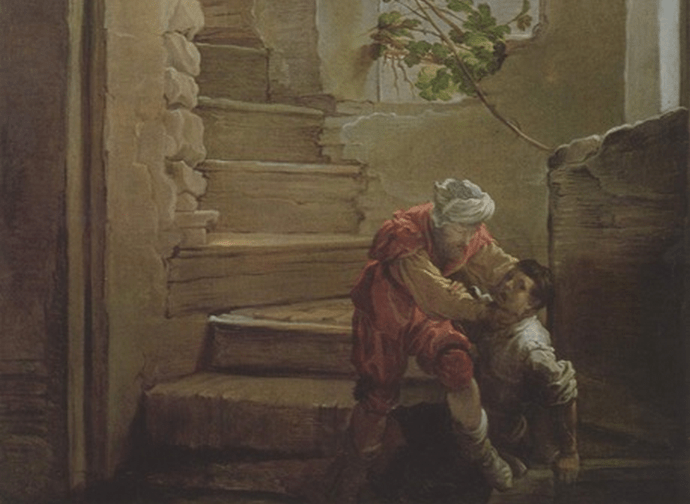
Painting entitled ‘il Mantovano’ by Domenico Fetti

            Unfortunately the forgiven debtor did not show the same mercy and compassion afforded him when he demanded payment from one who owed him money, a very small amount at that. When the king discovered the forgiven debtor’s actions he was angry and handed him over to the jailers. Although his debt was already paid, the king put him in the hands of the jailers to suffer severe discipline until he was willing to forgive others.

            Jesus paid the ultimate price for our salvation. When we, as Christians, consider the forgiveness shown to us by our Lord, how is it possible that we find it hard to forgive others? Let not our ingratitude come to the surface by not forgiving fellow believers for the little debt against us in relation to our great debt we have been forgiven by the Lord. Let us forgive each other as God forgave us.  

Read the Parable of the Unmerciful Servant: https://www.biblegateway.com/passage/?search=Matthew%2018%3A21-35&version=NIV

Bible Studies

The Lord’s Prayer, Jesus’s teaching on Prayer – 6 “Deliver us from evil”

“And lead us not into temptation, but deliver us from evil.” Matthew 6:13 KJV

            Our Lord’s final example in praying is often misunderstood by many. When Jesus taught His disciples to pray ‘And lead us not into temptation,’ He was not referring to being tempted to sin by God. God does not tempt anyone to sin. The book of James says, “Let no one say when he is tempted, ‘I am being tempted by God,’ for God cannot be tempted with evil, and he himself tempts no one.” (Ja. 1:13) The word ‘temptation’ is better translated ‘a trying, or testing,’ and there are several examples of testing in the Bible. Our Lord Jesus Himself was tested (tempted) by Satan in the wilderness, Abraham was tested by God when told to offer his son as a sacrifice, and Job was severely tested when accused by Satan.

            There are occasions when God will test us, or ‘put us to the test’ to test our faith in Him. There may be trials brought upon us by Satan permitted by God in order to prove and test our faith as in the case of Job and the apostle Paul. When we pray, ‘lead us not into temptation’ we are actually praying ‘don’t put us to the test, protect us from the test, and from Satan, the evil one.’ Our Lord does not lead us into any testing or trial in which He is not there and has not made a way of escape for us to bear it. Paul writing to the church in Corinth says, “No temptation has overtaken you that is not common to man. God is faithful, and he will not let you be tempted beyond your ability, but with the temptation he will also provide the way of escape, that you may be able to endure it.” (1 Cor. 10:13)

            Jesus teaches after praying not to be put to the test, we are to ask to be delivered from evil. This is not evil in general but from the evil one, Satan. Many versions of Scripture do reference it as the ‘evil one.’ We are to pray to be delivered from Satan’s schemes, his temptations, and his accusations against us.

            It is important to note that not all temptations (testing), trials or troubles are evil in and of itself. It was noted Jesus Himself was tempted by Satan. Our Lord passed the test and is our example in our troubled times. Abraham and Job also passed the test and were blessed for it. But when Paul asked the Lord to remove the thorn in the flesh from Satan three times, the Lord did not, but said, ’My grace is sufficient for you, for my power is made perfect in weakness.’ And Paul responded ‘Therefore I will boast all the more gladly of my weaknesses, so that the power of Christ may rest upon me.’ (2 Cor. 12:9) Paul also passed the test and serves as an example for us to follow.

            We are to pray that we be delivered from Satan’s evil temptations and not fall into sin. Jesus prayed for His disciples in His High Priestly prayer in John 17:15, “I do not ask that you take them out of the world, but that you keep them from the evil one.” A. W. Pink is quoted as saying, “To be kept from the evil of sin is a far greater mercy than deliverance from the trouble of temptation.” We may pray not to be put to the test, but the more concerning prayer is ‘deliver us from evil,’ Satan, the evil one.

Bible Studies

The Lord’s Prayer, Jesus’s teaching on Prayer – 5 “Forgiveness”

“and forgive us our sins, as we have forgiven those who sin against us.” Matthew 6:12 NLT

            Over the centurie the Bible has been translated from the original manuscripts into many different languages and it is still on-going. We also have several different versions of scripture available to us. According to the Wycliffe Global Alliance, Bible translation is currently happening in 2,846 languages in 157 countries, and there are yet 964 languages in which there are no translations, but the work has started. I open with this to remind us that whichever language text you may be reading, it may vary depending on the version it was translated from. One such example is the fifth petition in the Lord’s Prayer as taught to us by Jesus. Most versions say, ‘forgive us our debts,’ some say ‘forgive us our sins,’ and some traditional Church readings render ‘forgive us our trespasses.’ It is always most important to know the original meaning of certain words in order to apply them correctly to our lives.

            The word translated ‘debt’ in the original Greek is ‘opheilēma’ and means that which is owed, legally due, or a debt. Its secondary meaning is an offence or sin. It is easy to see why ‘debt’ is used in most versions. But a closer look considering the context and how it relates to the whole of scripture, we take note that ‘sin’ is also an appropriate translation and more to the point.

            Jesus instructs to confess our sins to God our Father and ask forgiveness as we have also forgiven those who sinned against us. What Jesus is saying is forgiveness leads to forgiveness. It’s important to note Jesus doesn’t say we ‘should’ forgive others, but that we ‘will’ forgive others. We will forgive others in response to our Father’s forgiveness of our sin when we accepted His Son Jesus as our Savior. Jesus went to the cross and bore the guilt and punishment for our sins which we could never pay. It is a debt none of us could pay. God the Father forgave our debt, he forgave our sin.

            In the fourth petition of the Lord’s Prayer Jesus teaches us to ask for our daily bread, food substances and our material needs. It is only logical Jesus now addresses our daily spiritual need of forgiveness. We have been forgiven an enormous debt and given salvation and eternal life through Jesus, however we are still fallen creatures in our sin nature who still sin daily. As we ask God daily to forgive us of our sin, we are reminded that we are pardoned sinners, and as pardoned sinners we should forgive as we have been forgiven.

            “Be kind and compassionate to one another, forgiving each other, just as in Christ God forgave you.” (Eph. 4:32 NIV)

Bible Studies

The Lord’s Prayer, Jesus’s teaching on Prayer – 4 “Our Daily Bread”

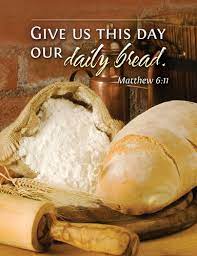
“Give us this day our daily bread.” Matthew 6:11

            The first three petitions Jesus taught His disciples to pray had an upward focus to God, His glory, His kingdom, and His will. Jesus now instructs them to ask God to care for their needs in the next four petitions. Early eighteenth century Theologian Matthew Henry, concerning our need for daily bread, writes the following, “Because our natural being is necessary to our spiritual well-being in this world…… we pray for the necessary supports and comforts of this present life, which are the gifts of God, and must be asked of him, for all the remainder of our lives.” Henry notes that it is needed daily, for it is on-going for the rest of our lives.

            The Greek word translated ‘daily’ is ‘epiousios’ which carries the meaning ‘the bread of necessity’ and ‘the bread that suffices for each day.’ It is what is needed every day to an exact amount, not too little and not too much. In Jesus’s day and in ours today, bread is a staple food item. Fresh baked bread with no preservatives will last about only one day. That was true in Jesus’s day and His point was well understood, it had to be supplied daily. We ask the Lord to meet our need daily need being careful not to ask for excess. Our Lord will supply all we need, not all we want or desire.

            Asking God to give us our daily bread does not only pertain to food in sustaining us. The daily bread we need also consists of all our daily needs to make it through this life as we serve Him. We need clothes on our backs, a place to call home, repairs to our home, transportation, viable employment, health, strength, and other physical needs. In a sense, when we pray for our daily bread, we are also praying for all that encompasses our survival now and in the future. God knows our future and He knows what our need will be before we will. (Mt. 6:8) Our complete trust in God to provide for us is built on the foundation of our faith in Him by praying to provide for our daily needs right into the future.

            Matthew Henry gives us six lessons to learn from the simple petition ‘Give us this day our daily bread.’ Adapted from the king’s English centuries ago for better understanding; First it teaches us self-restraint, to do things in moderation, and not be given to indulgence of appetite. Second, we are taught honesty and hard work through the vocation God has given us to meet our needs. Third, it teaches us not to be concerned about tomorrow, but to have continued faith in God that He will care for His children. Fourth, we ask God to give it to us, not sell it or lend it to us, but to give it. This teaches us to see the mercy of God in caring for us. Fifth, not to us only, but to others of like faith, we pray for their needs as well. Christians are to pray and fellowship together, and through this a heart of love and compassion will develop for those less fortunate. In this the Lord will use us to meet their need. And lastly, it teaches us to increase our desire towards God. As we hunger and anticipate the bread to feed us physically, our hunger to meet with God spiritually will also increase. “Give us this day our daily bread.”