Bible Studies

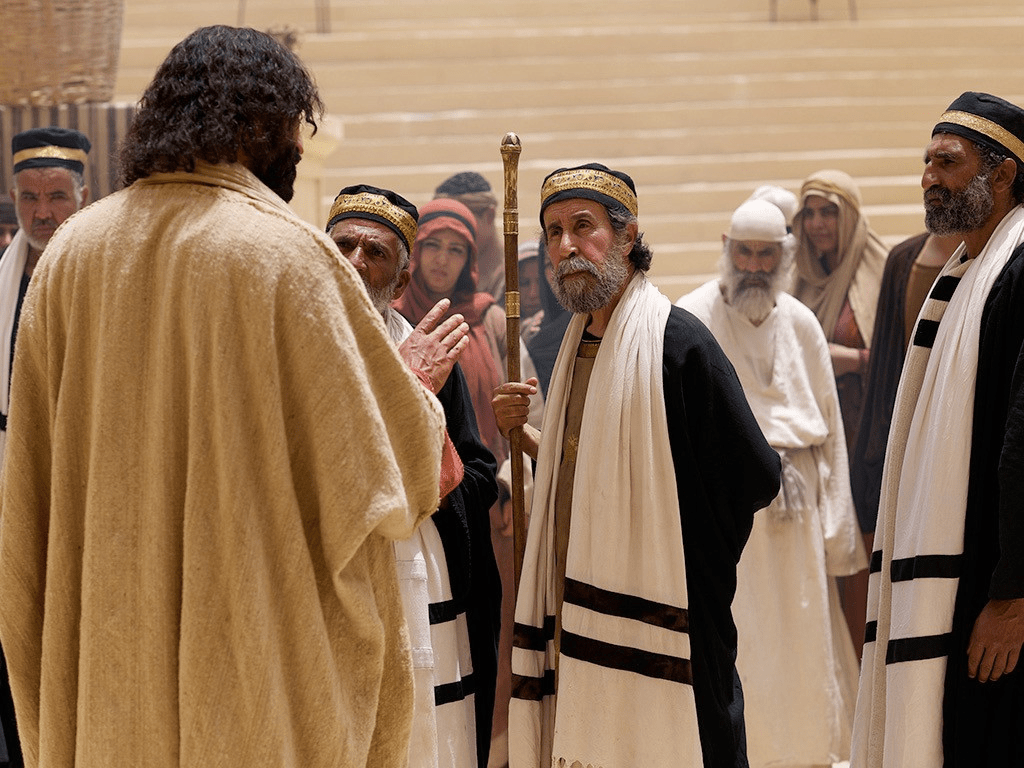
With whom do you stand, with Caiaphas or Christ?

“Now the chief priests and the whole council were seeking false testimony against Jesus that they might put him to death.” Matthew 26:59 ESV

FreeBibleimages.com

Caiaphas was the high priest in Jesus’ day. He was the head of the whole council of Jewish leaders. They were seeking to find an accusation against Jesus to put Him to death. A guilty verdict was already in from the leaders. They now had to find evidence to support their decision. Not finding any credible evidence Caiaphas finally asked Jesus outright, “I adjure you by the living God, tell us if you are the Christ, the Son of God.” (Mt.26:63 b esv) Jesus answered He was and was guilty as charged of blasphemy by the rulers, that is if He wasn’t who He said He was.  

You may find the title of this devotional ‘with whom do you stand, with Caiaphas or Christ?’ insulting. I insulted myself by asking the question. We can’t imagine ourselves making false accusations about Jesus or denying Him in any way. Doing anything intentionally deceitful to harm His name or hurt Him would be unthinkable. But are we capable of unintentionally, and without thinking, giving in to the pressure of the world system and denying Him by not defending Him at every turn?

The world today views Jesus as a historical figure. More people than not accept the fact of a historical Jesus who walked the earth two thousand years ago. The separation comes when asserting this Jesus was more than a good man, teacher, and philosopher, but God the Son the second person in the trinity. Scores of people, even so-called Christian religious leaders of our day, discount that Jesus is God the Son denying the truth of scripture and bowing to the idols of watered-down Christianity of unity, love, peace, and inclusion.

Leaders of watered-down Christianity and those who followed them have it half right. Jesus is indeed all about unity, love, peace, and inclusion. But the missing half is the acknowledgement of sin and the need to repent and confess. Jesus provided more than an example to follow on how to live. He provided the only way on how to live righteously as a child of God. Jesus provided the only way of salvation and eternal life by His sacrifice on the cross of Calvary. Only one who was perfect without sin, not just a good man, is capable to take away the sin of the world. We are all in need of having our sins removed, and all the unity, love, peace, and inclusion will never accomplish that.

Our modern-day world with watered-down Christianity is standing with Caiaphas denying that Jesus is the Son of God. So again, I’ll ask myself the question, ‘with whom do I stand, with Caiaphas or Christ?’ How about you?

Read: Matthew 26:57-68 ESV – Jesus Before Caiaphas and the Council – Bible Gateway

Bible Studies

I AM THE GOOD SHEPHERD: Jesus’ seven “I AM” statements – 4

“I am the good shepherd; I know my own sheep, and they know me, just as my Father knows me and I know the Father. So I sacrifice my life for the sheep. I have other sheep, too, that are not in this sheepfold. I must bring them also. They will listen to my voice, and there will be one flock with one shepherd.” John 10:14-16 NLT

Photo by Sam Carter on Unsplash

Jesus, in His fourth “I am” statement in the gospel of John said, ‘I am the good shepherd.’ ‘Good’ meaning ‘noble’, ‘worthy’ or a model of what a shepherd is to be. This indicates that not all shepherds were good. The responsibility of a shepherd is to care for the sheep, leading them, feeding them, and protecting them from danger even at the risk of their own lives, ultimately saving them from life-or-death situations.

Jesus says the noble, worthy shepherd lays down his life for the sheep. All of us are like sheep in a helpless life-or-death condition having no hope but to be rescued by Jesus, the ‘Good Shepherd.’ The Old Testament prophet Isaiah writes, “All of us, like sheep, have strayed away. We have left God’s paths to follow our own. Yet the LORD laid on him the sins of us all.” (Is. 53:6 nlt) Jesus did just that by laying down His life, offering it as a sacrifice for our sins by dying on the cross, providing the way of Salvation for us.

Throughout history there have been many deceiving shepherds who have led people astray. Prophets from the many false religions in the world administer their deceptive teaching concerning the way of Salvation and eternal life. They may sound sincere and persuasive but, they are sincerely wrong, and it ends in eternal destruction. They strive to lead people into thinking there are other ways to God. But there is no one who has ever said that they laid down their life for the sheep, nor could they, nor did they. There is only one good shepherd. Jesus said, “I am the good shepherd. The good shepherd lays down his life for the sheep.” Follow Jesus, the only Good Shepherd. He will not lead you astray, but into eternal life.

Bible Studies

I AM THE DOOR Jesus’ seven “I AM” statements – 3

“Truly, truly, I say to you, I am the door of the sheep………. If anyone enters by me, he will be saved and will go in and out and find pasture.” John 10:7, 9 ESV

Photo by Michael Windsor on Unsplash

We call our dwelling places home, whether an apartment, a dorm room, a house, or a recently purchased condo all of them have a main door for entrance. Upon going through the door and entering we find peace, security, and safety in the dwelling of our own home. 

In Jesus’ day shepherds would lay across the entrance (or gate) of the sheep pen during the night to guard the sheep, protecting them from danger and unwanted visitors. Within the confines of the sheep pen, their home, the sheep had safety and security. The door was being guarded.

In Jesus’ third ‘I am’ statement of His salvation message Jesus says, ‘I am the door.’ He is the entrance or the gate we must go through to be assured of eternal life in heaven. Entrance to an eternal home in Heaven is only through Jesus Christ and no one else or any effort on our part. In 2024 many people may find this statement intolerant. But these are Jesus’ words, and He says to all of us, ‘If anyone enters by me, he will be saved and will go in and out and find pasture.’ and only there.   

Looking forward to arriving at our earthly homes and entering through the door, we find the comforts, peace and security we have anticipated. And we can be assured of another home we will have for a much longer time than our short stay here on earth, that time is eternity, which does not end. May we look with greater anticipation to arrive at that home. Perhaps you do not have the assurance you will have a home of peace, comfort and security after this life? Romans 10:13 says, “For ‘Everyone who calls on the name of the LORD will be saved.’” (nlt) There is no other way to eternal life in heaven with God the Father except going through Jesus Christ, the door.

Photo by icecloudxx on Pexels.com

Read: John 10:7-10 esv – So Jesus again said to them, “Truly, – Bible Gateway

Bible Studies

I AM THE LIGHT OF THE WORLD: Jesus’ seven “I AM” statements – 2

“Again Jesus spoke to them, saying, ‘I am the light of the world. Whoever follows me will not walk in darkness, but will have the light of life.’” John 8:12 ESV

Photo by Bruno van der Kraan on Unsplash

            Have you ever been kept in the dark about something, totally unaware of certain situations until they came to light? Once they were revealed to you, the darkness that clouded your thinking was removed and you began to see the situation clearly.

            Spiritual darkness works much the same way. The world is blinded by Satan and kept in the dark of Jesus’ message of Salvation. The Bible tells us that “Satan disguises himself as an angel of light.” (2 Cor.11:14 esv) In this deception, Satan tries to convince us that all is well. He appears in many of the false religions of the world and even influences the false prophets portraying themselves as Christian ministers. The last thing Satan wants is for people to come to know the truth about Jesus, and to know of His Salvation plan. His plan is to keep them in the dark, claiming himself to be light.

            Jesus’s second “I am” statement in the gospel of John is “I am the light of the world.” Jesus proclaims those who follow Him will not walk in darkness, confirming there is darkness in the world, spiritual darkness. The apostle John begins his gospel with identifying Jesus as God who made all things and “In Him was life, and the life was the light of men. The light shines in the darkness, and the darkness has not overcome it.” (Jn. 1:4-5 esv) Becoming aware that Jesus is the light and accepting Him as Savoir instantly dispels the darkness in your life. The dark cloud in your life will be lifted by Jesus, God the Son, the light of the world. May you allow His light this Sunday to penetrate the darkness of your soul and see the situation clearly, Jesus’ love for you.

Bible Studies

The Last Passover – The First Lord’s Supper

“When it was evening, Jesus sat down at the table with the twelve disciples.” Matthew 26:20 NLT

Photo by Nico Smit on Unsplash

The last meal Jesus had with His disciples on the night before His crucifixion is known to many as the Last Supper. We have all seen that painting of that historic event. Jesus is seated in the center with the disciples gathered around Him on both sides. He will proceed to break the bread passing it to His disciples, representing His body, and then passing the cup representing His shed blood. But that is not how the meal started.

The gospel of Matthew tells us, “On the first day of the Festival of Unleavened Bread, the disciples came to Jesus and asked, ‘Where do you want us to prepare the Passover meal for you?’” (Mt.26:17 nlt) Jesus was in the habit of celebrating the Passover along with the Jewish community remembering God’s deliverance of Israel from their bondage in Egypt. This was the yearly observance as instructed by the Lord and explained by Moses in the book of Deuteronomy. (Dt.16:1-8) Jesus participated in this Passover meal with His disciples in that upper room that evening. Luke 22:15 expresses Jesus’ anticipation in having this meal with them. “Jesus said, ‘I have been very eager to eat this Passover meal with you before my suffering begins.’” (nlt) John MacArthur notes, “He wanted to prepare them for what was coming.”

Jesus would be crucified the next day as a sacrifice for sin. During the meal Jesus took bread and broke it into pieces giving it to His disciples saying, “Take this and eat it, for this is my body.” (Mt.26:26 nlt) He then took a cup of wine and gave it to His disciples telling them to drink from it explaining, “for this is my blood, which confirms the covenant between God and his people. It is poured out as a sacrifice to forgive the sins of many.” (Mt.26:28 nlt) Jesus carefully explained to them His time had come for His purpose was to lay down His life, His body being broken, and His blood shed for the remission of sin. (Heb.9:22)

The evening started with the Passover meal remembering God’s deliverance of the Jews as He saw the blood of the sacrificial lamb on the doorposts. It was symbolic of Jesus’ soon to be shed blood on the cross of Calvary for our sin. Jesus finished the meal by instituting a new covenant through His blood and a new observance for all those who believe in His name, the Lord’s Supper. Jesus said, “For as often as you eat this bread and drink the cup, you proclaim the Lord’s death until he comes.” (1Cor.11:26 esv) May we always remember our Lord’s death each time we gather for Worship.

Read: Matthew 26:17-29 NLT – The Last Supper – On the first day of – Bible Gateway

Bible Studies

I AM THE BREAD OF LIFE: Jesus’ seven “I AM” statements- 1

“Jesus replied, ‘I am the bread of life. Whoever comes to me will never be hungry again. Whoever believes in me will never be thirsty.’” John 6:35 NLT

FreeBibleimages.org

            Each of the four gospel writers in the New Testament portray Jesus in a manner to stress a certain characteristic of the Son of God. The gospels together create a perfect portrait of Jesus. Matthew’s main focus is on Jesus as the Jewish Messiah and King. Mark, writing to a mostly a Roman Gentile audience focuses on Jesus the servant. Luke with a much broader Gentile audience portrays Jesus as the Son of Man, focusing on His humanity. The apostle John writes to prove the deity of Jesus so that all may believe Jesus is the Son of God, and that believing they may have life in His name. Included in John’s gospel is the seven ‘I Am’ statements Jesus made. We will look at these statements over the next seven weeks.

            Bread is a staple food item that sustains nourishment to our physical bodies. Other staple food products would include; milk, eggs, fruits, vegetables, fish, poultry and other various meat products. But bread seems to have cornered the market (pun intended) on what foods are necessary to stock up on before an approaching snowstorm in my part of the Untied States along with milk and eggs.

            Physical hunger has been satisfied, physical bodies were nourished, and lives sustained for thousands of years by the bread provided for us through the baking process. Our bodies need food to survive. Many people who were in the crowd when Jesus fed the five thousand followed after Him the next day and Jesus rebuked them saying “I tell you the truth, you want to be with me because I fed you, not because you understood the miraculous signs. (Jn.6:26 nlt)

            The followers were only thinking of the physical, the here and now, much like we do today. Jesus then proceeded to tell them to believe in Him. He was the bread of God which came down from heaven and gives life to the world, in which they responded “always give us this bread.” (Jn.6:33-34) Again, only thinking in physical terms, the same is true today.

            Jesus declares, “I am the bread of life.” Those who accept Jesus (the bread of life) for Salvation will receive the nourishment needed to sustain eternal life. This is the first of seven “I AM” statements that Jesus made in the Gospel of John concerning His deity and the message of Salvation. Have you received “Jesus the bread of life?”

Read: https://www.biblegateway.com/passage/?search=John%206%3A22-51&version=NLT

Bible Studies

“The Parables of the Lost and Found” Parables of Jesus

“In the same way, there is joy in the presence of God’s angels when even one sinner repents.” Luke 15:10 NLT

FreeBibleimages.org

            We have come to the last week of Jesus’ parables with three more all concerning the lost and found. These parables are all aimed at the Pharisees and the teachers of the Law. They despised the tax collectors and the sinners who always gathered around Jesus to hear Him teach and to eat with Him, but they despised Jesus even more. In telling these stories Jesus would contrast the Pharisees exclusiveness with His love and compassion for all including the outcasts of society. These parables relate to every person who has ever walked this earth and those who will walk it in the future. It is about the lost and found.

            “So Jesus told them this story: ‘If a man has a hundred sheep and one of them gets lost, what will he do? Won’t he leave the ninety-nine others in the wilderness and go to search for the one that is lost until he finds it?’” (Lk.15:3-4 nlt) A familiar painting comes to mind which most of us seen with Jesus carrying a lost sheep over His shoulders. That one lost sheep represents you and I lost in our sin before we came to Christ. He calls and looks for each of us individually. It’s not a group thing, it’s you by yourself and it’s me by myself. Jesus says, “…. there is more joy in heaven over one lost sinner who repents and returns to God than over ninety-nine others who are righteous and haven’t strayed away!” (Lk.15:7 nlt) It’s about you and me, the lost and found.

            In the next parable, Jesus speaks of a woman who lost one of her ten silver coins. There were many women who followed Jesus, and this would be of considerable interest to them. A silver coin in those days was a day’s wages and she lost it somewhere in her house. She lights a lamp in the dark one room dwelling and sweeps until she finds it. When she finds the coin, she calls her friends to rejoice with her for finding what was lost. Jesus’ heavenly meaning in this earthly story is, “In the same way, there is joy in the presence of God’s angels when even one sinner repents.” (Lk.15:10 nlt) Again there is rejoicing in heaven over one individual who has come to Christ.

            Jesus is not yet finished on this subject and to drive the point home, He tells a third parable. “…. Jesus told them this story: A man had two sons. The younger son told his father, ‘I want my share of your estate now before you die.’ So his father agreed to divide his wealth between his sons.” (Lk.15:11-12 nlt) This parable, known as the ‘Parable of the Prodigal Son’, is the most familiar of all Jesus’ parables. It also has more than one heavenly meaning. The younger son was greedy and impatient wanting his share of his father’s estate while he was still alive. This would have been extremely rare but not unheard of. The father would need to sell off part of his property up to a third, which was the portion allotted to a younger son. The father had done that, perhaps unwisely, and his son took the money and ran. “A few days later this younger son packed all his belongings and moved to a distant land, and there he wasted all his money in wild living.” (Lk.15:13 nlt)

            The younger son blinded by greed and selfishness failed to remember a few important things about life. Good times don’t last forever. A party life will eventually lead to ruin. Money disappears quickly when spent frivolously. And, of course, everything comes to an end. His end came sooner than expected and during the worst possible time, a serve famine. It is often during these times prodigals of all ages, both men and women, hear from the Lord and come to their senses. The fun-loving partying son finally came to his senses and started his way back home. Upon his return he would confess his foolishness to his father and ask to take a position as one of his father’s hired servants. But the father had other plans. And our heavenly Father has other plans for us when we foolishly run away from Him. “So he returned home to his father. And while he was still a long way off, his father saw him coming. Filled with love and compassion, he ran to his son, embraced him, and kissed him.” (Lk.15:20 nlt) This parable is sometimes referred to as the ‘Parable of the Father’s Love’, and we can see why.

            The father demands a celebration be held in honor of his son’s return. All were enjoying the celebration with music and dancing. But there was one who did not celebrate by refusing to join the party. The older brother was furious at his father’s actions that he would welcome his brother back and with a party after what he had done. He looked at his brother as unworthy of such a celebration and forgiveness. A lesson directed right back at the Pharisees who thought those tax collectors and sinners were unworthy to eat with Jesus.

FreeBibleimages.org

            These three parables of the lost and found show the Lord’s love for each one of us. We are all lost in our sin, and He and all of heaven rejoices when we turn to Him for salvation and for forgiveness when we go astray. As the father in the parable explained to his other son, “We had to celebrate this happy day. For your brother was dead and has come back to life! He was lost, but now he is found” (Lk.15:32 nlt)

Read: Luke 15 NLT – Parable of the Lost Sheep – Tax – Bible Gateway

Bible Studies

“Clever Christianity” The Parable of the Shrewd Manager: Parables of Jesus

 “The rich man had to admire the dishonest rascal for being so shrewd. And it is true that the children of this world are more shrewd in dealing with the world around them than are the children of the light.” Luke 16:8 NLT

Photo by Pixabay on Pexels.com

            This week’s parable comes directly from life itself, an earthly story where all the characters are unjust and corrupt. How can we derive a heavenly meaning with such deception? With our sinful minds this is not possible, but Jesus is telling the story.

            A rich business owner had a manager working for him who ran the operation. The manager had authority over the business as granted by the owner. He was trusted in all areas of the business including financial terms, acting as an agent for the owner. It was reported to the owner that his manager was wasting his money. Jesus doesn’t give us the exact details of the mismanagement only that he was wasteful to the point the owner demanded an accounting. “So the employer called him in and said, ‘What’s this I hear about you? Get your report in order, because you are going to be fired.’” (Lk.16:2 nlt) The manager, realizing his position was about to come to an end, worked his status as a trusted agent to his advantage one more time.

            As Jesus describes, the manager acted shrewdly. He had a plan and said, “Ah, I know how to ensure that I’ll have plenty of friends who will give me a home when I am fired.” (Lk.16:4 nlt) He secured his future with the means he had afforded to him although unjustly. The manager arranged a meeting with his boss’s clients and adjusted their bills to a lower amount which he had the authority to do. They would be grateful for the reduced payment and most likely will remember him when he was unemployed. Not unlike how business is done in 2024, people acting shrewdly to line their own pockets taking care of number one, themselves.

            The owner, though outsmarted, revealed his character by commending his manager for his wittiness. “The rich man had to admire the dishonest rascal for being so shrewd.” (Lk.16:8a nlt) And this is where Jesus turns this earthy story of dishonest rascals into a heavenly meaning. Jesus says, “And it is true that the children of this world are more shrewd in dealing with the world around them than are the children of the light.” (Lk.16:8b nlt) Jesus makes the comparison between non-Christians and Christians on how they use earthly resources for the future and to gain friends. The unbelievers of this world do a better job. Jesus now gives us the lesson, “Here’s the lesson: Use your worldly resources to benefit others and make friends. Then, when your earthly possessions are gone, they will welcome you to an eternal home.” (Lk.16:9 nlt)

Photo by Andre Ouellet on Unsplash

            Jesus noted that the unjust and corrupt of this world are smart enough to use their resources to make friends and plan for the future benefiting themselves. Christians today should do the same, but to benefit others. Clever Christianity is using our earthly resources for more than earthly matters but also heavenly ones. We are to use our resources honestly and wisely to help others, to gain friends, to lead others to Christ populating heaven so when we arrive, they will welcome us. And the Lord will commend all clever Christians for using what He has given us to serve Him.

Read: Luke 16:1-9 NLT – Parable of the Shrewd Manager – Jesus – Bible Gateway

Bible Studies

Who Is My Neighbor? The Parable of the Good Samaritan: Parables of Jesus

“Then a despised Samaritan came along, and when he saw the man, he felt compassion for him.” Luke 10:33 NLT

FreeBibleimages.org

            Continuing our study of Jesus’ parables in Biblical Insights, this week we look at the Parable of the Good Samaritan. We have said a parable is an earthly story with a heavenly meeting, and we are going to stick to that. However, it is interesting to note the Wycliffe Bible Commentary suggests this parable may have been a report of an actual occurrence. Nevertheless, Jesus told the story so we can be sure it has a heavenly meaning whichever the case. It is another one of Jesus’ teachings for us to pay particular attention to.

            The backstory to this parable is what preceded the question ‘Who is my neighbor?’ The question was asked by a Religious Jewish Law expert who wanted to trap Jesus in a question. He asked Him, “Teacher, what should I do to inherit eternal life?” (Lk.10:25b nlt) Jesus asked him ‘how do you interpret the Law’ since he was an expert. The man answered correctly, “You must love the LORD your God with all your heart, all your soul, all your strength, and all your mind.” And “Love your neighbor as yourself.” (Lk.10:27 nlt) But after Jesus confirmed his answer, the expert revealed his self-righteous character by asking ‘who is my neighbor.’ Strict religious Jews would never consider any non-Jew as a neighbor. He needed further explanation which Jesus was more than willing to provide.

            Jesus tells the story of an unfortunate Jewish traveler on the road from Jerusalem down to Jericho. It was a 17-mile journey descending over 3,000 feet into Jericho on an isolated, rocky, and winding road known for its many assaults from robbers hiding among the rocks. The man was attacked by the waiting criminals, “They stripped him of his clothes, beat him up, and left him half dead beside the road.” (Lk.10:30b nlt) What happened to this traveler is also a common occurrence in our day. People are victims of assault among other crimes within our society. How we, as Christians, respond to these victims will indicate how well we understand who our neighbors are.

            Three individuals had shown their true understanding of being a neighbor. Sadly, two religious ministers, a priest and a Levite temple worker failed miserably. They both passed by on the other side without giving it a thought to help. “By chance a priest came along. But when he saw the man lying there, he crossed to the other side of the road and passed him by. A Temple assistant walked over and looked at him lying there, but he also passed by on the other side.” (Lk.10:31-32 nlt) One could speculate the reason or reasons these two failed to help the wounded traveler. Whatever it was outweighed the importance of caring for one in tremendous need. Perhaps it was religious pride or their religious legalism not to be defiled if they had touched him and he was dead surfaced in their mind. Either way they both left him unattended.

            In life it is often those we expect to help that do not, and those we wouldn’t expect to help do so and even go the extra mile. The same was true in Jesus’ day. In our story it says, “Then a despised Samaritan came along, and when he saw the man, he felt compassion for him.” (Lk.10:33 nlt) The Jews and the Samaritans did not get along. The Samaritans were looked down upon by the Jews, yet this Samaritan had compassion on this Jewish man when his own fellow Jews passed him by. This good Samaritan cleaned and bandaged the man’s wounds, put him on his own donkey, took him to an inn, and nursed him overnight. Then this despised Samaritan went the extra mile, “The next day he handed the innkeeper two silver coins, telling him, ‘Take care of this man. If his bill runs higher than this, I’ll pay you the next time I’m here.’” (Lk.10:35 nlt) The good Samaritan accurately displayed his understanding of who is his neighbor. Anyone with a need, anyone who needs help, whether rich or poor, regardless of skin color or ethnic background, male or female were all the good Samaritan’s neighbors and should be ours.

FreeBibleimages.org

            After telling the story, Jesus asked the Jewish Law expert, ‘“Now which of these three would you say was a neighbor to the man who was attacked by bandits?’ The man replied, ‘The one who showed him mercy.’ Then Jesus said, ‘Yes, now go and do the same.’” (Lk.10:36-37 nlt) The lesson for the Law expert and us is that every person has the responsibility to be a neighbor to all who cross their path, especially those in need. There are no exceptions.

Read: Luke 10:30-37 NLT – Parable of the Good Samaritan – Jesus – Bible Gateway

Bible Studies

Don’t Be Locked Out! The Parable of the Ten Bridesmaids: Parables of Jesus

“But while they were gone to buy oil, the bridegroom came. Then those who were ready went in with him to the marriage feast, and the door was locked.” Matthew 25:10 NLT

Photo by My Car Key Hero on Pexels.com

The experience of being locked out of something creates feelings of loneliness and abandonment. This may even occur when you lock yourself out of your home, automobile, or your private office. The good news is that these lockouts are not permanent, and outside of some embarrassment you’ll be back in. But there are some permanent lockouts in life, such as being denied access to where you lost that privilege due to your own actions. And there is a greater future denial of access that is due to not acting while we have the time before the door is locked keeping us out.

Preparedness for the Lord’s return is the heavenly meaning of Jesus’ story of the ten bridesmaids. And yes again, the kingdom of heaven is in view. Jesus starts by saying, “Then the Kingdom of Heaven will be like ten bridesmaids who took their lamps and went to meet the bridegroom.” (Mt.25:1 nlt) The bridesmaids were to wait in anticipation for the bridegroom to come and receive his bride beginning the wedding ceremonies. They were to be ready to meet him and be in the procession to the bridegroom’s home. But as we will see, not all of them were ready. They didn’t make it inside the reception hall.

Jesus told this parable about a future lockout as part of His Olivet Discourse in the gospel of Matthew. Among the ten bridesmaids “Five of them were foolish, and five were wise.” (Mt.25:2 nlt) In Jewish weddings of Jesus’ day, the bridegroom would go to his bride’s home being met by the bridesmaids for religious ceremonies before taking his bride to his home for continuation of the festivities. The bridesmaids were to be ready and watching for the coming of the bridegroom. “The five who were foolish didn’t take enough olive oil for their lamps, but the other five were wise enough to take along extra oil.” (Mt.25:3-4 nlt) But the bridegroom was delayed in this parable and falling asleep the bridesmaids were suddenly awakened with the announcement of his arrival.

At midnight the announcement was made the bridegroom was on his way.” All the bridesmaids got up and prepared their lamps.” (Mt.25:7 nlt) Light was needed to make their through the darkness to the bridegroom’s home. The foolish ones realized they did not have enough oil to make their way into the procession. They “asked the others, ‘Please give us some of your oil because our lamps are going out.’” (Mt.25:8 nlt)

This is a picture of us in the world today. The bridegroom represents Jesus Christ and His return. People today are the bridesmaids, both the foolish ones, and the wise ones. The foolish ones brought no oil for their lamps to light the way to the bridegroom, the wise ones did. Oil being symbolic in the Bible as the Holy Spirit is what the foolish ones did not bring with them. Tragically this represents all who make a profession of being a Christian (bridesmaid) only to find out they never accepted Christ as their savior. They don’t have the His Spirit in them, the oil for the lamp to light the way to the kingdom of heaven.

The five foolish bridesmaids tried to buy oil for their lamps at the midnight hour, but all the stores were closed, it was too late. Upon returning to the bride’s home, the door was shut and locked. They requested entrance but the bridegroom responded, “Believe me, I don’t know you!” And then he added a warning for us today, “So you, too, must keep watch! For you do not know the day or hour of my return.” (Mt.25:12-13 nlt) Jesus is going to return one day suddenly and unexpectedly and if you haven’t had your lamp filled with the presence of Christ by accepting Him for salvation, it will be too late. Fill your lamp today and don’t be locked out!

FreeBibleimages.org

Read: Matthew 25:1-13 NLT – Parable of the Ten Bridesmaids – Bible Gateway