“News about him spread all over Syria, and people brought to him all who were ill with various diseases, those suffering severe pain, the demon-possessed, those having seizures, and the paralyzed; and he healed them.” Matthew 4:24 NIV
I’m sure many of you have heard of the term “going viral.” You may have used it yourself in describing something you have seen going viral. The source for the term used today comes as a product of social media outlets, mostly through videos, comments, and news events shared on these various sites. As more and more people share these posts, it rapidly multiplies the coverage on social media platforms making it almost impossible to miss. You may or may not agree on the content, but you cannot deny its effectiveness in reaching people.
Although the term “going viral” is related to today’s technological advancements, the concept of “going viral” is as old as history itself. It may have taken a little longer but the effects were still the same. The more spectacular and unbelieving the news events seem to be the more it would be spread abroad. One who has personally seen or experienced such an event would be most excited to share the news. Early in Jesus’s ministry on earth news about Him went viral as He taught, proclaimed the Gospel, and healed people of every kind of disease and sickness.
The people who witnessed and experienced the healings shared the news of Jesus with the methods of their day. No doubt the news spread quickly and soon people from all Syria were coming to Him for healing and casting out demons. As the word continue to spread “Large crowds from Galilee, the Decapolis, Jerusalem, Judea and the region across the Jordan followed him.” (Mt. 4:25) The good news of Jesus Christ was “going viral.”
Today we have the same good news the people had in Jesus’s day. The fact is we have a more complete understanding of who Jesus is. We certainly have more advanced capabilities to share what we know and have experienced about Jesus. Are we using all our available resources to share the Gospel of Jesus Christ and seeing it ‘going viral’?
The following devotional was written on February 9, 2020
“It is better to trust in the LORD than to put confidence in man. It is better to trust in the LORD than to put confidence in princes.” Psalm 118:8-9 KJV
Have you ever thought about where you place your trust? There are many days when we need help and guidance as we travel on the road of life. Where do you go and who can you trust? Do you go to others who are smarter than you? This is not a bad idea if they are qualified to help. Perhaps you rely on the government and those in positions of authority. Again, these are sensible choices for help in areas beyond your expertise or in seeking justice. Do you rely on yourself, not trusting anyone, no matter the situation? Not exactly the best idea! But there is one that you can trust completely in everything, the Lord God Almighty!
So where is your trust? I must ask myself the same question. In preparing this devotional this week, I became aware of some significant changes in my place of employment. My first reaction was how we get through this. What adjustments need to be made? What resources do we need? I applied the appropriate management plan of action, but in reality it got the best of me as it so often does. Then the Lord reminded me, in over forty years of management, there has never been a time when He had failed to provide for me. I failed to trust Him first before proceeding with the plan of action.
The psalmist writes, “It is better to trust in the LORD than to put confidence in man,” and that includes yourself. . “It is better to trust in the LORD than to put confidence in princes.” Put your trust in the one who knows you intimately, even better that you know yourself. Trust the Lord who created the universe and gave you life. He knows a lot more than you and I. He will lead you in the right direction. Where is your trust?
For further study in trusting God, Read Psalm 146;
“Then Jesus said to them, “You foolish people! You find it so hard to believe all that the prophets wrote in the Scriptures. Wasn’t it clearly predicted that the Messiah would have to suffer all these things before entering his glory?” Luke 24:25-26 NLT
The story of Jesus is not only a New Testament story, but an Old Testament one as well. Some people today dismiss the relevancy of the Old Testament scriptures in modern day Christianity. But it is in those very books of the Old Testament that speak of Him and actually predict His birth and His death to save sinners. Jesus Himself said concerning the Old Testament scriptures, “it is these that testify about me.” (Jn 5:39)
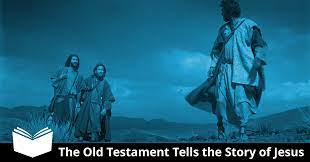
On the evening of Jesus’s resurrection, two men were on their way to Emmaus from Jerusalem. As they were discussing the events of that momentous weekend, Jesus came alongside and walked with them. He asked them what they were talking about. They found it hard to believe that anyone would not have known the events of the last three days. They told of the crucifixion of Jesus occurring on Friday, and noted that they anticipated that Jesus was the one who was going to redeem Israel. Then they told of the amazing discovery that morning of finding His tomb empty with angels declaring He was alive.
Jesus responding to His travelling companions points to the Old Testament scriptures and admonishes them that if they had clearly read the scriptures and believed them they would have not been surprised at the events that took place. Isn’t that much like today? We do not read the scriptures as we should, both the Old and New Testaments. They both tell of Jesus, His Story of redeeming sinners and reconciling us to God. It’s time to familiarize ourselves once again or perhaps for the first time, with the Old Testament of the Bible, it’s about Jesus; an Old Testament Story.
The most notable sermon of all time undoubtedly is Jesus’s Sermon on the Mount. It is where we find the Beatitudes recorded for us in the gospel of Matthew. Jesus begins by saying, ‘Blessed are the poor in Spirit’ which the first of the often recited Beatitudes by many followers of Jesus. But how many of you knew there are seven beatitudes mentioned in the book of Revelation. Full disclosure; I’m sure I read them many times, but never considered them as a collection of Beatitudes (blessings) ,after all they are in the apocalyptic book of Revelation. But then again, what could be more of a blessing than the Lord’s return.
The book of Revelation actually begins with a blessing. Beatitude #1 is; “Blessed is the one who reads aloud the words of this prophecy, and blessed are those who hear, and who keep what is written in it, for the time is near.” (Rev. 1:3 ESV) The apostle John was instructed to write to the seven churches in Asia Minor, which is modern day Turkey. This letter was to be read aloud. The one who reads it is blessed, and those who hear, pay attention, and obey it will also be blessed. Most likely, John wanted the book to read upon arrival for the time is near. It would serve as an encouragement for the church. The time is still very near, as the return of Jesus is the next great event to come. All other prophecy presented in Scripture before Christ’s coming has been fulfilled. Blessed are we when we heed with what is in this prophecy of the next event.
Beatitude #2 comes along in chapter 14; “And I heard a voice from heaven saying, ‘Write this: Blessed are the dead who die in the Lord from now on.’ ‘Blessed indeed,’ says the Spirit, ‘that they may rest from their labors, for their deeds follow them!’” (Rev. 14:13 ESV) The believer in Christ has assurance of eternal life after this life is over in contrast to those who die rejecting Jesus Christ as Savior.
Revelation 16 is where we find Beatitude #3; “Behold, I am coming like a thief! Blessed is the one who stays awake, keeping his garments on, that he may not go about naked and be seen exposed!” (Rev. 16:15 ESV) We are blessed when we are ready and expecting Christ’s return at any moment. A thief anticipating to break into your home is not going to announce ahead of time when to expect his arrival. Jesus encourages us to be ready as a watchful homeowner and a solider standing guard. A guard caught napping would be stripped of his clothes leaving him naked causing embarrassment. May this not be us, but let us be on guard in anticipation.
Beatitude #4; “And the angel said to me, ‘Write this: Blessed are those who are invited to the marriage supper of the Lamb.’” (Rev. 19:9a ESV) The invitees are all believers saved before Pentecost, all tribulation believers, and those believers alive during the Millennium. John MacArthur notes, ‘this is not the bride of Christ (the church), but the guests. The bride doesn’t get invited, she invites.’ All are glorified and will reign with Christ in His Kingdom.
A view of The Millennium Kingdom ushers in Beatitude #5, “Blessed and holy is the one who shares in the first resurrection! Over such the second death has no power, but they will be priests of God and of Christ, and they will reign with him for a thousand years.” (Rev. 20:6 ESV) All who die in Christ will inherent eternal life. Their souls are in Heaven with Him. At the Lord’s return their bodies will be resurrected and they we reign with Him for a thousand years on the earth in their new glorified physical bodies. There will be no second spiritual death; eternal separation from God in the lake of fire.
Beatitude #6 and #1 are verily similar in this respect, to keep the words written in this book. “And behold, I am coming soon. Blessed is the one who keeps the words of the prophecy of this book.” (Rev. 22:7 ESV) This blessing also includes another admonition of Jesus’s soon return. Yes, he is coming soon for the time is near.
It is only fitting the last chapter in the book of the Bible provides the last Beatitude. Beatitude #7 says, “Blessed are those who wash their robes, so that they may have the right to the tree of life and that they may enter the city by the gates.” (Rev. 22:14 ESV) Perhaps the best blessing saved for last. Those who have confessed and repented of their sin having trusted in Jesus Christ have been forgiven and had their sin stained robes washed and cleaned and now have access to the tree of life in the Heavenly city.
Now that we have reviewed the ‘Seven Beatitudes’ found in the book of Revelation, may we be able to say with John the Revelator, “He who testifies to these things says, ‘Surely I am coming soon.’ Amen. Come, Lord Jesus!” (Rev. 22:20 ESV) What a Blessing!
“Do you have the gift of speaking? Then speak as though God himself were speaking through you. Do you have the gift of helping others? Do it with all the strength and energy that God supplies. Then everything you do will bring glory to God through Jesus Christ. All glory and power to him forever and ever! Amen.” 1 Peter 4:11 NLT
Living in the 21st century certainly has its advantages. The advances I have seen in my lifetime could never have been imagined as coming into being. Most advances are aimed at making everything easier and more efficient. This is especially true in the area of technological advancement. Who would have thought a program could be invented to assist in writing an essay or term paper for you, along with helping you through the most difficult math exam. I could have used that in my college days for my Math of Finance exams. These advancements come under the auspices of what is known as AI, (Artificial Intelligence), and the creation of ChatGPT. It almost sounds futuristic, but it is not, it is now.
How should a Christian view AI and all its components such as ChatGPT with its learning, reasoning, language, and problem solving through “the ability of a digital computer or computer-controlled robot to perform tasks commonly associated with intelligent beings.” (1) As Christians we should always take advantage of every opportunity to spread the gospel. It started back in the 15th century when Johannes Gutenberg invented the printing press. Radio airwaves were introduced in the early 20th century and television broadcasts followed in the mid to late 20th century. Before the turn into the 21st century we had the establishment of the internet taking place and now we have advanced to the point in possessing technology in the palm of hands to listen to, watch, or read anything we choose.
We should use all the avenues and vehicles available to us in advancing the message gospel, but we need to be careful that our message is the truth of Scripture through our words and not words artificially generated. Ours words that are spoken or written are to be our words. Basic rules in writing apply to cite any references made that are not your own. Quote and document with accuracy statements and writings from other authors giving them credit. This may seem elementary but if words, phases, sentences, and even projected thoughts are extracted from ChatGPT are they yours, and if not, you can’t claim them. This is not to say we cannot edit our work to ensure proper grammar, punctuation, etc. with proper sources. But our work needs to be ours.
The apostle Peter gives us good advice, although I’m sure he never anticipated AI or ChatGPT in his day. He writes in 1 Peter “Do you have the gift of speaking? Then speak as though God himself were speaking through you…….…. Then everything you do will bring glory to God through Jesus Christ.” (4:11) Our responsibility as Christians is to be truthful and honest in all we do, especially in presenting the gospel of Jesus Christ bringing glory to God.
“But Paul said, ‘I am not out of my mind, most excellent Festus, but I utter words of sober truth.’” Acts 26:25 NASB
When I was a young boy there were certain times I was afraid to tell the truth. These occasions were associated with something I had said or done wrong and telling the truth would have dire consequences for me in the form of punishment. Making up a good story was not an option; my parents would never buy it. They would know I wasn’t telling the truth. So out came the truth with the consequences of punishment along with it.
Today, many years later, telling the truth can still have consequences for me although not due to the same circumstances. The apostle Paul in his defense of the gospel said, “I am not out of my mind…….but I utter words of sober truth.” Today if we preach Jesus Christ, the true gospel message, even using His words we are sometimes accused of being irrational or “out of our minds.” We are accused of being insensitive, offensive, and narrow minded.
One very important point to remember is that we are not making up a good story, we are telling a good story, the Greatest Story ever to be told. And we are commanded by Jesus Himself to tell the story (Mt.28:19-20.) Yes, there may be consequences, but Jesus promised never to leave us or forsake us (Heb.13:5.) Let us not be afraid of the consequences, Let us not be afraid to ‘Tell the Truth!’
“Repent of your sins and turn to God” Matthew 3:2 NLT
Those who need to make a valid point will, with emphasis, shout in delivering their message bringing home the main point. John the Baptist, known as the forerunner of Jesus the Messiah, had a message to bring to the people of his day. “His message was, Repent of your sins and turn to God, for the Kingdom of Heaven is near.” (Mt. 3:1b, 2) His ministry and message was predicted in the Old Testament book of Isaiah, “Listen! It’s the voice of someone shouting, ‘Clear the way through the wilderness for the LORD! Make a straight highway through the wasteland for our God!’” (Is. 40:3) The call is to repentance, preparing oneself by radically changing their life to live morally and spiritually in the sight of God.
John the Baptist shouted his message of repentance in the wilderness of Judea. Located a full day’s journey from Jerusalem along the western shore of the Dead Sea didn’t prevent those from coming to him to be baptized repenting of their sins. So many people were coming to him from the entire region that it prompted an investigation from the Pharisees and Sadducees. The religious leaders of the Jews had it figured they had no need of repentance due to their heritage as the children of Abraham. But, this repentance was of a personal nature which needed to be dealt with.
That message was something to shout about in John’s day as the Jewish people looked forward to the coming Messiah and the Heavenly Kingdom. There was a great need to get right with God and leave the traditions of men. That same message is something to shout in our day, “Repent of your sins and turn to God.” Some are following their own path which will lead to destruction. Many others are still following the traditions of men, feeling secure in their church attendance or membership. Our family heritage or church affiliation will not get us into the Kingdom of Heaven.
“Guard your heart above all else, for it determines the course of your life.” Proverbs 4:23 NLT
“Stay alert! Watch out for your great enemy, the devil. He prowls around like a roaring lion, looking for someone to devour.” 1 Peter 5:8 NLT
Dr. Erwin Lutzer in his book ‘The Church in Babylon’ wrote the following, “Maintaining mental and spiritual purity while surrounded by the temptations of technology thrusts us into a new level of satanic warfare…….Satan has marked technology as his territory. He says, ‘This is mine; here I rule.’” Living in the 21st century without the use of technology is, for all practical purposes, impossible. So what’s a Christian to do?
Centuries ago King Solomon gave us the answer in one of his many proverbs. “Guard your heart above all else, for it determines the course of your life.” (Pr. 4:23) But how is one to guard their heart when even the prophet Jeremiah said, “The human heart is the most deceitful of all things, and desperately wicked. Who really knows how bad it is?” (Jer. 17:9) On our own we cannot accomplish this, but through Jesus Christ and His Spirit within us, all things are possible. All things have become new for the Christian, but we still have the sin nature. Our sin nature will continually try to draw us away from mental and spiritual purity if we let our guard down.
Keeping our guard up involves being aware of everything that is able to distract us by keeping us away from the things of God. Today’s technology in all its forms is most likely the biggest culprit with our smartphones at the top of the list. For most of us, myself included, our smartphones have become our hearts (determining the course of our life). How well do we guard our smartphones? Are we using them as the necessity of life in our modern times or are we allowing them to become a distraction to all that is important? Are we using them for God’s glory or our own pleasure? Are we aware of the tendencies of Satan prowling around the internet and social media looking to devour us?
May we continue to look to God thanking Him for the usefulness in the gains of technology to better our lives and promote the gospel, and may we continue to ask Him to help us guard our hearts by guarding our smartphones.
“The LORD detests the sacrifice of the wicked, but the prayer of the upright pleases him.” Proverbs 15:8 NIV
One of the many traits of humans made in the image of God (Gen. 1:27) is the sense of kindness. On our own with are sinful nature we would never show kindness to anyone except ourselves. We all have been born with a sin nature, but our first parents, Adam and Eve, were created perfect in the image of God. The fall of Adam and Eve created a sin nature in all humanity going forward, but the characteristics of being made in the image of God; love, righteous anger, a sense of right and wrong, and emotions including kindness are still part of our DNA of God’s image.
The ability to show kindness is solely God given. Scouting programs inspire young children to serve others doing good deeds in their community and helping those in need. The Boy Scouts slogan is, ‘Do a Good Turn Daily.’ But even the image of God as the source and the example of kindness administrated by the scouts, our sin nature gives us the ability to do a good deed with the wrong motives. How many times have you heard or said it yourself, ‘I’ve done my good deed for the day.’ This attitude equates doing a good deed as a service to God pleasing Him. In other words, ‘I’m good for the day.’ But God wants much more from us than that.
One of the many proverbs of Solomon addresses, in direct terms, is the attitude of trying to please God by doing a good deed. “The LORD detests the sacrifice of the wicked, but the prayer of the upright pleases him.” (15:8) The Lord God sees our heart and knowns our attitude in the good deed we are doing. The deed itself may be good, but trying to score points with God is not what pleases Him. God is pleased as we engage with Him in prayer. He desires a growing relationship with the ones who were made in His image to do good deeds. Make your first good deed for the day be talking with God and he will give you more good deeds than you can handle, and God will be pleased, and many people will be blessed.
“There is a way that seems right to a man, but its end is the way to death.” Proverbs 14:12 ESV
“The fool says in his heart, “There is no God.” Psalm 14:1 ESV
A familiar saying throughout the years has been, “All roads lead to heaven” or “All roads lead to God.” Many times this statement goes unchallenged, but those who adhere to this logic are an example of Solomon’s proverb, “There is a way that seems right to a man, but its end is the way to death.” What seems right based on feelings, philosophy, astronomy, good works towards mankind, or being a follower of one of the many religions in our world today is a false hope. God has laid out His plan of salvation through His Son, Jesus Christ in the written scriptures, His book to us, the Holy Bible.
By rejecting what is clearly spelled out for us in the Bible, one is actually portraying what Solomon’s father, King David wrote, “The fool says in his heart, ‘There is no God.’” As the masses flock to the false religions of the world or try to fend for themselves with good works, they are saying the God of the Bible does not exist. They imply He misspoke and has given us an incomplete Word, but God’s Word stands complete and it stands true. Jesus said, “I am the way, and the truth, and the life. No one comes to the Father except through me.” (Jn. 14:6)
So how about you? Which road are you on? Are you on one of many religious roads throughout history? Are you relying on your good works, your kindness, and your love for others? Are you on the road of trusting what feels right and reasoning through science and philosophy? “There is a way that seems right to a man, but its end is the way to death.” Jesus says there is only One Road that leads to heaven.











 Word for the Soul