“The LORD helps the fallen and lifts those bent beneath their loads. The eyes of all look to you in hope; you give them their food as they need it. When you open your hand, you satisfy the hunger and thirst of every living thing.” Psalm 145: 14-16 NLT
You may have heard of the theological term ‘common grace’ and wondered of its meaning. Simply put, common grace is God’s blessings bestowed upon every person regardless of whether one is a believer or unbeliever. Blessings in nature of abundant rain or sunshine. Blessings of divine providence in near misses of dangerous storms or potential accidents. Blessings of food sources given to us from our creator, and the advances in modern technology and medical treatment are a blessing given to every individual. It is undeserved grace given to everyone. It is common grace.
David writing in the 145th Psalm of praise includes a thought or two about God’s common grace. God helps those who have fallen. He helps those with heavy burdens. His eye is always on us providing the food we need. If God grants common grace for all in time of need, how much more will He do so for believers. The apostle John wrote, “And we are confident that he hears us whenever we ask for anything that pleases him. And since we know he hears us when we make our requests, we also know that he will give us what we ask for.” (1Jn.5:14-15 nlt)
We should all be in the habit of continually going to God in all things. There will come a time when we have a need, usually when we least expect it. It is in these days of sudden confusion when we feel helpless that most of us look to God. What a blessing it is to have the confidence that He hears and will answer according to His will. And what a blessing it is to know God bestows more than common grace to His children to ask Him. Continue to look to God in your in time of need, and your next time of need when you least expect it.
“Behold, the virgin shall conceive and bear a son, and they shall call his name Immanuel” (which means, God with us).” Matthew 1:23 ESV
FreeBibleimages.org
There are many religions in the world today. Most of them serve and worship a god in some form or another. Others see this world as all there is and see themselves as gods. Most religions work towards entrance into the afterlife, whatever that looks like even though they can’t be sure if they’ll make it. There is only religion that I know of where God came to be with us and made it possible for us to be with Him forever in the afterlife. That religion, if you allow me to use the term, is Christianity.
The gospel writer Matthew quotes from Isaiah the prophet concerning the birth of Christ. “Therefore, the Lord himself will give you a sign. Behold, the virgin shall conceive and bear a son and shall call his name Immanuel.” (Is.7:14 kjv) Matthew confirms the meaning of ‘Immanuel’ as ‘God with us.’ Christianity is also the only religion where God is a ‘triune God,’ three persons in one. God the Father, God the Son, and God the Holy Spirit. Three in one. God the Son, Jesus Christ, left His heavenly glories to be with us and take on sin at the cross of Calvary. The apostle Paul says it best, “(Jesus) emptied himself, by taking the form of a servant being born in the likeness of men. And being found in human form, he humbled himself by becoming obedient to the point of death, even death on a cross.” (Ph.2:7-8 esv)
No other religion on earth has a God who came down to rescue sinners paying the penalty for their sins against Him. But Christ did just that, and like John 3:16 says, “For God so loved the world, that he gave his only begotten Son, that whosoever believeth in him should not perish, but have everlasting life.” (kjv) God’s plan of salvation is spelled out for us in the Bible, and it started with God with us. Christ came to us on Christmas. If you haven’t gone to Him for salvation what better day is there than today! It will be a Merry Christmas!!
“But as for you, Bethlehem Ephrathah, Too little to be among the clans of Judah, From you One will go forth for Me to be ruler in Israel. His goings forth are from long ago, From the days of eternity.” Micah 5:2 NASB
FreeBibleimages.org
Many families have Christmas Eve traditions they keep year after year. Some go by the wayside over the years, being replaced by new ones for the next generation and so on. There are fond memories of that first Christmas Eve you can remember as a child. Memories of the first Christmas Eve you had with your spouse or that special loved one are not forgotten. Baby’s first Christmas is cemented in your mind, along with so many memories of the ‘first’ Christmas Eve occurring during special events in your life. Memories are good for the soul and should be cherished, and remembering the first Christmas Eve, that very first Christmas Eve 2,000 years ago, should be cherished most of all.
Mary and Joseph had their baby’s first Christmas cemented in their minds. Their baby, Jesus, was Christmas. He was the Christ-child who came into the world. Jesus would save His people from their sins. It would be a Christmas Eve they would never forget. It began days before as Mary and Joseph traveled to Bethlehem under orders from Caesar Augustus to register in their hometown for taxation. Mary, about to give birth, had the ride of her life on a donkey which she would never forget. Joseph scrambling to find a place to stay in an overcrowded small town would make for good conversation years down the road. Their accommodation for the night would be a memory they both would like to have forgotten, but I’m sure they didn’t.
While we think back and treasure our memories of a special Christmas Eve, a special Christmas Eve long ago was remembered by two willing servants of God who trusted Him in the birth of His Son. Over the years those memories for Mary and Joseph grew sweeter and sweeter, covering any smell of a dirty stable that night. For the Son of God, the savior, was born that night. That first Christmas Eve was a night to remember.
The winter solstice arrived here in the northern hemisphere this past weekend on Saturday, December 21, at 4:20 AM EST. It is the day with the shortest amount of daylight. For those who dread shorter daylight hours and the winter season, there is good news, from this day forward the days will be getting longer. The winter solstice has been celebrated for centuries in various forms influenced by pagan festivals.
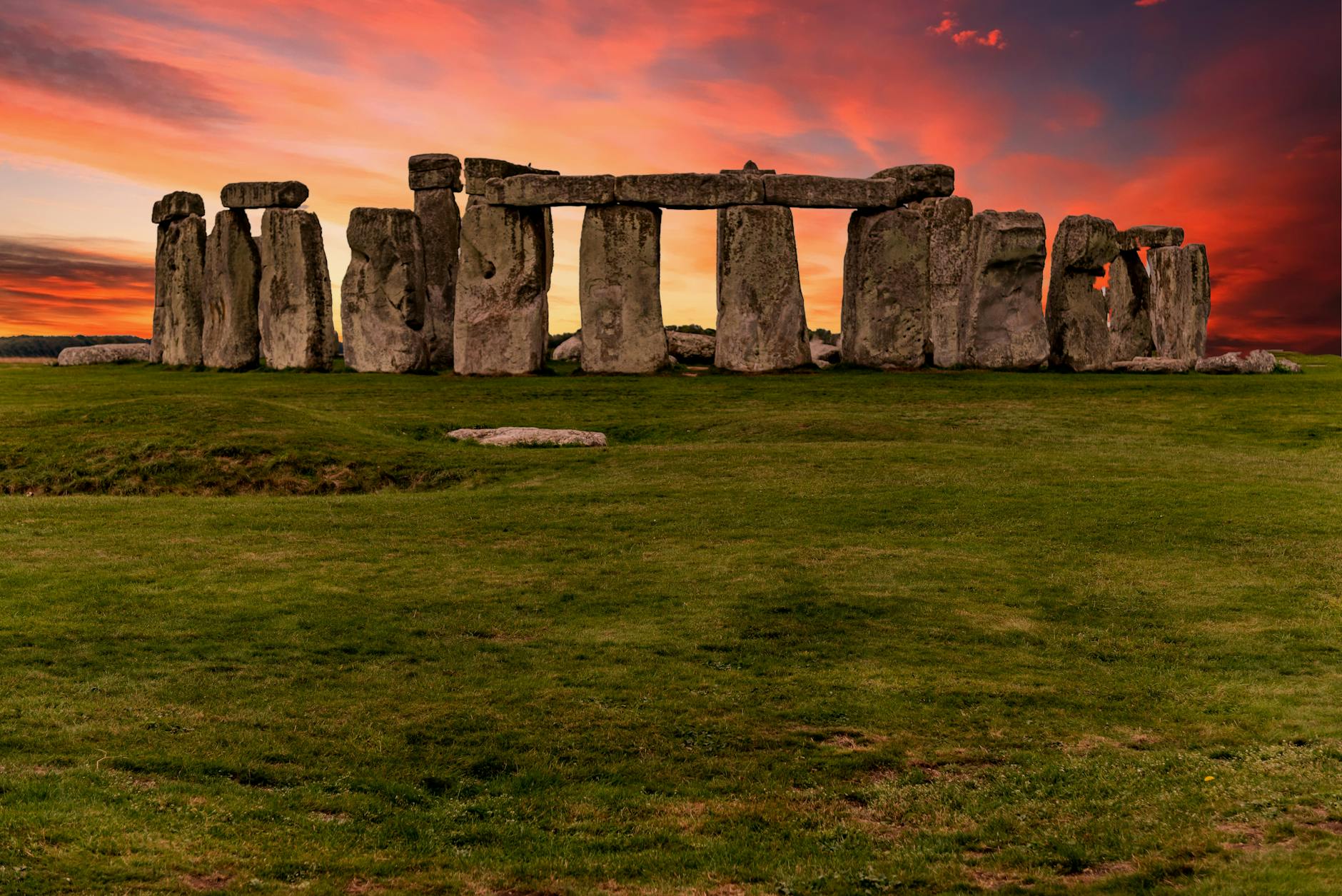
The three most famous are Saturnalia in ancient Rome, the Norse Yule traditions from Scandinavia from where we get our ‘yule log,’ and the celebrations of the Druids. Winter solstice celebrations are still held all over the world. Some follow the early pagan festivals, and others adapted from within their various cultures. Perhaps the most notable today is the thousands of visitors who will make their way to Stonehenge in Wiltshire, England, just to take in what they believe it to be. All these festivals have one thing in common, the darkest day giving way to rising light in the future days.
Just a side note; it is true that some of our Christmas traditions were picked up from some of these pagan festivals, such as the ‘yule log,’ since Christmas was first recognized on December 25, 336. The truth is, no one can be certain what time of the year Christ was born, most likely it wasn’t December 25th. The good news is, we know He came to earth being born of a virgin in Bethlehem.
It may not be a bad thing that Christmas is celebrated around the winter solstice. The world is anticipating the coming light to end their darkest days. What greater light is there for the world than the light of Jesus Christ and the hope of salvation for those who believe in Him. The amount of Christmas lights displayed around the world during the season adds to that hope. We do not know if Christ was born around the winter solstice, but it is fitting we celebrate His birth by shining His light in winter for all the world to see.
“And suddenly there was with the angel a multitude of the heavenly host praising God and saying, ‘Glory to God in the highest, and on earth peace among those with whom he is pleased!’” Luke 2:13-14 ESV
FreeBibleimages.org
A common thread that ran through the last two songs of hope we have looked at, Mary’s song and Zechariah’s song, is they both give glory to God. Mary said, “My soul magnifies the Lord,” and Zechariah exclaimed, “Blessed be the Lord God of Israel.” And the angels continue the theme this week with “Glory to God in the highest.” Indeed, the birth of Christ is reason to rejoice in praising God and giving Him all the glory. This week in our 4th Song of Hope for Advent we sing along with the angels, “Glory to God in the highest, and on earth peace among those with whom he is pleased!” (Lk.2:14 esv)
The greatest birth the world has ever known, the incarnation of God embodying human flesh, occurred in the most humiliating of circumstances. But God saw it was noted as the most glorious event that it was. R.C. Sproul describes it in this manner, “At the very moment the babe is wrapped in the cloth of humiliation, God is not satisfied that the circumstances of the Son’s birth be only humiliation. God desired that shame be balanced with glory and exaltation.” (1) And it was glory with a host of angels preceding down from heaven in a chorus of praise.
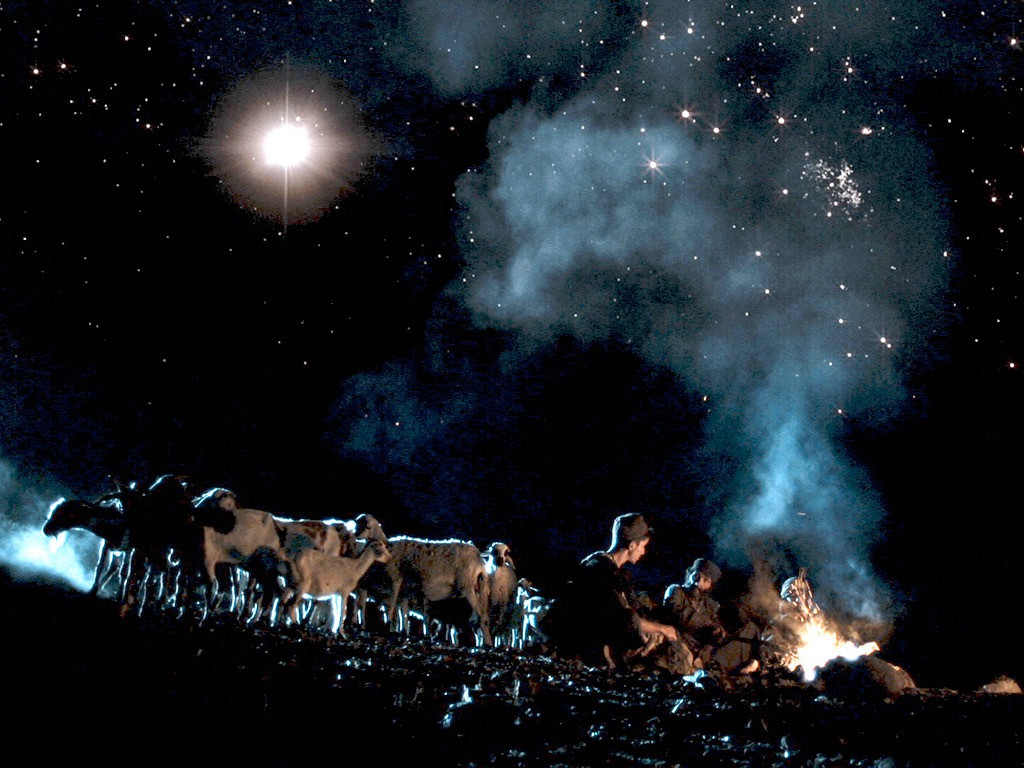
The first ones to receive the glorious news were the shepherds working the night shift out in the fields overlooking Bethlehem. Theirs’ was a busy occupation with the Temple in Jerusalem only six miles away. They provided many of the animals for sacrifice, including sheep. Shepherds worked day and night 365 days a year. They were also on the lower cast of society. The smell of the fields and animals was just as unattractive as their occupation for most people. Nevertheless, God chose them as the first ones to hear the good news. The news of Christ’s miraculous birth is for all people willing to come to Him and accept Him for salvation. The shepherds didn’t waste any time after the angels left them, “(they) said to one another, ‘Let us go over to Bethlehem and see this thing that has happened, which the Lord has made known to us.’” (Lk.2:15, esv)
The shepherds were filled with joy and hurried to see the Christ child, but when the angels first appeared, they were frighten to death. In fact, it was only one angel that got them all worked up. “And an angel of the Lord appeared to them, and the glory of the Lord shone around them, and they were filled with great fear.” (Lk.2:9 esv) Fear would have been a natural reaction when on a dark, quiet night of the same-old, same-old work an angel appears with the glory of the Lord shining all around them. But the angel quickly calms their fears with good news. “Fear not, for behold, I bring you good news of great joy that will be for all the people. For unto you is born this day in the city of David a Savior, who is Christ the Lord.” (Lk.2:10-11 esv)
This was good news for the shepherds. They would know ‘Christ’ was the Messiah that the Jews were waiting for. The angel referred to the city of David where the Messiah was prophesied to be born. This was a declaration of the birth of the one who would save the world from sin and death. Notice, the angel gives three titles to the Christ-child; Savior, Christ (Messiah, anointed one), and Lord (Yahweh, or God.) He was both God and man. The angel then gives them a sign of what to look for when they go to into Bethlehem to look for the savior, and then the song begins.
“And suddenly there was with the angel a multitude of the heavenly host praising God and saying, ‘Glory to God in the highest, and on earth peace among those with whom he is pleased!’” (Lk.2:13-14 esv) A heavenly host of angels came down and joined their colleague in singing their song ‘Gloria in Excelsis Deo.’ Here again, as in Mary’s and Zechariah’s songs, we get the name from the Latin Vulgate translation. The first words in the Latin Vulgate are ‘Gloria in Excelsis Deo’ meaning ‘Glory to God in the highest.’ The angels know of the glory and majesty of God and have just witnessed perhaps the greatest event they have seen and can’t hold back in giving praise and glory to God.
We will have the opportunity to sing along with angels this Christmas season whether singing in church, or caroling, singing at home, or in your car. This song of hope this week is giving glory to God for His plan of salvation coming to realization in the birth of Christ and the peace we can have by accepting Him as savior. What better song to sing.
During the last half of the 20th century and so far so in the 21st century a certain amount of people take offense to the spelling of Christmas as ‘Xmas.’ Their argument is, and rightly so, it is used to keep ‘Christ’ out of Christmas. The phrase ‘Keep Christ in Christmas ‘was coined to list ways to keep the meaning of Christmas true to what it is, the birth of Christ. Notably, it is also used to refute the spelling of ‘Xmas.’ There is no doubt within secular society attempts are made to undermine and diminish the influence of Christianity, and by using ‘Xmas’ they are found guilty. The opponents of the use of ‘Xmas’ need not worry so much. Those who use ‘Xmas’ with the intent to remove Christ from Christmas are failing in their attempts because, little do they know, they are promoting Christ in their actions.
The original use of ‘Xmas’ dates back to the year 1021, however it began to be used more frequently in the mid-1500s. The ‘X’ is from the Greek letter ‘Chi’ which is the first letter in Greek for the word ‘Christ.’ In Greek, the name of Christ is Χριστός (christos). The first letter resembles the English letter (x). It was in the middle ages when writing in ink was expensive that shorthand was used, and ‘chi’ was inserted for Χριστός. Carried over into English is ‘X’, therefore ‘Xmas’ meaning (christos-mas.) There was never any effort to disrespect the name of Christ for they could not have, it was not their attempt. The writing signified Christ and that was their intention.
Fast forward to 1983 and Webster’s 9th Edition which reads, “[X is symbol for Christ from the Greek letter chi (x), initial of Christos Christ + mas (in Christmas) ]: Christmas (dates from 1551).”
So, feel free to use ‘Xmas.’ You are honoring Christ who was born to save us from our sins. Don’t discourage those who use it thinking it keeps Christ out of Christmas, it does not. But thank them for honoring your Lord and Savior and show them Χριστός (christos) and His love for them and wish them a Merry Xmas.
Source used: Wiersbe, David W. & Warren W. C is for Christmas. Grand Rapids: Baker Books, 2012. Pg 199-200
The most familiar verse in all of Scripture is John 3:16. “For God so loved the world, that he gave his only begotten Son, that whosoever believeth in him should not perish, but have everlasting life.” (kjv) God’s love came down to the world when He sent His Son to be born of a virgin over 2,000 years ago. The world was and is still in need of a savior. The angels announced to the shepherds on that first Christmas Eve, “For unto you is born this day in the city of David a Saviour, which is Christ the Lord.” (Lk.2:11 kjv) Yes, God’s love came down. His plan of salvation from eternity passed, for you and me, had taken another step closer to its completion.
Jesus came into this world as the God-man to save sinners. His love for us is such that He left heaven’s glories to come here and live on this earth. Jesus lived and worked among us until His time came for the purpose of His coming. He would make the ultimate sacrifice dying on the cross of Calvary for our sins showing His love for us. Yes, Christ’s love for us came down thirty-three years earlier in the city of David, and it never wavered, even on the cross. His love that came down for us, kept Him up on the cross and this time did not come down.
We are incapable of reaching up to God for salvation. There is nothing we can ever do to save ourselves. So, love came down. ‘For God so loved the world.’ It is God’s desire that no one perishes into eternal damnation due to their sin. (2Pt.3:9) Christ’s coming to earth is proof of God’s love for us. Yes, love came down; in Jesus’ birth, in His death, in His resurrection, in sending us His Holy Spirit, and in His coming back again. Have you received God’s love that came down and accepted Christ as your savior?
“For you have been called to live in freedom, my brothers and sisters. But don’t use your freedom to satisfy your sinful nature. Instead, use your freedom to serve one another in love.” Galatians 5:13 NLT
Charles D. Meigs wrote, “The old Quaker was right: ‘I expect to pass through this life but once. If there is any kindness or any good thing I can do to my fellow beings, let me do it now. I shall pass this way but once.’” (1) Yes, the old Quaker understood there is only one life, and it is short. The Quaker’s mind was set on not passing up an opportunity to help his fellow beings while he had the chance. A humble attitude of caring for others more than ourselves is at the heart of the old Quaker’s service. “Do nothing out of selfish ambition or vain conceit. Rather, in humility value others above yourselves,” (Ph.2:3 niv)
Many of us today think the same way as the old Quaker. We know the brevity of life and there is only one, but we try to grab all we can for our own enjoyment. It is sad, but it is too often we help our fellow beings only when tragedy strikes, and we’re shamed into it. As Christians we are to show the love of God through what Christ has done for us. He has freed us from sin and eternal death. Christians are free in Christ to live in a way that draws others to Himself, and free to serve one another in love.
The apostle Paul tells the old Quaker and us, in writing to Christians in Galatia, we have the freedom to serve one another in Christ. The old Quaker took him up on the offer. What about us? This season is a good time to start. We are called to live in freedom and to serve.
(1) Cowman, Mrs. Charles E. Stream in the Desert 2. Grand Rapids: Zondervan Publishing, 1966. Pg. 342
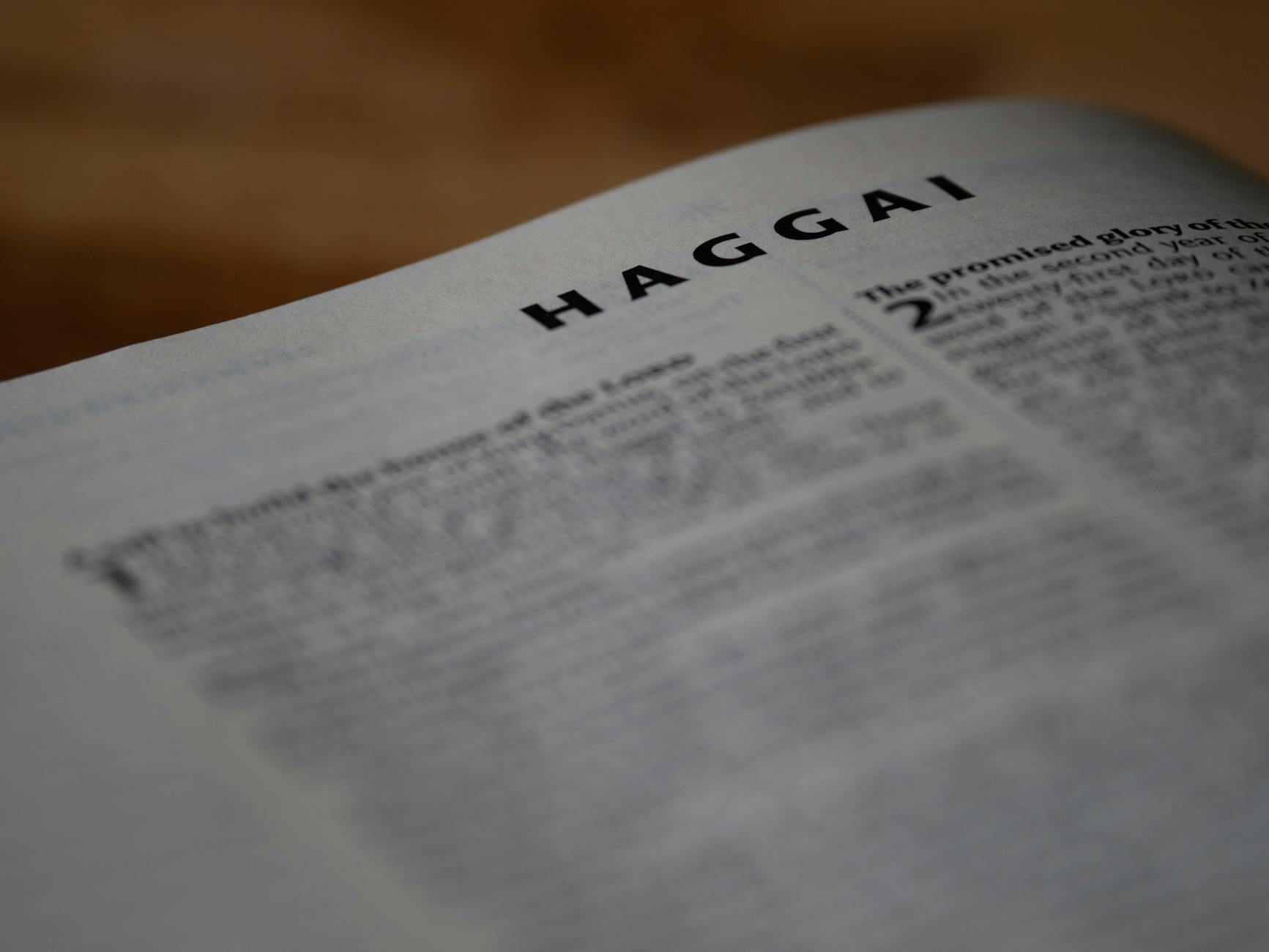
“Think about this eighteenth day of December, the day when the foundation of the LORD’s Temple was laid. Think carefully……But from this day onward I will bless you.” Haggai 2:18, 19b NLT
On this date December 18, 520 B.C. the Lord spoke through the prophet Haggai to the people of Judah who were about to continue rebuilding the Temple. The work on the Temple had stopped ten years earlier, but the work on the people’s own homes continued to be completed. The Lord reprimanded them in Haggai chapter 1. The leadership and the people responded, and the work began again.
The Lord told the people to “Think about this eighteenth day of December” (to remember from this day forward) how their lives were before they laid the foundation to rebuild the Temple. He wanted them to think about it carefully. The efforts in their work produced only half of what was expected. The Lord had caused a drought to occur, and sent blight, mildew, and hail to destroy their crops. Their money vanished as if they had holes int their pockets. The people of Judah were to remember their previous conditions and not forget what their sin of abandoning the Lord and His work cost them.
This December 18, 2024, may find you in an abandonment situation where you started a work for God, but it has been put on the back burner. You’ve abandoned it, meaning in a sense you’ve abandoned God. Perhaps all is not well, or perhaps it is, but you know something is amiss. The work you are pouring yourself into is not achieving profitable results. Unexpected bills are piling up, and the kids need braces. When we take our eyes off God, focusing on ourselves and our needs, we forget God can take care of both our needs and His work He assigns to do. Upon doing this we create a lot of our own problems by not trusting God.
The Lord doesn’t want to see us have problems. He desires us to obey Him and trust Him for our needs. If you are ready to get back at it for the Lord, don’t forget to remember what it was like before December 18, 2024, as the Lord told the people of Judah, “from this day onward I will bless you.” (Hag.2:19b nlt) God will never abandon His children. Let us not abandon Him.
“Since therefore the children share in flesh and blood, he himself likewise partook of the same things, that through death he might destroy the one who has the power of death, that is, the devil.” Hebrews 2:14 ESV
FreeBibleimages.org
The image of a baby boy in a manger is precious in our sight during the Christmas season. As Christmas Eve draws closer, the thought of that silent night fills our hearts and minds with great anticipation. The sounds of ‘Away in the Manger, ‘Silent Night,’ and ‘O Holy Night’ fill the air. Little thought is given to the image of the Christ child 33 years later suffering on the cross at Calvary. But that is why Christ came, and why He came as flesh and blood.
The writer of the book of Hebrews says that it was through Christ death on the cross that He destroyed Satan who has the power of death. Jesus conquered death by His resurrection three days later. He could only do that if He became like us and took on our physical nature of flesh and blood. Jesus not only conquered death, but He satisfied God’s required payment for our sins by His death. The apostle John tells us “He is the propitiation (appeasement or satisfaction) for our sins, and not for ours only but also for the sins of the whole world.” (1Jn.2:2 esv) “For without the shedding of blood, there is no forgiveness.” (Heb.9:22b nlt)
A third reason why Christ came as flesh and blood is He can help us in our time of need when tempted. “For because he himself has suffered when tempted, he is able to help those who are being tempted.” (Heb.2:18 esv) It is hard for us to imagine how Jesus was tempted in the same way we are today, but Scripture records it. We need to take it by faith. Matthew records Satan tempted Jesus with ‘the lust of the flesh, the lust of the eyes, and the pride of life.’ (Mt.4:1-11) And Jesus withstood the temptations. By coming in the flesh and taking on our physical nature Jesus can sympathize with our struggles and is there to help us through the Holy Spirit.
“For we do not have a high priest who is unable to sympathize with our weaknesses, but one who in every respect has been tempted as we are, yet without sin.” (Heb.4:15 esv)







 Word for the Soul