“Those who belong to Christ Jesus have nailed the passions and desires of their sinful nature to his cross and crucified them there. Since we are living by the Spirit, let us follow the Spirit’s leading in every part of our lives.” Galatians 5:24-25 NLT
The apostle Paul was not one to mince words in his writings. He gives it to us straight and doesn’t hold back. Writing to the churches in Galatia Paul writes, “When you follow the desires of your sinful nature, the results are very clear: sexual immorality, impurity, lustful pleasures, idolatry, sorcery, hostility, quarreling, jealousy, outbursts of anger, selfish ambition, dissension, division, envy, drunkenness, wild parties, and other sins like these. Let me tell you again, as I have before, that anyone living that sort of life will not inherit the Kingdom of God.” (Gal.5:19-21 nlt) Anyone who is consistently living in one or more of these ways seriously needs to consider if they are truly a child of God. Paul gives this warning, not to lord it over anybody, but to warn them of the serious consequences of living such a lifestyle.
Christians may not be involved in living such a lifestyle, but occasionally those desires spring forth through temptations and our sinful nature. Paul instructs us if we walk by the Spirit, we will not carry out the desires of the flesh. (Gal.5:16) He then goes on to list what we should be desiring, the fruit of the Spirit, ‘love, joy, peace, patience, kindness, goodness, faithfulness.’ (Gal.5:22-23) This is the way we should be living consistently.
The cross of Christ is where all our sins were exposed and dealt with. Christ took on our sins and paid the price for them. Our passions and sinful desires have been nailed to the cross and crucified there. We should not be trying to resurrect what has been crucified. Our sins have been nailed to the cross. Let us leave them there.
“The sons of Esau were Eliphaz, Reuel, Jeush, Jalam, and Korah. The descendants of Eliphaz were Teman, Omar, Zepho, Gatam, Kenaz, and Amalek, who was born to Timna. The descendants of Reuel were Nahath, Zerah, Shammah, and Mizzah.” 1 Chronicles 1:35-37 NLT
This year in my daily Bible reading I chose to use ‘The One Year Chronological Bible.’ I recommend it for those who are adamant about having things in order. The Bible can be difficult to understand, especially when related passages of Scripture are not in sync chronologically. A chronological Bible, as its name says, puts events in order of their occurrence. Even if you’re not concerned about the order of events, it is still a worthwhile read to understand history as recorded in Holy Scripture.
One important note; there are repetitive verses that are combined from several different books of the Bible to keep it in chronological order. These passages can dig deep into our souls as we read them to get a clearer understanding of Scripture. But then there are those verses as above, names of individuals in the genealogies which we cannot pronounce, let alone have a hard time reading them. That same passage above is found in Genesis 36. But it is chronologically correct.
I share this to say that if their names weren’t important, God would not have it repeated in His Word or record it at all. There are many people whose names are listed in the Bible and never mentioned again. But their names mattered to God, and the names of all individuals made in His image matter to Him. Think of the privilege it would be if you had your name written in the Bible, God’s Word, for all time. It would matter. You may feel like you are just a name written once in the Bible and forgotten. But think of the one who knows your name. You are not forgotten. Your name matters to God. You matter to God, and if you have accepted Christ as your savior, your name is written in the most important book of all, the Lamb’s Book of Life. (Rev.21:22-27)
“Let all that I am wait quietly before God, for my hope is in him. O my people, trust in him at all times. Pour out your heart to him, for God is our refuge.” Psalm 62:5, 8 NLT
Waiting can create anxious moments. The very definition is enough to make you uneasy; (to remain until something expected happens). Some people have the ability to wait patiently, and others need it to happen instantly. Depending on what you are waiting for will, of course, determine whether you can wait patiently or have some anxiety creep in. As Christians, we have someone to put our hope and trust in while waiting, in addition He will sit with us while we wait.
King David was waiting on God when he wrote Psalm 62. David was in midst of treasonous conspirators either from the family of Saul or from his son, Absalom, during his rebellion against his father. He was waiting on God for the outcome, but David was confident his victory was sure while he waited. “I wait quietly before God, for my victory comes from him.” (Ps.62:1 nlt) David was able to wait patiently and quietly for his hope was in God. He knew God was his refuge. David encourages all God’s people to trust in the Lord, and to pour our hearts out to Him.
The Lord understands our worried waiting moments. He is there by our side while we wait. It may feel as if we are all alone, but we are not. When we earnestly seek Him during these waiting moments through prayer, reading His Word, and waiting quietly, like David, we’ll sense and feel His presence, comforting us during the wait. It may be a long wait, or it may be a short wait. Either way, the Lord is with us, and the victory will be ours as we wait, hope, and trust in Him.
‘“The time promised by God has come at last!’ he announced. ‘The Kingdom of God is near! Repent of your sins and believe the Good News!’” Mark 1:15 NLT
FreeBibleimages.org
The first week of our study in the book of Mark we were introduced to John the Baptist whose mission was to introduce us to the Messiah, Jesus, the Son of God. He encouraged those in his day to clear the road and ‘prepare the way for the LORD’s coming!’ This week we begin to follow Jesus as He began His ministry in 27 A.D. when he was 30 years old. “One day Jesus came from Nazareth in Galilee, and John baptized him in the Jordan River.” (Mk.1:9 nlt)
The question is automatically asked, ‘Why did Jesus get baptized?’ It was His deliberate act of identification with us. Jesus identified with us in all ways as human, except for sin. He was sinless. Therefore, Jesus will bear our sins on the cross at Calvary. The triune God is on displayed in Jesus’ baptism proving His deity. The Father speaks from heaven, the Son is baptized, and the Holy Spirit appears as a dove anointing Jesus for His ministry. (Mk. 1:10-11) The symbol of a dove represents gentleness and purity, which describes Jesus, our meek and mild savior.
Very often when we have a high moment, a mountaintop experience, we’re brought down to reality. The sin of this world and the luring of Satan and his demons drags us down and tempts us. After Jesus had His high moment at His baptism, the Bible says the Spirit compelled (drove) Him into the wilderness to be tempted by the devil. This was a divine action and necessary for us as Jesus suffered the same temptations we face every day. He knows what we go through and can help us in our time of temptation. “For because he himself has suffered when tempted, he is able to help those who are being tempted.” (Heb.2:18 esv)
Jesus’ ministry now begins after defeating Satan by not succumbing to any of the temptations he offered up. This was Jesus’ first step in overthrowing Satan. Jesus then went into Galilee, the northern most region in Palestine, and started preaching God’s Good News, the Good News of salvation. Jesus announced, “The time promised by God has come at last! The Kingdom of God is near! Repent of your sins and believe the Good News!” (Mk.1:15 nlt) Dr. John MacArthur notes, ‘It was time for decisive action on God’s part. An era of God dealing with men had come.’ (1) And Dr. Charles Ryrie comments, ‘The rule of Messiah on earth, promised in the OT and earnestly longed for by the Jewish people, was near, for the Messiah has now come.’ (2) John the Baptist preached a message of repentance, now Jesus adds to it by believing the Good News. The Messiah is here, and He will save you from your sins.
Jesus now calls His first disciples along the shore of the Sea of Galilee, a body of water 700 ft below sea level, 14 miles long and 6 miles wide. It was fed by the waters of the upper Jordan River. Jesus saw Simon and his brother Andrew working at their craft for they were fishermen. Andrew had been a follower of John the Baptist. It is possible that Simon had been also, and they both went back to work fishing after John’s arrest. Jesus calls them to follow Him and be the first Evangelists, fishers of men. They immediately drop what they were doing, making the commitment to follow Jesus.
Further up the shoreline, Jesus and His first two recruits run into fellow fishermen James and John. Fishing was a main source of income for people in the Galilean region. James and John followed suit when Jesus called them to follow Him, leaving their father and co-workers in the boat.
Take note Jesus didn’t look for those to be His disciples from the religious elites, or those with references from well-respected Rabbis, and He didn’t recruit from intellectual scholars of the first century, but He chose ordinary people who fished for a living to carry out the greatest message the world has ever known. With these four and others who will come in time, including you and me, the gospel message will go forth, right up to our current day, for the promised time has come.
MacArther, John. The MacArthur Study Bible. Nashville: Word Publishing, 1997. Pg. 1458
Ryrie, Charles. The Ryrie Study Bible. Chicago: Moody Publishers, 2012. Pg. 1226
“Do you rulers indeed speak justly? Do you judge people with equity? No, in your heart you devise injustice, and your hands mete out violence on the earth.” Psalm 58:1-2 NIV
During a fourteen-month period from January 2024 through February of this year 2025, there will be approximately 90 countries installing new leadership, including the United States on January 20, 2025. There were more national elections held worldwide in 2024 than any year in history, and with that new leadership has been installed. The Bible says in Romans, “The authorities that exist have been established by God.” (13:1b niv) We may not all be pleased with the leaders God has place for us in our country, but it is for His purposes.
Every government leader in the world has the same responsibility towards God to rule righteously. Their authority is given and ordained by God. We all can testify most world leaders are not following through with their obligation. Citizens had the same problem thousands of years ago. David wrote the 58th Psalm as a lament against tyranny, wicked leaders, and judges. He criticized the rulers for being silent in righteous matters. “Do you rulers indeed speak justly?” (1:1a niv) And he questioned their integrity in administering justice. “Do you judge people with equity?” (1:1b niv) The answer to both questions is no. In fact, they were doing just the opposite, devising evil schemes that resulted in cruel injustice. Not much has changed over time.
There have been and still are government leaders who try to do the right thing for the people. But with the current situation the world is in we need a lot more of them. This pass election year was a pivotal point for most countries in the world in how they will govern in the future. People across the globe have expressed their dissent with the violence, chaos, drug cartels, corruption, and instability of their countries. And most voted in that way. These newly elected rulers have their work cut out for them. First and foremost is the recognition that their position is authorized by the God of the universe, and they are accountable to Him. The second is to rule righteously and administer justice according to the one who gave the authorization to govern. Third, and this is for us, to pray for our leaders wherever we reside.
“I urge, then, first of all, that petitions, prayers, intercession and thanksgiving be made for all people—for kings and all those in authority, that we may live peaceful and quiet lives in all godliness and holiness.” (1Tim.2:1-2 niv)
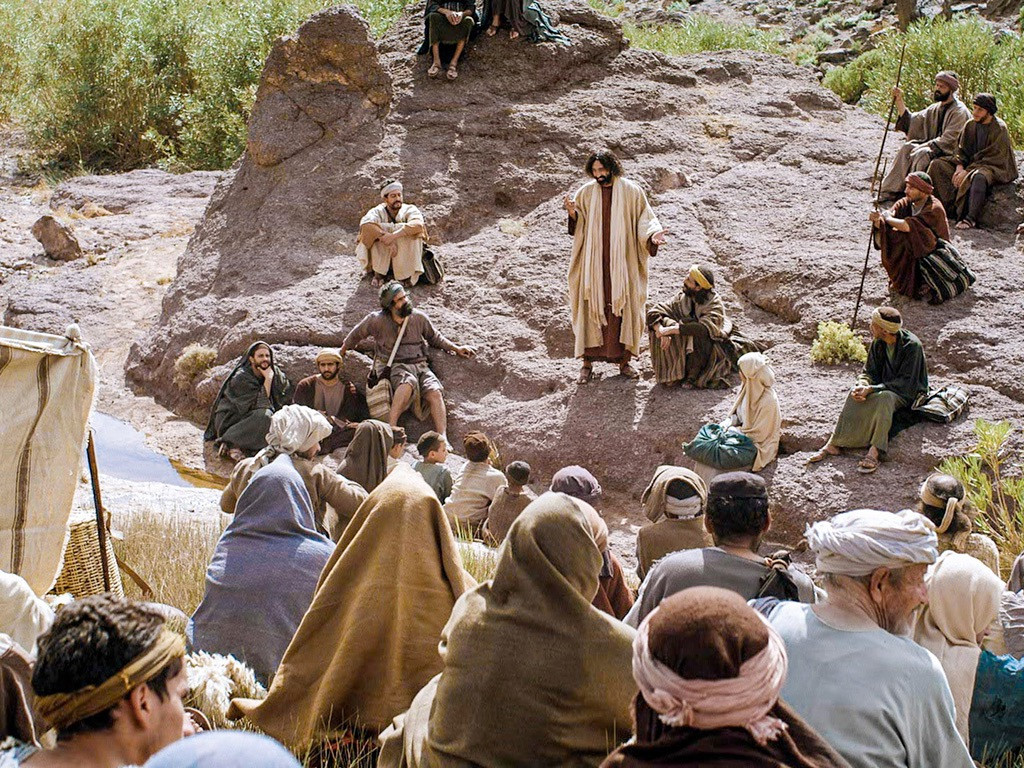
The Beatitudes, spoken by Jesus, are the opening to the Sermon on the Mount. Jesus is speaking to His twelve disciples as they came to Him. (Mt.5:1-2) It is important to remember that Jesus is instructing His disciples with the multitude of people listening in. The target of the Beatitudes and the whole Sermon on the Mount were for the disciples and followers of Jesus in our day. The Beatitudes contrast the happiness and fulfillment of life one has as a follower of Christ or as a follower of the world.
Jesus lays out the inner qualities of those who believe in Him. If they allow Him to work his purpose in their lives they will be blessed (happy). Meekness or gentleness is one such inner quality. It is not associated with being weak, but just the opposite, it shows true strength. Some refer to it as “power under control.” It is the self-control the apostle Paul writes about. Humbling ourselves before God and before men by doing the right thing in a way that brings glory to God is true a sign of being meek; showing power under control.
Meekness or gentleness is a character of a true Christian in the world today, although we do not always let it show. Our one foot in the world at times makes it difficult to restrain ourselves and control our temper. This leads to frustration, unhappiness, and not a very good example of a follower of Jesus. Let us take Jesus’s words for what they are, the truth, and strive to be meek, gentle, and humble. Let us be in control with the help of the Holy Spirit leading to blessings and happiness.
“God gave these four young men an unusual aptitude for understanding every aspect of literature and wisdom. And God gave Daniel the special ability to interpret the meanings of visions and dreams.” Daniel 1:17 NLT
A large number of Christians fall into the trap of compromising their faith in the workplace or around friends and family. This is especially true if largely outnumbered by non-Christians. We justify it by ‘going along to get along.’ No doubt there are obstacles to overcome with the pressures of a secular worldview held by those you encounter daily. I, for one, have felt those pressures during my forty-five-year career in retail. One thing the Lord taught me, He does reward faithfulness, although I must admit, I was not always faithful.
Daniel, Hananiah, Mishael, and Azariah were faced with their first big test of bowing to peer pressure, and going along to get along, in accepting the king’s daily food and wine not prepared according to the Law of God. These young Hebrew youths knew partaking of the meal was in violation of their God. No doubt, they were taught this by their parents in training them in the Law of God. They hadn’t forgotten, and they were about to be tested.
Daniel was the spokesman for the four of them. He knew the preparation process of the meal was to honor the Babylonian pagan gods. Daniel had discernment to see what this was, a slow process to gradually wean him and his friends from Hebrew culture and their God. Our secular society works the same way today, starting small and working up to full compromise, trying to get us to conform. Daniel didn’t bite but came up with an alternative plan rather than rebelling against the king. He suggested to the steward in charge to feed them vegetables and water for ten days. The steward would test their appearance and health. Whatever he decided Daniel and his friends would agree to.
Daniel had no idea what the outcome would be, but he put his faith God. The Lord rewarded Daniel and his friends in two ways for their faithfulness. First, they appeared healthier and more nourished than those eating the king’s food. Second, the Lord blessed them with an unusual aptitude in literature and wisdom. And Daniel was given the special ability to interpret visions and dreams. The Lord is in the habit of rewarding those who remain faithful to Him. It is better to go along to get along with God than compromise your convictions with the world.
“You, LORD, keep my lamp burning; my God turns my darkness into light……Though I sit in darkness, the LORD will be my light.” Psalm 18:28, Micah 7:8b NIV
Certain people enjoy the dark. It is a place where quiet meditation can take place. It is a place to get away from it all. Romantic couples have their own reasons for enjoying the dark. Then there are those who prefer darkness, as Jesus says, because their deeds are evil. (Jn.3:19) Most crimes are committed after dark as the culprits do not want their identity known. Sadly, there are some who sit in darkness, not enjoying it and can’t find a way out. Light doesn’t penetrate through the solid dark walls around their mind and soul. The good news is that there is a penetrating light that can pierce through that dark wall into your soul. Jesus Christ, God the Son.
2 Corinthians 4:6 says, “For God, who said, ‘Let light shine out of darkness,’ made his light shine in our hearts to give us the light of the knowledge of God’s glory displayed in the face of Christ.” (niv) Every individual has a soul darken by original sin until said person accepts Christ as savior removing the stain and punishment for our sin. Jesus then confirms we have been transformed from darkness into light in His Sermon on the Mount, “You are the light of the world.” (Mt.5:14a niv) A darken soul has now become the light of the world.
The consensus from many people is that once a person becomes a believer in Christ all their problems go away. That is simply not true. We still live in a dark world with evil influences all around us and it is sure to have an effect on even the strongest Christians. We need help from the Lord during these difficult times, and it is found in His Word. David writes in Psalm 18:28, “You, LORD, keep my lamp burning; my God turns my darkness into light.” (niv) And Micah says, “Though I sit in darkness, the LORD will be my light.” (Mic.7:8b niv) We don’t need to sit in darkness when the Lord keeps our lamps burning.
One final thought; God is there to help us through every situation in our lives, and that includes getting help from trained doctors and staff who treat those going through period of darkness in their lives. The Lord God has blessed us with these professionals, and they are there to help us. May we thank the Lord for the sources of light He gives to us in our time of need.
“Calling ten of his servants, he gave them ten minas, and said to them, ‘Engage in business until I come.’” Luke 19:13 ESV
FreeBibleimages.org
Jesus’ teaching often included speaking in parables, an earthly story with a heavenly meaning. He told the parable of the ten minas to refute the idea that the kingdom of God was to occur immediately. Jesus’ followers, including His disciples, did not understand His mission, but supposed He was going to establish His kingdom by overthrowing the oppressive Roman government. Jesus’ earthly mission was to give his life as a sacrifice for sin, providing salvation for all who believe in Him. He rose from the dead and ascended to heaven, promising to return and then establish His kingdom. This parable connects to Jesus’ return and every Christian’s accounting for the investment we made or didn’t make.
Jesus said to those around Him, “A nobleman went into a far country to receive for himself a kingdom and then return.” (Lk.19:12 esv) This would have been understood for Herod the Great himself had gone to Rome to receive his kingdom. The nobleman calls his servants and gives each of them one mina (3 months wages) and instructs them to engage in business investing his money for a return. This is a picture of Jesus. The mina the Lord Jesus gives to every believer is the gospel message to be invested in peoples lives. There will be a day of accounting how faithful we have been to what he has given us. “When he returned, having received the kingdom, he ordered these servants to whom he had given the money to be called to him, that he might know what they had gained by doing business.” (Lk.19:15 esv)
Very descriptive reports on the return of investments are given for three of the nobleman’s servants. Each apportioned by their diligence in service. The first had a 1000% return and was awarded ten cities. The second had a 500% return and was awarded 5 cities. Both these servants loved their master and wanted to please him, taking risks to ensure an increase. The third servant did nothing at all with what he was given but kept it to himself. The nobleman takes the mina from him and assigns it to where it will have the largest prospect of return.
Our Lord Jesus has gone away as the nobleman but will also return as he did. Jesus has given us the gospel message to invest by sharing it with others while He is away. Will we have a return on His investment? Will you have a return? You won’t have a return if you don’t invest it. Have you invested your mina, the gospel?
“Don’t copy the behavior and customs of this world, but let God transform you into a new person by changing the way you think. Then you will learn to know God’s will for you, which is good and pleasing and perfect.” Romans 12:2 NLT
I suppose most of us are influenced by those around us, whether for good or bad. That is why it is wise to limit our exposure to those with godly values and common sense. The same is true for the customs and behavior of the world, or as some Bible translations say, ‘of this age’, meaning the system of beliefs, values, and the spirit of the age. Christians need wisdom in what we choose to participate in sifting out what is of this age and what is not. I’ll admit, at times, it seems like a fine line, and what we see is often blurred by the customs we’re familiar with. The spirit of this age is under the influence of Satan who is real and not a myth. His agenda is for you and me to influence us to behave in check with the world around us.
Christians must combat this kind of thinking from the world by changing our thinking to the Lord’s way of thinking. Scripture instructs us to let God do the transforming. Romans 12:2 says, “Don’t copy the behavior and customs of this world, but let God transform you into a new person by changing the way you think.” (nlt) Changing the way we think is another way to say, ‘renewing your mind.’ We renew our minds by studying God Word. As we engage in serious study of Scripture the Holy Spirit gradually changes our way of thinking as we compare what God says in His Word with what the world is telling us. There is no comparison, and trust me, it will change your mind. You will then determine what is of the world and what is not. “Then you will learn to know God’s will for you, which is good and pleasing and perfect.” (Ro.12:2b nlt)











 Word for the Soul