Israel experienced the Lord delivering them from the bondage of the Egyptians. He had freed them to follow Him as He was leading them to the Promised land. They witnessed God’s might power in opening the Red Sea to cross over and escape from the pursuing chariots of the Egyptian army. They woke up every morning to the daily supply of food provided for them by the Lord. When they needed water, God provided it. But it seems they had a short memory of what God had promised them, and more importantly in what they had witnessed during their short time in the wilderness.
The children of Israel were on the threshold of entering the Promised Land. God had led them to the door of opportunity to continue following His lead. Everything was in place, the Lord had already given them the victory, Moses had the land surveyed to know what to expect, and now it was time to fulfill the Lord’s promise. But Israel failed to take advantage of the promise He had given them. They missed out by not following through with God’s plans, refusing to go in due to fear. One of the saddest verses in Scripture contains the Lord’s words, “Turn back tomorrow and set out toward the desert along the route to the Red Sea.” (Nu. 14:25) They forfeited their opportunity to enter the Promised Land and were told to turn around and go back in the opposite direction.
The Christian church in America is at the threshold of an open door for ministry perhaps not seen in quite a while. There are youth movements springing up on college campuses, the sports world has an increasing number of athletes no longer intimidated to express their faith, and there is a more openness in referring to God across the public, the news media, and even in our politics.
Is the church in America ready, is to cross the threshold into this new opportunity where God is leading? If we’re committed, there is no turning back. May we remember all the Lord has for us over the years, He has proven Himself faithful. May we continue be faithful, and not hear the Lord say to us, ‘turn back tomorrow and set out toward the desert.’
On this date on March 7, 1876, Scottish-born inventor, Alexander Graham Bell received a patent for the telephone in the United States. Three days later Bell spoke the first words over a transmitted phone line to his assistant, “Mr. Watson come here, I want you.” Watson heard it loud and clear from 100 ft away in their Boston laboratory. Today we can hear and see people loud and clear from across the world on our phones. Every invention takes on different characteristics and advances over time, except maybe the wheel, a wheel is a wheel. The telephone is proof of the advancements that are made once something is invented. To get where we are today in any modern convenience there needed to be a staring point, something was invented.
God has blessed the world in giving us individuals with wisdom in science, business, agriculture, manufacturing, entrepreneurship, medical research, and many other activities all with the skills to make our lives fuller, healthier, and easier. Some of these people use their talents in their field of expertise to build on what has proven to work and is successful, while others use their God given talents to create and invent something new.
The Bible records both in the Old and New Testaments people with extraordinary talent and skill in their profession. God has been working through those He has gifted all throughout history. Our human wisdom and knowledge come from the Lord God of heaven. He gives it to us as a display of His glory, for without Him we can do nothing.
There as been thousands of inventions over the years for our good and benefit. Our lives have been blessed by these inventions and by the inventors who brought them about. We can look forward with excitement to the inventions God will bless us with in the years to come.
“But I (God) will honor those who honor me, and I will despise those who think lightly of me.” 1 Samuel 2:30 NLT
“….. I praised and worshiped the Most High and honored the one who lives forever. His rule is everlasting, and his kingdom is eternal.” Daniel 4:34 NLT
Have you ever stopped to think of how many things you take for granted on a typical day? You woke up this morning. You had a nourishing breakfast to start your day. If you’re working today, you have a job. Students, you have a school of learning waiting for you. You have transportation to get you there. You have clothes on your back. The sun came up this morning and the moon will rise this evening. We get rain when we need it and sometimes when we don’t need it, but that is in the hands of the rainmaker, our Lord God. In fact, everything we take for granted is supplied by our creator God. We cannot claim anything achieved or possessed as our own. God is the source for it all.
Taking things for granted is taking them too lightly. We expect those things, whatever they are, will always be there without giving thought to their origin. We surmise somehow that we had a part in their existence. When we take for granted everything we have, or put ourselves in control of our own destiny, we are thinking lightly of God. He is the creator and ruler over all things. He is all sufficient and the one who supplies our needs.
Recognizing God is all sufficient and is the Most High and is ruler forever over all things pleases God. The Lord God Himself says, “But I will honor those who honor me.” (1Sam.2:30a nlt) But the Lord also says to us who take too many things for granted, “I will despise those who think lightly of me.” (1Sam.2:30b nlt) The question to ask yourself is, ‘am I despised or honored?’ Let it be, ‘I’m honored.”
“But you, be strong and do not let your hands be weak, for your work shall be rewarded!” 2 Chronicles 15:7 NKJV
As I have gotten older, I have learned a few things, like you’re never too old to learn something new. I also learned there is always something to do, particularly things that need to be done. They don’t go away just because you have gotten a little older. Since my retirement from my full-time vocation, I have been just as busy with the work that is before me. There is always work to do around the home my wife and I share, work around the neighborhood, and work in and around the church I belong to.
One of the greatest joys is having the opportunity to serve the Lord within the church with the work we do. A major part of that enjoyment is the men I work with, all of us retired, imagine that! I am thankful for the grace they show me as I work alongside them. Full disclosure, there is a lot that I cannot do, even some simple things. I’m not much of a handyman and I know my colleagues would agree. But eventually, I get there, it just takes a little time.
There is a verse in 2 Chronicles which says, “But you, be strong and do not let your hands be weak, for your work shall be rewarded” (15:7 nkjv) Now I believe I can speak for my friends as well as myself that we do not do the work for a reward or a pat on the back. It is for God’s glory and for the ministry to continue in our city. Scripture does infer that rewards will be given in heaven, although we won’t hold on to them very long, for we will lay them at our savior’s feet.
Whatever work you do, either for the church, your home, your neighborhood, or if you’re still actively employed, do it all for the glory of God. Make sure you have something to lay at Jesus’ feet.
Some tasks are so overwhelming they would never be accomplished without divine help from above. Moses had firsthand knowledge of this as he led the Israelite through the wilderness. Moses was reminded of the Lord’s unlimited power when faced with 600,000 angry, hungry people demanding meat to eat. Moses had a problem. The Lord told Moses the people would have meat to eat, to which Moses responded, “Should flocks and herds be slaughtered for them, to be sufficient for them? Or should all the fish of the sea be gathered together for them, to be sufficient for them?” (Num.11:22 nasb) Moses had an impossible task in front of him and questioned God in his frustration where he would get enough of meat to satisfy the entire bunch.
God already knew His intentions. He would supply the meat as only He can, but he was going to do so to teach the people a lesson for rejecting the Lord by crying out, “Why did we ever leave Egypt?” (Num.11:20 nasb) They grumbled against the Lord not being satisfied with the daily mana He provided. He gave them what they wanted. The Lord provided quail for an entire month until they became sick of it, and due to their sinful craving, and complaining against the Lord, a plague broke out before they finished the last bite.
We have two lessons here, first, the Lord’s power is not limited in any way. He is all powerful and He can supply our needs whatever our circumstances. The Israelites failed to realize God’s provision in the mana and craved for something more. Secondly, the Lord will give us what we want at times to teach us valuable lessons. Can the Lord do this, yes. He can supply all our needs, and yes, He will teach us the lessons we need to learn even if it’s in something we ask for.
Simply put, the art of persuasion is to convince someone or a group of people to change their thinking. There have been books published, classes taught, and videos produced explaining the techniques available to enhance your ability to master the art of persuasion. Persuading others can have both positive and negative effects. People can be persuaded to do good or bad, even Christians.
Some of our best friends practice the art of persuasion. They may have the best of intentions in what they are trying to convince us to do or be part of, but it may not be the best thing, or worse contrary to Scripture. As Jesus says we are to ‘be wise as serpents and innocent as doves.’ (Mt.10:16) There has been a blending of the modern-day culture with the church and Christianity in general for the last few decades. Activities we would have never considered engaging in some time ago, we now accept and participate with a little persuasion.
Solomon says in the book of Proverbs, “My child, if sinners entice you, turn your back on them!” (Pr.1:10 nlt) It may be difficult referring to our friends as sinners, but the Bible says all are sinners, and that includes you and me. (Ro.3:23) Christians need to pray for discernment when tempted to participation in something the Lord would disapprove of. An old anti-drug slogan simply said, ‘just say no.’ An anti-enticement slogan could be ‘it’s OK to turn your back on them.’
There are many resources to teach us the art of persuasion including the Word of God. The Holy Spirit guiding us through the Bible will teach us the art of knowing right from wrong, convicting us of our sin and our need of a savior showing us the way of salvation. Then we too can use the art of persuasion on our friends.
“Listen! A farmer went out to plant some seed. The farmer plants seed by taking God’s word to others.” Mark 4:3, 14 NLT
FreeBibleimages.org
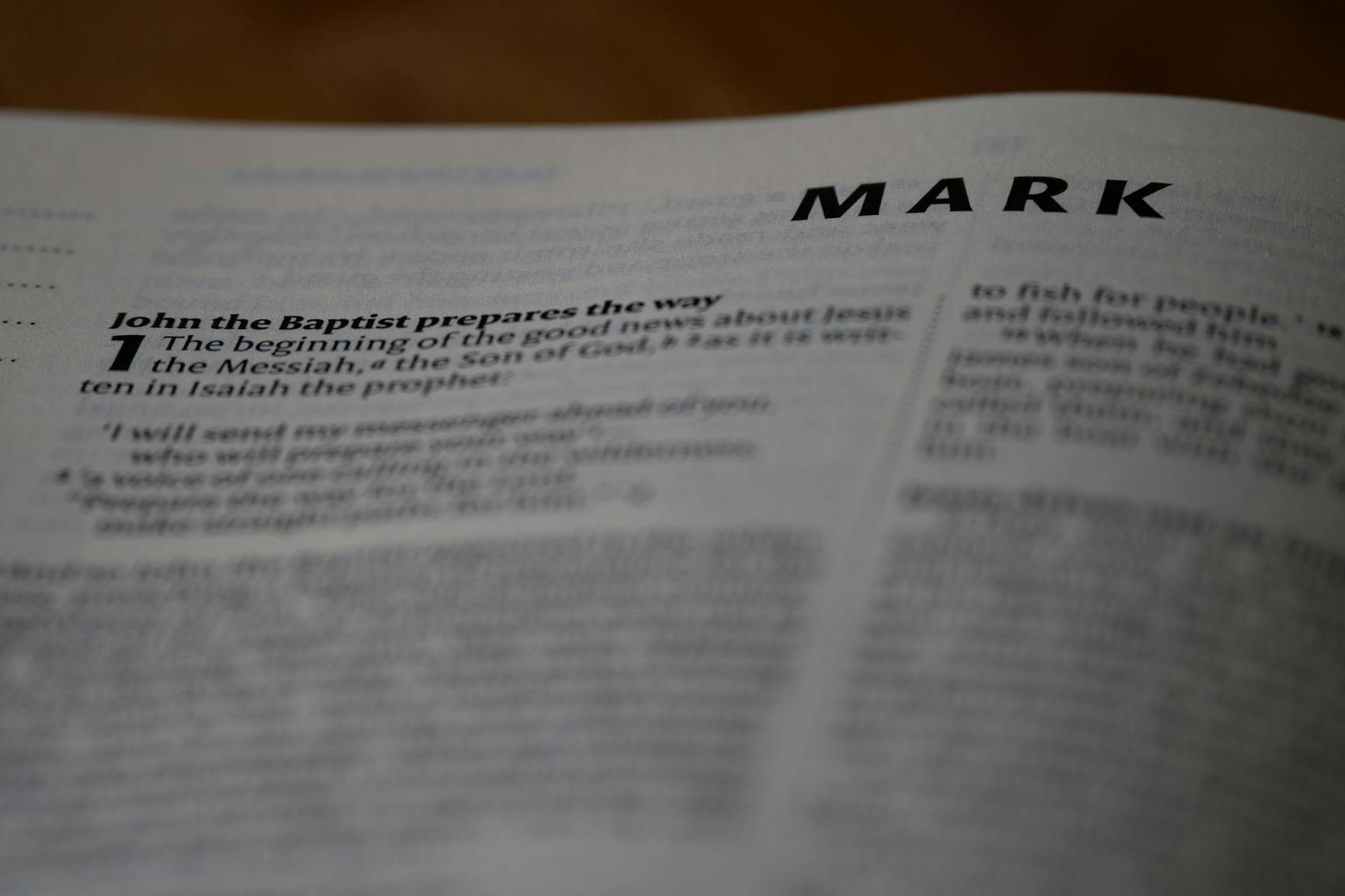
Beginning with chapter four in the book of Mark, Jesus increases His use of the parable method of teaching, an earthly story with a heavenly meaning. The crowds continued to grow around Him, which was good, but it also brought more people who opposed Him, many who were only superficial followers. Jesus’ purpose of speaking in parables was to teach His disciples. The substance of His teaching was withheld from those antagonistic and superficial hearers who would not understand for they were not spiritually discerned. (1Cor.2:14)
In chapter four, we see Jesus once again teaching on the shore of the Sea of Galilee. As the crowds are pressing towards Him, Jesus retreats into a nearby boat and sits down to teach. With the crowds gathered on the shoreline, Jesus begins to tell them many stories in the form of parables beginning with the parable of the farmer’s seed, otherwise known as the ‘parable of the sower.’
“Listen! A farmer went out to plant some seed.” (Mk.4:3 nlt) Jesus always uses illustrations from everyday life to convey His messages. Agriculture was the way of life in Jesus’ day, so all would be familiar with it. Jesus uses four examples of different types of soil in which the farmer planted his seed. The farmer scatters seed on the path, on stony ground, on soil with thorns, and on good ground. In those days seeds were scattered by hand, so it was easy for some seeds to make their way onto a foot path along a field where planting was being done. The path was hardened by heavy foot traffic leaving the seed on the path and the birds came and immediately ate it.
“Other seed fell on shallow soil with underlying rock. The seed sprouted quickly because the soil was shallow.” (Mk.4:5 nlt) This is the stony ground, very good soil, but shallow and on top of an underlying stone usually limestone. Heating from the sun caused rapid growth eventually scorching the plant from extreme heat because it did not have deep roots. Jesus then used the example of soil containing thorns which choked the plant by using up all the light, water, and space needed to grow. And then there were seeds that fell into the good fertile soil and grew producing an abundant crop. Jesus then said, “Anyone with ears to hear should listen and understand.” (Mk.4:9 nlt)
The disciples and others who were with them who had a desire to follow Jesus asked Jesus the meaning of the parable. Jesus replied, “You are permitted to understand the secret of the Kingdom of God. But I use parables for everything I say to outsiders.” (Mk.4:11 nlt) Jesus begins to explain the parable to them and to anyone who has spiritual faith relating themselves to Jesus and His message.
“Then Jesus said to them, ‘If you can’t understand the meaning of this parable, how will you understand all the other parables?’” (Mk.4:13 nlt) Jesus makes it clear that understanding this parable is essential going forward to understand His future parables. This parable presents the teaching and preaching of the gospel message, the message of salvation, and the acceptance or rejection of it.
Jesus begins to explain the parable, “The farmer plants seed by taking God’s word to others.” (Mk.3:14 nlt) The seed is obviously God’s word, more specially the gospel message of salvation through Jesus Christ. The farmer is Jesus Himself and anyone and everyone who teaches and preaches the gospel. The seed that fell on the footpath was heard by people but immediately taken away by Satan as representing the birds eating the seed. The seed in the stony soil is received enthusiastically and emotionally. There is genuine joy, but they have not counted the cost. Once the heat from troubles and persecution bakes through they quickly fall away. As the thorns choked out the sun, water, and space needed for the plant to grow and survive in Jesus’ example, so to do the three hinderances of anxieties, lure of wealth, and the craving of other things choke out those who receive the word but worry about such things.
The first three examples are given for us to understand that not everyone we speak to, or who listens to our teaching, or sits under our preaching is going to respond to the gospel message the same way. If fact all three end up not accepting it but in different scenarios. But Jesus ends this parable with encouraging words, “And the seed that fell on good soil represents those who hear and accept God’s word and produce a harvest of thirty, sixty, or even a hundred times as much as had been planted!” (Mk.4:20 nlt) Those whose hearts are receptive to the Holy Spirit’s prompting respond after hearing the message and accept God’s Word for salvation and bear much fruit.
It is important for Christians to be busy proclaiming the gospel. The Lord God requires us only to be faithful in telling others about Jesus Christ and His sacrifice for our sins. The results are in His hands and in His timing. God will do His work as we do ours. “Anyone with ears to hear should listen and understand.” (Mk.4:9 nlt)
The following Christian Perspective was posted 18 months ago, September 23, 2023. In light of the recent news headlines a repost is in order.
“Do you have the gift of speaking? Then speak as though God himself were speaking through you. Do you have the gift of helping others? Do it with all the strength and energy that God supplies. Then everything you do will bring glory to God through Jesus Christ. All glory and power to him forever and ever! Amen.” 1 Peter 4:11 NLT
Living in the 21st century certainly has its advantages. The advances I have seen in my lifetime could never have been imagined as coming into being. Most advances are aimed at making everything easier and more efficient. This is especially true in the area of technological advancement. Who would have thought a program could be invented to assist in writing an essay or term paper for you, along with helping you through the most difficult math exam. I could have used that in my college days for my Math of Finance exams. These advancements come under the auspices of what is known as AI, (Artificial Intelligence), and the creation of ChatGPT. It almost sounds futuristic, but it is not, it is now.
How should a Christian view AI and all its components such as ChatGPT with its learning, reasoning, language, and problem solving through “the ability of a digital computer or computer-controlled robot to perform tasks commonly associated with intelligent beings.” (1) As Christians we should always take advantage of every opportunity to spread the gospel. It started back in the 15th century when Johannes Gutenberg invented the printing press. Radio airwaves were introduced in the early 20th century and television broadcasts followed in the mid to late 20th century. Before the turn into the 21st century we had the establishment of the internet taking place and now we have advanced to the point in possessing technology in the palm of hands to listen to, watch, or read anything we choose.
We should use all the avenues and vehicles available to us in advancing the message gospel, but we need to be careful that our message is the truth of Scripture through our words and not words artificially generated. Ours words that are spoken or written are to be our words. Basic rules in writing apply to cite any references made that are not your own. Quote and document with accuracy statements and writings from other authors giving them credit. This may seem elementary but if words, phases, sentences, and even projected thoughts are extracted from ChatGPT are they yours, and if not, you can’t claim them. This is not to say we cannot edit our work to ensure proper grammar, punctuation, etc. with proper sources. But our work needs to be ours.
The apostle Peter gives us good advice, although I’m sure he never anticipated AI or ChatGPT in his day. He writes in 1 Peter “Do you have the gift of speaking? Then speak as though God himself were speaking through you…….…. Then everything you do will bring glory to God through Jesus Christ.” (4:11) Our responsibility as Christians is to be truthful and honest in all we do, especially in presenting the gospel of Jesus Christ bringing glory to God.
What does it mean to be a Christ follower in 2025? How does one become a follower of Jesus today? One becomes a Christ follower the same way His first disciples did it. They followed Jesus’ instructions, “Then he called the crowd to him along with his disciples and said: ‘Whoever wants to be my disciple must deny themselves and take up their cross and follow me.’” (Mk.8:34 niv)
The idea of ‘denying ourselves’ is to cease making our lives all about us turning from our selfish ways. We must admit we all have some selfish ways within us. Jesus walked that road of denial and set the example for us. If we are to be His followers, we must do the same.
Taking up our cross is to suffer for Christ’s sake and denying ourselves. It is our willingness to lose our life to save it as Jesus said, “For whoever wants to save their life will lose it, but whoever loses their life for me and for the gospel will save it.” (Mk.8:35 niv) You may save your physical life from persecution by denying Jesus and the gospel, but your eternal soul will be lost. Losing your life physically for Christ’s sake, the sake of the gospel, and the cross results in saving your life for all eternity, for the way of cross leads home.
Singer/song writer John Chisum’s recording ‘The Way of the Cross Leads Home.’ include these lyrics:
So I bid farewell to the way of the world
To walk in it no more
For my Lord says come and I seek my home
Where He waits at the open door
Oh, the way of the cross leads home
Yes the way of the cross leads home (1)
So let us deny ourselves, take up our crosses and follow Jesus by way of His cross leading us home.
King Nebuchadnezzar was a powerful man; in fact, he was the most powerful man in the world. He ruled the Babylonian empire which was most of the known world during his days. Nebuchadnezzar had somewhat of an ego problem. Life was all about him, and why not, he ruled the world, or so he thought. His ego led to pride and eventually arrogance. Looking out over the city of Babylon in his pride and arrogance, Nebuchadnezzar declared, “Look at this great city of Babylon! By my own mighty power, I have built this beautiful city as my royal residence to display my majestic splendor.” (Dan.4:30 nlt)
Indeed, Babylon was a great and beautiful city. I’m sure his residence would make the mansions on millionaire row look like poorly built shacks. And I’m sure Nebuchadnezzar accomplished all this by his own might and power, but he forgot two crucial things, His power came from the Lord God, and it is the Lord God who rules the world. He would soon find this out the hard way.
Through a dream King Nebuchadnezzar would learn his fate as Daniel interpreted for him. Daniel’s words were hard to accept even for Daniel himself, “You will be driven from human society, and you will live in the fields with the wild animals. You will eat grass like a cow, and you will be drenched with the dew of heaven.” (Dan.4:25 nlt) But it didn’t seem to move Nebuchadnezzar to change his ways and shed his pride and arrogance.
Pride is a very destruction force that will bring down the most powerful people. If it could bring down the mighty and powerful in the world, it can bring down you and me. The Lord said He hates pride and arrogance. May we be careful not to carry an attitude which the Lord hates.











 Word for the Soul