“Anxiety weighs down the heart, but a kind word cheers it up… A person finds joy in giving an apt reply— and how good is a timely word!” Proverbs 12:25, 15:23niv
Christians could speak the kindest words above everyone else, but we often fall well short of it. I’m sure we all know of people who have given Christianity a bad name, perhaps even the person in the mirror. Yes, we all fall short. We encounter people every day who need a kind spoken word to them. If we are living by the fruit of the Spirit, which includes kindness, we will never miss an opportunity to be kind.
By truly walking in the Spirit (Gal.5:22-23), Christians are always ready and prepared to share kind words. Those individuals who approach our space with anxiety, depression, fright, family circumstances, job related issues, or just having a bad day are not in front of us by accident. It is a divinely appointed time to speak kind words.
Our demeanor, if we are properly walking by the Spirit, will portray a calming reassurance that our words are sincere. The Holy Spirit will teach us and guide us along to find the right words to say. These opportunities will open trust to share the gospel with those who do not know the Lord Jesus as their savior. For our Christian brothers and sisters, this is part of being in the family of God to encourage one another with kind words, and what a privilege it is.
There is also great joy in sharing a kind word with one who needs it, especially when the time is right, and it is needed the most. May we be careful not to fall short in the opportunities set before us to share kind words. The time is always right.
Last Sunday in our study in the book of Mark we looked at one of many of Jesus’ parables, the Parable of the Farmer’s Seed. This week we review three rather short parables, one which is a continuation from lasts week. We noted last week that Jesus’ teaching was to instruct His disciples. His teaching was not revealed to the crowds because they would not understand. But this week, Jesus says after one of His parables, “Pay close attention to what you hear. The closer you listen, the more understanding you will be given—and you will receive even more. To those who listen to my teaching, more understanding will be given. But for those who are not listening, even what little understanding they have will be taken away from them.” (Mk.4:24-25 nlt)
Jesus is telling them and us to pay close attention and listen to His words. For us, we have His written words in Scripture to pay attention to. Although Jesus’ teaching may be hard to understand along with the rest of the Bible, we are not to neglect reading it and should take in what we can. Reading carefully, prayerfully, and paying attention to the Holy Spirit’s guidance will reveal truths you haven’t seen before. You can trust Jesus when He says, the closer you listen, the more you will understand, and you will receive even more understanding through the Holy Spirit as you dive into His Word.
The first parable of our three this week is the ‘Parable of the Lamp.’ Jesus asks the question; would anyone light a lamp and hide it so no one would see the light? Obviously, the answer is no. The lamp is to be placed appropriately on the lampstand to bring light into the home. Here Jesus is saying He is the light of the world and will one day be revealed as such. Jesus then says, “For everything that is hidden will eventually be brought into the open, and every secret will be brought to light.” (Mk.4:22 nlt) Who Jesus is going to be revealed. During Jesus’ time on earth many things were not in view but will be uncovered beginning with Jesus’ resurrection from the dead. Jesus tells those listening to Him and to us, “Anyone with ears to hear should listen and understand.” (Mk.4:23 nlt)
Our second parable picks up where last week’s left off. It is the Parable of the Growing Seed. The book of Mark is the only place where this parable is recorded. Last week’s parable concentrated on the soil and peoples’ responses to the gospel message. This parable’s emphasis is on the power of the seed which is the gospel message. The seed of the Word of God planted in peoples’ hearts will begin to produce fruit. Jesus’ illustration is as follows, “The earth produces the crops on its own. First a leaf blade pushes through, then the heads of wheat are formed, and finally the grain ripens.” (Mk.4:28 nlt) The Word sown in a receptive heart will always grow. The power of the gospel is in the seed. Sometimes growth is slow, but it is sure to produce fruit. It works in a person’s heart through the Holy Spirit until salvation occurs by accepting Christ. (Mk.4:29)
Our third and final parable is the Parable of the Mustard Seed. This parable along with the first two describe bringing about the kingdom of God. “Jesus said, ‘How can I describe the Kingdom of God? What story should I use to illustrate it?’” (Mk.4:30 nlt) Jesus told a story of the mustard seed in parable form. The mustard seed was one of the smallest seeds in the Palestinian region. The mustard plant will grow to 10-12ft high. It is not unusual to reach a height of 15ft. The point is what is starting out small with only Jesus preaching along with His disciples will flourish and spread rapidly across the world and at rapid speed. “It is like a mustard seed planted in the ground. It is the smallest of all seeds, but it becomes the largest of all garden plants; it grows long branches, and birds can make nests in its shade.” (Mk.4:31-32 nlt)
Jesus always spoke in parables in His public teaching throughout His ministry. His illustrations were in the simplest terms of everyday life so that the people could relate. They were earthly stories but had a heavenly meaning. As Jesus would say, ‘those with ears to hear, and hearts turned towards God, should listen, pay attention and understand.’ A lesson for us in understanding His Word by having our hearts committed and dedicated to the Lord and His purposes advancing the kingdom of God.
Israel experienced the Lord delivering them from the bondage of the Egyptians. He had freed them to follow Him as He was leading them to the Promised land. They witnessed God’s might power in opening the Red Sea to cross over and escape from the pursuing chariots of the Egyptian army. They woke up every morning to the daily supply of food provided for them by the Lord. When they needed water, God provided it. But it seems they had a short memory of what God had promised them, and more importantly in what they had witnessed during their short time in the wilderness.
The children of Israel were on the threshold of entering the Promised Land. God had led them to the door of opportunity to continue following His lead. Everything was in place, the Lord had already given them the victory, Moses had the land surveyed to know what to expect, and now it was time to fulfill the Lord’s promise. But Israel failed to take advantage of the promise He had given them. They missed out by not following through with God’s plans, refusing to go in due to fear. One of the saddest verses in Scripture contains the Lord’s words, “Turn back tomorrow and set out toward the desert along the route to the Red Sea.” (Nu. 14:25) They forfeited their opportunity to enter the Promised Land and were told to turn around and go back in the opposite direction.
The Christian church in America is at the threshold of an open door for ministry perhaps not seen in quite a while. There are youth movements springing up on college campuses, the sports world has an increasing number of athletes no longer intimidated to express their faith, and there is a more openness in referring to God across the public, the news media, and even in our politics.
Is the church in America ready, is to cross the threshold into this new opportunity where God is leading? If we’re committed, there is no turning back. May we remember all the Lord has for us over the years, He has proven Himself faithful. May we continue be faithful, and not hear the Lord say to us, ‘turn back tomorrow and set out toward the desert.’
“Listen! A farmer went out to plant some seed. The farmer plants seed by taking God’s word to others.” Mark 4:3, 14 NLT
FreeBibleimages.org
Beginning with chapter four in the book of Mark, Jesus increases His use of the parable method of teaching, an earthly story with a heavenly meaning. The crowds continued to grow around Him, which was good, but it also brought more people who opposed Him, many who were only superficial followers. Jesus’ purpose of speaking in parables was to teach His disciples. The substance of His teaching was withheld from those antagonistic and superficial hearers who would not understand for they were not spiritually discerned. (1Cor.2:14)
In chapter four, we see Jesus once again teaching on the shore of the Sea of Galilee. As the crowds are pressing towards Him, Jesus retreats into a nearby boat and sits down to teach. With the crowds gathered on the shoreline, Jesus begins to tell them many stories in the form of parables beginning with the parable of the farmer’s seed, otherwise known as the ‘parable of the sower.’
“Listen! A farmer went out to plant some seed.” (Mk.4:3 nlt) Jesus always uses illustrations from everyday life to convey His messages. Agriculture was the way of life in Jesus’ day, so all would be familiar with it. Jesus uses four examples of different types of soil in which the farmer planted his seed. The farmer scatters seed on the path, on stony ground, on soil with thorns, and on good ground. In those days seeds were scattered by hand, so it was easy for some seeds to make their way onto a foot path along a field where planting was being done. The path was hardened by heavy foot traffic leaving the seed on the path and the birds came and immediately ate it.
“Other seed fell on shallow soil with underlying rock. The seed sprouted quickly because the soil was shallow.” (Mk.4:5 nlt) This is the stony ground, very good soil, but shallow and on top of an underlying stone usually limestone. Heating from the sun caused rapid growth eventually scorching the plant from extreme heat because it did not have deep roots. Jesus then used the example of soil containing thorns which choked the plant by using up all the light, water, and space needed to grow. And then there were seeds that fell into the good fertile soil and grew producing an abundant crop. Jesus then said, “Anyone with ears to hear should listen and understand.” (Mk.4:9 nlt)
The disciples and others who were with them who had a desire to follow Jesus asked Jesus the meaning of the parable. Jesus replied, “You are permitted to understand the secret of the Kingdom of God. But I use parables for everything I say to outsiders.” (Mk.4:11 nlt) Jesus begins to explain the parable to them and to anyone who has spiritual faith relating themselves to Jesus and His message.
“Then Jesus said to them, ‘If you can’t understand the meaning of this parable, how will you understand all the other parables?’” (Mk.4:13 nlt) Jesus makes it clear that understanding this parable is essential going forward to understand His future parables. This parable presents the teaching and preaching of the gospel message, the message of salvation, and the acceptance or rejection of it.
Jesus begins to explain the parable, “The farmer plants seed by taking God’s word to others.” (Mk.3:14 nlt) The seed is obviously God’s word, more specially the gospel message of salvation through Jesus Christ. The farmer is Jesus Himself and anyone and everyone who teaches and preaches the gospel. The seed that fell on the footpath was heard by people but immediately taken away by Satan as representing the birds eating the seed. The seed in the stony soil is received enthusiastically and emotionally. There is genuine joy, but they have not counted the cost. Once the heat from troubles and persecution bakes through they quickly fall away. As the thorns choked out the sun, water, and space needed for the plant to grow and survive in Jesus’ example, so to do the three hinderances of anxieties, lure of wealth, and the craving of other things choke out those who receive the word but worry about such things.
The first three examples are given for us to understand that not everyone we speak to, or who listens to our teaching, or sits under our preaching is going to respond to the gospel message the same way. If fact all three end up not accepting it but in different scenarios. But Jesus ends this parable with encouraging words, “And the seed that fell on good soil represents those who hear and accept God’s word and produce a harvest of thirty, sixty, or even a hundred times as much as had been planted!” (Mk.4:20 nlt) Those whose hearts are receptive to the Holy Spirit’s prompting respond after hearing the message and accept God’s Word for salvation and bear much fruit.
It is important for Christians to be busy proclaiming the gospel. The Lord God requires us only to be faithful in telling others about Jesus Christ and His sacrifice for our sins. The results are in His hands and in His timing. God will do His work as we do ours. “Anyone with ears to hear should listen and understand.” (Mk.4:9 nlt)
The following Christian Perspective was posted 18 months ago, September 23, 2023. In light of the recent news headlines a repost is in order.
“Do you have the gift of speaking? Then speak as though God himself were speaking through you. Do you have the gift of helping others? Do it with all the strength and energy that God supplies. Then everything you do will bring glory to God through Jesus Christ. All glory and power to him forever and ever! Amen.” 1 Peter 4:11 NLT
Living in the 21st century certainly has its advantages. The advances I have seen in my lifetime could never have been imagined as coming into being. Most advances are aimed at making everything easier and more efficient. This is especially true in the area of technological advancement. Who would have thought a program could be invented to assist in writing an essay or term paper for you, along with helping you through the most difficult math exam. I could have used that in my college days for my Math of Finance exams. These advancements come under the auspices of what is known as AI, (Artificial Intelligence), and the creation of ChatGPT. It almost sounds futuristic, but it is not, it is now.
How should a Christian view AI and all its components such as ChatGPT with its learning, reasoning, language, and problem solving through “the ability of a digital computer or computer-controlled robot to perform tasks commonly associated with intelligent beings.” (1) As Christians we should always take advantage of every opportunity to spread the gospel. It started back in the 15th century when Johannes Gutenberg invented the printing press. Radio airwaves were introduced in the early 20th century and television broadcasts followed in the mid to late 20th century. Before the turn into the 21st century we had the establishment of the internet taking place and now we have advanced to the point in possessing technology in the palm of hands to listen to, watch, or read anything we choose.
We should use all the avenues and vehicles available to us in advancing the message gospel, but we need to be careful that our message is the truth of Scripture through our words and not words artificially generated. Ours words that are spoken or written are to be our words. Basic rules in writing apply to cite any references made that are not your own. Quote and document with accuracy statements and writings from other authors giving them credit. This may seem elementary but if words, phases, sentences, and even projected thoughts are extracted from ChatGPT are they yours, and if not, you can’t claim them. This is not to say we cannot edit our work to ensure proper grammar, punctuation, etc. with proper sources. But our work needs to be ours.
The apostle Peter gives us good advice, although I’m sure he never anticipated AI or ChatGPT in his day. He writes in 1 Peter “Do you have the gift of speaking? Then speak as though God himself were speaking through you…….…. Then everything you do will bring glory to God through Jesus Christ.” (4:11) Our responsibility as Christians is to be truthful and honest in all we do, especially in presenting the gospel of Jesus Christ bringing glory to God.
What does it mean to be a Christ follower in 2025? How does one become a follower of Jesus today? One becomes a Christ follower the same way His first disciples did it. They followed Jesus’ instructions, “Then he called the crowd to him along with his disciples and said: ‘Whoever wants to be my disciple must deny themselves and take up their cross and follow me.’” (Mk.8:34 niv)
The idea of ‘denying ourselves’ is to cease making our lives all about us turning from our selfish ways. We must admit we all have some selfish ways within us. Jesus walked that road of denial and set the example for us. If we are to be His followers, we must do the same.
Taking up our cross is to suffer for Christ’s sake and denying ourselves. It is our willingness to lose our life to save it as Jesus said, “For whoever wants to save their life will lose it, but whoever loses their life for me and for the gospel will save it.” (Mk.8:35 niv) You may save your physical life from persecution by denying Jesus and the gospel, but your eternal soul will be lost. Losing your life physically for Christ’s sake, the sake of the gospel, and the cross results in saving your life for all eternity, for the way of cross leads home.
Singer/song writer John Chisum’s recording ‘The Way of the Cross Leads Home.’ include these lyrics:
So I bid farewell to the way of the world
To walk in it no more
For my Lord says come and I seek my home
Where He waits at the open door
Oh, the way of the cross leads home
Yes the way of the cross leads home (1)
So let us deny ourselves, take up our crosses and follow Jesus by way of His cross leading us home.
“Who is powerful enough to enter the house of a strong man like Satan and plunder his goods? Only someone even stronger—someone who could tie him up and then plunder his house.” Mark 3:27 NLT
FreeBibleimages.org
In last Sunday’s Biblical Insights Jesus was becoming a notable popular figure. People were coming from all over Israel and some from outside the nation to hear Jesus teach and witness His healing miracles. Many of them came to be healed themselves from whatever affliction they had. This week the teachers of the Law in Jerusalem, the hierarchy of the religious rulers, have begun to take notice as news about Jesus filtered down to them. They make the trip to Capernaum to defy Jesus. These religious rulers accuse Jesus of being in league with Satan stating it was by Satan’s power He was performing these miracles. Jesus uses a simple illustration to prove them wrong.
But first things first. Our reading this week begins with Jesus choosing the rest of His twelve disciples. “Afterward Jesus went up on a mountain and called out the ones he wanted to go with him.” (Mk.3:13 nlt) Jesus’ choosing of all twelve was according to His sovereign determined purpose, including Judas Iscariot. These disciples minus Judas would go on to set the foundation of the Christian church.
The crowds were continuing to follow Jesus who is now with His disciples. “One time Jesus entered a house, and the crowds began to gather again. Soon he and his disciples couldn’t even find time to eat.” (Mk.3:20 nlt) Most likely this was Peter’s and Andrew’s home where they often met. The news of Jesus’ activities apparently was heard in Nazareth, Jesus’ hometown. Jesus’ family had come to Capernaum to get Jesus away from the crowds for some rest. Evidently, they were concerned for His wellbeing. They had thought He had lost His mind. Unfortunately, this showed an attitude of unbelief from those who knew Him best. New Christians today who come to faith in Christ at times come across as crazy, or not in their right mind by those closest to them.
The religious leaders from Jerusalem having arrived try to reason with the crowd telling them, “He’s possessed by Satan, the prince of demons. That’s where he gets the power to cast out demons.” (Mk.3:22 nlt) Jesus now uses His illustration to disprove the Jewish leader’s theory. Basically, Jesus is saying if He was working for Satan, why would he be casting out Satan’s demons. Besides, He asked them, “How can Satan cast out Satan? A kingdom divided by civil war will collapse.” (Mk.3:23-24 nlt) Jesus added Satan would be fighting with himself and could not stand.
Jesus then clears up any misunderstanding there may be in His illustration. He refers to Satan as a strong man in his house (his domain). Jesus asks who is strong enough to enter Satan’s domain to tie him up and plunder his goods. There is only one who is stronger, Jesus, and He has come to do just that. Jesus was declaring the kingdom of God has arrived, and He is plundering Satan and releasing those who are under his control. Jesus is not in league with Satan but in combat with him.
When the religious leaders attributed Jesus’ miracles to Satan and that He was possessed by an evil spirit they were blaspheming the Holy Spirit. Jesus had something to say about that. “I tell you the truth, all sin and blasphemy can be forgiven, but anyone who blasphemes the Holy Spirit will never be forgiven.” (Mk.3:28-29 nlt) That may sound confusing, after all doesn’t God forgive all sin when confessed? Yes, He does. So, what’s the difference? What Jesus is saying is when one equates spiritual good (the Holy Spirit) with spiritual evil (Satan) it hardens the heart to the point of making repentance and forgiveness impossible. The Wycliffe Bible Commentary notes, “The essence of the eternal sin is the attitude of heart that underlies the act. This is a fixed, unrepentant state of mind that persist in defiant rejection of the Holy Spirit.” (1)
Chapter 3 closes with the changes in human relationships in the kingdom of God. Jesus’ mother and brothers who came to see Him sent word to Him inside requesting to come out and talk with them. Jesus responded, ‘“Who is my mother? Who are my brothers?’ Then he looked at those around him and said, ‘Look, these are my mother and brothers.” (Mk.3:33-34 nlt) Jesus was not showing disrespect for His mother or brothers but was teaching us a very important truth about God’s kingdom. Those who know the Lord and are obedient to His will is God’s family. The relationship we have with Christ in the family of God is more important than our human family relationships. Jesus came to set us free from the power of Satan and provide us with eternal life for all who accept Him as their savior, and we are then placed in God’s family. That’s the gospel of Jesus Christ.
(1) Pfeiffer, Charles F., Harrison, Everett F. The Wycliffe Bible Commentary. Chicago: Moody Press, 1990. Pg 995
“Jesus came and told his disciples, ‘I have been given all authority in heaven and on earth. Therefore, go and make disciples of all the nations, baptizing them in the name of the Father and the Son and the Holy Spirit.’” Matthew 28:18-19 NLT
FreeBibleimages.org
Do you own a ‘red-letter edition’ of the Bible? I have had several over the years. The red letters, of course, are the words spoken by Jesus. It is an excellent edition especially for a new Christian and those seeking to know more about the sayings of Christ, for Jesus’ words are easy to find. A bit of caution though to be aware of when reading a red-letter edition. There is a tendency to put more emphasis on Jesus’ words as being more important than the rest of Scripture. They are not. All Scripture is God’s Holy Word and equally important. What Jesus had to say is very important and should be lived out by every Christian. There is no greater example of living a godly lifestyle than the Lord Jesus. We should heed the words He spoke, all His words, and live accordingly.
Throughout the four gospels Jesus tells us in His teaching why He came to earth. He came to redeem us and restore our broken relationship with God the Father due to our sin. Jesus proved He was God the Son by the miracles He perform, and His love and compassion He had for all. He lived a perfect sinless life and was the only one worthy to offer Himself as a sacrifice for our sins. Jesus taught His followers, including us, how we should live and care for others. Christians today are to be the hands and feet of Jesus in all He taught us by His words, His example, and His parting words which are His instructions for us to follow while He is away.
Sadly, I’m afraid there are many Christians and churches who are weighing the importance of Jesus’ words against the rest of Scripture even within the red letters themselves. For example, Jesus taught us how to treat others, how to care for poor and the sick, how to look out for widows and orphans, and visit those in prison, along with loving the Lord our God with all our heart and loving our neighbor as ourselves. Jesus taught us many other things in Scripture, but those mentioned above seem to have priority over everything else Jesus said including, “I am the way, the truth, and the life. No one can come to the Father except through me.” (Jn.14:6 nblt) and His final instructions, His parting words as he ascended to heaven.
All of Jesus’ words have equal importance and it is not up to us to pick and choose, especially when we ignore the gospel message of salvation. Jesus told us to, ‘go and make disciples of all the nations.’ We are to preach the good news of saving grace and explain why Jesus came. He came to provide our greatest need, forgiveness of our sins and to save us from eternal separation from the Father.
And yes, taking care of social needs in Jesus’ name is also the work of Christians and the church. We should be quick to do this work and never neglect it. It only stands to reason if Jesus instructed us to care for the temporal needs of people on earth, He cares just as much for the more pressing need of saving their eternal souls. That is why Jesus gave us those parting words. Let’s do both!
“Once when John’s disciples and the Pharisees were fasting, some people came to Jesus and asked, ‘Why don’t your disciples fast like John’s disciples and the Pharisees do?’” Mark 2:18 NLT
In this week’s Biblical Insights, we sit back and listen to the first two of many discussions Jesus has with the Pharisees, other religious rulers, and the people of Israel in the book of Mark. Jesus’ discussions along with His teaching is the core of the gospel of Mark. His favorite name for Himself is the ‘Son of Man.’ Jesus corrects misunderstandings and outright misinformation leveled against Him by the religious rulers, and He answers all questions presented to Him. He confirms His deity, the future coming kingdom, and that He is the way of salvation and the only way to the Father.
After the dinner party Levi had for Jesus in his home, some people came to Jesus with a question concerning fasting. “Why don’t your disciples fast like John’s disciples and the Pharisees do?” (Mk.2:18 nlt) Now, these two groups couldn’t be more apart on religious matters, but the people’s concern was legitimate. John the Baptist’s disciples probably were fasting as an expression of the repentance John preached. John was also in prison at this time, so their fasting could have been in mourning for him. The Pharisees, on the other hand, fasted twice a week as a religious ritual. Fasting was a sign of contrition and penitence as far back as the days of the Judges but had become a mere outward expression. The only fasting that was required by Mosaic law was on the Day of Atonement. The Jewish people found it odd that Jesus’ disciples did not fast as other religious people did, so they asked the question.
Jesus takes this opportunity to hint of His mission here on earth. He compares Himself to a bridegroom and His disciples as guests in a marriage celebration. A marriage was a joyous occasion, no time for mourning, why would they fast. But there will come a day when Jesus leaves them, and then they will fast. It will be appropriate at that time.
Expanding on the scope of His mission, Jesus uses two illustrations to explain something new is coming. Jesus’ new gospel of repentance and forgiveness of sin cannot relate to the old traditional rituals. “Besides, who would patch old clothing with new cloth? For the new patch would shrink and rip away from the old cloth, leaving an even bigger tear than before. And no one puts new wine into old wineskins. For the wine would burst the wineskins, and the wine and the skins would both be lost. New wine calls for new wineskins.” (Mk.2:21-22 nlt)
The Pharisees prompt the second of Jesus’ discussions this week. They observe Jesus’ disciples picking heads of grain and eating them as they were traveling along the road next to the grainfields. What upset them was this occurred on the Sabbath day. They claimed Jesus’ disciples were breaking the Sabbath by working harvesting wheat on the Sabbath day. As ridiculous as that sounds, that is how far they stretched the law to conform to their new rules and regulations. Some Christian leaders today are guilty of adding do’s and don’ts above what God has stated in His Word. Just a note of caution to be sure we are biblically sound.
The Old Testament book of Deuteronomy says, “And when you enter your neighbor’s field of grain, you may pluck the heads of grain with your hand, but you must not harvest it with a sickle.” (Dt.23:25 nlt) The Pharisees should have been familiar with that scripture, but their concern is it was the Sabbath day. Jesus gives them the example of David and his men, what they did when exhausted from hunger. “He went into the house of God (during the days when Abiathar was high priest) and broke the law by eating the sacred loaves of bread that only the priests are allowed to eat. He also gave some to his companions.” (Mk.2:26 nlt) Jesus was illustrating they may have done what was forbidden, but it is also lawful to do good and save a life on the Sabbath. He emphasized the true spirit of the Sabbath is intended for man restoration; spiritual, mental, and physical. (Mk.2:27)
FreeBibleimages.org
Jesus again confirms His Deity in His discussion with the Pharisees when He claimed He is Lord of Sabbath. He is greater than the Sabbath and therefore has the authority to reject the Pharisees rules and regulations concerning the Sabbath day. Jesus will have continual run ins with these religious rulers as we will see throughout the book of Mark, and He will confront them with who He is and His mission why He is here. Jesus said, “The time promised by God has come at last! The Kingdom of God is near! Repent of your sins and believe the Good News!” (Mk.1:15 nlt)
“As he walked along, he saw Levi son of Alphaeus sitting at his tax collector’s booth. ‘Follow me and be my disciple,’ Jesus said to him. So Levi got up and followed him.” Mark 2:14 NLT
FreeBibleimages.org
Have you noticed someone who has truly come to Christ and the radical change that has occurred in their life? I emphasize ‘truly’ for there are many who profess finding Jesus, but their lives do not show it. They are easily exposed to being fraudulent, no true conversion has taken place. Unlike the truly converted, whose lives have changed and taken on a new a meaning. Things they have done before they no longer do, things they would never do they are doing unashamed. Jesus has a way of making that happen in the most unlikely individual when they realize they need a savior. This week in our study in the gospel of Mark we meet up with such a person, Levi, whose name was changed to Mathew after he met Jesus in his place of business.
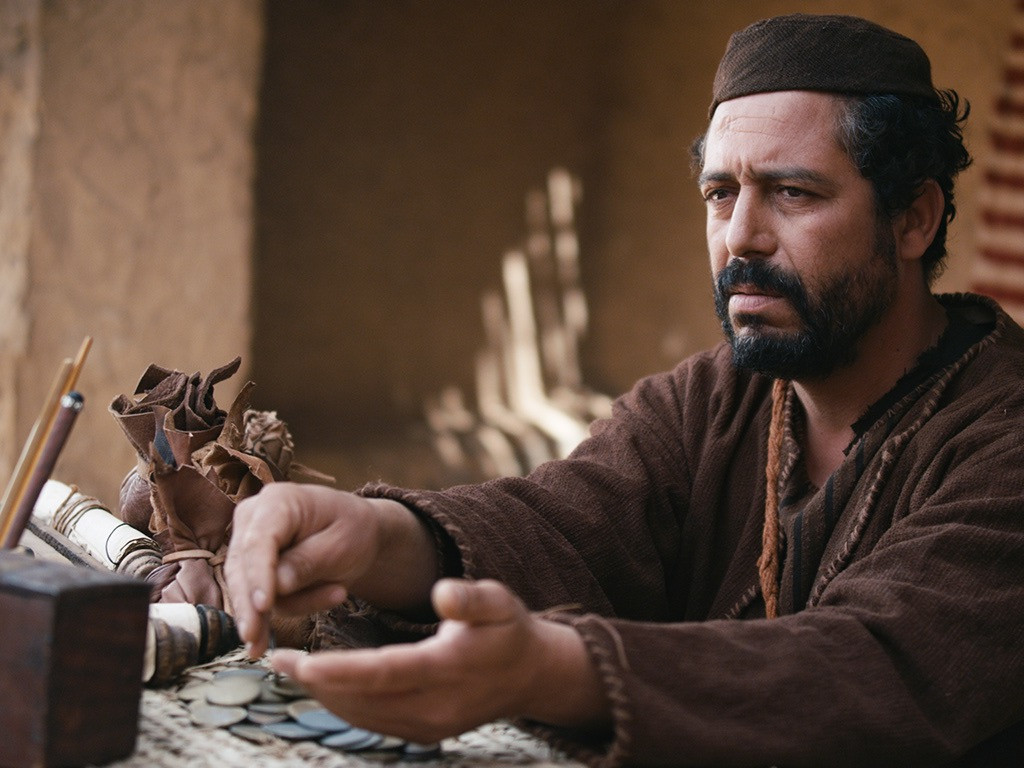
Jesus went out to the lakeshore after healing and forgiving the sins of a paralytic proving His deity in Peter’s house. Again, Jesus was teaching all who came to Him. “Then Jesus went out to the lakeshore again and taught the crowds that were coming to him.” (Mk.2:13 nlt) Jesus came to a tax booth near the Sea of Galilee. Tax booths were set up by the Roman government to collect taxes for infrastructure and to support the government. They were set strategically along the main roads to collect tolls like in our day. Commercial fishing was also taxed, so you would find a tax booth near a major fishing location. There Jesus saw Levi in his tax collector’s booth and said to him, ‘follow me and be my disciple.’ Levi didn’t hesitate to leave his lucrative job behind he went out and followed Jesus.
Levi is a good example for us to look at of one having a radical change after accepting Christ as savior. Levi was a tax collector, one of the most despised people in Israel at that time. Tax collection ran like our modern-day franchises. Tax offices were purchased from the Roman government with the right to collect taxes in a certain area. Operators were allowed to keep everything above the required government tax rate. Tax collectors made an exuberant living by charging excess fees far above what was reasonable, and most were dishonest. These tax collectors were making themselves rich at the expense of their own people. Levi left the money on the table, realizing that he needed a savior more than the money due to his sins, and he was now about to show everyone his radical change.
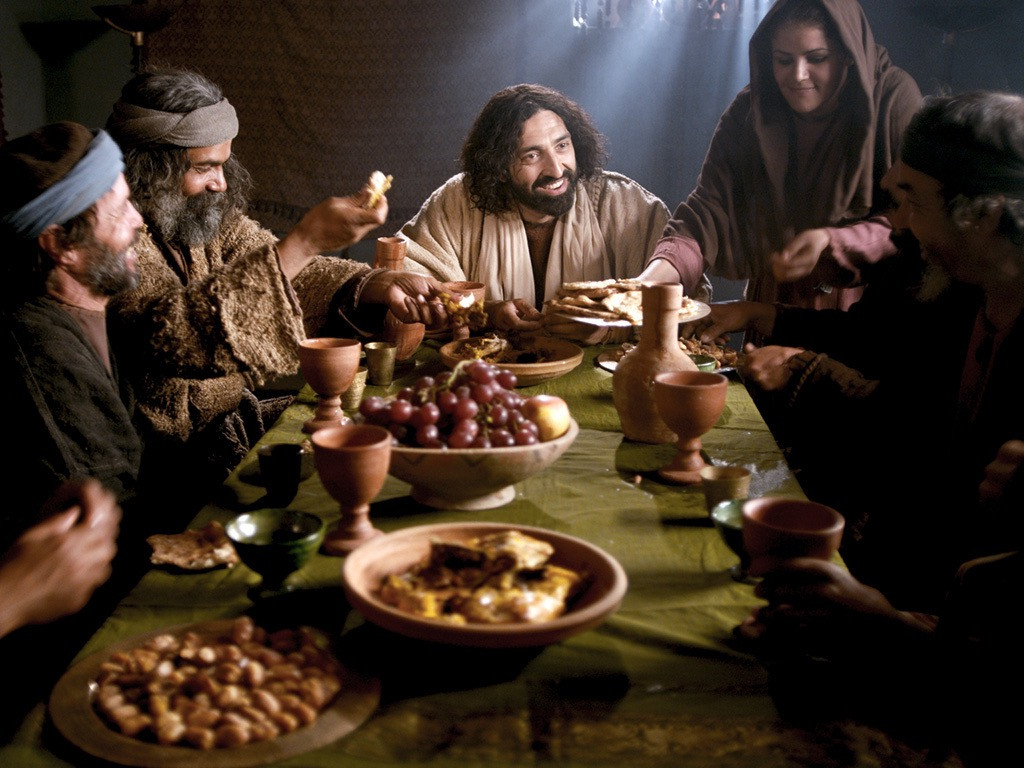
Levi’s quick response to Jesus and what he is about to do next is a testimony to the genuineness of his conversion. Levi decided to have a dinner party in honor of Jesus and invite his friends, colleagues, and associates. “Later, Levi invited Jesus and his disciples to his home as dinner guests, along with many tax collectors and other disreputable sinners.” (Mk.2:15 nlt) Levi wanted his guests to meet Jesus who had made such a change in his life. This did not sit well with the Jewish leaders who were looking for anything to discredit Jesus. Jesus sitting among these people and having a meal with them was an offense to these Pharisaical leaders. “But when the teachers of religious law who were Pharisees saw him eating with tax collectors and other sinners, they asked his disciples, ‘Why does he eat with such scum?’” (Mk.2:16 nlt) The leaders felt any contact with these people would make Jesus a sinner. Sinner was a common term for tax collectors, adulterers, robbers, and the like. But in their eyes, anyone who did not follow the Mosaic Law as they interpreted it were sinners, or scum.
Christians today need to be careful we don’t look down on non-Christians by not associating with them. Jesus gave us a command to go into all the world and preach the gospel making disciples in all nations. (Mt.28:19-20) Jesus also said “But I say, love your enemies! Pray for those who persecute you! If you love only those who love you, what reward is there for that? Even corrupt tax collectors do that much.” (Mt.5:44, 46 nlt) Jesus answered the Jewish leaders in Levi’s home by saying, “Healthy people don’t need a doctor—sick people do. I have come to call not those who think they are righteous, but those who know they are sinners.” (Mk.2:17 nlt) A self-righteous person feels no need to come to Christ for salvation, but a sinner does. And that sinner will have a radical change take place in their life for all their friends and the world to see.












 Word for the Soul