Bible Studies

“The Shepherd Feeds the Sheep” The Gospel of Jesus Christ: the book of Mark

Read: Mark 6:30-44 NLT – Jesus Feeds Five Thousand – The – Bible Gateway

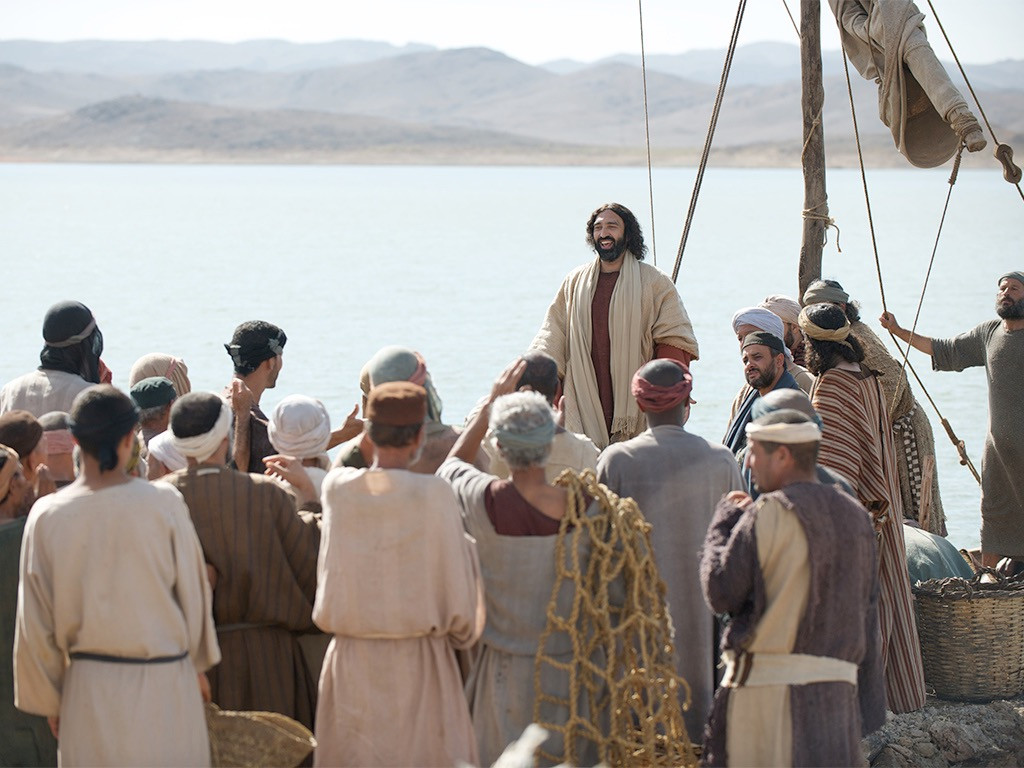
“Jesus saw the huge crowd as he stepped from the boat, and he had compassion on them because they were like sheep without a shepherd. So he began teaching them many things.” Mark 6:34 NLT

FreeBibleimages.org

This week in our study of the book of Mark we see Jesus as the good shepherd. Leading His disciples to a place of rest which they all desperately needed, Jesus is met by people who had followed Him around the Sea of Galilee to be near Him. Jesus didn’t get upset that His plans were ruined but looked on the people with compassion. He saw them for who they were, sheep without a shepherd.

Our story begins with the disciples returning from their preaching tour Jesus had sent them on. Jesus, naturally, would want a full report of their mission. Recapping their tour of duty was met with constant interruption that Jesus finally said, “Let’s go off by ourselves to a quiet place and rest awhile.” (Mk.6:31 nlt) The Bible says the disruptions made it impossible even for them to eat. What is needed most after a long time spent on the road in your job is a good meal when you arrive home. Jesus knew this and suggested they get away from the crowds. “So they left by boat for a quiet place, where they could be alone.” (Mk.6:32 nlt)

Their destination was the northeastern shore of the Sea of Galilee near the city of Bethsaida. Their departure didn’t stop the people from following Him. They took the long route walking eight miles along the shore arriving before Jesus who was cutting across the lake which was only four miles. It is possible the disciples’ boat incurred headwinds slowing them down, and it could have been the people were in a hurry not to let Jesus get away from them. Jesus met them as He came to shore with His disciples. Seeing the size of the crowd, the Bible says, “(Jesus) had compassion on them because they were like sheep without a shepherd. So he began teaching them many things.” (Mk.6:34 nlt) The rest and quiet time they were anticipating would have to wait, the sheep need a shepherd.

Jesus was teaching well into the late afternoon when His disciples came to Him saying, “This is a remote place, and it’s already getting late. Send the crowds away so they can go to the nearby farms and villages and buy something to eat.” (Mk.6:35-36 nlt) Jesus was aware of the hour and it was now time to turn His teaching specifically to the disciples. He told them to give them something to eat. The disciples gave Jesus a logical answer back up by numbers that it would take eight months of wages to feed such a crowd, also calculating the size of the crowd. The Lord was about to test their faith and teach them valuable truths about Himself. ‘“How much bread do you have?’ he asked. ‘Go and find out.’ They came back and reported, ‘We have five loaves of bread and two fish.” (Mk.6:38 nlt) Then Jesus told them to have the people sit down, it’s supper time!

It would do us well to picture the scene of this miraculous feeding of this large group of people. Jesus instructs the people to sit in groups on the green grass. The place is on the northeast shore of the Sea of Galilee. The grass is green signifying it is in the spring after the late winter and early spring rains. Grass in that area becomes dry and brown during the hot summer months. Having them sit down in groups of fifties and hundreds shows an orderly process. Our Lord always does everything in an orderly fashion. It would be smart for us to follow His example in all our endeavors. Jewish festivals in the day used a symmetrical seating of 50 semi-circles of 100 people for easy food distribution. So, this wasn’t uncommon. The Greek word used for ‘groups’ is prasia meaning ‘a garden bed or plot.’ The Wycliffe Bible Commentary describes the place as, ‘a picturesque scene, like beds of flowers with the different colors from all the clothing sitting in groups that can be seen from a distance.’ Yes, Jesus certainly does things in order and in splendid color.

“Jesus took the five loaves and two fish, looked up toward heaven, and blessed them. Then, breaking the loaves into pieces, he kept giving the bread to the disciples so they could distribute it to the people. He also divided the fish for everyone to share.” (Mk.6:41 nlt) In the preceding verse the words ‘took’ ‘looked’ ‘blessed’ and ‘break’ or ‘breaking’, are in a simple past tense in the Greek, whereas ‘gave’ is in the imperfect tense meaning ‘kept giving’ as in our text. Here is the miracle occurring. Jesus kept on giving the bread and fish and kept on giving until everyone had something to eat and were satisfied. There were also leftovers which Jesus had the disciples gather up. Twelve baskets in fact, one for each disciple so no one would miss out on their teacher’s lessons.

FreeBibleimages.org

They learned Jesus is the good shepherd who feeds His sheep. Jesus taught them He was able to feed thousands of people with five loaves and two fishes. The major lesson here is He can supply every need for His sheep. This miracle fulfilled prophecies from the Old Testament concerning the Messiah shepherd. Ezekiel 34:23 says, “And I will set over them one shepherd, my servant David. He will feed them and be a shepherd to them.” (nlt) Jesus is the Son of David, the Messiah who was to come. And Isaiah the prophet wrote, “On this mountain the LORD Almighty will prepare a feast of rich food for all peoples, a banquet of aged wine— the best of meats and the finest of wines.” (Is.45:6 niv)

Jesus is the Messiah, the Son of God, and the shepherd who feeds His sheep, protects His sheep and died for His sheep. “I am the good shepherd. The good shepherd sacrifices his life for the sheep.” (Jn.10:11 nlt) The gospel of Jesus Christ is the good news about the good shepherd who came and laid down His life in order that we may have eternal life by believing in His name. Yes, it’s supper time!

Bible Studies

“Parable of the Farmer’s Seed” The Gospel of Jesus Christ: the book of Mark

Read: Mark 4:1-20 NLT – Parable of the Farmer Scattering Seed – Bible Gateway

“Listen! A farmer went out to plant some seed. The farmer plants seed by taking God’s word to others.” Mark 4:3, 14 NLT

FreeBibleimages.org

Beginning with chapter four in the book of Mark, Jesus increases His use of the parable method of teaching, an earthly story with a heavenly meaning. The crowds continued to grow around Him, which was good, but it also brought more people who opposed Him, many who were only superficial followers. Jesus’ purpose of speaking in parables was to teach His disciples. The substance of His teaching was withheld from those antagonistic and superficial hearers who would not understand for they were not spiritually discerned. (1Cor.2:14)

In chapter four, we see Jesus once again teaching on the shore of the Sea of Galilee. As the crowds are pressing towards Him, Jesus retreats into a nearby boat and sits down to teach. With the crowds gathered on the shoreline, Jesus begins to tell them many stories in the form of parables beginning with the parable of the farmer’s seed, otherwise known as the ‘parable of the sower.’

“Listen! A farmer went out to plant some seed.” (Mk.4:3 nlt) Jesus always uses illustrations from everyday life to convey His messages. Agriculture was the way of life in Jesus’ day, so all would be familiar with it. Jesus uses four examples of different types of soil in which the farmer planted his seed. The farmer scatters seed on the path, on stony ground, on soil with thorns, and on good ground. In those days seeds were scattered by hand, so it was easy for some seeds to make their way onto a foot path along a field where planting was being done. The path was hardened by heavy foot traffic leaving the seed on the path and the birds came and immediately ate it.

“Other seed fell on shallow soil with underlying rock. The seed sprouted quickly because the soil was shallow.” (Mk.4:5 nlt) This is the stony ground, very good soil, but shallow and on top of an underlying stone usually limestone. Heating from the sun caused rapid growth eventually scorching the plant from extreme heat because it did not have deep roots. Jesus then used the example of soil containing thorns which choked the plant by using up all the light, water, and space needed to grow. And then there were seeds that fell into the good fertile soil and grew producing an abundant crop. Jesus then said, “Anyone with ears to hear should listen and understand.” (Mk.4:9 nlt)

The disciples and others who were with them who had a desire to follow Jesus asked Jesus the meaning of the parable. Jesus replied, “You are permitted to understand the secret of the Kingdom of God. But I use parables for everything I say to outsiders.” (Mk.4:11 nlt) Jesus begins to explain the parable to them and to anyone who has spiritual faith relating themselves to Jesus and His message.

“Then Jesus said to them, ‘If you can’t understand the meaning of this parable, how will you understand all the other parables?’” (Mk.4:13 nlt) Jesus makes it clear that understanding this parable is essential going forward to understand His future parables. This parable presents the teaching and preaching of the gospel message, the message of salvation, and the acceptance or rejection of it.

Jesus begins to explain the parable, “The farmer plants seed by taking God’s word to others.” (Mk.3:14 nlt) The seed is obviously God’s word, more specially the gospel message of salvation through Jesus Christ. The farmer is Jesus Himself and anyone and everyone who teaches and preaches the gospel. The seed that fell on the footpath was heard by people but immediately taken away by Satan as representing the birds eating the seed. The seed in the stony soil is received enthusiastically and emotionally. There is genuine joy, but they have not counted the cost. Once the heat from troubles and persecution bakes through they quickly fall away. As the thorns choked out the sun, water, and space needed for the plant to grow and survive in Jesus’ example, so to do the three hinderances of anxieties, lure of wealth, and the craving of other things choke out those who receive the word but worry about such things.

The first three examples are given for us to understand that not everyone we speak to, or who listens to our teaching, or sits under our preaching is going to respond to the gospel message the same way. If fact all three end up not accepting it but in different scenarios. But Jesus ends this parable with encouraging words, “And the seed that fell on good soil represents those who hear and accept God’s word and produce a harvest of thirty, sixty, or even a hundred times as much as had been planted!” (Mk.4:20 nlt) Those whose hearts are receptive to the Holy Spirit’s prompting respond after hearing the message and accept God’s Word for salvation and bear much fruit.

Photo by Brett Jordan on Pexels.com

It is important for Christians to be busy proclaiming the gospel. The Lord God requires us only to be faithful in telling others about Jesus Christ and His sacrifice for our sins. The results are in His hands and in His timing. God will do His work as we do ours. “Anyone with ears to hear should listen and understand.” (Mk.4:9 nlt)

Bible Studies

“Godly Leaders Study and Teach God’s Word” Godly Leadership: the book of Nehemiah

“For Ezra had set his heart to study the Law of the LORD, and to do it and to teach his statutes and rules in Israel.” Ezra 7:10 ESV

“They read from the Book of the Law of God and clearly explained the meaning of what was being read, helping the people understand each passage.” Nehemiah 8:8 NLT

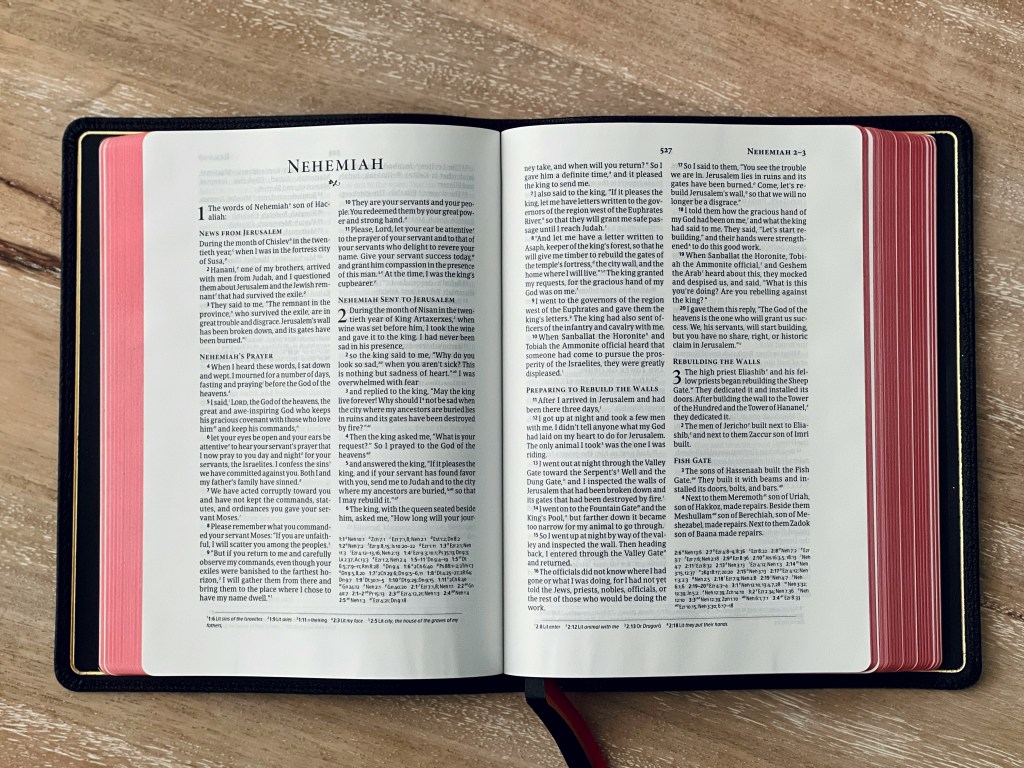
A new character is introduced this week, Ezra the scribe. Ezra is first mentioned in the book of Nehemiah in chapter 8 after the completion of the walls, but he had returned from Babylon 14 years before Nehemiah. He had led the second return of exiles safely back to Jerusalem. Herbert Lockyer in his book ‘All the Men of the Bible’ describes Ezra as “A man of deep humility and self-denial. A man of great learning with a fervent zeal for God’s honor. A man of great trustworthiness. A man anxious to commend his cause to others. A man who knew how to pray. A man deeply grieved over the sins of his people. A man who spared no pain to bring the people to repentance.” (1) Ezra will lead the reading of Law but before we get there, we don’t want to overlook chapter 7.

Jerusalem at this time was scarcely populated. Nehemiah took immediate action to repopulate the city. Nehemiah found the genealogical record of the first exiles to return. This record was compiled by Ezra back in Babylon although he was not part of the first return. Nehemiah called the nobles, the leaders of the city, and all citizens to come and register with the genealogical record. This would ensure a pure ancestry in the city of Jerusalem. “So the priests, the Levites, the gatekeepers, the singers, the Temple servants, and some of the common people settled near Jerusalem. The rest of the people returned to their own towns throughout Israel.” (Neh.7:73 nlt)

The repopulated city gathered on October 8, 444 B.C. New Years Day on the civil calendar known as the Feast of Trumpets. Ezra was asked to bring the book of the Law of Moses to be read for all who were assembled in the square. “Ezra stood on the platform in full view of all the people. When they saw him open the book, they all rose to their feet.” (Neh.8:5 nlt) The people stood in honor of God’s Word as Ezra read it. Some churches today observed that as well.

There are other godly leaders represented here in chapter 8 besides Ezra and Nehemiah, and that would be the Levites. The Levites were assistants to the priests and were also teachers of the Law. They helped explain the Law that was being read to the people for better understanding. The Levites also likely translated the words from Hebrew into Aramaic, the only language most of the people knew, due to being in Babylon for seventy years. There is a great need for godly leaders today to help others in understanding Scripture. The Holy Spirit will certainly guide you into all truth as you read the Bible, but we are all called to study Scripture for our own spiritual growth and be able to teach others. God doesn’t inspect us to be Pastors or teachers in a professional sense but to know enough to be able to give an answer for the hope you have inside you.  

When the people began to fully understand the Scripture that was being read to them, there was much sorrow over their sin that they began to weep. They were truly convicted. “Then Nehemiah the governor, Ezra the priest and scribe, and the Levites who were interpreting for the people said to them, ‘Don’t mourn or weep on such a day as this! For today is a sacred day before the LORD your God.’” (Neh.8:9 nlt) The people should be rejoicing that they know and understand God’s Word. The Lord had not destroyed them as a nation, and they are on the verge of a new beginning. This called for a celebration and Nehemiah led the way by encouraging them to celebrate with food, sweet drinks, and sharing with others. “And the Levites, too, quieted the people, telling them, ‘Hush! Don’t weep! For this is a sacred day.’” (Neh.8:11 nlt)

The reading of the God’s Word sparked a revival among all the people, but especially the priests, Levites and the family leaders. They met with Ezra for greater detail of the Law. It seems evident they were studying the Law and were concerned about the Feasts of Tabernacles that was approaching. Ezra explained what was to be done, and all the people did as they were instructed. It had been a long time since Israel as nation celebrated in accordance with the Law and great joy.

Ezra, Nehemiah, and the Levites shown godly leadership in providing what the people needed most at this time, and that was the renewing of the covenant with God. God’s Word was given and explained convicting the hearts of the people to repentance. There was the repopulating of the Holy city and the reestablishing of worship. Godly leaders build a solid foundation with the Lord by prayer, studying His Word, living out that Word, and teaching it. The good hand of the Lord will always be upon them. It is noted that Ezra also had the good hand of the Lord on him as Nehemiah did as he traveled from Babylon to Jerusalem, “For on the first day of the first month he began to go up from Babylonia, and on the first day of the fifth month he came to Jerusalem, for the good hand of his God was on him.” (Ezra7:9 esv) God’s good hand is on all leaders who are devoted to Him and lead in a godly way. May God raise up many more godly leaders in our day and in the days to come.

Photo by Tim Wildsmith on Unsplash

Read: Nehemiah 7:73-8:18 NLT – So the priests, the Levites, the – Bible Gateway

(1) Lockyer, Herbert. All the Men of the Bible. Grand Rapids: Zondervan, 1958. Pg. 118

Devotionals

What are you hiding from the children?

“We will not hide them from their children, but tell to the coming generation the glorious deeds of the LORD, and his might, and the wonders that he has done.” Psalm 78:4 ESV

Photo by Trinity Kubassek on Pexels.com

There are certain things parents hide from their children for their safety and to avoid confusion in material that is not age appropriate. Society does the same thing in keeping harmful material away from children, but sadly we are experiencing the present-day culture eroding those standards. Culture is lowering the age-appropriate standard to all-time lows on a variety of subjects causing harm and confusion to children. Christian parents are fighting an uphill battle in rising their children in the admonition of the Lord. What they hide from the innocent child in the home for their safety is often revealed in the classroom. 

Psalm 78 begins with a determination by the older generation to tell their children what their fathers passed down to them. They would teach them the glories of the Lord, His great might, the wonders He has done, and that God was their source of hope in this world. They weren’t going to hide these biblical truths from their children but teach them as soon as they were able to understand. Parents are commanded by God to teach them the wonders of God, who He is, His love for them, the way to live in this world, and God’s gift of salvation to all who believe.

Yes, there are many things to remain hidden from young minds, but the Word of God is not one of them and it must never be hidden. Parents should be intentional in teaching the Bible to their children. Their only hope in this life is in the God of the Bible. Knowing the truth of God’s Word, His commandments, and His love for them will go a long way in helping counter the hidden things they will be exposed to by the culture. You can be sure the classroom will keep the Bible hidden, so make sure it is fully exposed and taught in the comfort of your own home.

Read: Psalm 78:1-8 ESV – Tell the Coming Generation – A Maskil – Bible Gateway