Bible Studies

The Unforgiving Debtor: Parables of Jesus

“You evil servant! I forgave you that tremendous debt because you pleaded with me. Shouldn’t you have mercy on your fellow servant, just as I had mercy on you?” (Mt.18:32b-33 nlt)

Photo by Brett Jordan on Pexels.com

            This week in our study of the parables of Jesus we have one on forgiveness. Sometimes the hardest thing for a person to do is to forgive. This is especially true if the one extending forgiveness is extremely hurt. There are times one would finally agree to forgive the offender, but then adds they will never forget. Not much of a comfort for the one seeking forgiveness. Jesus is the perfect teacher to show us the true art of forgiveness and he did it in several ways recorded for us in the New Testament of the Bible.

            Our parable this week, ‘The Unforgiving Debtor’, has a backstory to it. Peter, the always inquisitive disciple, asked Jesus, “Lord, how often should I forgive someone who sins against me? Seven times?” (Mt.18:21 nlt) Peter thought the number of seven was sufficient since Rabbinic teaching only required three. Jesus’ answer didn’t follow the teaching of three being the acceptable number. He didn’t put a number on it. Jesus told Peter his number seven was insufficient. The correct number was seventy-seven. In others words it was to an uncounted number of times. Jesus takes this opportunity to teach us all a valuable lesson on forgiveness. Christians who have received God’s forgiveness are accountable to forgive others considering the enormous debt we have been forgiven as we will see in this parable.

            In Jesus’ earthly story there is a king who wanted to settle accounts with his servants who did business for him. These servants could have been governors of the provinces in the kingdom. One servant was in arrears of one million dollars in today’s currency. How did this servant come to owe such a lager debt we don’t know, perhaps it was mismanagement in the taxation process, or a complete mishandling of public funds, which is just as prevalent in our day. The amount was so excessive this governor couldn’t pay it back in a lifetime. The king then ordered that he, his wife and children along with all that he owned be sold to pay the debt. “But the man fell down before his master and begged him, ‘Please, be patient with me, and I will pay it all.’” (Mt.18:26 nlt) The king knew that he had no means in which to pay the debt. There was nothing he could ever do in his lifetime that would be enough to satisfy the debt.

The king of heaven, the Lord Jesus, knew there was nothing we could ever do to pay our debt regarding our sin. We are all doomed to a Christless eternity without our debt being paid in full, and we are not able to pay it. The king in Jesus’ story “was filled with pity for him, and he released him and forgave his debt.” (Mt.18:27 nlt) The king forgave the servants debt completely. It was only by the king’s grace and mercy he was free from the unpayable debt. No need to worry about back payments, the debt was marked paid in full. Jesus Christ paid our sin debt on the cross of Calvary. What we cannot do for ourselves, He did for us. When we accept Christ as our savior, our account is marked paid in full.

Photo by Alicia Razuri on Unsplash

Christians should be the most forgiving people on the planet considering the forgiveness granted to us unto salvation. Apparently though this is not always the case. Therefore, the need for more of Jesus’ teaching. Jesus continues His parable, “But when the man left the king, he went to a fellow servant who owed him a few thousand dollars. He grabbed him by the throat and demanded instant payment.” (Mt.18:28 nlt) This servant who was just set free from a lifetime debt was worried about a few thousand dollars owed to him by a colleague. This debtor also begged for more time, but what was different was his colleague had the ability to pay and only needed a little more time to clear the debt. But the unforgiving debtor refused and had his fellow worker put in prison.

            Needless to say, when the king heard of the matter, he was furious. He called for this servant and said to him, “You evil servant! I forgave you that tremendous debt because you pleaded with me. Shouldn’t you have mercy on your fellow servant, just as I had mercy on you?” (Mt.18:32b-33 nlt) Our Lord Jesus, King Jesus, has the same right to question us the same way should we ever forsake the forgiveness He has shown us by not granting it to others. No matter what offenses may have been done to us, it pales in comparison to our sin before the Lord. Our Lord forgives us of our sin as often as we come to Him, yes even seventy-seven times. May we do the same and forgive all those who ask for forgiveness remembering the debt that was forgiven on our behalf by our king, King Jesus!

Read: Matthew 18:21-35 NLT – Parable of the Unforgiving Debtor – Bible Gateway

Devotionals

Food for the Journey

“……I don’t want to send them away hungry, or they will faint along the way.” Matthew 15:32b NLT

FreeBibleimages.org

I am sure we have all heard the expression, ‘life is a journey.’ Indeed, it is. Curiously though no two people are on the exact same path in life. There may be similarities, but just as everyone is unique in their own way, their journey in life follows the course planned out for them. And for the Christian, the Lord had your life journey drawn up before you were even a thought in your parents’ mind. “You saw me before I was born. Every day of my life was recorded in your book. Every moment was laid out before a single day had passed.” (Ps.139:16 nlt)

Throughout our journey in life, we need subsistence to sustain us. We need a daily intake of food to nourish us to survive our physical life, and we need a daily intake of spiritual food to survive in our spiritual life. During Jesus’ ministry on earth, He had two occasions where He provided food for thousands of people as they were coming to Him for healing and to hear His teaching. Jesus had compassion for the people giving them both physical and spiritual food. He did not want to send the crowds away hungry for they might faint along the way.

Our Lord Jesus has the same compassion for us in our spiritual walk with Him. He does not want us to faint along the way in our life journey. He provides us with food to sustain our spiritual growth through His Word. As we have our quite time with Him, through our devotions, prayer, and Bible reading we can rest assured that we will not go away hungry. Make sure you put in the effort to get your daily spiritual nourishment for the journey. Jesus doesn’t want to send you away hungry.

Devotionals

They found Jesus, or did they?

“And I will give you a new heart, and I will put a new spirit in you. I will take out your stony, stubborn heart and give you a tender, responsive heart. And I will put my Spirit in you so that you will follow my decrees and be careful to obey my regulations.” Ezekiel 36:26-27 NLT

Photo by engin akyurt on Unsplash

The world has known of people who in their own words had a ‘come to Jesus’ moment. A present public life which is contrary to their previous lifestyle is doubted by some and praised by others. Over time the genuineness of their conversion is seen by the actions represented in their lives. The apostle Paul writes, “This means that anyone who belongs to Christ has become a new person. The old life is gone; a new life has begun!” (2 Cor. 5:17 nlt) Truly those who have come to know the Lord will display the new life being lived out in them.

Sadly, there are many who make a profession of faith in Christ who have had an emotional experienced of some sort but have not fully committed their lives to Christ. It may have been a self-serving decision determining to be a better person, or a hope for better circumstances to influence their life. But eventually whether they found Jesus or not will be revealed.

Ezekiel prophesying of Israel’s spiritual regeneration notes it is an action of the Lord God. God says He will give them a new tender responsive heart by taking out their stony stubborn heart, and He will put a new spirit in them. His spirit will enable them to be obedient to God’s decrees. Notice it is the Lord God who gives them the new heart with the ability to obey Him. Jesus says in the gospel of John, “No one can come to me unless the Father who sent me draws them…… This is why I told you that no one can come to me unless the Father has enabled them.” (Jn. 6:44, 65 niv)

Those of us who have truly found Jesus, found Him as the Holy Spirit drew us to Him. Accepting Christ, we have received the Holy Spirit enabling us to obey Him and ‘walk the walk’ as we say. This is not to say we don’t ever sin again, but our walk will be consistent with our faith in Christ with no one needing to question did we find Jesus. No, He found us, and we accepted His free gift of salvation as His spirit drew us to Himself.

Is the Holy Spirit drawing you to salvation in Christ? Do not resist His gift of a new tender responsive heart leading to salvation and accept Him as Lord and Savior of your life.

Bible Studies

Parables of the Kingdom of Heaven: Parables of Jesus

“Jesus always used stories and illustrations like these when speaking to the crowds. In fact, he never spoke to them without using such parables.” Matthew 13:34 NLT

FreeBibleimages.org

This week we look at Jesus’ ‘Kingdom of Heaven’ parables and there are a few, six to be exact. Most of them are short and to the point, but even in Jesus’ longer parables there are life changing points for ‘Anyone with ears to hear should listen and understand!’ (Mt.13:43b nlt) We noted last week that parables were an earthly story with a heavenly meaning, and these parables of the ‘Kingdom of Heaven’ leave no doubt as to the heavenly meaning. They do indeed point to the Kingdom of Heaven itself. Jesus taught His disciples the Kingdom of Heaven is future and those who will populate it will be those who respond to the message of their preaching and the preaching of the gospel throughout the ages until Jesus returns. It is still in effect today. There will be those who accept the preaching and those who will not respond to the message that kingdom of God is at hand.

There are five characteristics of the Kingdom of Heaven that are seen in these parables. The preaching of the gospel, the growth of the gospel, the power of the gospel, the value of the gospel, and the response of the gospel. The book of Matthew is our source this week found in chapter 13 and verses 24-50.

In the first parable in this passage, the parable of the wheat and the weeds (Mt.13:24-30), and the last parable of the fishing net (Mt.13:47-50) we find both the preaching of the gospel and the response of the gospel. Jesus says the preaching of the gospel “……is like a farmer who planted good seed in his field. But that night as the workers slept, his enemy came and planted weeds among the wheat, then slipped away.” (Mt.13:24-25 nlt) “Again, the Kingdom of Heaven is like a fishing net that was thrown into the water and caught fish of every kind.” (Mt.13:47 nlt) The preaching of the gospel goes out just as last week’s parable, the farmer scatters his seed with some taking hold and some not. Here the seed is planted and takes root accepting the gospel, but the evil one has also planted seeds becoming weeds as they reject God’s Word. The gospel net of preaching the good news is thrown out into the sea to catch all kinds of fish, but here again there are many who were there only for the ride into the shore.

A familiar parable is the parable of the mustard seed. (Mt.13:31-32) A mustard seed is the smallest of all seeds, but it grows into a large tree. The gospel message starts out small among believers but begins to spread quickly and rapidly encompassing many in its fold. It spreads quickly due to its magnificent power as illustrated in the parable of the yeast. “Jesus also used this illustration: ‘The Kingdom of Heaven is like the yeast a woman used in making bread. Even though she put only a little yeast in three measures of flour, it permeated every part of the dough.’” (Mt. 13:33 nlt) The power of the gospel through the influence of the Holy Spirit cannot be resisted by those called of the Lord.

Jesus gives us two very short parables to emphasize the value of being in the Kingdom of Heaven. In the parables of the hidden treasure and the pearl, the value is so great that one would give up everything they owned to possess it. Nothing could be more important, nothing else matters in this world than to be prepared for the next world.  

FreeBibleimages.org

The fifth characteristic of the Kingdom of Heaven as noted above is found in both the parable of the wheat and weeds and the parable of the fishing net. It is the response to the gospel message. Jesus’ heavenly message in these parables is the gospel is being preached, it grows in the power of the Holy Spirit, and it is the most valuable thing you can ever possess. But His message also speaks of those who will be in the Kingdom of Heaven and those who will not. Jesus’ words are clear in both parables as He distinguishes between the acceptance and rejection of the gospel. “Just as the weeds are sorted out and burned in the fire, so it will be at the end of the world. The Son of Man will send his angels, and they will remove from his Kingdom everything that causes sin and all who do evil. And the angels will throw them into the fiery furnace, where there will be weeping and gnashing of teeth.” (Mt.13:40-42 nlt)

It is a sobering thought there are many who believe they are the wheat in the field or the good fish in the net, only to find themselves being thrown out with bad. Don’t make the same mistake, accept the preaching of the gospel message, and secure your place in the Kingdom of Heaven. “Then the righteous will shine like the sun in their Father’s Kingdom. Anyone with ears to hear should listen and understand!” (Mt.13:43 nlt)

Read: Matthew 13:24-50 NLT – Parable of the Wheat and Weeds – Here – Bible Gateway

Devotionals

Restoration: A Dream Come True

“When the LORD brought back his exiles to Jerusalem, it was like a dream!” Psalm 126:1 NLT

Photo by Lord Varenn on Pexels.com

True restoration is only realized when one is truly broken. Brokenness shows itself in various ways. The most common form of brokenness among all of us who breathe is in personal relationships. Here again, these show themselves through various means and circumstances. The longing for a relationship to be restored at times seems an impossibility, but when it occurs is a dream come true. Restorations do occur in accordance with God’s will and timing.

The nation Israel was restored to their land after seventy years of captivity in Babylon due to their gross sin against God. Although it was prophesized that they would return it all seemed like a dream to them when it happened. They almost couldn’t believe it. Psalm 126 is a song of joy for the restoration of Israel to the land. The psalmist wrote that they were filled with laughter and sang for joy. The surrounding nations joined them in acknowledging the amazing things God had done for them. They asked the Lord to restore their fortunes by planting their seeds in tears, but they will rejoice in the harvest to come once again.

God is in the restoration business. No one is more broken than a sinner separated from God because of their sin. We were born with a sin nature, making us all broken and in need of restoration to God. With God being in the restoration business, He made it possible for each of us to be restored to Him through the blood of Christ on the cross of Calvary. There is nothing we could ever do to make things right with God. It is only through our acceptance of Christ as our savior. We can rejoice with the broken people of Isarel in their restoration to their land and our salvation through Christ’s sacrifice for us as we accept Him. A dream come true.

Read: Psalm 126 NLT – Psalm 126 – A song for pilgrims – Bible Gateway

Devotionals

Now or Later

“And a scribe came up and said to him, ‘Teacher, I will follow you wherever you go.’…. Another of the disciples said to him, ‘Lord, let me first go and bury my father.’” Matthew 8:19, 21 ESV

Photo by Magnet.me on Unsplash

Eagerness is one thing, but eagerness without thought is quite another. Being committed is honorable, but procrastination reveals non-commitment. Many of us dive into projects and make commitments of one kind or another only to find out that we cannot fulfill the responsibilities that come along with it. We are eager to commit to a worthy cause, which is noble, but totally misrepresent what we are actually capable of doing and how deep our commitment is when it is time show up. This is especially true in our work for the Lord. A lot of Christians over commit, but more often than not we have a tendency to overestimate ourselves without giving thought to the costs, or we delay our involvement mirroring our uncertainty.

Jesus came across to two individuals during His days on the earth which He could have also found among today’s Christians. One was a scribe, a teacher of the Law, who was enthused with what he saw of Jesus. He witnessed the miracles of healing and casting out demons. With his knowledge as a teacher he must have realized that no one can do these things unless is was of God. He was eager to follow Jesus and to be part of what He was doing, perhaps even the much anticipated establishment of His kingdom on earth. But our Lord saw through his eagerness, for he was not thinking passed what he saw. He did not see that Jesus had nowhere to call home. Using today’s vocabulary, Jesus was on the road seven days a week. Even though the scribe said that he would follow Him wherever He went, Jesus knew he had not considered his commitment.

Another disciple of Jesus also expressed interest in following Him, but wanted to delay it until he was in a better position financially receiving his inheritance from his father. He missed the importance of the urgency of Jesus’s ministry on earth. Time was short and time is short today. The work of presenting the gospel is an urgent matter. It requires a total daily commitment, not based on our time table, but on God’s as He opens up opportunities for us to serve Him.

May we have a willingness to follow Jesus wherever He leads us. Let our eagerness be met with the thought of the urgency of presenting the gospel and considering the cost. May we be obedient Now and not wait until Later. 

Bible Studies

The Farmer Scattering Seed; Parables of Jesus

“The farmer plants seed by taking God’s word to others.” Mark 4:14 NLT

FreeBibleimages.org

            Our Sunday Biblical Insights over the next couple of months will feature the ‘Parables of Jesus.’ One third of Jesus’ teaching was in the form of a parable. There are close to forty in all, and we will examine as many as we can, reviewing a couple of them in the same week. A parable is simply an earthly story with a heavenly meaning. We begin this week with the parable of ‘The Farmer Scattering Seed.’ This is one of several parables found in all the Synoptic Gospels (Matthew, Mark, and Luke). Mark’s gospel is our text for this parable. FYI, the book of John contains none of Jesus’ parables.

            Much of Jesus’ teaching was done before large crowds and this first parable is no exception. The crowd was so large that day Jesus got into a boat sitting down to teach all those who were gathered along the shoreline to hear Him. Jesus started by saying, “Listen! A farmer went out to plant some seed.” (Mk. 4:3 nlt) Familiar illustrations were often employed by Jesus in His teaching. Jesus’ day was mostly an agricultural society. Most people understood the principles of agriculture, the planting and harvesting of crops. This is where Jesus begins.

            The farmer is scattering his seed in the soil of his field to produce a fruitful crop. When scattering seed, it falls in various locations of the field. Jesus describes the seed as being scattered in four different areas. Some seeds never make it to the field as they fall on the footpath and the birds immediately devour it. Other seeds make it but fall on shallow soil on top of a rock. The plant rises quickly but is soon wilted and dies for lack of deep roots. Some seeds found deep soil, but the adequate dept also contained thorns which grew and choked out the plants. And then there were seeds that fell on good fertile soil. They sprouted, grew, and produced a bountiful crop.

            Later, Jesus’ disciples asked Him the meaning of the parable. Jesus did say as He concluded the parable, “Anyone with ears to hear should listen and understand.” (Mk. 4:9 nlt) They obviously didn’t understand. The farmer’s seed is providing earthly subsistence of food needed for survival. Jesus implies the heavenly meaning by equating the seed being planted by the farmer as the Word of God. He tells His disciples, “The farmer plants seed by taking God’s word to others.” (Mk. 4:14 nlt) God’s Word is the spiritual subsistence we need for eternal life. More specifically, Jesus Christ, the Son of God, the Word made flesh. “So the Word became human and made his home among us.” (Jn. 1:14a nlt)

            The four types of soil in the parable represent four different responses from individuals who are presented with the gospel. There are those with ‘no response’ for Satan immediately shows up and steals it away before it has the time to germinate. Many people have an ‘emotional response’ when they hear the gospel being preached, but not having deep roots they fall away when start to receive flak from others due to their interest in Christianity. A third response is a ‘conformity to the world response.’ “Do not conform to the pattern of this world but be transformed by the renewing of your mind.” (Ro. 12:2a niv) The word taken in begins to grow along side the thorns of this world, the lure of money, success, and all one would have to give up being a Christian. And those thorns chock out any new desires for God or His Word. But then there is the ‘fruitful response’, those who readily accept the gospel message being drawn by the Holy Spirit. “And the seed that fell on good soil represents those who hear and accept God’s word and produce a harvest of thirty, sixty, or even a hundred times as much as had been planted!” (Mk. 4:20 nlt)

Photo by Jonathan Wells on Unsplash

            The farmer scattering seed in Jesus’ parable is every Christian today. All who accepted Christ as savior has received a bag of seed from the Lord to spread around. Gospel seeds are not reserved for only pastors, Bible teachers, evangelists, or seminary professors, but everyone who names the name of Christ. Jesus is encouraging each of His followers in this parable not to be discouraged in the lack of response as we tell others about Him. There will be different types of responses according to each heart. The preparation of the soil is not our responsibility. God will prepare the soil. We are only called to be faithful and scatter the seed.

Read: Mark 4:1-9, 13-20 NLT – Parable of the Farmer Scattering Seed – Bible Gateway

A Christian Perspective

The Sun will be Darkened

“……the sun will be darkened, the moon will give no light, the stars will fall from the sky, and the powers in the heavens will be shaken.” Matthew 24:29 NLT

Photo by Drew Rae on Pexels.com

This coming Monday, April 8, a total solar eclipse will pass through North America. Its path starts in the South Pacific Ocean entering the mainland on Mexico’s Pacific coast. The path continues through Mexico entering the United States in Texas and traveling in a northeastern direction through the United States up through New England and entering Canada in southern Ontario exiting off the Atlantic coast of Newfoundland. This eclipse is being dubbed as the Great North American Eclipse as the moon makes its way between the sun and the earth. Thousands of people are making their way to the best locations to view the eclipse in its totality. From the small cities of Kerrville, Texas and Russellville, Arkansas, to Cleveland Ohio and Buffalo, New York, and everywhere in between spectators will be lining up to view the astronomical event. It is estimated that close to 50 million people are in the solar path, not to mention those travelling to it. Total solar eclipses are rare occurrences but happen within the astrological timetable. But there will be one last astronomical event as we know it that will darken not only the sun but the moon as well.

Jesus told His disciples He was going away, but He was coming back. When Jesus ascended into heaven from on top of the Mount of Olives two men dressed in white said to those who witnessed Jesus’ departure, “why are you standing here staring into heaven? Jesus has been taken from you into heaven, but someday he will return from heaven in the same way you saw him go!” (Acts 1:11 nlt) The Lord Jesus is going to return and plant His feet back on the Mount of Olives. Matthew describes this astronomical event as, “……the sun will be darkened, the moon will give no light, the stars will fall from the sky, and the powers in the heavens will be shaken. And then at last, the sign that the Son of Man is coming will appear in the heavens, and there will be deep mourning among all the peoples of the earth. And they will see the Son of Man coming on the clouds of heaven with power and great glory.” (Mt. 24:29-30 nlt)

As we view God’s creation of the sun, the moon, and the stars during the solar eclipse, may we remember that His Son Jesus Christ is returning in a way that will rock the world. He will come back and rule as King on the earth for a thousand years. The total solar eclipse will darken the sun for a few minutes in a very small portion of the earth, but when Jesus returns the whole world will see the darkening of the sun and feel the cataclysmic effects upon the earth. But the light will reappear when Christ begins His earthly reign. Astronomers through careful study can predict the next solar eclipse, but even the most educated theologians cannot predict the when the Son of Man will come back again. Everything is in place and ready for His return. Are you?

Devotionals

The Morning Light from Heaven

“Because of God’s tender mercy, the morning light from heaven is about to break upon us, to give light to those who sit in darkness and in the shadow of death, and to guide us to the path of peace.” Luke 1:78-79 NLT

FreeBibleimages.org

During the last few weeks, since daylight savings time began, the rising of the sun has coincided with my wake-up time. Of course that will change as the days get longer, but nevertheless as I walk from the bedroom into the dining room the sun is shining brightly on the wall through the living room window. As I was reading Zechariah’s prophecy in Luke chapter 1 the other day, I couldn’t help but reflect on my recent morning light experiences. “Because of God’s tender mercy, the morning light from heaven is about to break upon us.” (Lk. 1:78 nlt) The morning light of the sun is indeed from heaven for it is God’s creation and it is sure to break upon us every day. But Zechariah’s prophecy was not concerning the morning light from the sun, but the Son, Jesus the Son of God.

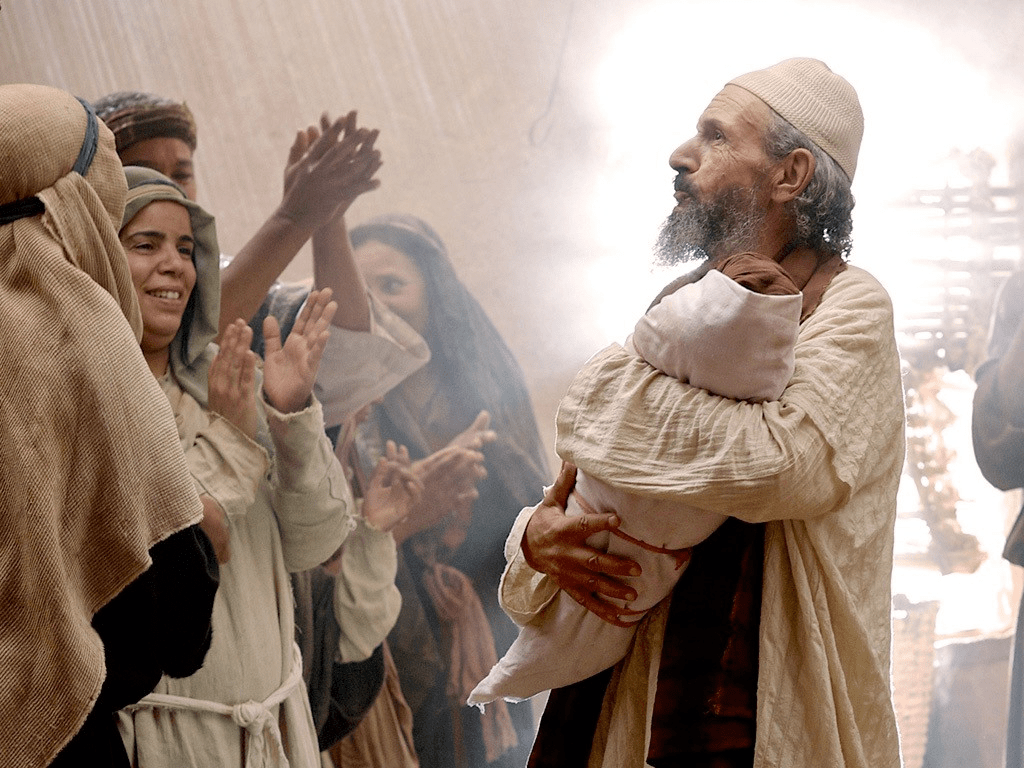
Zechariah’s prophecy followed the birth of son, John the Baptist. He praised the Lord God of Israel for sending the savior, Jesus Christ. “Praise the Lord, the God of Israel, because he has visited and redeemed his people. He has sent us a mighty Savior from the royal line of his servant David, just as he promised through his holy prophets long ago.” (Lk. 1:68-70 nlt) Zechariah knew his son John was to be the forerunner to prepare the people for the coming of the Messiah. “And you, my little son, will be called the prophet of the Most High, because you will prepare the way for the Lord.” (Lk. 1:76 nlt)

The prophecy concludes as Zechariah encourages those who sit in darkness that the morning light is about to break through. Perhaps you’re sitting in darkness this day. The morning light from heaven, Jesus Christ, is ready to break upon you if you look to Him to give you the light of His salvation.

Read: Luke 1:67-79 NLT – Zechariah’s Prophecy – Then his – Bible Gateway

Devotionals

Walking with Jesus

“They said to each other, ‘Did not our hearts burn within us while he talked to us on the road, while he opened to us the Scriptures?’” Luke 24:32 ESV

FreeBibleimages.org

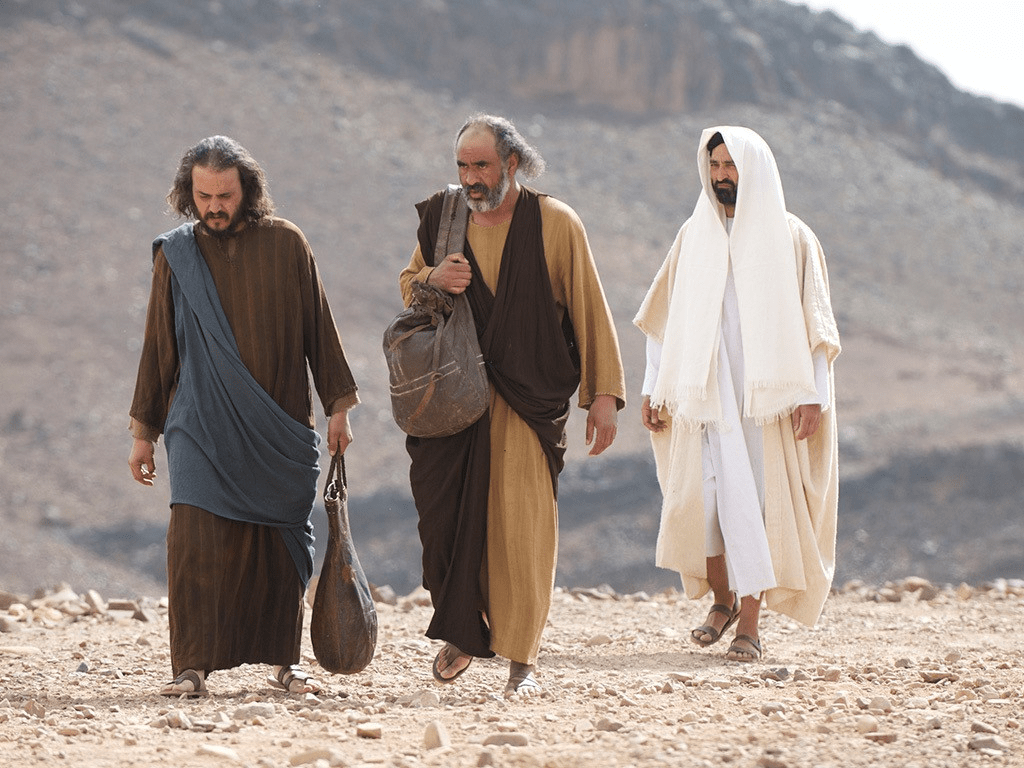
The first two people to walk with Jesus after His resurrection was Cleopas and his friend. They were returning to Emmaus from Jerusalem late in the day that first Easter Sunday when Jesus approached them and joined them in their walk. They had been discussing among themselves all that had transpired in the last few days. Jesus asked them in a curious way what they were talking about. They did not recognize Him even though they were told He was seen alive. Cleopas couldn’t believe their new walking companion wasn’t aware of the events around Jerusalem over that long weekend. He then preceded to give Him a detailed account of the last three days about Jesus the Nazarene.

Cleopas and his friend were sincere and accurate in their reporting of all that happened, but they missed the point as to the reason. They were looking for Jesus to free Israel from the Roman government and set up His Kingdom. Jesus then admonished them concerning Himself by saying, “Was it not necessary that the Christ should suffer these things and enter into his glory?” (Lk. 24:26 esv) Jesus then explained to them the scriptures as they walked together.

Christians today have the same opportunity to walk with Jesus through the presence of the Holy Spirit. As we read the Bible, the Spirit guides us into all truth concerning the Word of God. The Holy Spirit guides us into the saving knowledge of the Lord Jesus, our Savior. As we accept Christ as our Savior, He is constantly with us through the Holy Spirit as we walk in this life. Cleopas and his friend may have been the first to walk with Jesus after His resurrection unknowingly, but each of us today can know that it is Christ who walks with us as we put our faith in Him.

Read: Luke 24:13-49 ESV – On the Road to Emmaus – That very day – Bible Gateway