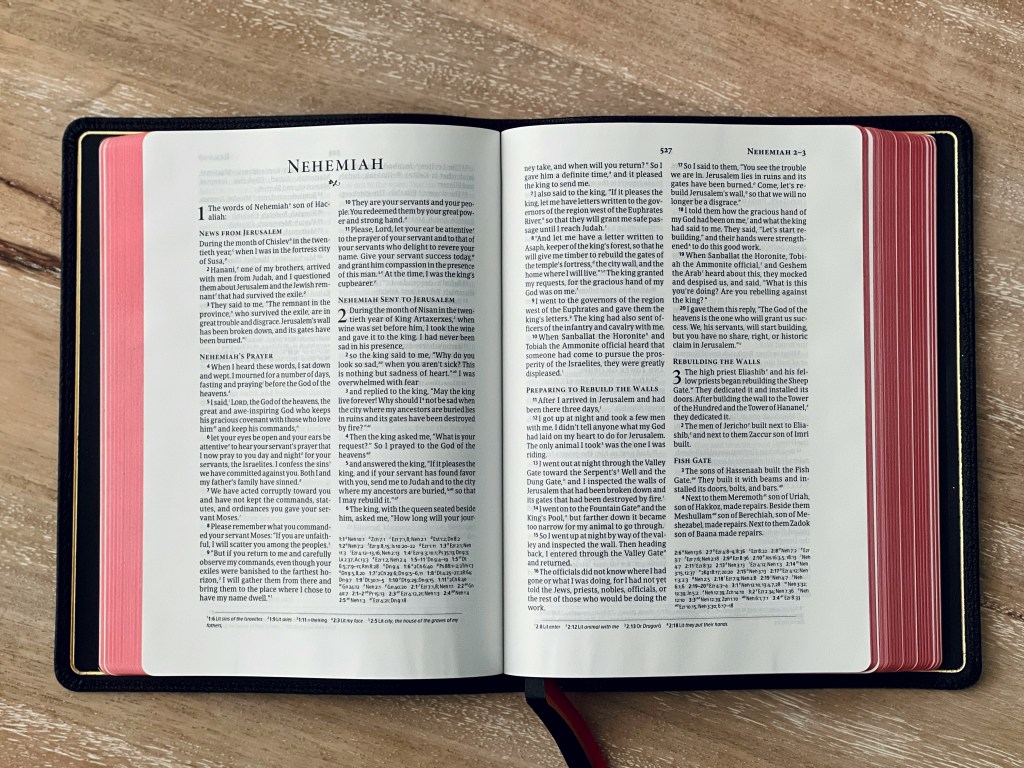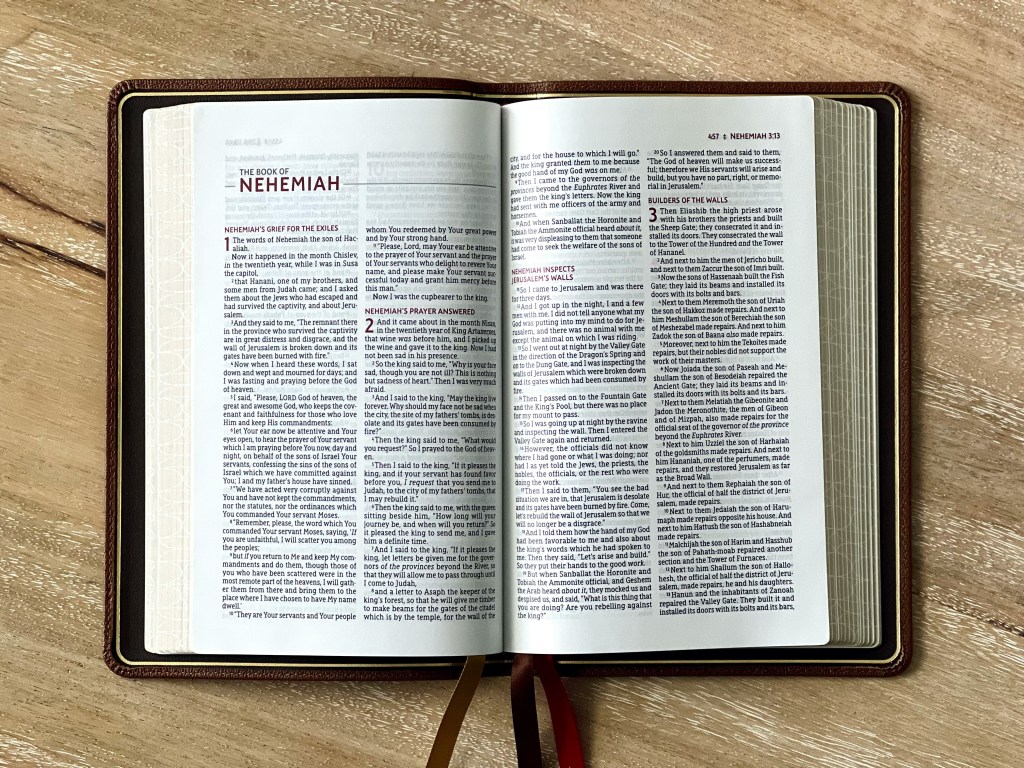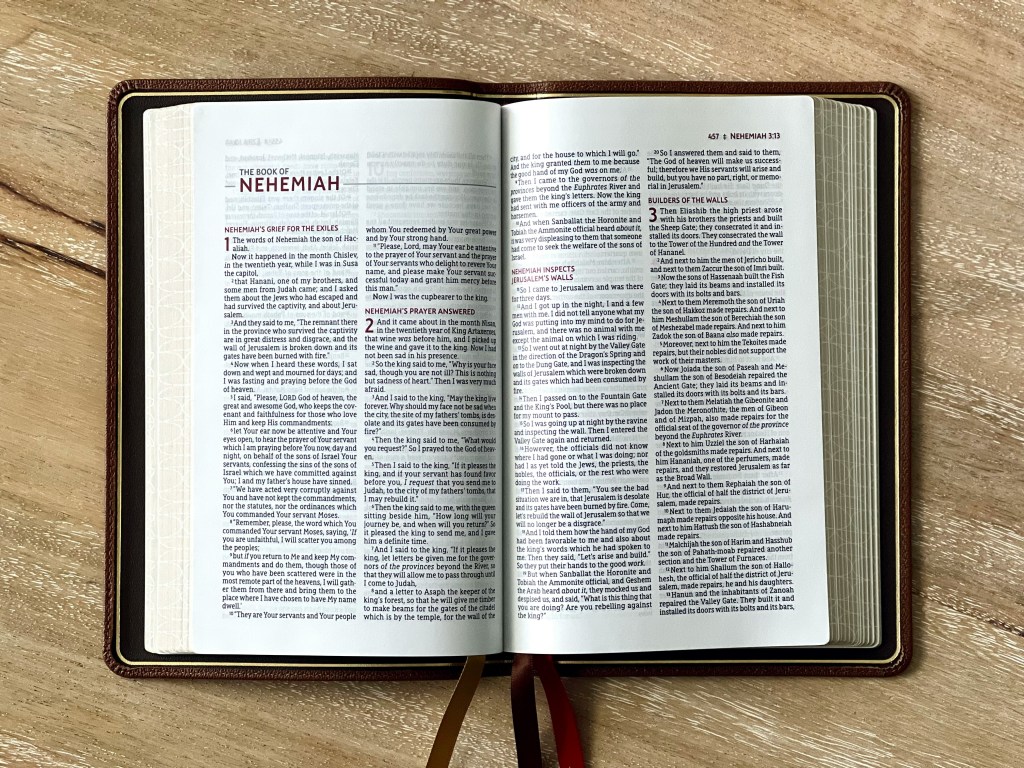
Bible Studies

“Godly Leaders’ Work is Never Done” Godly Leadership: the book of Nehemiah

“So I purged out everything foreign and assigned tasks to the priests and Levites, making certain that each knew his work. I also made sure that the supply of wood for the altar and the first portions of the harvest were brought at the proper times. Remember this in my favor, O my God.” Nehemiah 13:30-31 NLT

Photo by Tim Wildsmith on Unsplash
 

We have come to end of our study of godly leaders from the book of Nehemiah, but the work, unfortunately, for godly leaders never comes to an end. That is why godly leaders are needed in every facet of society. Last week we recalled the influence Nehemiah, Ezra, and the other leaders had on the people encouraging them and participating with them in the dedication of Jerusalem’s rebuilt walls. The people responded by celebrating and worshiping God. “Many sacrifices were offered on that joyous day, for God had given the people cause for great joy. The women and children also participated in the celebration, and the joy of the people of Jerusalem could be heard far away.” (Neh.12:43 nlt) You may have heard this saying, ‘when the cat’s away, the mice will play.’ Well, Nehemiah was away, back serving the king, and the people playfully went back to their old ways.

Before we are quick to condemn the people of Judah, we should look at ourselves in the mirror, me included. How many times have we repented our sins and past actions, only to repeat them when no one is around to notice. My point is that we need godly leaders around us to help us toe the line. Godly leaders are not perfect as we observed a few weeks back, but they are used by God and need our continue prayers.

Nehemiah may have received word of the turning back of the people while in Persia serving King Artaxerxes. Nehemiah had been back in Persia close to twelve years, enough time for the people to unravel a lot of the reforms that he had put in place. There was inter-marriage taking place again with foreigners. The children from these marriages could not speak the Hebrew language, but the languages of foreign nations. This command of separation from foreigners was for religious purposes and was not racial or political.

The Temple of God was being desecrated. Tobiah, an archenemy of the Jews, had now taken residence in the Temple courtyard where the articles for sacrifice were stored. Eliashib, a priest and supervisor of the storerooms in the Temple, was persuaded by Tobiah to provide accommodations for him while visiting Jerusalem. Tobiah used his influence as a relative to convince Eliashib to the point of moving out the articles for the Temple and bringing in Tobiah’s idols of worship.

In addition, the people neglected to support the priests and Levites who served in the Temple. As a result, they had to neglect their duties in the Temple and return to the fields to support themselves and their families. The Law of Sabbath was also being broken again. Work was being done, and business was transacted on the Sabbath day as any other day of the week.

As mentioned above, Nehemiah may have heard of what was taking place in Jerusalem. There was a reading from the book of Moses ‘on that same day.’ (Neh.13:1) This could have been the anniversary of the dedication of the wall years earlier. Notably, Ezra the scribe, was not present, but what he reinstated was still being carried on. The people may have drifted away, but not so far that they neglected the reading of the Word. Through this reading there was conviction. Perhaps, Nehemiah heard this and responded by coming back.

Nehemiah returned and put new reforms in place. His first act was throwing Tobiah out of the Temple storerooms with all his belongings. “I became very upset and threw all of Tobiah’s belongings out of the room.” (Neh.13:8 nlt) Nehemiah displayed the righteous anger Jesus displayed 450 years later, “Jesus entered the Temple and began to drive out all the people buying and selling animals for sacrifice. He knocked over the tables of the money changers and the chairs of those selling doves.” (Mt.21:12 nlt) Godly leaders should not be afraid and hold back righteous anger when it is called for. It needs to be on displayed, but in a godly way and according to God’s righteousness and justice. Nehemiah then performed a ceremonial cleaning in purifying the Temple storerooms.

The Levites were brought back into the Temple to perform their duties. Tithes were coming back into the Temple and the Levites were being supported for their work. Nehemiah appointed four men of good reputation as treasurers to oversee the distribution to the Levites. These overseers included a Priest, a Levite, a Scribe, and a lay person. A good model to follow today, honest people with different positions working together, and don’t forget the lay person.

Nehemiah then addressed the profaning of the Sabbath. He rebuked the people for working and conducting business on the Sabbath. He called out the nobles by saying to them, “Wasn’t it just this sort of thing that your ancestors did that caused our God to bring all this trouble upon us and our city? Now you are bringing even more wrath upon Israel by permitting the Sabbath to be desecrated in this way!” (Neh.13:18 nlt) Nehemiah commanded the gates to shut from sunset on Friday until sunset on Saturday threatening violators with arrest if they continued to buy and sell on the Sabbath.

Lastly, and yes again, Nehemiah had to deal with the sin of inter-marriage with pagans. His response may seem a little harsh, but the cat is back, and the mice are guilty. “So I confronted them and called down curses on them. I beat some of them and pulled out their hair. I made them swear in the name of God that they would not let their children intermarry with the pagan people of the land. (Neh.13:25 nlt) Nehemiah’s actions were to prevent this sin from occurring again in the future. He reminded them Solomon was the wisest and most powerful king in the world, and he was brought down by the influence of his foreign wives. The same would happen to them if they continued in this practice.

As we can see, godly leaders are needed for there is always work to do. We could say it’s job security, but it takes the right individual. A godly leader is one who is above reproach, committed to God, and to His work, His justice, His leadership, and must have a desire to do everything for God’s glory. Nehemiah’s motive throughout his ministry was to please and serve God. Godly leaders know it’s not about them, but what God will do through them.

Read: Nehemiah 13 NLT – Nehemiah’s Various Reforms – On that – Bible Gateway

Bible Studies

“Godly Leaders lead the people in confession and repentance” Godly Leadership: the book of Nehemiah

“The people responded, ‘In view of all this, we are making a solemn promise and putting it in writing. On this sealed document are the names of our leaders and Levites and priests.’ The document was ratified and sealed with the following names: The governor: Nehemiah son of Hacaliah, and also Zedekiah.” Nehemiah 9:38-10:1 NLT

 
Photo by Papaioannou Kostas on Unsplash

The walls and gates around Jerusalem were completed, the enemies of the Jews have backed off, the city has been repopulated, worship was restored, and the festivals commanded by the Lord were taking place, but there was some unfinished business to take care of. The people were deeply convicted of their sin as we learned last week in chapter 8, but there was no formal acknowledgement and confession. Nehemiah chapter 9 opens with, “On October 31 the people assembled again, and this time they fasted and dressed in burlap and sprinkled dust on their heads.” (Neh.9:1 nlt) Christians at times resemble the Jews here in Nehemiah. We are convicted of sin but continue to go along without dealing with it or we just go through the motions hoping that feeling will go away. It needs to be dealt with, and the people of Israel understood this and the leaders to action in leading them.

The Levites led the reading of God’s Word for three hours followed by three hours of confessing their sins and worshiping God. Confession of sin is an act of worship to a holy God, praising Him, as we confess, for His forgiveness and restoring us as if we have never sinned. Coming before Him with the right attitude, humbling ourselves is a manner of worship. The Jews had fasted beforehand and covered themselves with dust dressing in burlap. They had shown their distress over their sin. We don’t need to go that far today, but that same attitude can and should be expressed through prayer and fasting.

The Jews separated themselves from all foreigners as they confessed their sins, which was a very hard thing to do. Some of these foreigners were heathen women which God had commanded not to intermingle with. They were now married to them and possibly had children. Sin has a way of complicating our lives in a way we never thought possible. There is an old saying, ‘Sin will take you further than you wanted to go, keep you longer than you wanted to be kept, and cost you more than you wanted to spend.’  Once entangled in sin, the only way out is complete confession and repentance to the Lord.

The Levites led a prayer to God on behalf of the people. (Neh.9:5-37) The prayer begins by acknowledging God’s greatness and majesty, a good place for us to start when we pray. They continued with reciting Israel’s history from the Abrahamic covenant to their time in Egypt and the wandering in the wilderness, through the conquest and settlement of the Promised Land, through the judges, the prophets, and up to the present situation. God’s on-going goodness to Israel is noted along with each time throughout history their fathers disobeyed and sinned against God and now the present generation has done the same.

The people were yearning for that same goodness God had shown to their father’s generation by responding, “In view of all this, we are making a solemn promise and putting it in writing.” (Neh.9:38a nlt) They were making an appeal for a new covenant agreeing to follow God’s Laws. The leaders, priests, and Levites signed the document, “On this sealed document are the names of our leaders and Levites and priests The document was ratified and sealed with the following names: The governor: Nehemiah son of Hacaliah, and also Zedekiah.” (Neh.9:38b 10:1 nlt) The godly leaders took the first step and put their names on the document of confession and promised repentance. It is sad, but some of them were also guilty of the same sins, but they led in a godly manner of confession and repentance before the people.

Godly leaders today can fall into sin as we are often reminded. Their true character will come to light even more so in how they respond to their downfall. Is there full confession and repentance or are there excuses and cover-ups that eventually cause them to disappear from the scene? Our pastors and spiritual leaders need our constant daily prayers. Satan does not rest but is continually scheming to bring them down.

The leaders in Jerusalem set an honest godly example for the people who “joined their leaders and bound themselves with an oath. They swore a curse on themselves if they failed to obey the Law of God as issued by his servant Moses. They solemnly promised to carefully follow all the commands, regulations, and decrees of the LORD our Lord.” (Neh.10:29 nlt) They agreed not to intermarry with non-Jewish people. They agreed to keep the Sabbath free from commercial activity, support the Sabbatical year, and to support the needs of the Temple.

The book of Nehemiah is filled with examples of godly leadership, all in which are applicable for our day, but as mentioned above some of them did fall. They led the people into sin by either ignoring the sins they had seen being committed or the people followed their lead. Either way, we need to remember we are all sinners. That is not a reason to excuse the sin or dismiss the sinner, but to pray for confession and repentance. May godly leaders continue to lead the way.

Read: Nehemiah 9-10 NLT – The People Confess Their Sins – On – Bible Gateway

Bible Studies

“Godly Leaders Study and Teach God’s Word” Godly Leadership: the book of Nehemiah

“For Ezra had set his heart to study the Law of the LORD, and to do it and to teach his statutes and rules in Israel.” Ezra 7:10 ESV

“They read from the Book of the Law of God and clearly explained the meaning of what was being read, helping the people understand each passage.” Nehemiah 8:8 NLT

A new character is introduced this week, Ezra the scribe. Ezra is first mentioned in the book of Nehemiah in chapter 8 after the completion of the walls, but he had returned from Babylon 14 years before Nehemiah. He had led the second return of exiles safely back to Jerusalem. Herbert Lockyer in his book ‘All the Men of the Bible’ describes Ezra as “A man of deep humility and self-denial. A man of great learning with a fervent zeal for God’s honor. A man of great trustworthiness. A man anxious to commend his cause to others. A man who knew how to pray. A man deeply grieved over the sins of his people. A man who spared no pain to bring the people to repentance.” (1) Ezra will lead the reading of Law but before we get there, we don’t want to overlook chapter 7.

Jerusalem at this time was scarcely populated. Nehemiah took immediate action to repopulate the city. Nehemiah found the genealogical record of the first exiles to return. This record was compiled by Ezra back in Babylon although he was not part of the first return. Nehemiah called the nobles, the leaders of the city, and all citizens to come and register with the genealogical record. This would ensure a pure ancestry in the city of Jerusalem. “So the priests, the Levites, the gatekeepers, the singers, the Temple servants, and some of the common people settled near Jerusalem. The rest of the people returned to their own towns throughout Israel.” (Neh.7:73 nlt)

The repopulated city gathered on October 8, 444 B.C. New Years Day on the civil calendar known as the Feast of Trumpets. Ezra was asked to bring the book of the Law of Moses to be read for all who were assembled in the square. “Ezra stood on the platform in full view of all the people. When they saw him open the book, they all rose to their feet.” (Neh.8:5 nlt) The people stood in honor of God’s Word as Ezra read it. Some churches today observed that as well.

There are other godly leaders represented here in chapter 8 besides Ezra and Nehemiah, and that would be the Levites. The Levites were assistants to the priests and were also teachers of the Law. They helped explain the Law that was being read to the people for better understanding. The Levites also likely translated the words from Hebrew into Aramaic, the only language most of the people knew, due to being in Babylon for seventy years. There is a great need for godly leaders today to help others in understanding Scripture. The Holy Spirit will certainly guide you into all truth as you read the Bible, but we are all called to study Scripture for our own spiritual growth and be able to teach others. God doesn’t inspect us to be Pastors or teachers in a professional sense but to know enough to be able to give an answer for the hope you have inside you.  

When the people began to fully understand the Scripture that was being read to them, there was much sorrow over their sin that they began to weep. They were truly convicted. “Then Nehemiah the governor, Ezra the priest and scribe, and the Levites who were interpreting for the people said to them, ‘Don’t mourn or weep on such a day as this! For today is a sacred day before the LORD your God.’” (Neh.8:9 nlt) The people should be rejoicing that they know and understand God’s Word. The Lord had not destroyed them as a nation, and they are on the verge of a new beginning. This called for a celebration and Nehemiah led the way by encouraging them to celebrate with food, sweet drinks, and sharing with others. “And the Levites, too, quieted the people, telling them, ‘Hush! Don’t weep! For this is a sacred day.’” (Neh.8:11 nlt)

The reading of the God’s Word sparked a revival among all the people, but especially the priests, Levites and the family leaders. They met with Ezra for greater detail of the Law. It seems evident they were studying the Law and were concerned about the Feasts of Tabernacles that was approaching. Ezra explained what was to be done, and all the people did as they were instructed. It had been a long time since Israel as nation celebrated in accordance with the Law and great joy.

Ezra, Nehemiah, and the Levites shown godly leadership in providing what the people needed most at this time, and that was the renewing of the covenant with God. God’s Word was given and explained convicting the hearts of the people to repentance. There was the repopulating of the Holy city and the reestablishing of worship. Godly leaders build a solid foundation with the Lord by prayer, studying His Word, living out that Word, and teaching it. The good hand of the Lord will always be upon them. It is noted that Ezra also had the good hand of the Lord on him as Nehemiah did as he traveled from Babylon to Jerusalem, “For on the first day of the first month he began to go up from Babylonia, and on the first day of the fifth month he came to Jerusalem, for the good hand of his God was on him.” (Ezra7:9 esv) God’s good hand is on all leaders who are devoted to Him and lead in a godly way. May God raise up many more godly leaders in our day and in the days to come.

Photo by Tim Wildsmith on Unsplash

Read: Nehemiah 7:73-8:18 NLT – So the priests, the Levites, the – Bible Gateway

(1) Lockyer, Herbert. All the Men of the Bible. Grand Rapids: Zondervan, 1958. Pg. 118

Bible Studies

“Godly Leaders are not Distracted or Intimidated” Godly Leadership: the book of Nehemiah

“So Sanballat and Geshem sent a message asking me to meet them at one of the villages in the plain of Ono……Remember, O my God, all the evil things that Tobiah and Sanballat have done. And remember Noadiah the prophet and all the prophets like her who have tried to intimidate me.” Nehemiah 6:2a, 14 NLT

Photo by Lukáš Kačaliak on Unsplash

When time is running out and efforts to put a plan in place are fading as days go by, one gets desperate. This was the case with Nehemiah’s enemies, Sanballat, Tobia, Geshem, and others outside Jerusalem who had tried to put a stop to the rebuilding of the walls around the city. The wall itself was now completed and the finishing work of installing the doors in the gates was about to start. An all-out, last-ditch effort was made by the opposition to not only stop the work but to eliminate Nehemiah.

Sanballat, Tobia, and Geshem realized they could not stop them by force since Nehemiah had put in place defensive and offensive strategies to protect the on-going work and provide safety to the workers. Their enemies then went to a plan of deception.  “So Sanballat and Geshem sent a message asking me to meet them at one of the villages in the plain of Ono. But I realized they were plotting to harm me.” (Neh.6:2 nlt) Cleverly Nehemiah was given the option of choosing one the villages in the plain of Ono to have this conference. The idea was to present it as a safe place, but Nehemiah saw through that refusing to go and sending a message back.

Nehemiah knew of a possible threat on his life, but more important to him was the total completion of the walls and gates surrounding Jerusalem. He was not going to let anything distract him from completing the job. Nehemiah replied with a great answer, “I am engaged in a great work, so I can’t come. Why should I stop working to come and meet with you?” (Neh.6:3 nlt) In a subtle way, Nehemiah let them know he knew this meeting was only to stop the work. Ono was seven miles from Jerusalem and was the most western part of the Jewish resettlement after retuning from captivity. He was not going to let the work be compromised by leaving it to attend a meeting. Nehemiah knew what was up and wasn’t going to let it distract him.

Christians need constant awareness of distractions that come our way which seem innocent enough, but they are deceiving. Anything that keeps us from finishing what the Lord had us start must be carefully examined to ensure it’s not a trap by the evil one to stop us. Opposition will always come in some form when doing a work for God, you can count on it. Don’t get distracted.

Sanballat and the rest of his crew were persistent in sending the same message four times. But Nehemiah was just as persistent in sending the same reply four times. When this latest plan failed to stop the work, they came up with another one. “The fifth time, Sanballat’s servant came with an open letter in his hand.” (Neh.6:5 nlt) Official correspondence in those days would be written on a papyrus or leather sheet. It would be rolled up and sealed for authenticity, and it was meant for the recipient. This letter that was sent was an open letter. It was an insult to Nehemiah as the governor for Sanballat wanted the entire public to know about it. Our government officials today use the same tactics in the form of leaks to the public through unnamed sources to news and media outlets. The news was meant to be damning to Nehemiah’s reputation. It insinuated he would lead the Jews in revolt against the king of Persia and install himself as king after the city was fully secured. There is always an element of some truth in false statements to make them believable. Nehemiah did have a deep love for Jerusalem, and he was a great leader, but these allegations were obviously lies in which Nehemiah quickly condemned and called them out on it. He then continued the work with greater determination. “They were just trying to intimidate us, imagining that they could discourage us and stop the work. So I continued the work with even greater determination.” (Neh.6:9 nlt)

The enemy was not yet done. Just as Satan and his minions always tries to get one last shot at us today, he did the same through Shemaiah, a false prophet. Shemaiah tried to persuade Nehemiah to seek shelter in the temple. He told him there was a threat to his life, a half-truth. The threat was not outside, but inside. Nehemiah knew that seeking protection in the Temple area at the alter of asylum was permissible, but to go into the holy place in the Temple of God as a layman was a sin. Shemaiah was seeking to either kill his reputation by having him sin against God in front of the people because of his cowardice or he was planning the kill Nehemiah himself.  Either way, Nehemiah again knew of the deception once Shemaiah tried to convince him to hide in the Temple of God. He also knew Sanballat and Tobia had hired him. “They were hoping to intimidate me and make me sin. Then they would be able to accuse and discredit me.” (Neh.6:13 nlt) Nehemiah’s reputation and the morale of the people were at stake if he fell to the deception.

Through Nehemiah’s godly leadership with the people responding with a mind to work, and the help of God, the wall around the city was rebuilt in just fifty-two days. “So on October 2 the wall was finished—just fifty-two days after we had begun. When our enemies and the surrounding nations heard about it, they were frightened and humiliated. They realized this work had been done with the help of our God.” (Neh.6:15-16 nlt) The threats, distractions, and intimidation had no effect on Nehemiah and as a result the work was finished. This would make a good ending to the story of Nehemiah’s godly leadership, but we are only at the half-way point. The work never stops. The rest is yet to come.

Read: Nehemiah 6:1-7:3 NLT – Continued Opposition to Rebuilding – Bible Gateway

Bible Studies

“Godly Leaders Administer Justice, are Generous, and Lead by Example” Godly Leadership: the book of Nehemiah

“When I heard their complaints, I was very angry……You must restore their fields, vineyards, olive groves, and homes to them this very day. And repay the interest you charged when you lent them money, grain, new wine, and olive oil.” Nehemiah 5:6, 11 NLT

Photo by Pixabay on Pexels.com

As we come to chapter 5, this is a passage in Scripture that seems to be misplaced chronologically. When Nehemiah was sent to Jerusalem to rebuild the walls he was also installed as governor by King Artaxerxes. It is suggested by some commentators that the events of chapter 5 take place later in Nehemiah’s first twelve years as governor rather than when the walls were being rebuilt. But then there are others who think not. To me, it does seem it fits better later in Nehemiah’s first stay in Jerusalem as governor, and I will work from that viewpoint in this week’s insight. Whether at the time of rebuilding the walls or later in his governorship, Nehemiah exhibits a godly leader who administers justice, is generous, and leads by example.

Some of the men of Judah, along with their wives, raised a cry of protest against their fellow Jews. They were being taken advantage of due to financial hardship. There had been a famine in the land sometime earlier and many needed to sell their farmlands and homes for food to survive and borrowed money to pay their taxes to the Persian king. (Neh.5:3-4) Of course the wealthy saw an opportunity to make themselves richer and bought up property and loaned out money with interest against the Law of Moses. Some of the poor sold their sons and daughters to the nobles as slaves to make payments on their debt. The rich got richer, and the poor got poorer. I think we can identify with that even in our day.

When Nehemiah heard their cry, he was filled with righteous anger. “When I heard their complaints, I was very angry.” (Neh.5:6 nlt) Nehemiah reacted quickly to the injustice that was occurring to his Jewish brothers and sisters who were under his leadership. He called in the nobles, (the wealthy) who had taken advantage of this plight to the poor and brought charges against them. He then called a public meeting and said, ‘“We are doing all we can to redeem our Jewish relatives who have had to sell themselves to pagan foreigners, but you are selling them back into slavery again. How often must we redeem them?’ And they had nothing to say in their defense.” (Neh.5:8 nlt) Nehemiah reminded them that he and others were working towards buying back those who sold themselves as slaves and ended up in the hands of pagan foreigners. And now the nobles were selling them back again into slavery, their Jewish brethren. After Nehemiah’s rebuke there was silence among the rich and famous in Jerusalem. Their greed was uncovered. Justice was about to be restored.

Nehemiah commanded the nobles to restore all the property they had confiscated and to return the money they collected in interest payments. They responded, “We will give back everything and demand nothing more from the people. We will do as you say.” (Neh.5:12a nlt) This was followed by Nehemiah’s insistence that their promise be confirmed with an oath. “Then I called the priests and made the nobles and officials swear to do what they had promised.” (Neh.5:12b nlt) Nehemiah shook out the folds of his robe signifying God will shake them if they break their oath. “The whole assembly responded, ‘Amen,’ and they praised the LORD. And the people did as they had promised.” (Neh.5:13b nlt) One commentator noted, “The Cancellation of the debt had unifying effects.” Acting and correcting an injustice enabling the wrongdoers to see the error of their ways and planting a seed for unity is the mark of a godly leader.

Nehemiah was not only an administrator of justice, but he was a generous man. Here is where we see Nehemiah’s first term as governor. “For the entire twelve years that I was governor of Judah—from the twentieth year to the thirty-second year of the reign of King Artaxerxes—neither I nor my officials drew on our official food allowance.” (Neh.5:14 nlt) Nehemiah served for twelve years as governor before being called back to Susa by the king. It is noted Nehemiah did not take anything that he was entitled to as governor. He took no salary and accepted no food allowance. It should be also noted that Nehemiah was a very wealthy man drawing a substantial salary for being King Artaxerxes cupbearer. But nonetheless, governors before him took what they were entitled to, Nehemiah did not. He also had the right to collect taxes for himself, but again, he chose not to. He did not want to put an extra burden on the people.

Governors were expected to entertain diplomats from other territories on an on-going basis. All the provisions for these eloquent banquets were paid for by Nehemiah himself. He also fed all his officials every day from his own personal account. I think it is safe to say there are not many leaders today who show that kind of generosity. To be fair, there have been some leaders in recent history who did accept their salary, forgoing it to serve the people. But there are others who are only interested in gaining as much wealth as they kind. Nehemiah is an example of a leader truly in it to serve the people.

Last for this week, an additional insight of Nehemiah’s leading by example. “I also devoted myself to working on the wall and refused to acquire any land. And I required all my servants to spend time working on the wall.” (Neh.5:16 nlt) Nehemiah was alongside the workers in rebuilding the walls. He also had all his servants participate in the work. Nehemiah set the example that he would not ask anyone to do something he was not willing to do himself. That is another mark of a true godly leader. Overall, Nehemiah set an unselfish example for all the people. From administering justice, to his generous spirit, and to his willingness to put his hands to work, Nehemiah is an example much needed among our leaders today. May we pray for more Nehemiah’s in leadership, and may we pray for a little of Nehemiah in ourselves.

Photo by Oladimeji Ajegbile on Pexels.com

Read: Nehemiah 5 NLT – Nehemiah Defends the Oppressed – About – Bible Gateway

Bible Studies

“Godly Leaders are Organized, Motivated and Diligent” Godly Leadership: the book of Nehemiah

“At last the wall was completed to half its height around the entire city, for the people had worked with enthusiasm……So I placed armed guards behind the lowest parts of the wall in the exposed areas. I stationed the people to stand guard by families, armed with swords, spears, and bows.” Nehemiah 4:6, 13 NLT

Photo by Mapbox on Unsplash

The work of rebuilding the walls in Jerusalem is starting to take place here in chapters 3 & 4 in the book of Nehemiah. Nehemiah had completed his prep work. He has the authorization from the king to rebuild, the materials have been provided, Nehemiah had done a walk around the city surveying the damage noting the work that needed to be done, and most importantly, he had the good hand of the Lord upon him.

Chapter 3 details the beginning of the work. Eight gates are noted to be repaired along with their attached sections and specifically who was responsible for the rebuilding of that portion of the wall. This building project include all classes of people; priests, rulers, goldsmiths, the common laity, women, and merchants were motivated to work on rebuilding the wall. No doubt they were motivated by their leader Nehemiah who was organizing the workers in a way that would cover every inch around the city wall. The rebuilding began at the northeast corner of the city moving counterclockwise. Some of the workers were assigned to sections in front of their own homes. I’m sure extra careful effort would be made on that portion of the wall for the protection of their family. Nehemiah was also aware that it would take all the people to be motivated, not just the leaders, to get the job done. Nehemiah’s example of motivation is still used today in many business models in boosting moral in the workplace.

The work was progressing, but now so was the opposition to it. “Sanballat was very angry when he learned that we were rebuilding the wall. He flew into a rage and mocked the Jews.” (Neh.4:1 nlt) The first attempt by Nehemiah’s enemies was to humiliate the people and their work. They tried to make them feel subconscious in their efforts, eventually quitting. “What does this bunch of poor, feeble Jews think they’re doing? Do they think they can build the wall in a single day by just offering a few sacrifices? Do they actually think they can make something of stones from a rubbish heap—and charred ones at that?” (Neh.4:2 nlt) Nehemiah didn’t waste any time. He quickly called out to the God of heaven for help. He didn’t insult his mockers or resort to physical means but prayed to God who brought him this far. Dr. John MacArthur notes, “Nehemiah’s dependence of God is never more evident than in his prayer.” Nehemiah is again displaying his godly leadership in recognizing God as the true leader.

The motivation and organizational skills Nehemiah displayed paid off as the wall was erected to half its height “for the people had worked with enthusiasm.” (Neh.4:6b nlt) Sanballat, Tobiah, and the rest of Nehemiah’s enemies now with a new addition, the Ashdodites from the western side of Jerusalem, were about to unveil plan B. Jerusalem was now completely surrounded by those in opposition to the rebuilding the walls of Jerusalem. And “They all made plans to come and fight against Jerusalem and throw us into confusion.” (Neh.4:8 nlt)

Nehemiah was diligent in leading the people in prayer (Neh.4:9) and securing a plan for readiness in case of attack. He placed guards around the city day and night. But discouragement was setting in from overwork and fear of attack. And when the people gazed at the debris to be cleared out, they were beginning to become overwhelmed. “The workers are getting tired, and there is so much rubble to be moved. We will never be able to build the wall by ourselves.” (Neh.4:10 nlt) This is good example for modern-day Christians to observe. There are times when our spiritual walls of protection are destroyed and lie in ruins due to our sin. Among the debris and ruins of the wall is the rubble and broken pillars of sin we have allowed in our life causing our spiritual wall to collapse. It may be a daunting task, but our sin must first be cleaned up and discarded before we start to rebuild those spiritual walls.

The Jews were getting full warnings of a planned attack when they least expect it, but it was imminent. Nehemiah went into action to protect the people and to see to it that the work would continue. He placed guards at the lowest and most vulnerable spots on the wall. When rebuilding our own spiritual walls, we will have low spots that need protection so that we don’t slip back into sin. Be aware and stand guard. Satan does not want your walls built back up. Nehemiah stationed families together behind the wall in open spaces with weapons for protection. Families would be together protecting each other and seeing their portion of the wall rebuilt. We also need family support in rebuilding our spiritual walls, don’t try to do it alone. Nehemiah now exhorts everyone by saying, “Don’t be afraid of the enemy! Remember the Lord, who is great and glorious, and fight for your brothers, your sons, your daughters, your wives, and your homes!” (Neh.4:14b nlt)

The Jews’ enemies realized that God frustrated their plans just as they tried to upend the Jews work on the wall. They gave up on plan B. But Nehemiah did not let up. He took the time to better secure the work area and the protection of the people. Nehemiah cut his workforce in half by installing half of them as guards while the other half continued to build the wall with a weapon close at hand. The leaders were positioned behind the workers and were prepared to lead the response if attacked. A trumpeter was always alongside Nehemiah to sound the alarm for all to hear and help wherever there was trouble. The people willing followed Nehemiah working sunrise to sunset, staying in the city protecting it every night and each other not even taking time to change their clothes. Godly leaders who are organized, motivated, and diligent will accomplish much in whatever they are charged to do and will have the support of those behind them.

Photo by Tim Wildsmith on Unsplash

Read: Nehemiah 3-4 NLT – Rebuilding the Wall of Jerusalem – Then – Bible Gateway

Bible Studies

“Godly Leaders are Prepared” Godly Leadership: the book of Nehemiah

“If it please the king, let me have letters addressed to the governors of the province west of the Euphrates River, instructing them to let me travel safely through their territories on my way to Judah. And please give me a letter addressed to Asaph, the manager of the king’s forest, instructing him to give me timber.” Nehemiah 2:7-8a NLT

Photo by Jopwell on Pexels.com

There are essential traits that every godly leader must possess. We will look at several of them during our course of study in the book of Nehemiah the next few weeks. Last week we noted the first and most important one, prayer and fasting. To be truly successful in any endeavor in life, especially leadership, a proper relationship with the Lord in prayer is a must. We closed last week with Nehemiah continuing to pray even though he had a plan. He knew having a plan was not enough. The Lord had to be a part of it. This week we will examine Nehemiah’s plan unpacking it and noting the value of his preparations for restoring Jerusalem starting with rebuilding the walls and gates.

As we begin chapter 2, four months have passed, and it is the month of Nisan in the spring 445 B.C… Nehemiah is in his usual position serving wine to King Artaxerxes. But there is a problem. The king notices Nehemiah’s countenance is not his usual self, but one of sadness. This frightens Nehemiah greatly for it was dangerous to display such a sad emotion before the king. The king’s officials were expected to always be happy in the presence of the king despite any personal situations they were dealing with. Nehemiah literally feared for his life. So, when the king asked him, “Why are you looking so sad? You don’t look sick to me. You must be deeply troubled.” (Neh.2:2 nlt) Nehemiah was terrified.

Nehemiah gave an immediate response. “Long live the king! How can I not be sad? For the city where my ancestors are buried is in ruins, and the gates have been destroyed by fire.” (Neh.2:3 nlt) Nehemiah appealed to the reverence of one’s ancestral burial ground by noting the ruins around them. The city’s gates in those days represented the very life of the city. They were a place for social gatherings. It was also the place where the elders of the city met to settle disputes brought to them from the residents. Nehemiah was both honest and direct in his answer to King Artaxerxes which the king understood as a deep matter of concern. And due to the relationship built up over the years the king was quick to offer help in any way he could. Building relationships through trust with those you work for and work with will pay dividends in the future. This is one example, but of course, we don’t do it to get something out of it, but to be obedient to God as representing Him in the workplace.

A quick silent prayer was offered by Nehemiah to the God of heaven before his reply to the king. “So I prayed to the God of heaven.” (Neh.2:4b esv) When prayer is needed in the moment, Nehemiah’s response is the way to go. There is no time for proper posture, getting your list out, or reading scripture first, you need to pray now. Just do it! God will hear and answer. Nehemiah had been praying for such an occasion over the last four months. He never knew when the opportunity would come, so he needed to be ready. Ready to ask the king for his help when the time arrived, and of course he prayed. This was the day he was waiting for and he was prepared.

Praying, fasting, planning, and preparing are essential traits for godly leadership as mentioned, but ‘patience’ is also an essential trait. This could be the hardest to achieve, but nothing is impossible with God as you take it to Him in prayer. Godly leaders must be patient to work on God’s timetable. Rushing into a project, even well planned out, based on our own assumptions that the right time is right will prove disastrous. Prayer is vital in determining when God gives us the green light. Godly leaders will not go on their assumptions but will wait for clarity from the Lord.

The patience of Nehemiah paid off as the time had come that he was preparing for to deliver his request to the king. His prayer life and his confidence in God gave him the boldness of a godly leader who trust is in the Lord. Nehemiah boldly asked for a leave of absence from his important role as the king’s cupbearer. “If it please the king, and if you are pleased with me, your servant, send me to Judah to rebuild the city where my ancestors are buried.” (Neh.2:5 nlt) The king granted his request, and the time of his absence was agreed to. Nehemiah then shown he had done his homework planning what he would need. He boldly asked King Artaxerxes for letters of authorization for clear passage through other jurisdictions. Nehemiah then asked for a letter of authorization to secure timber from the king’s forest to build the walls and gates of Jerusalem and even timber his own home when he gets there. He evidently researched and knew where to find the lumber he needed. Nehemiah prepared to take on the project of rebuilding Jerusalem. Beginning with prayer and fasting, working a plan, and preparing to present it to the king, and with great patience when the time had come, Nehemiah was ready.  “And the king granted these requests, because the gracious hand of God was on me.” (Neh.2:8b nlt)

Leadership today is need of a Nehemiah approach to be a godly leader. Whether involved in church ministry, working in the business world, or in government, godly leaders who pray, plan, and are prepare will confidently be able to accomplish much and make a difference where God has placed them. If you aspire to be a leader, be prepared. You never know when that door will finally open when the gracious hand of God is on you.

Photo by Tim Wildsmith on Unsplash

Read: Nehemiah 2:1-8 NLT – Nehemiah Goes to Jerusalem – Early the – Bible Gateway

Bible Studies

“Prayer and Fasting” Godly Leadership: the book of Nehemiah

“The wall of Jerusalem has been torn down, and the gates have been destroyed by fire. When I heard this, I sat down and wept. In fact, for days I mourned, fasted, and prayed to the God of heaven.” Nehemiah 1:3b-4 NLT

Photo by Tim Wildsmith on Unsplash

Today we start our Biblical Insights Fall Series with a study into the book of Nehemiah. While there are many themes and insights we can glean from this book, our focus will be on Godly Leadership in a time of crisis. A selection of events of his leadership from his own memoirs provide the context for this Old Testament history book. Nehemiah demonstrates unmatched skills for his day in overall leadership and organization. The Wycliffe Bible Commentary notes, “No portion of the Old Testament provides us with a greater incentive to dedicated, discerning zeal for the work of God than the book of Nehemiah. The example of Nehemiah’s passion for the truth of God’s word, whatever the cost or consequences, is an example solely needed in the present hour.” (1) With that said, let us begin.

Nehemiah was a trusted Royal official in King Artaxerxes court. Artaxerxes was King Ahasuerus’ son from our study in the book of Esther. In fact, Esther was his stepmother. Nehemiah was one King Artaxerxes most trusted officials for he was the king’s cupbearer. He would choose and taste the king’s wine safeguarding it from being poisoned. He was highly trusted and would be used by God for His purposes as Joseph, Daniel, and Esther. Once again God’s people found themselves in an uncomfortable and dangerous situation.

Some quick background; The Jewish people had returned to Jerusalem from captivity in 538 B.C. and completed the rebuilt temple 515 B.C… There was a second mass return from the Persian Empire under the leadership of Ezra in 458 B.C… The book of Nehemiah begins in Nov/Dec 445 B.C. as Nehemiah receives word from his brother and others who had traveled to Jerusalem to report on the conditions of the city. Nehemiah was concerned for the people there and anxious to receive the report. Scripture does say how involved Nehemiah was in these men going to Jerusalem, but he was certainly concerned. Nehemiah possessed a caring attitude for his brothers and sisters in Jerusalem. When he heard of the bad report he was devastated by the news. “They said to me, ‘Things are not going well for those who returned to the province of Judah. They are in great trouble and disgrace.’” (Neh.1:3a nlt) When he heard the news, Nehemiah took the first step a Godly leader takes, he mourned for those in Jerusalem, fasted and prayed. Godly leaders know who to turn to when people are in trouble. A lesson appropriate for leaders today.

What was hard for Nehemiah to grasp was not that the walls and gates were torn down, but that the work had stopped in rebuilding them after their return to the land. There was much opposition and delays when building the temple, but the people were able to see it to completion. Apparently, those distractors still had a stronghold on Jerusalem’s residents that they did not continue the work. This was extremely dangerous for the safety of the people and the protection of the temple with no walls of defense. Nehemiah was not a religious leader but understood what the city of Jerusalem was to the Lord God. It was the city where God had put His name, and His name was not being glorified by the total completion of the city walls when His people returned to Jerusalem. Nehemiah had godly insight into the problem which a Godly leader needs to have to be successful.

Notice another trait of a Godly leader. Nehemiah identified with the people in his prayer. “Listen to my prayer! Look down and see me praying night and day for your people Israel. I confess that we have sinned against you. Yes, even my own family and I have sinned!” (Neh.1:6 nlt) Nehemiah recognizes perhaps the people have not been obedient to God and therefore the walls of protection are gone so he prays to that end and adds his own sin and confesses. Godly leaders confess their sins and the sins of those they represent.

Nehemiah reminds the Lord of His covenant with Israel in his prayer, not that he needs to be reminded but plead with God to activate His promise to them if the people repented. “But if you return to me and obey my commands and live by them, then even if you are exiled to the ends of the earth, I will bring you back to the place I have chosen for my name to be honored.” (Neh.1:9 nlt) The Lord had indeed brought them back and now Nehemiah is asking God for His name to honored again in Jerusalem through His chosen people. “The people you rescued by your great power and strong hand are your servants.” (Neh.1:10 nlt)

Nehemiah closes his prayer with a request that the king’s heart would be kind to him when he makes his approach to ask permission to go to Jerusalem to rebuild the walls. He already had a plan. A good leader does go about haphazardly but has a plan in place. We can all use this advice in our daily lives. God may change your plans but have a plan in place Nehemiah did.

Finally, a Godly leader understands the value of bringing everything before God in prayer. Nehemiah prayed recognizing the transcendent God, who is high and mighty far above His people and close enough to help them in their time of need. We have the same God today. May all those in leadership positions follow Nehemiah’s first step when faced with a crisis. Pray!

Read: Nehemiah 1 NLT – These are the memoirs of Nehemiah son – Bible Gateway

(1) Pfeiffer, Charles F, Harrison, Everett F. The Wycliffe Bible Commentary. Chicago: The Moody Bible Institute of Chicago, 1990.

A Christian Perspective

Pray for Christian Leaders in Government

“Then the other administrators and high officers began searching for some fault in the way Daniel was handling government affairs, but they couldn’t find anything to criticize or condemn. He was faithful, always responsible, and completely trustworthy. So they concluded, ‘Our only chance of finding grounds for accusing Daniel will be in connection with the rules of his religion.’” Daniel 6:4-5 NLT

Photo by Ian Hutchinson on Unsplash

Government officials who profess Christianity are looked upon as a threat to our way of life. Adhering to Biblical principles accuses them of intolerance, taking away rights, discrimination, limiting freedom, and dare I say a threat to democracy. Of course, none of this is true for the God of the Bible would never support those things listed above. In fact, the Bible speaks quite openly just the opposite when administered according to His standard of truth and His holiness. God has established government for an orderly way of life in our world to maintain peace by punishing criminals and providing safety and protection for all its citizens. The guidelines to follow are found in His book He has written to us, the Bible. It is when government seeks to establish their own reasoning of right and wrong contrary to God’s standards that we have an unorderly world.

Christians in government leadership positions need our daily prayers. They are in an uphill battle with mostly every piece of legislation being debated or with laws they need to follow which are against God’s Word. There are many who want to silence them and see them out of office. I believe the Lord has placed them there by His grace and will use them for His glory not only for a more stable government, but in advancing His kingdom by leading others to Christ. They have a great responsibility to maintain integrity among their colleagues with whom they are in opposition for the greater cause for doing the right thing for the people.

The prophet Daniel in the Old Testament could well represent a modern-day government official. He, indeed, was one. One of the top three in Darius’ administration. Daniel’s character and integrity were above reproach, and his work was of excellent quality. He was on his way to being promoted but his two companions wanted him out of office and tried to find some accusation against him but couldn’t find any. Daniel’s godly character and work ethic made it impossible to find anything negative in his service to the king. His opponents knew they could only get him to violate the law if it was something that went against his God, so they devised a plan and they passed such a law. This is being done in our government before our very eyes in 2024.

Be praying for all who hold office in our government, Christians and non-Christians alike. For those who do not know the living savior to come to know Him and for Christians to be able to stand for the truth and not be persuaded to compromise God’s Word in fear of losing their jobs. Pray they will maintain their integrity and conduct their work to highest standard as a follower of Jesus. And continue to pray for the United States in the upcoming election that men and women of God will be elected to office governing as God’s Word commands.