
Bible Studies

SOLA GRATIA (Grace Alone)

“But no man can be thoroughly humbled until he knows that his salvation is utterly beyond his own powers, devices, endeavors, will, and works, and depends entirely on the choice, will, and work of another, namely, of God alone.” Martin Luther
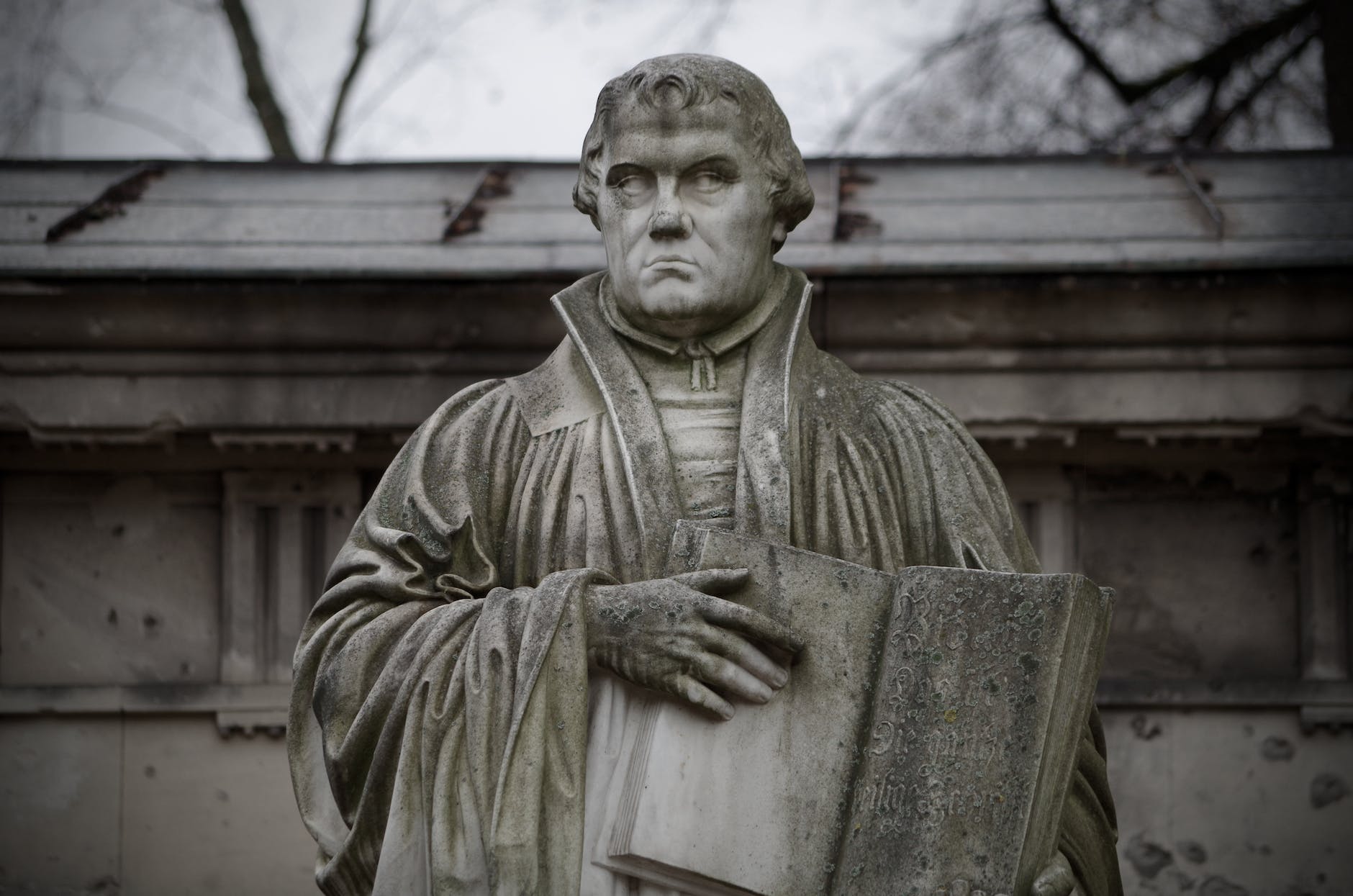
Photo by Florian Chefai on Pexels.com

            The third of the Five Solas to be recognized during the Reformation period was ‘sola gratia’ or (grace alone). In the early sixteenth century there was an emphasis on church teaching of salvation by works of merit and indulgences. Scripture says we are saved by grace alone as Paul writes in the book of Ephesians, “For by grace you have been saved through faith. And this is not your own doing; it is the gift of God.” (Eph. 2:8 ESV) The first reformer of the sixteenth century was Martin Luther and he had said, “Our salvation depends entirely on the choice, will, and work of another, namely, of God alone.” We cannot take any credit leading to our salvation, God has done it all.

            Yes, ‘for by grace we been saved through faith,’ but the reality is God gives us the faith to believe in His Son through the Holy Spirit as He draws us to Himself. Our regeneration proceeds our faith. It is by His grace that He grants us the faith to believe in Jesus for we would never do this on our accord. Paul, the apostle, quoted from the Old Testament in the book of Romans, “as it is written: ‘None is righteous, no, not one; no one understands; no one seeks for God. All have turned aside; together they have become worthless; no one does good, not even one.’” (3:10-12 ESV) God’s saving grace towards sinners is His granting unmerited favor upon us. When God’s saving grace is applied to us it cannot fail to accomplish the purpose for which it was given.

            The saving grace that God bestows on His chosen cannot be understood or appreciated until we have a full knowledge of what we have been saved from. There is not one of us who has a right to eternal life, “for all have sinned and fall short of the glory of God.” (Ro. 3:23 ESV) We are all sinners in Adam, “Therefore, just as sin came into the world through one man, and death through sin, and so death spread to all men because all sinned.” (Ro. 5:12 ESV) And the punishment for sin is death, physical death and spiritual death being eternally being separated from God in the lake of fire. “And if anyone’s name was not found written in the book of life, he was thrown into the lake of fire.” (Rev. 20:15 ESV)

Photo by Abigail on Unsplash

            As we come to accept that there is nothing we could ever do to find favor with God to enter into His presence, we should find ourselves in continued praise and worship for what He has done for us through His grace. God has chosen to love us in Christ, underserving sinners that we are. As Paul writes again in Romans, “For if, because of one man’s trespass, death reigned through that one man, much more will those who receive the abundance of grace and the free gift of righteousness reign in life through the one man Jesus Christ.” (Ro. 5:17 ESV) May we chose to live for Him as He chose us to live with Him.

Devotionals

The Grace of God

“and Judah the father of Perez and Zerah by Tamar……and Salmon the father of Boaz by Rahab, and Boaz the father of Obed by Ruth, and Obed the father of Jesse, and Jesse the father of David the king. And David was the father of Solomon by the wife of Uriah” Matthew 1:3, 5-6 ESV

            The four gospels, Matthew, Mark, Luke, and John, are narratives of Jesus Christ. Each author through the Holy Spirit presents a specific perspective of our Lord Jesus. Matthew in writing to a mainly Jewish audience presents Jesus as the Messiah, Mark presents Him as the suffering servant to the gentiles, Luke’s gospel focuses on the humanity of Christ, the Son of Man, and John’s narrative is acknowledging the deity of Christ. Jesus is indeed God the Son.

            A common theme throughout all of the Gospels, in fact all through the Old and New Testaments, is the grace of God. We are reminded of this in Matthew’s listing of the genealogy of Christ in Matthew chapter 1. Most of us admittedly brush over genealogies and numerical records in the Bible. They seem to be hard to follow, certainly hard to pronounce some of the names, and just not that important. But if we take that approach to Matthew’s genealogy of Christ we will miss seeing God’s redemptive plan of salvation and His marvelous grace.

            Embedded within the genealogy found in Matthew’s gospel are the names of four women. Women normally would not be listed in Jewish genealogies, but these four were. Two were even Gentile women. Three of the four had moral lapses in their backgrounds. While it is important to note that the descendant in each case was through the man; Why then the significance to include these women? It is to present God’s plan of salvation to save sinners, which includes all of us. God’s plan of salvation includes all ethnic backgrounds. No one is beyond the grace of God.

Devotionals

The Kingdom of Heaven: God’s vineyard of grace   

“For the Kingdom of Heaven is like the landowner who went out early one morning to hire workers for his vineyard.” Matthew 20:1 NLT

“God saved you by his grace when you believed. And you can’t take credit for this; it is a gift from God. Salvation is not a reward for the good things we have done, so none of us can boast about it.” Ephesians 2:8-9 NLT

Photo by Laker on Pexels.com

            The Kingdom of Heaven is not a commercial venture. You cannot buy your way into heaven. Nor can you earn your way through hard work, helping the poor, caring for others, going to church, or any other charitable means you may employ. It is only by God’s grace that we have access to heaven as we believe in His Son Jesus for Salvation. Entrance into the kingdom is by God’s grace alone at the moment He bestows it upon us whether in our childhood or in old age while on our death bed.

            Jesus tells His disciples a ‘Parable of the Vineyard Workers’ in a response to a question Peter asked Him. Peter’s concern was he and the other disciples sacrificed their livelihood in following Jesus. The sentiment was they should be ranked on a higher scale in the kingdom than others who have not given up as much. Jesus sets them all straight by explaining God’s grace on each individual in relation to the kingdom of heaven.

            The parable begins with the landowner going out to hire workers in his vineyard. This most likely occurred during harvest season as landowners would hire day workers gathered in the market place looking for work. Workers were hired at the start of the day for an agreed amount of pay. Throughout the day the landowner would return to the market place right up until the last hour and find others who needed work and send them into the vineyard. At the end of the end the workers got paid, and each received the same amount, a full day’s wages. Those who worked all day were upset either that they did not received more or that the others were treated the same by the gracious landowner.

            Jesus is saying all those in the kingdom have accepted Him as Savior and have the same amount of grace applied to them. Those who have been Christians all their lives and have done great service for Christ will be in the kingdom along with those who have done little due to little time to serve Him since their conversion. God’s grace is applied equally to all.

            For those of us who have been Christians a long time are we using the time God has given us to serve Him?  Those of you who have recently come to know the Lord, are you being faithful in the opportunity given to you to serve Him? And are we all praying for those who have not yet accepted Christ as Savior? We are all workers in God’s vineyard of grace, may we be faithful in the work He has given us.

Read the Parable of the Vineyard Workers: https://www.biblegateway.com/passage/?search=Matthew+20%3A1-16&version=NLT