Devotionals

Hot Mic

“He who planted the ear, does he not hear? He who formed the eye, does he not see?” Psalm 94:9 ESV

            A most entertaining aspect of any sporting event is to hear firsthand sounds of the game from the players themselves. The NFL has captured and perfected this better than any other sport as their experience with it spans over fifty years. That is not to say other major sports have not made inroads in their own unique style. Major League Baseball, for example, has dugout interviews with mangers and players, and on occasion has conversed with players on the field during a game. And what is more exciting than hearing and seeing the competitiveness on a NBA court.

            Although entertaining, a drawback to this feature is the vulnerability of some to express a thought or opinion, either intentional or unintentional, in which they would like to have back. For the most part, those who participate in this venture are well aware of the hot mic in their presence.  But at times words are expressed as if no one is listening, as if no one is around to hear their voice.

            All of us can relate to have misspoken at one time or another. We regret what had been said and the consequences it caused with the harm it had done. The psalmist reminds us it is not only those around us who here our words, but there is one who always hears. There is one who is always listening. The Lord God not only hears all we say, but He sees all we do, even when there is no one around. God has the ultimate “hot mic” along with His “all seeing surveillance camera.”

            This should not only serve as a warning to us, but also a comfort. May our conduct bring glory to God through our speech and actions encouraging others and leading them to Jesus Christ.

Bible Studies

The Lord’s Prayer, Jesus’s teaching on Prayer – 4 “Our Daily Bread”

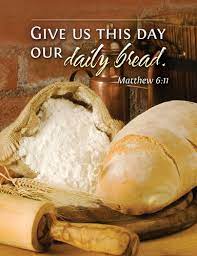
“Give us this day our daily bread.” Matthew 6:11

            The first three petitions Jesus taught His disciples to pray had an upward focus to God, His glory, His kingdom, and His will. Jesus now instructs them to ask God to care for their needs in the next four petitions. Early eighteenth century Theologian Matthew Henry, concerning our need for daily bread, writes the following, “Because our natural being is necessary to our spiritual well-being in this world…… we pray for the necessary supports and comforts of this present life, which are the gifts of God, and must be asked of him, for all the remainder of our lives.” Henry notes that it is needed daily, for it is on-going for the rest of our lives.

            The Greek word translated ‘daily’ is ‘epiousios’ which carries the meaning ‘the bread of necessity’ and ‘the bread that suffices for each day.’ It is what is needed every day to an exact amount, not too little and not too much. In Jesus’s day and in ours today, bread is a staple food item. Fresh baked bread with no preservatives will last about only one day. That was true in Jesus’s day and His point was well understood, it had to be supplied daily. We ask the Lord to meet our need daily need being careful not to ask for excess. Our Lord will supply all we need, not all we want or desire.

            Asking God to give us our daily bread does not only pertain to food in sustaining us. The daily bread we need also consists of all our daily needs to make it through this life as we serve Him. We need clothes on our backs, a place to call home, repairs to our home, transportation, viable employment, health, strength, and other physical needs. In a sense, when we pray for our daily bread, we are also praying for all that encompasses our survival now and in the future. God knows our future and He knows what our need will be before we will. (Mt. 6:8) Our complete trust in God to provide for us is built on the foundation of our faith in Him by praying to provide for our daily needs right into the future.

            Matthew Henry gives us six lessons to learn from the simple petition ‘Give us this day our daily bread.’ Adapted from the king’s English centuries ago for better understanding; First it teaches us self-restraint, to do things in moderation, and not be given to indulgence of appetite. Second, we are taught honesty and hard work through the vocation God has given us to meet our needs. Third, it teaches us not to be concerned about tomorrow, but to have continued faith in God that He will care for His children. Fourth, we ask God to give it to us, not sell it or lend it to us, but to give it. This teaches us to see the mercy of God in caring for us. Fifth, not to us only, but to others of like faith, we pray for their needs as well. Christians are to pray and fellowship together, and through this a heart of love and compassion will develop for those less fortunate. In this the Lord will use us to meet their need. And lastly, it teaches us to increase our desire towards God. As we hunger and anticipate the bread to feed us physically, our hunger to meet with God spiritually will also increase. “Give us this day our daily bread.”

A Christian Perspective

Education Starts in the Home

            According to The Tech Edvocate in June 2021, the number one reason for failing schools in America is ‘parents are not involved enough.’ (1) The Public School Review in June of 2023 ranks parents involvement at number thirteen below overcrowding, bullying, teacher tenue, standardized testing, teacher salaries, school safety, and their number one reason for failed education in schools is deficits in government funding for schools. (2) We definitely have a problem with the education system in the United States in 2023.

            As tragic as failing education is today in all subject matter in the traditional sense, a more troubling factor is the ever evolving curriculum that is subject to change as the current culture demands it. With no solid basis to instill programs and agenda driven ideology into already established course curriculum, educators and school boards across the country have caved to the loud cries of diversity, equity, and inclusion. They are at the same time discriminating against Christians and those who hold to a moral view of ethics.

            How do we begin to address these issues? Time and space will not allow a thorough investigation on the subject with proposed solutions, but as Christians, especially Christian parents, there are plenty of recommendations from the God of the Bible to help us along. First of all, parents are responsible for the education of their children. We can say education starts in the home. The book of Proverbs says, “Start children off on the way they should go, and even when they are old they will not turn from it.” (22:6) The apostle Paul in writing to the early churches says, “Fathers, do not exasperate your children; instead, bring them up in the training and instruction of the Lord.” (Eph. 6:4) Christian parents are to teach their children from an early age the teachings of Holy Scriptures. Setting the foundation of learning from God’s Word and His moral standards will help when instructing your children in all other stages of life, including their formal education.

            If you are fortunate enough by God’s grace for your children to attend a private Christian school or to homeschool them, rejoice in God’s blessings. But perhaps it is the Lord’s will for your children to attend today’s public schools. A firm Biblical foundation instilled in them from an early age will guide them through their educational journey. It is an on-going guide for every student, whether homeschooled, in Christian schools, or in secular public schools.

            Education starts in the home, and God has given that responsibility to every parent and not to the state, especially in matters concerning how His Word commands us to live. We are to continually teach our children about the Lord and His commandments from the beginning of the day until the end, and while inside the house and outside. This is as old as Moses’s instructions to the nation of Israel in what is known as the ‘Shema’ or ‘hear.’ Let us follow through with the ‘Shema’ of the Old Testament as we teach our children in 2023.

            “Hear, O Israel: The LORD our God, the LORD is one. Love the LORD your God with all your heart and with all your soul and with all your strength. These commandments that I give you today are to be on your hearts. Impress them on your children. Talk about them when you sit at home and when you walk along the road, when you lie down and when you get up. Tie them as symbols on your hands and bind them on your foreheads. Write them on the doorframes of your houses and on your gates.” Deuteronomy 6:4-9 NIV

Devotionals

Stir up one another

“And let us consider how to stir up one another to love and good works, not neglecting to meet together, as is the habit of some, but encouraging one another” Hebrews 10:24-25 ESV

            The number one reason to attend church this Sunday or any Sunday is to worship God. Right alongside that reason is to hear a message from His Word. The writer of the book of Hebrews gives us another reason; “to stir up one another to love and good works.” All Christians need to be encouraged in their walk with Jesus. You may have heard the saying, “Nothing’s ever easy”, and that is particularly true of the Christian life.

            Dear friend, think of the obstacles and struggles that come your way during the week. Our Christian friends are going through similar difficulties as well. We all need encouragement. We need to be there for each other; to listen, to share a word and to pray with each other. The simple fact is, if we are not attending church together, this will not happen and there will be a lot of discouraged Christians.

            We are “to stir up one another to love and good works” especially in light of the difficult days that we are in. Our lives are to reflect the love of Christ and represent Him by our love for each other and our good works done in His name. Jesus says in John 13:35, “By this all people will know that you are my disciples, if you have love for one another.”

            Let us be in the habit of encouraging each other and not neglecting to meet to “stir up one another!”

Devotionals

You Know Me

“O LORD, You have searched me and known me, You know when I sit down and when I rise up; You understand my thought from afar.” Psalm 139: 1-2 NASB

            What a comfort it is to know that God, the God of the universe, knows us intimately. He knows of our struggles, our fears and our limitations. He also knows of our joy and all our successes. But let us also look at the other side of coin; yes it is a comfort to know that God knows all about us, and He does know ALL about us. Look again at the end of verse 2, “You understand my thought from afar.” He even knows the thoughts of our minds, yes, good thoughts pleasing to Him and evil thoughts that fly in the face of His Holiness.

            King David wrote Psalm 139 as a prayer of devotion to the Lord to examine his heart and to get rid of anything displeasing in His sight. King David wanted to be true to the Lord and be led in His righteousness. (Psalm 139:23-24) And how is it with you? The comfort of knowing that God sees all and knows all about us is a great comfort, but it should also serve as a great wakeup call as He does see ALL and knows ALL about us, good and bad.

            May we be as King David desiring to be true to God and be led in His righteousness. For He Knows You and He Knows Me!

Read Psalm 139: Psalm 139 NASB1995 – God’s Omnipresence and Omniscience. – Bible Gateway

Devotionals

A City on a Hill

“You are the light of the world. A city set on a hill cannot be hidden.” Matthew 5:14 ESV

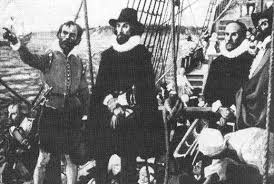
            John Winthrop, the first governor of the Massachusetts Bay Colony, coined the phrase ‘A City on a Hill’ while aboard the flagship Arabella upon arriving on the shores of present day New England. An English Puritan lawyer, Winthrop was in pursuit of religious freedom along with many others in early 17th century England. His encouraging words to his shipmates set the tone for the work ahead of them lasting for centuries to come, “We must always consider that we shall be as a city upon a hill—the eyes of all people are upon us.” His sentiments have been repeated countless times throughout the years in the United States of America as a mode of encouragement most famously used by both President John F. Kennedy and President Ronald Reagan.

            Jesus told His disciples they were the light of the world and a city on a hill. The landscape of America includes several cities that are elevated on mountainous terrain visible for all to see. A city on a hill cannot be hidden. Neither can anyone who has accepted Christ as Savior be hidden from the world. Jesus’s words to His disciples apply to every Christian today. Christians are the light of the world and cities on a hill that can be seen by all. With such great amount of exposure, are we taking advantage of our opportunity to represent Christ, or are we allowing the clouds and fog of indifference to settle in?

             People today are looking for light in a dark world. Christians possess the light of Christ and are placed on a hill of God’s choosing to bring the light of the gospel to others and to bring glory to God. Jesus said, “…..let your light shine before others, so that they may see your good works and give glory to your Father who is in heaven.” (Mt. 5:16b)

            The Puritan settlers knew that future generations would look to them as a city on a hill. Christians today need to follow their example and live up to John Winthrop’s words, “We must always consider that we shall be as a city upon a hill—the eyes of all people are upon us.” For all eyes are upon us, the city on a hill.

Devotionals

Our Plan – God’s Plan

            As one who has more years behind him than in front of him, I often look back throughout my life and ask, ‘Is this the way I planned it?’ Most dreams and desires have not been met, at least not yet, and perhaps will not come about. Some dreams and desires have come about beyond my wildest imagination leading me to admit that it had to be God’s planning and not of my doing.

            The Lord gives us free will to make our own choices and to make our life plans. But as we go through life we discover looking back that our life is not exactly as we planned. Oh, it may be heading in the right direction, but we’re not there. Perhaps you have already arrived at where you planned to be, but the road to getting to your destination was not what you had envisioned, not even close. That’s when we see God’s plan.

            It is inevitable that God’s plans for His children overrides any plans we may have. God had specific plans for our lives from eternity past before the foundations of the world were laid. His plans cannot change, they are carved in stone, as we may say. Whatever direction our plans take we can be sure that God’s hand is in it.

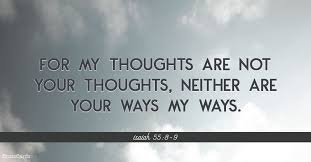
            The Lord instructed the prophet Samuel to go to Bethlehem to the house of Jesse for He had chosen Jesse’s son David to be King in Israel. Samuel was to anoint David as the next king to follow after King Saul. We are not told what David’s dreams and ambitions were during his teenage years as he worked tending sheep out in the fields. But no doubt, the Lord was preparing David in his occupation for the plans He had for him. David was also the most unlikely candidate among Jesse’s sons to be king, but our thoughts are not God’s thoughts. Our ways which seem right to us are not God’s ways which are right to Him.

            Wherever you are in this life, consider the Lord’s plan and the circumstances that brought you to this point. Ask Him to open your eyes to see how he has worked His perfect plan. Have faith in Him through obedience as He continues to work His plan for you in the days ahead.

Read the Story of David’s Anointing:  https://www.biblegateway.com/passage/?search=1+Samuel+16%3A1-13&version=NIV

Devotionals

A Shaken Reed

“What did you go out into the wilderness to see? A reed shaken by the wind?” Luke 7:24b ESV

            Have you ever noticed a reed, a tall slender blade of grass, blowing in the wind? It blows whichever way the wind is blowing. It is weak in that it is easily swayed.

            Jesus asks those in the crowd, who have been following Him, and who apparently had followed John the Baptist, “What did you go out into the wilderness to see? A reed shaken by the wind?” John the Baptist, obviously wasn’t a man easily swayed by public opinion. He didn’t sugar coat his message to the people. He was a true prophet of God. (Luke 7:26-28)

            Are you a reed shaken by the wind? I need to ask myself the same question, am I a reed shaken by the wind of this world that prevents me from speaking the truth? The truth about the sinful condition of mankind, the wrath of God, and the judgment to come. One cannot read through the entire Holy Scriptures, The Bible, and not see it. The truth is those without Christ will die in their sins into eternal damnation. But, the truth is also that Jesus came to pay the penalty for sin and those who put their faith and trust in Him will escape the eternal punishment and received eternal life in Heaven with Him.

            Are you proclaiming the whole truth of God’s Word, the Bible, or is your reed (your message) being shaken by the wind?

Bible Studies

The Lord’s Prayer, Jesus’s teaching on prayer – 3 “Thy Name, Thy Kingdom, Thy Will”

“Hallowed be thy name. Thy kingdom come. Thy will be done in earth, as it is in heaven.”

            The Lord’s Prayer is a simple model Jesus taught His disciples when they asked Him to teach them to pray. It begins with an upward focus to the God of heaven, His glory and His will leading to the human needs of each of us. Jesus’s main focus, also His priority in prayer, is the exaltation of God. The first petition He taught His disciples to pray is ‘Hallowed be thy name.’ It may be translated as ‘holy’ be thy name. God’s name is to be treated with reverence for it is holy. This should make us aware as we approach God in our failed human state that we are about to converse with a holy God. It is our place to begin our prayer by treating His name as holy, ‘hallowed be thy name.’ It was Jesus’s first petition in His prayers and should be ours as well.

            The second and third petitions flow together with the first exalting God the Father. In all that we do, Christians are to do everything for the glory of God including our prayers. Our prayers should reflect the desire for glorifying God by honoring Him and praying for His kingdom to be established and His will be done in all things. This brings glory to God as we pray in agreement that God’s will and His kingdom will all come about according to His plans established before the foundations of the world.

            We may ask, why then should we pray? If God’s plans for His kingdom and His will are already determined, then why pray? Note the following reason on why we should pray; Prayer is not only about asking for things from God, although that is certainly an important part of prayer, but more importantly it is a time of meeting with God, your creator. It is a time to sit with Him and seek to know Him better. We need again to remember ‘who God is’ and ‘who we are’ and that the God of the universe wants to have a relationship with us. He has reached out to make that happen, for we would not do that on our own. Therefore He deserves our praise and reverence exalting His name as we sit in prayer with Him. Modern day theologian R. C. Sproul notes when asked ‘Does our prayer change God’s mind? No, prayer changes us’ and that is the basis of prayer, to know God and to be changed by Him.

            The Messianic Kingdom will indeed become a reality one day in the future. The Lord Jesus will rule from Jerusalem over the entire earth for 1,000 years. But currently this world is under the rule of Satan and his demons. Paul writing in Ephesians says the following, “For we are not fighting against flesh-and-blood enemies, but against evil rulers and authorities of the unseen world, against mighty powers in this dark world, and against evil spirits in the heavenly places.”(Eph. 6:12 NLT) Therefore as Christians we desire to see the Kingdom of God in its fullness come quickly. Until then we pray ‘hallowed be thy name, thy kingdom come,’ and for God’s will for us to be completely known that we obey His will ‘in earth as it is in heaven.’  

A Christian Perspective

In The Beginning

Everything has a beginning; your life, a relationship, a new year, a new school year, a semester, a job, an idea leading to a new consumer product, even this essay. Everything has a beginning to point to. Unfortunately everything also has an ending, after all, nothing last forever, but ‘not quite.’ 

            The most recognizable quote of ‘in the beginning’ is in the Scriptures of the Holy Bible. Genesis 1:1 say, “In the beginning God created the heavens and the earth.” The earth and all of the universe had a beginning. There was a time when the universe did not exist but then came into being. This is not a debate as to the origins of the planets and the universe, this view is to be understood God created in the beginning, in the beginning of our time.

            What exactly is ‘our time?’ NASA’s explanation of the universe is as follows, “The universe is everything. It includes all of space, and all the matter and energy that space contains. It even includes time itself and, of course, it includes you.” (1) Our time began when God created the universe, when He created all of space, matter, and energy. Our time began when God created man in His image, “So God created man in his own image, in the image of God created he him; male and female created he them.” (Gen. 1:27) We had a beginning.

            While we had a beginning, our creator had no beginning. There is no time in which God did not exist. The prophet Isaiah wrote, “Who has done such mighty deeds, summoning each new generation from the beginning of time? It is I, the LORD, the First and the Last. I alone am he.” (Is. 41:4) Identifying Himself as the ‘First and the Last’ constitutes God existed before the universe began and will be around after it is gone. Jesus, God the Son, also identifies as the ‘First and the Last’ in the book of Revelation for He said “I am Alpha and Omega, the first and the last.” (Rev. 1:11a)

            While we contemplate our lives having a beginning and an end, it is often hard, if not impossible, to understand God who never had a beginning and will never have an end. Don’t even try, it can’t be done. It is accepted only through faith in the God of the Bible. Once we have accepted God, His true Word, and Jesus Christ His Son for salvation it becomes clear that God is from eternity past and future, although we still can’t understand it. But this should also be a great comfort to us for He has all things under control and knows our deepest needs both now and in the future. He was there in our beginning and will be there in our end and this is where the ‘not quite’ comes in.

            Everything will certainly come to an end one day, except for a couple of things; the triune God, His Word, and the souls of people. We may have had a beginning in this life, but we were created with a body and a soul. The body will come to an end due to our sin nature, but our soul lives on into eternity. Those who have confessed and repented of their sin accepting Christ as Savior will spend eternity in the new heaven and the new earth, those who have rejected Christ will spend eternity in the lake of fire with Satan and his demons. “Then the devil, who had deceived them, was thrown into the fiery lake of burning sulfur, joining the beast and the false prophet. There they will be tormented day and night forever and ever…..And anyone whose name was not found recorded in the Book of Life was thrown into the lake of fire.” (Rev. 20:10, 15)

            When you were born, you were born for eternity. Your body will die, but your soul will live on. You are living in the beginning of eternity. Where will you be living when your earthly life has ended? Jesus said, “I am the way, the truth, and the life. No one can come to the Father except through me.” (Jn. 14:6) The time is now to make the choice where you will spend eternity while you are still living ‘in the beginning.’